

A suit worn once, for nineteen minutes
On 27 September 2008, Zhai Zhigang opened the hatch of Shenzhou-7 and became the first Chinese person to float in open space. His suit was named Feitian — the flying apsara, after the airborne figures painted on the cave walls at Dunhuang a thousand years ago.
The spacewalk lasted about nineteen minutes. The suit cost roughly 30 million yuan, about US$4.4 million at the time, and weighed around 120 kilograms. It never came home: too heavy to bring back, it stayed in the orbital module and burned up on re-entry.
Only three countries have designed, built and flown their own suits for extravehicular activity — EVA, the technical term for a spacewalk: Russia, the United States and China. Since 2021, Feitian suits aboard the Tiangong space station have supported more than a dozen spacewalks. In December 2024, two crew members spent about nine hours outside, passing an eight-hour-fifty-six-minute record the United States had held since 2001.
What a Feitian suit actually is
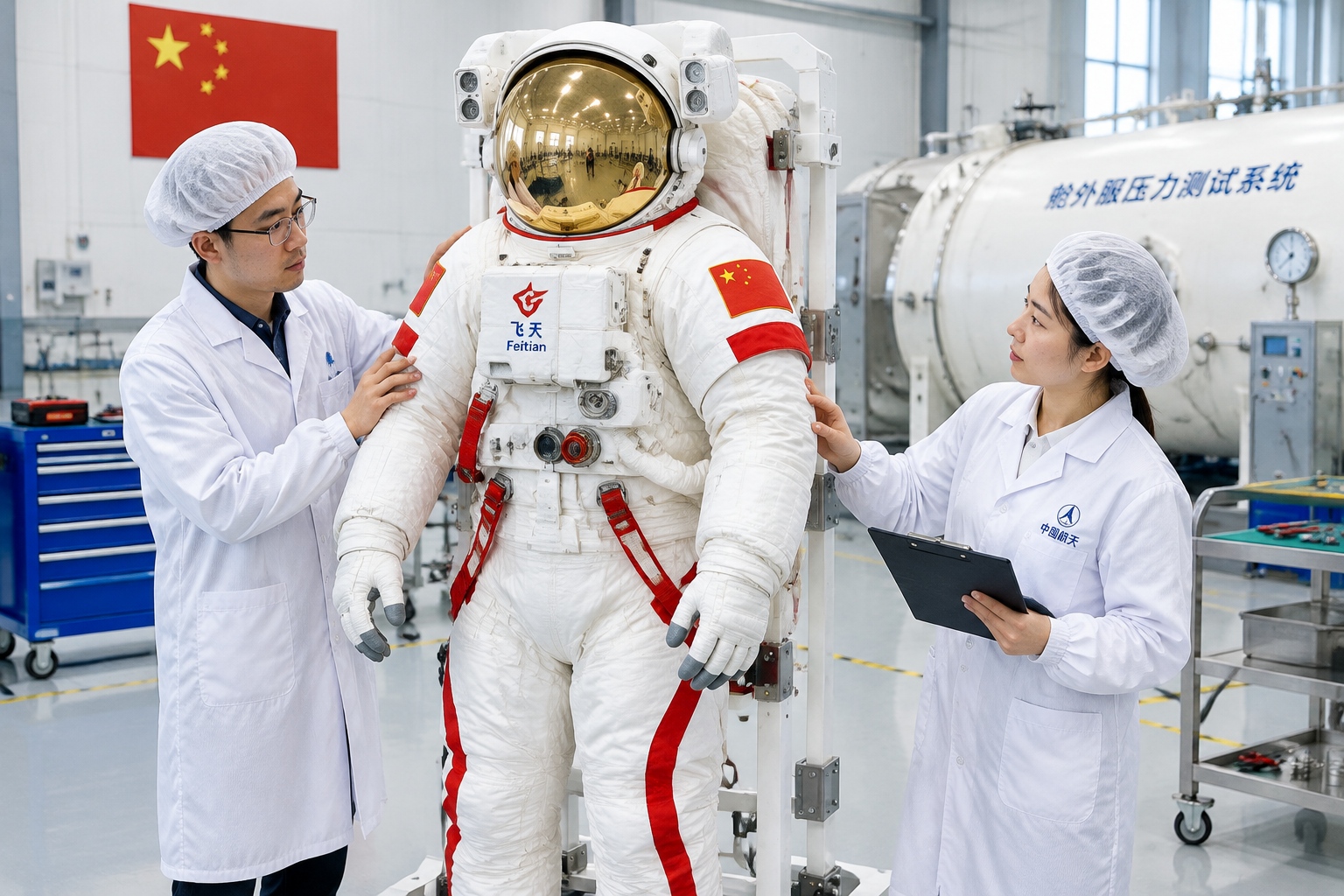
On the ground it looks like a small white room with a person somewhere inside. The shell is white with red trim, the visor is gold, and the whole assembly is one piece: like the Russian Orlan it resembles, it is a rear-entry suit, and the astronaut climbs in through a hatch in the backpack. Life support is built into the back rather than bolted on as a separate module, as in the American design.
Today’s version fits crew members between about 1.6 and 1.8 metres tall. The first generation was essentially tailored to one body. With roughly 120 to 130 kilograms of suit around them, astronauts are moving mass rather than weight, which is why joint stiffness matters more than the number on a scale.
Designers say the cultural references are deliberate. The name comes from Dunhuang; the gold visor and red-and-white colour blocking are a visual signature; Chinese coverage of the newest suits points to stylised flight motifs worked into the trim. Not decoration — but not accidental either.
Ten systems inside one garment
Engineers describe a Feitian suit as ten subsystems that happen to share a shell.
Pressure and life support
The suit holds a breathable atmosphere at roughly 40 kilopascals, a bit under half of sea-level pressure, so an astronaut pre-breathes pure oxygen before the hatch opens to flush nitrogen from the blood. Oxygen comes from tanks; carbon dioxide is scrubbed chemically; humidity is pulled out of the loop. The first-generation suit carried about four hours of consumables. The current one is reported to support roughly eight hours — enough for a nine-hour walk with margin.
Thermal control
In a vacuum there is no air to carry heat away, only radiation and sublimation. So the astronaut wears a liquid cooling garment, threaded with tens of metres of fine tubing, and the backpack sublimates water ice directly into space to dump body heat. Without it, a working astronaut overheats inside a sealed suit within minutes.
Helmet and visor
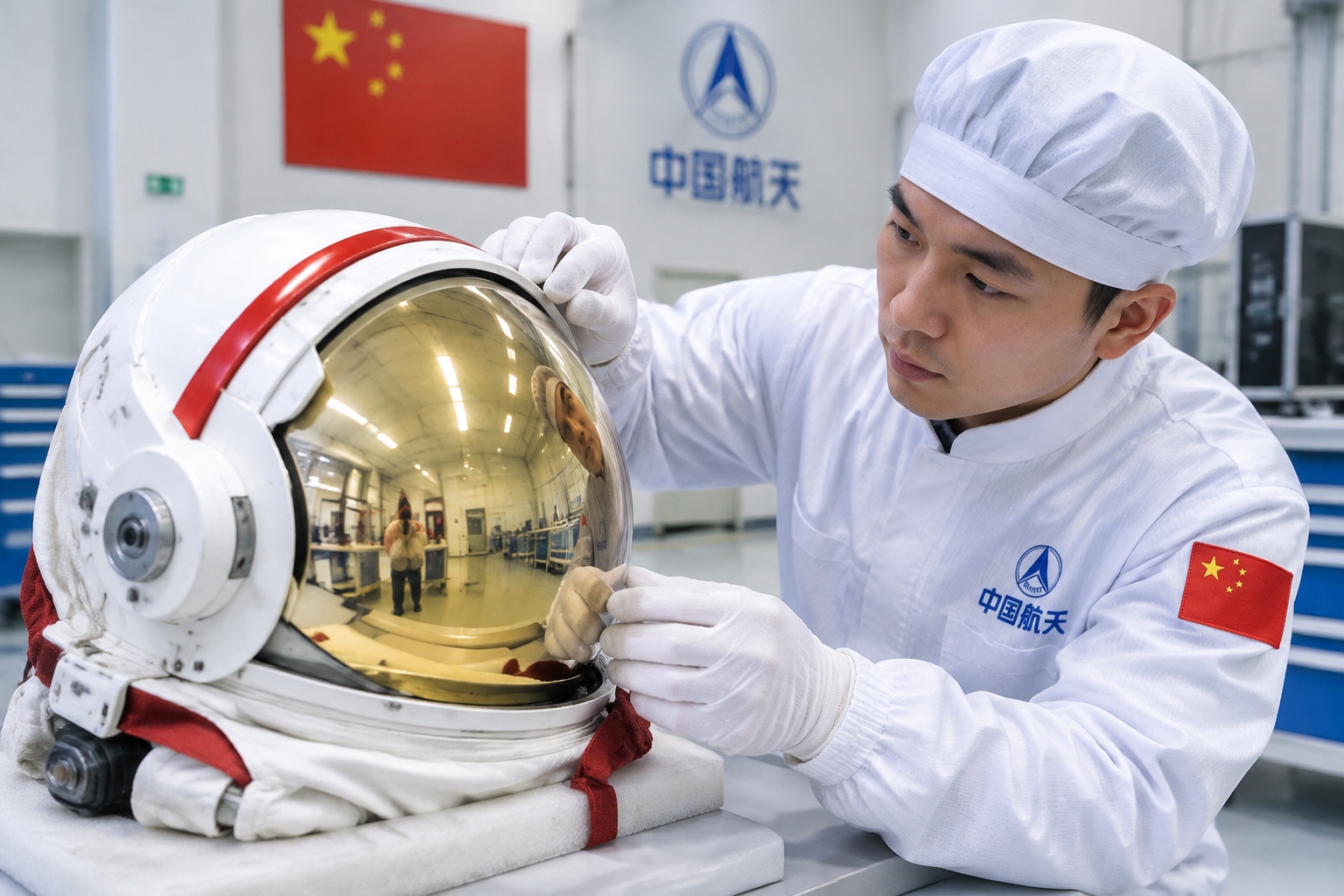
The visor is a stack of layers. An outer shell takes dust and micro-debris; a thin gold coating reflects infrared and ultraviolet and cuts the glare of unfiltered sunlight; an inner layer stops fogging. Lights and a camera sit on the sides.
Gloves
Every engineer who has worked on an EVA suit says the glove is the hardest part. It must hold the same pressure as the rest of the suit, survive the temperature swings, and still let someone turn a small connector or flip a switch by feel. Thick enough to protect, thin enough to feel — the requirements fight each other.
Communication, telemetry and power
Radio links the astronaut to the station and the ground. Biomedical sensors feed heart rate, suit pressure and consumable levels to flight controllers. Batteries run the assembly. Add a drink bag, emergency oxygen, a waste-collection system, the tether that keeps the astronaut attached and the spares staged in the airlock, and the count of ten makes sense.
The environment the suit is built for
Tiangong orbits at roughly 400 kilometres, moving at 7.8 kilometres per second, circling the planet every 90 minutes — sixteen sunrises and sixteen sunsets a day. The outer surface of a suit swings from about minus 120°C in shadow to around 120°C in sunlight.
Then everything else. Atomic oxygen, single atoms left over from broken molecules, etches ordinary polymers. Ultraviolet light degrades fabric. Micrometeoroids and flakes of orbital debris arrive at relative speeds up to roughly 10 kilometres per second. Radiation is monitored rather than fully blocked; a suit is protection, not a shield.
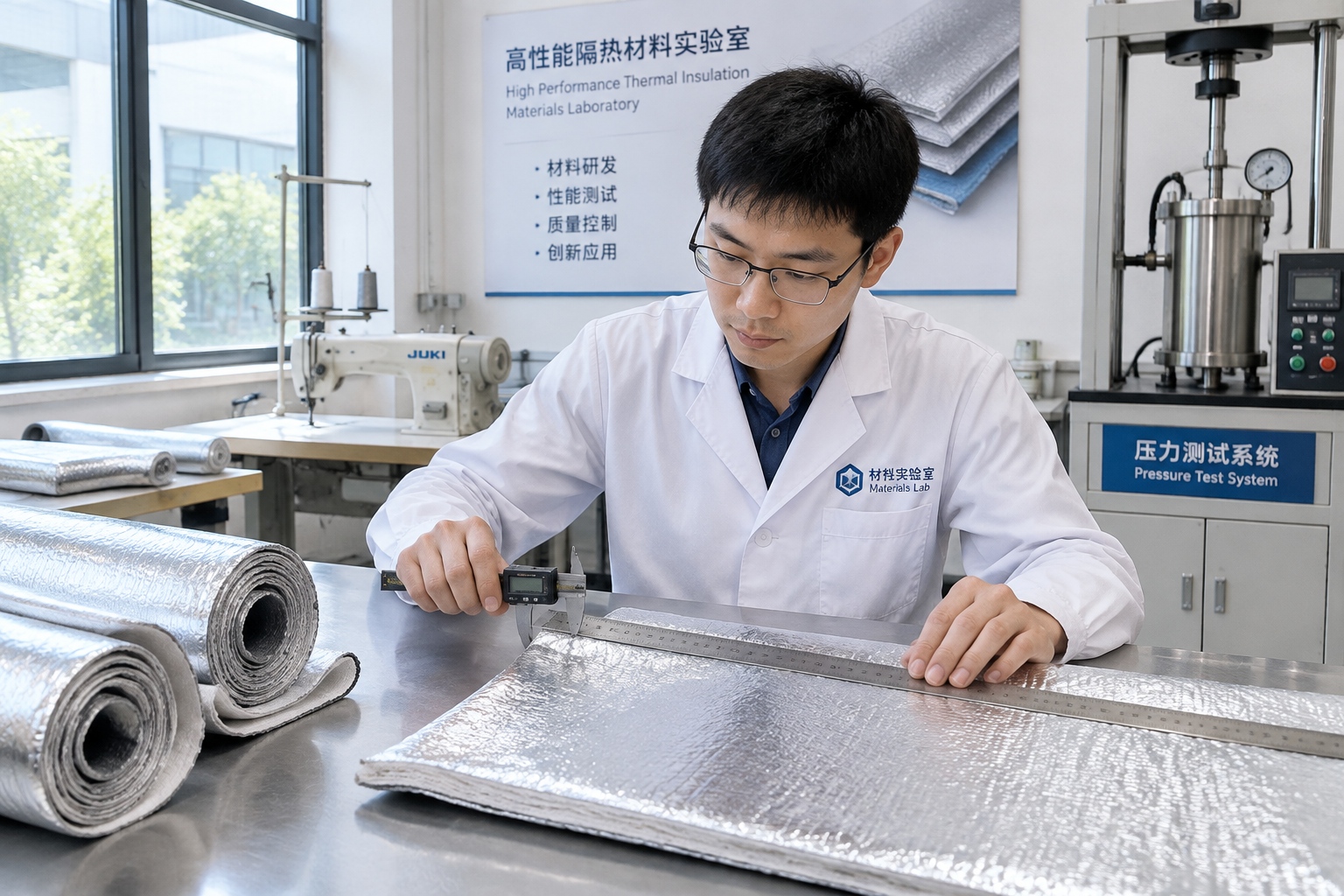
So the suit is a sandwich: an outer woven layer that resists abrasion and atomic oxygen, multiple layers of aluminised thermal insulation, a coated pressure bladder that holds the gas, and a comfort layer against the skin. Every seam is sewn, sealed and leak-tested to a specification. In orbit, a slow leak is not a maintenance item.
The years spent on the glove
Ask engineers at the Astronaut Center of China or the China Academy of Space Technology and the stories are about repetition, not breakthroughs. Glove designs that pressurised fine on the bench and locked an astronaut’s fingers in the tank. Seals that passed cold tests and failed after a hundred thermal cycles. Sensors that read perfectly until the humidity rose.
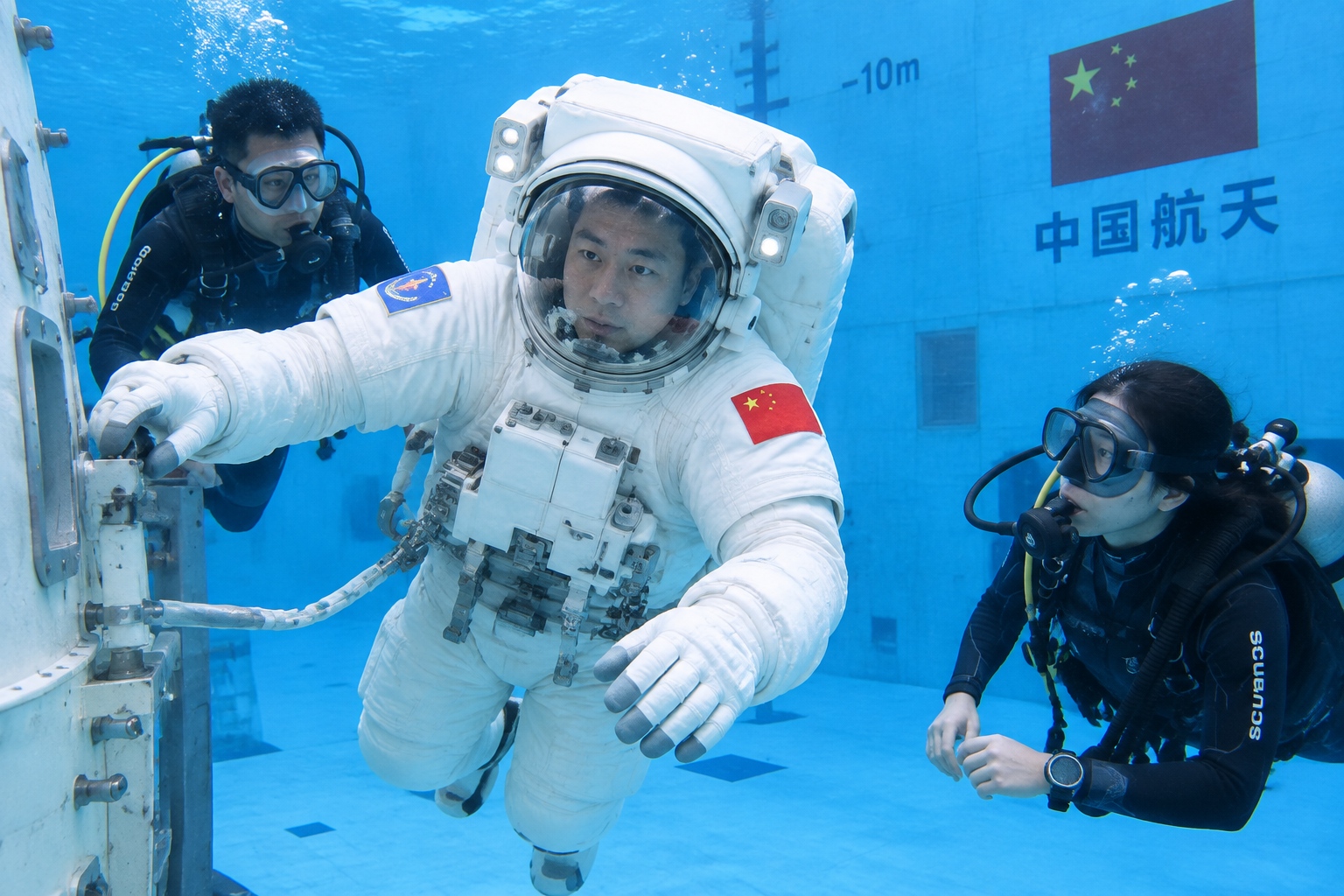
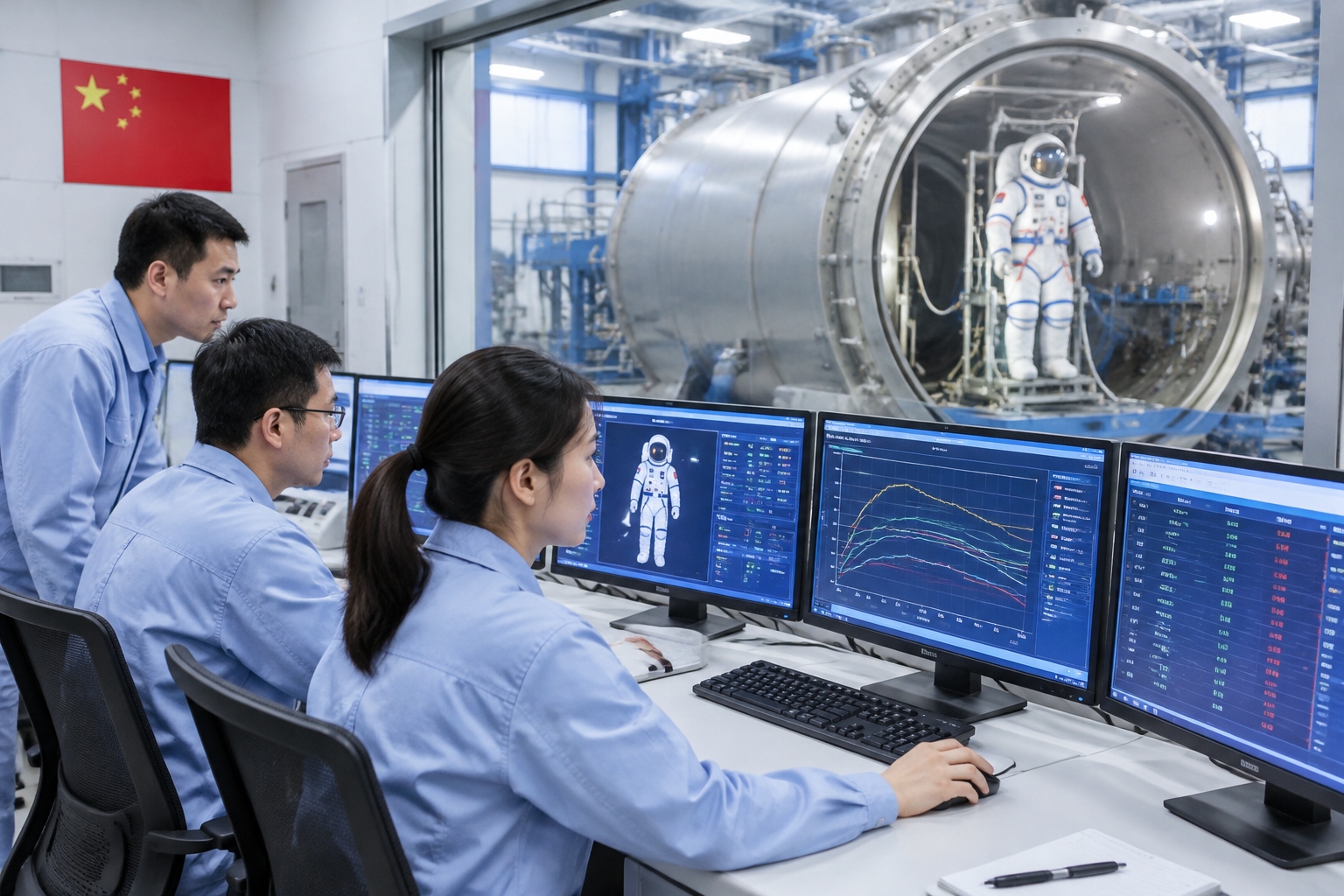
Testing happens in vacuum chambers, thermal-vacuum rigs and water. China’s neutral buoyancy pool — a tank about 10 metres deep, where suited astronauts rehearse an entire spacewalk for hours with divers hovering around them — is where most procedural problems surface. The line inside the programme runs roughly: sweat on the ground so the crew does not have to.
How China’s route differs
The American and Russian suits represent two philosophies. The US extravehicular mobility unit is modular: a rigid upper torso in different sizes, interchangeable arms and legs, and a life-support backpack that can be serviced between spacewalks. The Russian Orlan is monolithic: one piece, rear entry, simpler to operate and easier to store. The Feitian is closer to the Orlan architecture — a logistics decision on a small station, not a shortcut.
What is distinctly Chinese is the supply chain. Export controls on space technology left nothing to buy, so the first Feitian was built from the fabric up by domestic institutes and factories: the bladder, the insulation, the gold-coated visor, the cooling garment, the valves, the seals, the sensors. The programme lists more than a hundred participating units. The current suit, reported to have a service life of fifteen spacewalks over three years, is the one doing the work today.
What leaves the factory afterwards
The parts that reach ordinary life are rarely the dramatic ones. Heat-resistant flexible fabrics, compact liquid-cooling loops, sealed valves and lightweight biometric sensors all have civilian customers: firefighters and steelworkers, medical cooling devices, industrial safety gear. The lasting effect is not one spinoff product but a set of small suppliers that learned to hold tolerances and pass qualification tests for space, then found other markets.
Next stop: the Moon
In September 2024 China showed a lunar surface suit — a different problem from an orbital one. Abrasive dust, no atmospheric shielding, temperatures swinging from roughly 120°C in daylight to minus 180°C at night, and a body that has to walk, kneel and stand up in one-sixth gravity. State media reported in February 2025 that the suit is named Wangyu and the crewed rover Tansuo, with a crewed landing targeted before 2030 using the Long March 10 rocket, the Mengzhou spacecraft and the Lanyue lander.
The number people remember about Feitian is 30 million yuan for a suit worn once. The more useful number is nine hours: a single spacewalk in December 2024, in a garment holding a human being at half atmospheric pressure, in vacuum, through sixteen sunrises and sunsets. That is what precision manufacturing means when you strip the phrase down — a product that does not get a second chance.
Start the discussion at forum.chinacomes.com