

A Sparkling Surprise in a Small City
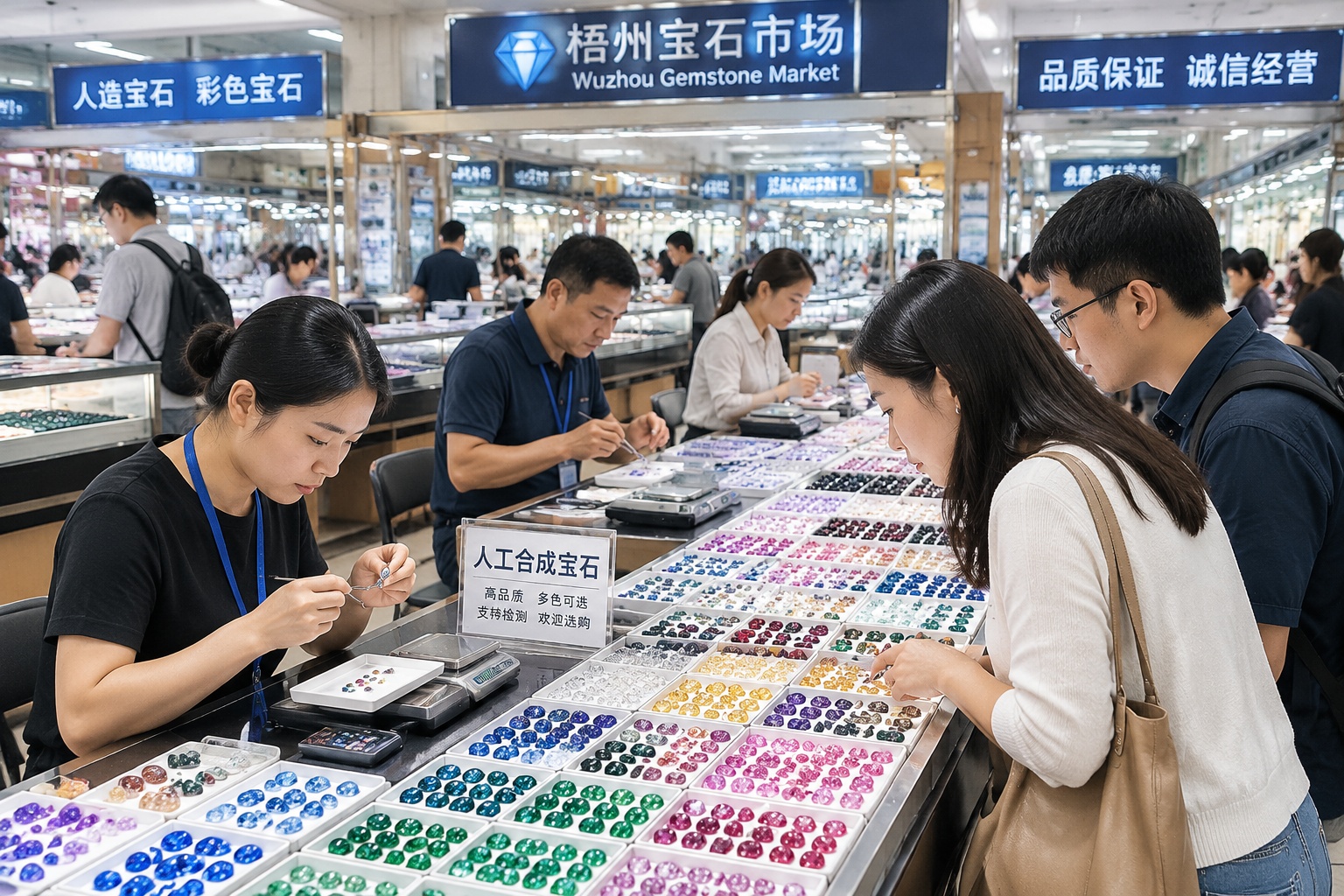
It looks like a bag of colorful candy, but the woman behind the counter in Wuzhou’s gemstone market is selling something far more precious — at least by weight. She scoops a mound of brilliant-cut cubic zirconia onto a small scale, counts stones with practiced speed, and wraps them in paper. Nearby, another stall displays rows of moissanite in every shade from icy white to canary yellow. This is Wuzhou, a city of just over three million people in China’s southern Guangxi region, and you’ve probably worn its handiwork without ever realizing it.
More than 70% of the world’s lab-created gemstones — those affordable sparkles in fashion rings, earrings, and necklaces — are cut and processed here. Not in Mumbai, not in Bangkok, but in this unassuming Chinese city that most outsiders have never heard of.
How Wuzhou Became the World’s Jewelry Backroom
The story begins in the 1980s, when a group of entrepreneurs in Wuzhou noticed that the global demand for cheap, shiny stones was growing. They started experimenting with cubic zirconia, a synthetic material that could mimic diamonds at a fraction of the cost. What began as a small experiment quickly turned into a regional specialty. By the 1990s, Wuzhou had developed a complete supply chain — from raw crystal synthesis to precision cutting, polishing, and trading.
Today, the city’s gemstone industry is a tight web of family workshops and specialized factories. In the main trading building, you’ll find hundreds of booths under one roof, each specializing in a different stone type, cut, or color. The atmosphere is fast-paced, pragmatic, and surprisingly low-key. There’s no glitz here — just rolls of plastic bags, magnifying glasses, and the constant clicking of tweezers.
Inside a Family Workshop: Precision Meets Grit
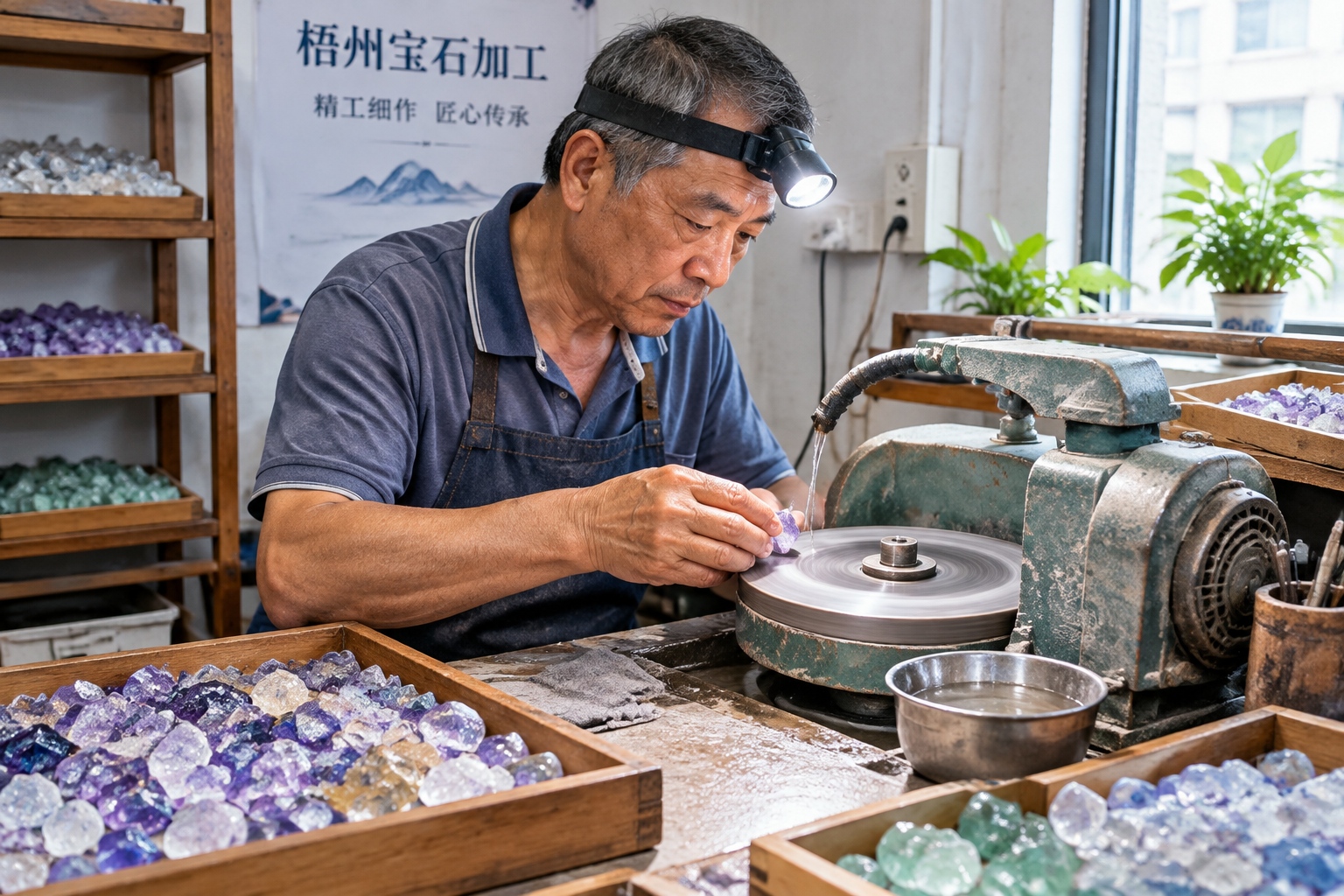
To understand Wuzhou’s gemstones, you need to visit a cutting workshop. In a small room off an alley, a machine about the size of a desktop printer spins a diamond-encrusted blade. A worker in her 30s, wearing casual clothes and a headlamp, guides a tiny piece of synthetic corundum into the blade. She does this hundreds of times a day, each cut accurate to less than a millimeter.
“People think it’s easy because these stones aren’t ‘real,’” she says, without looking up. “But the skill is real. One wrong angle and the stone loses its fire.” Her family has been in this trade for twenty years. They now export to Thailand, India, and the United States, mostly through wholesale buyers who visit Wuzhou twice a year.
In many workshops, technology has changed the work. Laser cutting machines handle the rough shaping, while workers finish each stone by hand. Even so, the city’s competitive edge lies in its human expertise. “You can buy a machine anywhere,” says a workshop owner. “But finding workers who know exactly how to make a stone sparkle — that’s Wuzhou.”
From Wuzhou to Your Jewelry Box
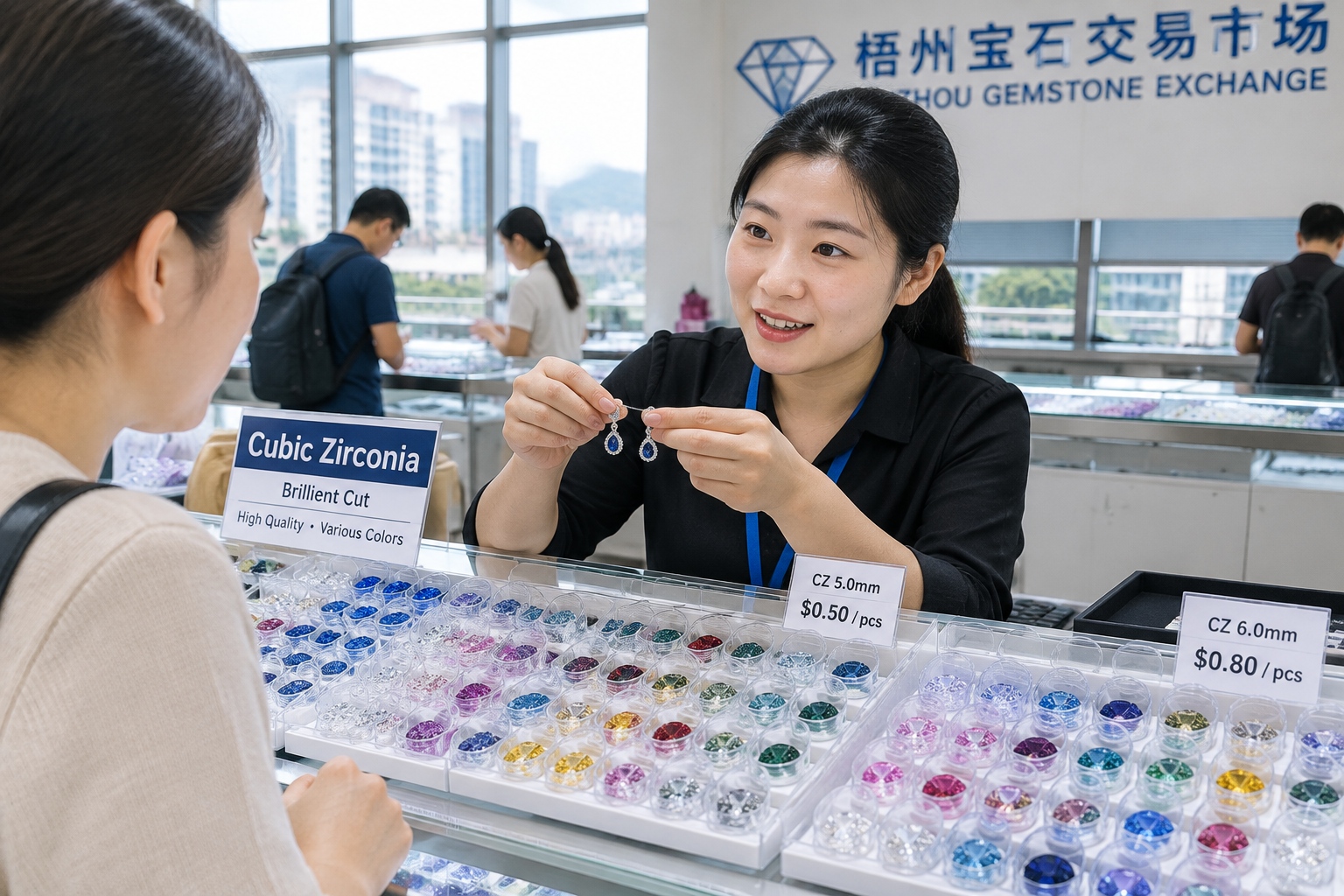
Walk into any jewelry store in New York, London, or Sydney, and you’ll likely find a display case of affordable diamond simulants. Many of those stones began as synthetic crystals in a factory somewhere, then traveled to Wuzhou for cutting and polishing. From Wuzhou, they are shipped to massive jewelry trade hubs in Guangzhou and Hong Kong, then onward to gemstone dealers worldwide.
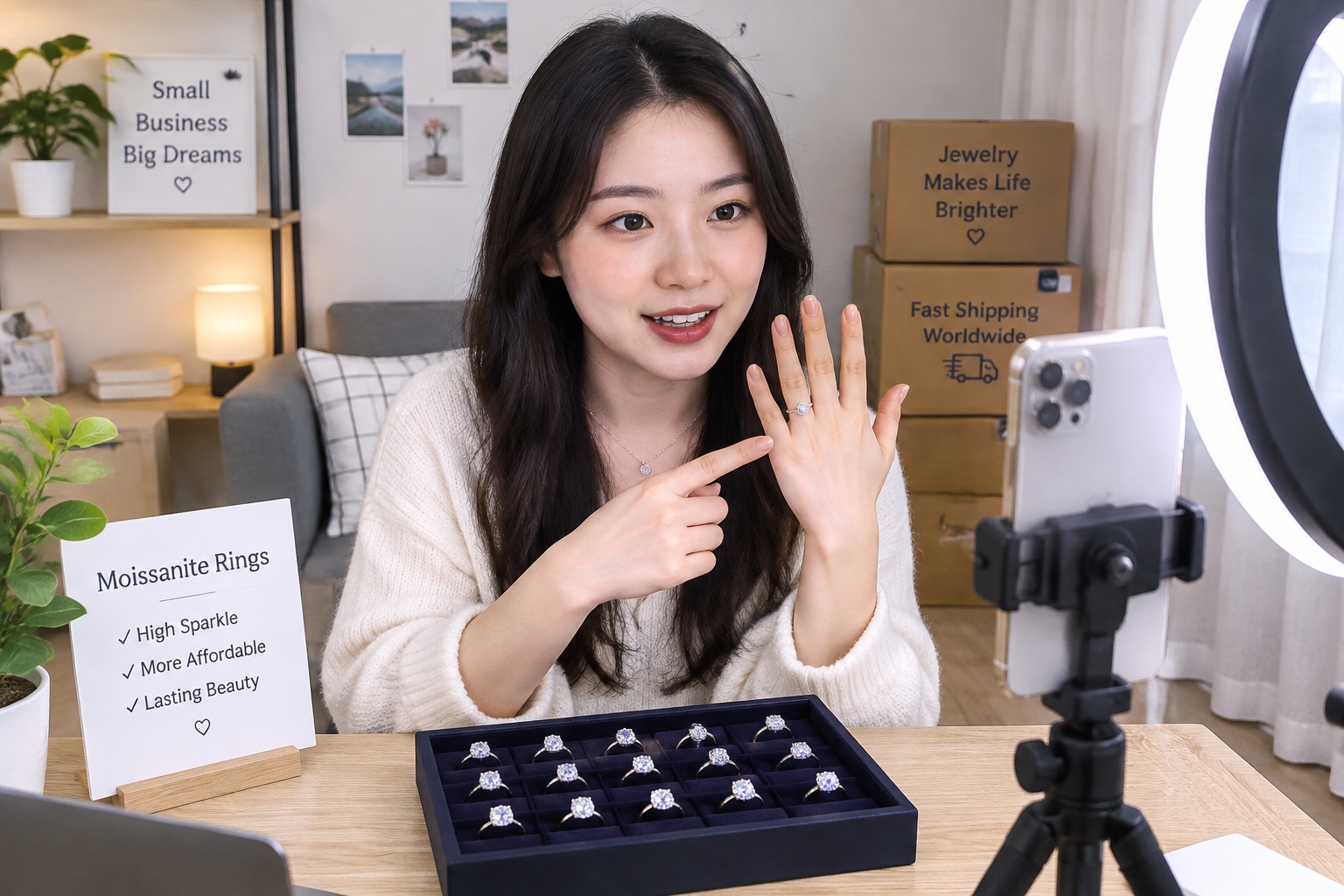
Online selling has also transformed the local industry. Young traders in Wuzhou now run live-streaming shows from their homes, demonstrating how a ring glows under light. Others use Alibaba’s wholesale platform to reach overseas buyers directly. A single package containing a few hundred polished stones can be delivered to a small boutique in Europe within ten days.
Not Just Cheap Imitations: A Different Kind of Luxury
It’s easy to dismiss lab-created gemstones as “fake,” but the reality is more interesting. Synthetic stones have the same crystal structure, hardness, and optical properties as their natural counterparts. They’re not made of plastic — they’re grown in laboratories under conditions that mimic the earth’s heat and pressure. For many consumers, they offer a conflict-free and often more affordable way to enjoy fine jewelry. A one-carat lab-created moissanite, for instance, can look almost identical to a diamond but costs a fraction of the price.
Wuzhou is now pushing beyond cheap cubic zirconia. Factories are producing high-quality synthetic spinel, lab-grown diamonds, and even specialty stones that change color with lighting. The city’s annual gemstone festival attracts buyers from more than 50 countries.
What Locals Think: Pride, Pragmatism, and Ambition
For the people of Wuzhou, the gemstone trade is a matter of both pride and practicality. “When people ask where I’m from, I say Wuzhou,” laughs a young saleswoman. “If they’re in jewelry, they know. And they always ask me to get them a good deal.”
But locals also understand the limits of the industry. Margins can be thin, and the work is often repetitive. Many workshop owners are investing in automation and design to move up the value chain. Their children are studying marketing, e-commerce, and gemology — hoping to build a future where Wuzhou isn’t just a backroom processor, but a recognized name in the global jewelry market.
A City of Hidden Global Connections
Wuzhou is a reminder that globalization isn’t only about huge tech companies or giant harbors. Sometimes it’s about a small city that quietly does one thing extremely well. The next time you see a sparkling stone in a charming boutique or a discount store, take a closer look. It might have traveled from a narrow street in southern China to reach your hand. And in that tiny piece of crystal lies a story of skill, survival, and reinvention.
Start the discussion at forum.chinacomes.com