
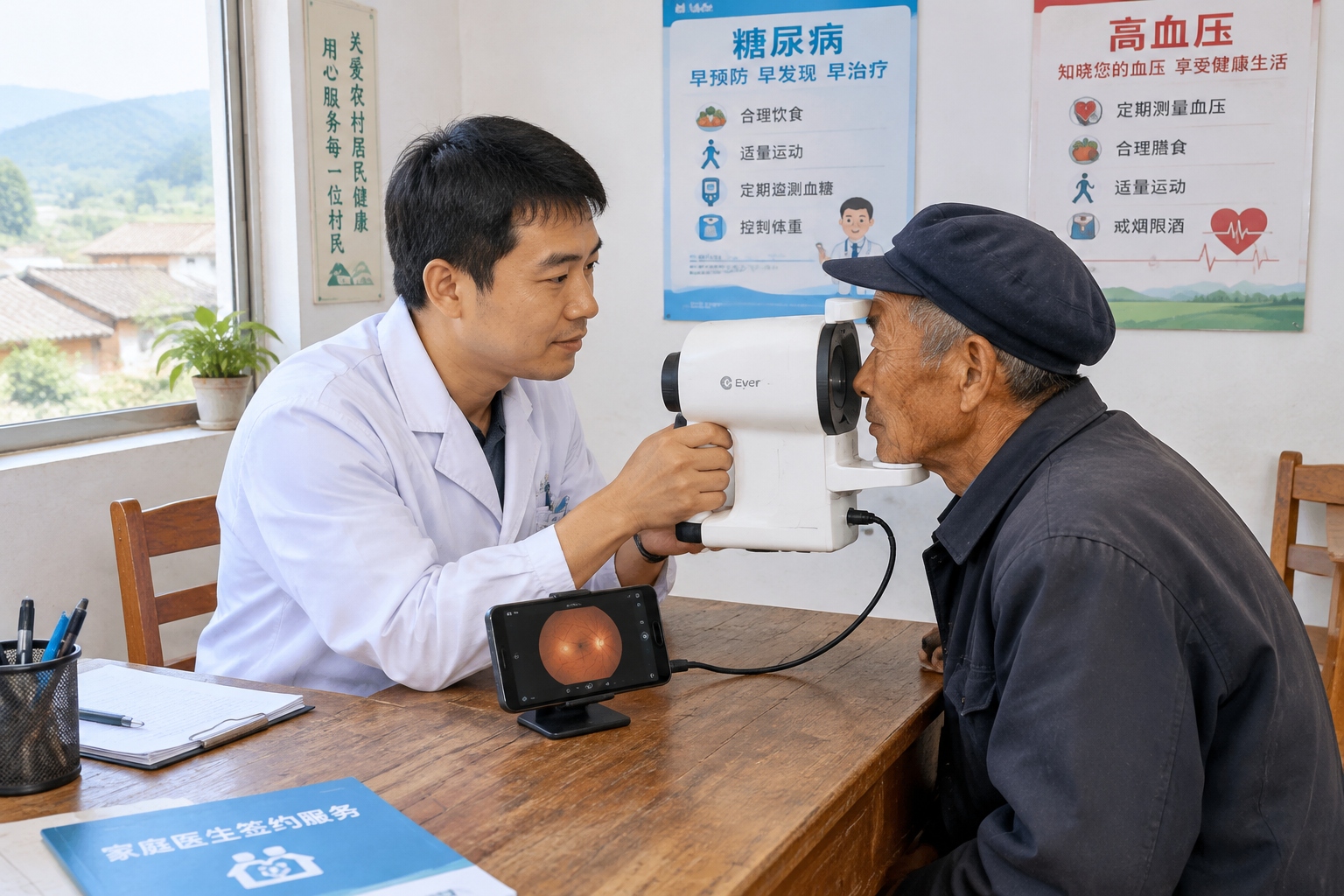

In a small clinic nested in the mountains of Yunnan, a 62-year-old farmer sits still while a nurse holds a compact camera just a few centimeters from his eyes. The camera clicks, and within three minutes, an AI-powered system flags early signs of diabetic retinopathy. The doctor reviews the result, marks it for referral, and tells the patient to visit the county hospital for a more detailed exam. No ophthalmologist on site. No delay. Just a smartphone-sized device and a clear next step.
This is not a pilot project from a tech fair. It is part of a quiet wave of AI-assisted diagnostics spreading across China’s rural health clinics. If you have followed China’s medical technology news, you might have heard about AI reading CT scans in big hospitals. But the more interesting story is happening at the grassroots level, where the gap between urban and rural healthcare has always been hardest to bridge.
What’s Actually Happening in the Village Clinic?
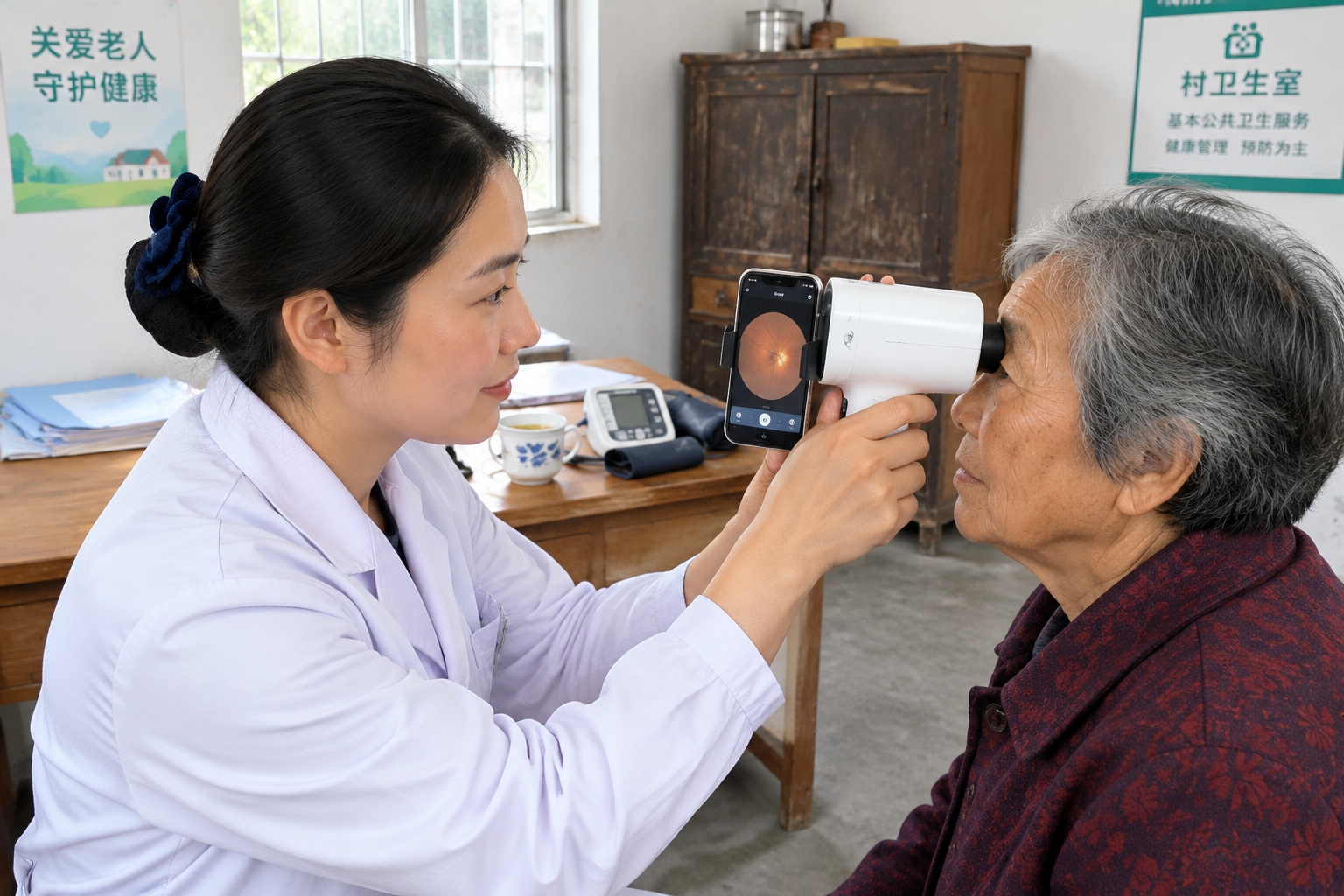
China has around 600,000 village clinics, many of them staffed by one or two doctors who handle basic health checks, vaccinations, and common illnesses. These village doctors often work without specialists, modern imaging equipment, or even steady access to medical databases. That is where AI steps in.
One of the most common applications is retinal screening. Portable fundus cameras, paired with AI algorithms, can detect signs of diabetes-related eye damage with accuracy that rivals trained specialists. The equipment costs a fraction of a full hospital-grade camera system, and the software runs on a regular smartphone or a low-cost tablet. Doctors only need to upload the photo to a cloud platform or to an embedded app, and the AI returns a report with a risk score and suggested follow-up.
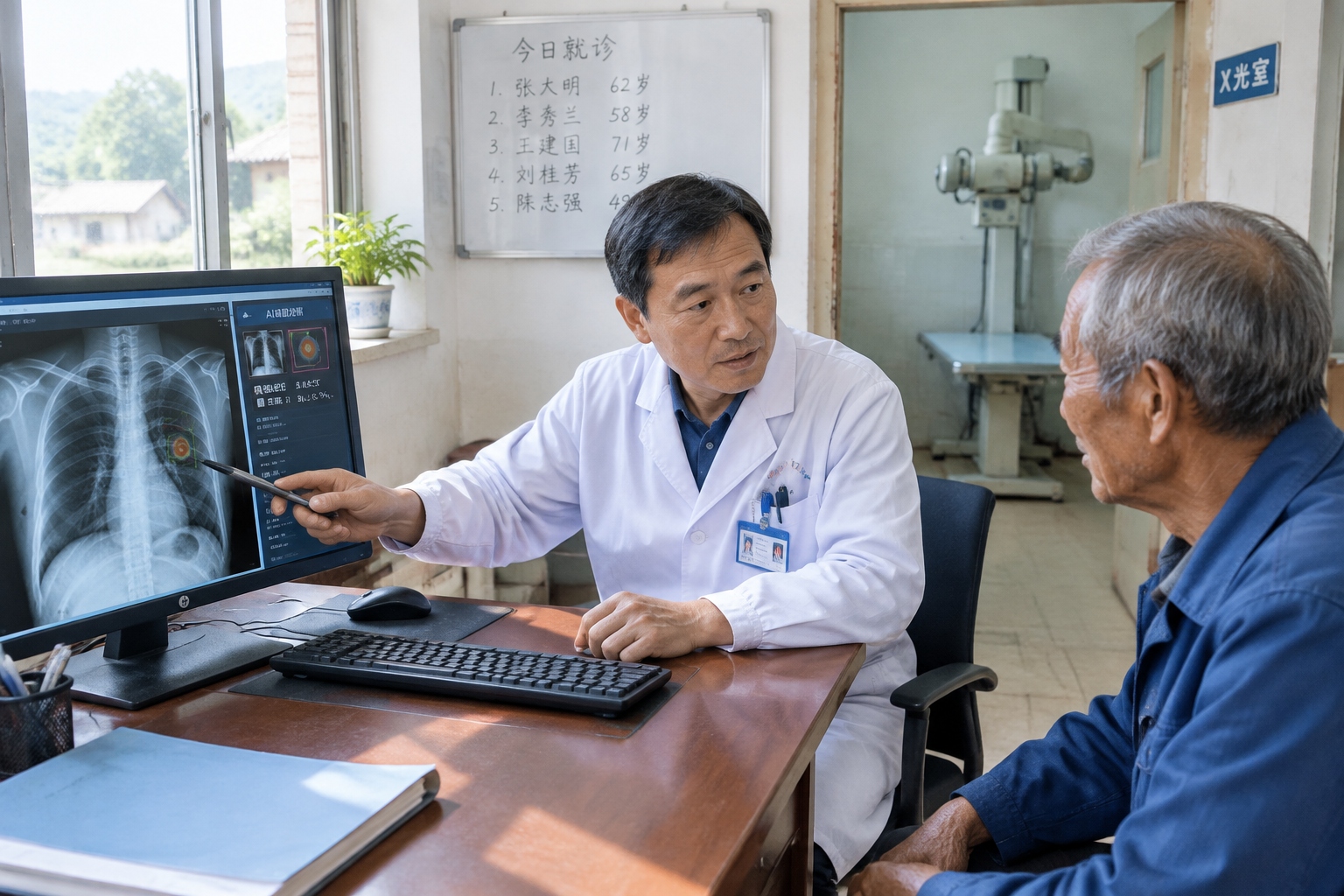
Another growing use is reading chest X-rays. Some clinics in poorer counties have received basic X-ray machines in the past decade, but rarely have radiologists to interpret the images. AI systems can now highlight suspicious nodules, fractures, or signs of tuberculosis. The result? A rural doctor can make a referral decision within minutes instead of waiting days for a remote specialist. In many provinces, this is already part of routine tuberculosis screening programs.
Why China’s Countryside Is a Perfect Starting Point
You might wonder whether these technologies work outside of a controlled demo. In reality, China’s rural environment offers some advantages that make AI a natural fit.
First, the shortage of specialists is acute. For every 10,000 residents, cities have about three times as many licensed doctors as townships. When a region lacks a single ophthalmologist, a well-calibrated AI screener is not a luxury—it is a necessity. The government has also pushed for expanding telemedicine and AI-assisted diagnostics, with funding programs aimed directly at county and village levels.
Second, smartphones have reached near-universal penetration in rural China. Farmers who check crop prices on their phones are comfortable having their eye photos scanned by a phone-connected device. Village doctors, meanwhile, are often younger than the doctors they assist, and many have grown up with digital tools. They tend to see AI as a helpful assistant rather than a threat to their profession.
Third, the disease burden is high. Diabetes and hypertension rates in Chinese villages have risen steadily over the past decades, and serious complications like retinal damage are common. AI screening can be done quickly during a routine village health check, catching problems that would otherwise go unnoticed until it is too late.
How Do Rural Doctors Actually Use AI?
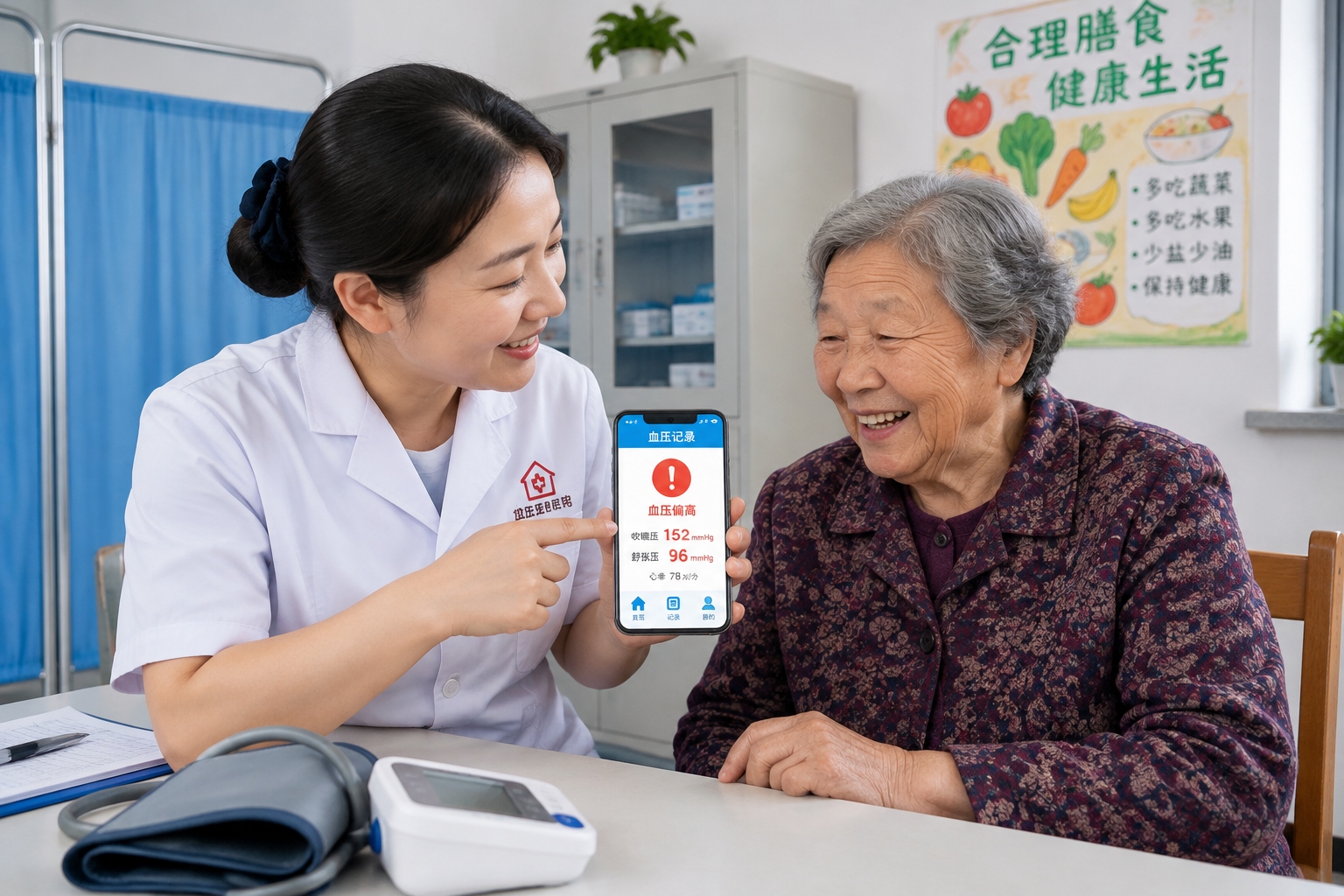
To understand the tool, look at a typical morning in a village clinic in Hunan. The doctor, let’s call her Chen, starts her day by reviewing a list of elderly patients scheduled for routine blood pressure and blood sugar checks. She uses a mobile app connected to a portable ECG device to record an electrocardiogram for a 74-year-old with intermittent chest pain. The AI does not make a final diagnosis—it flags irregular heartbeats and recommends a further hospital evaluation.
Chen also uses an AI-assisted question-asking tool on her phone. When a patient describes vague symptoms, the system prompts her to ask a few extra questions, then suggests possible directions for testing. She finds this especially helpful for respiratory diseases and skin conditions, where visual clues matter.
These tools have built-in adaptation to the local context. Many work offline or with low-bandwidth connections, since many villages still experience patchy network coverage. Data is encrypted during transmission, and the AI output is always reviewed by the human doctor before any advice is given. That human-in-the-loop approach has been central to gaining trust among rural medical staff.
Not Magic Yet: The Real Limitations
It is important to be honest about what AI cannot do. The quality of AI depends heavily on the quality of data it has been trained on. If a model has seen mostly urban patient images, it may underperform on darker skin tones or different facial structures. Developers in China are increasingly working with rural hospitals to improve diversity in training datasets, but this is still an ongoing challenge.
Network reliability is another hurdle. While offline modes exist, cloud-based AI still requires stable connections. Reports from one pilot in Guizhou mentioned times when the internet was too weak to upload images, forcing doctors to fall back on their own judgment. Doctors also complain about extra paperwork; AI generates a lot of data that has to be logged into two or three different systems, adding minutes to every consultation.
Privacy and consent remain sensitive topics. Some elderly patients worry about their medical photos being stored on company servers. The government has issued regulations on health data security, but enforcement in remote clinics is uneven. Digital literacy varies, and a few doctors worry about becoming overly dependent on AI, losing their own clinical instincts.
What Could Come Next?
Despite these challenges, the direction seems clear. Several Chinese provinces have started including AI-assisted screening in their annual rural health checkup programs, covering millions of people. The feedback from doctors has pushed developers to simplify interfaces and reduce the time per scan. Instead of adding new burdens, good AI feels like a second pair of eyes—quiet, fast, and always on the lookout.
Researchers are also experimenting with AI that speaks local dialects. In places where residents speak non-Mandarin dialects, natural language processing trained on dialect data can help an AI system understand reports from village doctors or even guide a patient through a self-check-in. This is early-stage work, but it points to a future where technology adapts to people rather than the other way around.
In the longer run, AI may help rural clinics become early warning stations for public health threats. If a village clinic notices a cluster of unusual respiratory symptoms, an AI dashboard could pick up the pattern and alert health authorities sooner. That kind of preventive surveillance is still in research, but pilot projects are underway.
Back in Yunnan, the farmer finished his eye test and received a note to get the full exam in town next week. He had no idea a machine had helped read the photo. He only knew the clinic staff seemed confident and the process was quick. Sometimes that is exactly the right measure of technology: not how impressive it looks, but how smoothly it fits into an ordinary morning in a village that might not even appear on a global map.
AI is not replacing rural doctors. It is giving them tools that make them feel more equipped to face the daily uncertainty of practicing medicine in a place where every specialist is hours away. And that is a change worth paying attention to.
Start the discussion at forum.chinacomes.com