
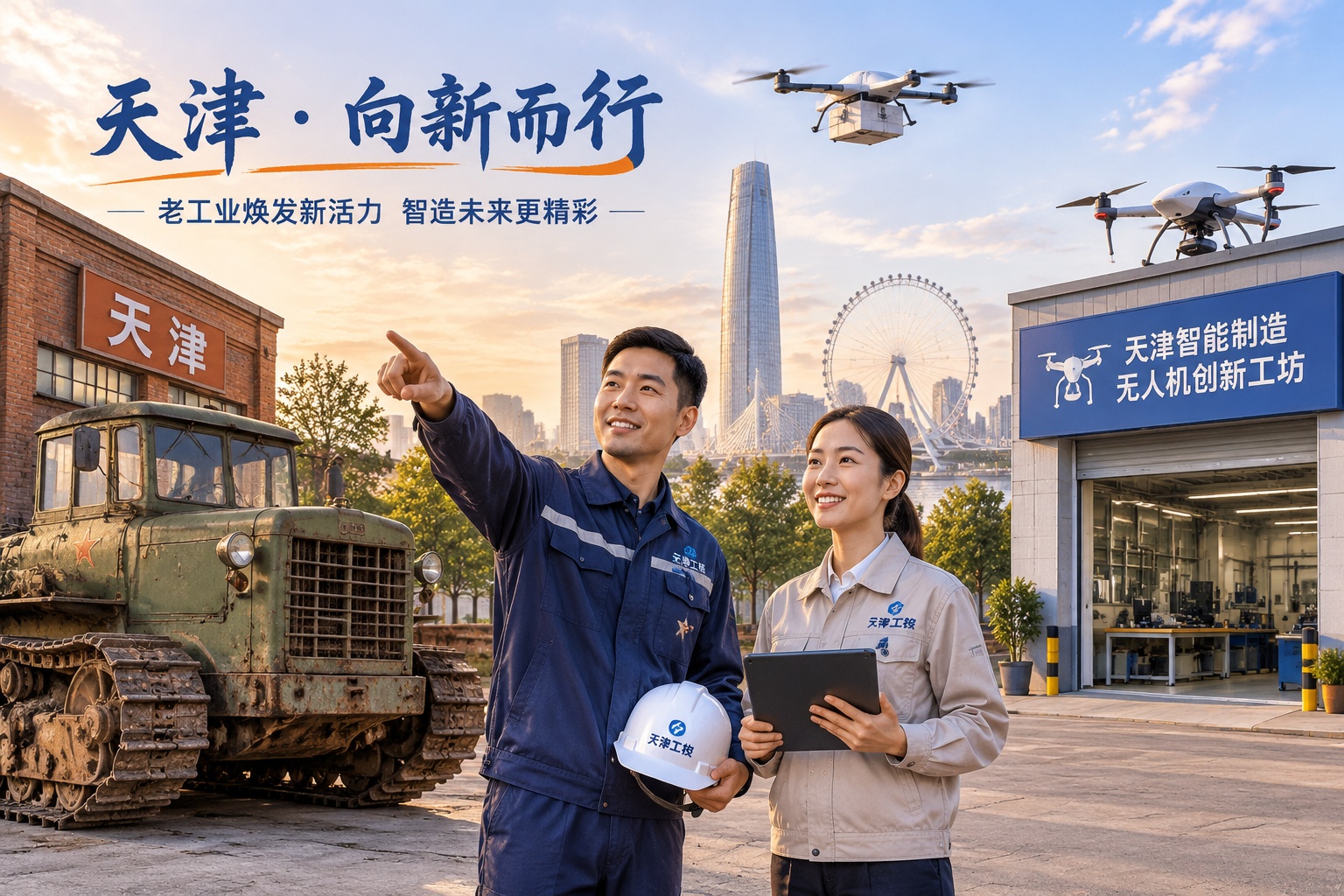

An Unexpected Skyline
If you were to wander through Tianjin’s old industrial districts, you might still see crumbling Soviet-style factory walls and rusted railway tracks. But if you look up, there’s a good chance you’ll spot a sleek quadcopter zipping across the sky. This is the new Tianjin: a city that has not abandoned its heavy industry roots but has learned to fly above them.
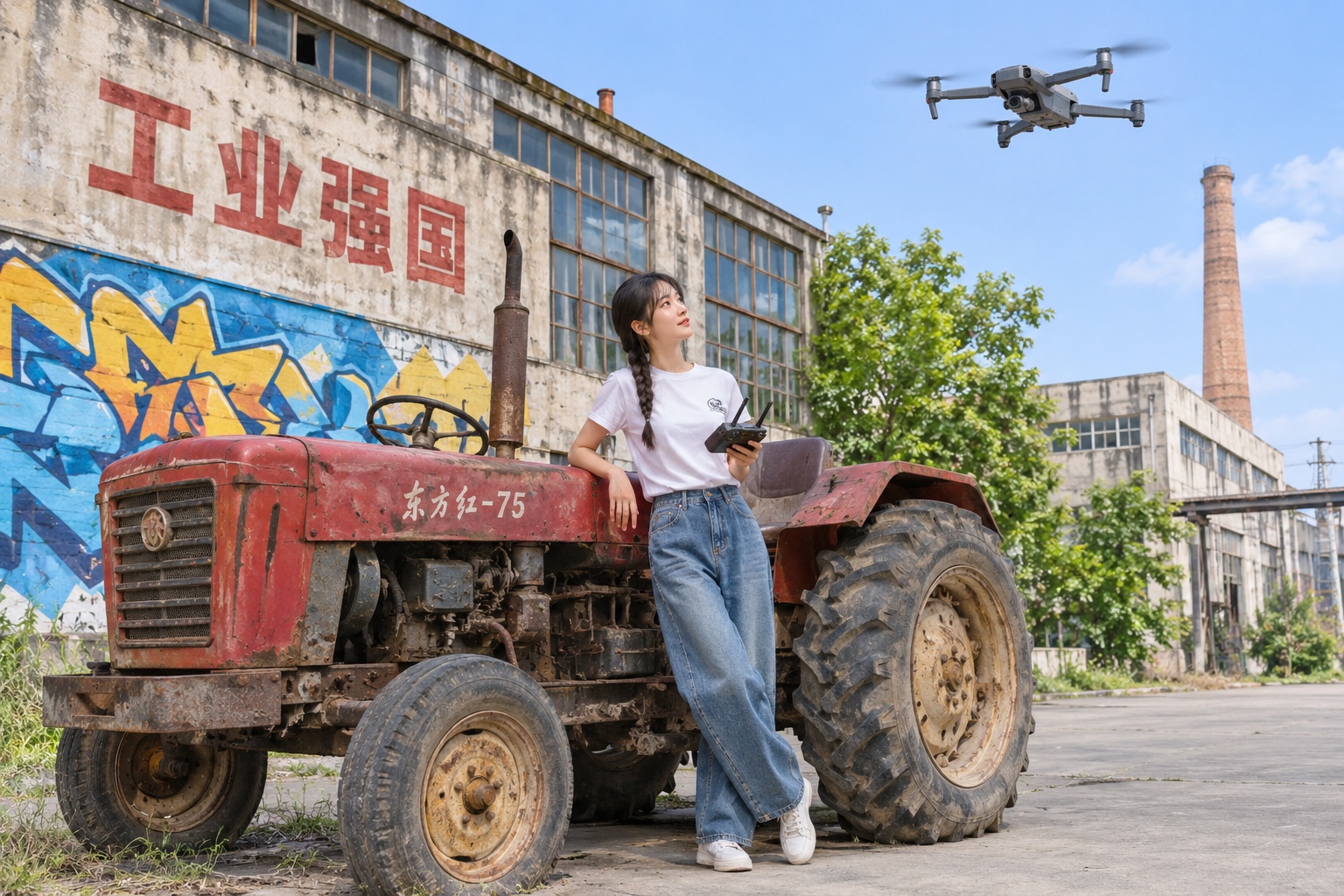
As a resident of Tianjin for over a decade, I’ve witnessed this transformation firsthand. My first job was at a state-owned machinery plant, a place where the smell of machine oil and the sound of lathe machines never stopped. Colleagues often joked that our products—though sturdy and reliable—were not exactly global tech leaders. But the city never stood still. Today, that same plant stands silent, while a few blocks away, a drone startup is developing autonomous delivery systems for local logistics companies.
A City Built on Wheels and Wings
Tianjin’s industrial history runs deep. For decades, the city was a core heavy machinery and transport equipment hub in northern China. The China-Tianjin Tractor Plant, which once produced iconic models like the “Iron Bull,” was a source of pride. Yet, after market reforms and as the economy shifted, those old red stars on truck grilles faded. The city’s planners had to decide: either cling to the past or embrace the unknown.
In a decision that echoes across several old industrial cities in China, Tianjin chose the latter. Old factory buildings were not just demolished but reinvented. Some sites are now tech incubators or shared offices for startups. A walk through the TEDA (Tianjin Economic-Technological Development Area) shows a different skyline than it was twenty years ago. Here, the humming is not of engines but of server racks and test rigs.
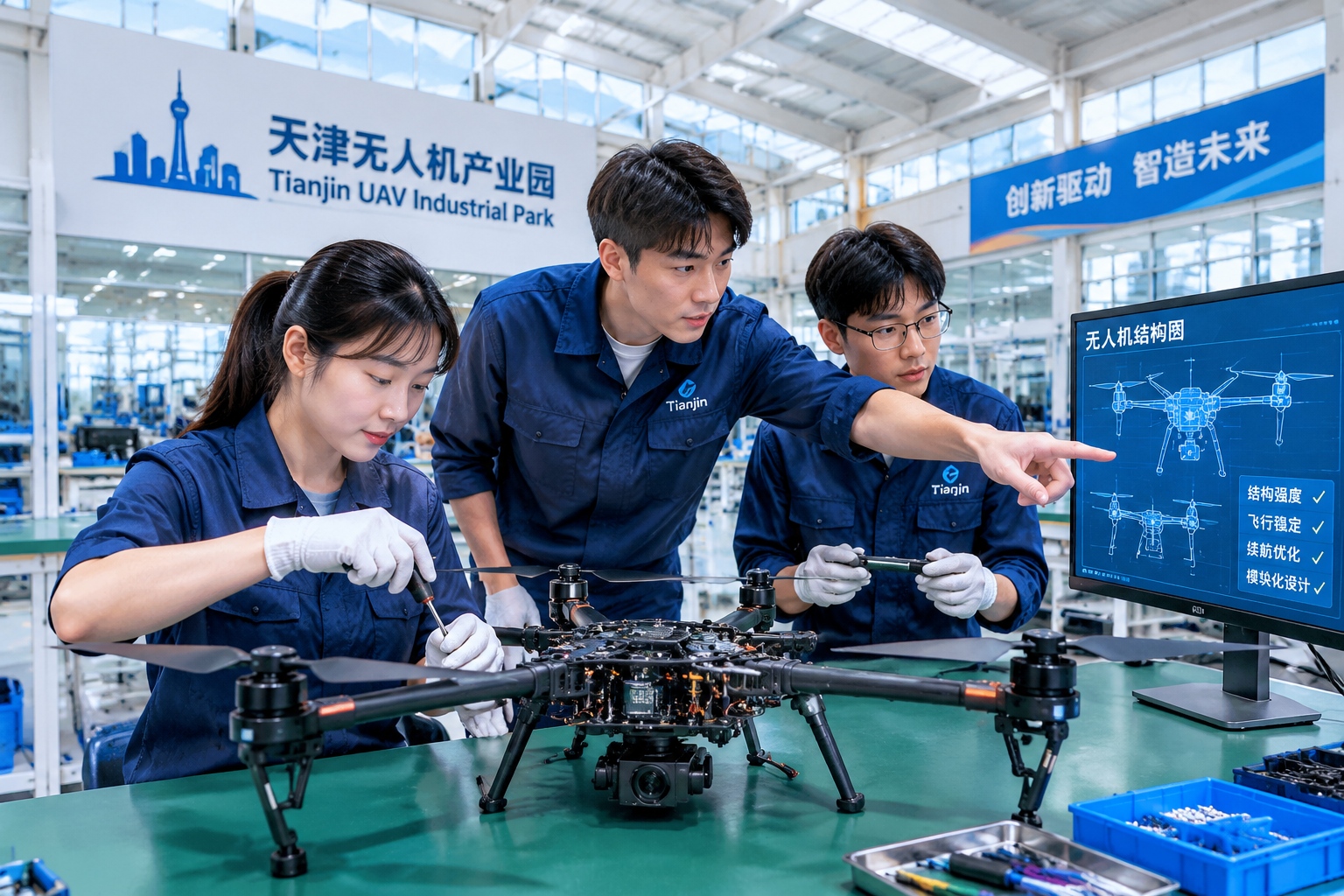
Where does the ‘old’ meet the ‘new’? Just ask Chen, a 28-year-old engineer who runs a company that makes autonomous delivery drones. He has a small workshop inside one of those renovated factories. “My grandfather drove a tractor from this city. I fly drones built here. It feels like progress, maybe too fast, but real.” His sentiment captures a broader urban trend: instead of discarding the industrial past, Tianjin is turning it into a foundation for future innovation.
Impressive Numbers in the Sky
The scale of this shift can be seen in the numbers. By 2023, Tianjin’s high-tech industries made up about a third of its industrial output, according to the municipal statistics bureau. Drone and robotics production grew by double digits in the last two years, while the city’s “four-winged” drone cluster at Tianjin Binhai New Area alone attracted over a hundred related companies. It’s one of the fastest-growing drone production areas in China, producing everything from consumer quads to heavy-lift delivery drones that can carry up to fifty kilograms.
This is not a gaping shift from farm to future; it’s more of a bridge. Many technicians working on today’s drones started textured careers in the old machinery sector. Li, a former tractor engineer in his late 50s, now spends his time calibrating the sensors for autonomous flight systems. “I still use the same mental discipline, but now I deal with software and plastic of carbon fiber.”
Public Spaces That Show the Trend
The change isn’t locked inside factories. In the summer, you would see hobbyists flying drones near the ancient Haihe River, just by the concrete-built skyscrapers. A famous local tech fair, the “Tianjin Robot and Drone Expo,” now draws crowds, with children for the first time seeing drones not as something from a movie but as a tool they can possibly design themselves one day.
To strengthen this, the city’s Public Security Bureau uses surveillance drones for traffic control, and along the coast, they help monitor polluted waters. This shows a more practical side of the industry beyond city marketing.
But What About the Old Workers?
The transition is not without its friction. Pension funds in legacy steel and machinery companies occasionally make the news for debt issues, and older workers without IT skills find it harder to land a new position. However, the government and several companies have worked to retrain the workforce. In Tianjin’s TEDA, there’s a free zero-cost upskilling center where a 50-year-old assembly worker can relearn basic code or drone repair in half a year. A rough estimate is that over 30,000 industrial workers have received some form of retraining since 2020. ~’20’
These statistics matter, but they hide the real human stories. One afternoon, I was interviewing in the new CN- mobile tech incubator next to the old tractor factory. I met Xu, a former welder who now builds the six-row rack members for commercial drones. He shows me a steel composite he’s holding: “This piece flies over cars with a payload. I never thought I’d be part of that—Tianjin makes wings now.”
Why Does It Matter for the Future?
Tianjin’s example is a blueprint for many Chinese industrial cities facing the same challenge. It shows that retraining can be more organized than leaving thousands out of work; that innovation can rise from rust. The sky of Tianjin is now a mixed technology, not only traces of salted the old smokestacks. For the globe, the Tianjin shift reads as a tale of contingency and rhythm. It sees how a heavy-lifting industrial region can aim for a knowledge-based economy without wiping away its manufacturing core.
Final Thoughts: from Tractors to Propellers
From one vantage point, it’s that you can see the same firm iron on an old road as a drone lifts off its roof a few meters away, passing by an old-fashioned farmer selling watermelons. It is not the perfect either/or but a coexistence that asks for speed and humility.
China doesn’t have a single story, and Tianjin crafts its own—a workshop story where past and future are neighbors. If you ever find yourself in northern China, to ignore the reminiscence of the old machine plant isn’t the real experience. Take an hour to walk those halls, and then check your drone map. This is where the future has built its warehouse.
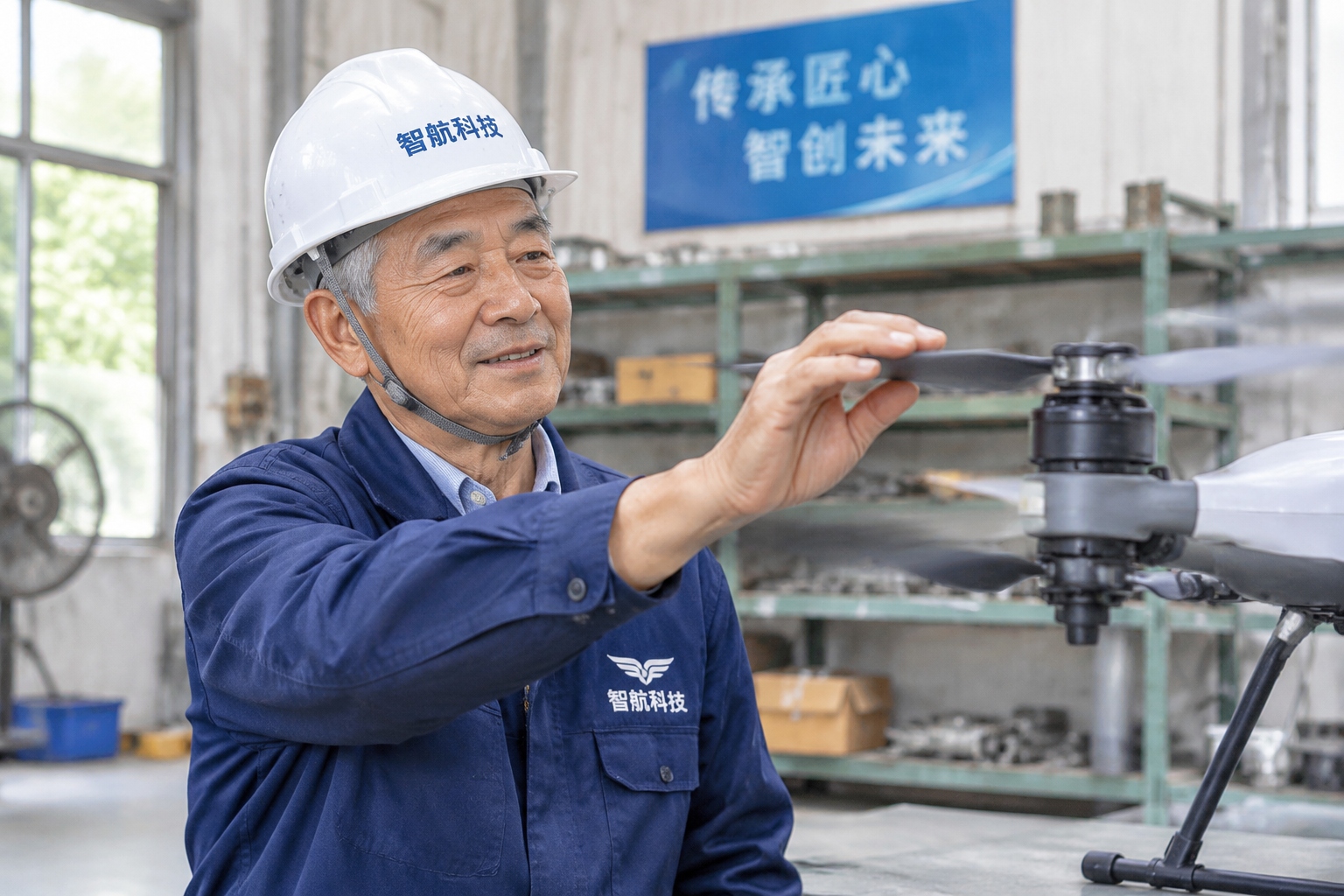
Images allow you to see the path clearly: old wheels can become new wings.
Start the discussion at forum.chinacomes.com