
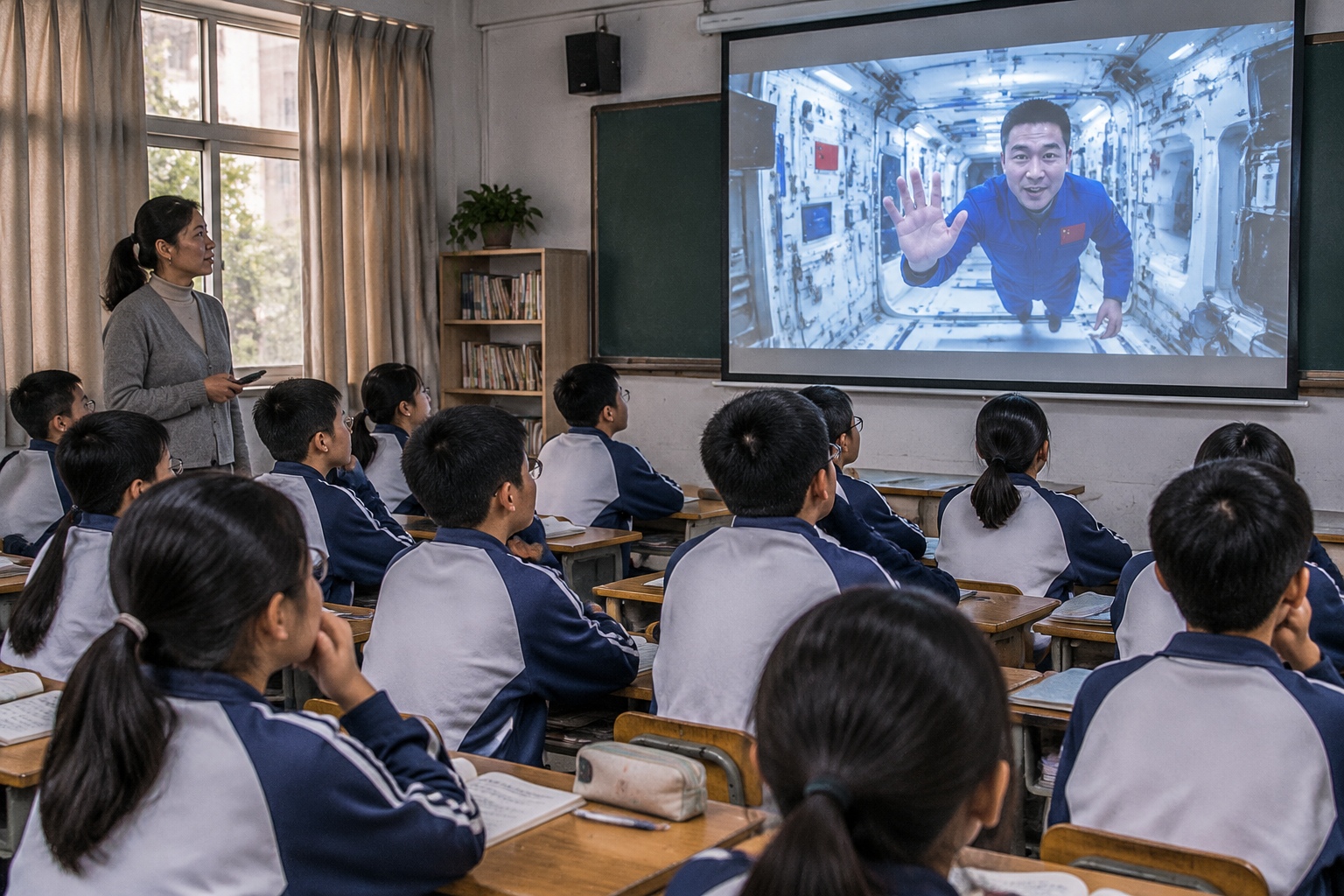

At 3:40 on a December afternoon, the physics teacher at a county middle school in Guangxi switched off the classroom lights. Thirty-two seventh-graders in navy-and-white tracksuits stopped talking. The projector threw a pale rectangle onto the whiteboard, and there — small, sharp, unmistakably live — was a woman in a blue flight suit, floating upside down.
Wang Yaping was about 400 kilometres above the school, aboard China’s space station. She squeezed a water bag until a clear sphere the size of a plum drifted in front of the camera, then dropped an effervescent tablet into it. The tablet fizzed. The bubbles did not rise. They hung inside the water ball like weather in a glass marble, and somewhere in the dark room a boy said “ohhh” out loud.
That broadcast, the first of several live Tiangong classes sent down from orbit in late 2021, is the part of the station most Chinese people have actually seen. The rest of it — the modules, the cargo flights, the experiment racks — is harder to picture. Here is what is up there, and what it is for.
What Tiangong actually is
Tiangong means “heavenly palace.” It is China’s permanent crewed station and, in the official phrasing, the country’s national space laboratory. It is considerably smaller than the International Space Station, and because it was assembled three decades later, it was designed around equipment that did not exist when the ISS was being bolted together.
Three modules make up the structure. Tianhe, the core module, went up in April 2021 and holds the life-support systems, the main control console and the crew’s living quarters. Wentian and Mengtian, the two laboratory modules, arrived in 2022 and dock on either side, giving the station its T shape. A Shenzhou crew ship and a Tianzhou cargo freighter stay attached at the ends. Together the pressurised volume comes to roughly 110 cubic metres — about the interior of a small house, except that it is arranged as long cylinders with every surface lined in storage bags, cabling, experiment racks and handrails.
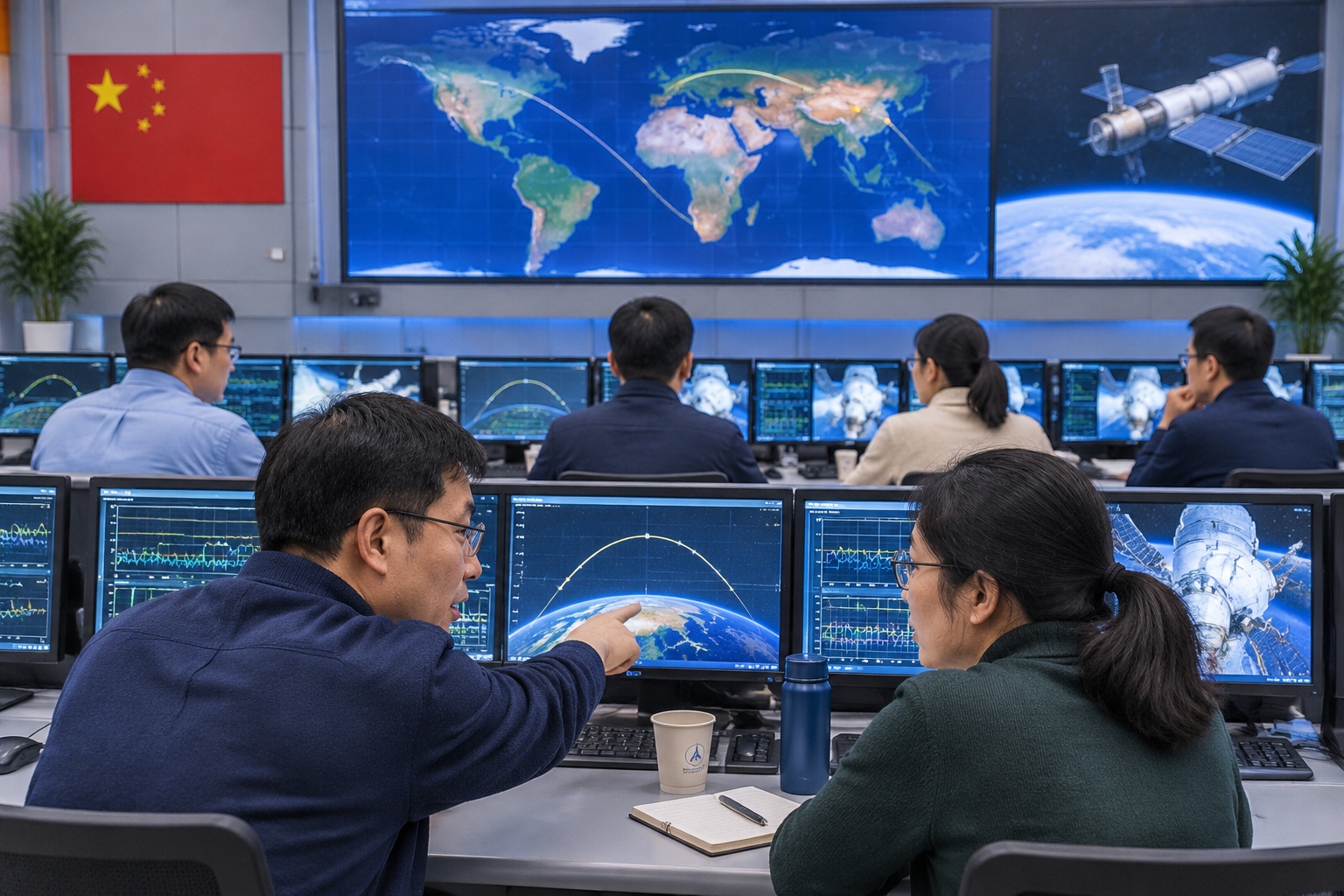
It orbits every 90 minutes at an altitude of roughly 340 to 450 kilometres, inclined 41.5 degrees to the equator: a track that passes over most of the world’s populated land but never over the poles. Three people live aboard at a time.
Six months in orbit is a logistics problem before it is a science problem
The most useful number for understanding long-duration stays is the water recovery rate. Urine, wash water and the moisture pulled out of the cabin air are all processed back into drinking water; Chinese space officials put recovery at above 90 percent. Oxygen is produced by electrolysing water, and carbon dioxide is scrubbed chemically. Without that loop, a six-month mission would have to haul up several tonnes of water per crew; with it, the station needs resupply rather than tankers.
What still has to come from Earth — food, spare parts, propellant, new experiment hardware — arrives on Tianzhou freighters, which carry about six tonnes per flight and dock automatically. Cargo launches punctuate the calendar a few times a year.
Crews rotate roughly every six months. In late November 2022 the Shenzhou 14 and Shenzhou 15 crews overlapped for a few days, putting six people aboard the station for the first time. The incoming crew’s ship stays docked throughout as a lifeboat; the outgoing crew’s ship takes them home. Between handovers, the same three people see nobody else for half a year.
A day aboard, hour by hour
Morning runs on Beijing time. Controllers at the Beijing Aerospace Control Center send up the next day’s timeline before the crew sleep, and the schedule is tight enough to be printed as a grid. The crew wake around 6:30 and start with medical checks: blood pressure, a body-mass measurement on a device built to work without gravity, and a short questionnaire about how they slept.
Breakfast comes from a menu of more than 120 items. Rice porridge arrives in a pouch, rehydrated and eaten through a straw; the egg is rehydrated too. There are noodles, meat dishes and pickles. It is not restaurant food, but it is recognisably Chinese cooking, and crews are allowed to request particular dishes before launch.
The working day splits roughly in half. One block goes to maintenance — swapping filters, checking hoses, stowing supplies, running leak checks — which on a station is unglamorous and constant. The other goes to experiments: setting up samples, changing cartridges, photographing results, and talking to the scientists on the ground who are watching the same data a few seconds behind.
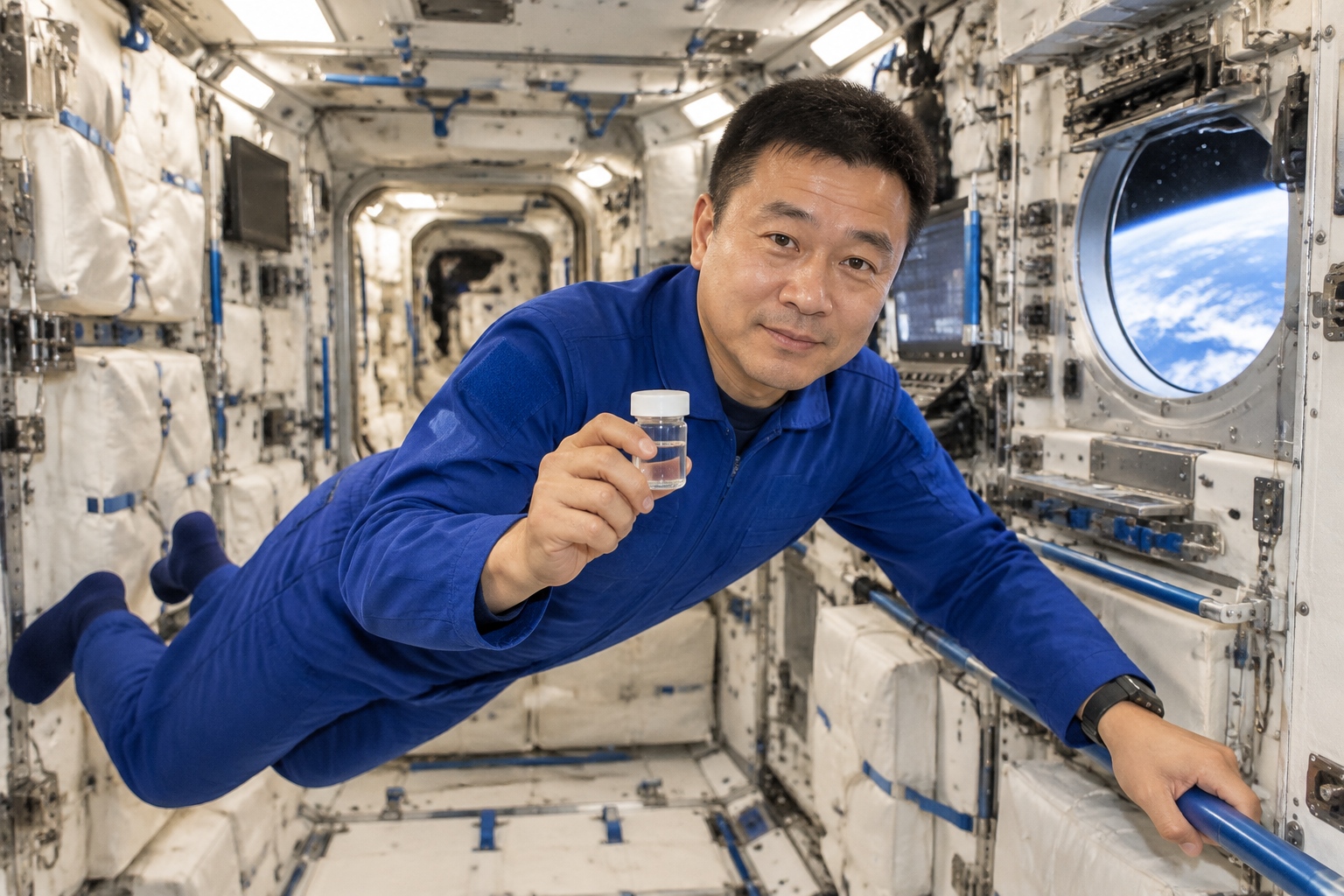
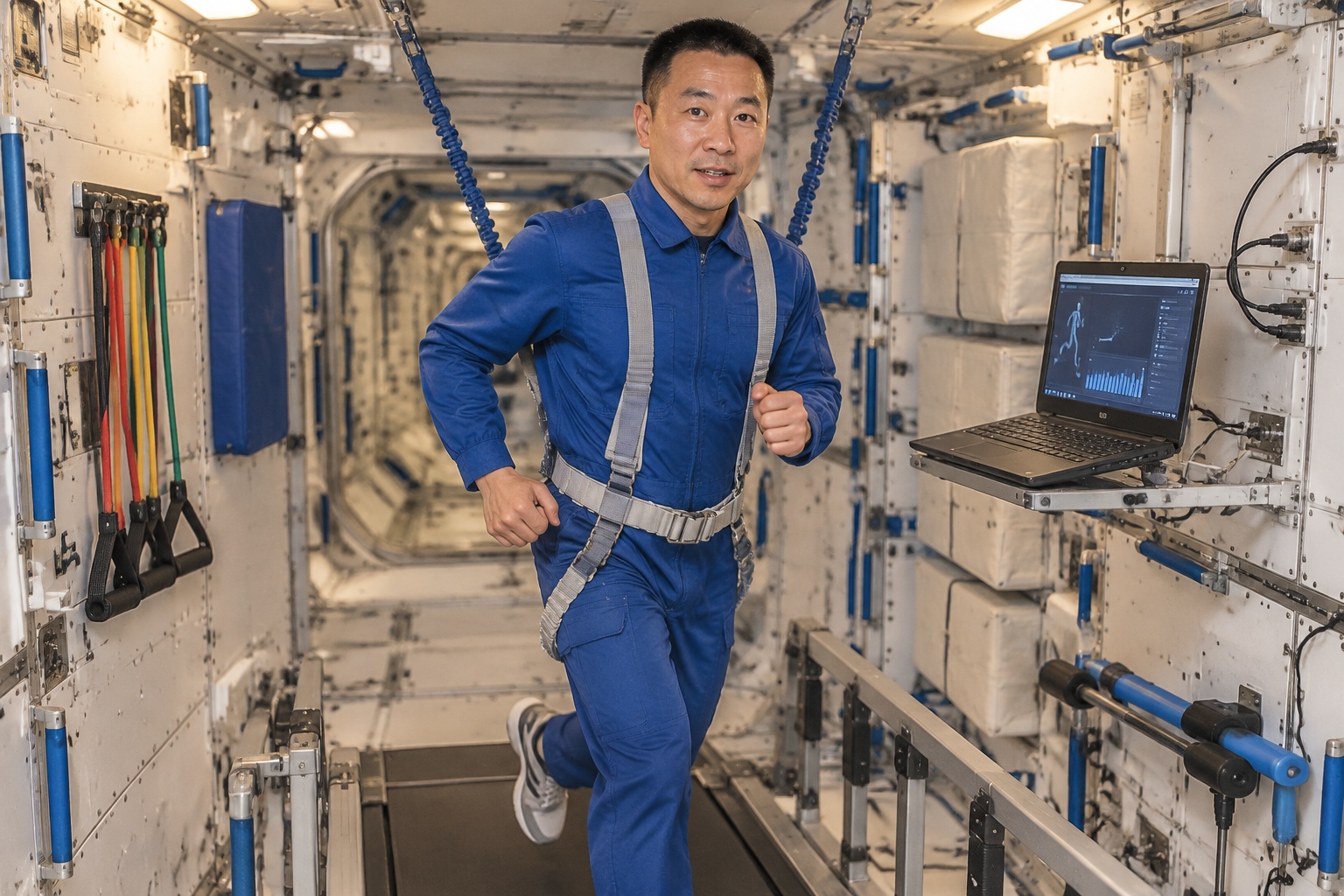
Then exercise, two hours of it, and it is not optional. Without gravity loading, bone density and muscle mass fall quickly. The treadmill is used with a bungee harness that pulls the runner down; the resistance machine uses vacuum cylinders instead of weights, because a stack of iron plates is useless in orbit.
There are no showers. Washing is done with wet towels, and hair with a no-rinse cap that the crew massage in and then discard. Sleep happens in bags fixed to the wall of small private berths, which matters more than it sounds: the station sees 16 sunrises and sunsets a day, so the body’s own clock has nothing to work with. Lighting inside the modules is tuned warmer in the evening and brighter in the morning to compensate. Most days the crew make video calls home, over a link that occasionally drops out when the station passes beyond a relay satellite.
What the national laboratory is actually for
The point of a station is not the view. It is the fact that nothing inside it settles, sinks or rises. In microgravity there is no convection, so fluids mix only by diffusion; there is no buoyancy, so flames behave differently; crystals grow without the stress of their own weight. Those conditions make certain experiments possible that cannot be done on Earth at all.
More than a hundred research projects have been run aboard since the laboratory modules arrived. They include a cold-atom clock that uses laser-cooled atoms to keep time to within about a second in tens of millions of years, part of work on future navigation and fundamental physics; high-temperature alloy and semiconductor crystal growth; fluid physics; and combustion tests that feed into engine design and fire safety.
The life-science racks have the widest public reach. Rice and Arabidopsis plants have been grown through a full cycle in orbit — sprouting, flowering, setting seed — which matters for any long mission that cannot rely on sealed packets. In 2024 a crew brought up a small aquarium with zebrafish and hornwort, an early step in studying how vertebrates cope with weightlessness. The astronauts are subjects too: bone loss, changed vision, immune shifts and the gut microbiome are measured before, during and after flight.
Who else gets to use it
Tiangong is not closed. In 2019, the China Manned Space Agency and the UN Office for Outer Space Affairs selected nine international experiments from 17 countries for the station, including teams from Kenya, Peru, Saudi Arabia and Mexico. China has also said it will train and fly foreign astronauts, and in early 2025 announced an agreement with Pakistan to begin that process.
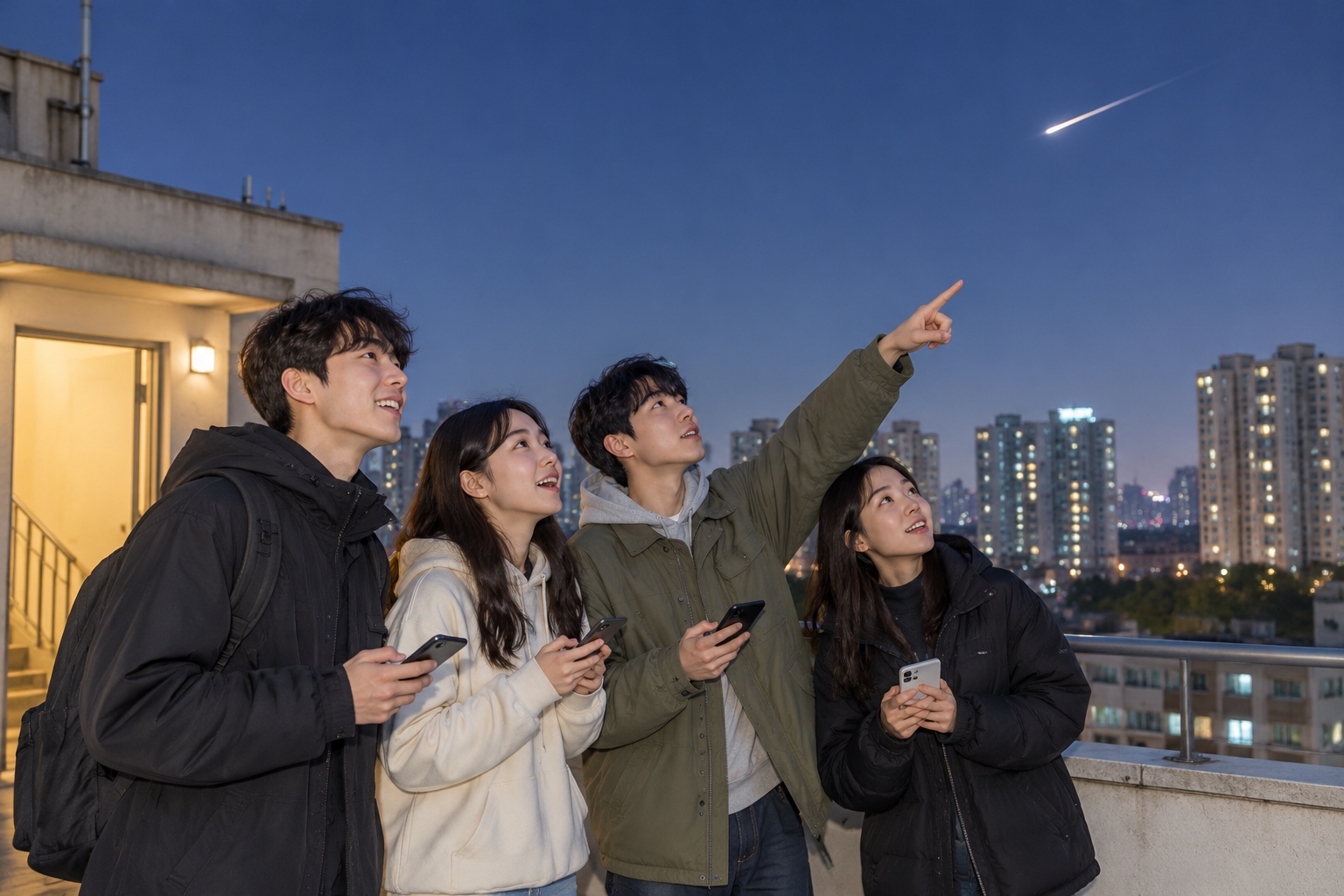
The station is a broadcasting studio as well. The Tiangong classes have become a fixture in Chinese schools — a live science lesson with a laboratory the size of a house and a teacher who is genuinely floating. Whatever else the programme achieves, it has put a Chinese face in orbit into classrooms whose students may never see a launch site.
What comes back down
Some of the returns are ordinary and useful. Seeds flown on missions and then planted on the ground have produced rice varieties now grown at commercial scale in southern China, valued for yield and salt tolerance after radiation and microgravity scrambled their genetics in ways breeders can screen for. Materials tested on the station feed into industrial processes.

A space telescope, Xuntian, is expected to join the station in a nearby orbit in the coming years. Unlike Hubble, it is designed to dock with the station for repairs and instrument upgrades.
Back in Guangxi, the lesson ended with questions. A girl in the second row asked whether the water ball would stay whole forever. It would not, the astronaut said; eventually it would drift into a vent or simply come apart, so she had to catch it first. The lights came back on, the class returned to ordinary physics, and the station kept circling — sixteen times a day, over that school roof.