
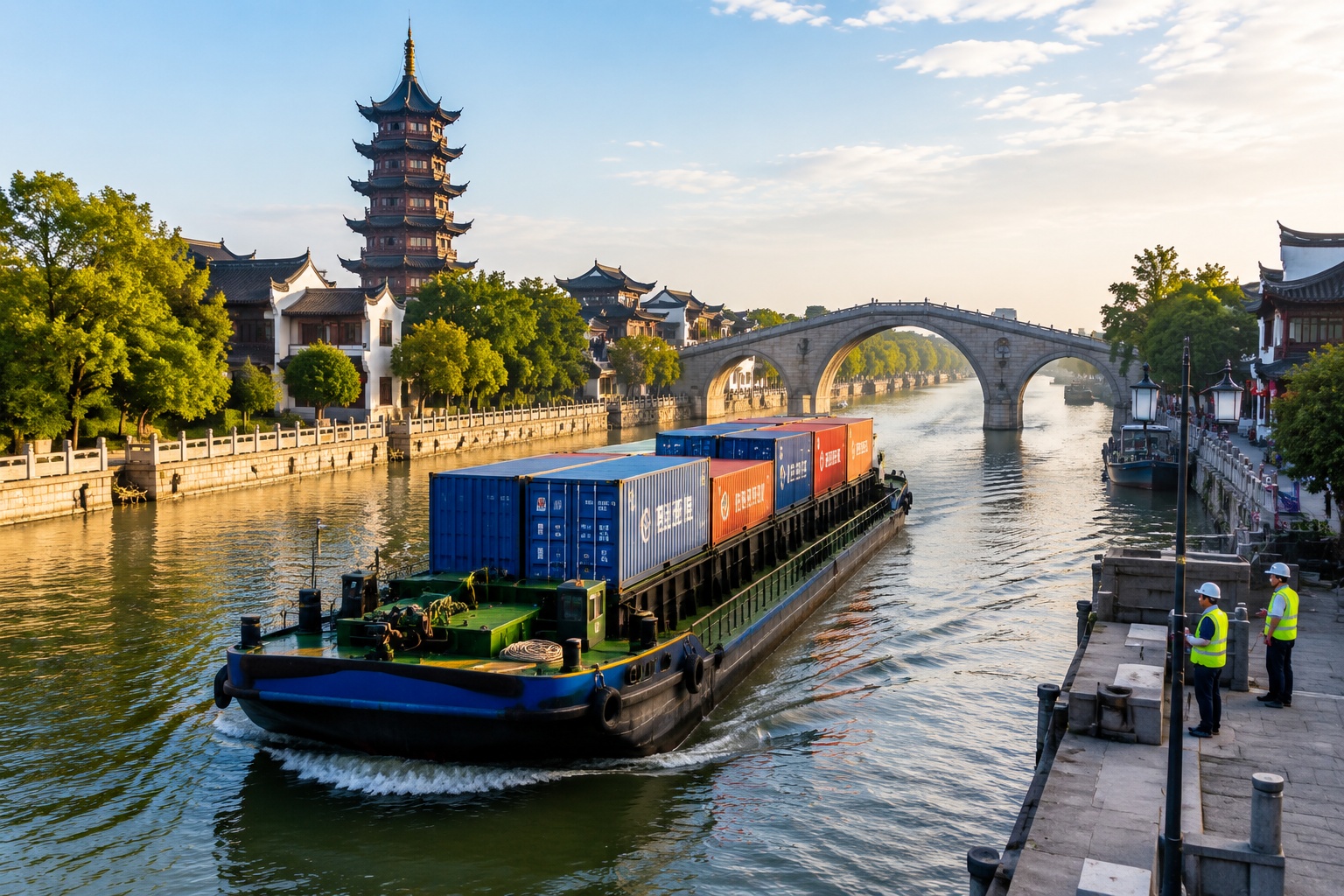

On a chilly morning in early spring, a crane operator in the port of Jining, in China’s Shandong province, lifts a twenty-foot container from a barge no bigger than a city bus. The barge has traveled more than 700 kilometers up the Grand Canal from a factory district near Shanghai. Its cargo: a mix of steel coils, solar panels, and bags of rice. Within hours, the container will be on a truck heading to a warehouse in the provincial capital. By the end of the week, some of those solar panels will be on a ship bound for Europe.
If you imagine China’s ancient canals as postcard scenery dotted with tourist boats and willow trees, you are partly right. But you are also missing one of the quieter transformations in Chinese logistics. Over the past decade, the country has spent heavily to modernize its canal network—deepening channels, building modern locks, and turning old river ports into intermodal hubs. The result is that a system once built for emperors and grain taxes is now carrying containers, coal, and construction materials with a reliability that surprises many first-time visitors.
A 2,500-Year-Old Highway Gets a New Job
China’s canal network is anchored by the Grand Canal (大运河), which connects Beijing in the north to Hangzhou in the south. It is not just a tourist attraction; it is the world’s longest man-made waterway, stretching about 1,800 kilometers. For much of Chinese history, it was the country’s economic spine, moving rice from the fertile Yangtze delta to the capital cities of the north. Rail and highways reduced its importance in the twentieth century, and by the 1980s many sections were too shallow for large cargo ships.
Then came the shift. As China’s factories spread inland and environmental rules tightened, moving heavy goods by truck became more expensive and more polluting. Barge transport uses far less fuel per ton of cargo. According to a 2023 report from China’s Ministry of Transport, moving goods by inland waterway emits roughly one-fifth the carbon dioxide of truck transport for the same distance. That math caught the attention of both local governments and private logistics firms.
Starting in the 2010s, provinces along the Grand Canal began investing in port renovation and channel dredging. The port of Jining, once a sleepy coal depot, is now a modern container terminal with rail links to the interior. In 2023, its cargo volume exceeded 70 million tons, up from about 10 million tons a decade earlier. Similar stories are playing out in cities like Xuzhou, Suzhou, and Hangzhou, where old wharves have been reborn as multimodal logistics parks.
What It’s Like to Move Freight by Canal Today
To understand the appeal, you need to step aboard a typical canal barge. Many are still family-operated, with a small cabin behind the cargo hold. The captain might be a woman in her fifties who grew up on the water, or a young man who left a factory job to join his uncle’s boat. These are not huge ocean-going vessels. A standard barge carries about 1,000 to 2,000 tons—roughly the equivalent of 50 to 100 truckloads. That means one barge can replace dozens of trucks, reducing road congestion and cutting noise in towns along the route.
Speed is not the selling point. A barge moves at walking speed, and a trip from Shanghai to Jining might take five days. But for many cargo owners, time is not the main concern. Coal, grain, sand, and manufactured goods are rarely urgent. What matters is cost. Shipping by barge is often 30 to 40 percent cheaper than rail and 50 to 60 percent cheaper than road for the same distance, according to logistics industry estimates. In a country where transport costs are a major part of factory expenses, that adds up quickly.
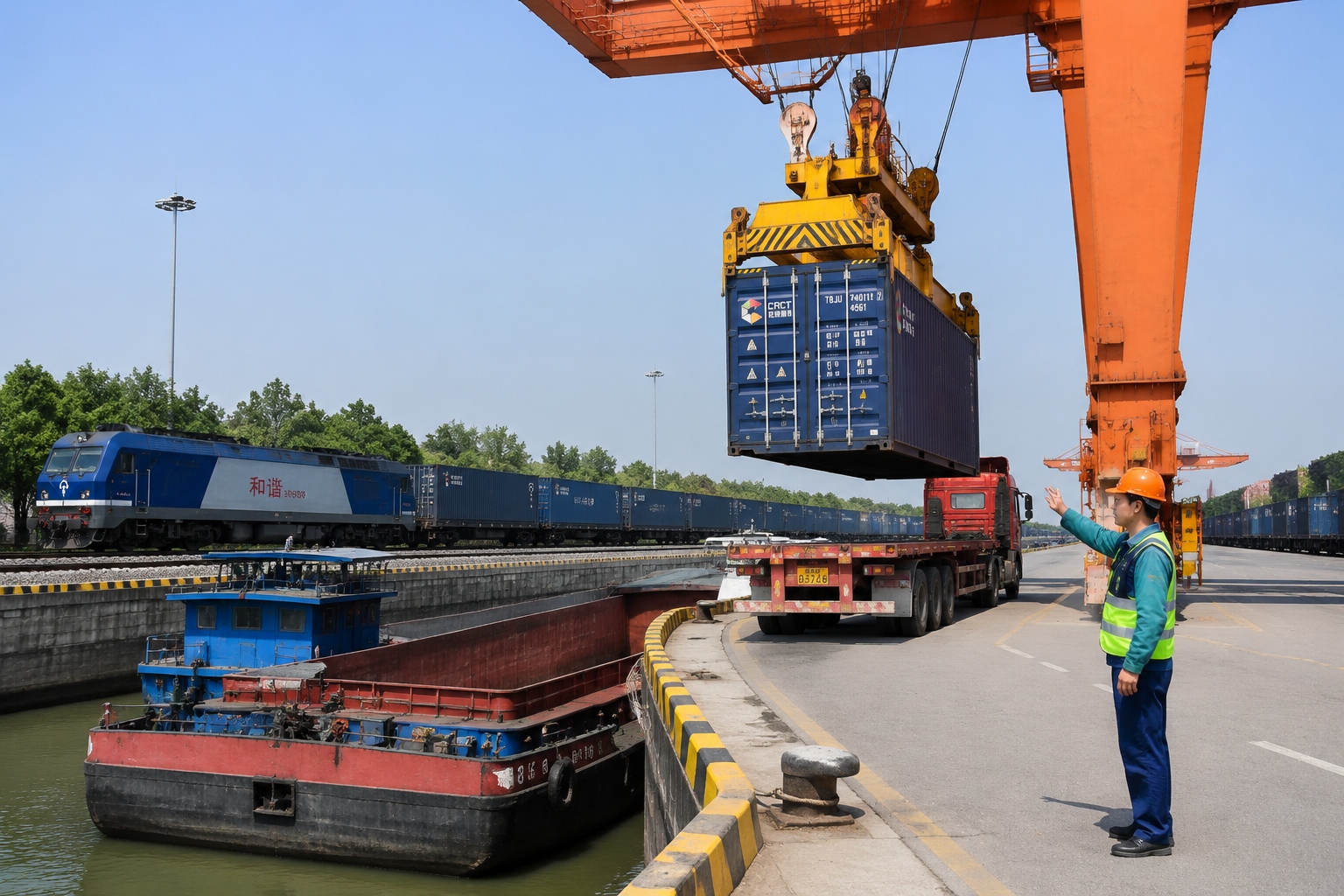
One of the most visible improvements is the containerization of river freight. In the past, goods like rice or steel were loaded loose or in bags, making transfers slow and labor-intensive. Today, more and more barges carry standard 20- and 40-foot containers. At newly rebuilt ports, gantry cranes lift containers directly from barge to truck or rail car, just like at a coastal port. This system, known as ‘multi-modal transport,’ is a favorite term among Chinese logistics planners, but on the ground it simply means fewer broken bags and less stolen cargo.
If You’re from Europe or the US, Here’s What Might Surprise You
European readers might recall the Rhine or the Danube, which carry significant freight. The United States has the Mississippi and its network of locks and dams. China’s canal system feels different in two ways. First, the scale of recent investment is enormous. New locks are being built with capacities that match some ocean locks. Second, the integration with railways is much deeper. At many canal ports, you can watch a train pull in, load containers, and leave within a few hours. That kind of coordination between water and rail is still rare in many parts of the world.
Another surprise is how much of the canal system is still used by local communities. In the suburbs of Suzhou, you might see a barge carrying construction sand pass a jogging path and a riverside park. The canal is not fenced off. In many cities, the banks have been converted into public walkways and bike paths, with exercise equipment and tea houses. This is not what many people expect from an industrial waterway. The authorities have tried to balance commercial use with public space, and in places like Hangzhou they have succeeded in creating a green corridor that is both functional and pleasant.
There are also complexities. The canal water is not always clean. Industrial runoff and urban wastewater are ongoing problems, though the government has invested in water treatment plants and wetland restoration. And while barge traffic reduces road congestion, the old locks can still create bottlenecks. On busy days, boats may wait hours to pass through a lock, especially in the Jiangsu section where traffic is heaviest. The authorities are building new bypass channels and improving traffic management systems, but the canal is a work in progress.
Why China Is Betting on Waterways
The logic behind China’s canal revival is not nostalgic. It is about cost, climate, and capacity. Rail networks are crowded, and highways have maintenance costs. Water transport offers a low-carbon complement. In 2023, China’s inland waterway freight volume reached 4.3 billion tons, about 8 percent of the country’s total freight. The government’s 14th Five-Year Plan (2021–2025) calls for expanding the high-grade waterway network by nearly 3,000 kilometers, connecting more industrial zones to river ports.
For foreign companies operating in China, these canals are becoming a practical option. A German auto parts maker with a factory in central China told me last year that they now ship some components by barge to Shanghai for export. The trip takes longer, but the savings on fuel and tolls are significant. The company calculates that each barge load saves roughly 15,000 yuan (about $2,100) compared with trucks. That kind of number gets the attention of financial controllers.
The revival also has a human dimension. In cities like Jining and Xuzhou, port expansion has created jobs not just for dockworkers but for crane operators, mechanics, customs brokers, and software developers who build the tracking systems. Young people who once moved to coastal cities for work are finding stable employment closer to home. A 32-year-old port dispatcher I met in Jining put it simply: ‘My grandfather carried sacks of rice on the canal. I move containers with a keyboard.’
Rivers as Infrastructure, Not Just Memory
What makes this story worth telling is that it challenges the usual image of Chinese modernization. The country is not simply bulldozing old things to build new ones. Sometimes it finds new uses for very old structures. The Grand Canal has been a UNESCO World Heritage site since 2014, and its ancient embankments and stone bridges are protected. But it is also a functioning part of the economy—a living industrial waterway that moves real goods every day.
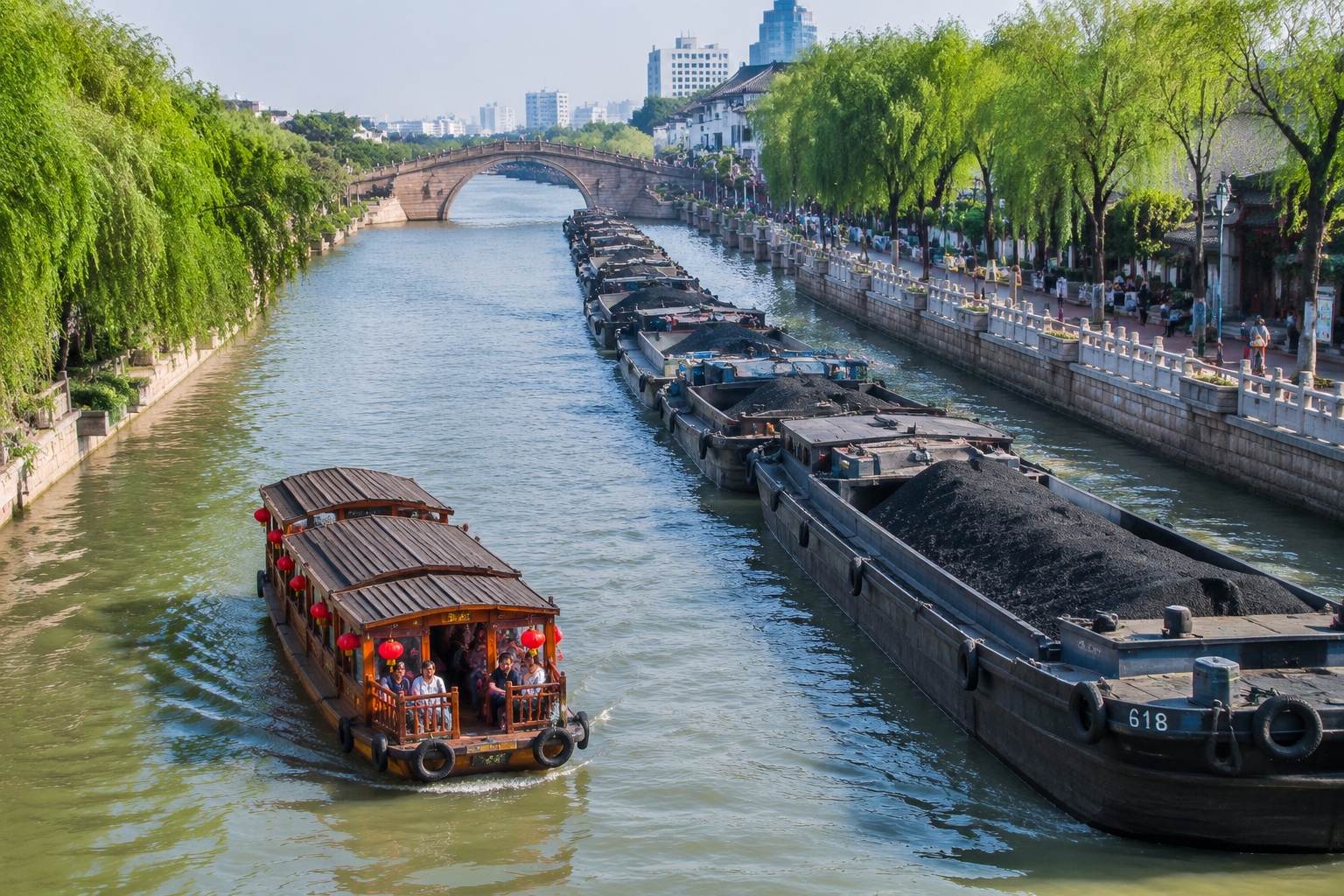
When you stand on a bridge over the canal in Suzhou, you can see tourist boats with lanterns heading one way while a tugboat pushes a string of dark barges the other way. The two images coexist. It’s a good metaphor for China today: ancient and modern, leisure and industry, memory and ambition, all sharing the same water. The next time you see a container on a ship, you might wonder if part of its journey began on a canal that has been moving freight for two millennia.
Start the discussion at forum.chinacomes.com