

A Morning in a Yiwu Warehouse
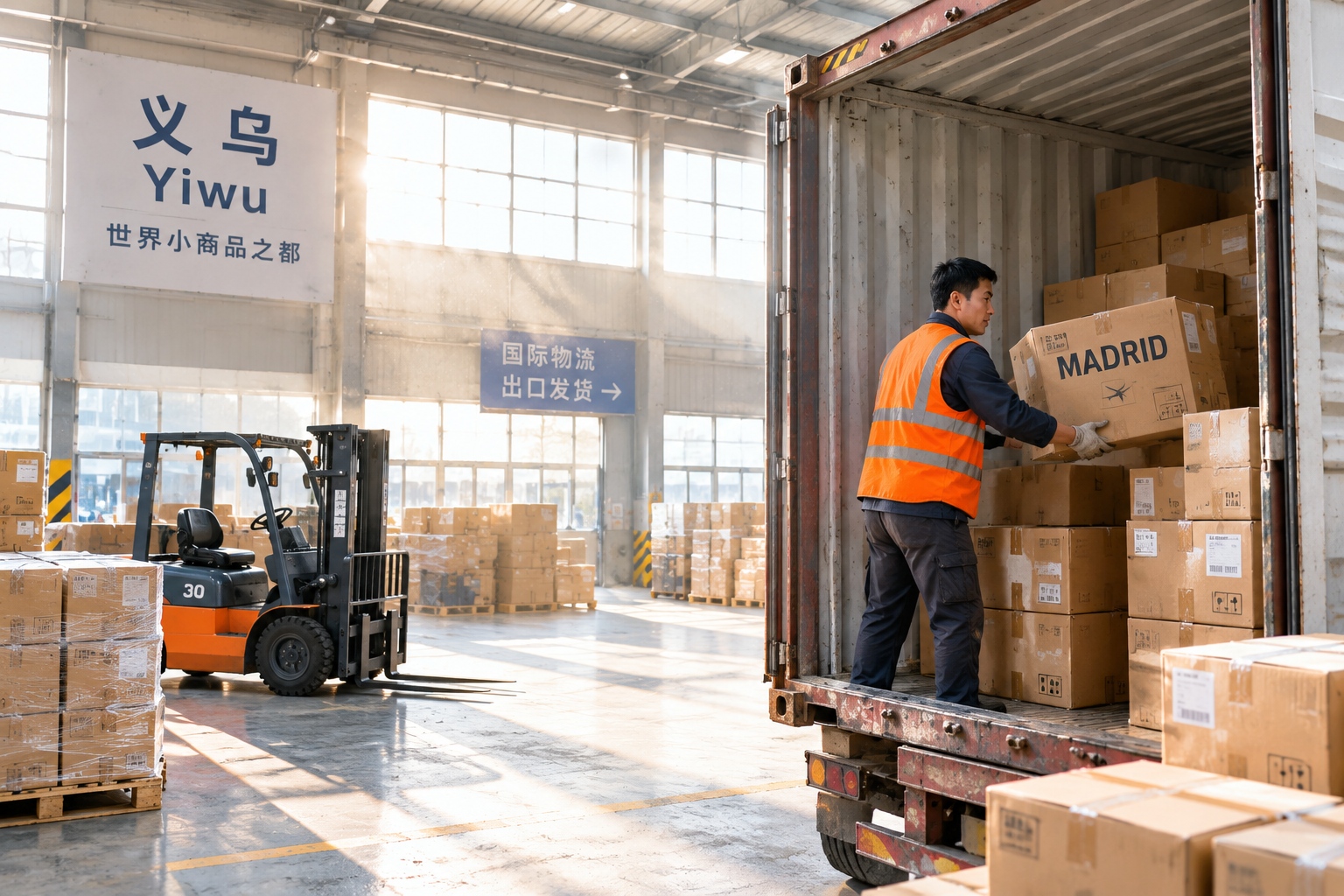
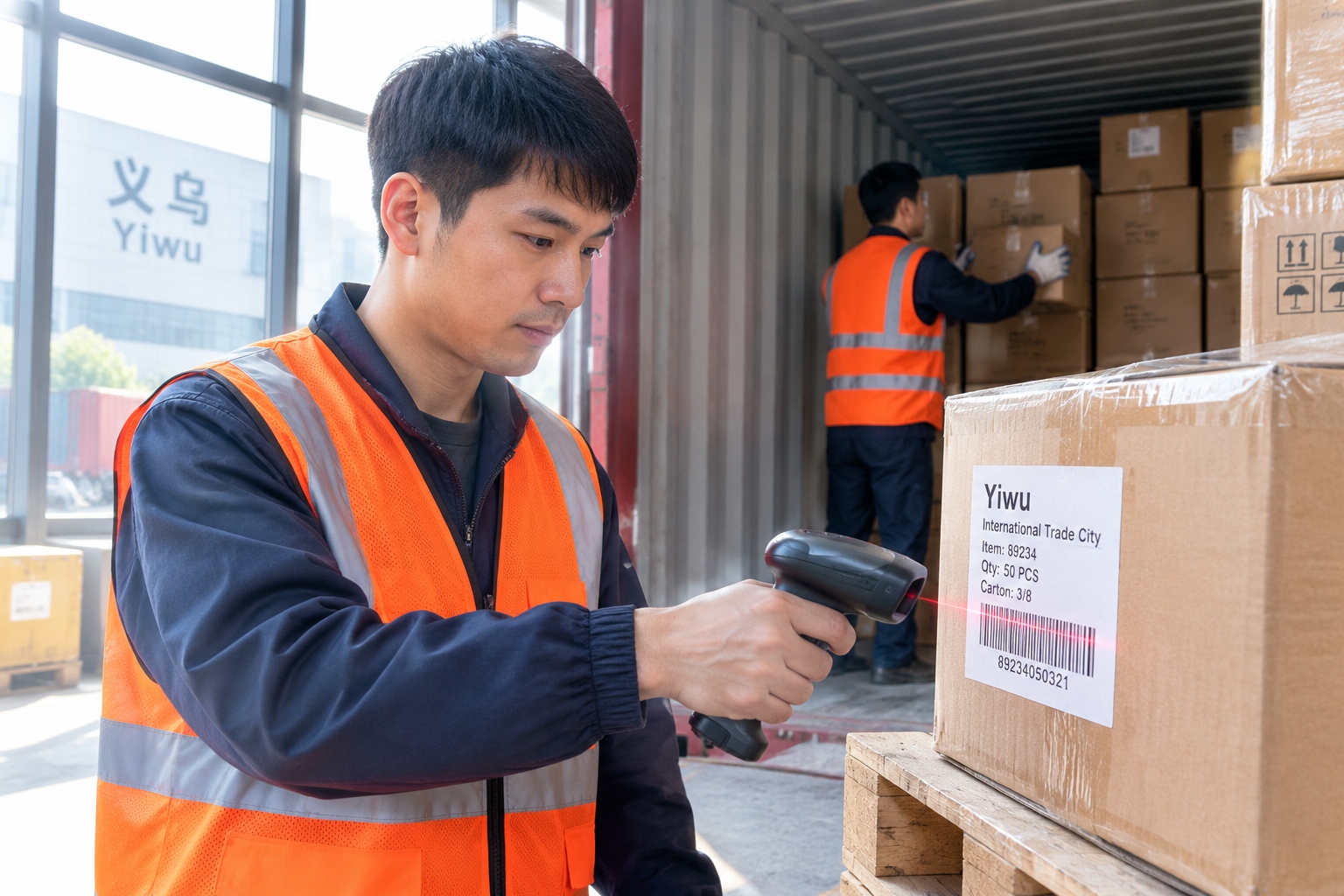
The warehouse smells like cardboard and fresh printing ink. At 8:30 in the morning, light from the high windows is still pale, falling across rows of boxes stacked like a miniature city of brown cubes. Li Qiang, 32, a packing worker, wipes sweat off his forehead with a dirty towel. He has been loading a 40-foot container since 6 a.m. He picks up a carton, flips it over, scans the barcode with a handheld gun, and places it on the stack. He repeats the action about 800 times a day. “This batch is going to Madrid,” he says, pointing to the shipping label. “I’ve never been to Madrid, but I’ve sent at least 300 containers there.”
This container will not fly. It will not board a ship either. Instead, it will travel along the China-Europe Railway Express, a network of freight trains stretching more than 13,000 kilometers from this dusty warehouse in Yiwu—a small city on China’s east coast that has become the world’s largest wholesale market for small consumer goods—to the Spanish capital.
Why a Train Instead of a Ship or a Plane?
For many overseas buyers, Yiwu is the place where cheap, colorful, everyday things come from: LED strips, plastic toys, kitchen gadgets, holiday decorations. Before the rail link was established, these goods almost always went by sea, taking 35 to 40 days to reach a Mediterranean port. Air freight was faster but could cost ten times more. The China-Europe Railway Express, launched as an ambitious pilot project in 2011, offered a third option. It has since grown into a bus network that has completed more than 90,000 train trips across the Eurasian continent.
“The train is not the cheapest, and not the fastest. It is the most balanced option,” says Wang Feng, a freight forwarder in Yiwu who has spent eight years arranging shipments to Europe. He is responsible for the container this story follows—filled with 12,000 sets of LED string lights, ordered by a wholesaler in Madrid just in time for the Christmas season.
Inside the Factory and the Packaging Line
The story begins a few days earlier, in a small factory on Yiwu’s outskirts. Fifteen workers sit around a long table, packing tiny LED bulbs into plastic strips. Each light is tested once at the end of the assembly line. The atmosphere is not festive; it is rhythmic. Workers chat over the hum of sealing machines. A supervisor counts boxes: 400 sets per carton, 30 cartons per pallet, 10 pallets per container, each pallet carefully positioned to maximize space.
“We time this precisely,” says the factory owner, He Di. “If we finish loading by the 15th, the train leaves on the 17th. In the past, shipping by sea meant we had to finish a month earlier to catch a vessel. Now we can push orders much closer to the season.” That flexibility is a big reason why rail freight has become popular among small brands.
The Boarding: How a Container Gets on the Train
Back at the warehouse, Li Qiang and his partner use a forklift to move the last pallet into the container. They place cartons in interlocking rows, filling every gap with smaller boxes—like solving a three-dimensional puzzle. “Gravity is our enemy,” Li jokes, as he pushes a lighter box against the wall with his knee. After six hours, the container door is shut, sealed with a bright yellow bolt lock, and a truck carries it to Yiwu West Railway Station, about eight kilometers away.
At the station, a gantry crane lifts the 28-ton container onto a flatcar. The entire train is more than 50 cars long, an assembly of red, blue, and green units. Our container gets a spot near the middle, sandwiched between a container full of Fujian tea and another carrying solar panels. At 10:30 p.m., the train departs without ceremony. There is no whistle; the wheels just begin to turn, a low, rhythmic hum that gradually fades into the night.
Crossing the Border: Changing Wheels at Alashankou
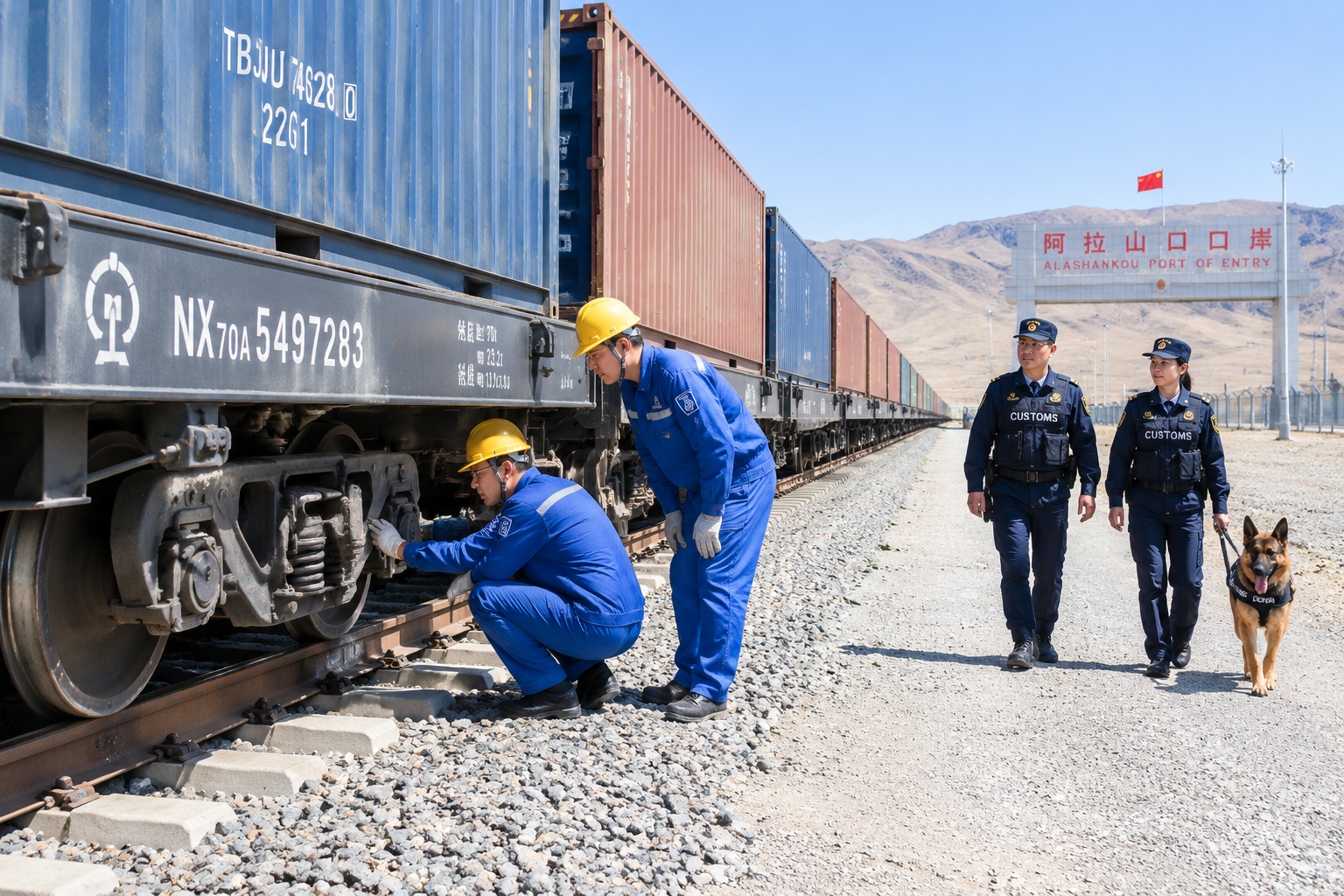
The first major stop is Alashankou, a border crossing on China’s western edge. Here, the rail line meets Kazakhstan’s wider gauge—1,520 mm compared with China’s 1,435 mm standard gauge. A specialized facility lifts each carriage one by one, swapping the bogies, the wheel system underneath the wagon. For a container on a flatcar, the process is barely noticeable: just a brief, slow lurch. Yet it is a physical necessity that has defined cross-border rail travel for more than a century.
Customs officers scan every container with X-ray machines, and a black-and-tan dog walks the length of the train, sniffing between the wheels. The paperwork is digital—a single customs declaration from Yiwu is shared across Chinese, Kazakh, and Russian authorities, so the stop lasts only about six hours. In the early years, border checks could take days.
Through the Steppe, the Forest, and the Plain
From Alashankou, the train dives into the Kazakh steppe. The flatness is hypnotic—only clusters of hay or a few horses interrupt the horizon. The driver, a Kazakh man with fifteen years on the job, sips black tea from a thermos and watches the empty tracks. He gets off at the border; the train rolls on with a new crew.
The cargo itself does not sleep, but it cools. The GPS chip inside the container records temperatures as low as minus 8°C near Chelyabinsk in Russia. Wang Feng, sitting in his Yiwu office, watches these numbers on his phone. “It’s like remote-monitoring a baby,” he laughs. The LED lights are unaffected, but the log gives him and his customer a sense of certainty.
Then the landscape changes: birch trees appear, then pine forests. Somewhere beyond the Ural Mountains, the train crosses the boundary between Europe and Asia—a fact known only to the driver and the GPS. The crews change again at Belarus, and then again near Poland. Each driver handles a stretch he knows intimately.
The Gateway to Europe: Malaszewicze
After about 15 days, the train reaches Malaszewicze, a small village in eastern Poland that has become the largest rail hub for Asia-Europe trade. Here, the track gauge changes back to standard European size, so the entire composition must be wheeled again. Unlike the automated Alashankou facility, Malaszewicze uses a mix of modern cranes and older hydraulic lifts. Containers are hoisted and transferred onto different flatcars. Your container is lifted gently, as if it were a huge egg, then placed onto a new European-standard wagon.
The terminal hums with activity. Forklifts buzz between stacks of colorful boxes. International freight forwarders from Poland, Germany, and the Netherlands check the seals on each unit. Some containers are dropped off in Poland, some are reloaded for Duisburg or Milan. Our container is attached to a westbound service, scheduled to leave within 12 hours.
The Last Leg: Poland, Germany, France, Spain
From Malaszewicze, the train crosses central Poland, enters Germany near Frankfurt an der Oder, and then turns southwest, passing through Saxony’s industrial belt. In Dresden, the tracks run so close to a residential garden that the train’s headlights briefly flicker across a row of oak trees. France comes next: the line follows the Rhine, passes through Strasbourg, then heads toward Lyon. On day 24, the train enters Spain through a tunnel in the Pyrenees. The climate changes abruptly—from the cool, rainy French Atlantic to the dry, glowing sun of the Mediterranean coast.
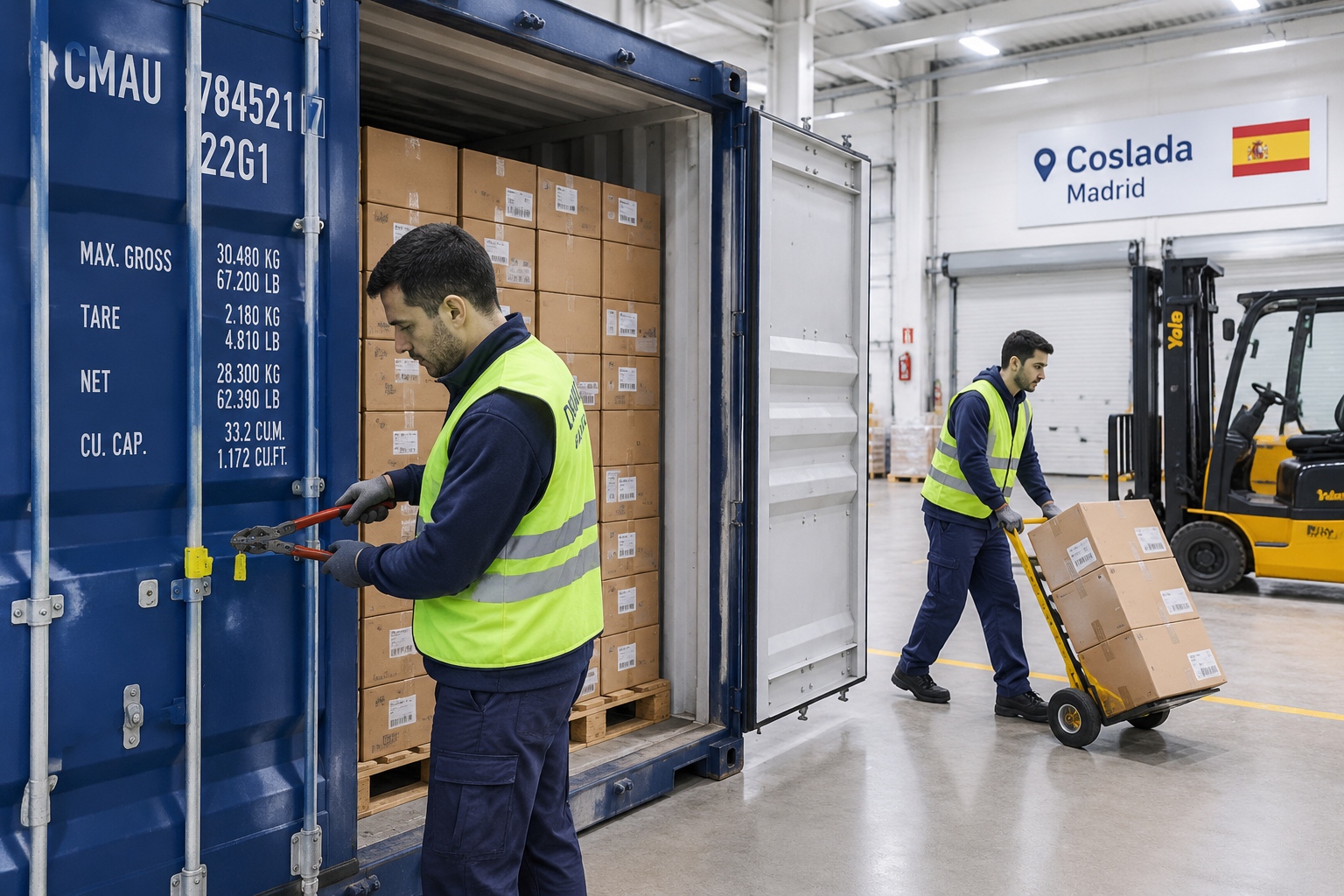
At a freight station near Zaragoza, Spanish customs conducts a final inspection. Everything checks out. The next morning, the container makes the short hop to the Madrid Free Trade Zone in Coslada, a city of 90,000 people just east of Madrid.
On day 26, a Spanish warehouse worker cuts the yellow seal with scissors. The door swings open to reveal cartons stacked perfectly intact. “Looks like it survived,” he says to his colleague. They unload the boxes onto pallets, and a forklift carries them inside a warehouse that smells of cinnamon and cardboard.
What This Journey Means for Trade and Daily Life
The China-Europe Railway Express is more than a technical achievement. It changes the way small businesses trade across thousands of miles. For the Madrid wholesaler—let’s call him Andrés García—the rail link means he can place a new order in early October and receive it in early November, just in time for the winter market. From the consumer’s perspective, the LED lights are affordable because rail freight costs roughly 30 to 40 percent of what airfreight would charge.
In Yiwu, more than 60 percent of export orders now travel at least part of the way by rail, according to logistics associations. Wang Feng’s company alone sends two thousand containers a year by train. “This railway makes our customers feel certain,” he says. “The timing is reliable. You can build a sales plan around it.”
Challenges and Pivots
The route isn’t static. Geopolitical shifts have forced periodic rerouting. After the conflict in Ukraine escalated, many operators temporarily paused the northern corridor through Poland; some now use the Caspian Sea route that crosses Georgia and Turkey, while others move freight via the southern branch through the Balkans. Weather and congestion can also cause delays—a snowstorm in Poland once halted traffic for 48 hours. But the system has proven resilient because freight forwarders have learned to adapt, shifting cargo from one corridor to another like water finding a new path.
Conclusion: A Box’s Eye View of a Connected World
Six months later, those LED strings glow in a small plaza in Toledo, swaying in the wind. The box that started in a dusty Yiwu warehouse is no longer just cardboard; it is a container of stories—a journey that crossed eight countries, two gauge changes, and countless time zones. It linked the hands of Li Qiang in Yiwu with those of Andrés García in Madrid. No human passengers call the train home, but every box carries the silent intent of commerce.
Next time you see a string of lights in an outdoor market, remember that it may have just completed a 13,000-kilometer journey on a caterpillar of steel, guided by people you will never meet. The train has no aisles, no announcements, no stations, yet it allows a piece of Chinese light to illuminate a Spanish celebration. That is the quiet magic of modern logistics.
Start the discussion at forum.chinacomes.com