

A grandmother baking bread, in two languages
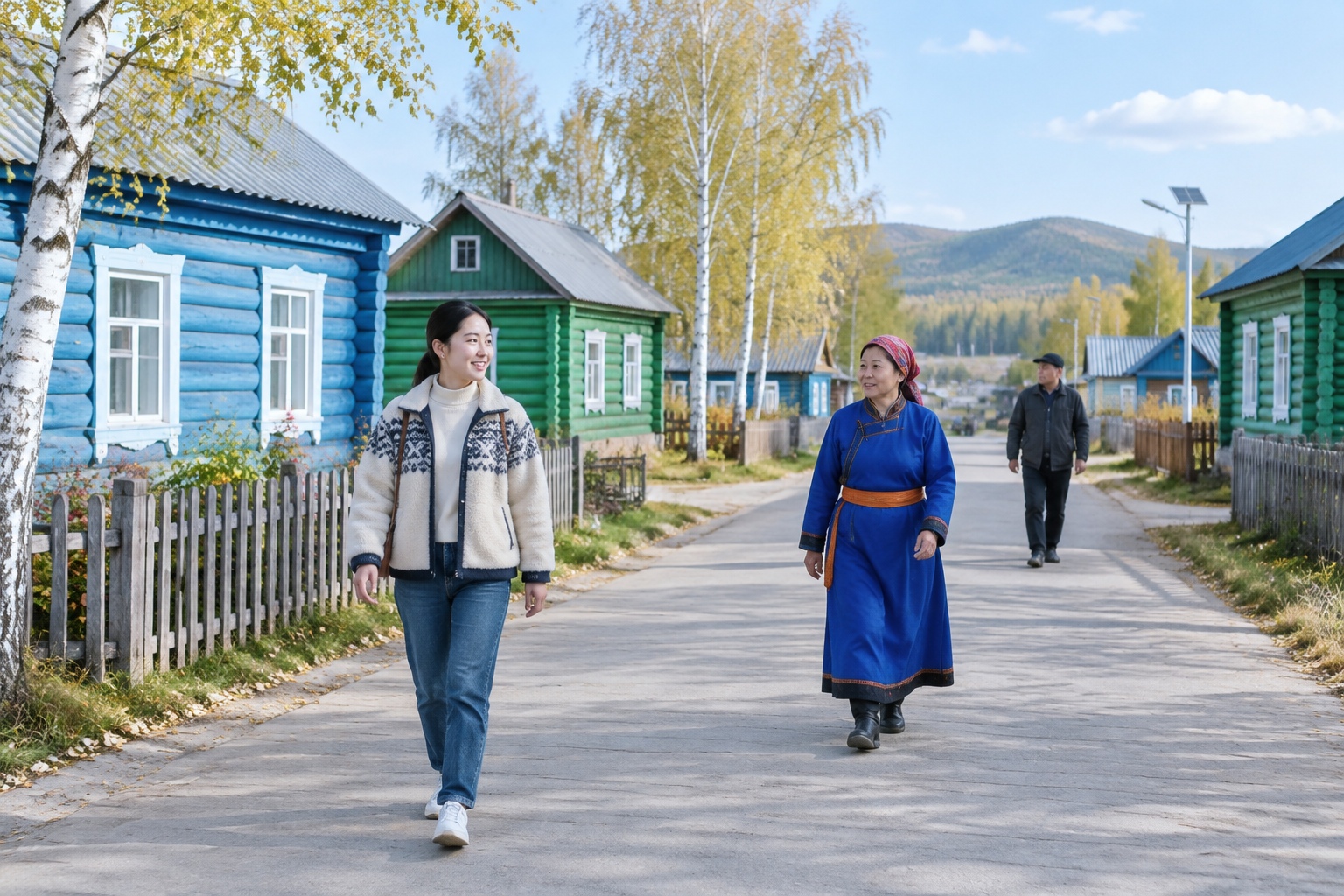
In the village of Enhe, near China’s northern border, 68-year-old Nina pulls a round loaf of dark rye bread from a wood-fired brick oven. She calls it lieba, the Chinese pronunciation of the Russian word khleb. When her grandson runs in asking for a slice, she scolds him gently in Mandarin. When her neighbor stops by, they switch to a soft, old-fashioned Russian that linguists say has barely changed in a century.
Nina is not a tourist attraction, though plenty of tourists photograph her bread. She is a Chinese citizen. Her passport is red. Her ethnicity, printed on her ID card, reads “Russian”—one of the 56 officially recognized ethnic groups in China. Most visitors from abroad have no idea this community exists.
Where is this, and how did Russians end up here?
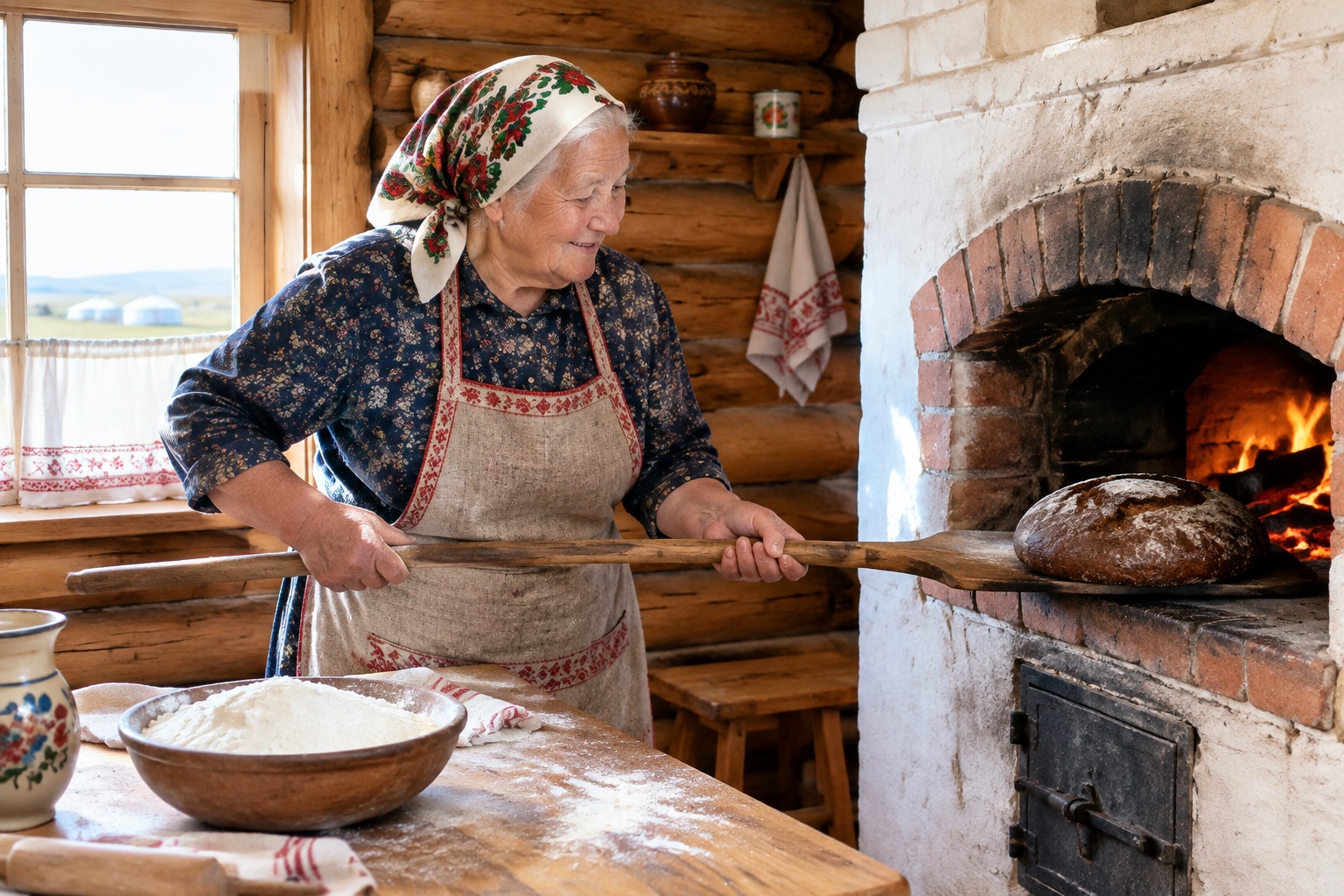
Enhe sits in Ergun City, in the Hulunbuir region of Inner Mongolia, close to the Russian frontier. This is grassland and birch forest, far from the skyscrapers people usually associate with modern China. Winters drop well below minus 30 degrees Celsius. The nearest big city is hours away by road.
The story of how Russians settled here begins in the late Qing dynasty, more than a century ago. Russian gold prospectors, traders, and later refugees crossed the Argun River into Chinese territory. Many Russian women married Chinese laborers who had come north looking for work. Their children—mixed Chinese and Russian heritage—are often called Hua’e descendants locally.
So the “ethnic Russians” of China are not recent migrants. They are the great-grandchildren of people who built lives on this side of the river generations ago. Across the country they number only about 15,000, making them one of China’s smallest ethnic groups, with the largest concentration right here in Inner Mongolia.
Log cabins, kvass, and a kitchen that smells like rye
The first thing you notice in Enhe is the architecture. Instead of tiled roofs and brick courtyards, the houses are mukeleng—log cabins built from whole timber, joints notched and stacked without nails, painted in blues, greens, and ochre. The style is unmistakably Siberian, well suited to brutal winters because thick wood holds heat.
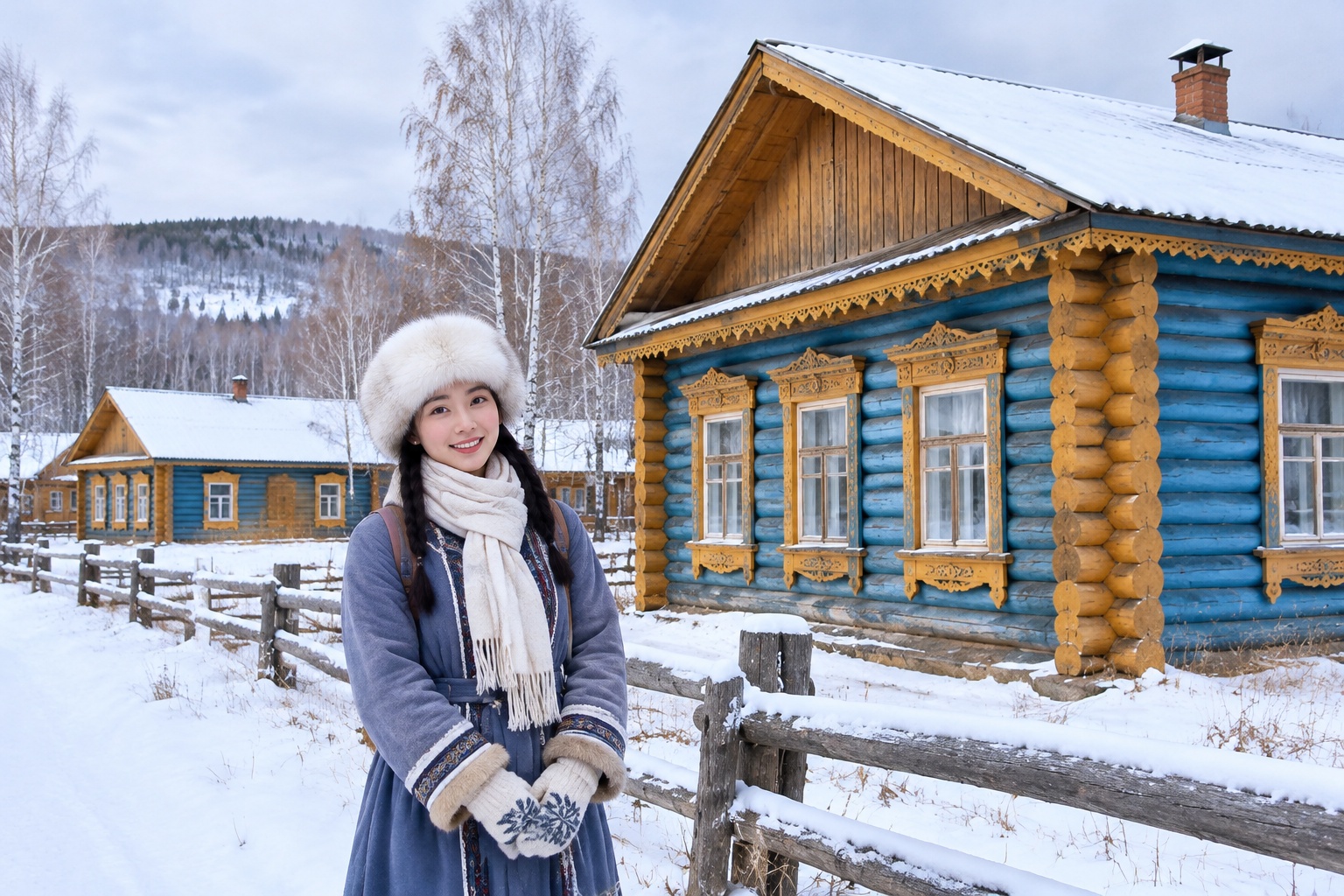
Food is where the culture is most alive. Families still bake lieba in outdoor ovens, dense and sour, meant to last for days. They brew kvass, a lightly fermented drink made from bread—slightly fizzy, a little tangy, served cold in summer. There is sulian blueberry jam, pickled vegetables, and a stew that tastes closer to a Russian borscht than anything you would find in Beijing.
What makes it interesting is the blending. On the same table you might see rye bread next to stir-fried dishes, kvass beside Chinese tea. Grandmothers who grew up making dumplings for Spring Festival also roast whole chickens the Russian way. Nobody treats this as a contradiction. It is simply dinner.
Keeping the language, living in modern China
The hardest thing to preserve has been the language. Older residents like Nina speak fluent Russian at home, but the younger generation is more comfortable in Mandarin. Children attend ordinary Chinese schools, take the national college entrance exam, and watch the same short videos as teenagers everywhere else in the country.
Some families push back against the drift. A few schools in the region now teach Russian as a special subject, and local cultural centers run folk dance and choir groups that perform old songs. One young woman I spoke with, a 24-year-old named Lida, left for university in a bigger city, trained as a nurse, and came back. “My Russian was rusty,” she admitted. “But my grandmother’s bread wasn’t going to bake itself.” She now runs a small guesthouse and teaches visiting kids a few Russian words over breakfast.
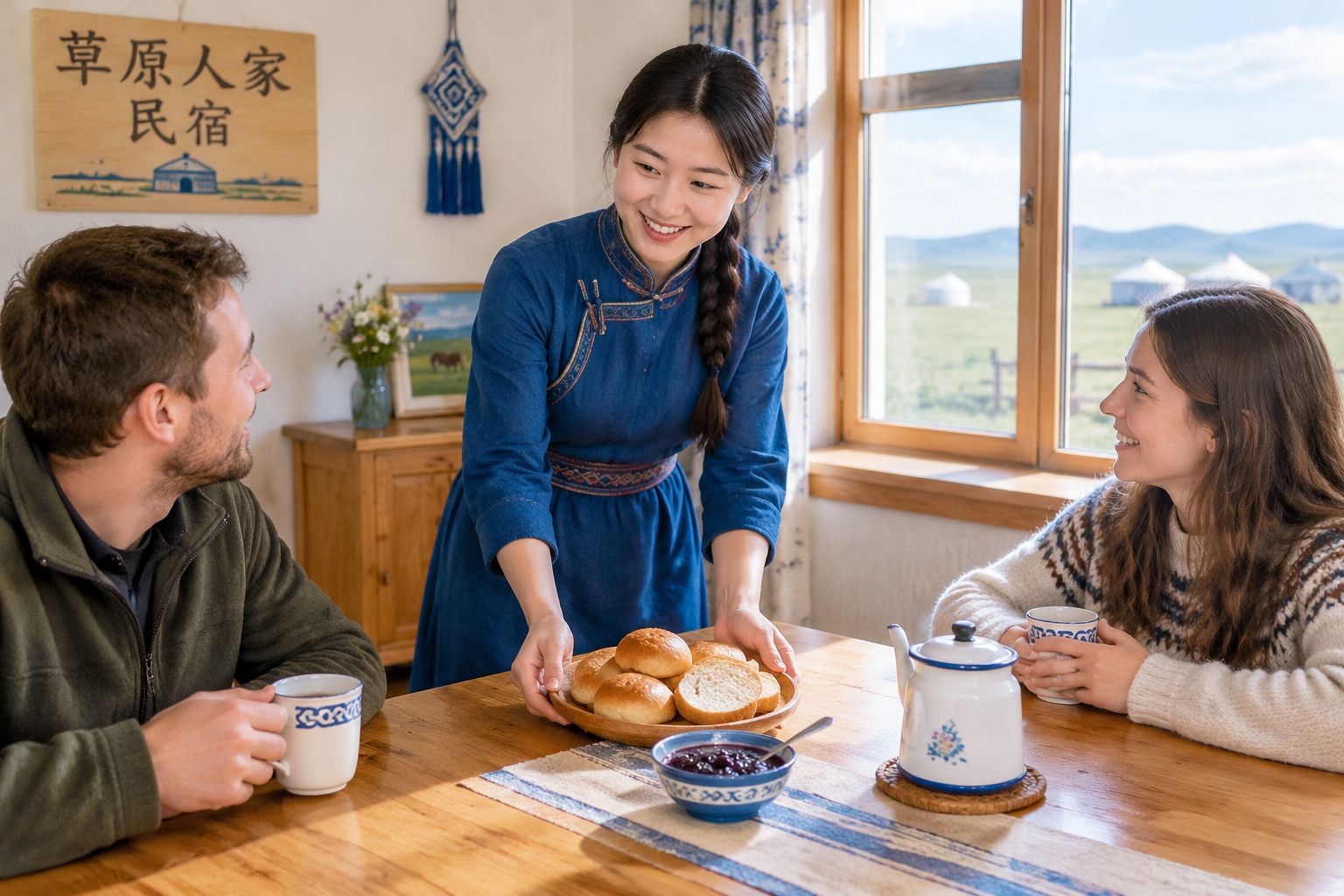
This is the part that outsiders often miss. The community is not frozen in time. People here have smartphones, mobile payment, delivery vans that reach even remote villages, and the same economic choices as any rural town in China—whether to stay, whether to open a business, whether to chase city wages. Tourism has become a real income source, which both helps the culture survive and risks turning it into a performance. Residents are aware of that tension and talk about it openly.
Life under China’s ethnic policy
China designates certain areas as ethnic townships, which gives communities like Enhe a degree of formal recognition and some support for cultural preservation. Russian is listed among the country’s minority languages. Festivals get local backing. ID cards mark ethnicity, and ethnic minority status can carry certain benefits in areas like education policy.
In practice, daily life for an ethnic Russian in Ergun looks a lot like life for their Han Chinese or Mongolian neighbors. They farm, run shops, drive tour buses, work in county offices. Intermarriage across these groups is common and uncontroversial. What sets the Russians apart is mostly cultural—the food, the holidays, the faces, the family stories—rather than any separation from the rest of society.
Many residents describe themselves, without prompting, as a kind of bridge. The border crossing to Russia is nearby, cross-border trade is active in the region, and people who speak both languages and understand both cultures are genuinely useful. A shopkeeper told me he does business with Russian truckers one week and Chinese tour groups the next, switching languages mid-sentence.
Easter and Spring Festival in the same house
Nowhere is the blend clearer than during the holidays. The community celebrates Baskhka—the local name for Orthodox Easter—with painted eggs, baked treats, and gatherings that bring neighbors together. Weeks or months earlier, the same families hang red couplets and set off fireworks for Chinese Spring Festival, eating dumplings at midnight like the rest of the country.
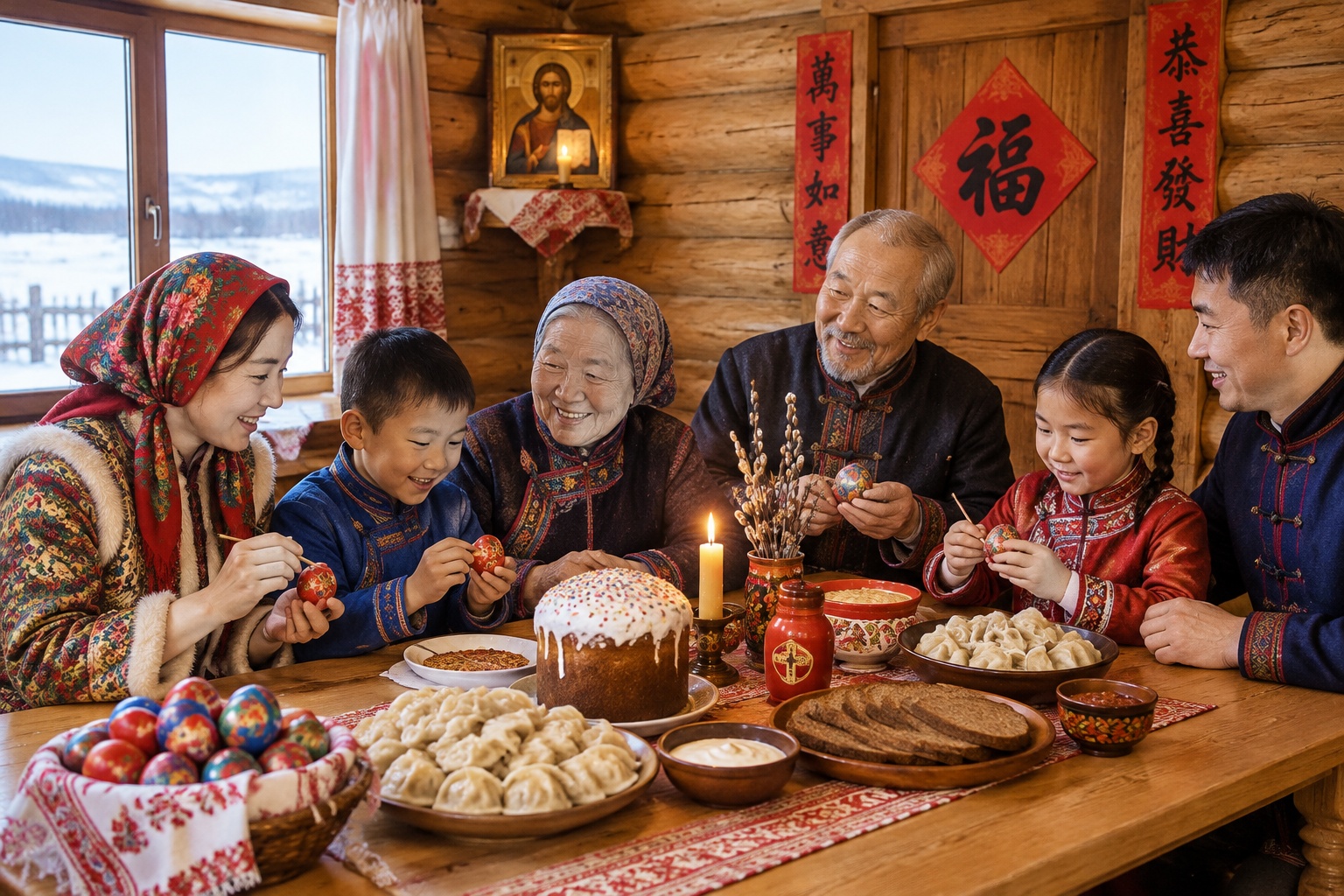
Watching a household move from lunar new year to Orthodox Easter within a single calendar is a quiet lesson in what multicultural China can look like at ground level. There is no grand statement being made. A grandmother dyes eggs because her mother did, and lights firecrackers because her neighbors do, and sees no reason to choose.
That is the real face of this place. Not an exotic theme park on the map, but a living community where Russian bread, Chinese New Year, birch forests, and mobile payment coexist without anyone finding it strange. For a visitor from abroad expecting a single, uniform China, Enhe is a useful surprise: proof that the country’s diversity is not a slogan but something you can taste, hear, and share at someone’s kitchen table.
Start the discussion at forum.chinacomes.com