


That Awkward Moment with a Private Tutor
When Emma, an Australian marketing director in Beijing, wanted to help her 10-year-old son improve his maths, she found a British university student who gave lessons in the family’s living room. No contract. Cash payments. All went well until a Chinese friend warned her about China’s “Double Reduction” policy. Emma had no idea the policy might apply to her family. “He’s not even in a Chinese public school,” she said. “It’s only one-to-one. How illegal can that be?”

Emma’s confusion is common among expatriate parents in China. The Double Reduction policy, introduced in July 2021, was aimed at after-school academic tutoring for children in compulsory education (grades 1–9). But its reach extends toward anything that looks like private academic tutoring, including the kind of informal agreements Emma made. To understand what you can and cannot do as a foreign parent or a foreign tutor, you need a clear picture of the policy’s real scope.
What Exactly Is the “Double Reduction” Policy?
The policy’s full name is “Further Reducing the Burden of Homework and After-school Training for Compulsory Education Students.” It was issued by China’s central government in July 2021. The main goal was to take the commercial pressure out of K-9 academics. Here is what changed:
- For-profit tutoring companies that taught Chinese-language academic subjects for grades 1–9 had to re-register as non-profit organisations.
- Funding and stock-market listings for such companies were banned.
- Academic tutoring classes could no longer be held on weekends, national holidays, or school holidays.
- Online academic courses faced the same time restrictions.
- Foreign nationals living outside China were prohibited from offering online academic tutoring to students in China.
These restrictions apply to “subject-based” courses, meaning Chinese, mathematics, English (as a school subject), physics, chemistry, biology, politics, history, and geography. Courses like calligraphy, football, swimming, piano, and coding are considered non-academic and have largely been left alone.
Does That Affect Foreign Families?
Yes, but not in the same way as Chinese families. A foreign child who attends an international school in China typically follows a non-Chinese curriculum, such as the IB or A-level system. The Double Reduction policy targets training that follows China’s national curriculum, but city-level enforcement often looks at how the lesson is provided rather than what textbook a child uses. A tutor sitting in your home teaching mathematics to an under-16-year-old can look identical to the “subject-based supplementary classes” the policy aims to cut.
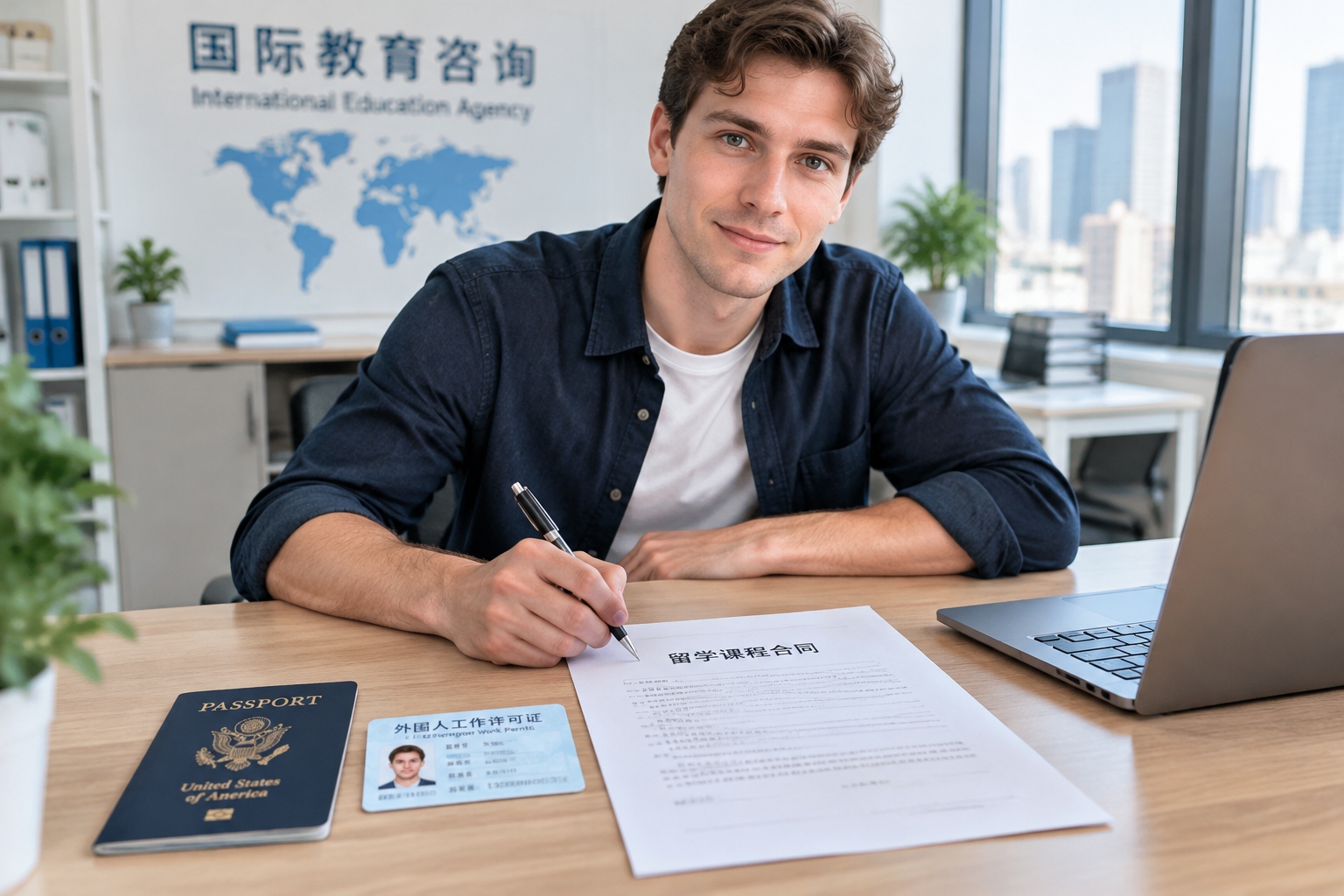
There are also visa rules that apply to any foreigner working in China. Even if your own private tutor is teaching a subject outside the Chinese curriculum, they still need a valid work permit. If they don’t have one, they are working illegally, and you as the employer can face financial penalties.
What Is Still Allowed for Foreign Families in 2024?
Let’s assume you want to support your child’s learning outside normal school hours. These options remain open:
1. School-run enrichment programmes
Many international schools and bilingual schools offer after-school clubs, homework support, or exam-preparation sessions taught by their own staff. Because these teachers are already employed and licensed, this is usually the safest route. Check with your school’s admissions or pastoral office.
2. Non-academic extracurricular classes
Sports, music, art, chess, and computer coding classes are still available through commercial training centres, as long as those centres have the proper business licence and the teachers have work permits. For instance, an expat coach who teaches swimming at a licensed sports centre is operating legally.
3. Tutoring by a current, licensed foreign teacher outside school hours? Usually not
A foreign teacher who works at an international school cannot simply charge parents for private tutoring on the side. Their work permit is tied to that school, and the Chinese work-permit system does not allow a foreigner to freelance. Some teachers think “cash” avoids detection, but fines and visa cancellation can be triggered by an anonymous complaint from a neighbour, a competitor, or even a disappointed client.
4. Online tutoring from outside China? Also restricted
If a tutor is based in the UK or the US and delivers live online lessons to a child in China, the Double Reduction rules treat this as “foreign-institution-run training.” Chinese authorities have already penalised overseas platforms that target Chinese students. For a foreign family that plans to return to their home country one day, it may feel natural to use a tutor from your home country. But if the lessons are delivered to a location inside China and the student is of compulsory education age, you are in a grey zone. Many families do it anyway, but they are not protected if a complaint is filed.
One-on-One Home Tutoring: It Depends Which City You Live In
It is tempting to assume that a private tutor in a family home is invisible. But Chinese education authorities have made it clear that the “no weekends” rule also applies to one-on-one lessons when the tutor is paid and the subject is academic. The official line from the Ministry of Education is that “offering subject-based tutoring in the form of ‘one-on-one’ or ‘home tutoring’ is an illegal training activity.” Enforcement, however, is highly uneven.
Beijing: Strict crackdowns urbanised
In Beijing and Shanghai, inspectors have entered residential blocks after receiving anonymous tips, and several foreign-language teachers have been caught teaching without work permits. Cases of parents who hired tutors without a licensed organisation behind them have also been investigated, with fines under China’s Exit and Entry Administration Law.
Second- and third-tier cities: Lighter but not absent
In smaller cities, local education bureaus often have too few inspectors to chase individual tutors. Many foreign tutors operate for months or years without trouble. But “rarely punished” is not the same as “legal.” A single complaint from a disgruntled former student or a curious neighbour can trigger a visit, and the legal consequences are the same in every city.
Legal Risks for Foreign Tutors Without a Work Permit
If you are a foreigner thinking about offering tutoring services to expat or local families in China, the core legal problem is work authorisation, not the Double Reduction policy. China’s visa system requires a sponsored, employer-specific work permit before you can legally earn money. If you do not have such a permit, the penalty is severe.
- For the foreigner: a fine of 5,000 to 20,000 RMB, up to 15 days of detention, and possible deportation. Exit and Entry Administration Law, Article 80.
- For the employer (the parent): a fine of 10,000 RMB per illegally employed foreigner, up to a total of 100,000 RMB. Any illegal income earned is confiscated.
- For both: if a foreigner is found guilty of working without a permit, their visa may be cancelled and they can be blacklisted from re-entering China for years.
Even if you hold a work permit as an English teacher at a local school, the permit is tied to that school. Offering private tutoring in someone’s living room violates the terms of your stay. This is why so many Chinese-language legal articles advise foreign tutors to always be hired by a licensed training school, not by individual parents.
Real Cases: What Enforcement Looks Like
The most widely reported cases come from “checking day” operations, also called “校外培训监管” more in Chinese. In 2022 and 2023, Beijing education officials publicly named several education consultancies that used rented flats as fake “student houses.” In one example from Hangzhou, a group of parents paid a foreign teacher hundreds of RMB per hour to help their children through an international school’s entrance exam. The teacher was detained and later deported, and the parents were fined together with the company that had arranged the lessons.
These cases are not meant to scare you; they simply illustrate how rules are being carried out on the ground. A licensed language school aimed at adults, or a licensed sports academy for children, are different types of businesses, but they all follow the same principle: the teacher must be legally employed, and the course contents must match the announced curriculum.
Compliance Checklist for Foreign Parents and Foreign Tutors
To keep yourself on the right side of the rules:
For foreign parents
- Ask any private tutor to show you their “Foreigner’s Work Permit” and a passport with a work residence permit. The employer name on the permit must match the tutor’s actual main employer.
- If the tutor is employed by a training centre, ask to see the centre’s business license and confirm that the centre specialises in non-academic or approved courses.
- For academic subjects, rely on your child’s school to provide structured extra help. Schools have the authority to organise such support through their own payroll.
- Do not assume that paying in WeChat or cash protects you. The legal definition of illegal employment does not depend on how payment is made.
- Check the registered business scope of any training centre before enrolling. A centre that lists only “consulting” or “art training” cannot lawfully provide mathematics or English.
For foreign tutors
- If you are in China on a student visa, tourist visa, or spouse visa, you are not allowed to earn money by teaching. Wait until a school sponsors your work permit.
- If you already have a work permit as a teacher, your employer can add a note for “off-campus programme” but only if the employer itself is licensed for that activity.
- Refuse cash-only teaching offers that are not tied to a registered entity. The money you receive may feel good, but the potential deportation record is not worth it.
- If a family offers to “pay you as a freelance contractor,” remember that China has no separate “freelancer” visa for education work. You would still need a Chinese employer to sponsor you.
Different Cities, Different Tolerances—But One Rulebook
This article does not say that every foreign tutor will be caught tomorrow. Legal enforcement in China varies greatly by city and by the nature of a complaint. A tutor in a suburban neighbourhood of Chengdu may never be inspected. But if a dispute occurs over payment, or if a tutor accidentally injures a child during a lesson, the matter will quickly be straightened out in court or in an administrative investigation. At that point, the officially written rules will matter, not the unofficial tolerance of the local market.
Foreign parents should also remember that a child’s education is not a contract with an illegal tutor. If your tutor is deported mid-semester, your child loses continuity. If you are fined, that is an unpleasant financial and reputation hit. The best way to enjoy a worry-free experience is to work with people and organisations that have the paperwork to back their lessons.
Final Thoughts
China’s Double Reduction policy has not banned tutoring for everyone. Non-academic classes are alive. International schools run their own extracurricular curricula. What has become significantly harder is the old pattern of hiring an unlicensed individual granny, student, or foreigner to give private math or English lessons in your living room. The safest route for expat families is simple: ask for proof of legal work status, choose licensed providers for non-academic activities, and let your child’s main school handle the tricky academic revision.
Emma eventually ended her arrangement with the British student and enrolled her son in a weekend coding class, where the foreign instructor worked under a proper Chinese work permit. His son now builds robots on Saturdays, and Emma has far fewer reasons to worry about the knock on the door.
Start the discussion at forum.chinacomes.com