

Before dawn on a ridge in the Qinling
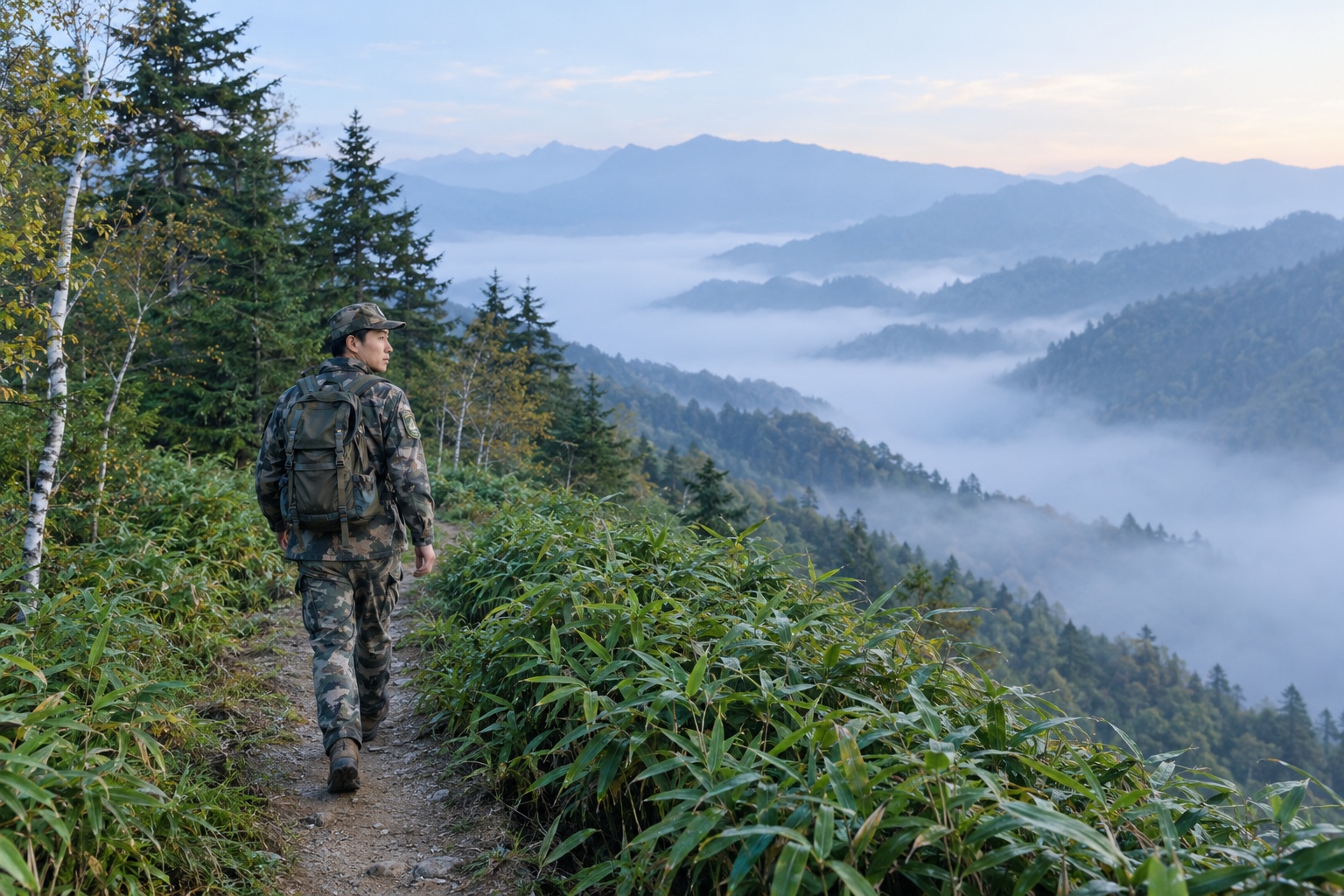
At 5:40 a.m., an hour’s climb above the Sanguanmiao ranger station in Shaanxi’s Foping National Nature Reserve, the bamboo starts to knock. Not wind exactly — stems tapping against stems, a dry wooden clatter that runs up the slope and fades. It is the loudest sound in the forest. Below us a river is moving, and you can hear it through the trees without ever seeing it.
A ranger in a camouflage jacket stops on the trail, crouches, and touches a stalk. It has been bitten off at a clean angle, the way a knife sharpens a pencil. Bamboo shavings scatter the ground. Fresh. He says nothing, just nods uphill and keeps walking. Somewhere in the green above us is an animal that weighs about as much as a person, and we will almost certainly not see it.
That is the first thing to understand about wild giant pandas. They are not a photo opportunity. They are a landscape.
The panda map is smaller, higher and stranger than most people picture
Most visitors meet pandas in Chengdu, at a breeding base with ticket gates and a queue for the window. Those animals are real, and the captive program has worked: roughly 700 giant pandas now live in breeding centres and zoos, almost all descended from a handful of wild-born animals. But the wild population lives on a completely different map — one made of mountains rather than cities.
Wild giant pandas survive in six mountain ranges along the eastern edge of the Tibetan Plateau: the Qinling, Minshan, Qionglai, Daxiangling, Xiaoxiangling and Liangshan. Together these ranges spill across three provinces — Sichuan, Shaanxi and Gansu — and hold about 2.58 million hectares of habitat. The fourth national panda survey, carried out between 2011 and 2014 and released in 2015, counted 1,864 wild pandas: 1,387 in Sichuan, 345 in Shaanxi, 132 in Gansu. A fifth survey began in 2023 and will take years to complete.
If one number explains the whole geography, it is this: wild pandas live between roughly 1,200 and 3,400 metres above sea level.
Altitude decides everything
Pandas are bears that turned into bamboo specialists. Bamboo is a grass, and a poor one nutritionally, so an adult wild panda eats for 12 to 15 hours a day — stems, leaves and, in spring, shoots. That is 12 to 15 kilograms of plant material daily, more during shoot season, and only a fraction of it gets digested.
Because bamboo species change with height, pandas spend the year moving up and down the mountain. In winter they drop into valleys at 1,200 to 1,800 metres, where it is warmer and the bamboo stays green. In summer they climb past 2,800 metres, following new shoots and cooler air. One animal’s home range can span 1,500 vertical metres. A panda’s world is not a forest. It is a whole mountain, used in layers.
There is a second reason this vertical mobility matters. Bamboo flowers and dies en masse on a cycle of roughly 30 to 60 years, wiping out the bamboo on entire ridges at once, and regrowth from seed takes years. If the bamboo on your slope dies and the next slope is out of reach, you starve. That is part of why panda rescue operations in the 1970s and 1980s were so urgent.
The Qinling pandas, the northernmost group, are distinct enough to be classed as their own subspecies: slightly smaller, with a rounder skull. A few are brown instead of black and white. Qizai, found as a cub in Foping in 2009, is the only brown giant panda in captivity.
A green archipelago cut into pieces
On a satellite image, panda habitat looks like an archipelago: islands of forest separated by pale lines of highway, river, farmland and settlement. The fourth survey found wild pandas living in 33 separate local populations, and several of those number fewer than 30 animals. Small groups lose genetic diversity, and one bad bamboo year, disease outbreak or new road can finish them.
The 2008 Wenchuan earthquake, whose epicentre lay inside panda country, killed nearly 70,000 people and also triggered landslides that buried bamboo slopes across Wolong and the surrounding valleys. Some slopes have grown back green. Others are still bare rock.
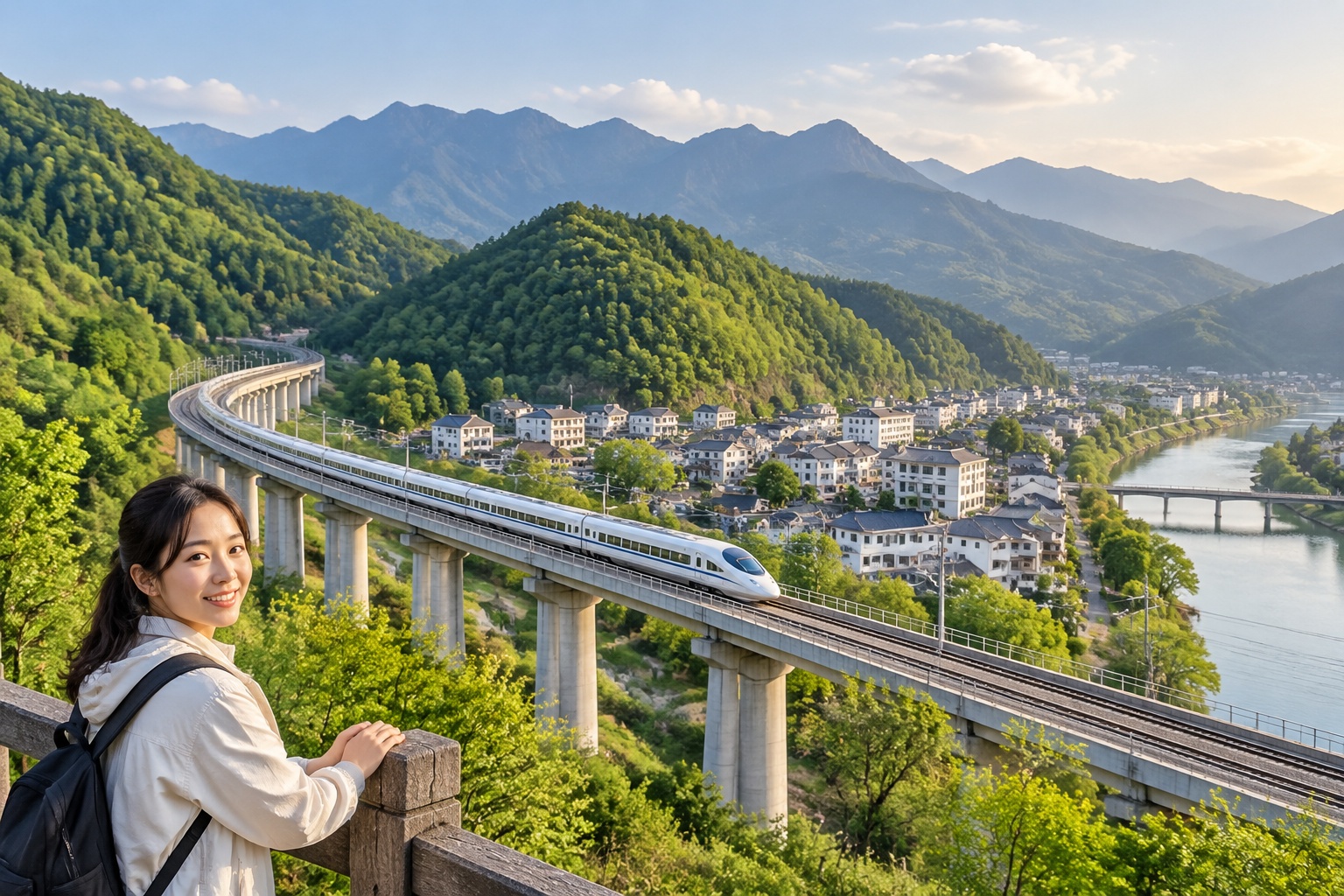
China’s response has been large and, in places, surprisingly specific. Logging across the upper Yangtze was banned after the 1998 floods. The Grain-for-Green programme paid farmers to put steep fields back into forest. In October 2021 the Giant Panda National Park was formally established across 27,134 square kilometres in the three provinces; officials say it covers about 70 percent of wild habitat and roughly 1,300 wild pandas. Engineers have rerouted infrastructure: the Huangtuliang tunnel on the Mianyang–Jiuzhaigou highway was driven straight through a mountain rather than over a panda ridge, and the Xi’an–Chengdu high-speed railway, opened in 2017, crosses the Qinling mostly in tunnels.
The honest part is that people live in these mountains too. In Pingwu County, Sichuan, more than 300 wild pandas share slopes with farms and villages, and in some valleys there are more pandas per square kilometre than people — but the people are still there, and inside core protection zones they have lost access to firewood, timber and medicinal herb collecting. Some received compensation, tourism work or resettlement. Some got very little. Conservation here is not a wilderness story. It is a negotiation still in progress.
Three places you can actually stand
Wolong, Sichuan — where the science started
About three hours’ drive from Chengdu, past the rebuilt town of Yingxiu, Wolong is the most famous panda reserve on earth and the easiest to reach from a major city. In the early 1980s the American biologist George Schaller and the Chinese scientist Hu Jinchu ran the first long-term field study of wild pandas at Wuyipeng, a ridge station at around 2,500 metres. After the 2008 earthquake destroyed the old breeding base, a new one opened at Shenshuping in Gengda township, where pandas live in large forested enclosures rather than cages. It is a good first stop, because it turns the panda back into an animal instead of an exhibit.
Foping, Shaanxi — easiest to reach, least crowded
Foping is 50 minutes from Xi’an by high-speed train, which makes it possibly the most accessible wild panda habitat anywhere. The reserve holds one of the highest densities of wild pandas on record, and the county town works as a base: Panda Valley, a short drive out, has captive animals and forest trails, and the local museum explains the Qinling subspecies. The best habitat, around Sanguanmiao, requires a permit from the reserve administration and is closed to casual visitors — which is exactly why the pandas are still there.
Baishuijiang, Gansu — the edge of the map
Baishuijiang sits in Wen County, in the far south of Gansu, pressed against the Sichuan border next to Jiuzhaigou. It is the province’s largest panda reserve and holds most of Gansu’s roughly 130 wild pandas. Very few travellers go. The roads are slow, the lodging is basic, and permits come from the reserve office. If you want the quietest corner of panda country, this is it.
What you will actually see
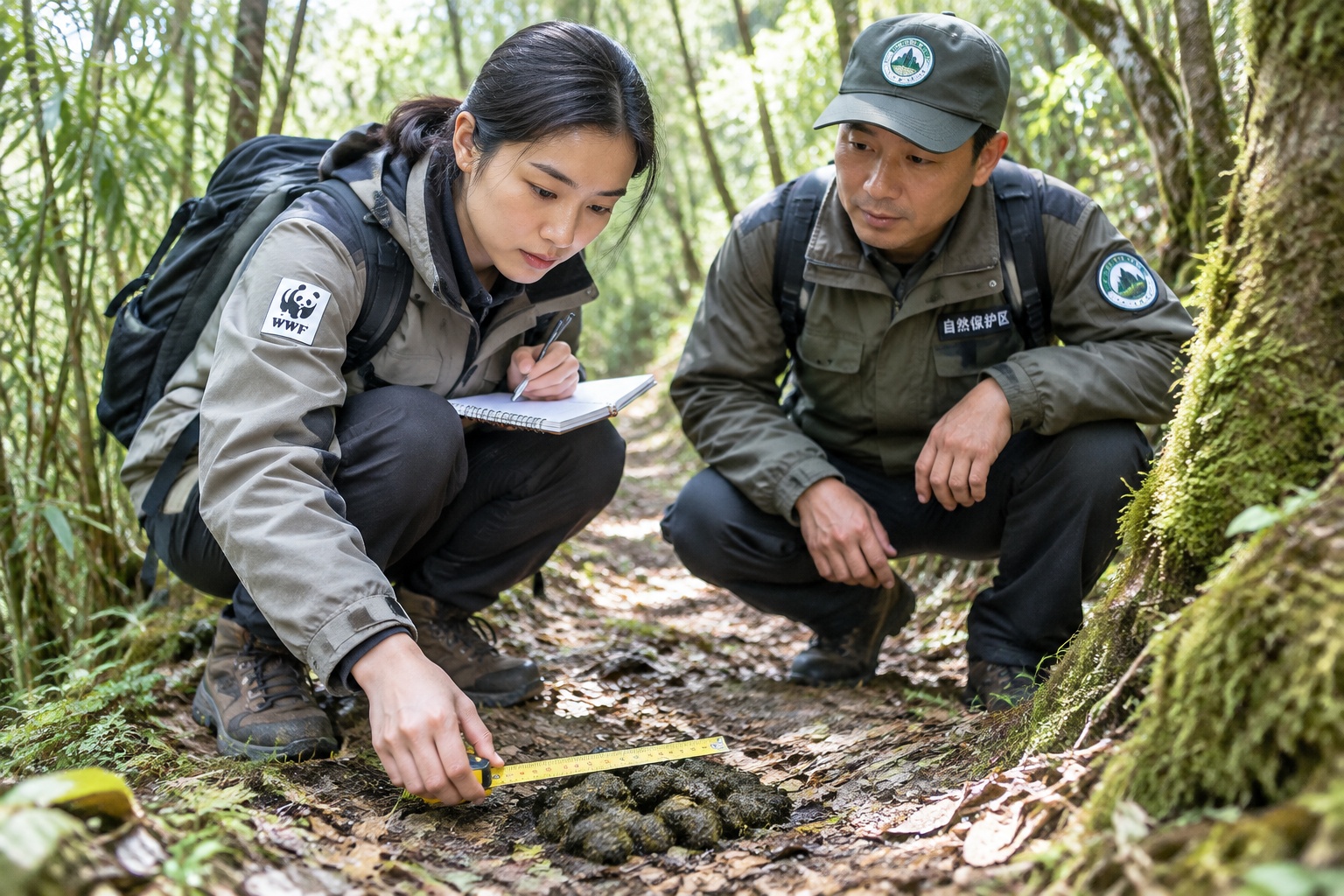
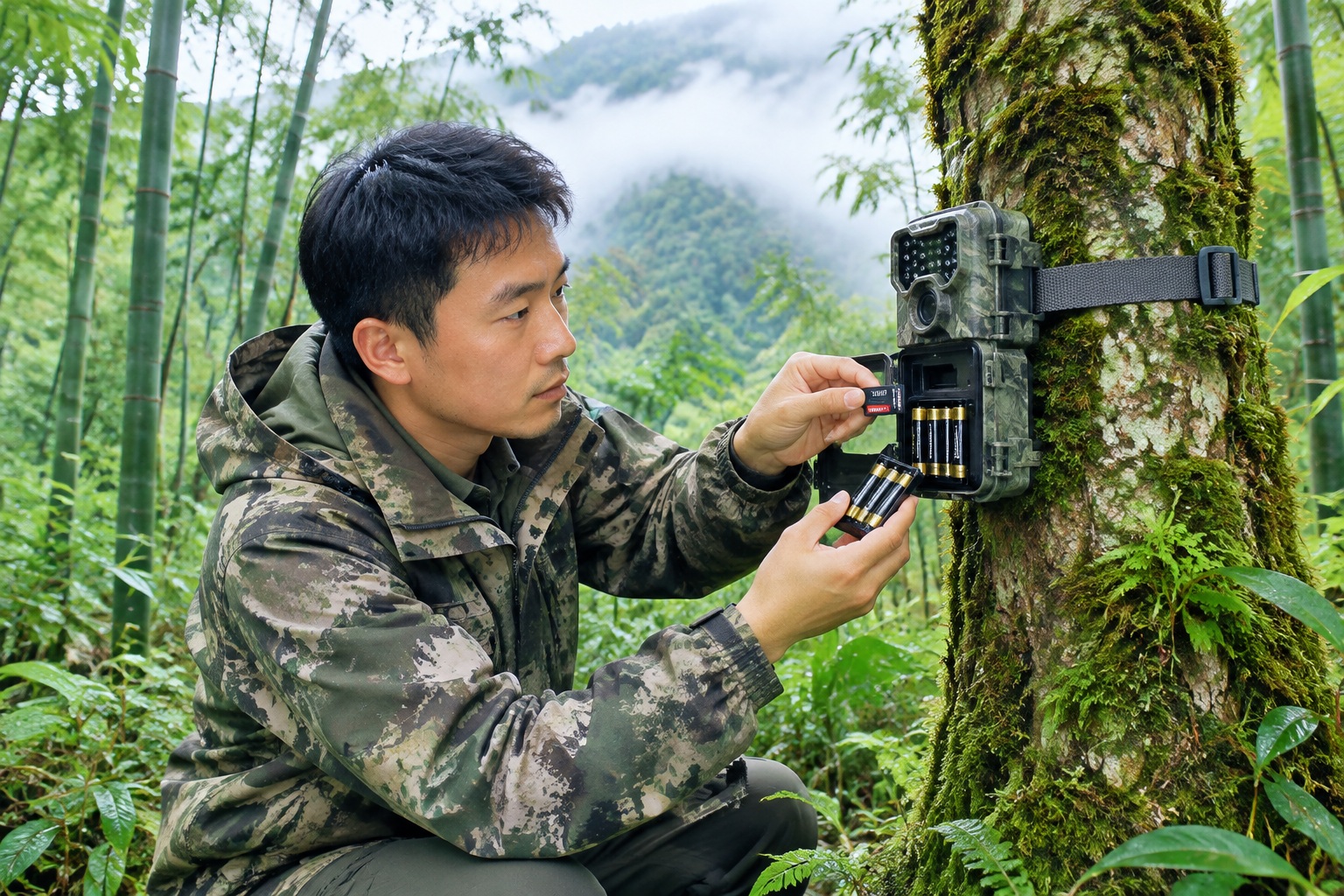
Almost certainly not a panda. Even rangers working in good habitat go months without one. What you see is evidence: droppings the size of a small log, dark and packed with bamboo fragments, smelling faintly of tea and cut grass; bamboo bitten off at a neat angle; claw marks on trunks at chest height; green tunnels pushed through dense bamboo where an animal walked. Camera traps record what hikers miss. On the trail, reading a mountain by its leftovers is the real experience.
If you go: practical notes
When. April to May and September to October are best — cool, often misty, bamboo at its greenest. July and August bring heavy rain, leeches and landslides. December to February is when pandas move into lower, warmer valleys and are theoretically easiest to find, but high roads can close.
Getting there. Chengdu to Wolong is about three hours by car or minibus. Xi’an to Foping is 50 minutes by high-speed rail, then a local taxi or bus. For Baishuijiang, fly or take the train to Jiuzhaigou or Longnan and hire a car; the last stretch is a few hours of winding mountain road.
Permits and cost. Breeding bases and buffer-zone trails need only a ticket, usually 60 to 100 yuan (US$8 to US$14). Hiking into core habitat requires approval from the reserve administration, normally arranged through a local guide or guesthouse, and costs a few hundred yuan a day. Alipay and WeChat Pay accept foreign cards in most towns, but carry some cash.
Altitude and kit. You will be walking between 1,500 and 3,000 metres. Bring rain gear, warm layers and shoes that grip wet stone. Cloud and drizzle are normal — the same weather that makes the bamboo grow.
Rules. No drones. Don’t collect bamboo or plants. Stay on trails in buffer zones. And leave dogs at home: free-roaming dogs can pass distemper to pandas, one of the quiet threats to small populations.
The shape of the place
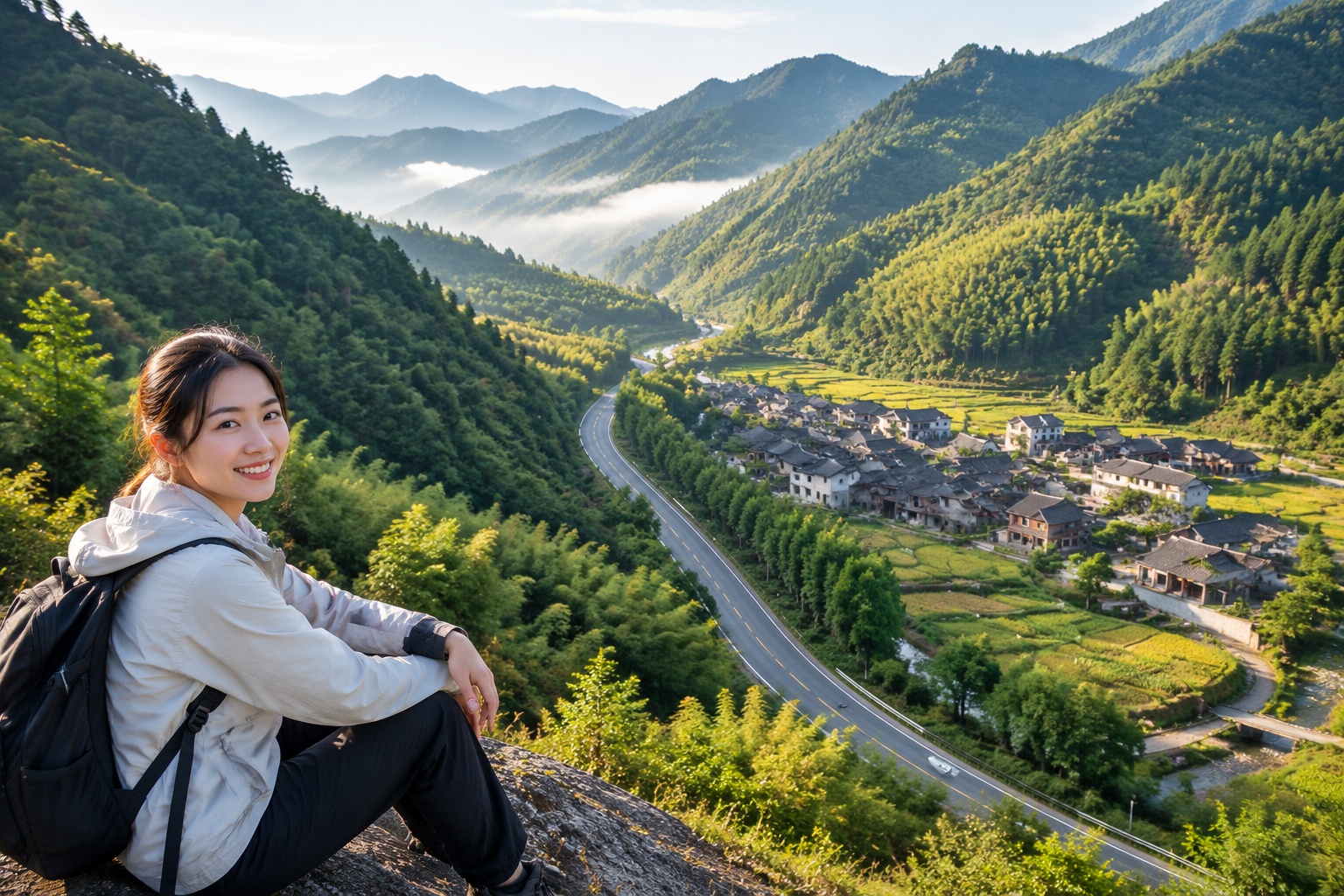
You come for a bear and leave with a mountain range — a wet, green, vertical world that most maps flatten into blank space. Walking down from Sanguanmiao, the cloud lifted for ten minutes and the whole valley showed itself: ridge after ridge of bamboo, a village on a saddle, a thin grey road stitched across the far slope. Then the mist closed again. The bamboo kept knocking. The panda was somewhere in there, eating, and that turned out to be enough.
Start the discussion at forum.chinacomes.com