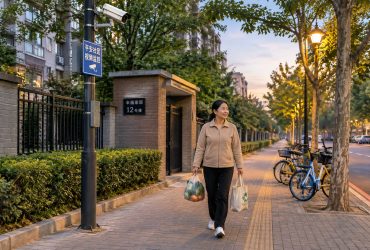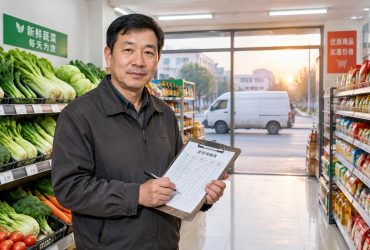
In Beijing's oldest hutong, a community police officer doesn't just patrol; he knows every resident by name. This is the quiet power of China's grassroots policing, where human connection builds safety.
In the noisy workshops of Shenzhen, a former assembly line worker turned his nights into code. This is a story of how ordinary people in China are rewriting their own futures through self-education and digital transformation.
In a world of polished influencers, a comedian from China's cold northeast proves that thick regional accents and raw honesty are the ultimate connection. Meet the funny voice behind China's comedy boom.
In Beijing and beyond, young volunteers are patiently teaching seniors how to navigate WeChat and mobile payments. This is not just about technology; it's a story of intergenerational connection in a rapidly digitizing China.
In a small village in Guizhou, crowds of thousands gather under floodlights for a basketball game played by local farmers. No celebrities, no expensive tickets—just raw passion and community spirit that makes the NBA look distant.
Western media spent decades labeling China's only-child generation as selfish 'little emperors.' But ask Li Wei, a 32-year-old software engineer in Shanghai, or Mei Ling, an entrepreneur in Chengdu, and you get a different story. This article cuts through the stereotype to explore how one-child policies shaped a generation defined by intense pressure, deep family responsibility, and hard-won independence.
You've seen the movies. You know the flying monks and the dragon dance. But if you ask a random person on the street in Shanghai or Beijing to do a backflip, they'll probably just check their WeChat for directions. Let's bust the biggest myth about modern China.
For two decades, buying a home in China was an obligation. Today, rising prices and economic shifts have changed the narrative. From Li Wei's apartment hunt to shifting youth habits, we explore how ordinary Chinese families are redefining the 'home-buying dream' in a cooling market.
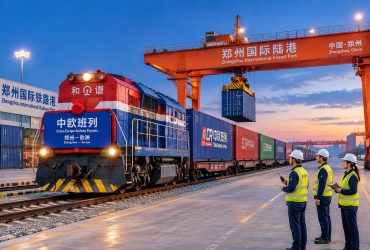
Forget the hype about AI or space race. The real engine of China's modern economy is its supply chain—a dense, efficient network that turns raw materials into finished products faster and cheaper than anywhere else. Here is how this invisible infrastructure shapes daily life for ordinary Chinese people.
To the outside world, red in China feels like a loud holiday signal. But for ordinary people, it is a quiet language of history, protection, and hope that colors everything from wedding dresses to smartphone apps.