

The Sour Reality
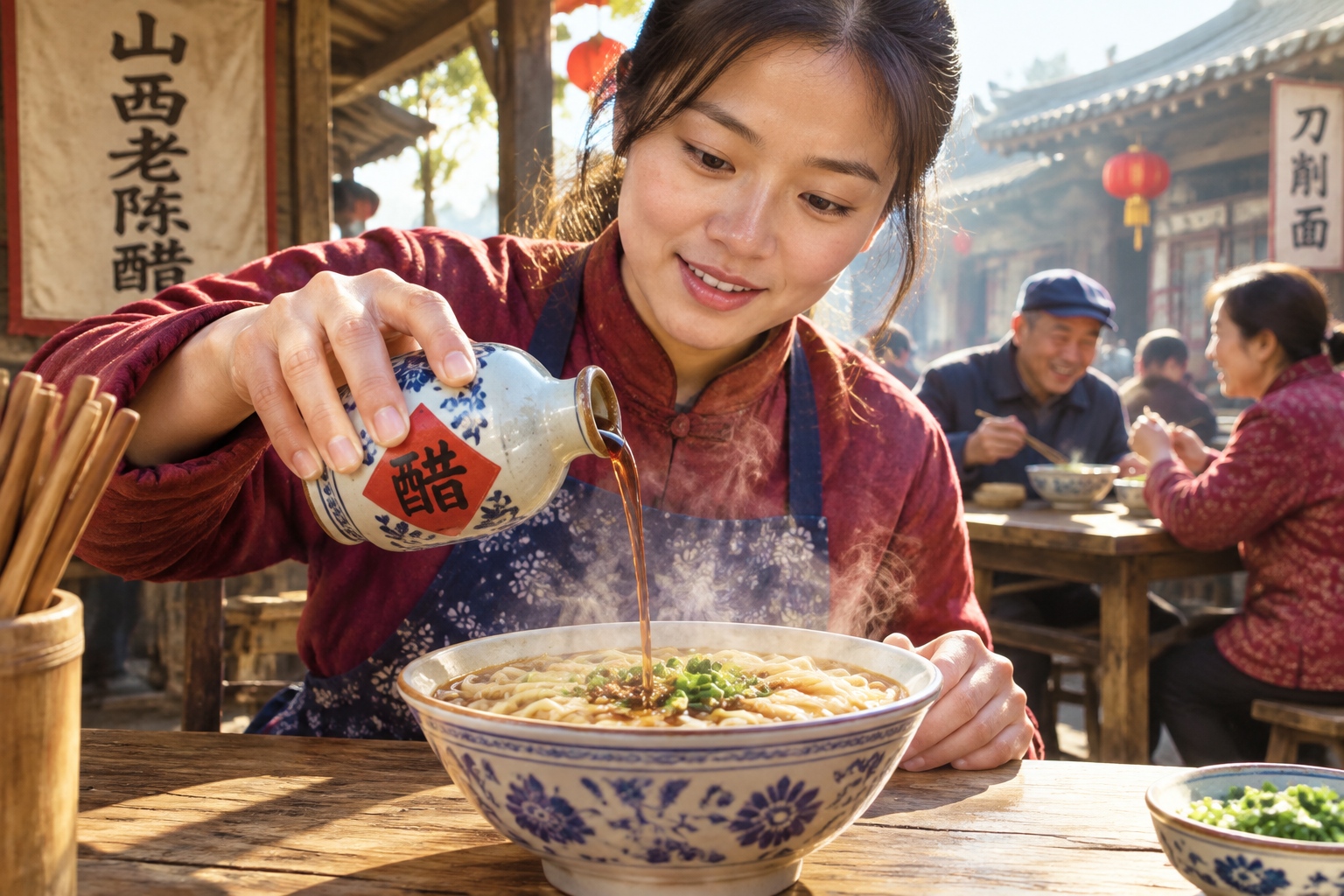
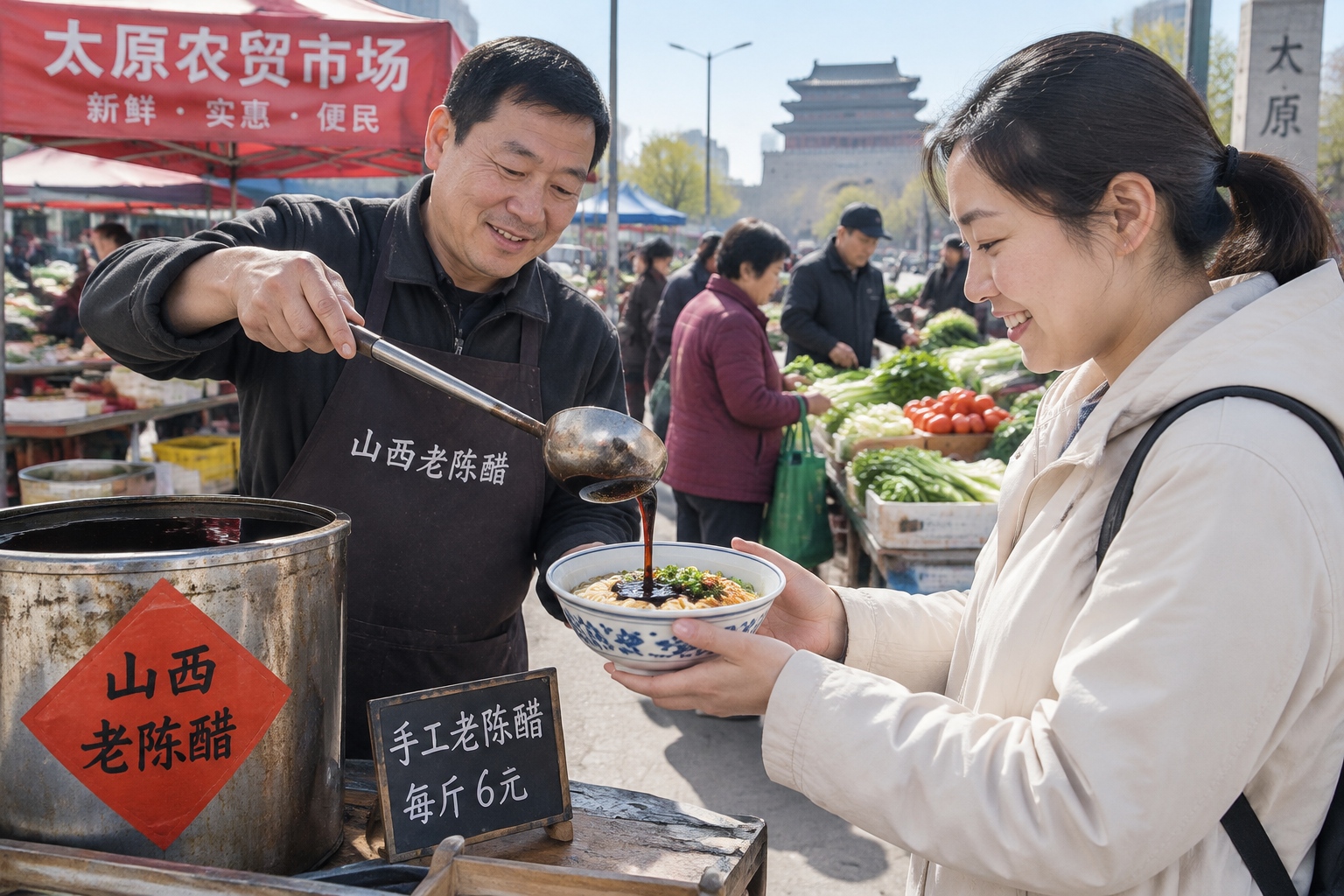
Walk through any morning market in Taiyuan, the capital of Shanxi province, and you will smell it before you see it. It is a sharp, penetrating tang that hangs in the air alongside steaming buns and boiling noodles. In Shanxi, vinegar is not an optional garnish on the side; it is as fundamental as salt or water.
I remember visiting a small noodle shop in Pingyao古城 (Ancient City). The owner didn’t ask if I wanted chili oil or soy sauce. He simply poured a large ladle of dark, aged vinegar into my bowl before I could even taste the noodles. For Shanxi locals, adding vinegar is an instinctive reflex, similar to how people in New Orleans reach for hot sauce or Italians grab their olive oil. It defines the flavor profile of entire meals.
Geography as the First Chef
Why such a deep fixation on sourness? The answer lies not in genes alone, but in the harsh geography that shaped Shanxi for thousands of years. Located in North China, Shanxi has a continental climate characterized by long, dry winters and scorching summers. Historically, before modern refrigeration, this environment made food preservation incredibly difficult.
Acid is nature’s preservative. Fermenting grains into vinegar lowered the pH level, preventing bacterial growth and allowing communities to survive lean winter months. The soil in Shanxi is also rich in millet and sorghum but poor in certain trace minerals like calcium. Historians suggest that the high intake of acetic acid helped locals absorb nutrients more efficiently from a diet heavy in grains and vegetables.
Fermentation: A Cultural Technology
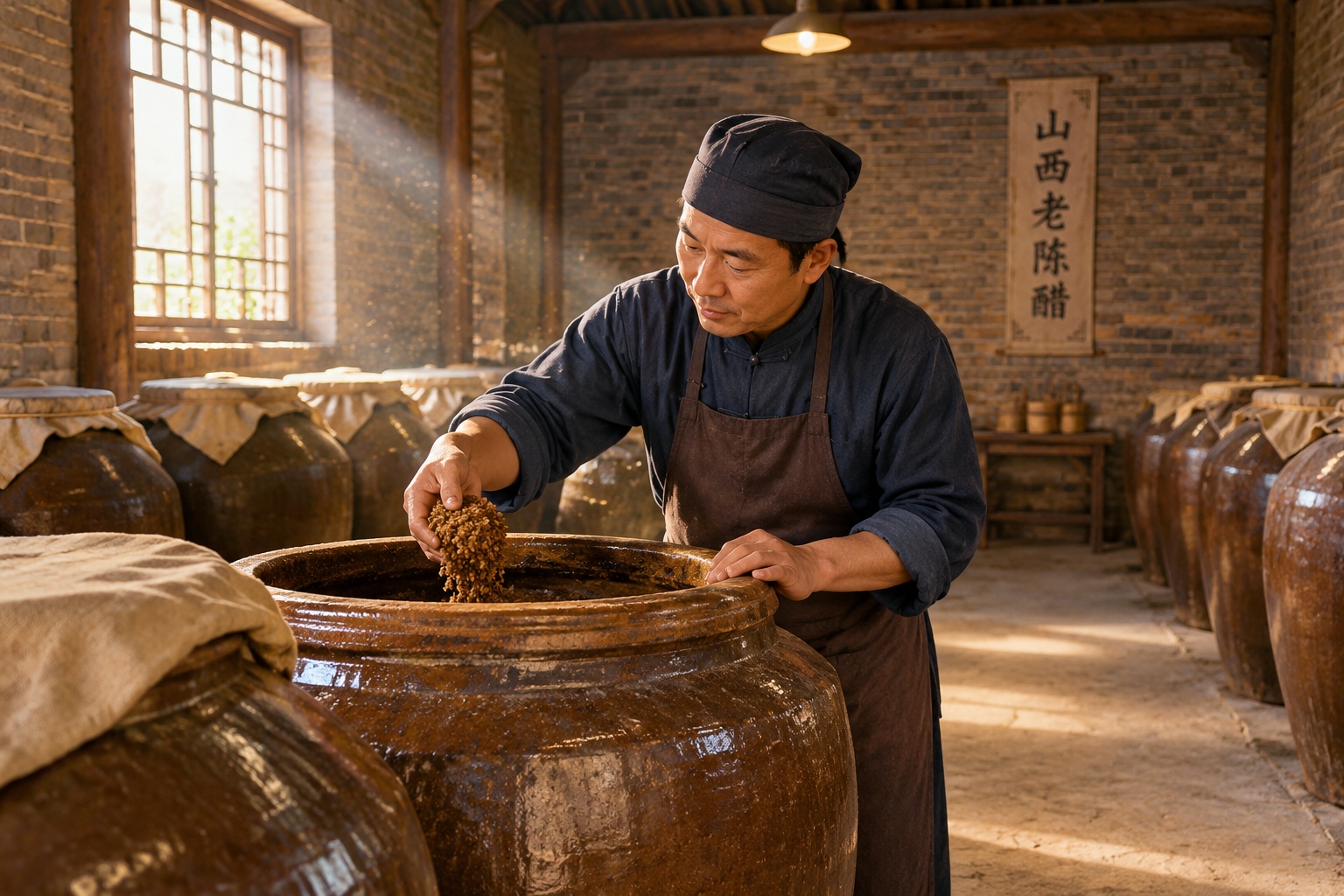
In Shanxi, making vinegar is considered a high art form passed down through generations. The most famous variety, Xiao Vinegar (or aged grain vinegar), undergoes a fermentation process that can last for months or even years.
The production involves roasting grains like sorghum until they are smoky, then fermenting them in large earthenware jars. This isn’t just cooking; it is biological engineering done by hand. Each family historically had its own “starter” culture—a mixture of fermented grain kept alive for decades. To throw away the starter was to lose one’s heritage.
This tradition has evolved into a massive industry, yet the small workshops still operate with ancient methods. The smell of fermenting grains is so pervasive in Shanxi that locals claim it can be smelled from miles away. It is a sensory signature of the region, much like the scent of roasting coffee in Ethiopia or brewing beer in Bavaria.

The Modern Shift
Does this ancient habit survive in the age of global fast food and health-conscious trends? The answer is a nuanced yes. While younger generations in Shanghai or Shenzhen might prefer lighter, sweeter flavors, Shanxi’s youth still reach for the vinegar bottle.
However, the context has shifted. In the past, people drank vinegar straight from the bottle to aid digestion or fight off colds—a common folk remedy. Today, it is less about survival and more about flavor refinement. Supermarkets in Taiyuan now offer dozens of varieties: aged vinegar with dates, vinegar for seafood dipping, and even low-sodium options for health-conscious families.
There is a subtle tension here. As the region embraces modernization, there is a conscious effort to preserve the traditional brewing methods as part of China’s Intangible Cultural Heritage. This isn’t just about taste; it is about maintaining a link to the past in a rapidly changing world.
A Global Perspective on Sourness
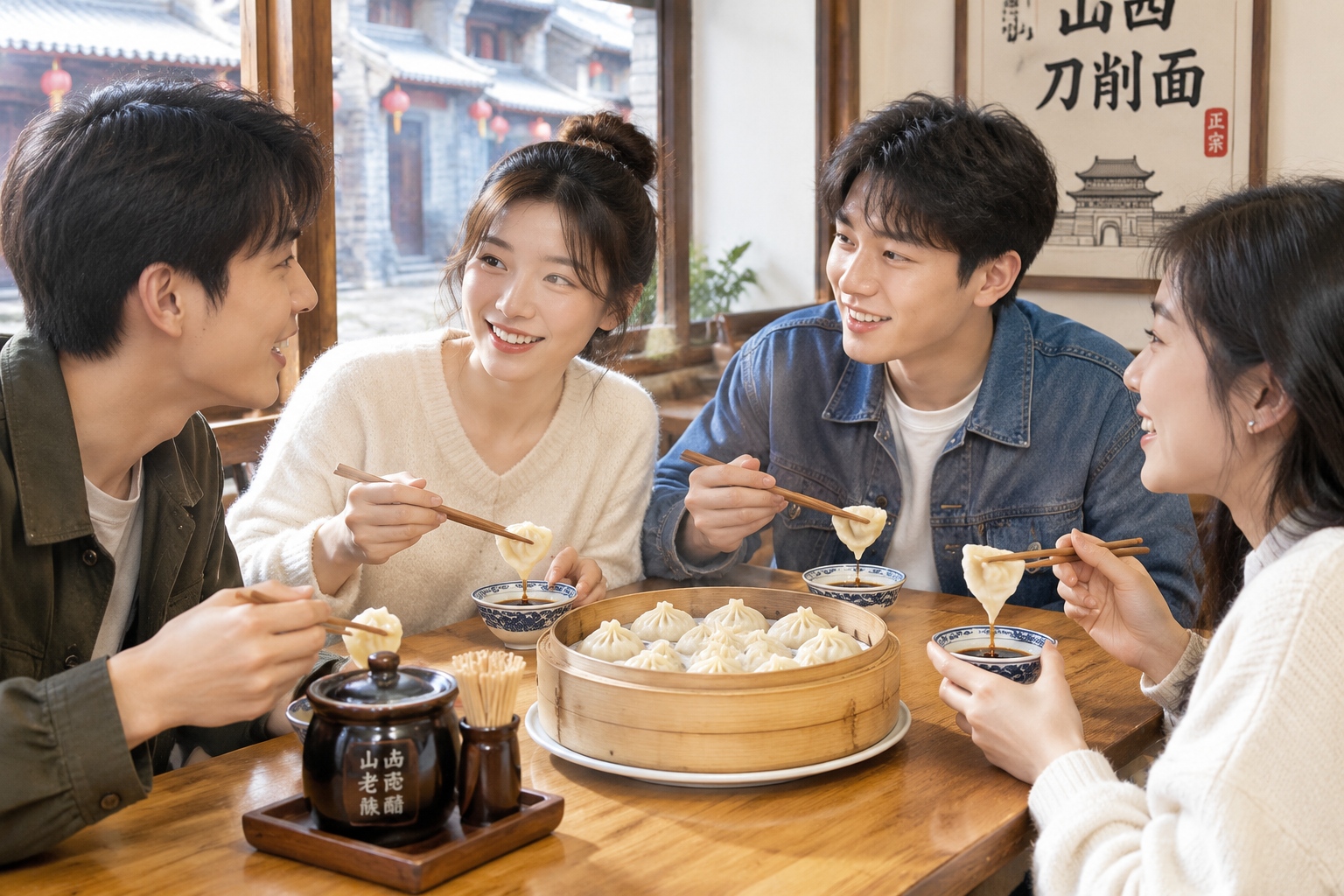
Shanxi’s obsession with vinegar invites comparison with other culinary traditions. In Western Europe, sourness often comes from wine or fresh citrus. In Southeast Asia, it is derived from tamarind or lime. But in Shanxi, the sourness is complex, derived from fermented grains.
This difference highlights the diversity of Chinese cuisine. It is not a monolith; it is a patchwork of regional adaptations to local environments. Just as the Sichuanese developed a love for numbing chili peppers due to their humid climate, Shanxi people developed a palate for sour vinegar due to dry heat and preservation needs.
Understanding this helps foreign readers see China not as a single entity with uniform habits, but as a collection of distinct ecosystems. The “dietary gene” isn’t just in the DNA; it is written into the soil, the climate, and the history of every family kitchen.
Start the discussion at forum.chinacomes.com