

A Bowl of Noodles, A Screen in Hand
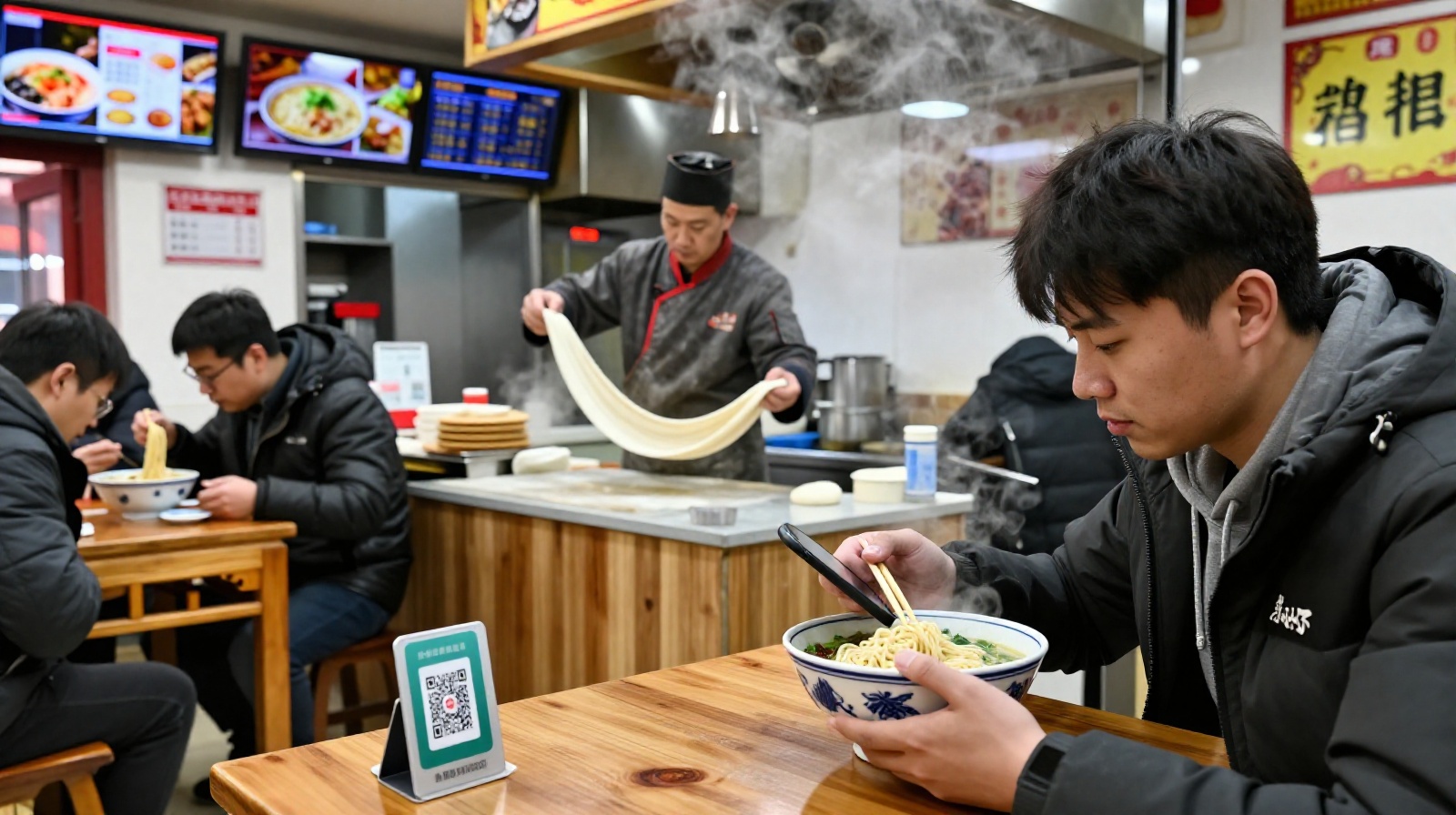
The air inside “Old Li’s Noodle House” near the Muslim Quarter in Xi’an smells intensely of cumin and chili oil. It is a smell that has defined this city for centuries. But look closer at the counter: there is no handwritten menu taped to a chalkboard, nor are customers shouting orders over the noise. Instead, every table features a small QR code. A young woman scans it with her phone, browses a colorful digital menu on WeChat, and pays instantly via Alipay.
“I don’t even need to take out my wallet anymore,” she laughs, showing me the receipt that popped up digitally seconds later. “The kitchen just sees my order appear on their screen.”
This scene is now typical in many Chinese cities, not just for high-end restaurants but for humble noodle shops selling one of China’s most beloved dishes: youmian (oil-spiced noodles) or biangbiang noodles. It represents a quiet revolution where ancient culinary traditions are being preserved, not replaced, by the tools of the digital age.
The Young Owner and the Tablet Menu
I met Li Wei, 28, who took over his family’s shop three years ago. His father still runs the kitchen with the same intensity he had for decades, pulling massive strips of dough that stretch like ribbons before being sliced into wide noodles.
“My dad was terrified I would ruin the business,” Li Wei admits, wiping sweat from his forehead. “He thought if we stopped writing orders by hand, people would think the food wasn’t fresh.”
The shift didn’t happen overnight. During the pandemic, contactless ordering became a necessity. But once customers saw how much faster they could eat—skipping the 15-minute wait for a waiter to take an order and calculate change—the new system stuck.
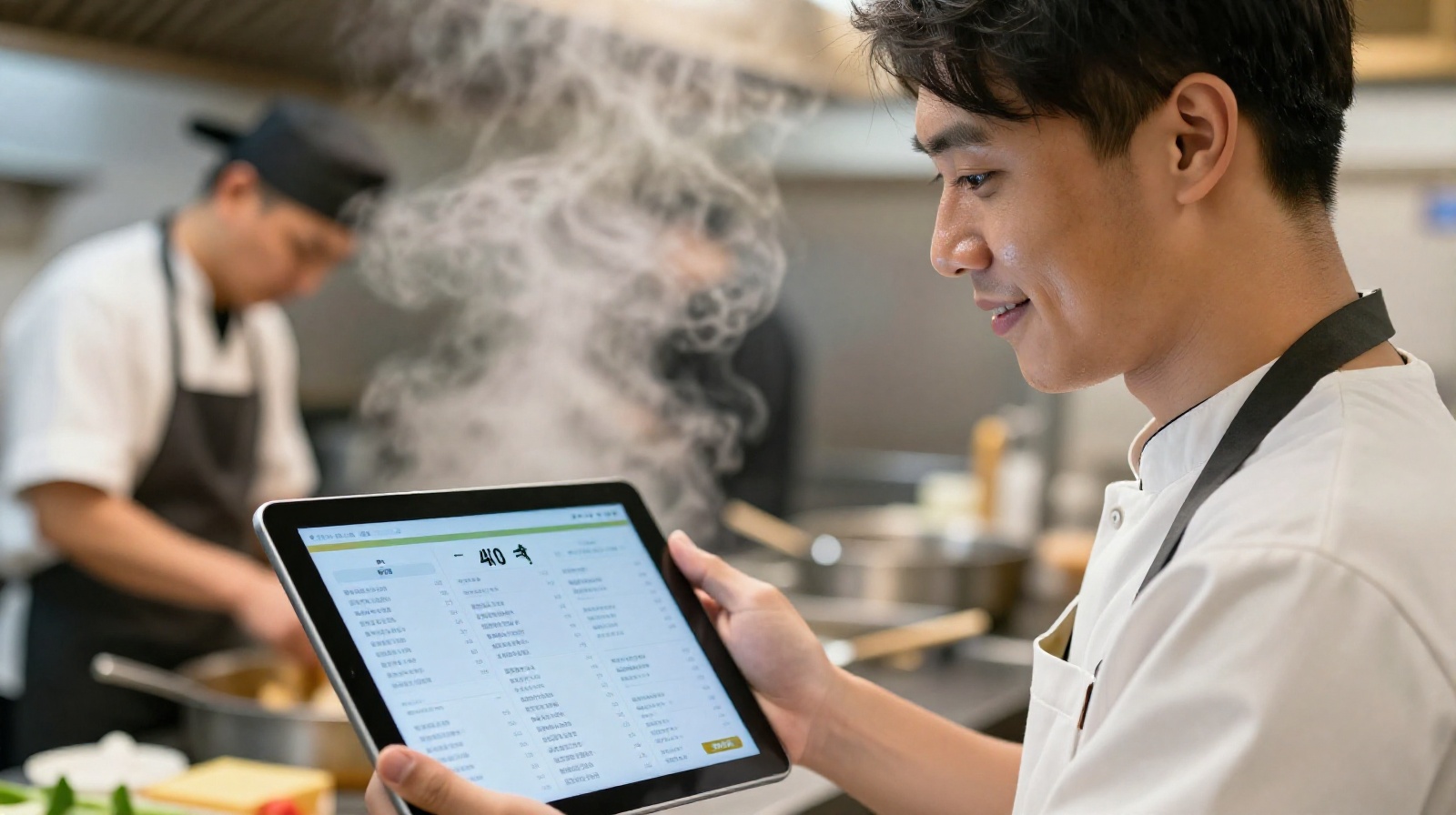
Alt: A young male restaurant owner in China standing behind a counter, holding a tablet computer displaying a menu interface while a chef pulls noodles in the background.
The benefits were immediate. In peak hours, when lines stretch out the door, the digital system can handle dozens of orders simultaneously without errors. The kitchen displays a timer for each dish, ensuring that even as demand spikes, the noodles are cooked to the exact same texture. It’s efficiency meeting tradition.
Behind the Counter: Tradition Meets Technology
The heart of the shop remains unchanged. Li Wei’s father still stands at the wooden block, slapping dough with a rhythmic thud that echoes off the tiled walls. The skill to pull noodles by hand is something that cannot be automated; it requires years of muscle memory and intuition.
However, technology has quietly entered the kitchen workflow. Digital timers replace the old wall clocks, syncing with the ordering screens so chefs know exactly how many minutes a bowl needs to simmer in the broth. Inventory management apps track flour and oil usage, helping Li Wei predict when he needs to restock without running out during lunch rush.
“Technology helps me manage the chaos, but it can’t make the noodles taste good,” says his father, stirring a massive pot of red chili sauce. “The soul is still in my hands.”
Cashless and Connected: A Local Habit
For tourists or even older locals who remember when cash was king, this transition can be jarring at first. But for the millions of young people living in Xi’an, mobile payment is as natural as breathing.
I spoke with a tourist from Berlin who initially panicked when he realized he had no Chinese credit cards and very little cash. A nearby shopkeeper helped him set up Alipay on his phone. Within minutes, he was scanning QR codes at three different snack stalls in the market.
“It feels like magic,” the tourist said, sipping a bowl of spicy beef noodles. “I don’t have to worry about getting change or losing coins. I can focus on the food.”
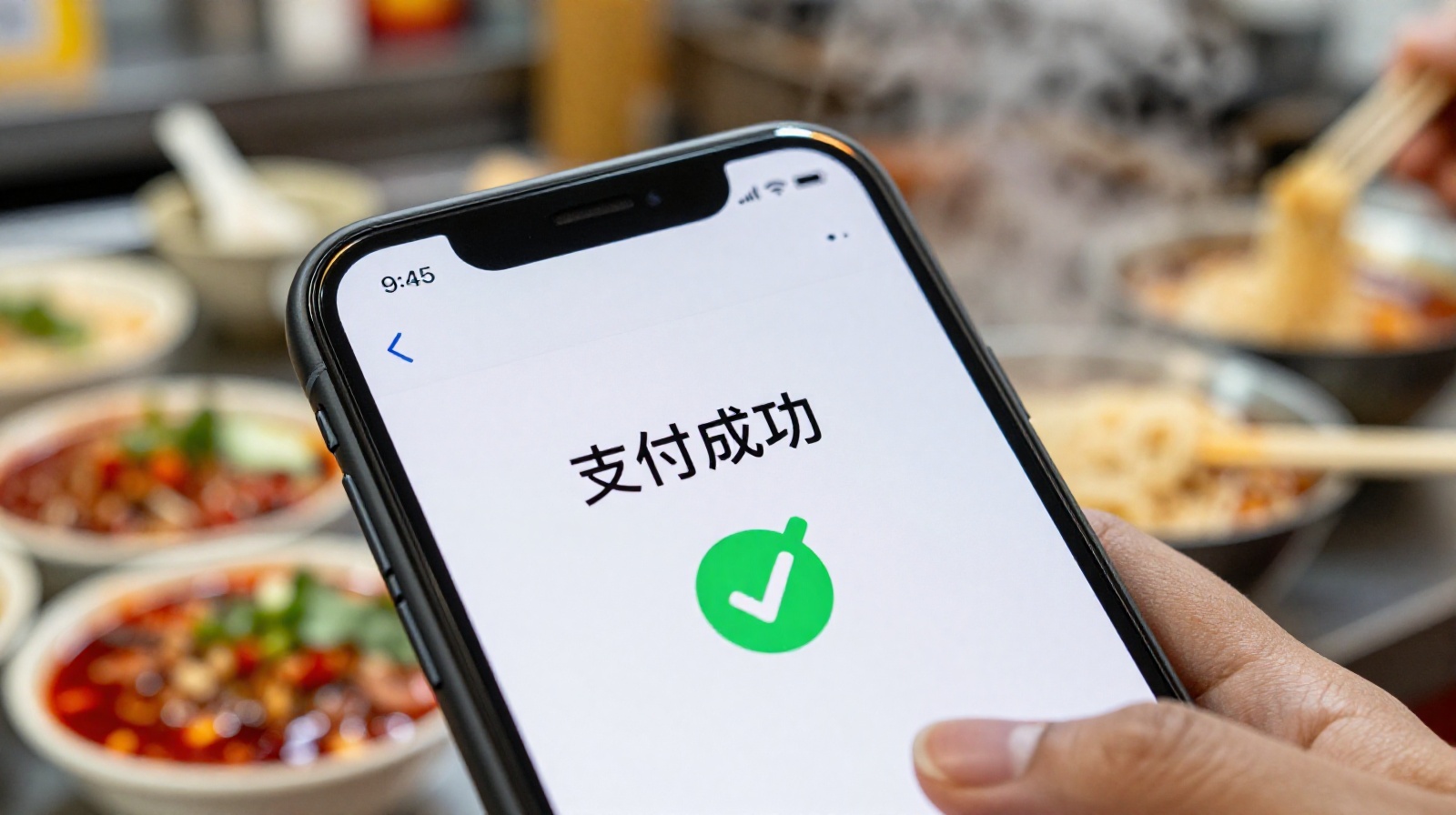
Alt: Close-up shot of a smartphone screen showing a mobile payment app interface in China with a blurred background of a busy noodle shop counter.
The speed is staggering. A typical transaction takes less than five seconds. This efficiency has reshaped the rhythm of daily life. Lunch rushes are shorter, tables turn over faster, and small businesses can operate with leaner staffs because fewer people are needed to handle cash registers or manage paper menus.
A Broader Trend Without Losing the Soul
This noodle shop is a microcosm of China’s broader economic landscape. The integration of technology into traditional industries isn’t about erasing history; it’s about survival and evolution.
According to recent data, over 90% of small and medium-sized enterprises in China have adopted some form of digital payment or management software. Yet, the cultural fabric remains intact. In Xi’an, you will see robots delivering food alongside grandmothers hand-making dumplings. The technology serves the culture, not the other way around.
As I left “Old Li’s,” the kitchen was still full of steam and the rhythmic thud of dough. The digital order screen flashed a new ticket, but the taste in my mouth was purely traditional. It is a balance that many Chinese communities have mastered: keeping their roots deep while reaching for the future.