

1. Stepping Out of the Guidebook
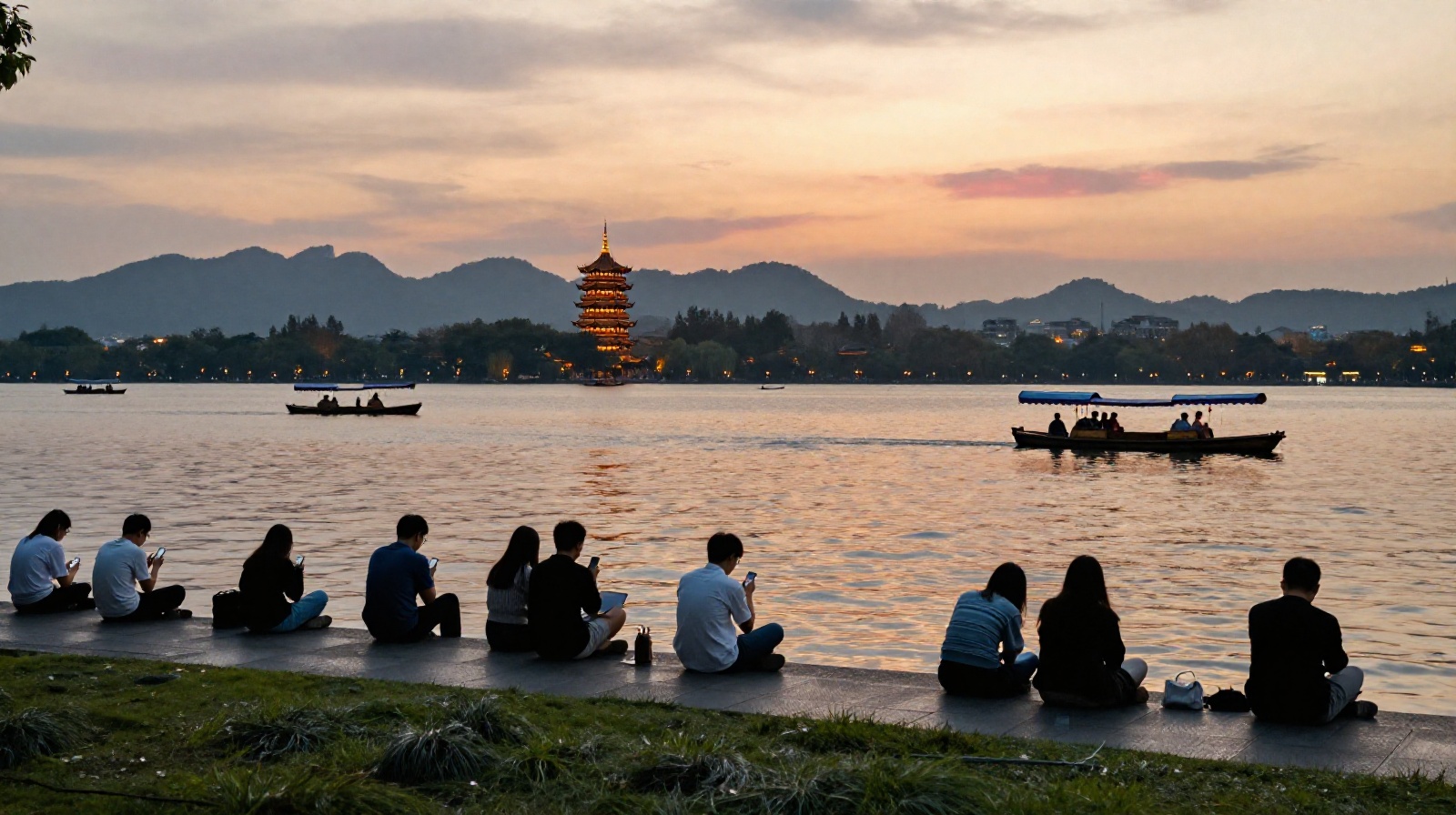
If you ask a Western travel guide, West Lake is a painting: misty mornings, willow trees, and silent boats. But if you walk along its shores at 6 PM on a Tuesday, you won’t find silence. You’ll hear the clatter of e-scooters, smell frying scallion oil pancakes from street stalls, and see hundreds of young people jogging or playing frisbee.
For the locals, this isn’t just a tourist trap. It’s their living room, their gym, and increasingly, their office. The UNESCO status often makes outsiders think of protection as “freezing” the lake in time. But for the 20-somethings of Hangzhou, it means something different: it’s a guarantee that the view from their window will never be blocked by a skyscraper, allowing them to build modern lives on an ancient foundation.
2. From Stone Pathways to Smart Tourism
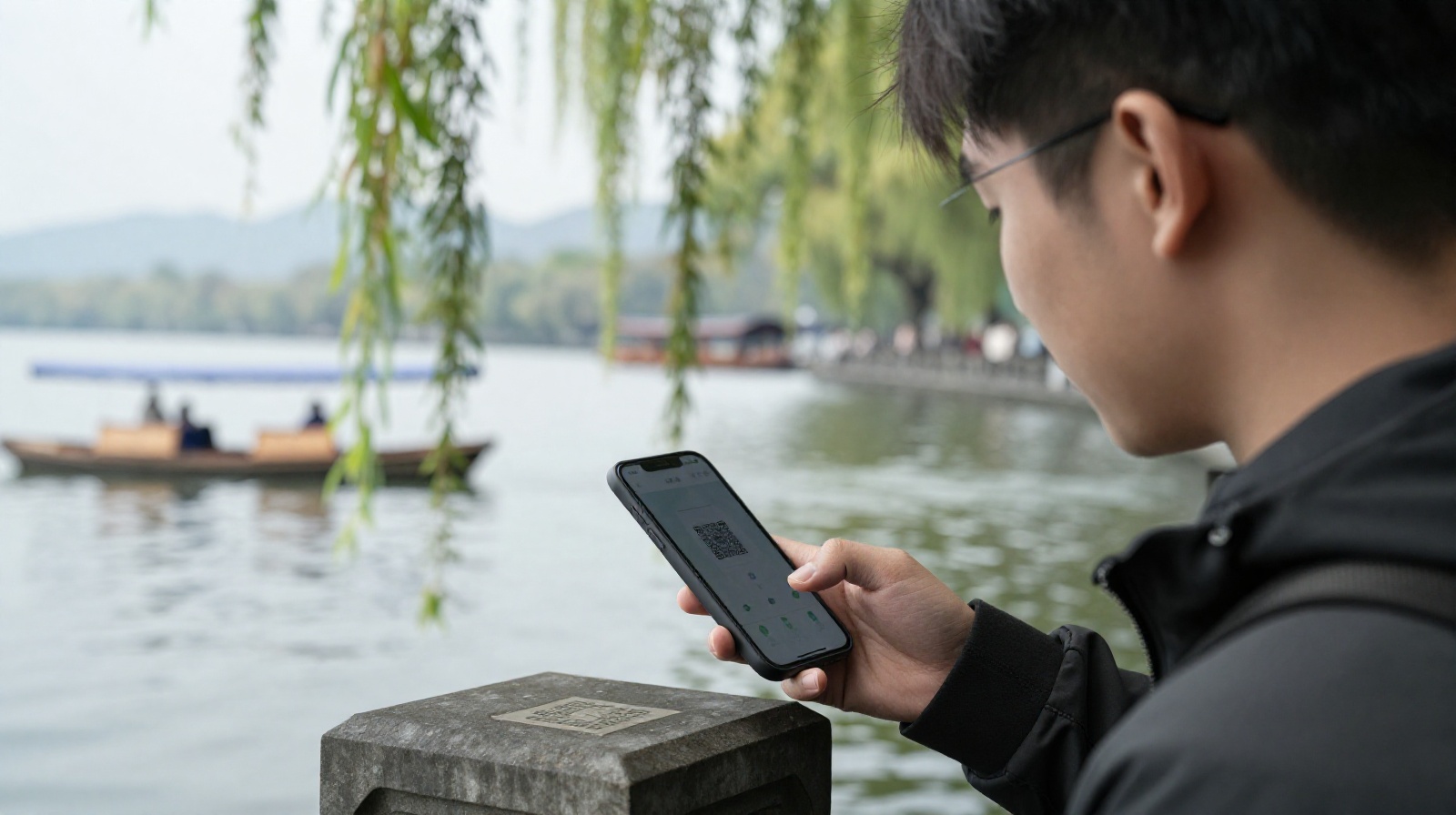
The first thing you notice today isn’t just the stone bridges; it’s the digital layer overlaying them. Liang, a 24-year-old software engineer who works in the nearby Internet Hub, explains how his daily commute has changed.
“Ten years ago, you needed to wait in line for a paper ticket to take a boat,” Liang says, showing me his phone. “Now, I scan an Alipay QR code, and the boat leaves in two minutes. But it’s not just convenience; it’s data.”
This isn’t just about tourists. The same digital infrastructure that powers ride-hailing apps also manages crowd control at the lake, ensuring safety without blocking the historic paths. Local youth are employed to maintain this system—coding algorithms for boat routing, managing VR guides that replace old paper maps with augmented reality history lessons. They aren’t erasing tradition; they are upgrading the interface of it.
3. The ‘Third Space’ Phenomenon
Hangzhou is known as China’s tech capital, but young residents have found a unique way to blend high-tech work with low-tech nature. Along the lakefront, you’ll find more than just cafes; you see “coworking spots” under centuries-old trees.
I spoke with Mei, a freelance graphic designer who rents a small desk at a lakeside studio. “I used to work in a sterile office downtown,” she tells me, tapping her laptop while the breeze rustles the lotus leaves nearby. “Now I come here. The UNESCO rules prevent heavy construction, so we have this open space. It’s quiet enough for focus but loud enough with nature to keep me grounded.”
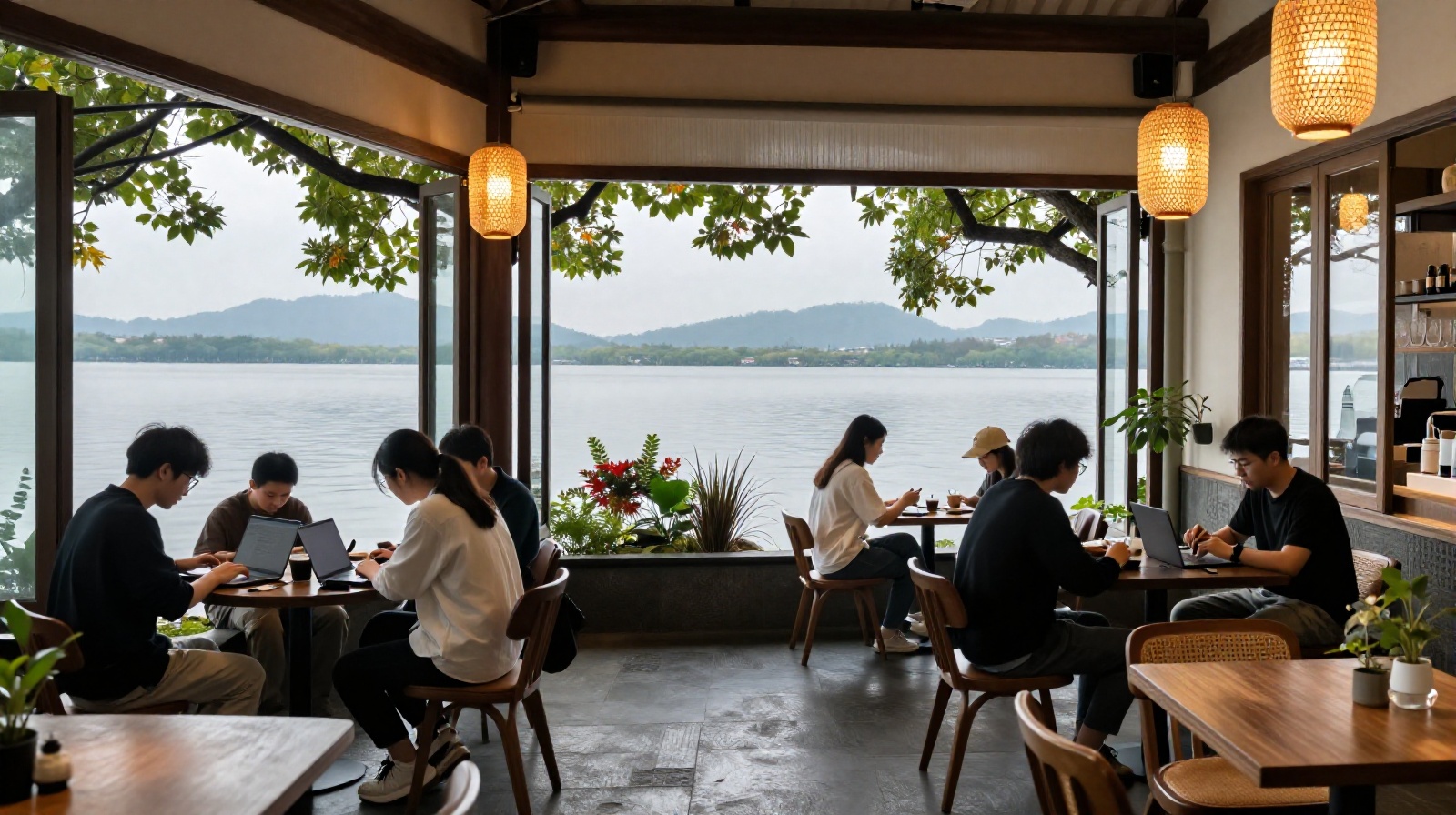
This shift has created a new kind of social fabric. Indie markets pop up on weekends where young designers sell handmade goods near the Broken Bridge. Startup teams hold strategy meetings under 1,000-year-old banyan trees. The lake isn’t an obstacle to modernization; it’s the backdrop that makes their work feel meaningful.
4. Stewardship as Lifestyle
There is a misconception that heritage sites are places you visit and leave alone. In Hangzhou, conservation has become a lifestyle, driven largely by young volunteers and entrepreneurs. The UNESCO label doesn’t restrict them; it empowers them to create value.
Taking part in the “Guardians of West Lake” program, university students spend weekends cleaning waterways or monitoring biodiversity. But it goes deeper. Young local artists are turning traditional crafts into modern cultural products—designing sustainable packaging for tea using lake motifs, or creating digital art projects that interpret ancient poetry through code.
“The status gives us a brand,” says Chen, 27, who runs a small eco-tourism startup. “People travel here not just to see water, but to experience this balance between history and future. We get to build businesses on it.”
5. A Living Legacy
The story of West Lake isn’t about preserving a scene for the past. It’s about proving that heritage can be a launchpad for the future. For young Hangzhou residents, the lake is not a museum to be looked at through glass; it is a dynamic ecosystem where they live, work, and innovate.
As the sun sets over the Su Causeway, illuminating both the ancient pagoda and the digital billboards of the city beyond, it’s clear: the UNESCO legacy isn’t static. It lives because young people refuse to let it sit still. They are rewriting the definition of what a heritage site can be in the 21st century.