

A Summer Escape That’s Not Just for Emperors
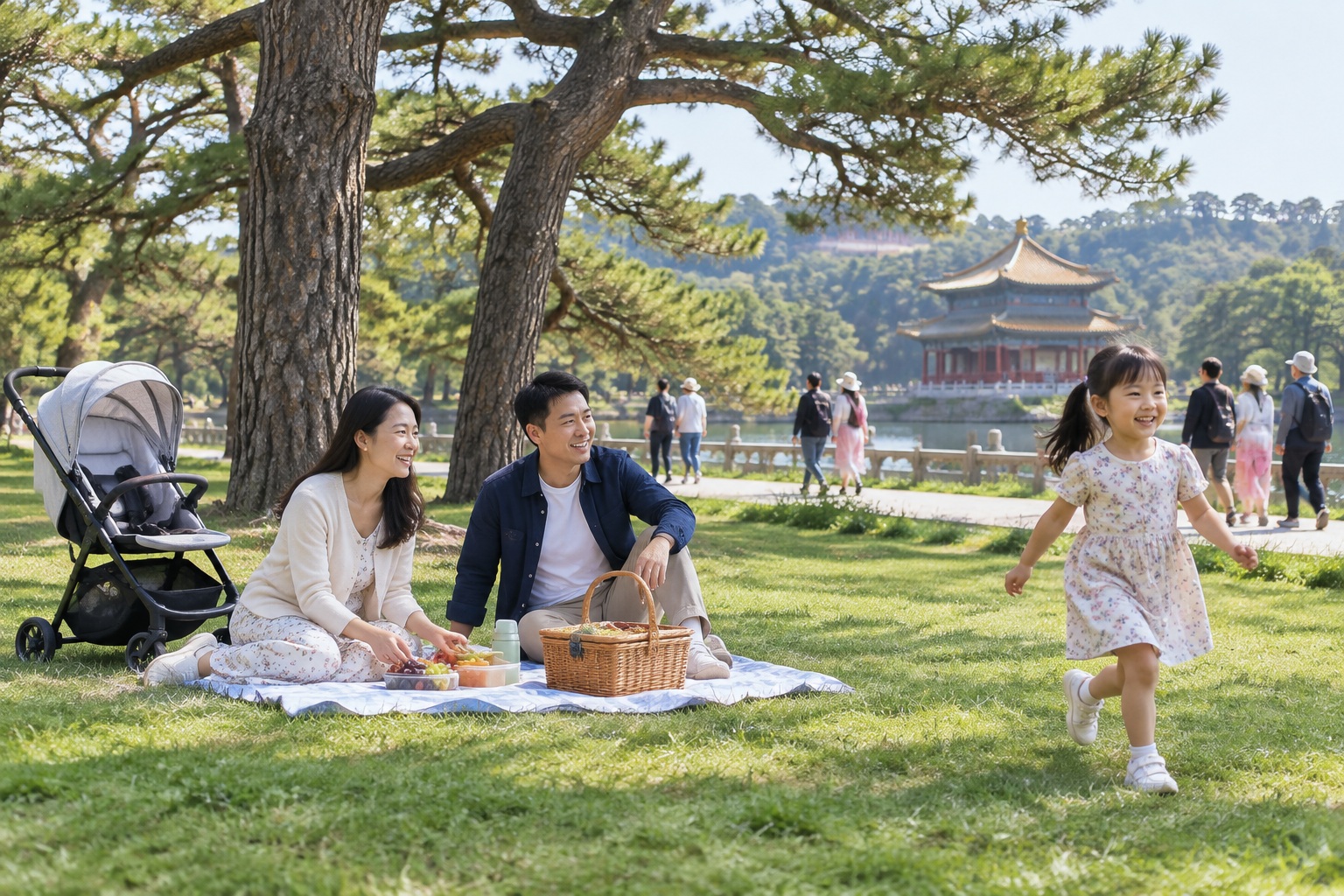
On a sweltering July afternoon, while Beijing’s Forbidden City is packed with tour groups fanning themselves, a family from Shijiazhuang is spreading a picnic blanket under a 300-year-old pine tree. Their kids are feeding fish in a lake that once belonged to Qing emperors. Welcome to Chengde Mountain Resort.
Chengde is a one-hour high-speed train ride from Beijing. It’s a UNESCO World Heritage site, the largest imperial garden in China, and eight times the size of Beijing’s Summer Palace. But today, it’s a public park where locals and domestic tourists come to relax, not just to sightsee.
What Exactly Is Chengde Mountain Resort?
Built in the 18th century by Qing emperors, this was their summer retreat. It’s not a single palace but a vast landscape of lakes, plains, mountains, and a few modest palaces. Emperors would spend months here to escape the heat and handle state affairs. Since 1994, it’s been a UNESCO World Heritage Site.
Think of it as a combination of a national park and a historical palace. The grounds are huge—5.6 million square meters—so you never feel crowded, even on busy days. The city of Chengde itself is small, about 3.5 million people, and the resort sits right in the middle. From the train station, it’s a 30-minute walk or a quick bus ride.
How Do Ordinary Chinese Families Spend a Day Here?
Morning: Lakes, Boats, and Tai Chi
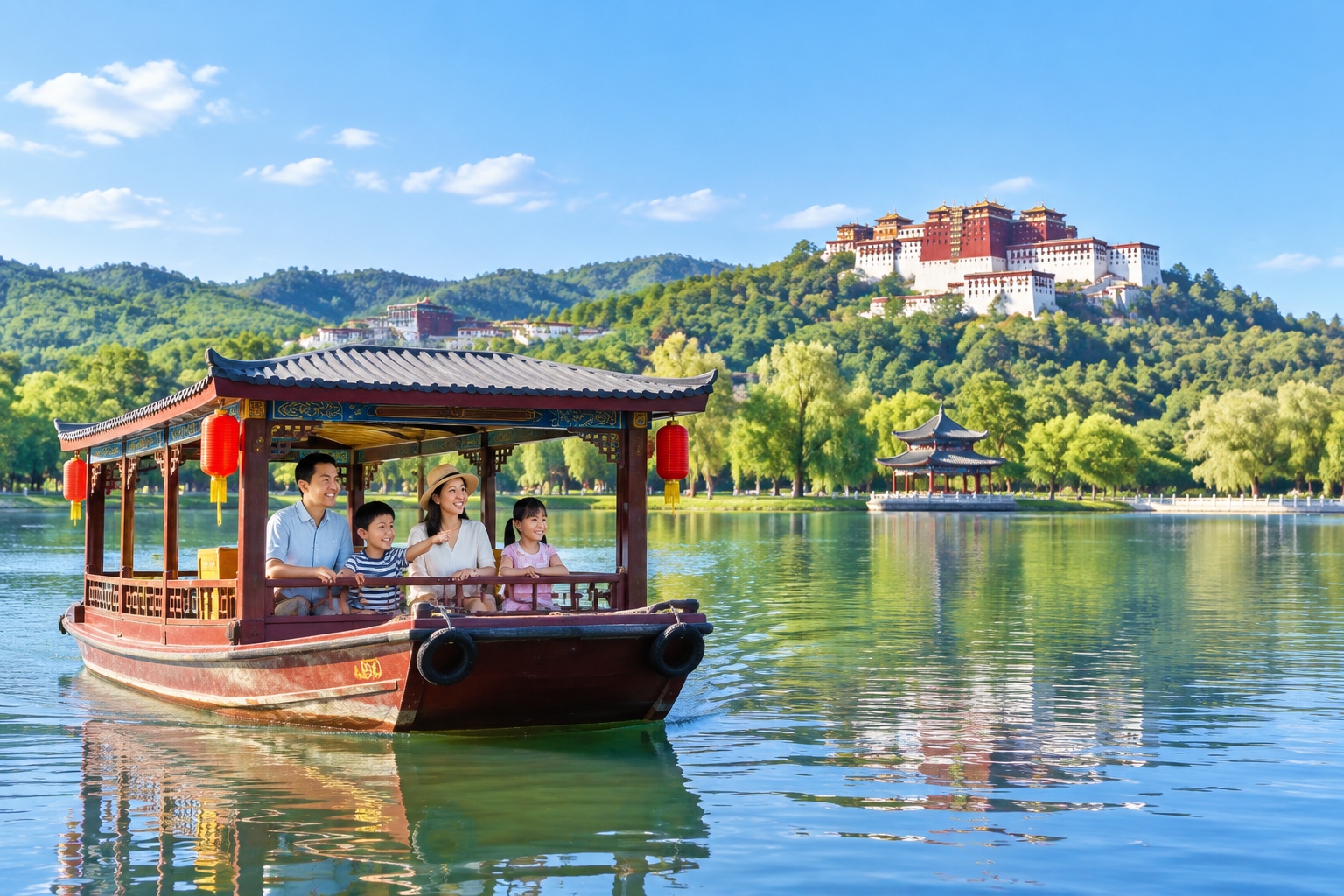
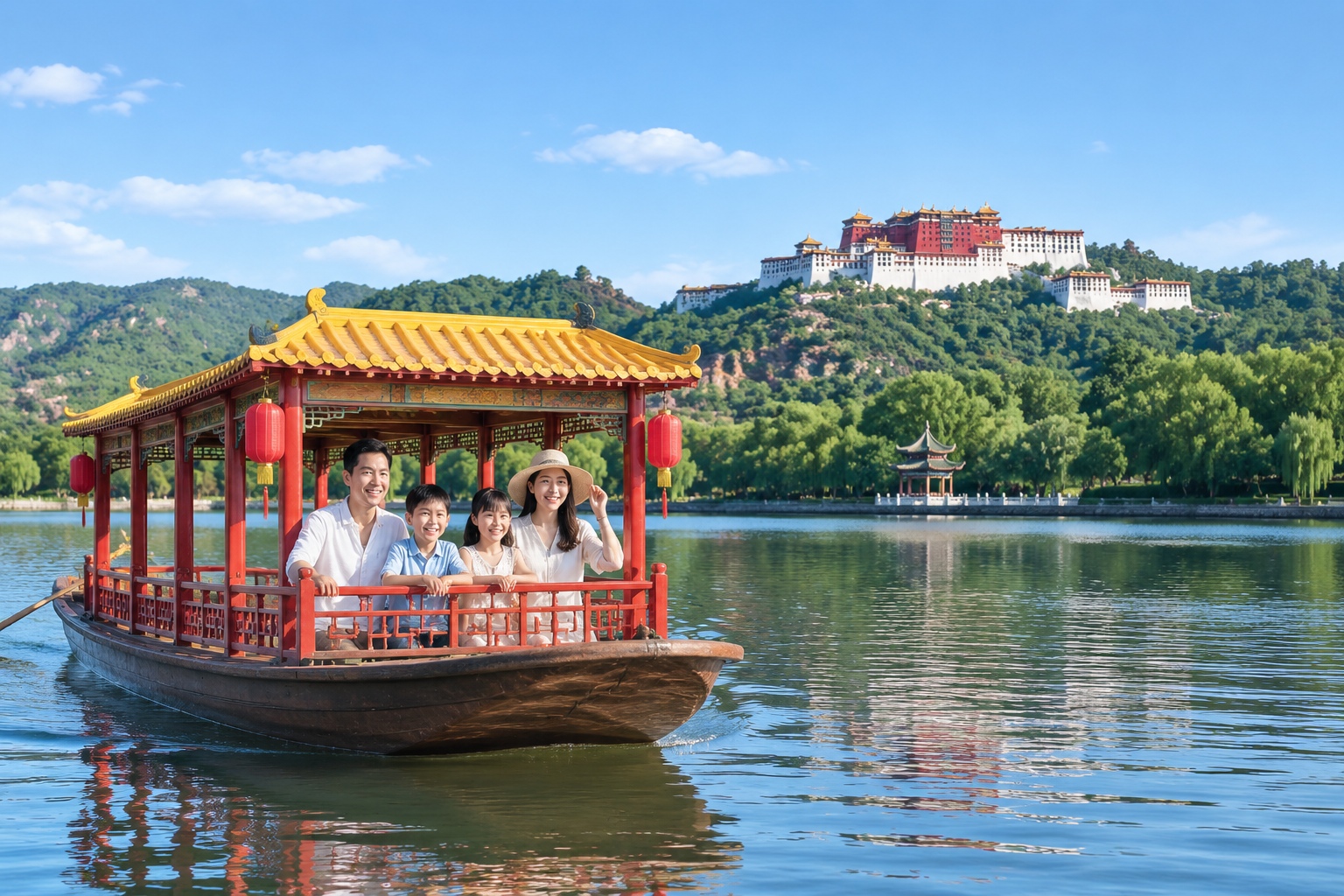
Locals arrive early for tai chi, jogging, or just strolling. Tourists rent bikes or take the sightseeing boat. The Lake Area is the most popular. You can rent a small boat for 50–100 RMB. Kids love feeding the fish. The shaded paths are perfect for a slow walk. The lakes are connected by bridges, each with a different name and style. Locals bring their own tea and sit by the water.
Afternoon: Picnics, Palaces, and Ice Cream
Picnics are a big deal. Families bring their own food or buy from vendors. The main palace (Zheng Gong) where emperors lived is modest compared to the Forbidden City, but it’s worth a look. It’s made of nanmu wood, which smells faintly of camphor. Don’t miss the emperor’s study, where you can see original furniture. Ice cream stalls sell “imperial” themed popsicles that kids love.
If you have energy, walk or take the sightseeing bus to the Plain Area. It’s quieter and offers great views of the surrounding mountains. For kids, the Plain Area has deer and wild horses—yes, real ones. They’re used to people and you can watch them from a distance.
Evening: Lights, Performances, and Street Food
The resort closes around 5–6 PM, but the surrounding area comes alive. The night market near the entrance has street food. Try Chengde liangfen (cold noodles) or roasted sweet potatoes. For dinner, head to the pedestrian street near the resort. Try “qiao mian he le” (buckwheat noodles) or “wan wan” (a type of dumpling). There’s also a large-scale performance, “Kangxi Grand Ceremony,” in the evening, but that’s outside the resort.
Beyond the Resort: The Eight Outer Temples
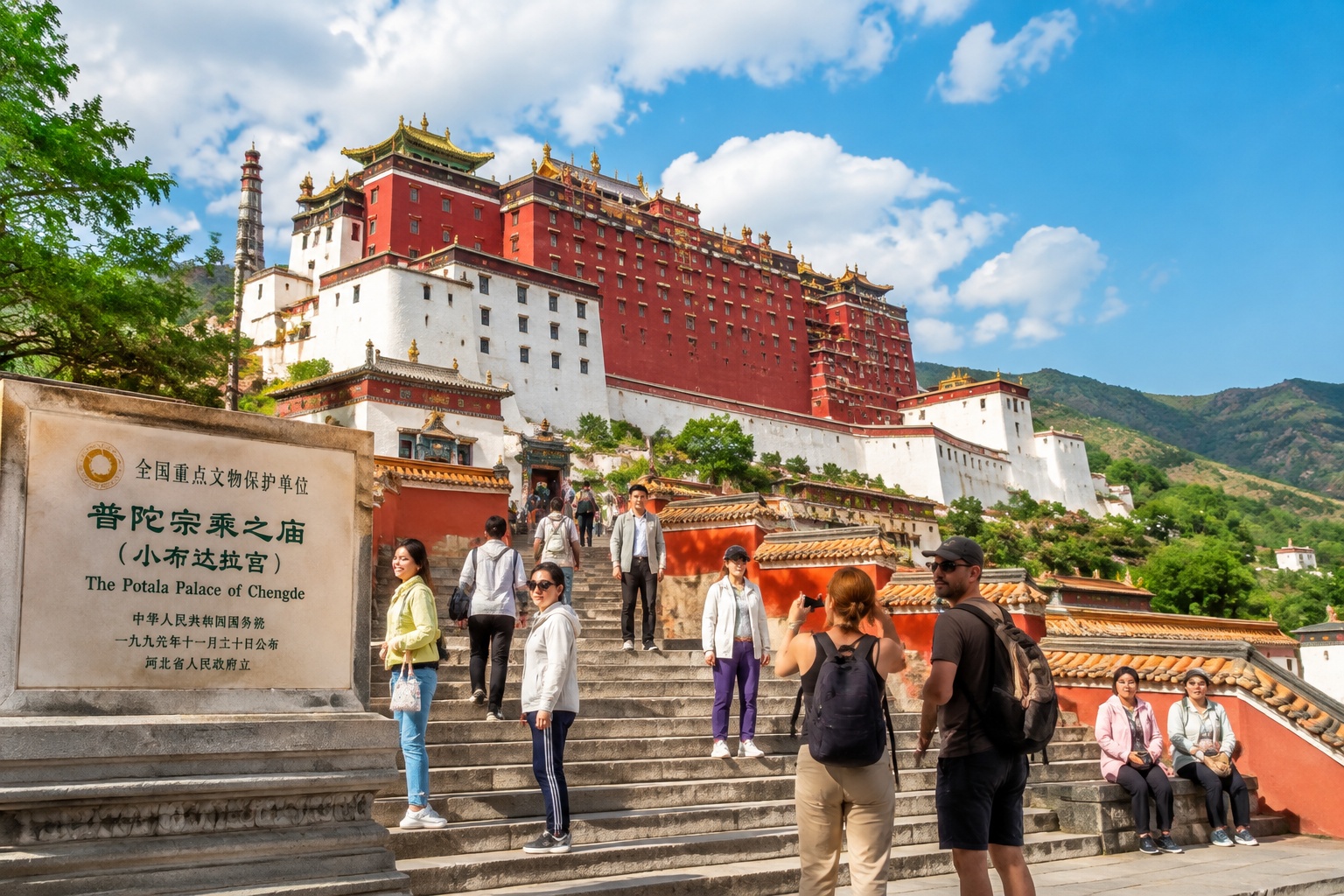
Most visitors combine the resort with the temples. Putuo Zongcheng (Little Potala Palace) is the highlight. It’s a replica of the Potala Palace in Lhasa, built for visiting Tibetan leaders. You can climb to the top for a view of the resort. Puning Temple has a 22-meter-tall wooden Buddha, the tallest of its kind in the world. Both are worth a half-day. You can buy a combo ticket for 200 RMB that covers the resort and two temples.
Practical Tips for Your Visit
How to get there: High-speed train from Beijing Chaoyang Station to Chengde South Station, about 1 hour, 95 RMB. Then bus or taxi to the resort.
When to go: Late spring and early autumn are best. Summer is peak but hot. Winter is quiet and snowy, but some areas close.
Tickets: 130 RMB in peak season (Apr–Oct), 90 RMB off-season. Combo tickets with temples available.
What to bring: Comfortable shoes, sunscreen, hat, water. You can bring your own food.
Getting around: Sightseeing bus (40 RMB) or boat. Bikes are available.
Where to eat: Inside the resort, there are a few snack bars. Better to eat outside near the entrance. Try local specialties: 承德凉粉 (cold noodles), 驴打滚 (glutinous rice rolls), 荞面饸饹 (buckwheat noodles).
Language: English signs are limited, but maps are available. Download a translation app.
How to avoid crowds: Arrive at opening (7:30 AM) or after 3 PM. Weekdays are much quieter than weekends. The resort is huge, so even on busy days, you can find a quiet corner.
The Mountain Area: For the Adventurous
If you’re up for a hike, the Mountain Area covers 80% of the resort. You can take a jeep tour (100 RMB) or walk. The views of the Little Potala Palace from the top are stunning. But it’s a lot of steps, so not ideal for strollers.
A Local Family’s Day at the Resort
Li Wei, a father of two from Beijing, comes here every summer. “We take the 7 AM train, arrive by 8:30, and spend the whole day. The kids love the boats and the deer. We bring sandwiches and fruit. It’s cheaper than Disneyland and way more relaxing,” he says.
Why It Feels Different from Beijing’s Palaces
Because it’s not a museum. It’s a living park. You’ll see retirees playing cards, kids flying kites, couples taking wedding photos. The scale is huge, so it never feels as crowded as the Forbidden City. You can find a quiet spot by the lake and just sit. It’s a place where history and daily life blend. That’s the charm.
Conclusion
If you want to understand how Chinese people enjoy their imperial heritage today, Chengde is a great place. It’s not just for history buffs. It’s for families, for walkers, for anyone who wants a break from the city. And you can do it in a day trip from Beijing, but better to stay overnight to catch the evening vibe.
Start the discussion at forum.chinacomes.com