

Introduction: A Factory Town Reinvents Itself
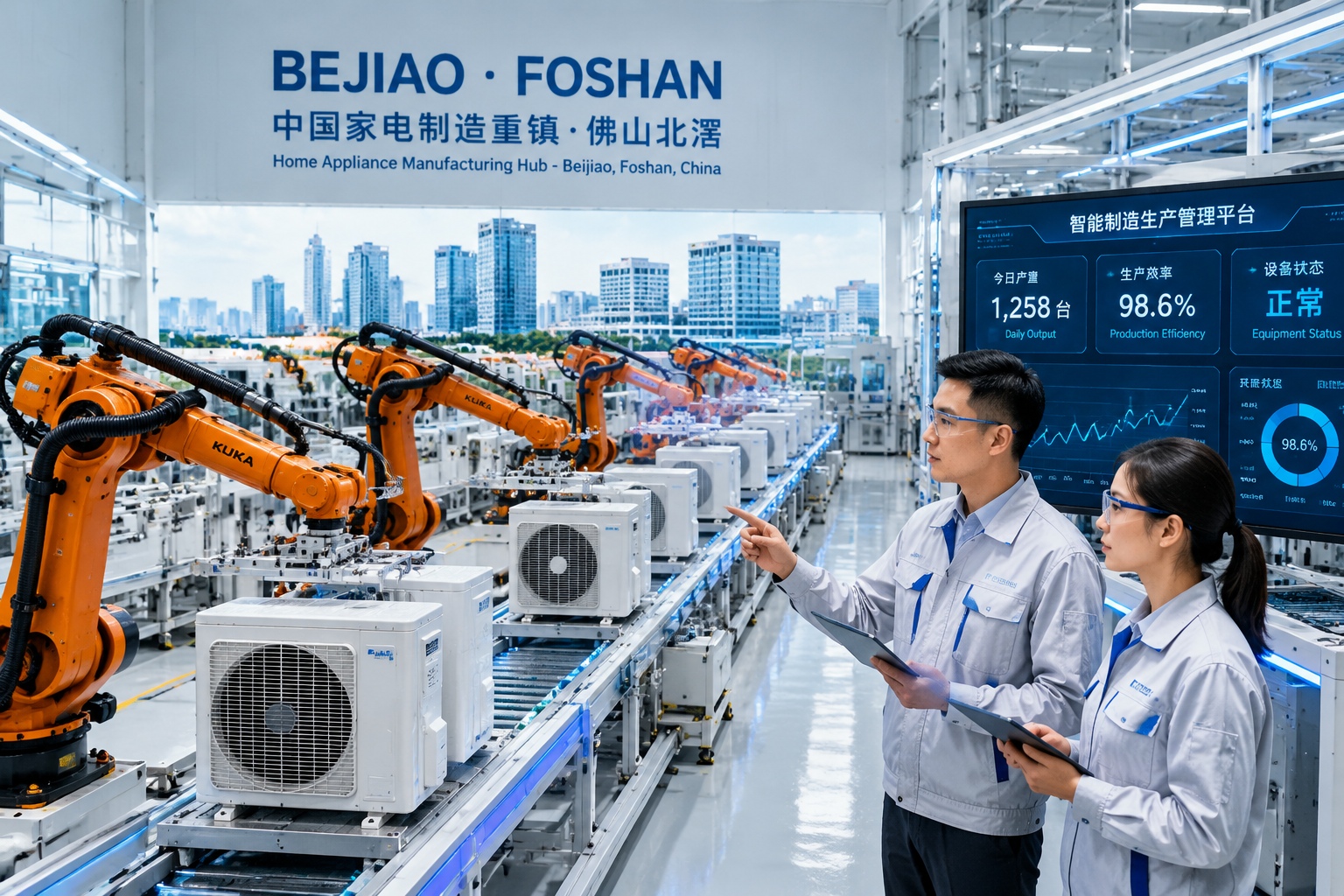
It is a typical morning in Beijiao, a town of about 370,000 residents in Foshan, southern China. Inside a sprawling factory complex, orange robotic arms assemble air-conditioner compressors with near-silent precision. Automated guided vehicles glide along painted lines, delivering parts to workers who monitor digital screens instead of tightening screws with their bare hands.
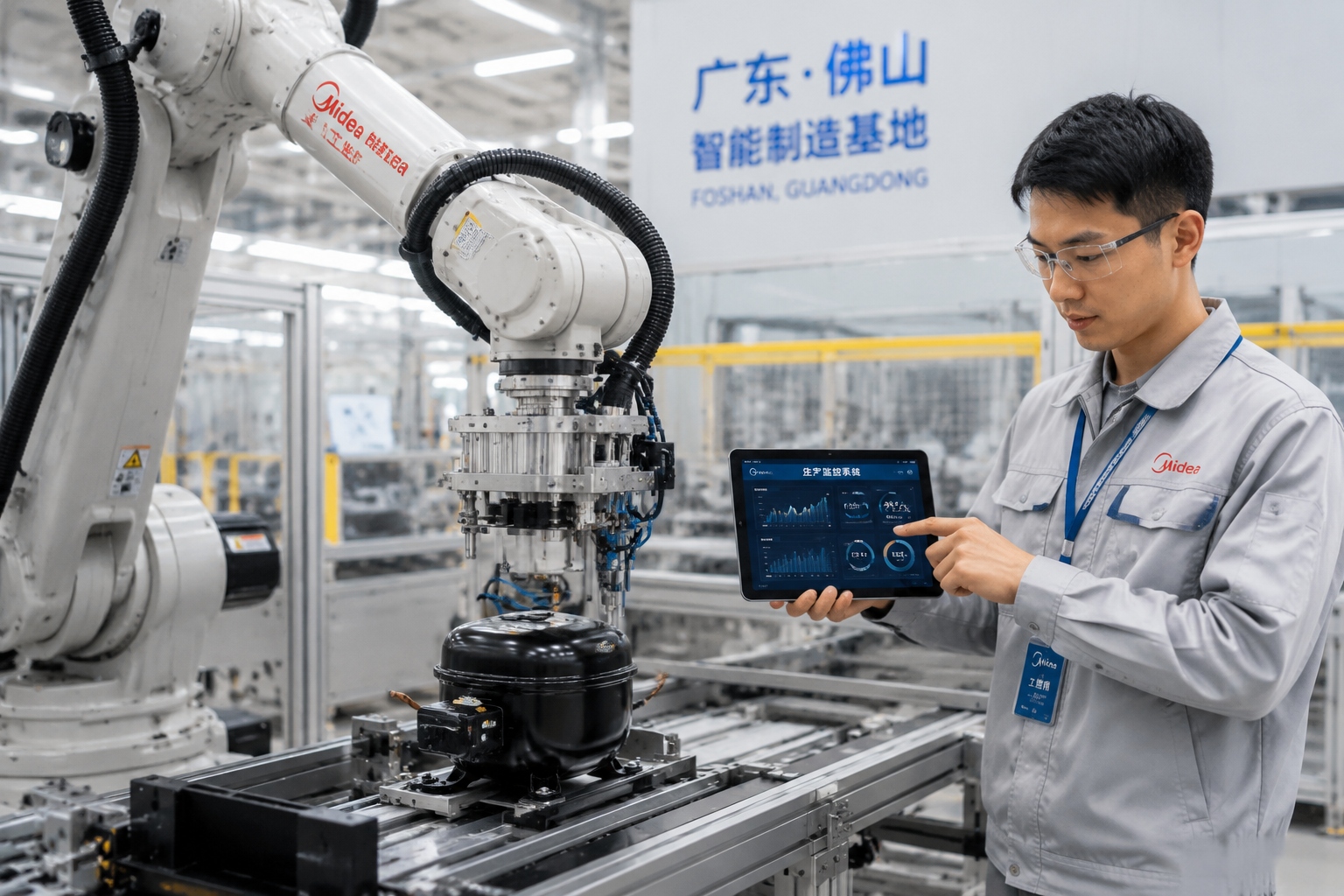
This scene would be unremarkable in any high-tech hub—except that 20 years ago, this same town was mostly known for producing cheap goods under other people’s brands. Beijiao, along with the rest of the Pearl River Delta, was the hidden workshop behind many well-known Western appliance labels. Now, it’s home to the world’s largest air-conditioner maker, hundreds of design studios, and a new generation of entrepreneurs who want to build their own names.
How did a small Chinese town move from low-cost assembly to self-driven innovation? The answer says a lot about China’s broader industrial upgrade.
From OEM Workbench to Innovation Hub
Beijiao’s industrial story began in the 1980s, when villagers turned agricultural land into small workshops. With cheap labor and proximity to Hong Kong’s trading networks, they started making electric fans, kitchen appliances, and later, air conditioners for foreign companies. Known as OEM (original equipment manufacturing), this model meant that local factories made products to the designs of others, earning only a small processing fee—sometimes as little as US$2 per unit on a product that would retail for hundreds.
By the early 2000s, Beijiao was one of the largest appliance manufacturing clusters in the world. The town produced millions of units annually, but the skills, royalties, and high-value profits stayed with foreign brands. Local firms like Midea, which began as a plastic bottle cap workshop in 1968, still had most of its revenue coming from OEM orders.
The Turning Point: Crisis and Reinvention
Then came the global financial crisis of 2008. Orders from the United States and Europe plummeted. Many small OEM factories in Beijiao closed within months. The shock forced a choice: continue competing on price, or find a way to climb the value chain.
Midea, now China’s largest appliance maker, chose the latter. The company invested heavily in research and development, setting up labs to test compressors, controls, and new materials. It also began to hire international designers and engineers, building a product development team that could move from concept to production in months rather than years. By 2022, Midea was spending more than RMB 12 billion (US$1.7 billion) on R&D annually and held over 60,000 active patents worldwide. Its flagship air conditioners today are sold under its own brand in more than 200 countries.
Smaller firms followed. Take Bear Electric, founded in Beijiao in 2006. Instead of competing on standard products, Bear focused on small, creative appliances—like mini rice cookers and portable blenders—targeting young city dwellers. By leveraging e-commerce platforms and social media, the brand grew rapidly, listing on the Shenzhen stock exchange in 2019. Today it’s a reminder that scale isn’t the only route; niche innovation can also build a brand.
Data Behind the Transition
The shift from made in to designed in is visible in the numbers. Beijiao, which accounts for about 10% of China’s appliance exports, now files over 20,000 patents per year in its industrial zone, according to local government data. Its export mix has also shifted: a decade ago, most of the town’s exports were sold under foreign brands. Today, estimates from trade associations suggest that close to half are own-branded or designed by local firms.
Government as the Platform Builder
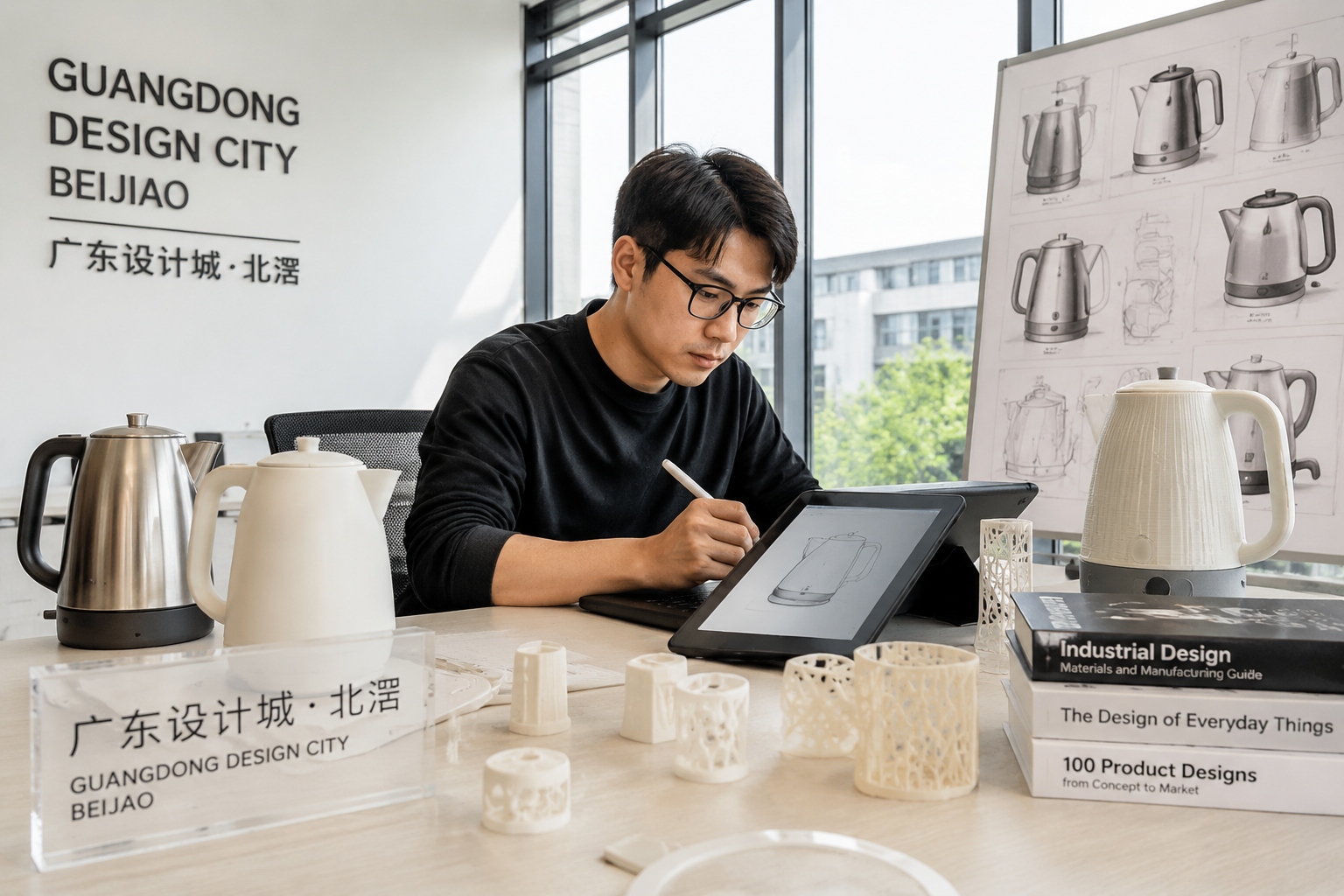
Local government played an important role in this transformation. The Guangdong Design City, established in the town in 2009, offers subsidies, shared prototyping facilities, and incubation space for industrial designers. Today, it hosts more than 200 design companies and has attracted thousands of designers who help local manufacturers turn concepts into market-ready products.
The district government also introduced incentives for digitization, helping mid-sized factories implement assembly-line sensors and data management systems. One such factory, which makes smart toasters for a German brand, now has a failure-rate of less than 0.5%—down from 2% a decade ago—because it uses AI-powered visual inspection.
Human Impact: Skills and Lives
These changes have transformed ordinary people’s lives. Workers in Beijiao are no longer just seasonal migrants performing repetitive tasks. They are trained to operate CNC machines, debug robotic arms, and analyze quality data. Some return to their hometowns after saving enough money, while others stay and build careers. Wu Xiaofang, a 34-year-old quality inspector, began as a line worker 12 years ago, earning US$400 a month. Now, after retraining, she manages a team of 15 and makes nearly triple that amount. “I never imagined I’d work with robots,” she said.
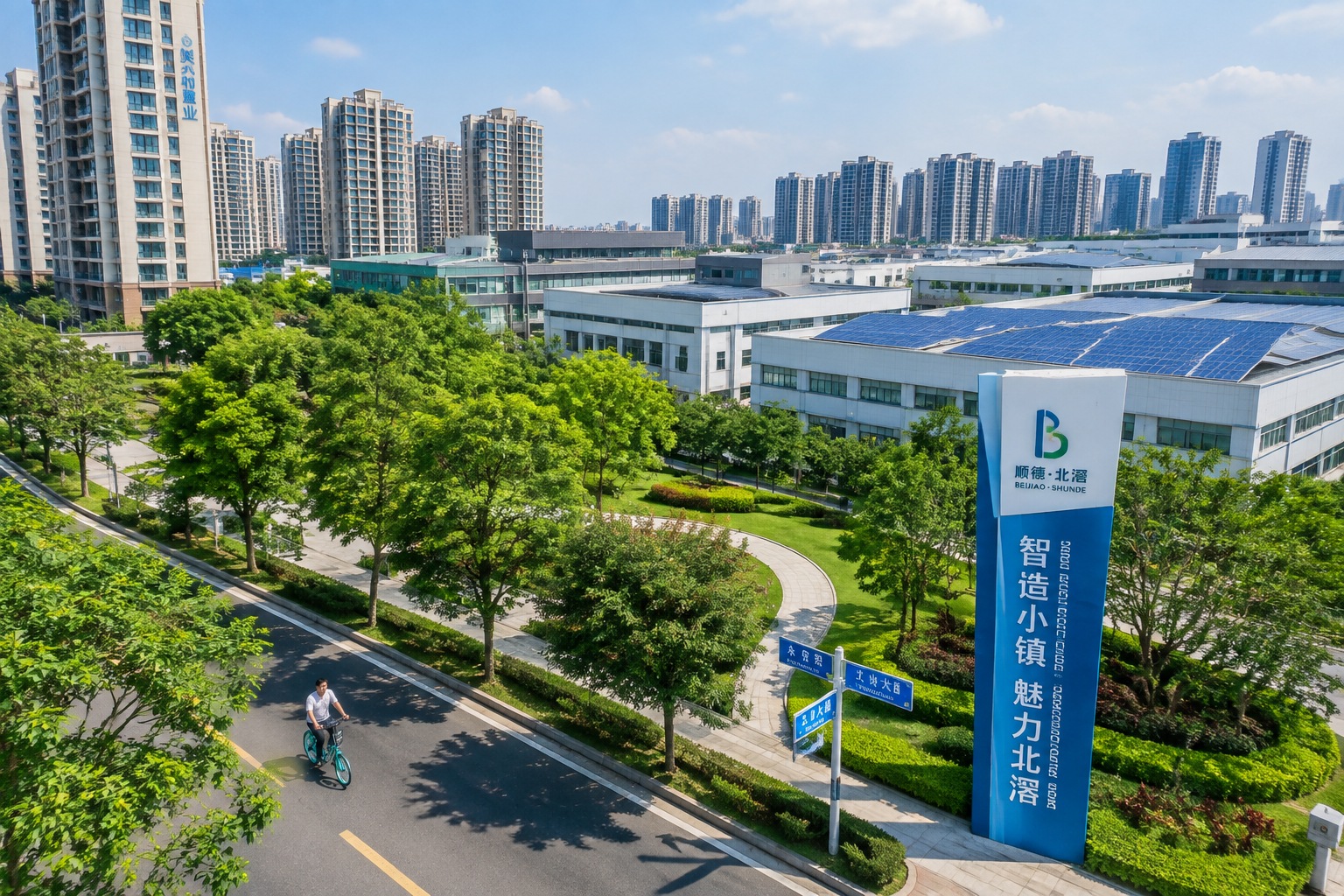
The town itself has seen a cultural shift. New cafés, bookstores, and parks have sprung up around the industrial parks. A new art museum, funded by local businesses, opened in 2021. Young people who once left for big cities now often find comparable opportunities at home. “My classmates in Shenzhen envy my commute time,” joked Li Zhiqiang, a 26-year-old product engineer at a startup. “I get to ride my bike to work past rice fields.”
Unfinished Business
But the road to higher value is not without obstacles. The US-China trade war and the pandemic dislocated supply chains. Some manufacturers have shifted a portion of production to Vietnam and India to avoid tariffs. Others are grappling with rising material costs and a slowdown in the global property sector, which weakens demand for white goods.
There’s also the challenge of building a lasting brand. Consumers in Europe or North America might recognize the Midea brand, but for every Midea, there are dozens of small factories that still struggle to move beyond OEM. The process is uneven and often messy.
Conclusion: A Mirror to China’s New Manufacturing
Beijiao’s story is not a fairy tale of effortless success. It’s a story of a town that hit a wall and decided to re-engineer itself. The rise of own-brand innovation here mirrors a bigger change in China’s economy—the shift from sheer volume to value. That shift is still ongoing, and it’s shaping the jobs, products, and social fabric of places like Beijiao.
In a way, the most impressive thing about this transformation is how unremarkable it has become. The robots hum, the patents pile up, and the brands gain ground. And yet, there’s still a long way to go.
Start the discussion at forum.chinacomes.com