

One Suitcase, One Extra Year
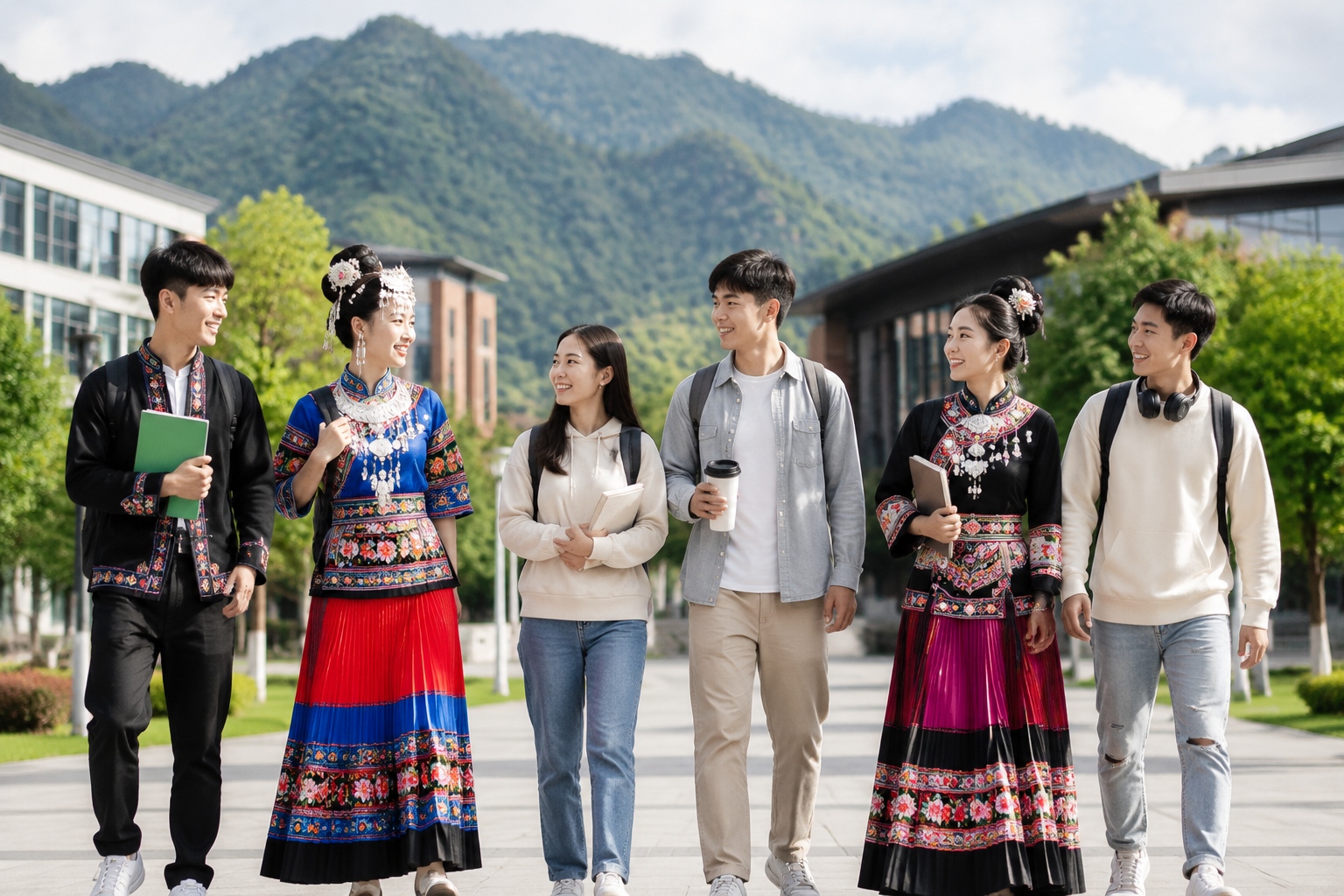
Two years ago, Yang Mei left her mountain village in Guizhou Province with a single suitcase and a train ticket to Chengdu. She was not going straight into a university degree program. Instead, she had enrolled in a one-year ethnic minority preparatory class, known as yuke ban, at a university in southwest China. For Yang, who had attended a high school where the nearest bookstore was a two-hour bus ride away, that extra year made all the difference.
Today, Yang is a junior majoring in civil engineering at another university in the same city. She recalls the first few weeks of the preparatory program as a mix of anxiety and relief. “I had never seen a chemistry lab until I walked into the prep class,” she says. “They didn’t just review high school subjects. They taught us how to study, how to manage time, and how to speak up in class.”

What Is an Ethnic Minority Prep Class?
China’s national college entrance exam, the gaokao, is the main gateway to tertiary education. For decades, the country has also run a parallel system to help ethnic minority students from less-developed regions integrate into university life. The ethnic minority preparatory class is one of those bridges: students spend one year on campus, taking intensive courses in Chinese, mathematics, English and basic sciences. Upon passing an internal assessment, they automatically move into a four-year bachelor’s degree program.
Southwest China—home to Guizhou, Yunnan, Sichuan, Tibet, Guangxi and parts of others—has one of the highest concentrations of ethnic minority populations in the country. It also has a clustering of universities with strong preparatory programs, such as Southwest Minzu University in Chengdu, Yunnan University in Kunming, and Guangxi University in Nanning. These programs are not separate colleges; they are a first-year layer attached to the same institutions.
A Bridge Over a Widening Gap
The rationale behind the prep year is straightforward. Many ethnic minority students come from rural areas where high school resources are limited. Physics experiments may be demonstrated on a blackboard, English listening exercises might be skipped, and mathematics is taught by rote rather than reasoning. Even with a lower gaokao cut-off score for minority applicants, those students can struggle in a fast-paced freshman classroom.
The extra year is designed to level that playing field. Academic staff at preparatory programs say the focus is not just on content but on academic habits. “We teach them how to take notes, how to use the library,” explains one teacher at a university in Yunnan, who asked not to be named. “The goal is that by the time they enter first year, they are no different from their peers.”
Data from several Southwest universities suggest the approach works. According to publicly available reports from Southwest Minzu University, the university’s prep program has a pass-through rate of around 98 percent each year, meaning nearly every student moves on to a bachelor’s degree. No less important, the university says, is that those students subsequently graduate at rates comparable to or better than the institution-wide average.
Beyond Test Scores: Life Skills and Confidence
For students like Yang Mei, the prep year was also about learning to be an independent adult. Until she moved to the prep campus, she had lived in a village with fewer than 300 residents. Her parents were farmers who, in her words, “didn’t fully understand what a university was, but knew it was a way out.”
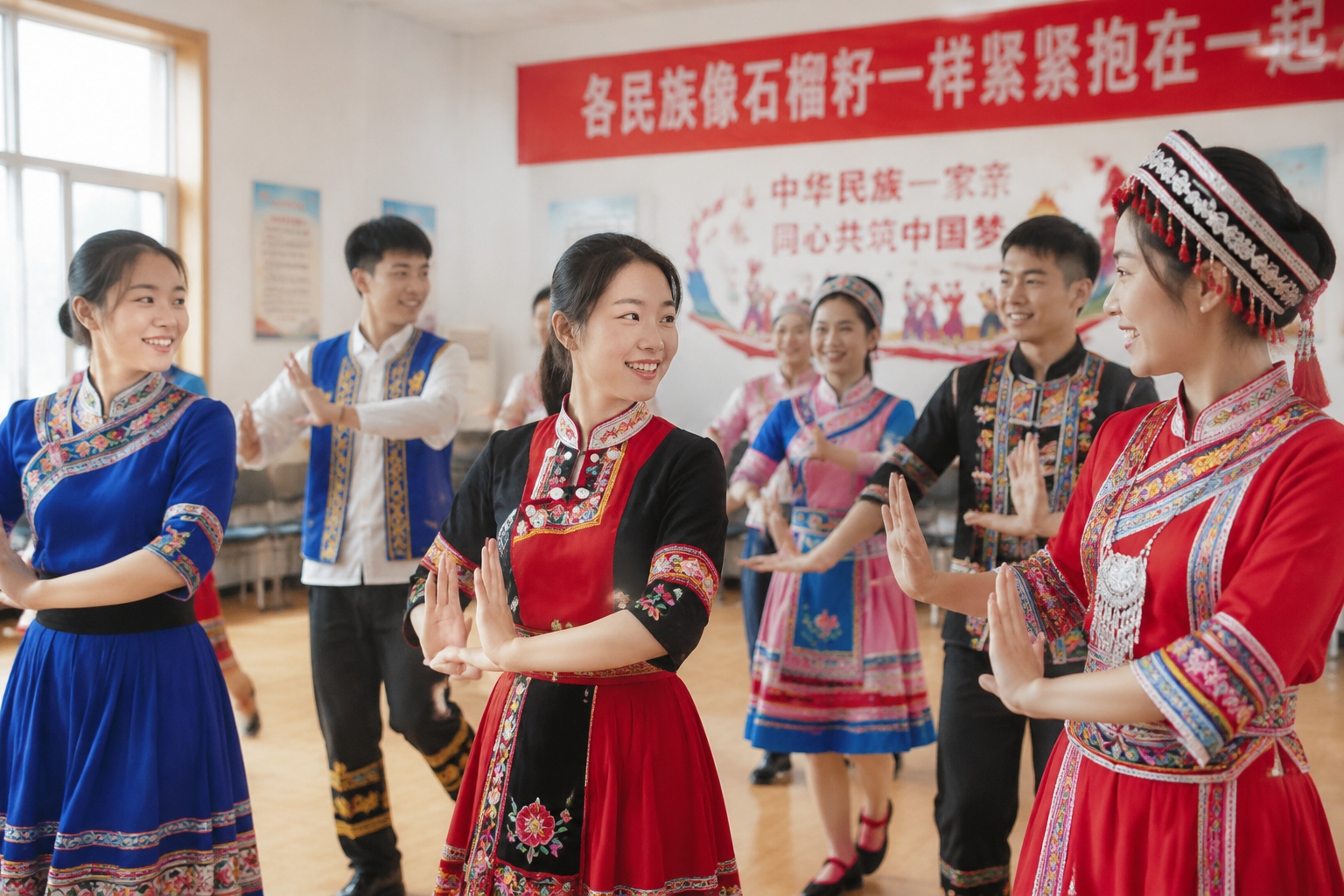
Yang’s prep class of 40 students became a small support network. They came from different provinces and different ethnic groups—Miao, Buyi, Dong, Yi, and more. Some had never spoken in front of an auditorium; by the end of the year, they were organizing campus performances. “The teachers pushed us to try extracurricular activities,” Yang says. “For many of us, that confidence was as important as the math formulas.”
Financial support also plays a role. Most ethnic minority prep students receive a tuition waiver or a living stipend from the central government, which funds the programs as part of its ethnic minority development strategy. This makes the prep year a realistic option for families that could not otherwise afford a year of university with no degree.
Not a Shortcut, But a Stepping Stone
Some outside observers have asked whether the preparatory class lowers academic standards. In interviews, administrators emphasize two points. First, prep students must meet the identical graduation requirements as all other students once they enter the bachelor’s program. The extra year is not a waiver—it is a delay in the starting line, not a shorter race. Second, the curriculum itself is demanding. Students take more than 30 hours of classes per week, often including courses that Chinese high schoolers would have taken many months earlier.
“If anything, prep students tend to be more careful about their grades,” says a counselor from a Sichuan-based university. “They know they are here because someone invested in them. They don’t want to waste that chance.”
The Ripple Effect on Families and Communities
The impact of these programs reaches far beyond the individuals enrolled. A 2021 study by the Institute of Ethnology and Anthropology at a Beijing university tracked graduates of one prep program and found that nearly 70 percent chose to work in government agencies, state-owned enterprises, or public schools in the ethnic minority regions where they came from. In other words, the preparatory class does not simply move talented young people away from their hometowns—it helps prepare them to go home as professionals, doctors, engineers and teachers.
Yang Mei’s own plans follow that pattern. She is now considering a master’s degree in water resource engineering, with the long-term goal of returning to Guizhou to work on rural infrastructure projects. “My village still has brooks that flood in summer,” she says. “I want to build a bridge that stays.”
Challenges and the Road Ahead
The preparatory system is not perfect. Students sometimes report feeling isolated because they enter the university in a separate cohort, and the one-year delay can be socially confusing. Some researchers argue that the uneven quality of pre-university schools means a single year may not close the gap for every student. Others worry that the separate track stigmatizes minority students, though many students themselves reject that view.
In response, universities in the southwest have begun experimenting with more flexible models. A few now offer a two-year foundation program for students with particularly weak backgrounds, while others have integrated prep students into regular freshman seminars during the second semester. These reforms reflect a broader shift from static assistance toward more adaptive support.
An Investment in the Future
For a country with 56 recognized ethnic groups, education policy is never just about test scores. The minority preparatory class is part of a wider promise: that geography and family income should not permanently decide a young person’s horizons. In southwest China, where mountain roads are still being paved and high-speed rail lines are still extending, the one-year bridge from a small village to a campus is a piece of social infrastructure in its own right.
Yang Mei is now in her third year of civil engineering. She recently visited her old prep school to talk to new students. “When I saw them looking at me, I remembered how I had felt two years earlier,” she says. “I told them, ‘This year is not a detour. It’s the road.'”

Start the discussion at forum.chinacomes.com