

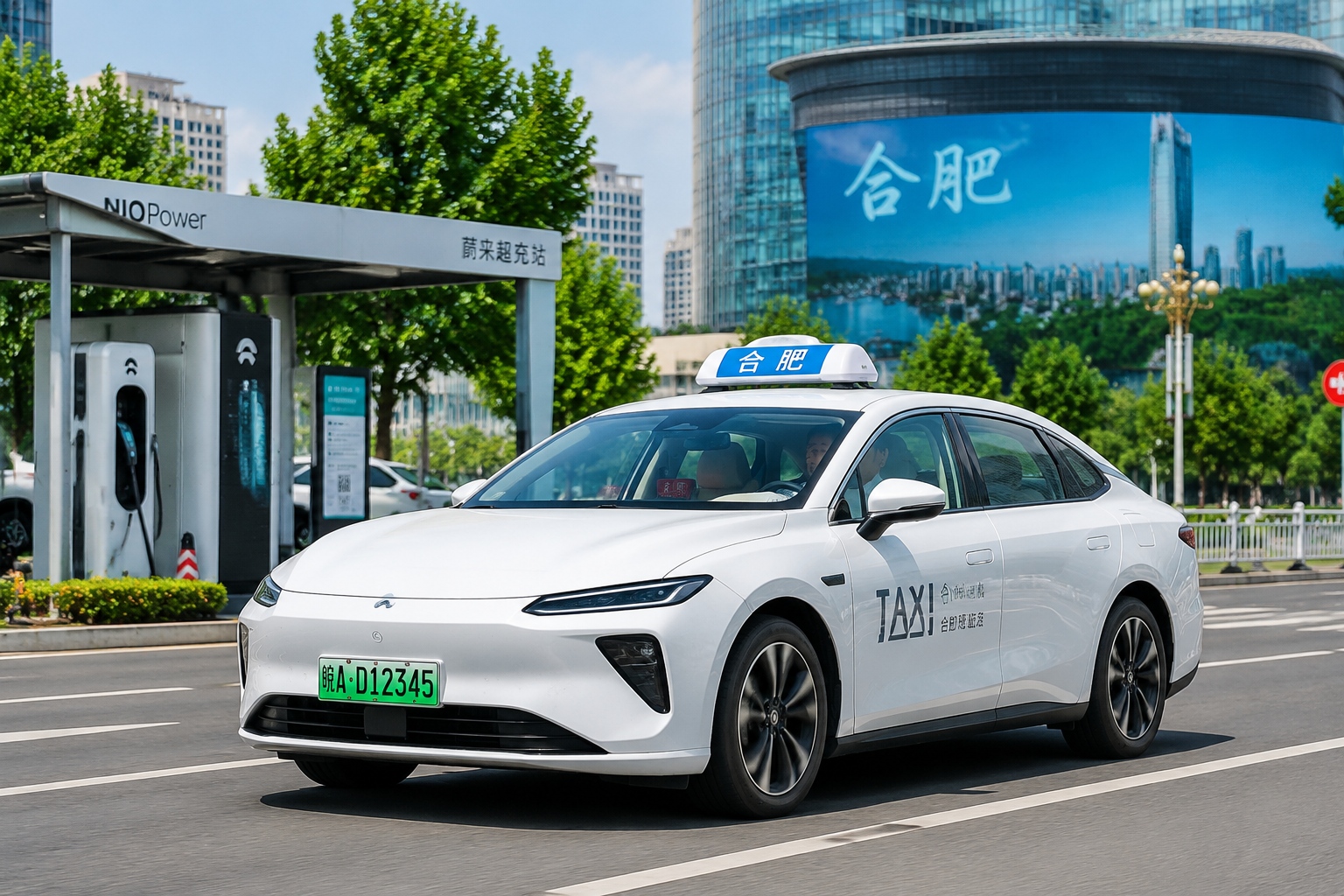
On a busy morning in Hefei, the capital of Anhui province in central China, a line of electric taxis waits outside a metro station. Many are white NIO cars with large glass roofs. The driver of one taxi, a man in his 50s, says his previous car was a gasoline JAC, made by Anhui’s own Jianghuai Automobile. “The electric car costs less per day to run,” he tells me, “and it’s quieter.” That short conversation captures something bigger: a province that once made ordinary fuel vehicles is now one of China’s strongest bases for electric cars.
A Legacy Automaker and a Fast Shift
Anhui’s auto history goes back to 1964, when Jianghuai Automobile was established in Hefei. For decades, JAC built trucks and buses, then passenger cars. It became known for cheap, practical vehicles. But by the 2010s, the company was struggling to compete in a crowded market. In 2016, JAC teamed up with Volkswagen to build EVs, but the partnership was slow. The real turning point came when a struggling startup called NIO knocked on Hefei’s door.
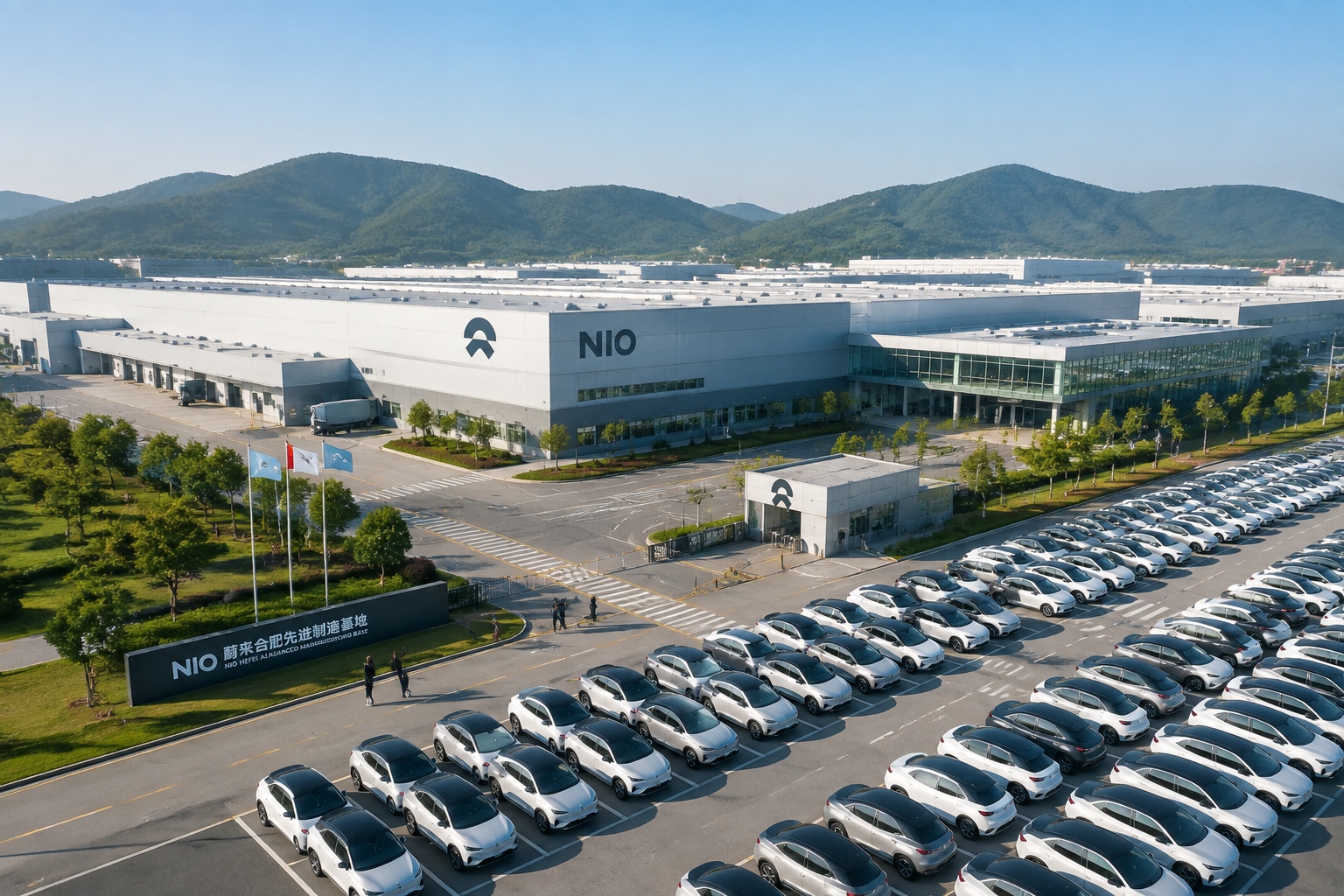
In 2019, NIO was burning cash and near collapse. Its cars were well-received, but it could not raise enough money. Hefei’s municipal government stepped in. In April 2020, state-backed investors in Hefei pumped 7 billion yuan (about $1 billion) into NIO China, in exchange for roughly 24 percent of the company. NIO set up its China headquarters in Hefei Economic and Technological Development Zone. The bet looked risky at the time, but it paid off. By the end of 2020, NIO’s share price had soared, and Hefei’s investment was worth several times more.
That deal sent a signal to the industry: Anhui was serious about EVs.
More Than NIO: The Supply Chain Takes Shape
NIO was the anchor, but not the whole story. After the rescue, more companies moved in. BYD, China’s largest EV maker, built a huge plant in Hefei’s Changfeng county, producing its popular Song and Qin models. Volkswagen established a new majority-owned EV factory in Hefei under the name Volkswagen Anhui, its first such facility in China. Local battery maker Gotion High-Tech, based in Hefei, expanded to become a major supplier of lithium-iron-phosphate batteries.
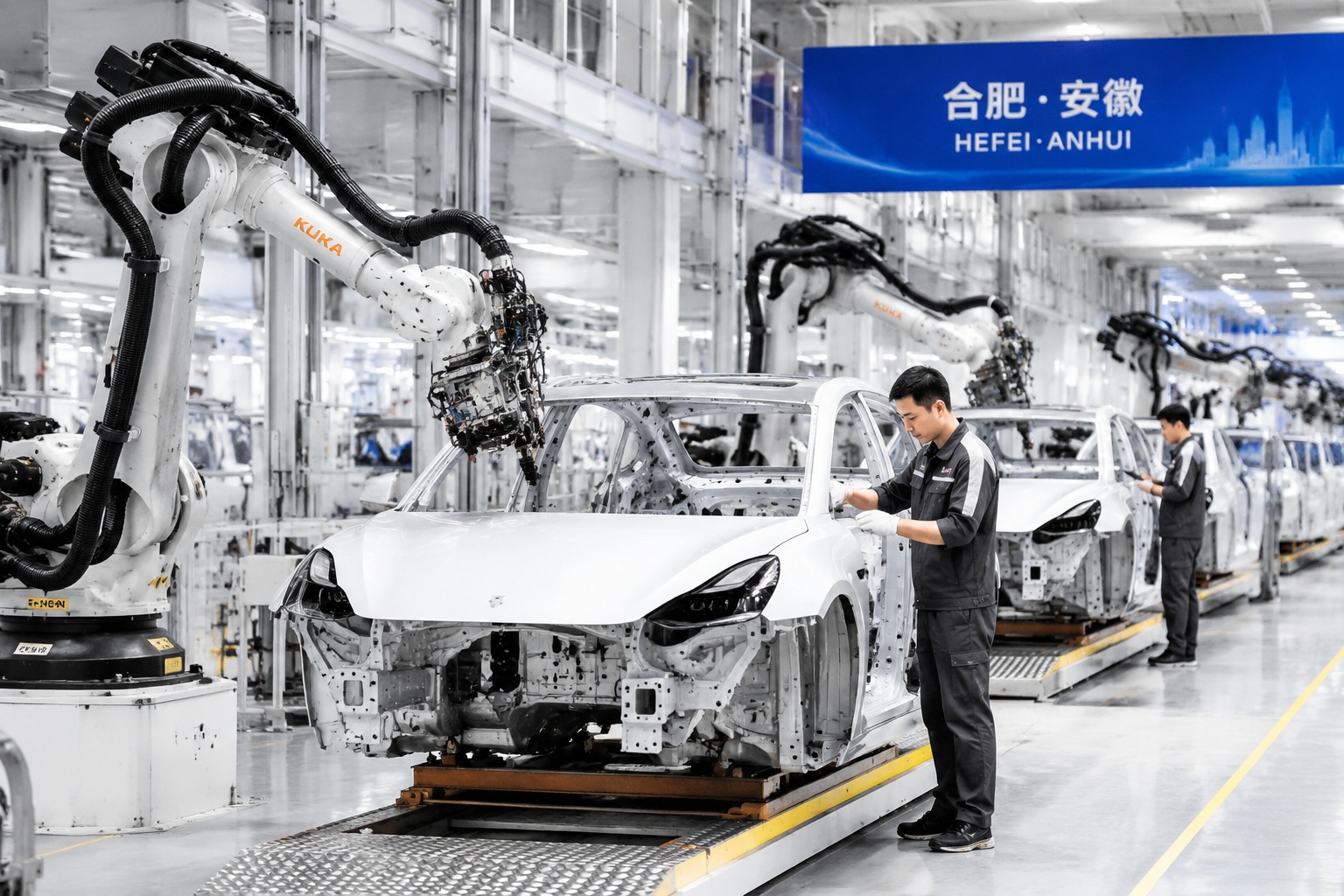
The result is a dense local network. In Anhui, you can find battery materials, cells, electric motors, and complete vehicles within a few hours’ drive. This matters because EV production depends on close coordination. A company like NIO can test a new part in the morning and have it installed on a prototype by the afternoon. “If you need to solve a production problem, you want your suppliers next door,” says a production engineer who has worked in both Shanghai and Hefei.
Government policy helped too. Anhui’s provincial government set ambitious targets for new-energy vehicles and offered subsidies, cheap land, and streamlined approval processes. Hefei also invested in testing facilities and formed industrial funds to back startups. This is a common pattern in Chinese industrial policy: local governments use tax revenue and loans to attract anchor companies, then build the ecosystem around them.
How Fast Is This Growing?
Numbers help tell the scale. In 2023, Hefei produced 746,000 new-energy vehicles, nearly double the year before, according to local statistics. Anhui province as a whole produced around 868,000 EVs, ranking among the top five provinces in China. In the first half of 2024, the pace continued, with Anhui’s EV output up more than 80 percent year-on-year. To put that in context, that is more electric cars in one province than many countries manufacture in a full year.
One reason for such growth is the rise of export demand. Anhui has been pushing vehicles through the Yangtze River ports and via rail to Europe. NIO began selling in Norway, Germany, and other European markets over the past few years. BYD exports from its Hefei plant to Southeast Asia and Latin America. In 2023, China overtook Japan as the world’s largest vehicle exporter, and Anhui is a major contributor.
The Ordinary Side of the Revolution
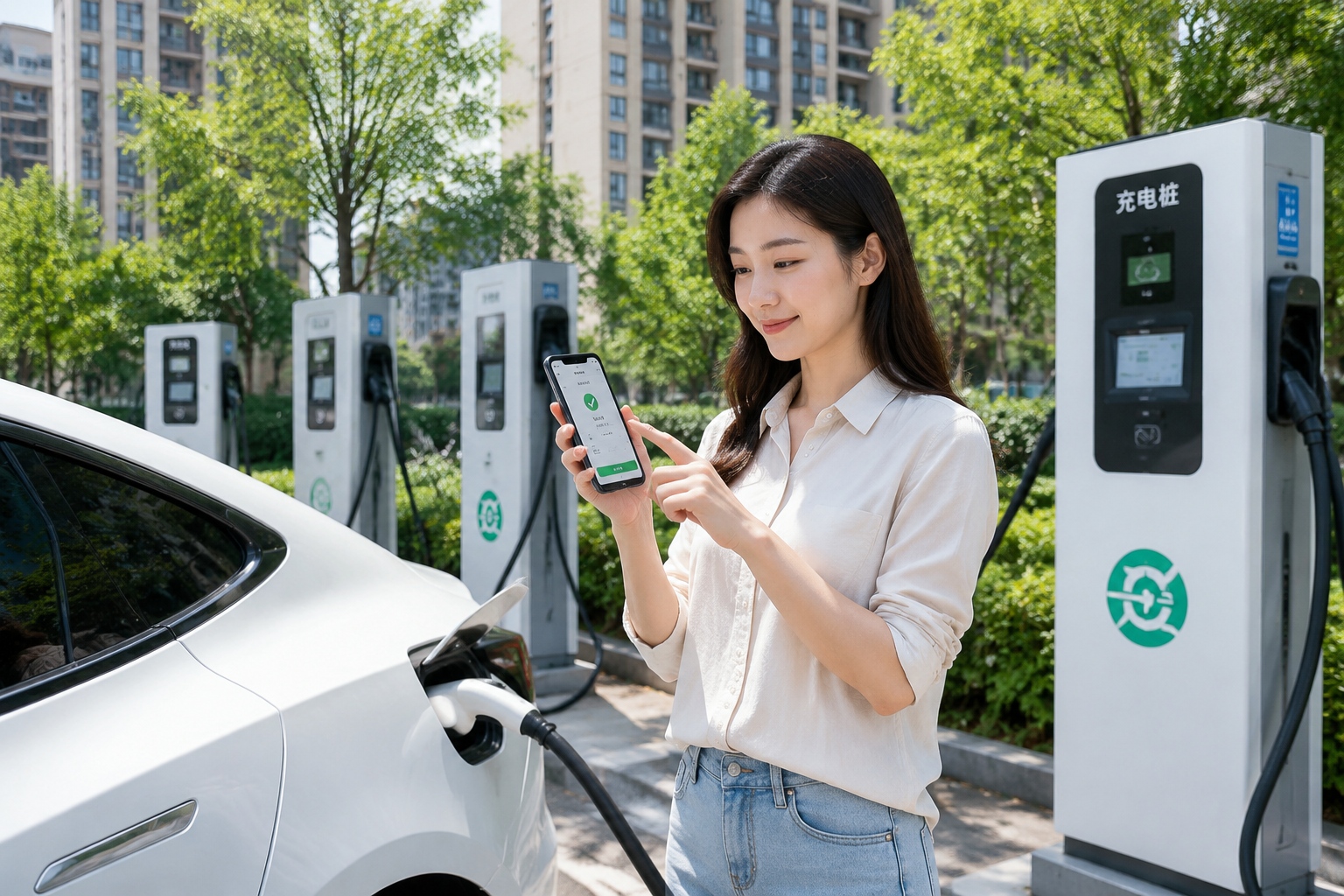
For people in Hefei, the EV shift is not just about factory lines. It is visible in daily life. Most taxis in the city center are electric. Public buses are almost all battery-powered. Charging stations are everywhere—in parking lots, near supermarkets, even in small convenience stores. As of late 2023, Hefei had more than 110,000 charging piles, one of the highest densities in China. Many drivers charge at home or work, and fast charging stations can add 200 km in around 20 minutes.
The change is economic, too. Anhui used to send many workers to Shanghai and the coast. Today, the EV industry has created hundreds of thousands of jobs in the province—from assembly-line workers to software engineers. A young engineer in his late 20s, who moved back to Hefei from Beijing, explains: “I make about 80 percent of my previous salary, but the cost of living is much lower. I can rent a bigger apartment and still save money.” That kind of story helps explain the province’s appeal.
Challenges Ahead
Anhui’s rise is real, but not without risk. Competition among Chinese provinces is fierce. Many places are building EV clusters, trying to replicate Shenzhen’s success. Price wars in China’s car market have squeezed profit margins, hurting even successful companies like NIO, which posted net losses in recent years. The manufacturing capacity in Anhui could outpace demand if the national market slows.
Also, government-led investment has a downside. The 2020 NIO rescue was celebrated, but not every city that bets on a struggling startup succeeds. Local governments across China have lost money on failed investments in solar, semiconductors, and EVs. Anhui is better positioned because it has strong research institutions—like the University of Science and Technology of China in Hefei—and a growing software and artificial intelligence scene. But the long-term test is whether these companies can compete without constant support.
What Anhui Teaches Us
Anhui’s story is not just about China’s EV boom. It is about how industrial policy works in practice. Instead of betting on one famous company, Anhui built an ecosystem. It used public money as seed capital, accepted initial losses, and then used market demand to fuel expansion. It also benefited from the fact that China’s EV market is the largest in the world, giving local manufacturers a huge testing ground.
From a struggling traditional automaker to one of the most important EV regions on the planet, Anhui has covered a lot of ground in less than a decade. The change can be seen in the electric taxis on Hefei’s streets, in the rows of battery cars waiting to be shipped abroad, and in the young workers filling new jobs every year. The province still has problems to solve, but it has already shown that a once-traditional industrial city can reinvent itself—and do it much faster than many in the West expected.
Start the discussion at forum.chinacomes.com