

A graph in a Chengdu control room
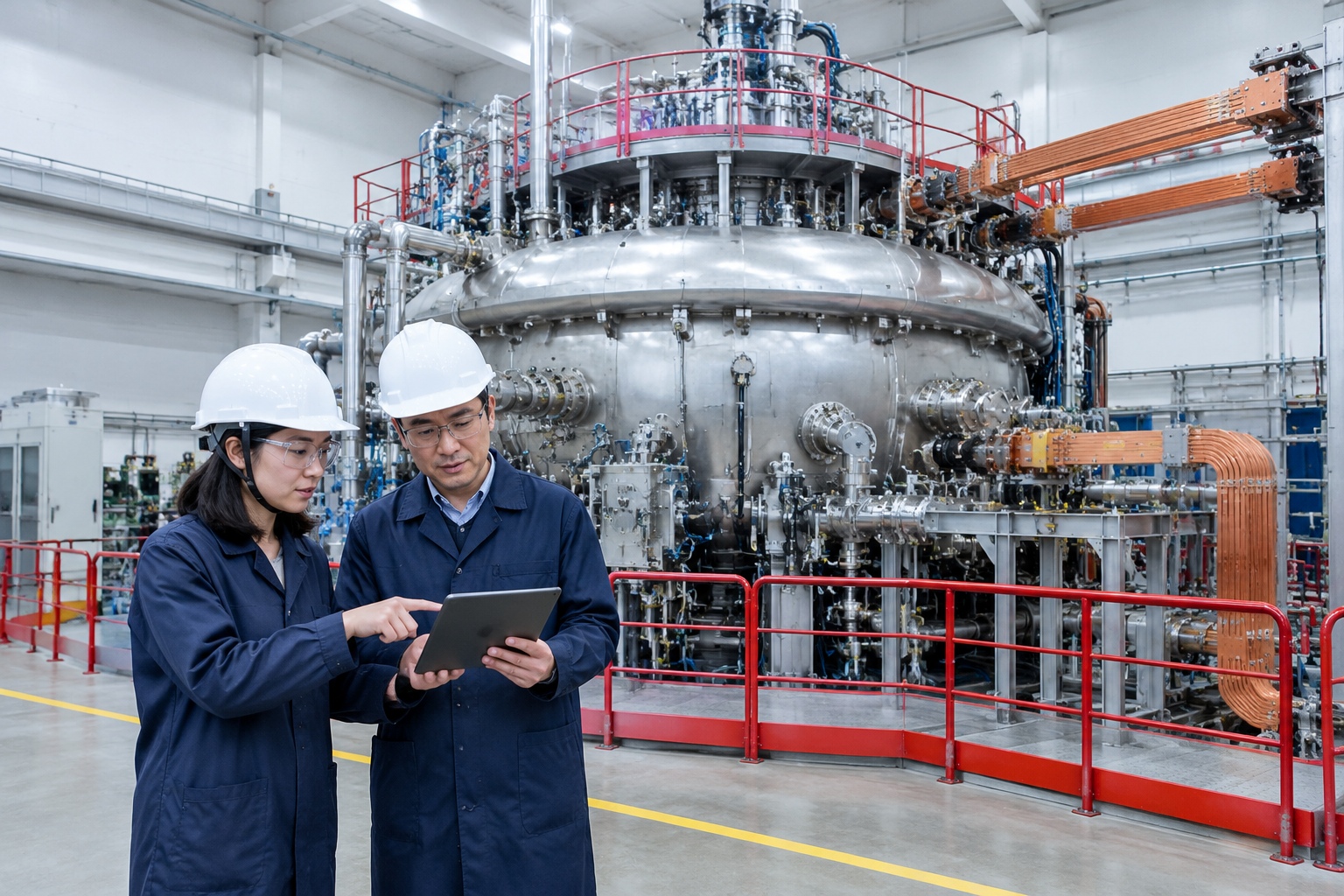
At the Southwestern Institute of Physics in Chengdu, the HL-3 fusion experiment fills a hall with stainless steel pipes, copper busbars and a silver doughnut-shaped vacuum vessel. During a recent experimental campaign, researchers reported that ion temperatures and electron temperatures in the plasma had each crossed 100 million degrees Celsius. That is about seven times hotter than the core of the Sun.
The result is easy to turn into a headline. It is harder to explain. HL-3 is not a power station. It is a magnetic confinement fusion experiment, and “dual hundred million” refers to plasma measurements taken under specific heating and confinement conditions. The useful question is not whether China has built a small sun. It is what this machine has shown, and what it has not.
What “dual hundred million” actually measures
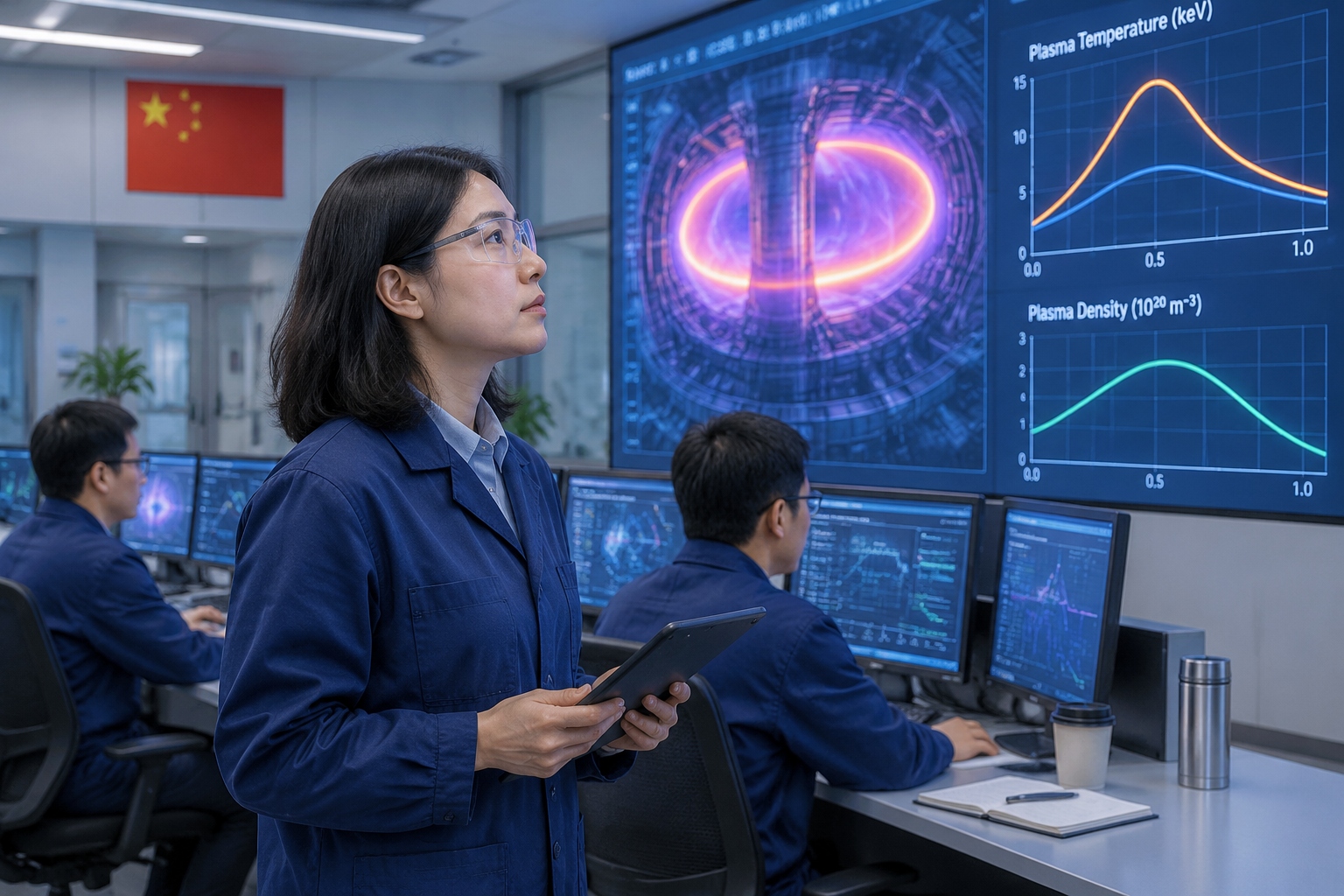
Inside a tokamak, hydrogen isotopes are heated until electrons separate from atomic nuclei, forming a plasma. The ions and electrons do not always have the same temperature. Ion temperature matters most for fusion because positively charged nuclei must overcome their mutual electrical repulsion. Electron temperature shapes heat confinement, current drive and the behavior of impurities. Reaching both above 100 million °C in high-confinement, or H-mode, discharges is a sign that heating, insulation and control are working together.
It does not mean that the entire plasma volume was sitting at 200 million °C. “Dual” means two separate temperature channels crossed the same symbolic threshold. Fusion performance also depends on density and confinement time. A hot but thin plasma, or a hot plasma that lasts for milliseconds, is not a power-plant plasma. HL-3’s result belongs to the physics of high performance, not yet to the business of generating electricity.
HL-3 is not EAST’s twin
China’s best-known fusion machine is EAST, the Experimental Advanced Superconducting Tokamak in Hefei. EAST uses superconducting magnets and has focused on long-pulse operation; in 2023 it sustained a high-confinement plasma for 403 seconds. HL-3, in Chengdu, is a different design with a different mission. It uses copper magnets, which limit pulse length but allow high plasma current and flexible operation. It is a test bed for high-power heating, high-beta plasma and advanced divertor configurations.
The two machines are not duplicate construction. EAST is built to run long and steady, testing the physics of a future continuous reactor. HL-3 is built to push parameters and try configurations that are difficult to reach on EAST. One is a marathon runner. The other is a high-power test bed. China needs both because fusion has too many unsolved problems for one machine to answer.
The hardware behind the temperature
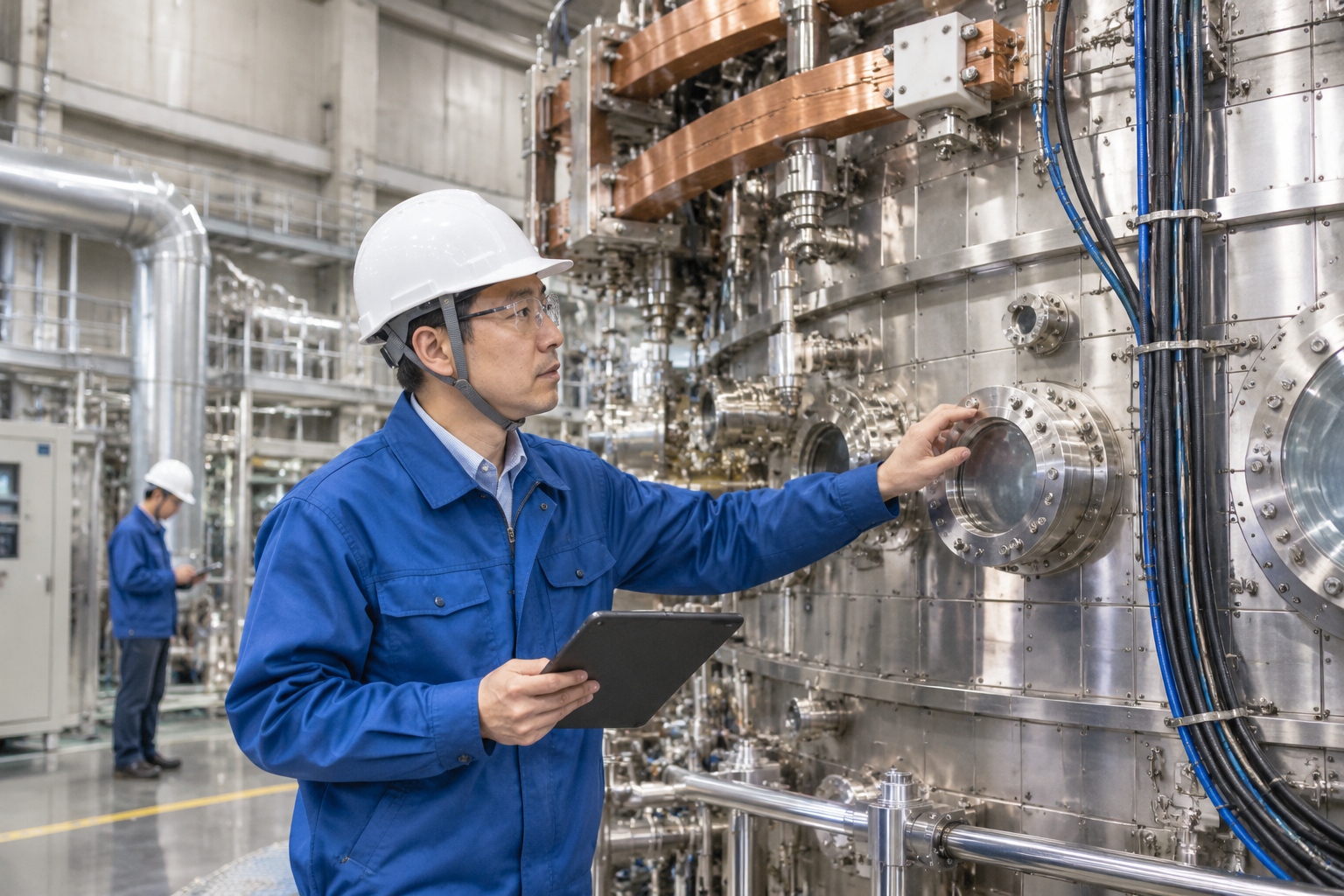
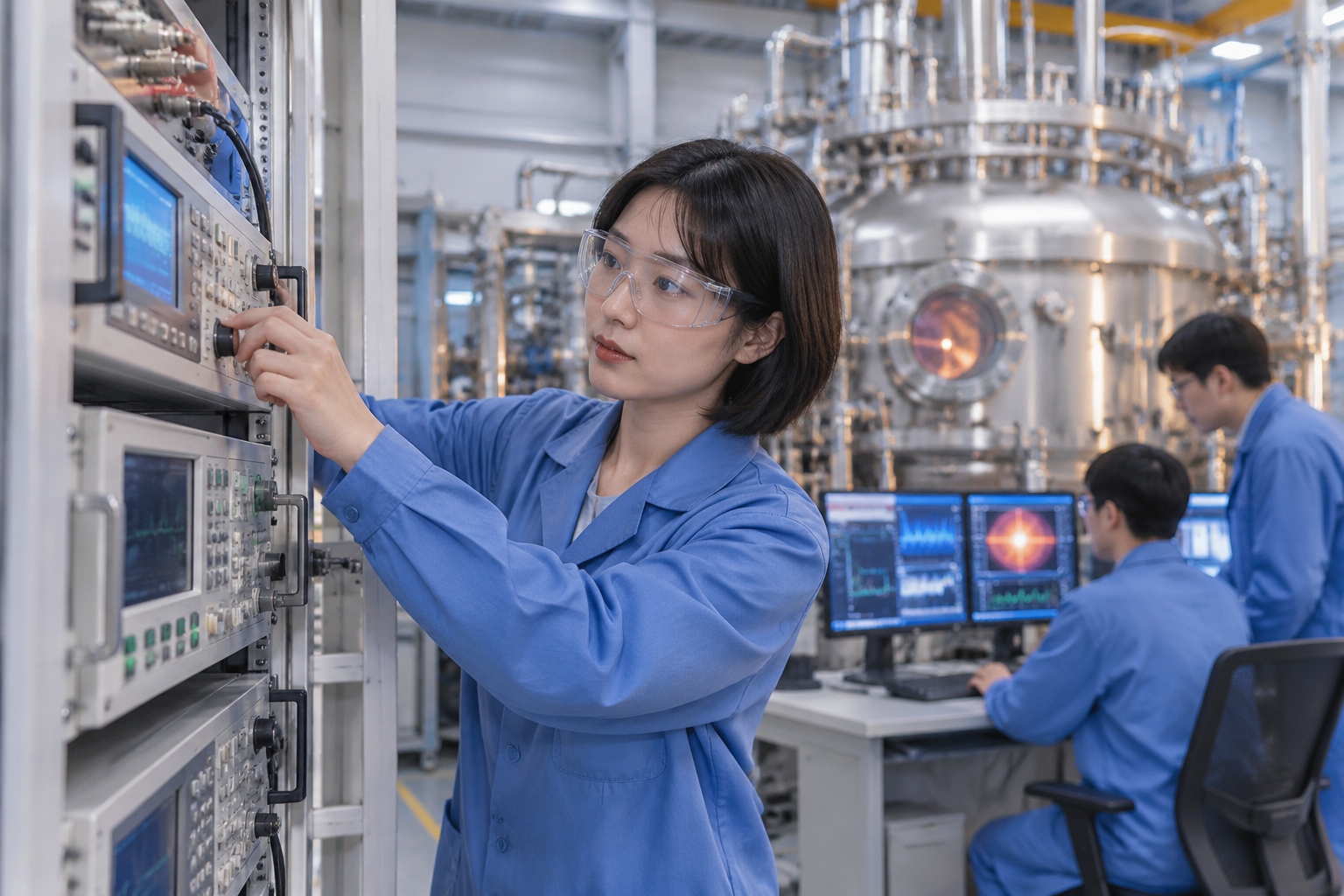
Reaching 100 million °C is not a matter of turning up one dial. HL-3’s heating system combines several tools: neutral beam injection, electron cyclotron resonance heating, lower hybrid current drive and ion cyclotron resonance heating. Each couples power to the plasma in a different way. Diagnostics measure what happens next: Thomson scattering for electron temperature and density, electron cyclotron emission for temperature profiles, spectroscopy for impurities and rotation, magnetic probes for stability.
Copper magnets shape a flexible, high-current magnetic cage, but they also heat up. That is why HL-3’s experiments tend to be shorter than EAST’s long pulses. The trade-off is deliberate. A flexible copper machine can explore high-current scenarios, test divertor designs and train control algorithms without tying up a superconducting device for weeks. The result is not one heroic shot. It is a campaign of discharges, each one adjusting heating power, gas fueling, magnetic configuration and feedback control.
Why China runs several fusion machines at once
Fusion research is often described as a race. In practice it looks more like a portfolio. No single tokamak can test all the physics and engineering needed for a reactor. Some questions need long pulses. Some need high power. Some need advanced materials. Some need tritium. China’s fusion program spreads these questions across EAST, HL-3, university experiments, industry suppliers and design teams for a next-generation test reactor, CFETR. The point is to compress learning cycles by running experiments in parallel.
This is also why the HL-3 result matters beyond one lab. Every high-performance discharge produces data for models of plasma turbulence, heat exhaust and disruption prediction. Those models travel. They feed into the design of divertors, the choice of heating systems and the control software for future machines. A result on a copper tokamak in Chengdu can inform a superconducting reactor design in Hefei or a component test in a factory.
From plasma parameters to a power plant
The gap between a fusion experiment and a fusion power plant is large. A plant must produce more energy than it consumes, breed its own tritium, survive neutron damage and run with high availability. It must handle heat exhaust as well as temperature. The divertor, the component that receives the plasma’s exhaust, faces heat loads comparable to the surface of a spacecraft re-entering the atmosphere. Materials must resist that for years, not seconds.
HL-3’s dual hundred-million-degree result helps with the physics side: it shows that a high-performance plasma can be created and controlled. It does not by itself demonstrate a burning plasma, where fusion reactions provide most of the heating. It does not prove tritium self-sufficiency. It does not answer the engineering questions of a power station. Those are the next milestones, and they are why readers should treat any single temperature record as a checkpoint rather than a finish line.
What to watch next
The next indicators are less photogenic than a temperature number. Look for sustained H-mode operation with high bootstrap current, heat loads handled by an advanced divertor, reliable disruption avoidance, and progress on tritium handling and neutron-resistant materials. Look for results that can be repeated, not just announced. In fusion, reproducibility is the real breakthrough.
For a reader outside China, the HL-3 story is a reminder that the country’s technology push is not one machine or one headline. It is a system of labs, suppliers, engineers and competing designs. The dual hundred-million-degree result is meaningful because it adds another data point to that system. It is not meaningful because it means fusion electricity is around the corner. The honest answer is more interesting: China is building more than one road to the same difficult destination, and it is learning from all of them.