

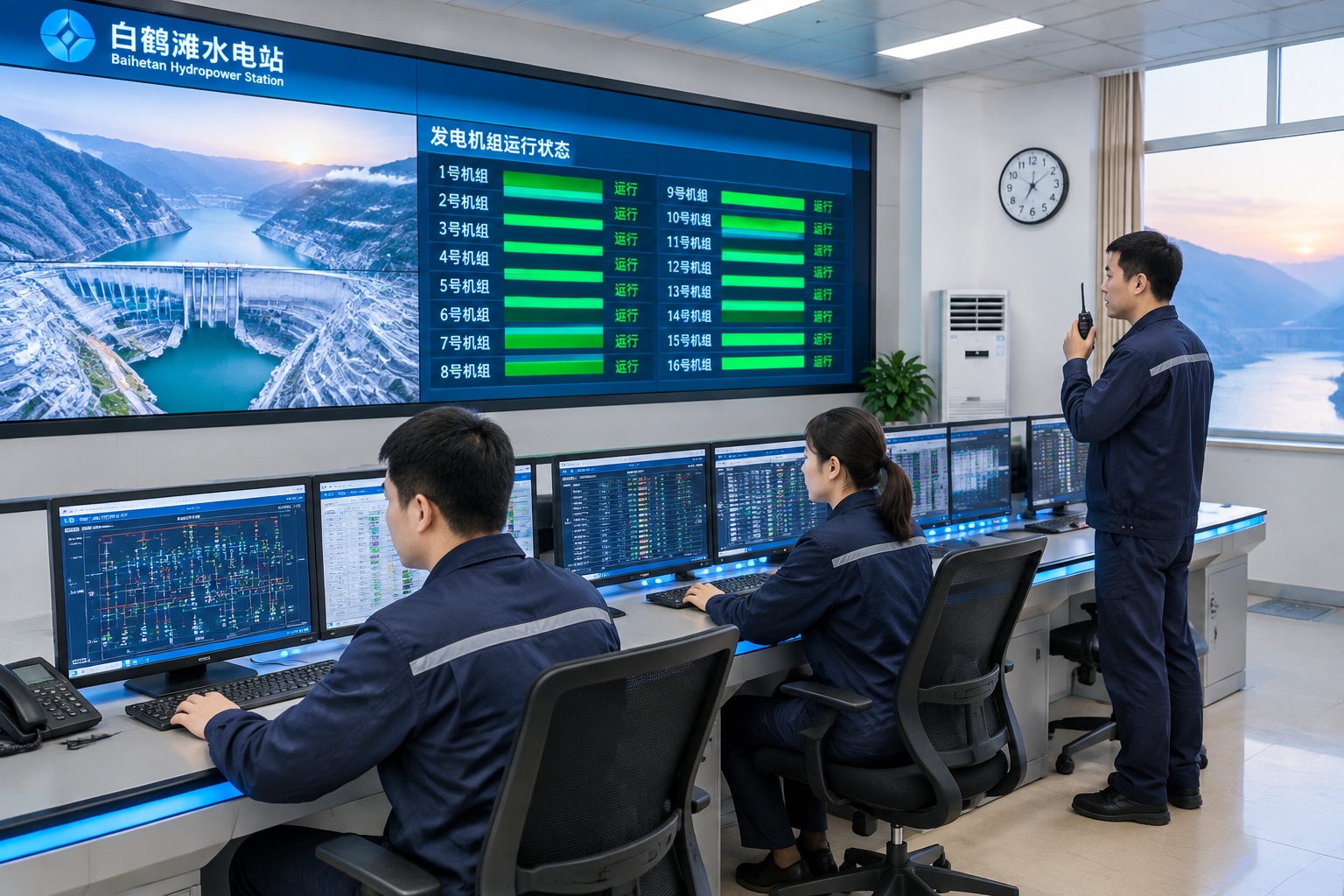
6:10 a.m., Inside the Baihetan Control Room
The control room sits above the Jinsha River, on the stretch where Yunnan and Sichuan run into each other. At ten past six on a weekday morning, most of the light comes from a wall-sized screen and a row of small blue lamps on the operator consoles. Sixteen horizontal bars cross the screen, one for each generating unit. All sixteen are green.
A shift supervisor, 31, from Kunming, walks the row and stops at a console. He points at a number that has barely moved in twenty minutes: 16,000 megawatts. “It doesn’t feel like anything,” he says. “You hear a hum through the floor. That’s it. That’s sixteen million kilowatts.”
Baihetan was built between 2017 and 2022. Its sixteen turbines were the first of their size anywhere to enter commercial service — one million kilowatts each. Total installed capacity is 16 gigawatts, second only to Three Gorges, and the station generates close to 62 billion kilowatt-hours a year. Most of that electricity does not stay in Yunnan or Sichuan. It leaves.
A Mega-Project Is a Machine for Moving Things, Not a Monument
Foreign visitors photograph Chinese infrastructure — the bridges, the dams, the stations — as objects. A more useful way to look at them is as conveyor belts. A dam is not a wall; it is a route for electrons. A bridge is not a height record; it is a change in travel time. A rail line is not a symbol; it is a distance that employers and employees can now treat as commutable.
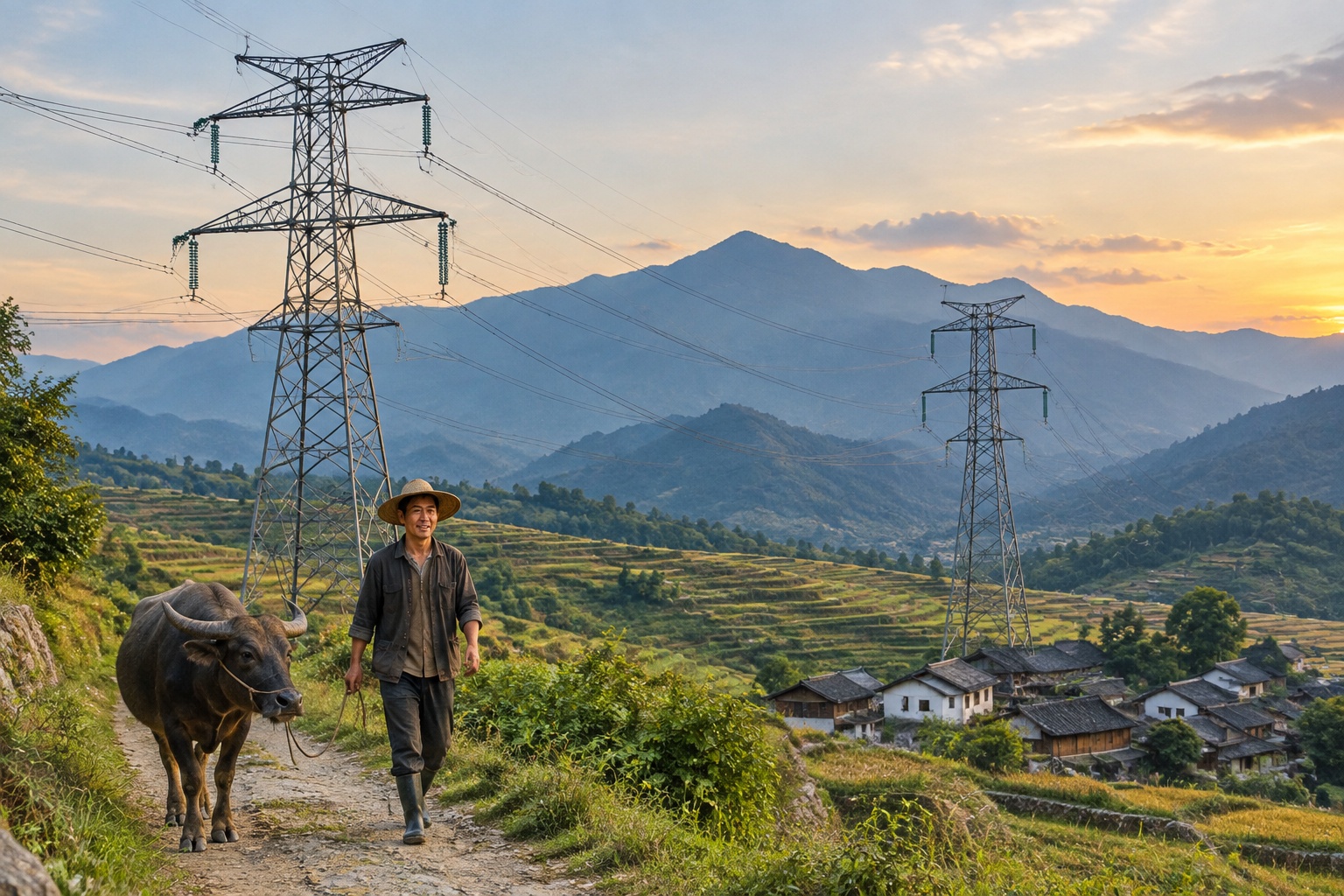
Baihetan’s power travels east on two ultra-high-voltage direct-current lines, one to Jiangsu and one to Zhejiang, roughly 2,000 kilometres away. UHV is a Chinese specialty: transmitting at 800,000 to 1,100,000 volts loses far less energy over long distances than an ordinary grid. The most extreme example, the Changji–Guquan line, runs 3,293 kilometres from Xinjiang to Anhui at plus-minus 1,100 kilovolts and can carry 12 gigawatts — the highest-voltage line in commercial operation anywhere.
That number matters for a reason that is easy to miss. Electricity that can be moved cheaply over 3,000 kilometres makes remote wind and solar worth building. Western China has some of the best solar and wind resources on earth and very little local demand. UHV turns that mismatch into a business.
Redrawing the Map: Energy East, Factories Inland
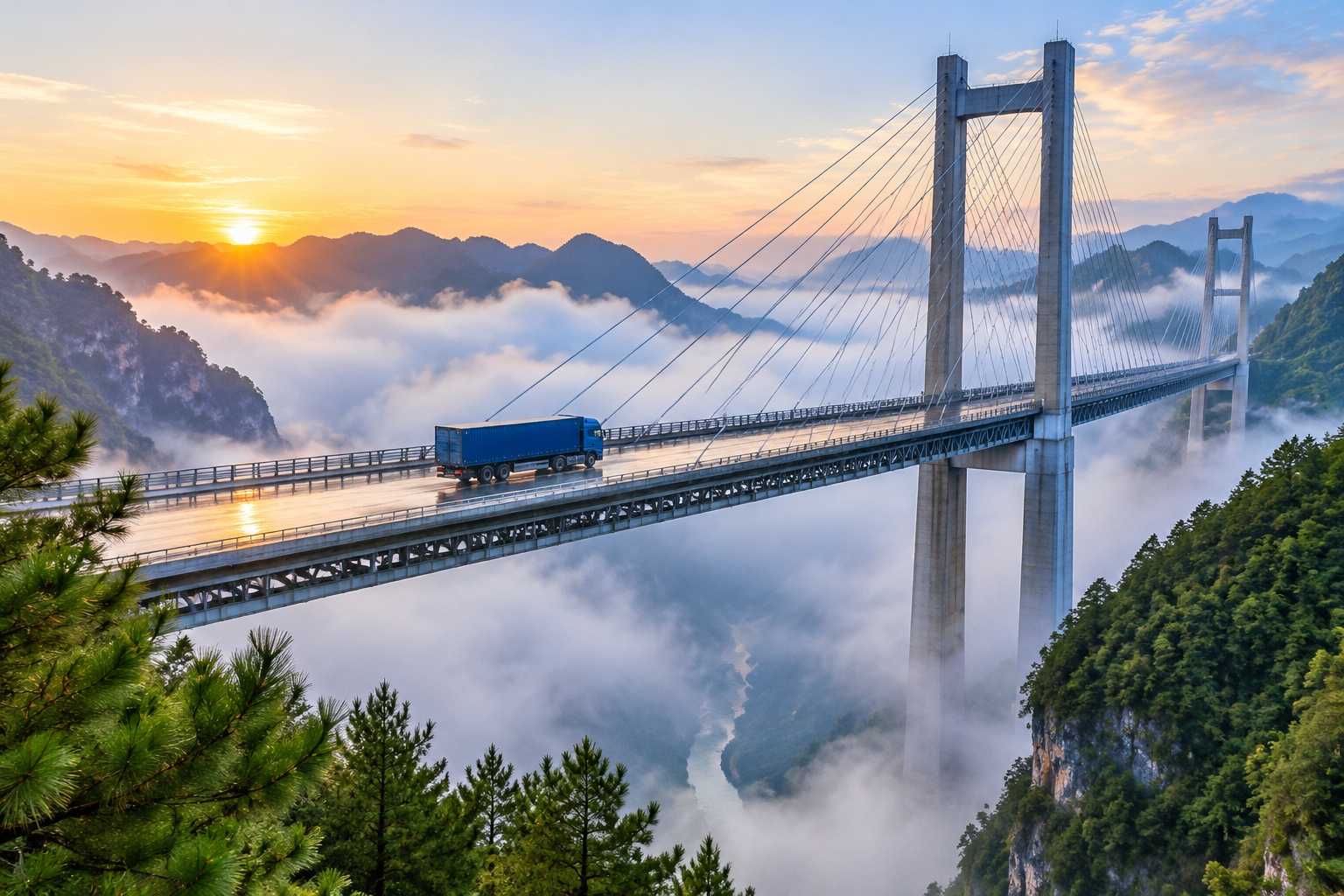
The same logic runs through roads and rails. Take Guizhou, a mountainous province in the southwest that was, for much of the twentieth century, one of the country’s poorest. To build expressways through it, engineers had to cross deep gorges. The Beipanjiang Bridge, opened in 2016 on the Hangzhou–Ruili expressway, hangs 565 metres above the river. A newer crossing nearby, the Huajiang Grand Canyon Bridge, opened in Guizhou in September 2025 with a deck roughly 625 metres above the water.
What changes is not the view. It is the drive. Before these bridges, crossing that section of the province meant hours of switchbacks and a queue of trucks. Now it takes minutes, and the trucks keep moving.
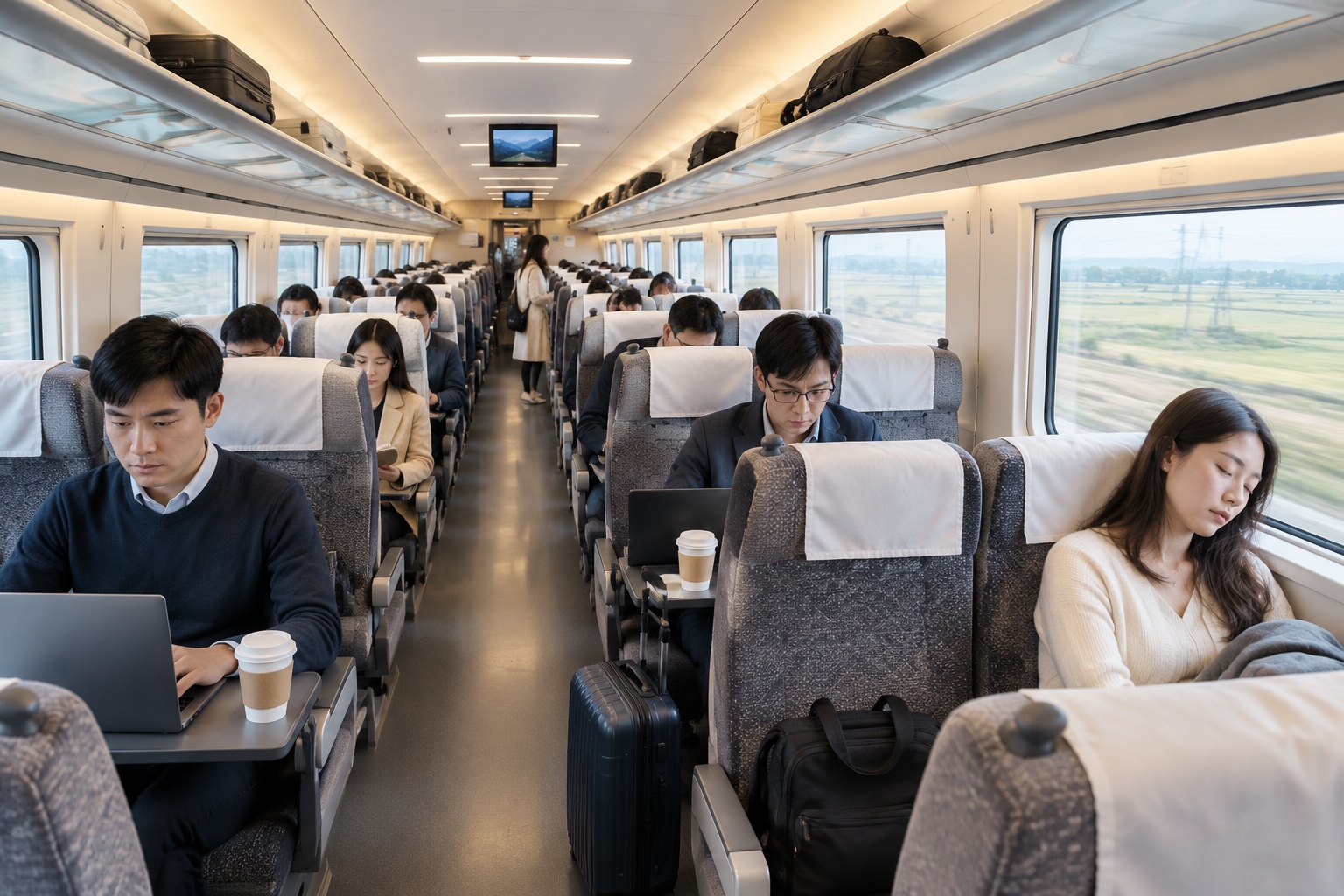
Multiply that by 48,000 kilometres of high-speed rail — the size of China’s network at the end of 2024 — and you get a different map of where it makes sense to live and work. Shanghai to Kunshan is about twenty minutes by train. Zhengzhou, in central Henan, hosts the largest iPhone assembly complex in the world, so workers who would once have migrated to Guangdong for a factory job can now find one a bus ride from home. Chengdu and Chongqing, two cities of more than 20 million people each, are around an hour apart by rail and increasingly describe themselves as one economic unit.
Then there is data. In 2022 the government launched a programme usually translated as “East Data, West Computing.” The logic is simple: the eastern seaboard generates most of China’s data and has expensive land, expensive power and warm weather; the west has cheap hydroelectricity, cool air and, now, fibre-optic connections. Eight national computing hubs were designated, including one in Gui’an, just outside Guiyang, where server farms sit among karst hills and one operator famously placed its servers inside a cave.
None of this is only about engineering. It is about relative prices: the cost of power, the cost of land, the cost of moving a tonne of goods or a terabyte of data from one place to another.
What Shows Up at the Kitchen Table
Macro maps are abstract. Here is what the same changes look like over the course of an ordinary week.
Electricity
Chinese households pay roughly 0.5 to 0.6 yuan per kilowatt-hour, low by international standards — partly because the grid is state-run, partly because cheap western power is moved to dense cities rather than generated there from imported fuel. The visible consequence is mundane: air conditioners run all night in Chongqing in August and the bill does not become a crisis.
Delivery
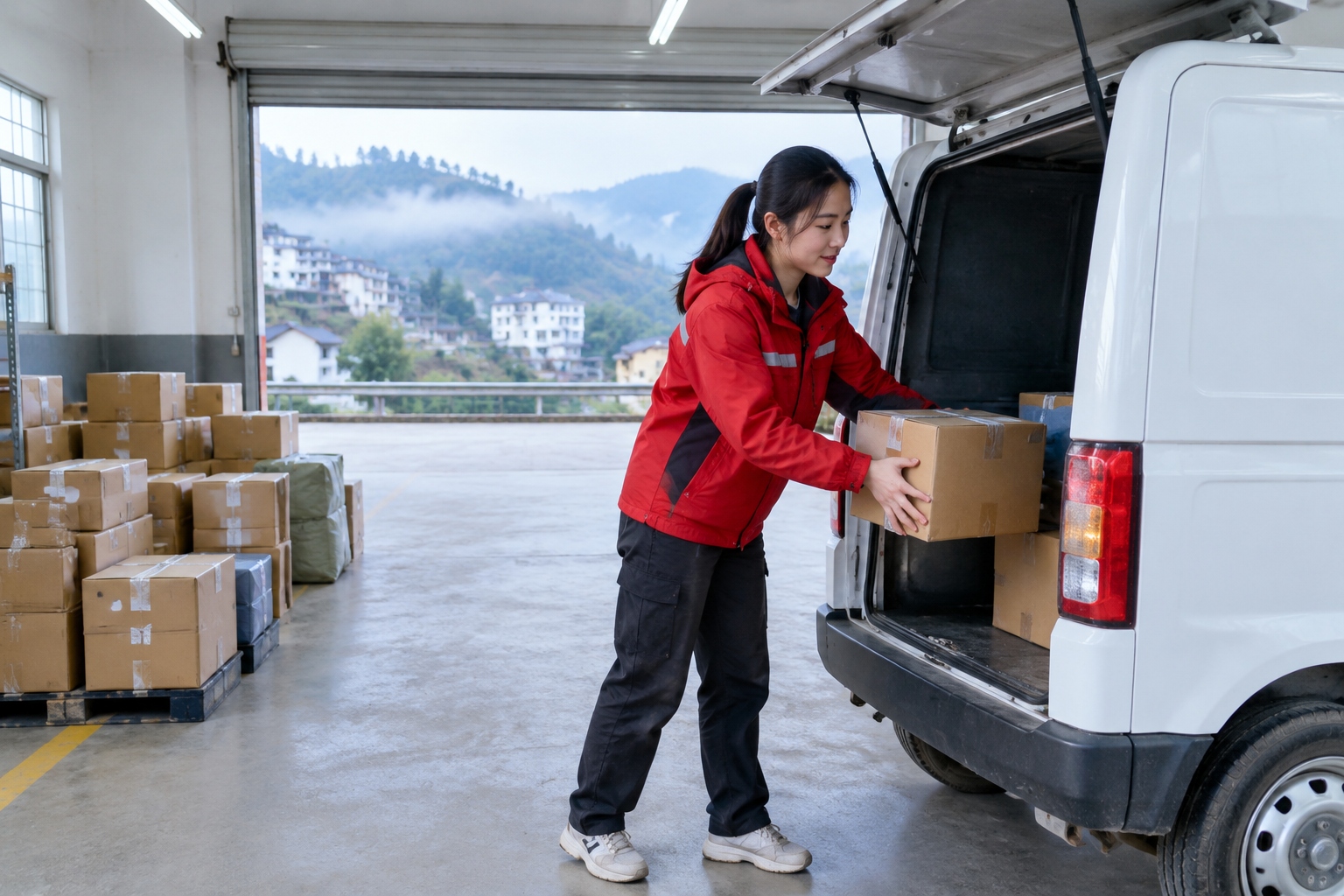
China’s courier industry handled about 174.5 billion parcels in 2024, more than 120 for every person in the country. Much of that volume moves by road and rail along the same corridors the mega-projects created. In county towns in Guizhou or Gansu, a parcel from a factory in Yiwu, Zhejiang, often arrives within two or three days. That has quietly changed what it means to live somewhere small: you no longer have to move to a city to buy what cities sell.
Work and weekends
High-speed rail made the two-day trip ordinary. A family in Wuhan can spend a weekend at the coast; students go home for the Spring Festival in hours instead of overnight. It also changed the shape of careers. Dual-city households — one partner working in Shanghai, the other in Suzhou or Hangzhou — are common in the Yangtze Delta, because the train makes a two-hour commute survivable, if not exactly pleasant.
The Parts That Don’t Fit on a Poster
The bill is real, and it is large.
Most of these projects are financed by local governments through borrowing, and the returns arrive over decades, if at all. Guizhou is the clearest case: it built bridges, expressways and a data-centre cluster at a pace that outran its tax base, and by 2023 it was publicly asking Beijing for help with its debt. In November 2024 the central government announced a 10-trillion-yuan package to refinance local hidden debt — an acknowledgement that the pace of the previous decade was not sustainable. Some high-speed rail lines carry far fewer passengers than planners projected. Some bridges carry fewer trucks.
People move, too. The Three Gorges project displaced around 1.3 million people; the middle route of the South–North Water Transfer moved roughly 345,000. Resettlement has been handled better in some places than others, and compensation and new livelihoods have been uneven. Villages near reservoirs lost farmland and, in some cases, the fishing or farming economy that went with it.
There are environmental trade-offs that rarely make it into ribbon-cutting coverage. Reservoirs in subtropical regions can emit methane as submerged vegetation decomposes. Dams interrupt fish migration and trap sediment that downstream banks and deltas need. And despite the world’s largest build-out of hydro, wind and solar, coal still supplies more than half of China’s electricity — the UHV grid moves coal-fired power just as effectively as it moves green power.
Back to an Ordinary Tuesday
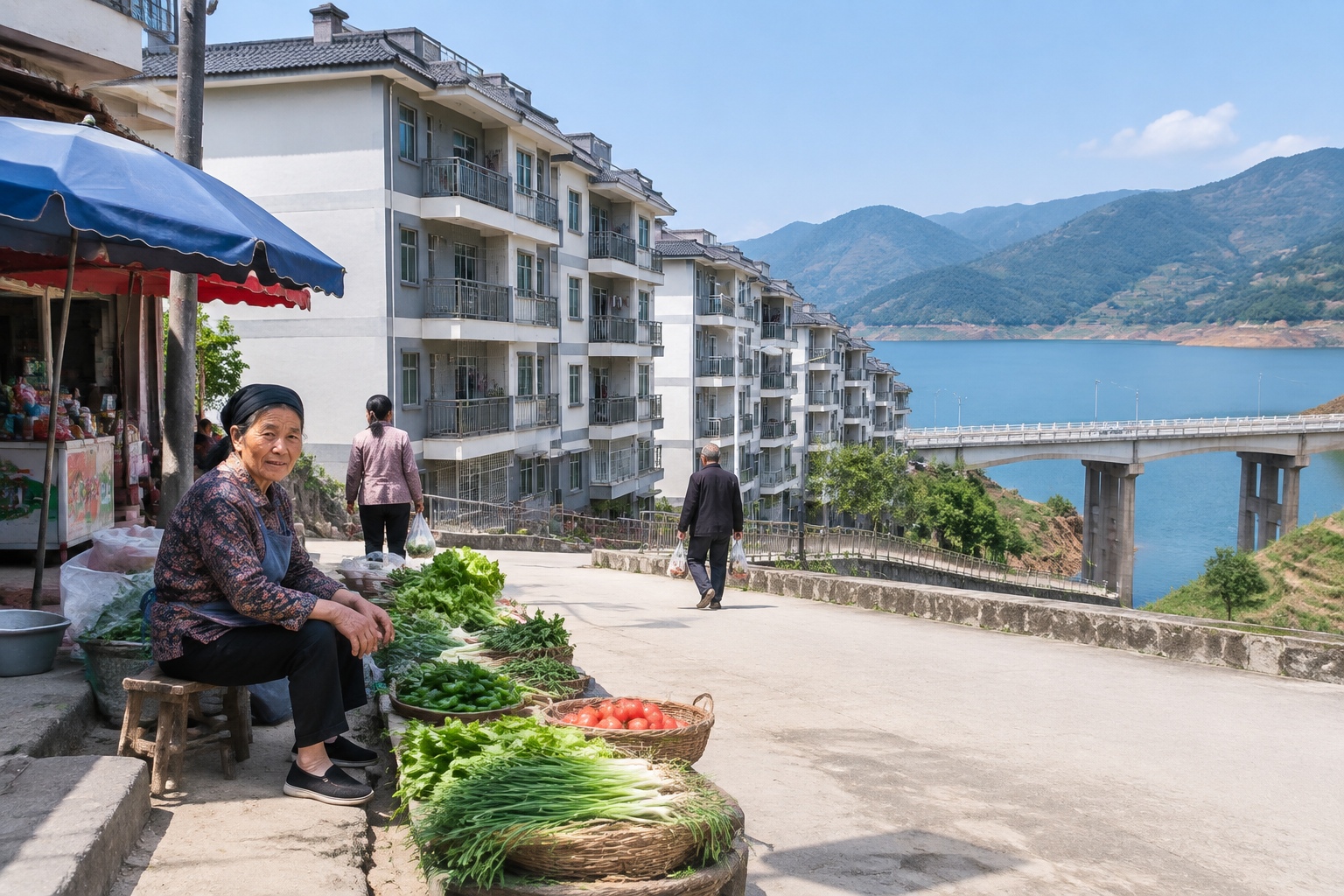
At 7:40 on a Tuesday morning in Zunyi, Guizhou, a courier loads about 200 parcels into a small electric van. Her route crosses a viaduct that did not exist when she was in school. Her mother’s generation sold vegetables at a market within walking distance of home. She delivers phone cases, running shoes and a rice cooker to villages up a mountain road, then drives back down before the afternoon rush.
That is the honest measure of a mega-project. Not the height of a bridge deck or the voltage of a line, but whether one specific person’s Tuesday gets slightly easier — and who paid for it, and who was never asked.
Start the discussion at forum.chinacomes.com