

Evening in the Park
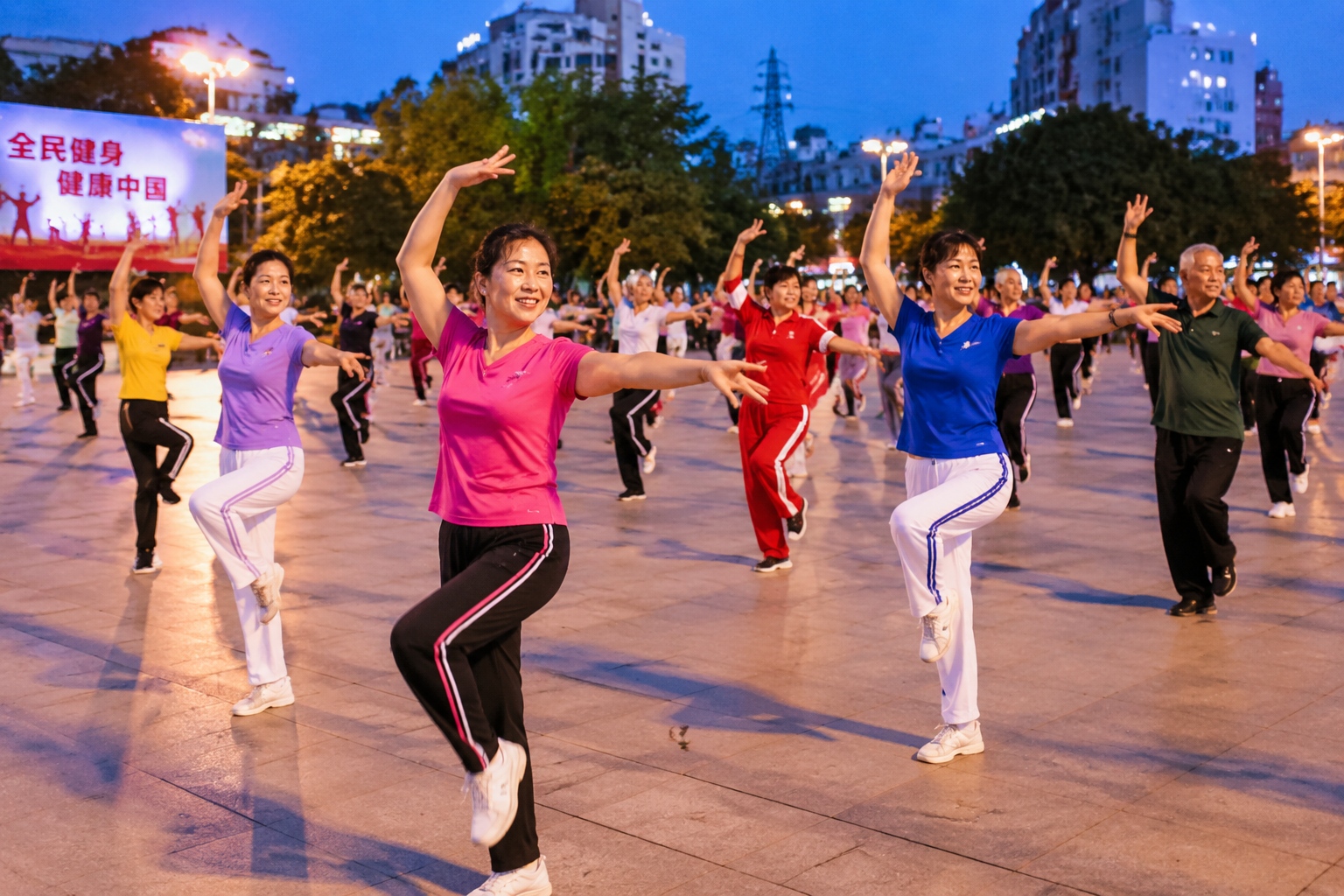
It’s 7 p.m. in a park in Hangzhou. A line of women in comfortable sneakers and bright T-shirts sways in perfect sync to a Mandarin pop song. Their arms rise, their hips shift, a step forward, a step back. A few men trail at the back, doing their best. At the edge, a toddler dances along, and an old man watches, fan in hand. This is square dancing – or guangchangwu – a nightly ritual happening in thousands of parks and plazas across China.
You might have seen videos online: large groups moving in formation, music blasting from portable speakers. It looks fun, but also a little intimidating to join. How do you even step in? The truth is, square dancers are some of the friendliest people you’ll meet. You don’t need talent. You just need to show up. Here’s how to go from watching at the edge to dancing in the middle.
Why Chinese Are Dancing in Squares
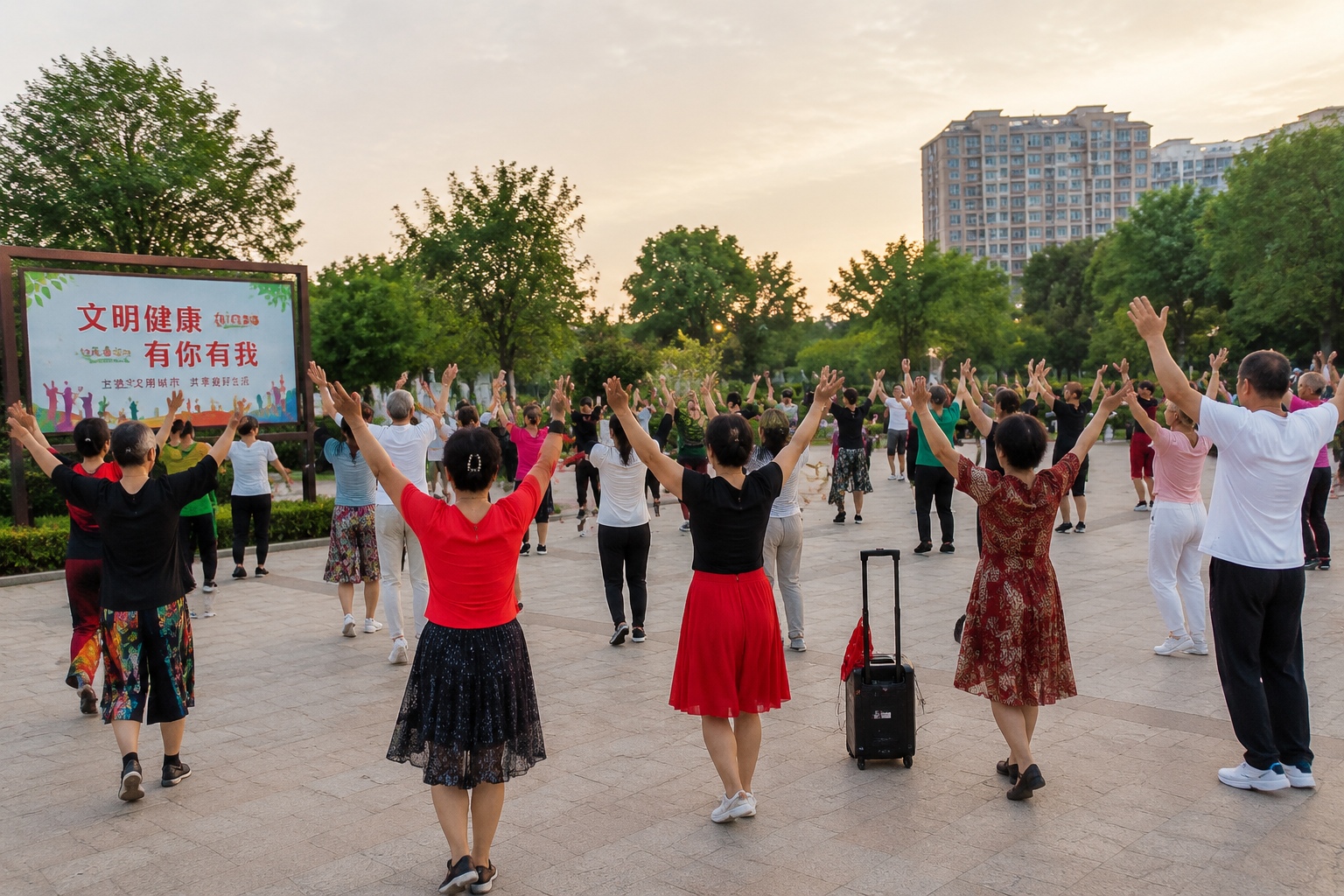
Square dancing isn’t just a form of exercise. It’s a social ritual that grew out of China’s aging population and a culture that values community. After retirement, many Chinese find themselves with free time and not much to do. Parks offer a perfect stage. The music is loud, the moves are repetitive, and everyone can follow along. For many, it’s the highlight of the day – a chance to chat with neighbors, shake off stress, and feel alive.
The dance styles have evolved too. You’ll see everything from traditional folk dance to disco, Latin, and even “smooth” ballroom moves. Some groups hire instructors to learn new routines. Others learn from YouTube videos. There’s no strict rulebook. That’s why it’s so easy to join: the only requirement is a willingness to move.
Step 1: Find Your Dance Crew
Not all square dance groups are the same. In one corner of a park, you might find 50 women moving to a fast beat. In another, a smaller group does a slower, more graceful routine. In a third, a mix of older men and women practice a dance with Latin flair. Before you jump in, spend a few minutes observing.
Start by noting the time. Most groups dance in the early morning (6 a.m. to 8 a.m.) and in the evening (7 p.m. to 9 p.m.). The morning crowds are often more serious and exercise-focused. The evening sessions are more relaxed and social. If you want an easier entry, go for the evening.
Next, listen to the music. Some groups play upbeat Chinese pop songs with catchy choruses. Others use classic folk songs or even Western hits. Common tracks include “You Are My Rose” and “The Most Splendid Ethnic Style” – you don’t need to know the lyrics to enjoy the rhythm. Find a style you like. Also pay attention to the dance style. Some routines are fast and athletic, with leaps and kicks. Others are smooth and simple, more like walking with arm movements. Look for a group where the dancers seem to be moving at a pace you can keep up with.
There’s no membership. You can switch groups any time. In fact, many people hop between groups before settling on one. So don’t worry about picking the “wrong” team. Just pick one that feels enjoyable.
Step 2: The Art of Joining In
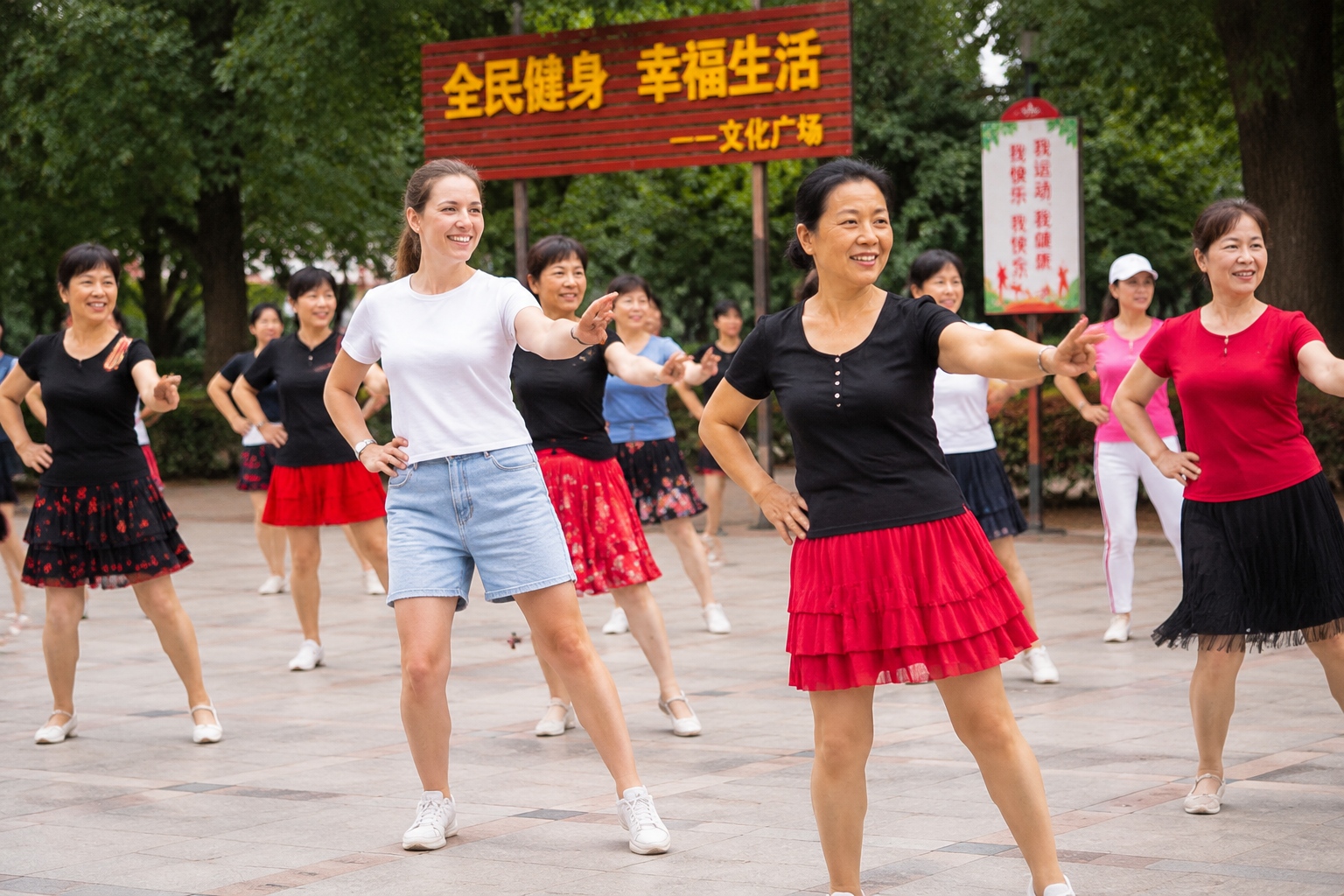
Once you’ve spotted a group, walk to the back row. The back is where newcomers and beginners always start. Nobody will kick you out. The dancers are too focused on their own steps.
Here’s the key: don’t ask for permission. Just start moving. Copy the person in front of you. You’ll be clumsy at first, and that’s okay. The dancers are used to it. They see new faces all the time. Smile, nod, and try to catch someone’s eye. When the chorus hits, give a little thumbs-up. This nonverbal language says: “I’m new, but I’m happy to be here.”
One practical tip: position yourself at the back corner, not the middle of the back row. That way, you have room to make mistakes without blocking anyone. Also, watch your spacing. Square dancers are used to a certain distance between each other, usually about half a meter. Don’t get too close.
Step 3: From Bystander to Regular
After a few nights of dancing at the back, you’ll start to recognize the routine. The steps feel less foreign. That’s when you can start talking to people. Choose the friendliest-looking dancer—often the one who smiles back at you—and ask a simple question after a song ends.
“Excuse me, what’s the name of this dance?” or “You make it look so easy. How long have you been dancing?” These work well. Even if you’re speaking English, most people will understand your gestures, or they’ll find someone who speaks a little English. The goal isn’t a deep conversation; it’s to show you’re interested in them, not just the dance.
Make an effort to remember a few names. The “leader” of the group—usually the one who sets up the speaker and leads the first row—is worth knowing. A simple “Hello, Auntie Li” (if you learn she’s called Li) will earn you a big smile. In China, calling someone “auntie” (ayi) or “uncle” (shushu) is a friendly, respectful way to address older adults.
As you become more familiar, you might be invited to buy an after-dance snack or join a group outing. Some groups go on weekend hikes together. Don’t miss those chances. They’re the real door to community life.
What to Wear, How to Behave
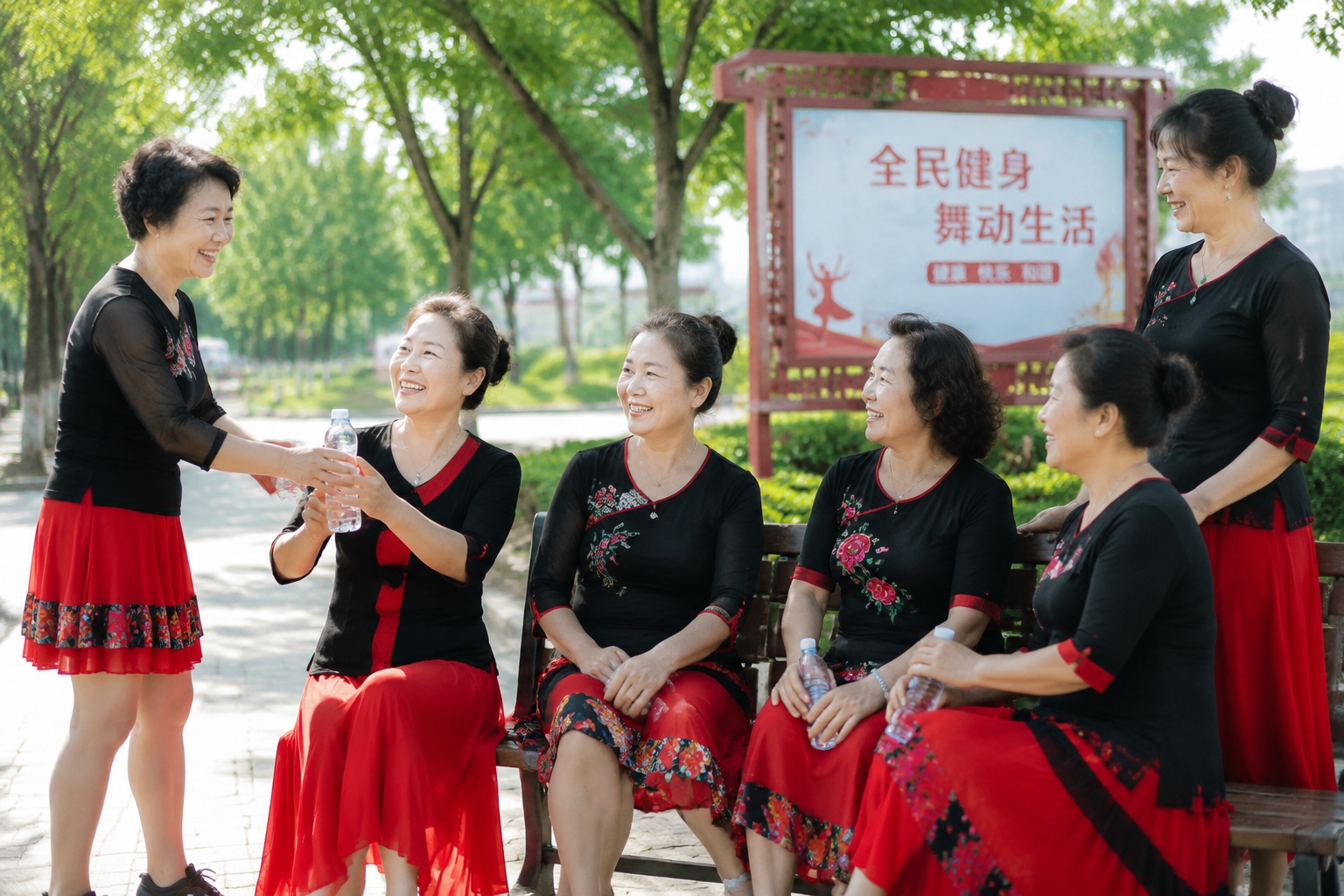
This part is simple: wear what you’d wear for a long walk. Loose pants, a t-shirt, and comfortable flat shoes. You’ll see women in colorful dresses, but they’re usually the ones who’ve been dancing for years. As a beginner, you don’t need any special gear. Sneakers are fine.
Volume is a sticky point. Square dancing has been criticized for loud music in residential areas. Many cities now have rules about noise levels and hours. Be a good neighbor: don’t crank up the music on your own, and keep your group’s volume low if you’re near homes. If another group’s music is too loud, don’t complain to them directly—talk to the local community committee or a police officer. That’s the proper way.
Mind your feet. The most common injury in square dance is stepping on the heel of the person in front of you. Keep a good distance, and look where the front row moves before you follow. Also, don’t bump elbows. Use the half-meter rule.
Finally, respect break times. Many groups pause between songs. That’s when people chat, drink water, or check phones. Don’t start dancing while others are resting. Wait for the music to start again.
Frequently Asked Questions
Can I join even if I don’t speak Chinese?
Absolutely. Square dancing is nonverbal. The moves are visual, and the rhythm does the talking. You can learn the steps by copying the dancer in front of you. Many foreigners have joined without knowing a word of Mandarin. For extra help, download a translation app on your phone.
What if I have two left feet?
So does half the group. The key is to keep moving. The dancers aren’t performing for anyone; they’re just enjoying themselves. After a few sessions, your body starts to remember the patterns. Don’t worry about perfection—nobody’s grading you.
Can I take photos or videos?
It’s fine to ask. Some people love having their picture taken, others don’t. A polite “Can I take a photo?” works. If someone says no, just put your phone away.
Why You’ll Want to Come Back
After one evening of square dancing, your legs might ache. Your coordination might still be off. But something happens: the instant you leave, a feeling settles in. It’s not just the endorphins from moving your body. It’s the warmth of being part of a group, even for an hour.
In a fast-changing country, square dancing offers something rare: a ritual that’s free, open, and built on simple human connection. The music doesn’t care if you’re rich or poor, local or foreign. It just wants you to move. And the dancers—they’ll cheer you on no matter how many times you trip.
So, that’s the invitation. Find a park, hear the music, and take one step. No one will mind if you’re a little late to the circle.
Start the discussion at forum.chinacomes.com