


At 9:30 on a Tuesday morning, Dr. Chen Yan is standing at a blackboard in a research institute in Shanghai, sketching a molecular pathway with a piece of chalk. She is 34, a postdoc about to apply for a principal investigator position — the moment when many young Chinese scientists either take off or leave academia. Chen has published in top journals. Her mentors call her “exceptionally sharp.” Still, she says, “I know I am competing with men who do not have to think about whether to have a baby in the next three years.”
Chen’s situation is not unique. In China, women make up nearly 40 percent of all scientific researchers — a share comparable to many Western countries. But when you climb the academic ladder, the numbers tell a different story. Data from the Chinese Academy of Sciences (CAS) shows women account for less than 10 percent of elected CAS members. Among recipients of the “Changjiang Scholars” program, one of China’s top faculty awards, fewer than 15 percent are women. The gap is not about ability. It is about a system that is slowly — and only recently — learning to adapt.
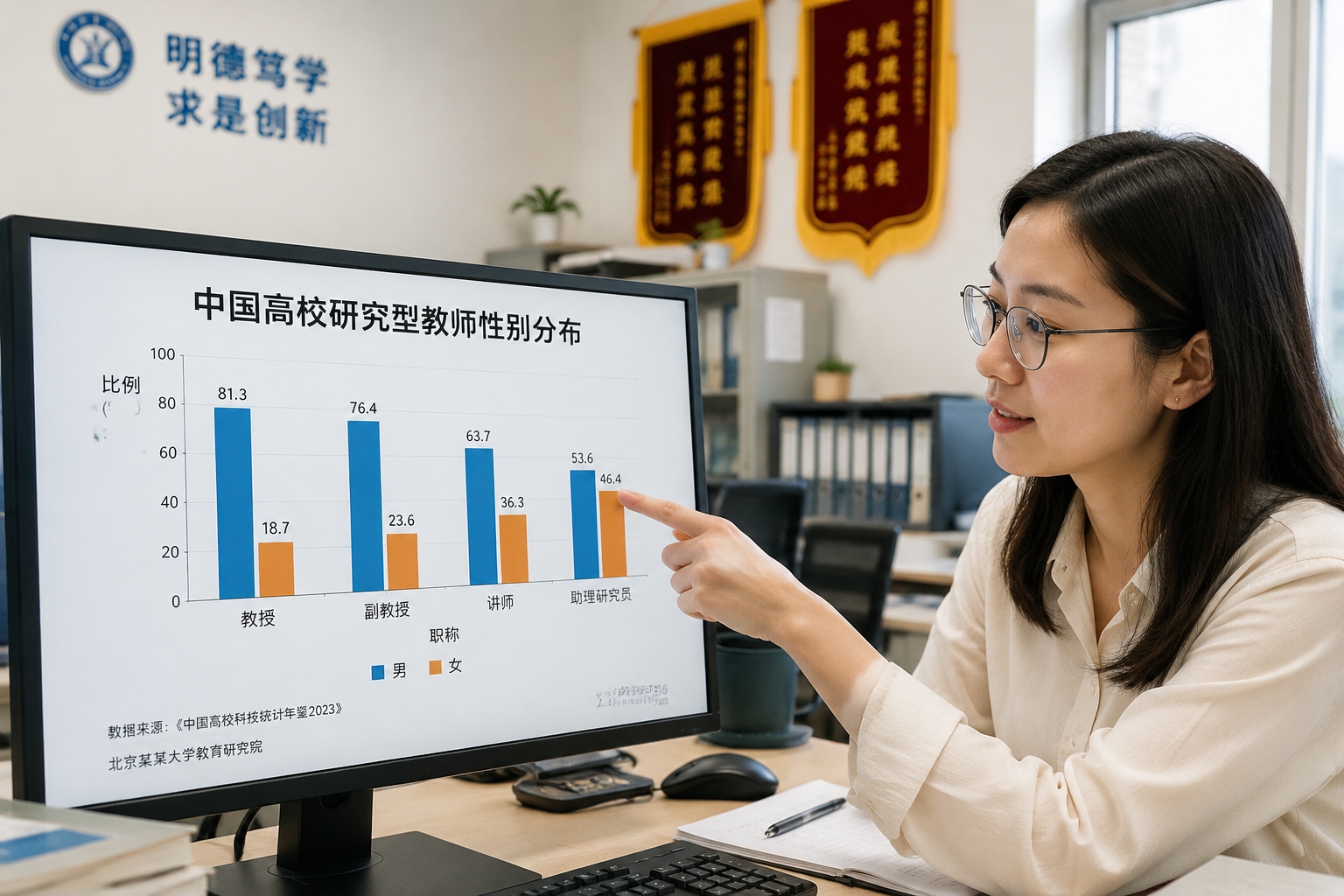
The Data Reality: Where Women Stand in Chinese Academia
Official statistics paint a clear picture. The Chinese Academy of Sciences has around 900 members; fewer than 90 are women. The Chinese Academy of Engineering shows a similar ratio. At the professor level, women hold only about 20 percent of full professorships in China’s university system, according to a 2020 Ministry of Education report. Compare that with the entry level: women now earn about half of all master’s degrees and more than 40 percent of doctoral degrees in science and engineering.
The sharp decline from PhD to full professor — sometimes called the “leaky pipeline” — appears sharply in China. Women start strong, but somewhere between postdoc and principal investigator, they begin to disappear. A prominent study on academic careers in China found that for every 100 women who earn a PhD in science and engineering, only about 13 eventually reach full professor, while for men the number is around 27. The reasons range from unconscious bias in peer review to the heavy burden of childcare and eldercare, which still falls disproportionately on women.
The Age Rule That Works Against Women
One small but telling detail: for years, China’s national funding agency required applicants for the Young Scientists Fund to be under 35. That deadline collides directly with the typical childbearing years. In 2011, after years of pressure, the National Natural Science Foundation of China changed the rule — women got a five-year extension, up to 40. Men stayed at 35. It was a rare example of explicit gender sensitivity in Chinese science policy. But it also points to a persistent assumption that women are the ones who pause.
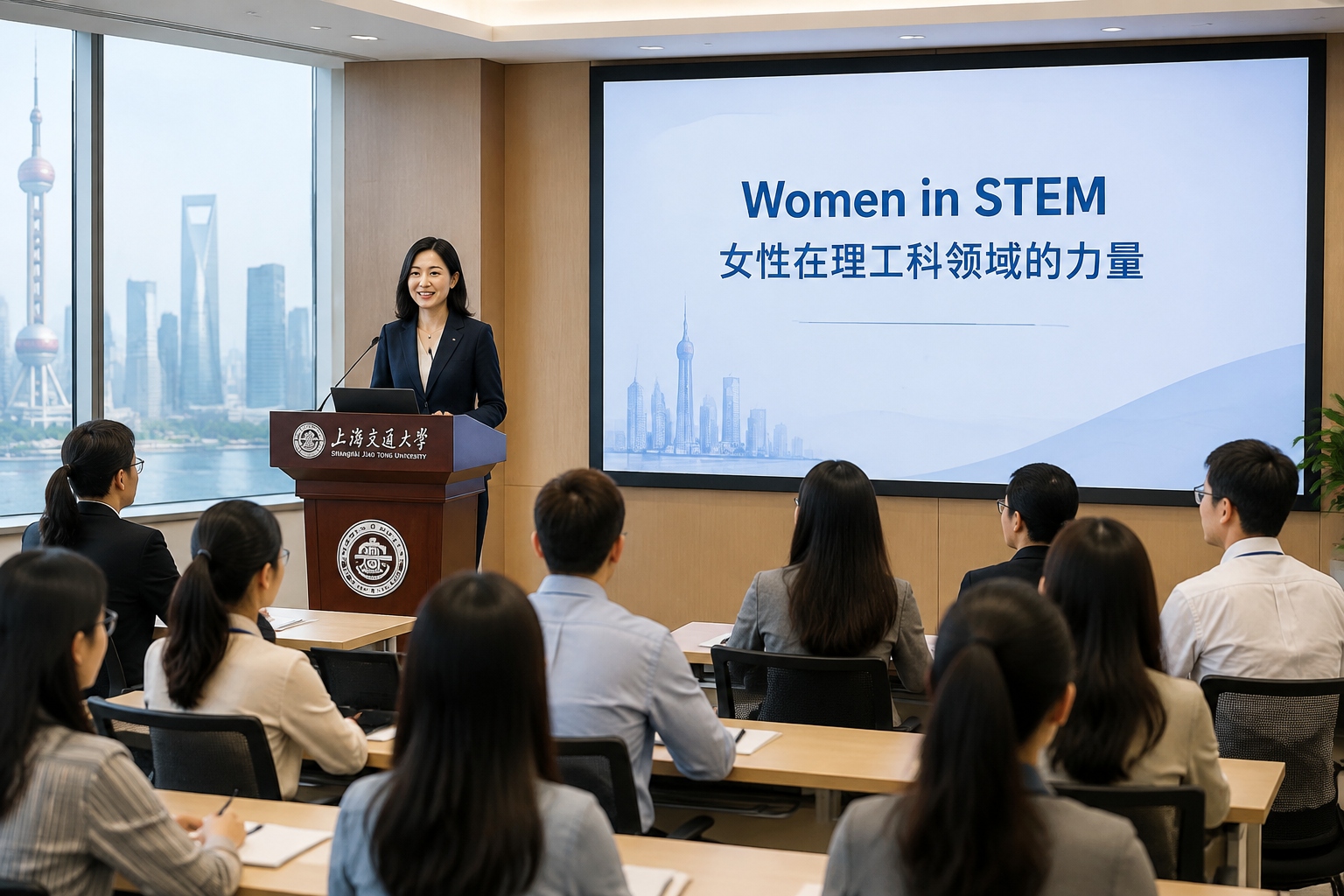
Policy Push: How China Is Trying to Change the Rules
Since 2011, a series of top-level policies have tried to address the gender gap. The “Thirteenth Five-Year Plan for Women’s Development” called for “equal participation of women in science and technology.” In recent years, the Ministry of Science and Technology and the All-China Women’s Federation have issued guidelines encouraging academic institutions to create dedicated funds and flexible assessment criteria for women researchers. More than 30 universities and research institutes have since established special recruitment channels.
The China Association for Science and Technology (CAST) also runs mentoring and networking programs for young female researchers. The Chinese Academy of Sciences now holds an annual “Women in Science” forum in Beijing, where senior female scientists publicly share their struggles and strategies. These changes are real, but they are also recent. Many female scientists who are now in their 40s grew their careers without them.
What Female Scientists Want (Really)
In interviews, Chinese women scientists repeatedly ask for the same thing: a real meritocracy. Dr. Wang Fang, a materials scientist at Tsinghua University, says, “The most helpful policy is not a special fund. It is a review process that judges my publication record instead of asking why my husband didn’t come to the party.” Wang is now serving on a university funding panel, and she says the atmosphere has changed. “People are more aware. Not every man understands, but at least the words are spoken.”
Cultural Shifts: A Generation of Women Who Refuse to Sit Quietly
Behind the policy changes is a cultural shift that is harder to measure. In China’s major cities, the number of single women with advanced degrees has risen sharply. Young women increasingly reject the idea that marriage and motherhood define them. Recent surveys at Chinese universities suggest that the share of female STEM graduate students planning long-term research careers has risen from around 58 percent a decade ago to about 74 percent today.
This generation also has female role models. Tu Youyou, the pharmacologist who won a Nobel Prize in 2015, remains a household name. Yan Ning, a structural biologist who left Tsinghua for Princeton and later returned, is the most famous young face of Chinese science on social media. Wang Xiaoyun, a cryptographer who cracked two major security algorithms, was elected to CAS in 2015 and now serves as a dean at Shandong University. Their visibility matters — especially for girls deciding whether to enter a male-dominated field.
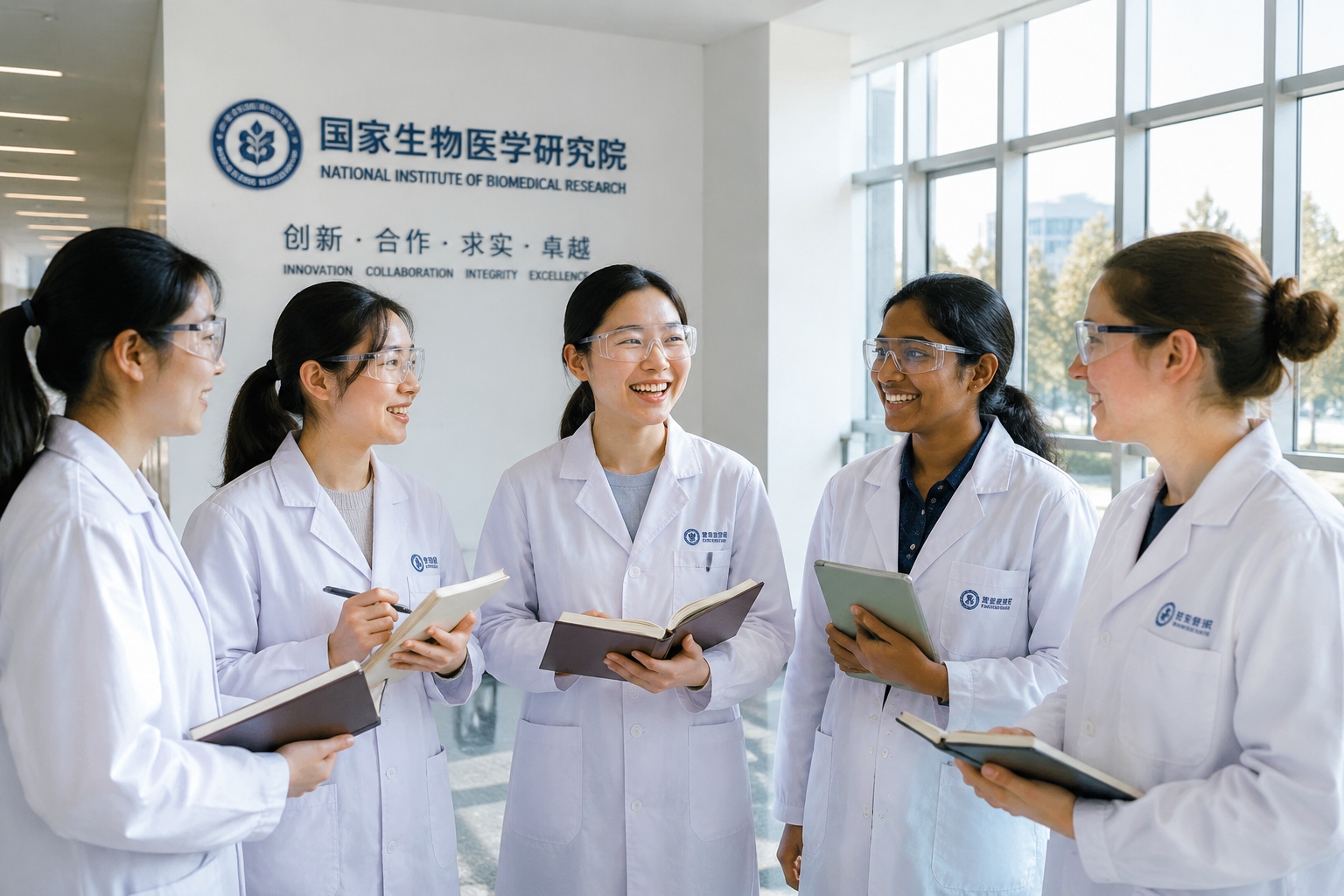
Visible Success: Women at the Top of Chinese Science
These women are not exceptions; they are harbingers. In 2020, military scientist Chen Wei, who helped develop China’s first COVID-19 vaccine, became a household name. In 2021, the Chinese Academy of Sciences’ Institute of Zoology promoted two of its five new full professors from female researchers — a record. And female-led projects are not underperforming: a large-scale analysis of publications from Chinese institutions found that, after controlling for field and seniority, papers by female corresponding authors were cited at rates comparable to or slightly higher than those by men.
The Road Ahead: Challenges That Remain
For all the progress, nothing is automatic. Unconscious bias still lives in anonymous review forms. The ideal scientist is still often imagined as a man in a lab coat. And for women in small cities or less endowed institutions, the special funds often exist only on paper. Dr. Chen Yan, the Shanghai postdoc, is hopeful but cautious. “I will apply for the principal investigator position. I have a good shot. But I also know that if I don’t get it, the first question people will ask is whether I am ready for children.”
The policy changes in China’s research system are real, but they are only a start. The decisive change is in the choices of thousands of women like Chen, who refuse to stay silent and keep doing what they do best: asking hard questions, gathering data, and proving — one experiment at a time — that the lab has room for them.
That is the quiet revolution. It doesn’t make headlines every day. But it’s happening, right now, in the corridors and conference rooms of China’s best universities.
Start the discussion at forum.chinacomes.com