
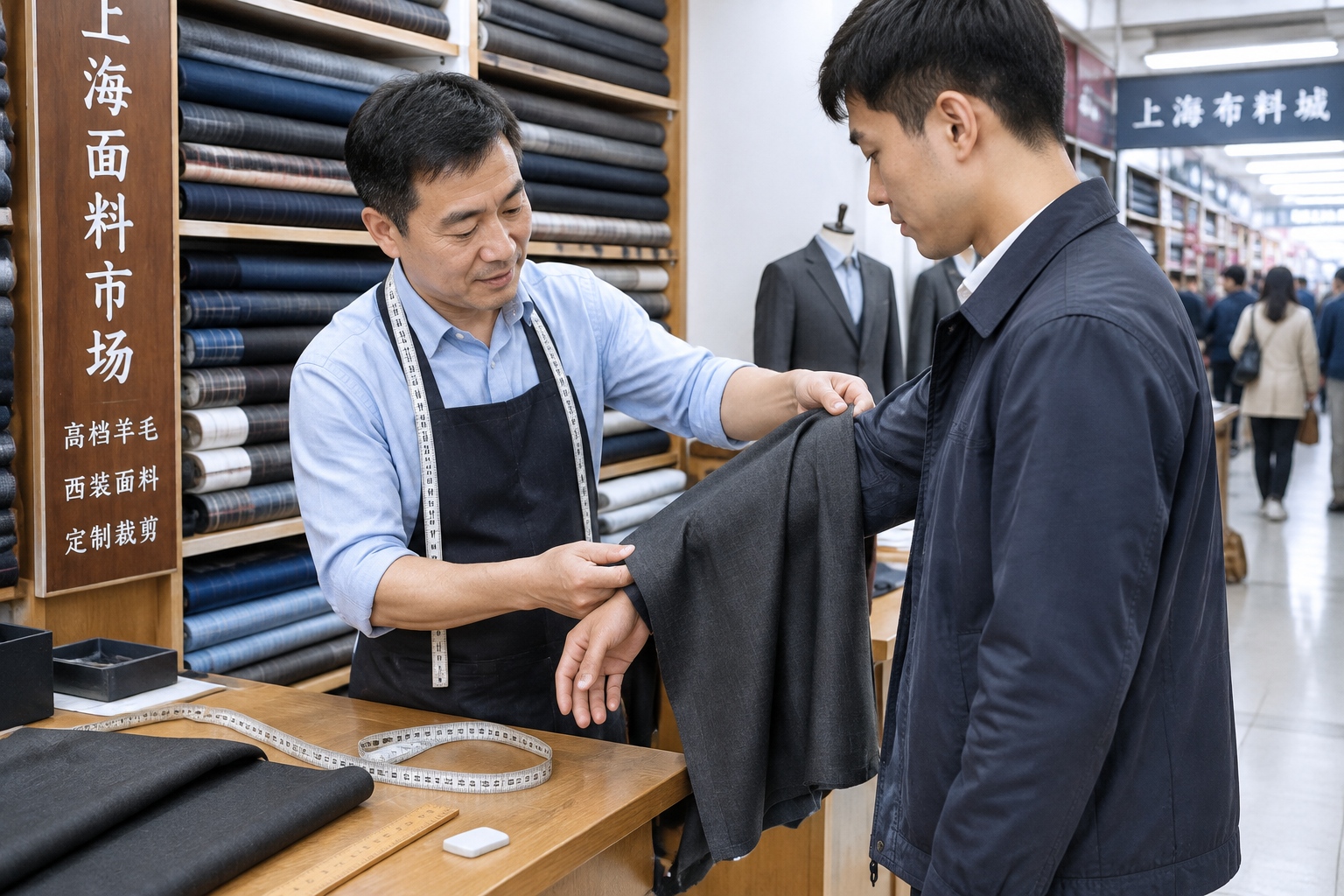

A Tuesday Morning on the Third Floor
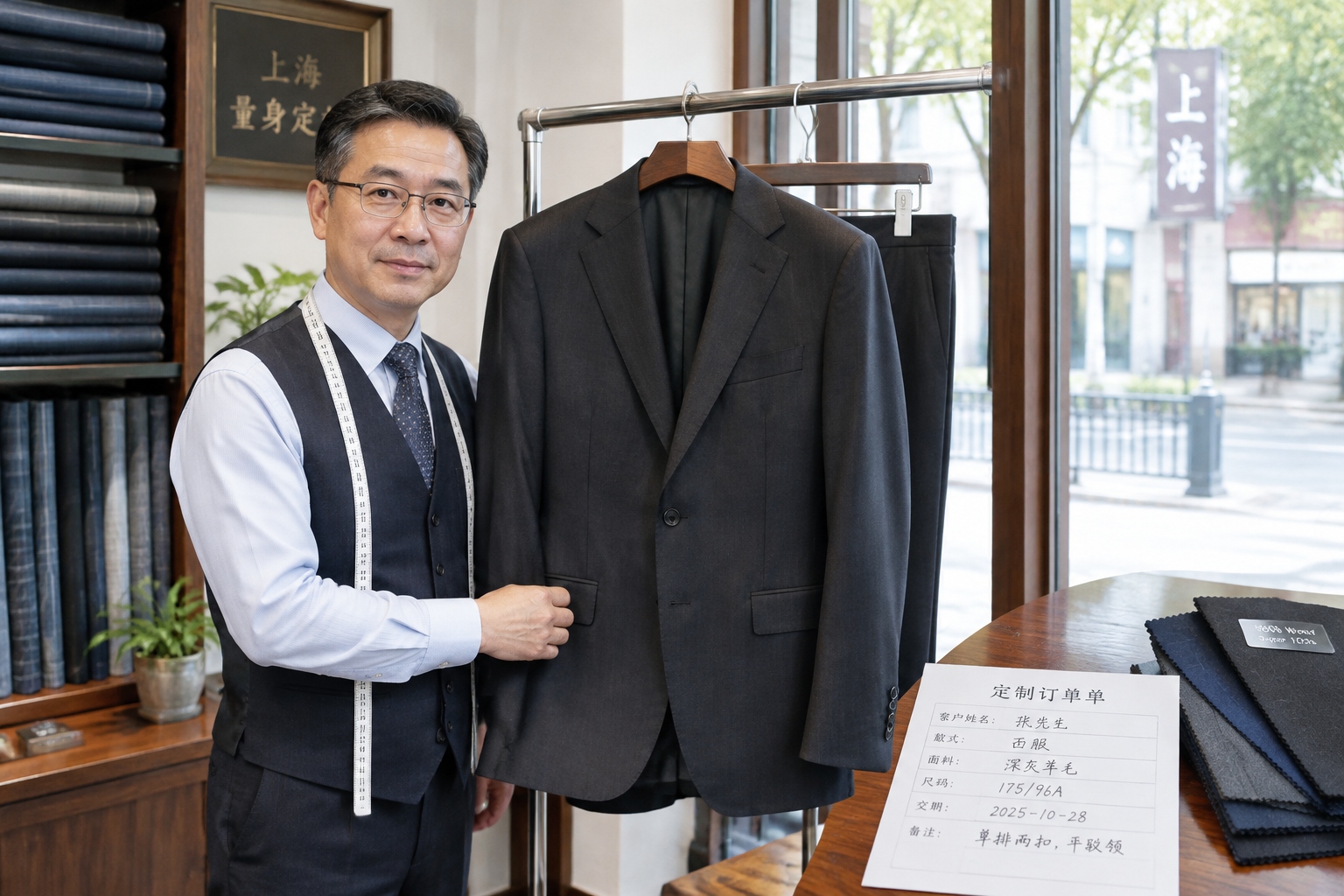
At half past ten, the third floor of the South Bund Fabric Market in Shanghai smells faintly of chalk, steam, and new wool. A tailor named Mr. Chen pulls a bolt of charcoal fabric from a shelf, unrolls about a meter across his counter, and drapes it over my forearm so I can feel the weight. “This one is a wool blend,” he says. “Good for daily wear. If you want pure wool, I show you different ones.” Behind him, a measuring tape hangs on a nail next to photos of past customers in finished jackets.
This is where the “price of a T-shirt” story usually starts. Let me be honest right away: it’s an exaggeration. You will not walk out with a genuine bespoke suit for the price of a basic cotton tee. But compared to what a comparable made-to-measure suit costs in London, New York, or Tokyo, the numbers here are low enough that the hyperbole feels almost fair.
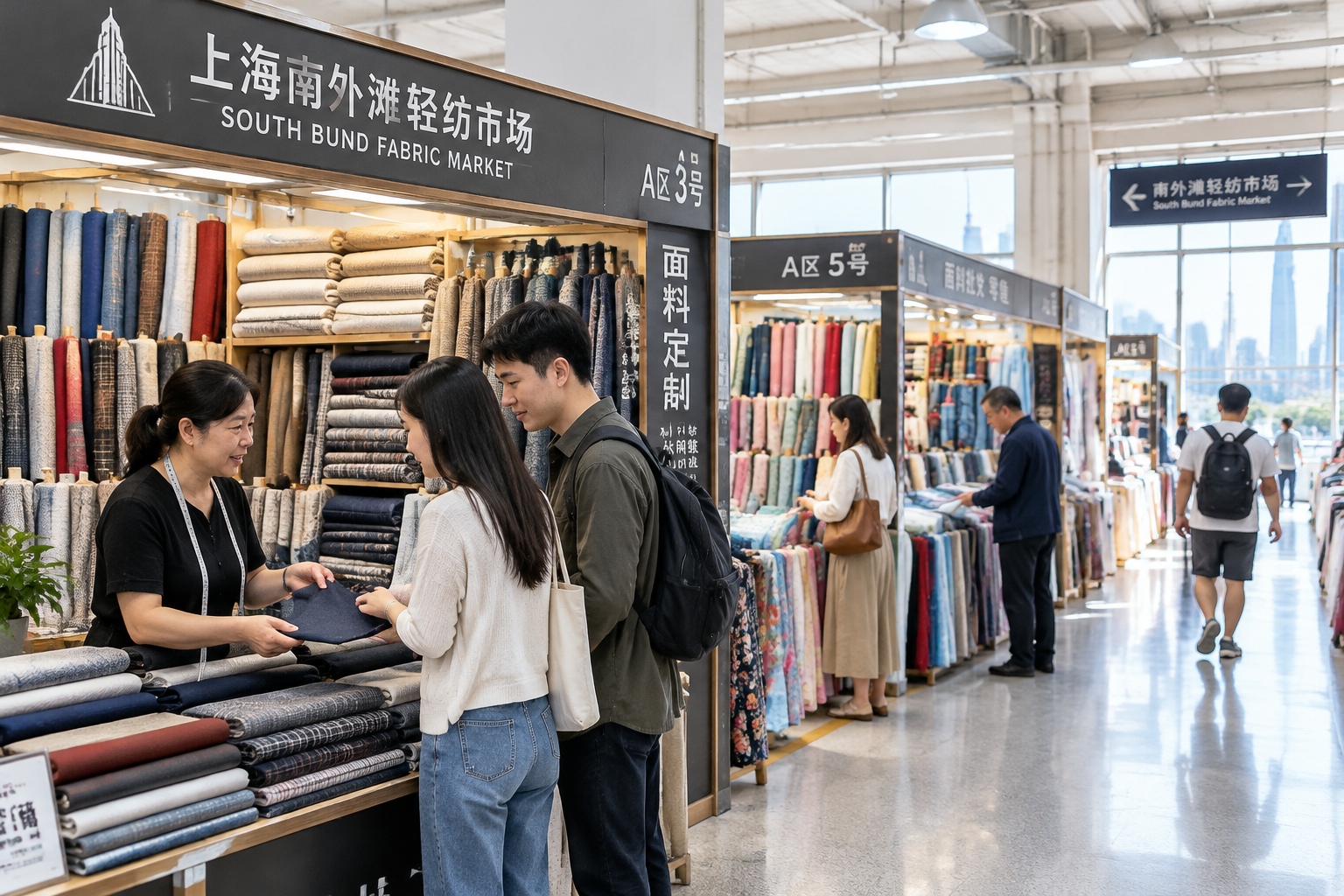
What “Cheap” Actually Means Here
A reasonable two-piece suit, made to your measurements from a decent wool-blend fabric, generally runs between 800 and 1,500 RMB (roughly 110 to 210 US dollars). Step up to pure wool or a recognizable imported cloth, and you’re looking at 1,800 to 3,500 RMB. The absolute floor, a simple blazer in basic fabric, can dip toward 500 RMB during a slow season if you bargain.
So where does the T-shirt comparison come from? A branded designer T-shirt in a Shanghai mall can easily cost 400 to 700 RMB. Set that next to a 500 RMB custom blazer and the joke writes itself. It’s a real contrast, not a fantasy, but it only holds at the entry level and with sharp negotiating.
The cost breaks down into three parts: fabric, labor, and the shop’s margin. Fabric is where prices swing the most. Labor in these markets is remarkably affordable because the tailors work at volume and keep overhead low. The margin is where your bargaining happens.
Choosing the Fabric Without Getting Fooled
The fabric stall is where most mistakes get made, because this is the one thing a first-time buyer can’t easily judge. A few habits help.
First, ask directly: “Is this pure wool, a blend, or polyester?” A trustworthy tailor will tell you plainly and often show the bolt’s label. Pure wool wrinkles and then slowly recovers; polyester springs back instantly and feels slightly plasticky. Crush a corner of the cloth in your fist, hold it for a few seconds, then release. If the creases hang around stubbornly or the fabric feels cold and slick, it’s heavy on synthetics.
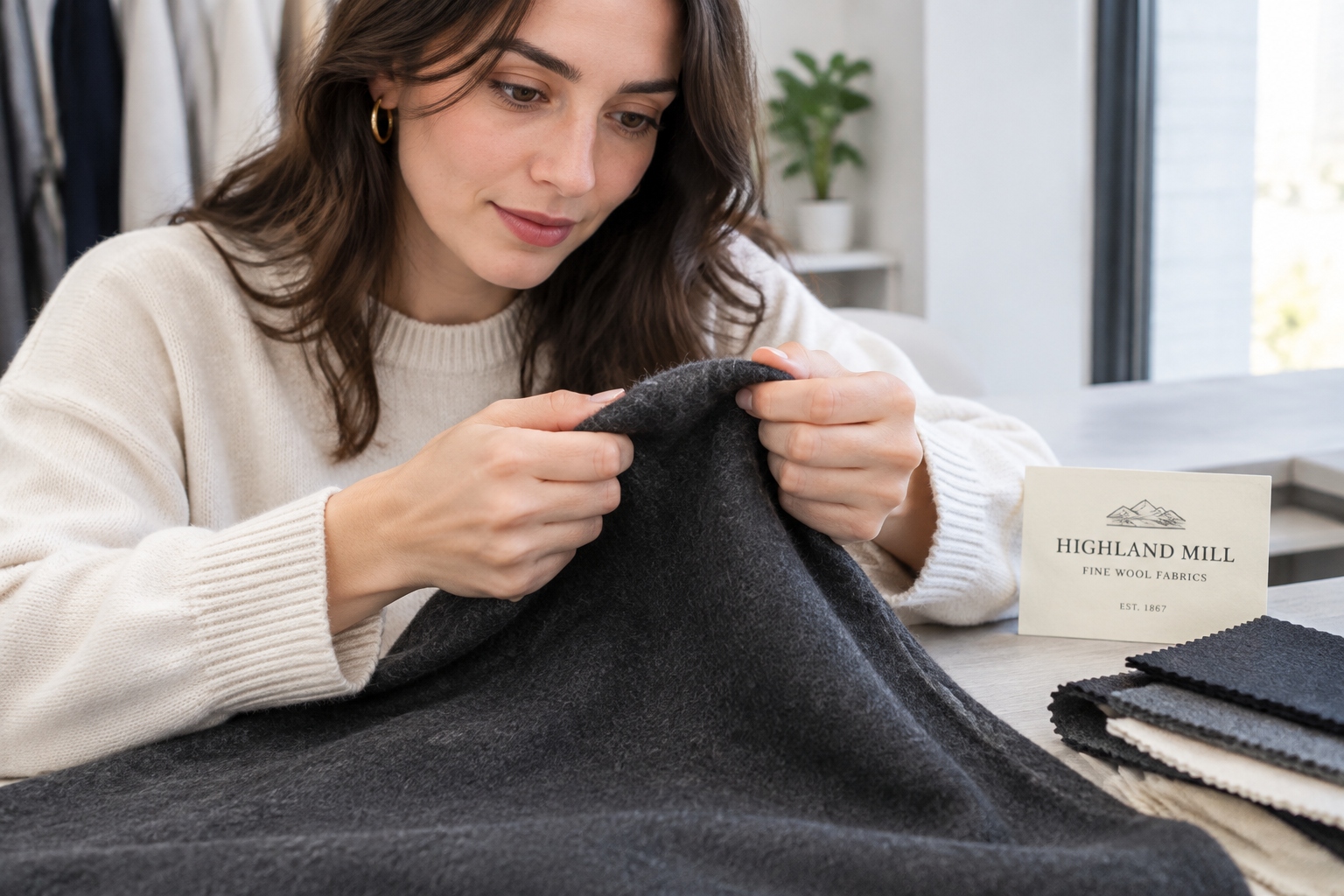
Second, don’t assume a high price means better cloth. Ask to see the mill name. Fabrics from well-known Italian or English mills usually come with a printed selvage edge. If a seller claims “imported Italian wool” but can’t show any marking, treat the claim as decoration, not fact.
Third, match the fabric to your climate and use. Shanghai summers are humid and brutal; a lightweight, breathable wool around 240 to 280 grams matters more than a famous label. For a suit you’ll wear year-round, mid-weight wool blends hold their shape and travel well.
Getting Measured
The measuring session takes ten to fifteen minutes and tells you a lot about the shop. A careful tailor measures more than a dozen points: chest, waist, hips, shoulder width, sleeve length, back length, and the drop between shoulder and neck. Mr. Chen worked quickly but kept narrating, “Your right shoulder sits a little lower, very common, I’ll adjust the pattern.”
Watch for this kind of attention. If someone measures you in under three minutes and jots down four numbers, the fit will probably disappoint. Good tailors also ask how you want the suit to feel, slim or relaxed, and whether you’ll wear it to an office or a wedding. These questions shape the cut.
Bring a shirt or jacket that already fits you well. Pointing at a real garment and saying “like this, but the sleeves a touch longer” communicates far better than abstract words across a language gap.
The Fitting: Where Bespoke Earns Its Name
Most shops ask for seven to ten days and one fitting; some offer a rush service in two or three days for a fee. The first fitting is the real test. You’ll try on a roughly assembled version, and the tailor will pin, chalk, and pinch the excess.
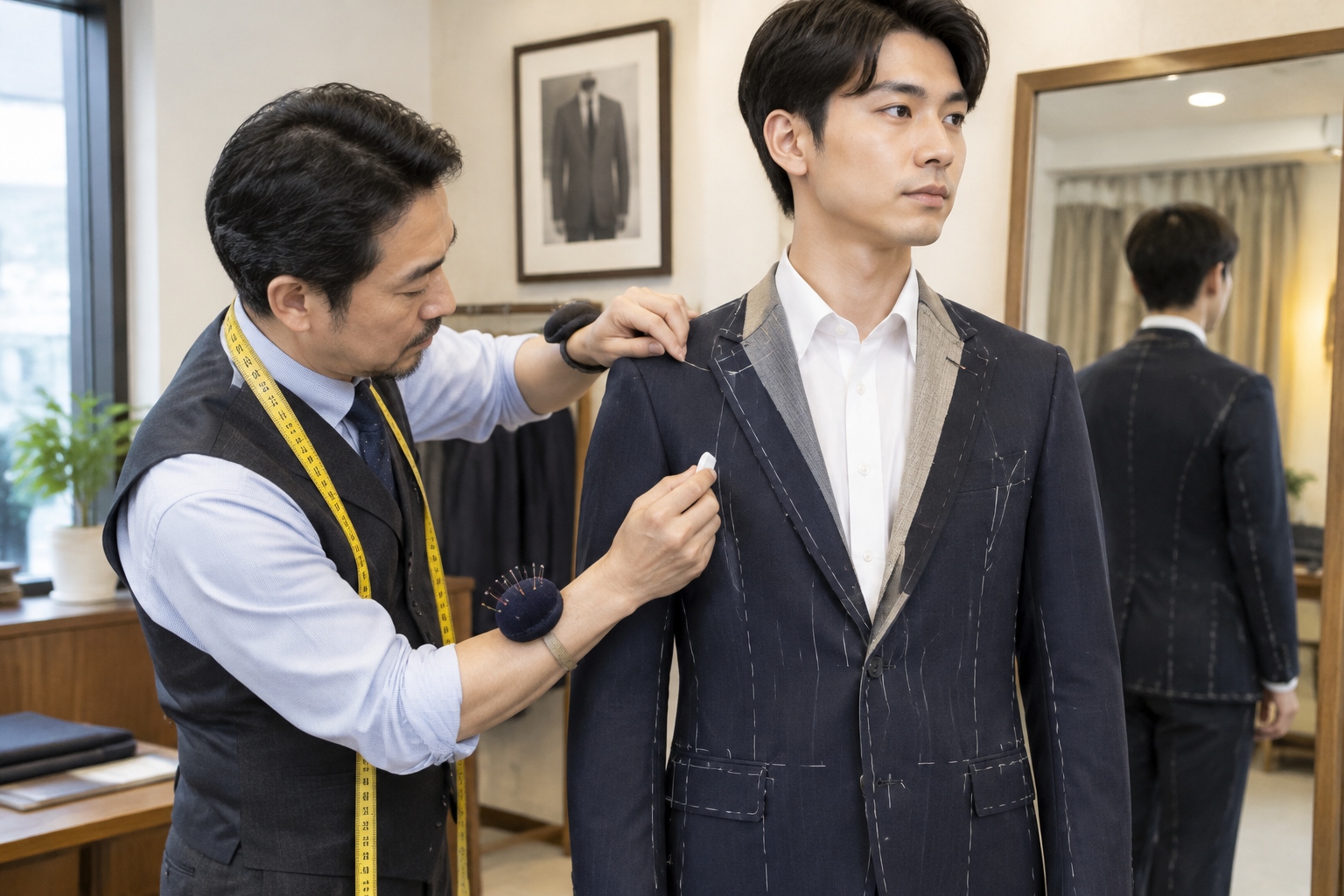
This is the stage you should never skip, even if the suit already feels fine. Stand naturally, move your arms, sit down. A jacket that looks perfect while you stand still can bind across the back when you reach for a door. Say something if the collar gaps at the neck, if the trousers break too high over your shoes, or if the waist pinches when you sit. Adjustments are included; this is what you came for.
Good shops will happily call you back for a second fitting. If a tailor resists any changes or insists the fit is “already perfect” when it clearly isn’t, that’s a signal to be firmer, or to choose someone else next time.
A Practical Walkthrough
Here is how a smooth visit tends to go. You arrive with a reference garment and a rough budget in mind. You spend twenty minutes feeling fabrics and asking about composition. You settle on a cloth and confirm the total price in writing or on the shop’s order slip, including lining and any extras like working buttonholes or a second pair of trousers.
You get measured, discuss the style, and pay a deposit, usually half. A week later you return for the fitting, mark the changes, and collect the finished suit a few days after that. The whole thing fits comfortably inside a one-week trip, which is exactly why visitors keep coming back to these markets with empty suitcases.
How to Avoid the Common Traps
A few rules save money and regret. Always agree on the final price before you commit, and get it noted down. Confirm what’s included; some quotes exclude lining or a second trouser. Be specific about fabric composition and don’t pay import-wool prices for a blend.
Give yourself enough time for a proper fitting rather than squeezing it into your last afternoon. And bargain politely, especially if you order more than one piece; two suits or a suit plus extra trousers almost always unlock a better rate.
Why This Exists at All
Shanghai’s tailoring culture isn’t a tourist invention. The city has a long garment-making history, and the fabric markets grew around a dense ecosystem of skilled, independent tailors who learned the trade through years of hands-on work. Low overhead, intense competition, and a steady stream of both local and international customers keep prices down and standards up.
None of this means every shop is excellent or every bargain is real. Quality varies, and the cheapest option is rarely the best one. But for anyone curious about how everyday craftsmanship still thrives in a modern Chinese city, an afternoon on the third floor of a fabric market, chalk dust in the air and a measuring tape over someone’s shoulder, is a surprisingly honest window into it.
Start the discussion at forum.chinacomes.com