

A Bridge, a Tower, and a Question at 7 A.M.
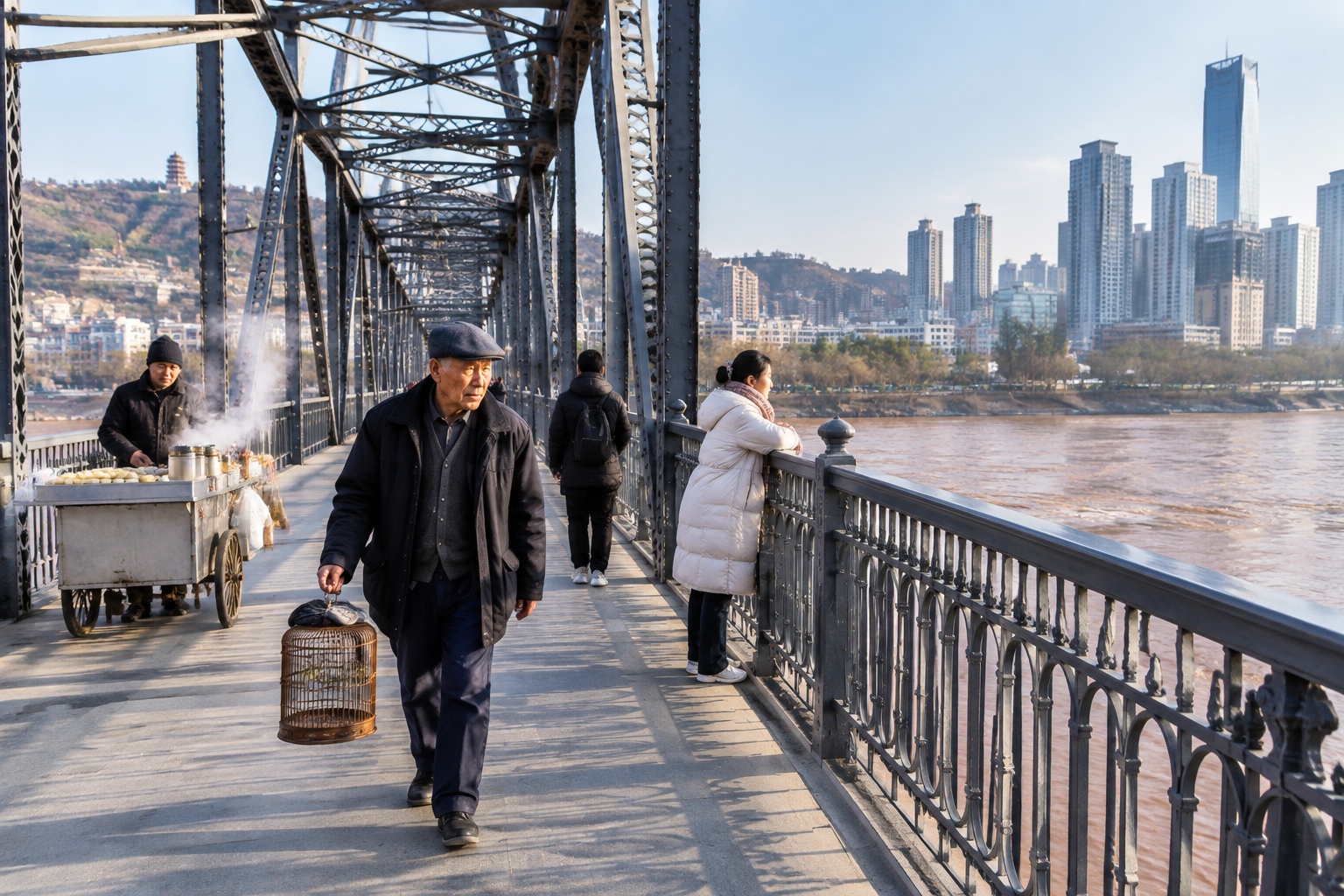
On the Zhongshan Bridge in Lanzhou, in northwest China’s Gansu province, the morning belongs to people who are not in a hurry. Men carry bird cages in the direction of the park. A woman sells hot soy milk from a cart. Walkers in thick coats move slowly along the railing, stopping to look at the water.
The bridge itself is a black steel truss a little over 230 metres long, finished in 1909 by a German construction firm and long called the first permanent bridge across the Yellow River.
Turn one way and you see the river, wide and brown. Turn the other way and you see the buildings of a newer Lanzhou: glass, thirty storeys, kitchen windows with laundry hanging out.
Visitors tend to ask locals one question here. Which one is the landmark, the bridge or the towers? The answer is usually a shrug. Both. That is not a dodge. It is a fairly accurate description of how most Chinese cities are put together.
What Old Landmarks Were Actually For
In many Western cities, the old building is the one that survived. In Chinese cities, the old building is often the one somebody decided, at some point, was worth keeping. That decision has been remade several times in the past century.
These older structures were not decoration. A pagoda on a hill was a civic statement: a feng shui tower, a marker for boats on the river, a way for a city to tell itself it was prosperous. Longxiang Pagoda in Nanning, in the southern region of Guangxi, was first built in 1585 on Qingshan hill above the Yong River. It stood nine storeys tall and stayed there for three and a half centuries before it was demolished in 1937, when a war made tall landmarks a liability. The pagoda Nanning families visit today is a 1986 reconstruction, on the same hill, now the tallest pagoda in Guangxi and a stop on almost every local weekend route.
Temples did more than hold incense. In many towns they doubled as granaries, schools and meeting halls. Ancestral halls kept the records and the money of extended families. City gates decided who paid tax on the way in. Old commercial streets — Beijing’s hutongs, Shanghai’s shikumen lanes, Fuzhou’s Three Lanes and Seven Alleys — were places where retail, gossip and childcare all happened inside the same 300 metres.
That is why old buildings carry weight in a Chinese city. They were infrastructure before they were heritage. Quanzhou, in Fujian province, had 22 of its temples, mosques, bridges and tombs inscribed as UNESCO World Heritage in 2021, not because they are pretty, but because they document a port city that traded with the wider world for centuries.
What New Landmarks Are For
New landmarks have a different job, and it becomes clearer if you stop calling them monuments and start calling them instruments.
A bridge moves goods. A convention centre brings conferences that fill hotels. An office tower announces that a district exists. Ping An Finance Center in Shenzhen — 599 metres, 115 floors, completed in 2017 — is not there because Shenzhen needed another roof. It is there because a financial district needed an address, and because a public observation deck on the 116th floor gives the whole city a piece of sky to show people.
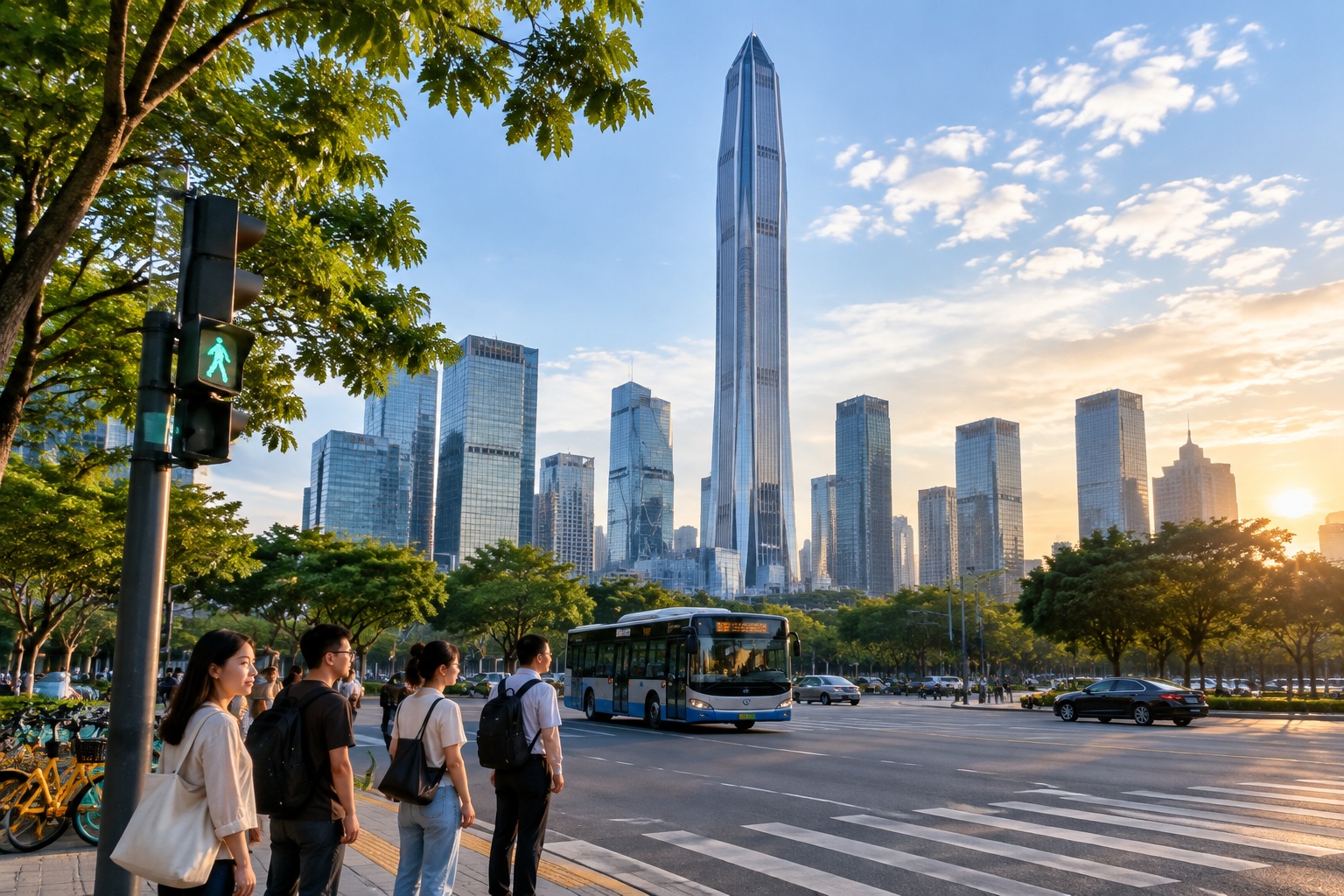
If you are from Rotterdam, London or Kuala Lumpur, none of this sounds foreign. Erasmus Bridge, the Shard, the Petronas Towers: cities everywhere build tall things to say they have arrived. What differs in China is volume and speed. A mid-sized city can add a ring road, a metro line and a business district inside a decade, and each of those projects usually arrives with a nameable building attached.
Old and New Standing Side by Side
The common assumption abroad is that development eats heritage. Sometimes it does. More often the two share a skyline, and often they share a history as well.
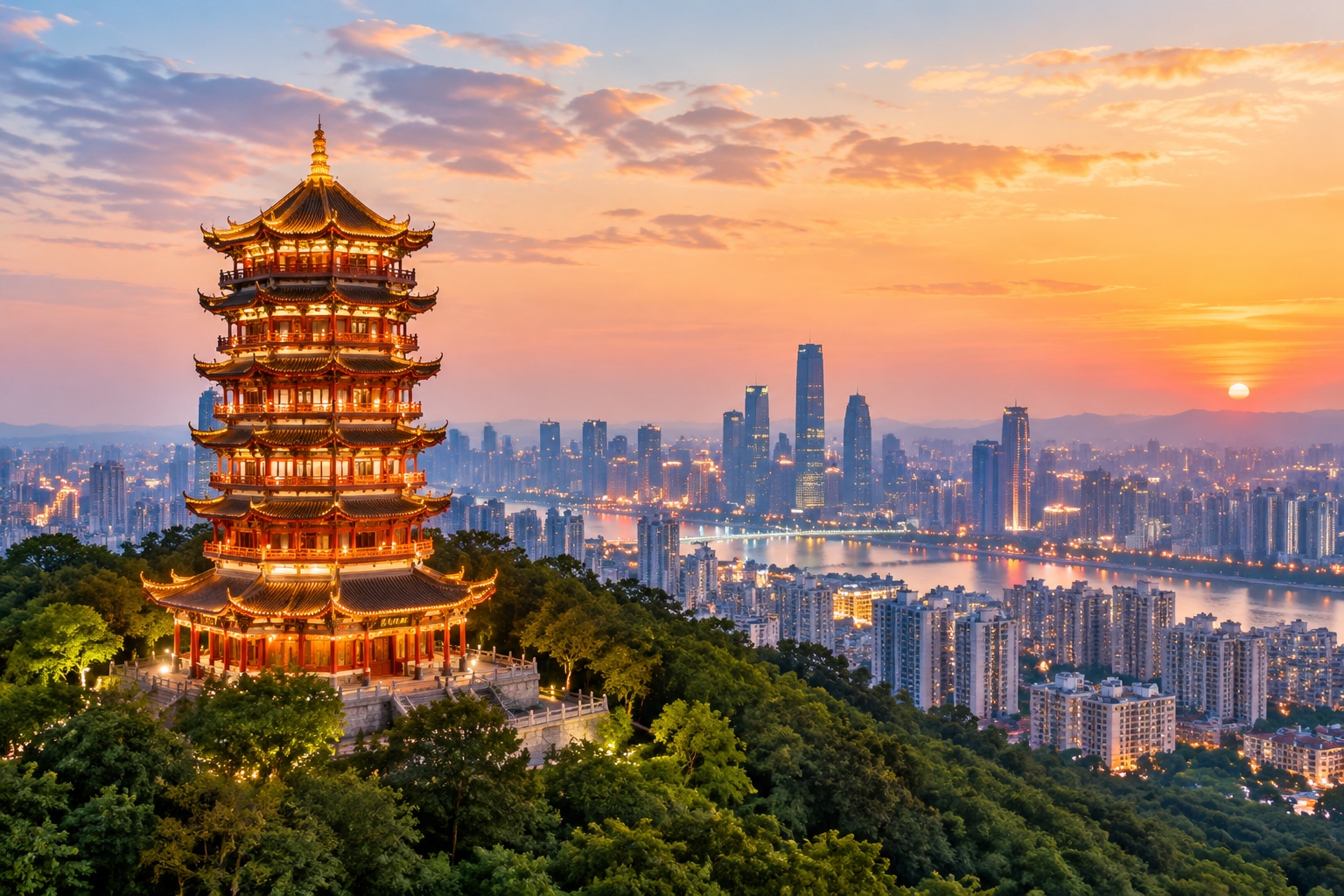
Wuhan’s Yellow Crane Tower is the clearest example. Chinese schoolchildren memorise poems about a tower on that river that has burned down and been rebuilt so many times that no living person has seen the original. The building tourists climb today was completed in 1985, roughly a kilometre from the old site, with escalators inside. It is a modern structure performing an old idea — which is arguably what a landmark has always been.
In Guangzhou, the Chen Clan Ancestral Hall, finished in 1894 and now the Guangdong Folk Art Museum, sits about twenty minutes by metro from Canton Tower, a 600-metre steel lattice completed in 2010. Guidebooks list both without any sense of contradiction. Shanghai produced two different answers to the same shikumen lane in the same decade: Xintiandi, rebuilt in 2001 as polished retail and restaurants, and Tianzifang, where more small shops and some residents stayed. Planners still argue about which one worked better.
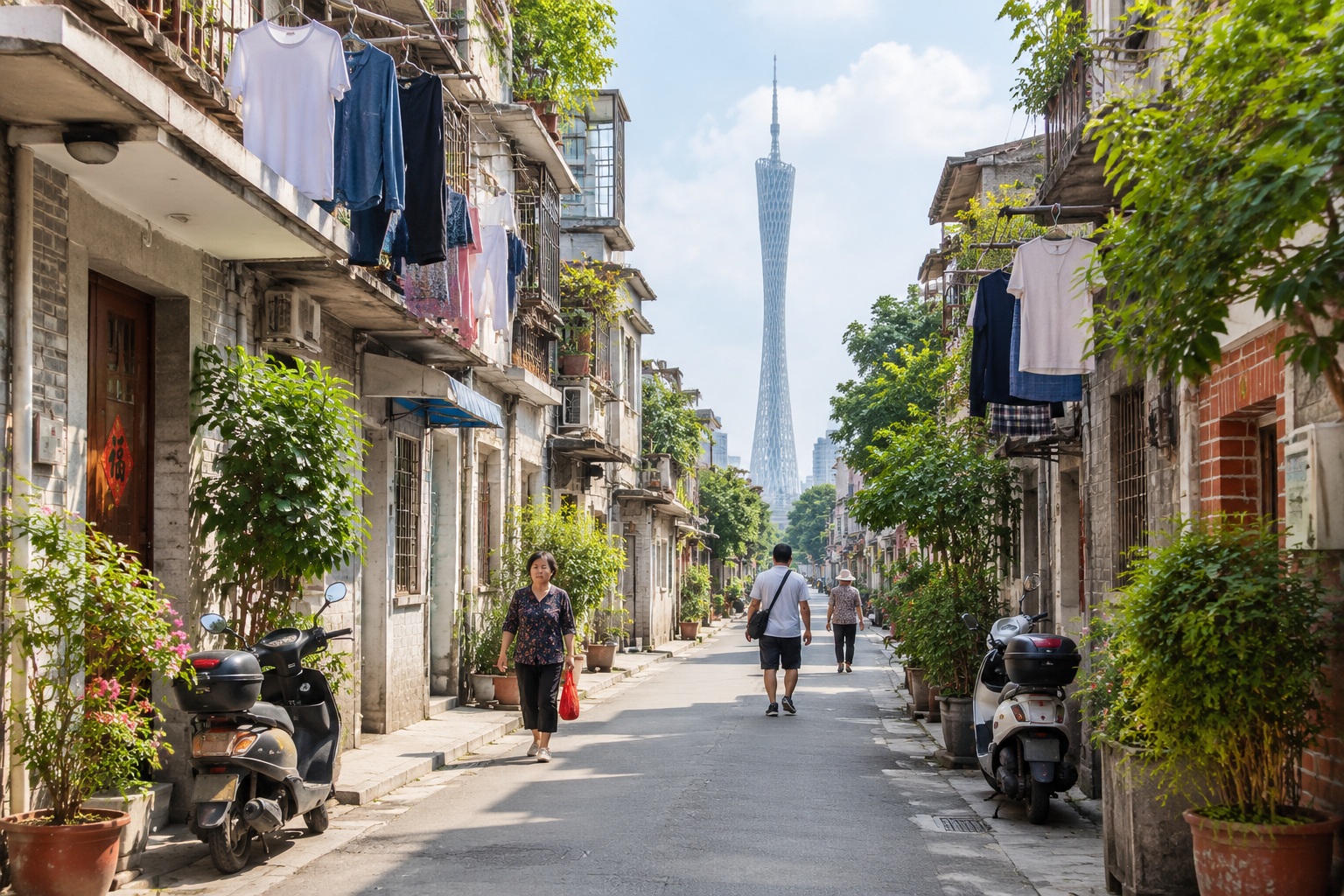
Beijing offers a less comfortable case. In 2017 and 2018, the city sealed up thousands of small businesses that had been created by knocking windows through the street-facing walls of courtyard houses. Streets became quieter and, by official accounts, safer. Residents also lost the shops where they bought vegetables and repaired shoes, and a fair number of them said so publicly.
The Part That Doesn’t Photograph Well
Not every preserved street is preserved. Plenty of ancient commercial districts built in the 2000s are new construction with old-style roofs and a souvenir shop every four metres. Locals usually know which is which. Tourists usually do not.
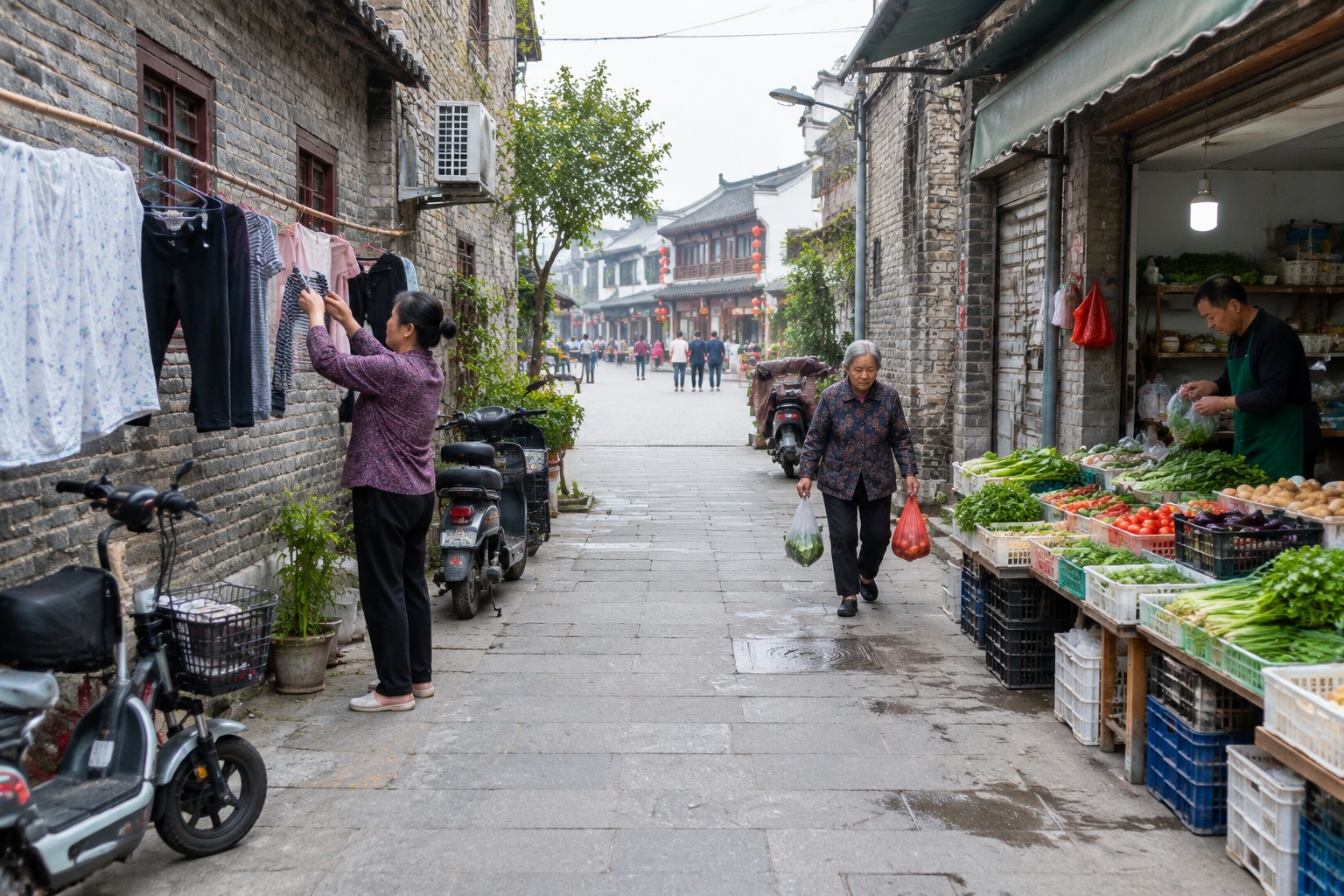
And for two decades, the standard Chinese answer to old housing was demolition. Whole neighbourhoods came down. Residents were moved into new apartments, often at the edge of town, with private bathrooms and a longer commute. From the 1990s into the 2010s, that trade-off was accepted by many households and resisted by many others, sometimes inside the same family.
The policy has since shifted. In 2021, China’s Ministry of Housing and Urban-Rural Development told cities to stop large-scale demolition-and-rebuild in urban renewal projects, capping demolition at roughly a fifth of a project’s existing floor area and pushing for residents to be rehoused nearby rather than on the outskirts. Shanghai passed its own urban renewal regulations the same year. Flattening a block is now more expensive, slower and more likely to be challenged than it was ten years ago.
How People Actually Use Both
The clearest sign that old and new are not enemies is what happens around them on an ordinary Tuesday.
At the base of Longxiang Pagoda, retirees practise tai chi before the tour buses arrive. In the evening, the same plaza hosts loudspeaker dancing. In cities across the country, wedding photographers shoot restored old streets in the morning and glass-roofed shopping malls in the afternoon, and nobody finds this odd.
Names matter too. Beijing’s subway Line 2 runs where the city wall used to stand, and its stations are named after gates demolished in the 1950s and 1960s: Xizhimen, Dongzhimen, Fuchengmen. The gates are gone. The names arrive every four minutes. In smaller cities, a bus stop may still be called Old Pagoda long after the pagoda has been replaced by a phone shop. The word outlives the object, and people keep giving directions with it.
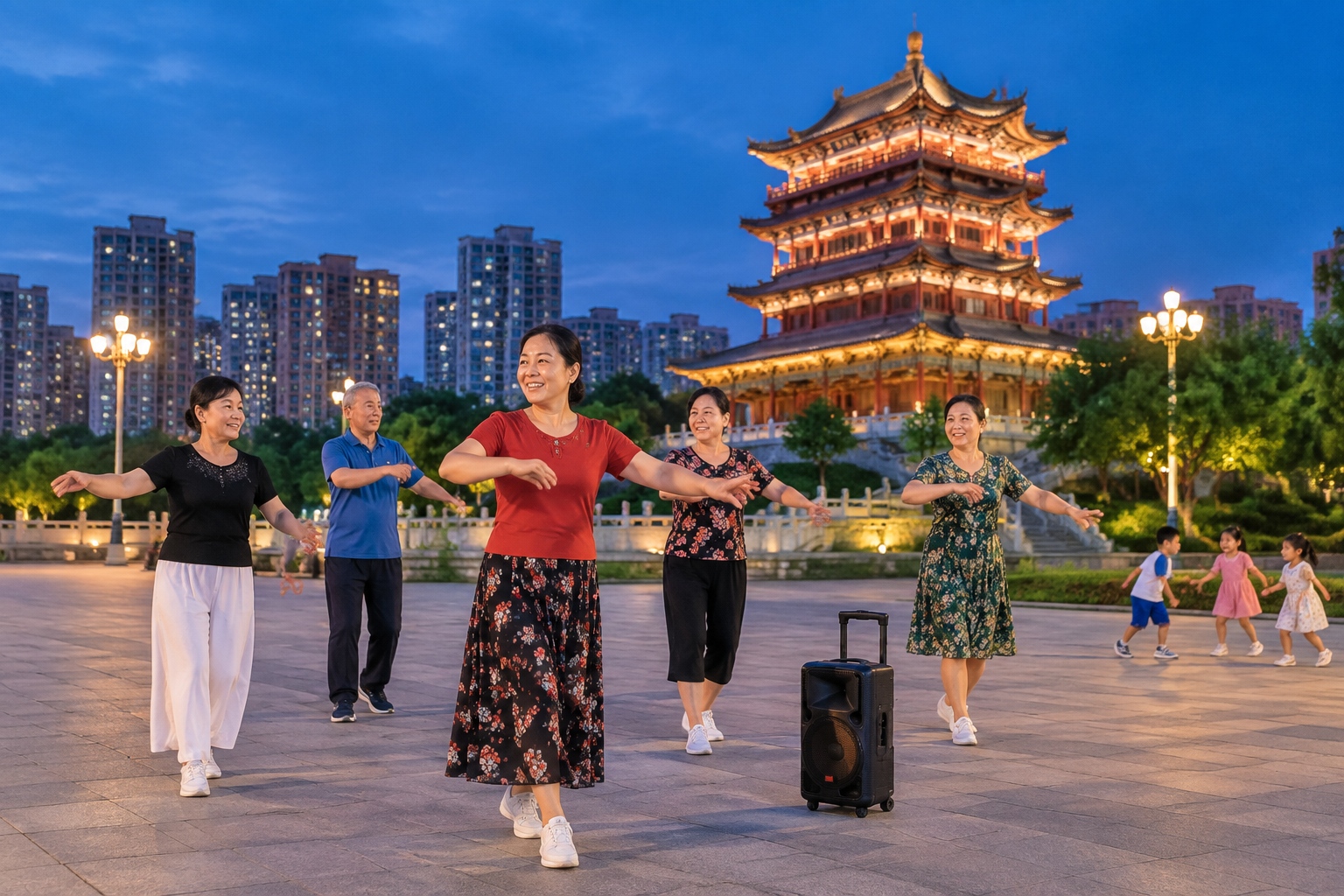
That is closer to how memory works in a Chinese city than any bronze plaque.
If You Are Coming From Europe or North America
The most useful comparison is not that China preserves less or builds faster. It is a difference in timing, and in who controls the land.
Most European cities grew slowly over centuries, and many wrote their preservation rules after the Second World War, when there was still time to argue about what to keep. China’s urban population went from roughly 18 percent in 1978 to more than 66 percent today — several hundred million people moving into cities within a single working lifetime. Housing, sewers and metro lines had to be built for them, and built now.
Land ownership shapes the rest. Urban land in China is state-owned and leased for fixed terms, usually 40 to 70 years. That allows a city government to assemble an entire block, plan it and rebuild it in a coordinated way — a process that in most American or European cities means negotiating with dozens of separate owners for decades. The same mechanism that makes fast, coherent renewal possible also makes it easier to erase something valuable before anyone has time to object.
So when a Chinese city keeps both a 400-year-old pagoda and a 600-metre tower, it is not confused about its identity. It is managing two jobs at once: one building to say who we were, another to say what we can do.
What You’d Notice If You Looked for Ten Minutes
Next time you are in a Chinese city, skip the observation deck for an hour. Go to the old bridge at seven in the morning and see who is on it. Walk the lane behind the restored shopping street and look at what the back doors are like. Ask a taxi driver what the neighbourhood was called before the towers went up.
You will usually get a straight answer, and often a story about a school, a factory or a grandmother’s courtyard that used to be there.
Every city has to decide what it keeps. In China, the interesting question is not whether old landmarks can survive modern ones — mostly they do — but who gets to hold the memory, and where they get to hold it. That question is being answered block by block, right now, by the people crossing the bridge at seven in the morning.
Start the discussion at forum.chinacomes.com