

Eleven at night in Chengdu, and nobody is going home
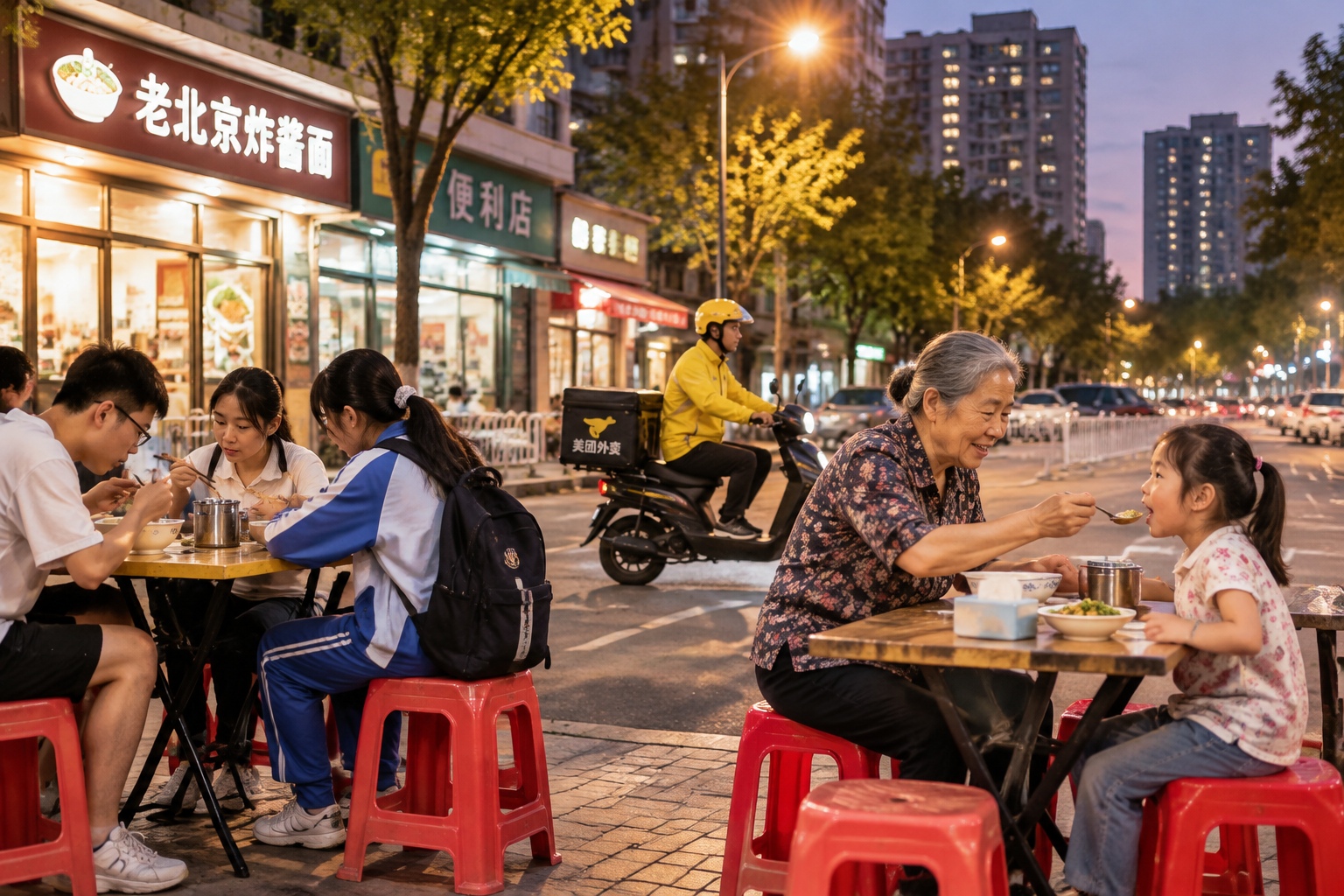
It is 11:20 on a Tuesday night in Chengdu, and the sidewalk outside a hotpot restaurant is full. A grandmother in a floral blouse feeds noodles to a five-year-old perched on a plastic stool. Two college students argue about a singer neither of them can quite name. A delivery rider in a yellow helmet slides between the tables and disappears down the block.
I was standing there with three American teachers who had flown in for a two-week school exchange. One of them taught history in Ohio. She kept scanning the street like she was waiting for the other shoe to drop. “Where I’m from,” she said, “this many people on the street at this hour means something is about to happen.”
Nothing happened. We ate skewers, bought oranges from a cart, and walked twenty minutes back to the hotel. That walk — flat, uneventful, almost boring — turned out to be the thing she described most often after she got home. Not the skyscrapers. Not the high-speed train. The boring walk.
What “society isn’t broken” actually looks like
First-time American visitors usually carry one of two scripts about China. One says it is a high-tech dystopia. The other says it is a poor country held together with tape. Neither script survives a normal week in a Chinese city.
1. The night is public space
Chinese cities are busy after dark in a way that genuinely surprises people from the United States. Not just in tourist centers — in ordinary residential neighborhoods, on a Tuesday. Grandparents walk toddlers at 9 p.m. Teenagers sit on curbs with milk tea. Convenience stores stay lit. Small restaurants keep serving until the last table leaves, which might be 1 a.m.
None of this is magic. Chinese cities are dense: millions of people live within a five-minute walk of shops and food, so a street-level business can survive on foot traffic alone. Subway systems often run until 10:30 or 11 p.m. Streets are brightly lit. Violent crime is low by most international comparisons, and visible policing plus a very large network of cameras is part of why. That trade — safety for surveillance — is a real trade, and Chinese residents hold a wide range of opinions about it. But for a visitor who has spent years reading about a country in decline, the mood on the street is the first thing that doesn’t match the story.
2. The small machinery of daily life mostly works
This is what visitors notice second: the number of everyday tasks that just happen.
You scan a QR code to unlock a shared bike for 1.5 yuan. You ride it to a subway station, where a trip across Shanghai starts at 3 yuan — roughly 40 US cents. You order groceries at 10 p.m. and they arrive in about 30 minutes. A high-speed rail network of more than 45,000 kilometers connects most major cities, so a 1,300-kilometer trip takes about four and a half hours. A parcel shipped across the country costs a couple of dollars and lands in two days.
For a foreigner, the friction is real too, and worth saying out loud: you cannot simply swipe a Visa card at a noodle shop. You have to link a foreign card to Alipay or WeChat Pay before the country becomes convenient. The seamlessness was designed for locals. Visitors borrow it, and often feel a little clumsy doing so.
3. Third places that are not coffee shops
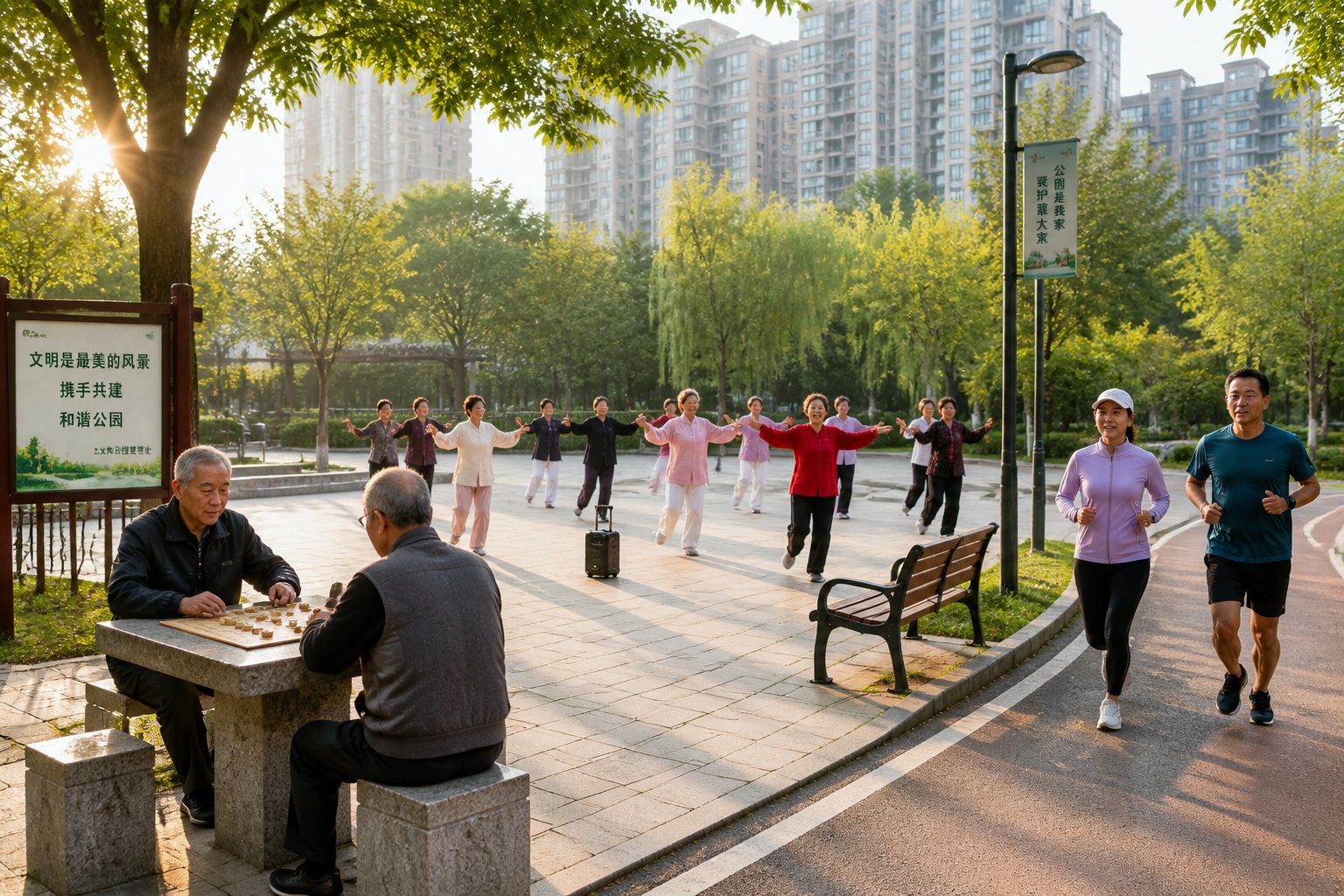
At 7 a.m. in almost any Chinese city park, you will find people in their sixties and seventies doing tai chi, dancing in loose groups around a portable speaker, playing Chinese chess on a stone table, or walking backwards for their knees. Nobody is buying anything. That is the point.
Sociologists call these “third places” — somewhere that is neither home nor work — and they are the cheapest infrastructure a society can build for itself. In much of urban America, they have quietly thinned out.
The parts that do not fit the postcard
Within the same week, the teachers noticed other things, and it would be dishonest to leave them out.
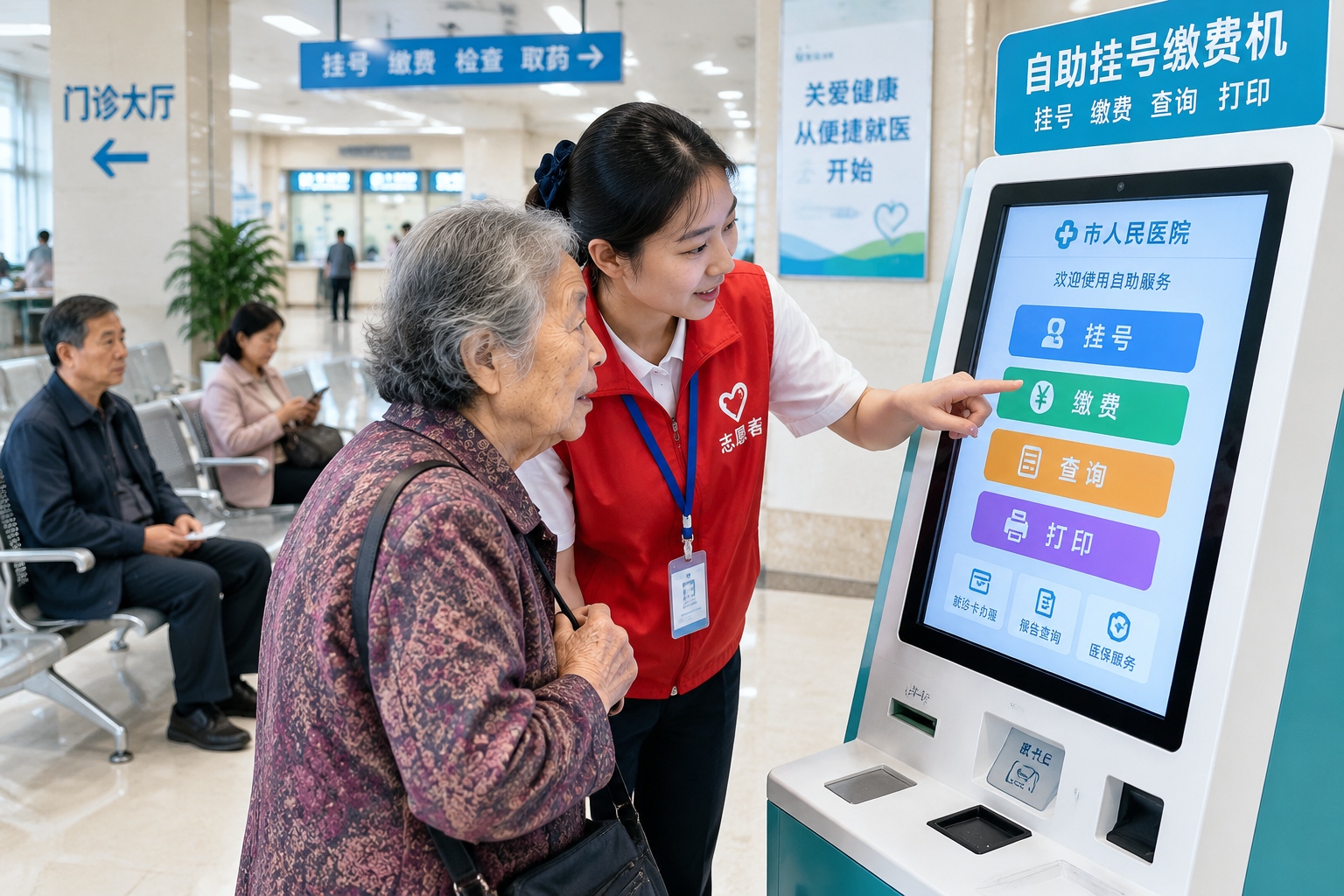
Cameras sit on nearly every pole. Public conversations about politics follow narrow channels, and the apps visitors use at home — Google, Instagram, YouTube — do not work without a VPN, which is technically not allowed. One afternoon, at a hospital self-service kiosk, a woman in her seventies stared at the screen and could not get past step two; a young volunteer had to walk her through it. Digital convenience in China is real, and it also leaves people behind, especially the old and the rural.
Then there is work. In office towers, the lights are often still on at 10 p.m. The phrase “996” — 9 a.m. to 9 p.m., six days a week — comes from the tech industry and is widely criticized inside China, which tells you something. Parents spend enormous sums on tutoring and exam prep. Housing is expensive in big cities. A young couple may work in Shanghai for a decade and still not have the paperwork that gives their child full access to local schools.
None of this cancels the 11 p.m. hotpot crowd. Both facts belong to the same country.
Why it lands especially hard for Americans
In 2023, the US Surgeon General formally described loneliness and isolation as an epidemic, with roughly half of American adults reporting measurable loneliness. Downtowns in many cities are still half-empty after the pandemic, and the lunch counters and shops that depended on office workers went with them. Gun violence kills more than 40,000 people a year in the United States, a number with no real equivalent in China.
For a lot of Americans, “public life” now describes something they remember rather than something they use. So when they stand on a Chinese street at 11 p.m. — families, grandparents, teenagers, no obvious tension — they usually do not read it as a political statement. They read it as a loss they recognize. That is the comfort in the headline: not that China is perfect, but that a functioning public life is possible at all, and therefore not something that had to disappear.
What this is not
It would be easy, and wrong, to turn this into a scoreboard. A society can be orderly and still be constrained; order is not the same as voice. Visitors from democracies tend to notice that quickly, and Chinese citizens disagree among themselves about how much order is worth how much freedom.
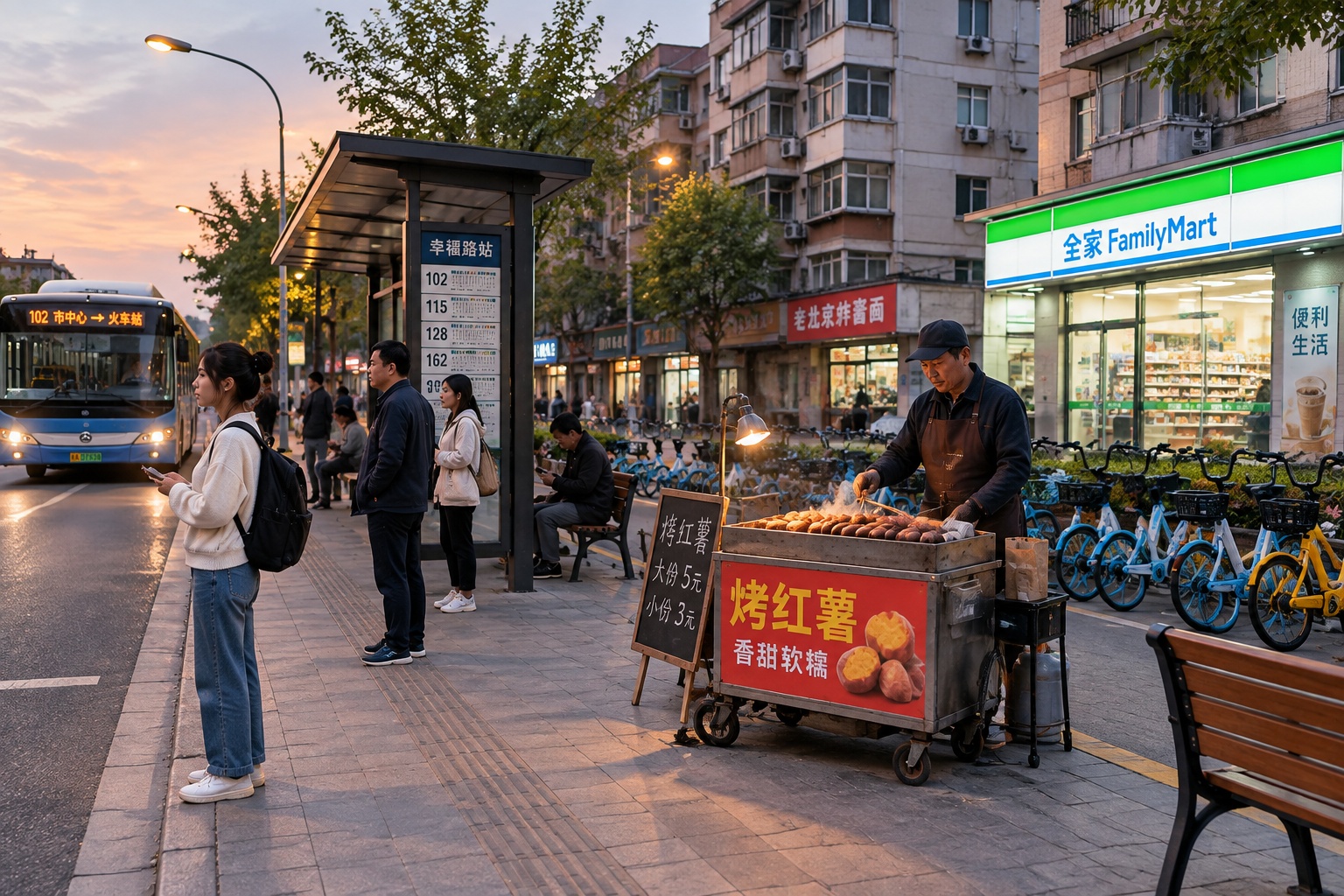
The point here is narrower. Public life is engineered, not natural. Someone decides to put a bench there, run the subway until 11, keep a night market legal, light the street, and let a 70-year-old sell roasted sweet potatoes without a permit fight. Those choices can be made, maintained — or allowed to decay.
The thing worth carrying home
On her last night, the teacher from Ohio bought a bag of oranges from a cart for 12 yuan, about $1.70, and said something I still think about.
“I came here expecting to feel unsafe. Instead I felt like I was in a place where people still expect to run into each other.”
That is a small sentence, and it is also a description of a whole society. You do not need to copy China to want the same thing. You just have to notice that the ingredients are ordinary: a bench, a streetlight, cheap food within walking distance, a bus that comes every six minutes, a park where nobody has to buy anything.
None of it is exotic. All of it is a decision.
Start the discussion at forum.chinacomes.com