
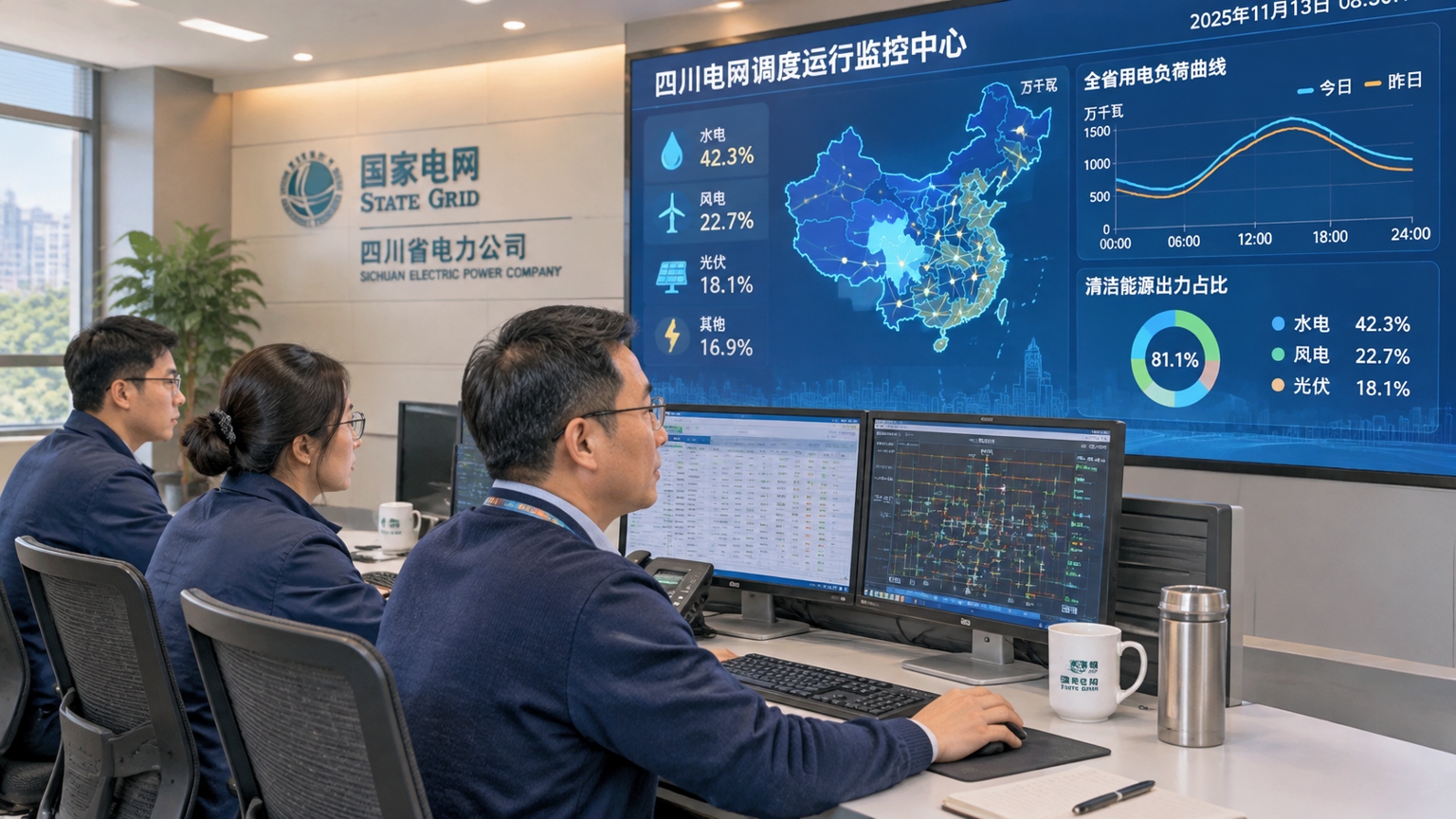

At 8:30 a.m. in a Chengdu control room
At 8:30 on a Tuesday morning, the dispatch hall in Chengdu is already bright. A dispatcher in a dark blue sweater leans toward a curved desk, coffee untouched, and watches a wall screen split into two worlds. On the left, blue lines show water pouring through the turbines of dams in western Sichuan. On the right, red blocks show demand climbing in Shanghai, Suzhou and Hangzhou. A phone rings. Someone calls out a number. The dispatcher taps a keyboard, and a few hundred kilometers away, a power plant adjusts its output by a sliver.
This is not the most dramatic scene in China’s energy transition. There is no ribbon-cutting, no giant model of a turbine. It is a room full of screens, stale air and people who talk in numbers. But it is where the country’s most important geographic fact becomes a daily routine: China’s energy is in the west, and China’s load is in the east.
For readers outside China, that sentence may sound like a planning slogan. It is closer to a physical condition. The country’s terrain falls in three broad steps, from the high plateau of Tibet and western Sichuan, down through the deserts and grasslands of the northwest, to the dense plains and coastal cities of the east. Each step has a different job. The west produces power. The east consumes it. The grid connects the two. Publicly reported figures put total installed capacity above 4.04 terawatts, with renewables accounting for more than 60 percent.
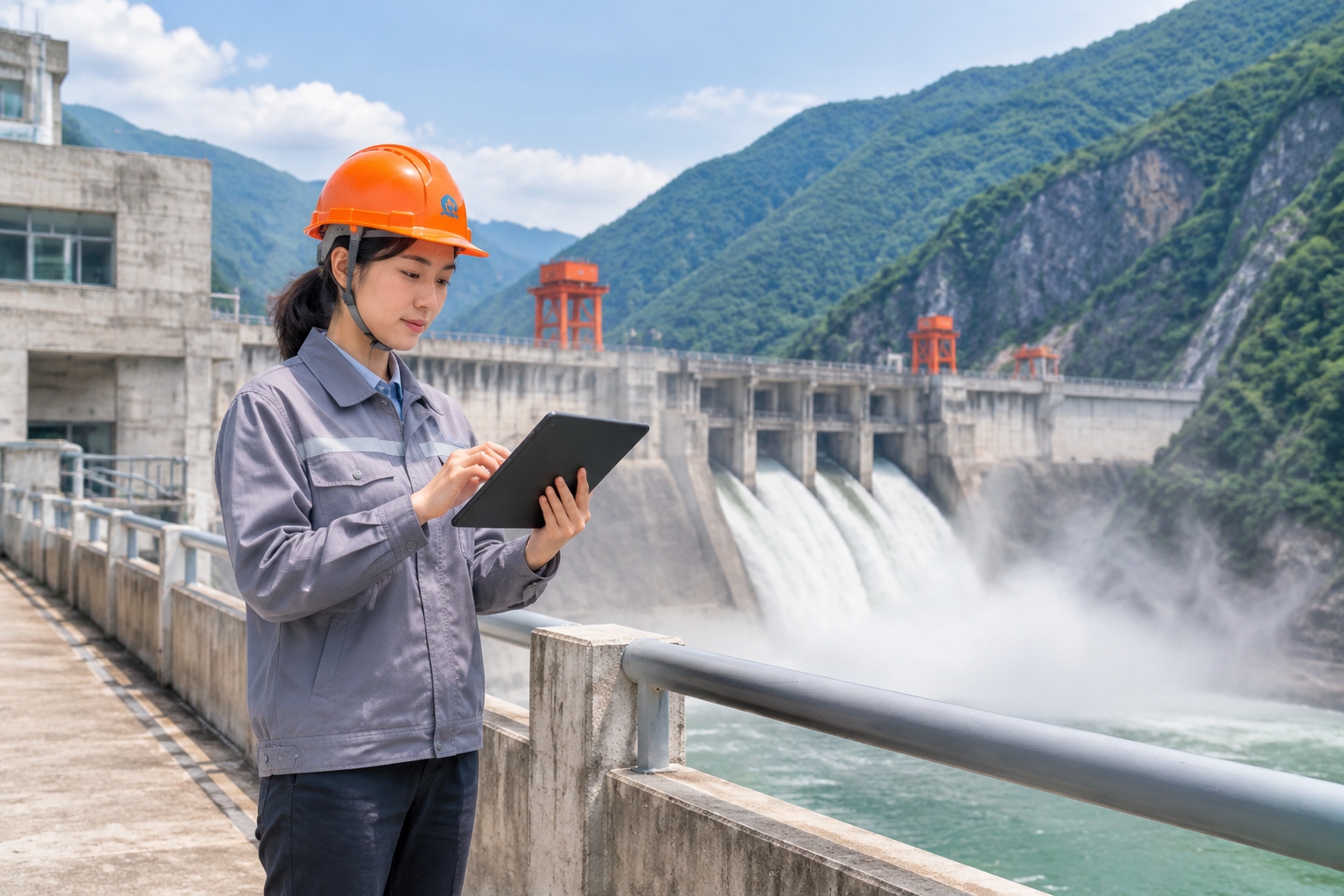
Southwest hydro: the steady hand
Drive west from Chengdu into the Hengduan Mountains and the scale changes quickly. Rivers cut through gorges more than a kilometer deep. The Jinsha, Yalong, Dadu and Min rivers carry snowmelt and monsoon rain through narrow valleys. This is the heart of China’s hydropower system. Dams such as Baihetan, Wudongde, Xiluodu and Xiangjiaba sit in this landscape, not as isolated monuments but as a chain of adjustable power sources.
Hydro is valuable for a simple reason: it can respond fast. When a cloud covers a solar farm or the wind drops, a hydro turbine can increase output within minutes. When demand falls at night, it can hold water back. In a grid with more wind and solar, that flexibility matters as much as raw capacity.
China’s total hydropower capacity is about 454 gigawatts, and most of the economically exploitable resource is concentrated in the southwest, especially Sichuan and Yunnan, with Guizhou providing flexible backup and Tibet holding long-term potential. The numbers are large, but the daily experience is local. In a county town near a dam, a maintenance crew checks a generator before dawn. In a control room in Kunming, an operator watches river flow and provincial demand on the same screen. The same water that turns a turbine also irrigates fields, moves boats and shapes local weather. Hydropower is not a switch; it is a system with seasons.
That is why southwest hydro functions as the steady hand of the Chinese grid. It does not solve every problem. Drought years reduce output. Reservoirs have social and environmental costs. But for the eastern factories and data centers that need power every second, the reliability of hydro is a foundation.
Northwest wind and solar: the expanding frontier
Travel north and west, and the landscape changes again. In Ningxia, Gansu, Inner Mongolia, Qinghai and Xinjiang, the sky is wide, the air is dry, and the ground is often empty. For a long time, these places were described mainly as remote or poor. From an energy perspective, they are something else: a frontier with almost no physical ceiling.
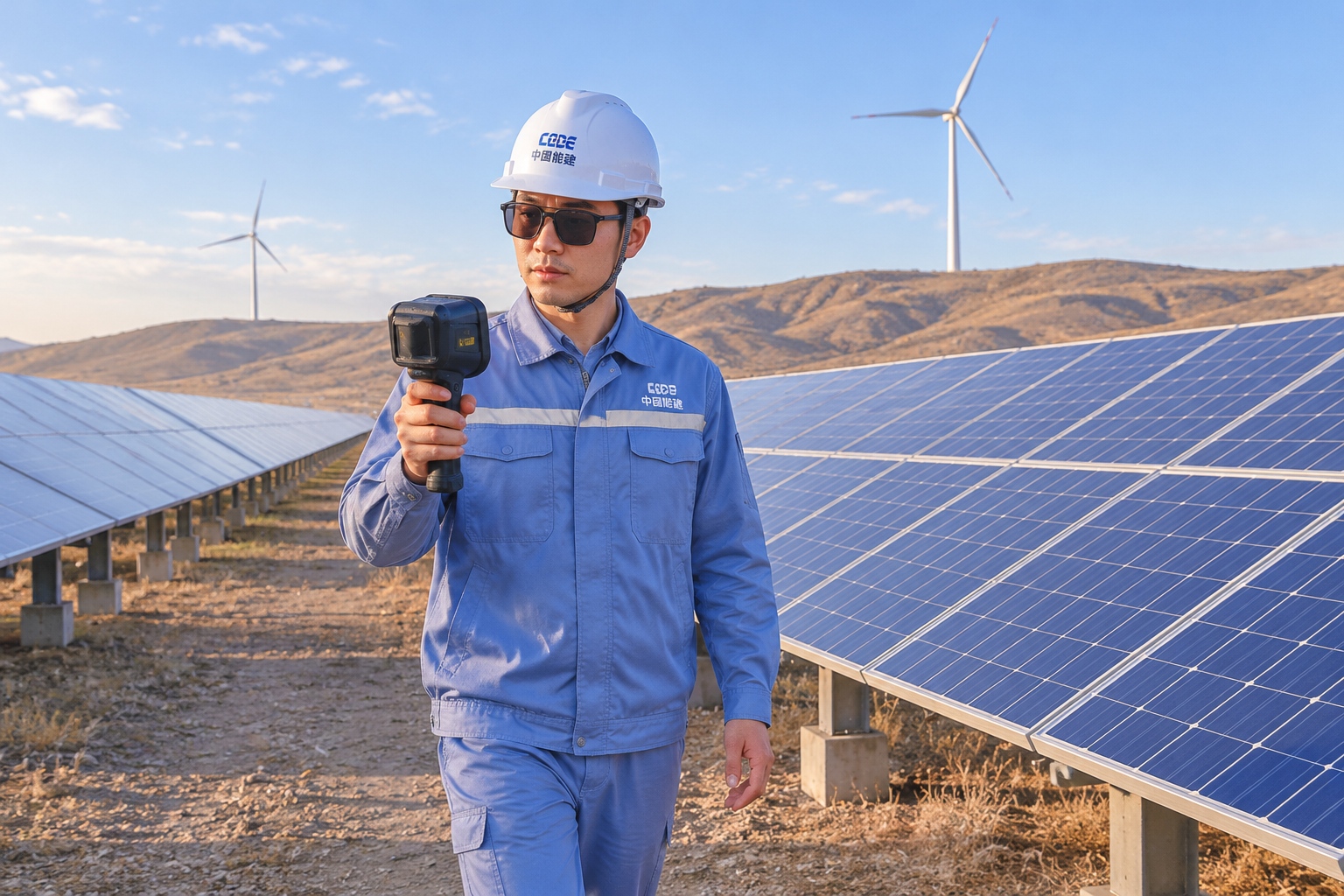
Wind and solar need land, sun, wind and low conflict with housing. The northwest has all four. The wind blows steadily across open plains and desert edges. The sun is strong and predictable. Vast areas of desert and gobi are unsuitable for farming but suitable for panels. China’s installed solar capacity has reached about 1.27 terawatts, and wind capacity about 679 gigawatts, with a large share in the north and northwest. In a single solar park, the rows of panels can stretch farther than the eye can follow. On a nearby ridge, wind turbines turn slowly in the dry air.
This is where the future of Chinese electricity becomes more than a domestic story. AI models, cloud computing, electric vehicles and automated factories all need huge amounts of power. A data center is not a metaphor for the digital economy; it is a building full of servers that must be cooled. The competition over AI may be described as a race for chips and algorithms, but it is also a race for cheap, stable, low-carbon electrons. The northwest is one of the few places on earth where that race can be scaled.
There are complications. Solar and wind are variable. Transmission lines must be built. Local grids must absorb power that sometimes arrives faster than demand. Storage is still expensive. But the direction is clear: the northwest is no longer only a source of coal or long-distance labor. It is becoming a source of energy for the whole country.
Eastern load: where the power is spent
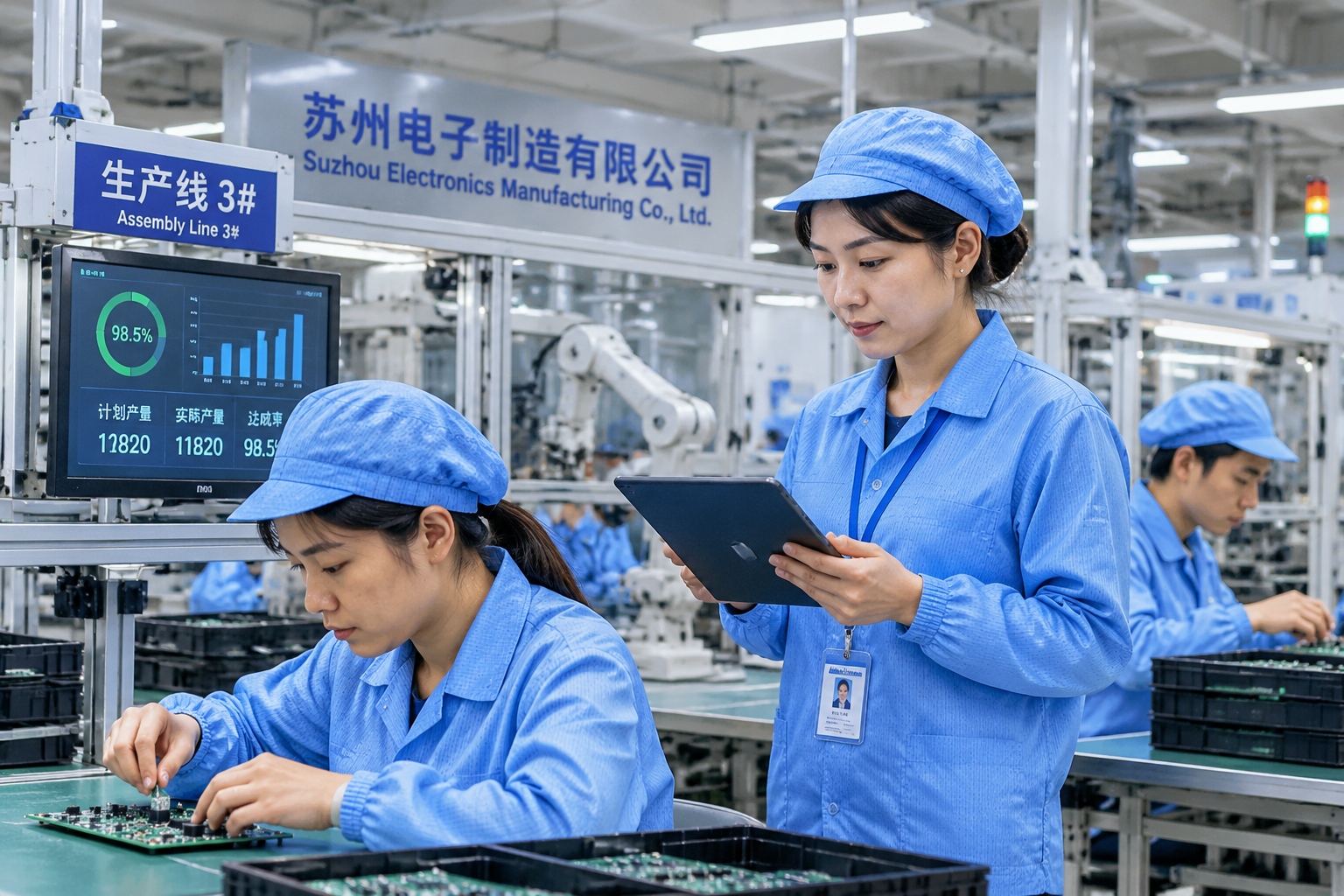
Now look east. The plains and coastal provinces, from Shandong and Jiangsu to Zhejiang, Fujian and Guangdong, occupy about 30 percent of China’s land but carry most of its population, industry and exports. This is where the power is actually used. In Suzhou, a factory floor runs three shifts. In Shanghai, a financial district keeps its lights on all night. In Shenzhen, a server room hums behind a glass wall. In a provincial capital, an air-conditioning load spikes on a July afternoon.
The east is not naturally rich in energy. It has no deep river gorges for large hydro. It has dense cities and expensive land. Solar and wind exist, but they compete with housing, farms and factories. The east is a load center by geography, not by choice. That is why the west-east connection is not a political slogan but an engineering necessity.
West-to-east transmission: three corridors, one grid
China has built the world’s largest ultra-high-voltage transmission network to move power across these distances. The system is usually described as three corridors. The northern corridor sends wind, solar and coal-fired power from Inner Mongolia, Gansu, Ningxia and eastern Xinjiang to Beijing, Tianjin, Hebei, Shandong and the northeast. The central corridor carries hydro from the upper Yangtze and its tributaries to Shanghai, Jiangsu, Zhejiang, Hubei, Hunan and Jiangxi. The southern corridor links Yunnan and Guizhou hydro, plus wind and solar from Guangdong and Guangxi, to the Greater Bay Area.
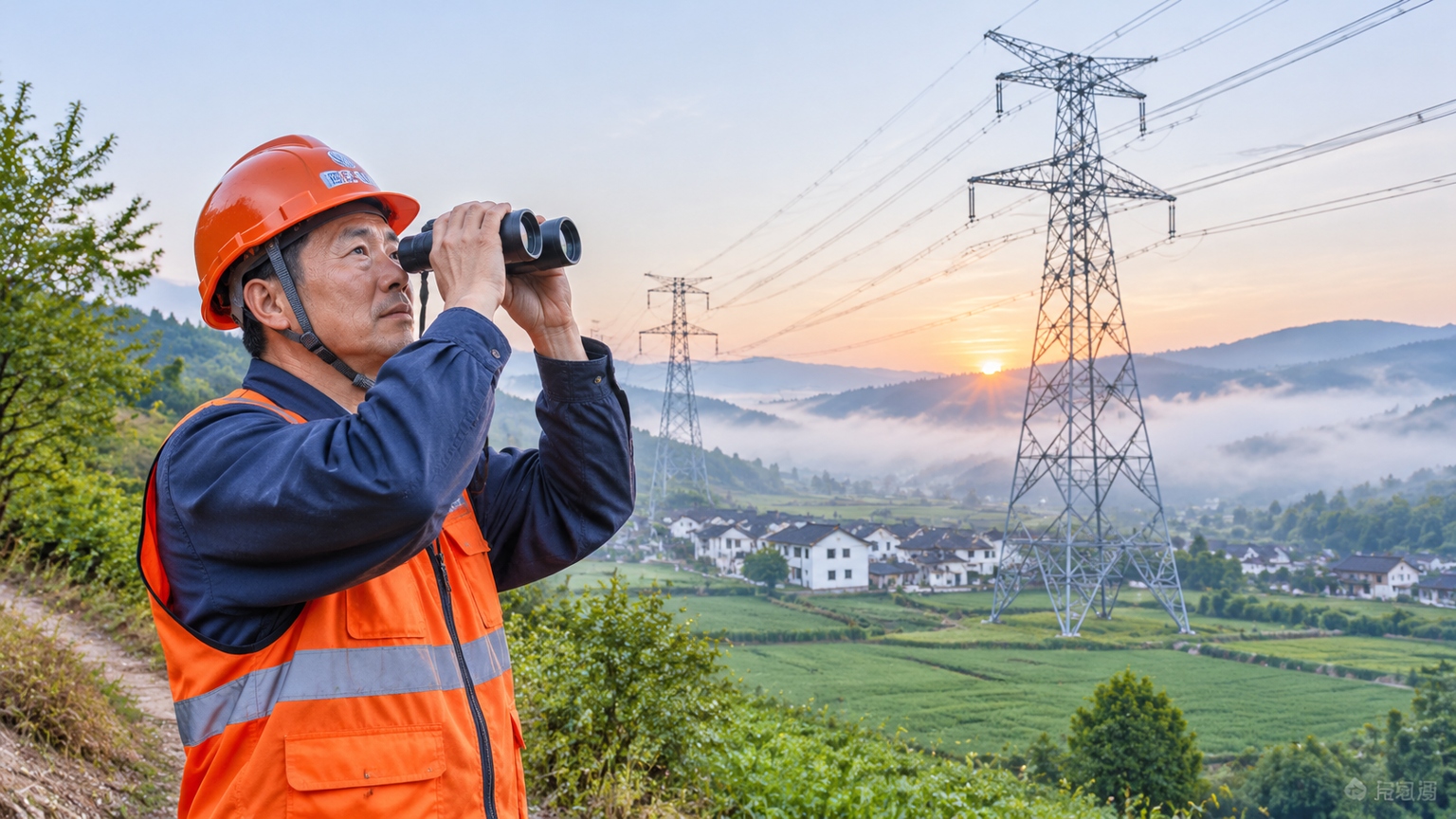
On a map, these lines look like thin red strokes. On the ground, they are steel towers the height of apartment buildings, crossing mountains, rivers, farmland and desert. Maintenance crews climb them in summer heat and winter wind. The power does not travel as a metaphor. It moves through cables, converters and substations, second by second, under a single dispatch system.
This is one area where China’s scale gives it an advantage that is hard to copy. The United States has abundant resources but a fragmented grid, with limited interconnection between regions. Europe has cross-border markets but also local opposition, land constraints and high prices. Japan and South Korea have little space for large new renewable bases. China’s grid is not perfect, but it can move power from a desert to a factory town on the coast in a way that few other systems can.
The AI question: chips need electrons
The next decade of technology will be measured in watts as well as parameters. Training a large AI model consumes electricity. Running inference at scale consumes more. Data centers need not only power but predictable power, because a voltage dip can damage equipment and a price spike can change a business model. For countries with aging grids and limited new supply, AI growth may hit a physical ceiling. For China, the ceiling is higher, though not infinite.
This is why the combination of southwest hydro, northwest wind and solar, and eastern load matters beyond energy policy. It links the country’s geography to its industrial future. The west can produce clean power at scale. The east can use it in factories, labs, data centers and homes. The grid is the bridge. If the bridge works, the whole system becomes more than the sum of its parts.
What the view from the ground shows
The macro story is easy to tell. The ground-level story is messier and more human. In a solar park in Ningxia, a young technician walks between panels with a thermal camera, looking for hot spots. In a factory in Suzhou, a line leader checks a dashboard that shows how much power the shift is using. In a village near a transmission line, farmers complain about the shadow of a tower and then ask whether the new road will be paved. In a provincial dispatch center, an operator worries about a thunderstorm moving toward a wind farm.
These scenes do not fit neatly into a slogan. They show a system being built and adjusted in real time. China’s renewable buildout is not only a story of state plans. It is also a story of workers installing panels, engineers debugging converters, local officials negotiating land, and families living with new infrastructure. That is what a real energy transition looks like: not a single breakthrough, but thousands of ordinary adjustments.
Limits and the next problems
It would be dishonest to describe China’s power system as flawless. Hydro depends on rainfall. Wind and solar are variable. Some regions still curtail renewable output when the grid cannot absorb it. Storage, demand response and electricity markets need to grow. Building a dam or a solar park can displace people or change local ecosystems. The east still relies on coal for backup and peak demand. The system is large, but it is not frictionless.
The next phase is therefore less about adding capacity than about making the system smarter: better forecasting, more storage, more flexible pricing, stronger regional coordination and a cleaner mix of backup power. The challenge is not to prove that China can build big projects. It has already done that. The challenge is to make a very large grid behave with the precision of a small one.
A foundation, not a slogan
Back in the Chengdu control room, the morning rush is over. The dispatcher checks the hydro output again. On the wall screen, the red blocks in the east have softened as factories settle into their day. The numbers move slowly. No one claps. The system simply keeps working.
That ordinary continuity is the real story. China’s geography gave it a difficult energy map: load far from resources, mountains in the west, plains in the east. It has spent decades building a grid to overcome that map. The result is not a guarantee of national greatness. It is a foundation. In a century that will be shaped by AI, manufacturing and clean power, a country that can move electricity from a desert to a data center has an advantage that is hard to ignore. The future will not be decided by electrons alone. But in the coming competition, electrons will be part of every answer.