

A traffic jam that nobody expected
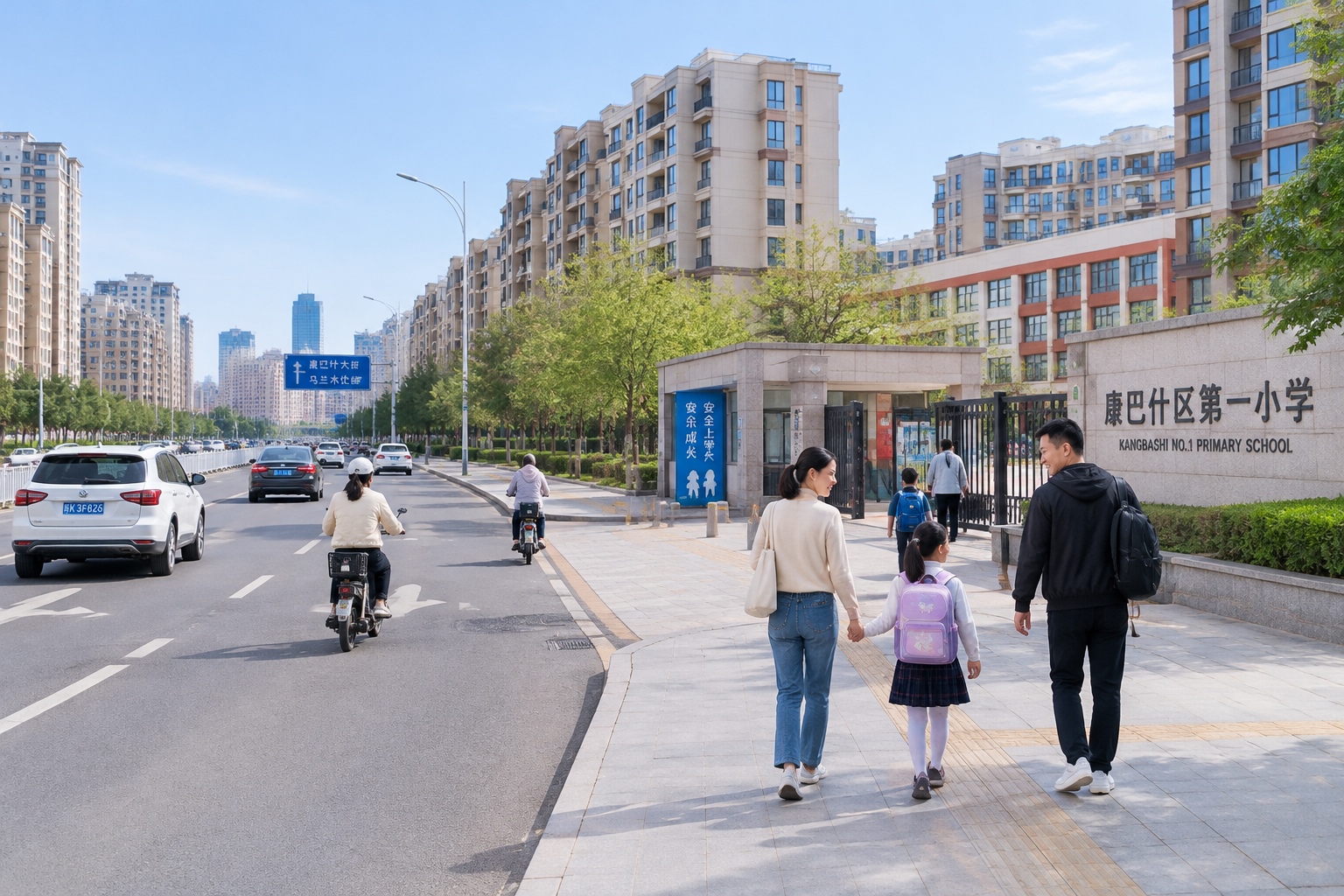
The first thing I noticed on my way back into Kangbashi was something absurdly ordinary: I had to wait through two cycles of a red light. On a wide boulevard, at 8:20 on a weekday morning, parents in SUVs were dropping kids at a school gate while an e-bike delivery rider threaded between the cars. A decade earlier, this same intersection was the kind of place foreign camera crews came to film emptiness.
Kangbashi (康巴什) is a district of Ordos, a city in the grasslands of Inner Mongolia in China’s north. Around 2010, it became the global poster child for the “ghost city” (鬼城) — a Chinese term for a newly built urban area with towers, roads and plazas but almost no people. Time, the BBC, and dozens of others shot the same images: eight-lane roads with no traffic, apartment blocks with dark windows, a giant central square where two bronze horses reared over nobody.
I wanted to see what ten years had done to that picture.

Why the apartments were empty in the first place
To understand Kangbashi, you have to understand the money that built it. Ordos sits on roughly one-sixth of China’s coal reserves. During the 2000s commodity boom, that coal turned the city into one of the richest places in the country by GDP per capita. Local families who leased land or ran small mining operations suddenly had cash, and they did what felt safe: they bought apartments.
The local government, flush with coal revenue, decided to build an entirely new district 25 kilometers from the old city center. Kangbashi was planned for around a million people, with museums, a theater, government offices and residential towers rising almost simultaneously. Developers built faster than anyone could move in. Many apartments were bought as investments, not homes — bought and then left empty, waiting for prices to climb.
Then two things happened. Coal prices fell. And an informal lending network that had funneled mining money into real estate began to crack. By 2011 and 2012, construction stalled, prices dropped, and the half-finished towers made the “ghost city” story look permanent.
What actually brought people in
The thing that revived Kangbashi was not a grand plan. It was schools.
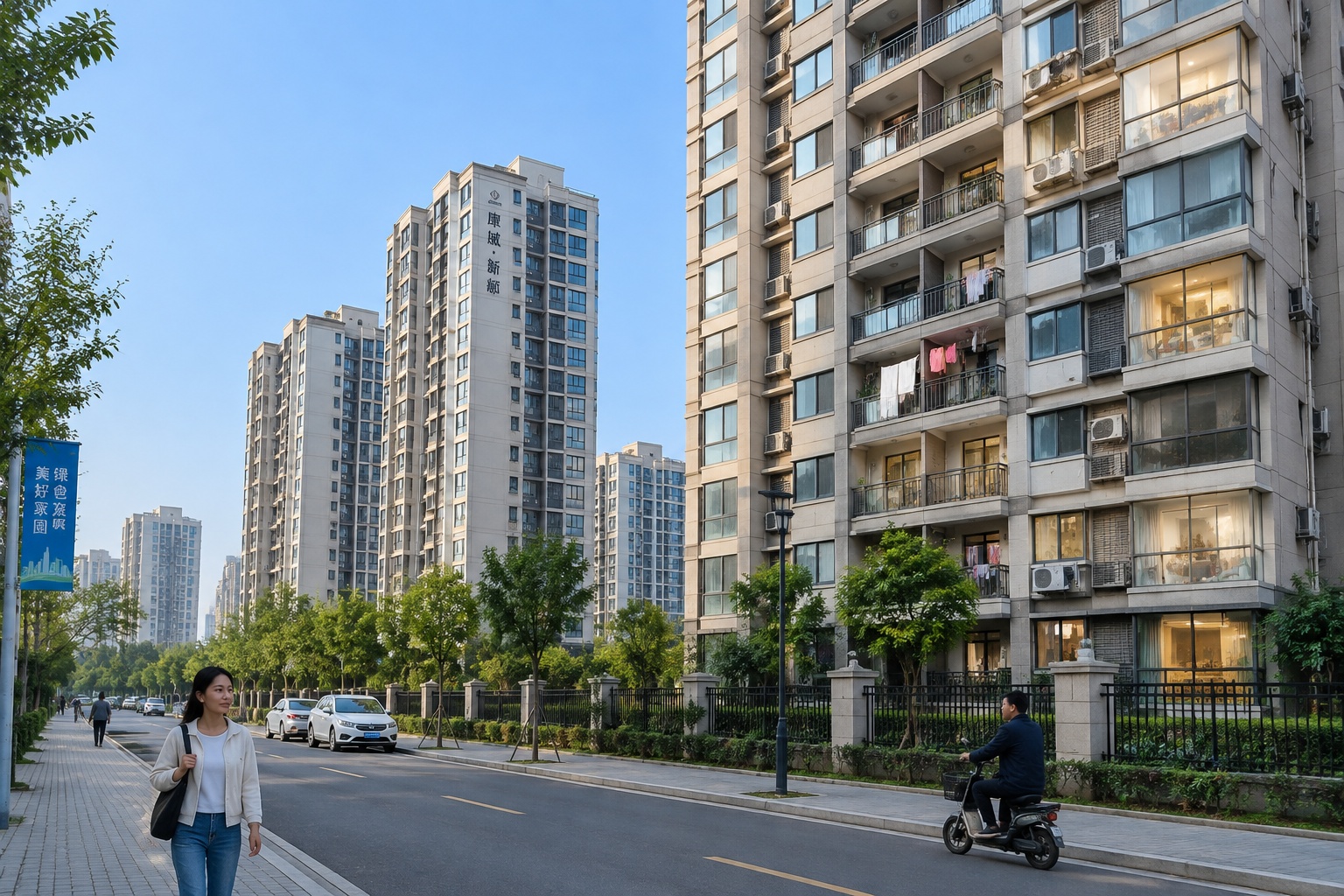
In China, where your child can attend public school is tied to where your household is registered — a system called hukou (户口). Ordos moved several of its best primary and secondary schools, along with hospitals, into Kangbashi, and tied enrollment to buying or owning a home there. For families in the older districts, that was a strong, concrete reason to move. A good school seat is one of the most valued things a Chinese middle-class family can secure.
Government offices relocated too, bringing civil servants and the restaurants, print shops and daycare centers that follow them. Rents were low, so young couples and teachers could afford to live close to work. Slowly, the dark windows started to light up.
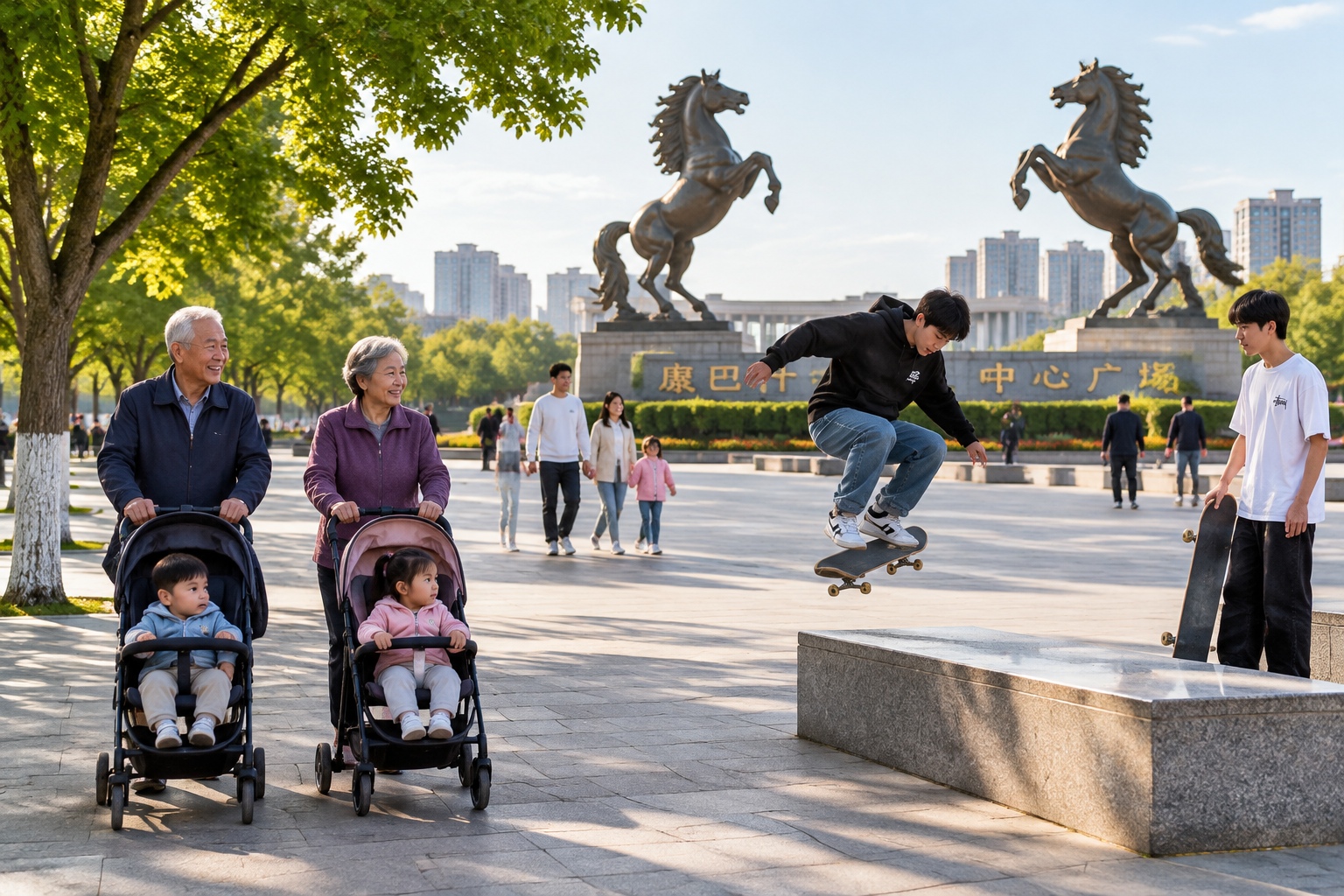
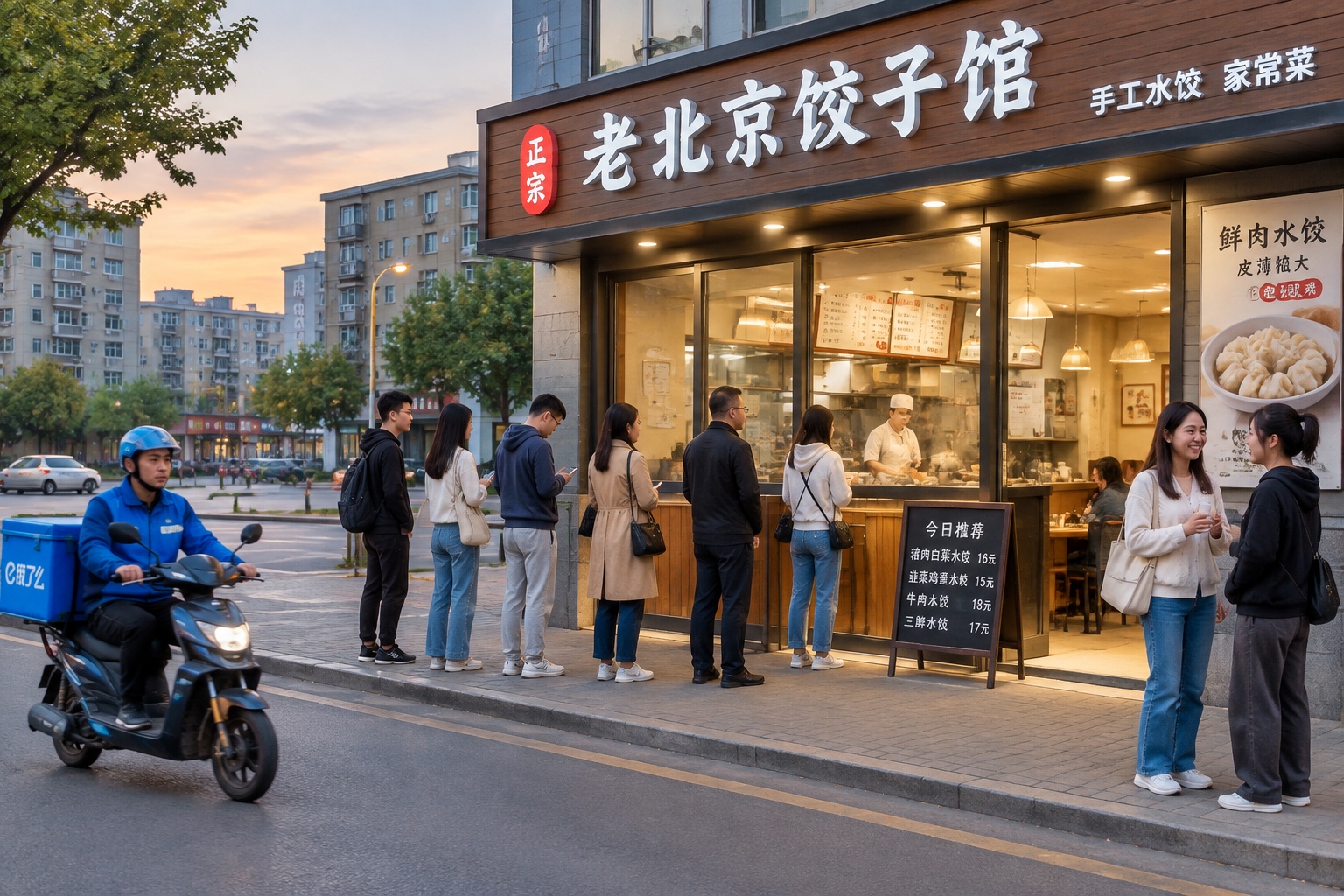
Walking the district now, the signs of ordinary life are everywhere. Outside a dumpling shop near the stadium, a line forms at lunch. In the central square — still enormous, still a little grand — grandparents push strollers in the late-afternoon shade and teenagers practice skateboard tricks against the stone benches. A man named Mr. Zhao, who runs a small tea shop, told me he moved from the old town in 2016 “for the kid’s school” and stayed because “it’s quiet, the air is clean, parking is easy — everything a big city isn’t.”
Local figures put Kangbashi’s population at well over 100,000 today, up from the few thousand who lived there when the ghost-city label stuck. It is not the million once imagined. But it is unmistakably a working town.
From one rock to many bets
Kangbashi’s recovery is really a smaller version of a bigger story: Ordos trying not to depend on a single rock.
Coal is still the backbone — it would be dishonest to pretend otherwise. But the city has spent the past decade pushing money into things coal could eventually pay for or power. On the plateaus outside town, you now see fields of solar panels and rows of wind turbines; Inner Mongolia has become one of China’s largest regions for wind and solar capacity, and Ordos is a hub for it. There are plants turning coal into chemicals and liquid fuels, which keeps more of the value chain local instead of just shipping raw coal east.
Then there are the data centers. Cheap electricity and cold, dry winters make the region attractive for the server farms that power everything from video apps to AI training. It is not glamorous, but it is exactly the kind of quiet infrastructure that a modern economy runs on — and it employs people who are not miners.
None of this makes Ordos a tech capital. The point is narrower and more honest: a resource town learned, the hard way, what happens when you bet everything on one price, and started spreading its bets.

The gap between the headline and the street
What strikes me most about Kangbashi is how stubbornly the old image has stuck abroad, long after the streets filled in. The “ghost city” story was true when it was told. The mistake was treating a snapshot as a prophecy — assuming an empty city in 2011 would stay empty forever.
China built a lot of urban space very fast, often ahead of demand. Some of it failed. Some of it, like Kangbashi, filled in once the schools, jobs and services arrived to give people a reason to stay. Both outcomes are real, and the interesting question is not “ghost city or success story” but what makes the difference between the two. Here, the answer was mundane: put the things people actually need — classrooms, clinics, offices — where you want them to live.
What a filled-up ghost city tells you
I left Kangbashi in the early evening, when the square was at its busiest. Kids chased each other around the bronze horses that once stood guard over nobody. A food-delivery scooter beeped past. Somewhere a square-dancing group was setting up its speaker.
It was not a futuristic skyline or a cautionary tale. It was just a mid-sized Chinese city doing the normal work of being lived in. That ordinariness is the real headline — and the reason the old one deserves an update.
Start the discussion at forum.chinacomes.com