
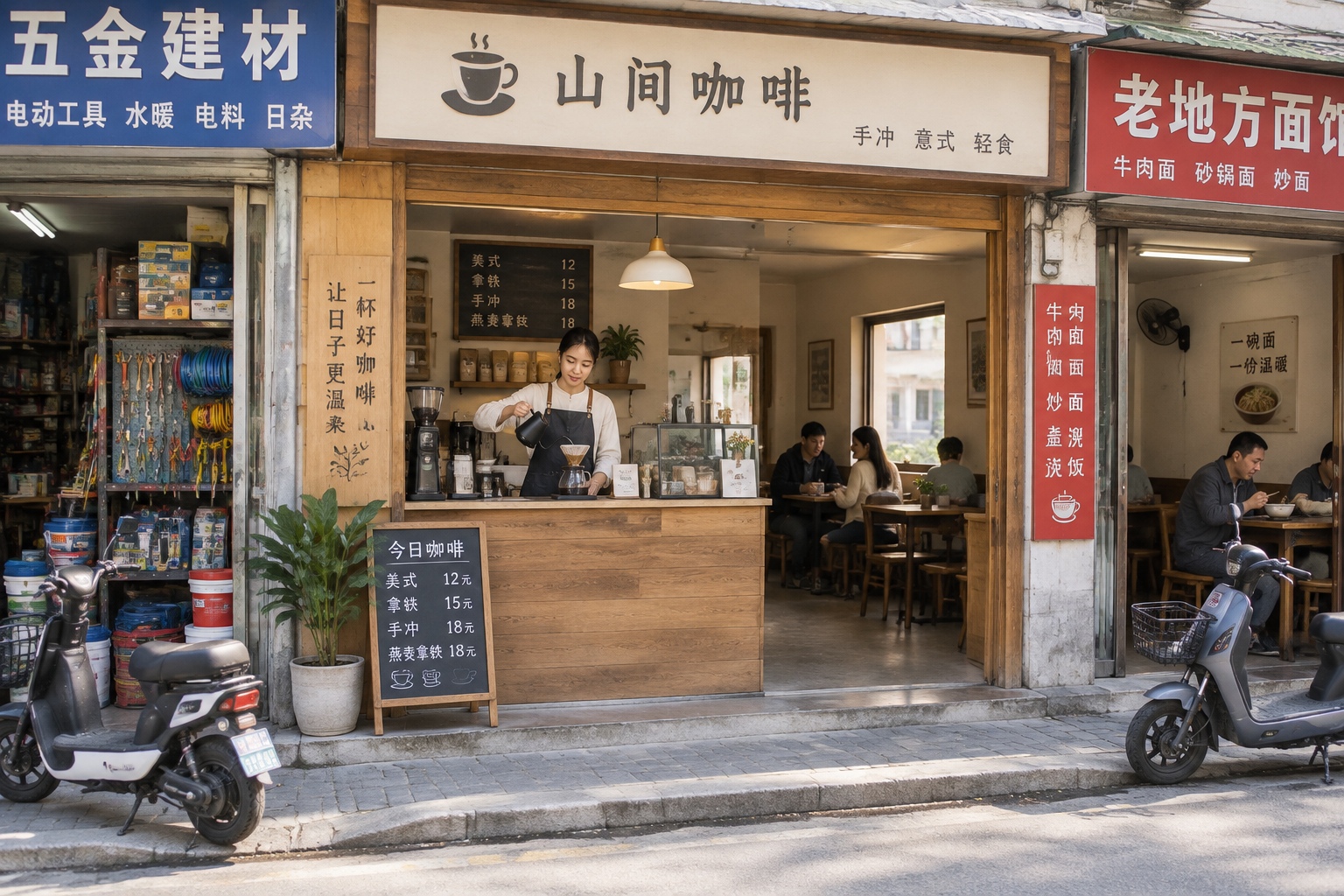

A coffee bar between a hardware store and a noodle shop
On a Saturday morning in a county town in eastern Zhejiang, the first customer walks into a narrow coffee bar wedged between a hardware store and a beef-noodle shop. The barista, a woman in her late twenties who moved back from Hangzhou two years ago, weighs out eighteen grams of beans from Yunnan and starts a pour-over. A single cup costs 35 yuan—roughly five US dollars. In a town where a bowl of noodles runs eight yuan, that is not a small number.
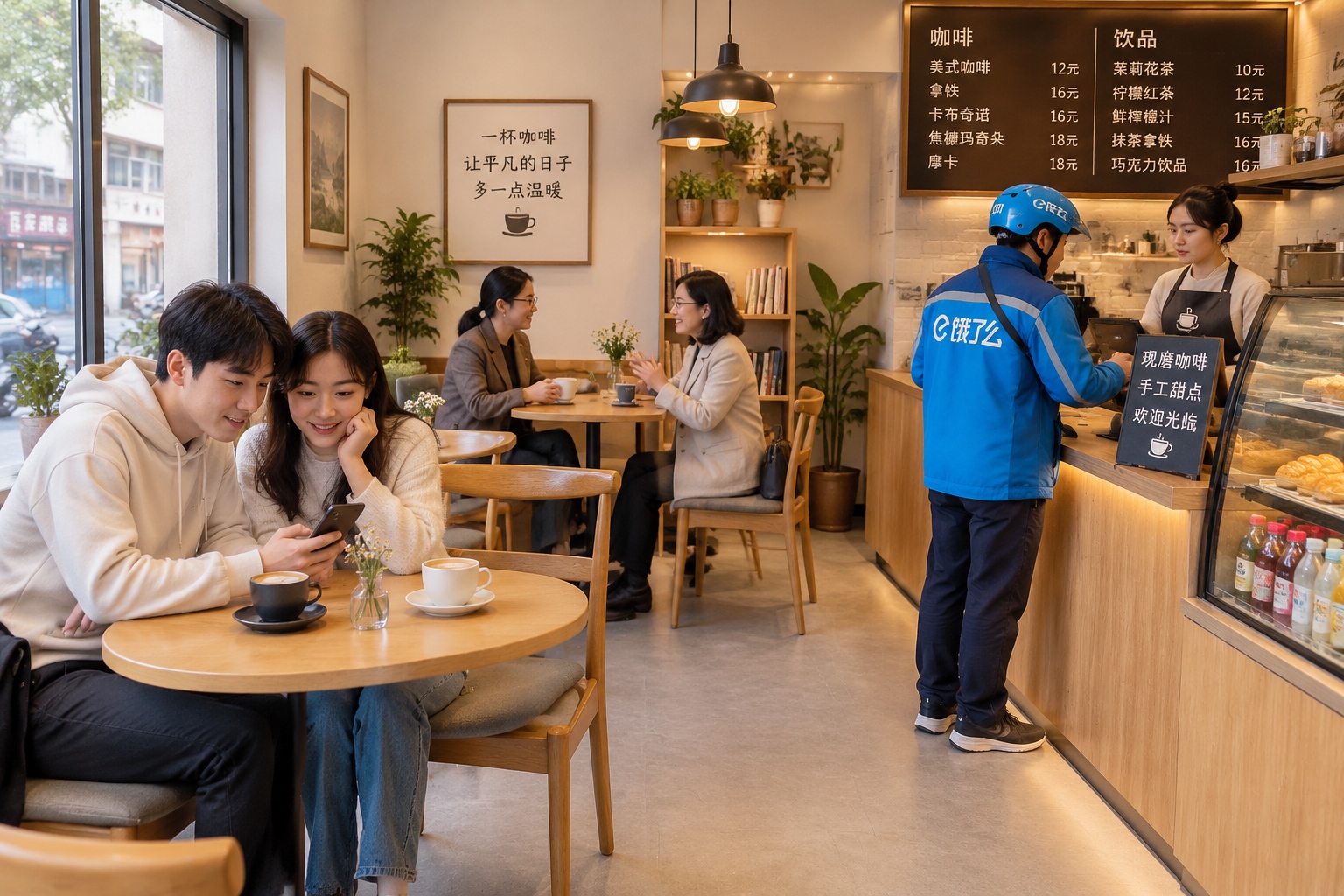
Yet by eleven o’clock the six seats are full. A couple scrolls through wedding-venue photos on a phone. Two high-school teachers compare notes. A man in a delivery uniform orders an iced latte to go, pays by scanning a QR code, and is back on his electric scooter in ninety seconds. None of this would have looked unusual in a big city a decade ago. What is new is where it is happening.
What a “county” actually is in China
For readers outside China, the word “county” can be misleading. A Chinese county (县) is an administrative level below the prefecture-level city. There are around 1,800 of them, and together they are home to roughly 500 million people—more than the entire population of the European Union. The seat of a county, the county town, is often a compact urban center of tens of thousands to a few hundred thousand residents, surrounded by townships and villages.
For decades, the story of Chinese consumption was told through first-tier cities: Shanghai, Beijing, Shenzhen, Guangzhou. The county was where people left from, not where trends arrived. That assumption is now out of date, and the 35-yuan coffee is one small piece of evidence.
Why premium products are finding buyers in small places
Three things changed at once.
The first is logistics. China’s delivery network reaches almost every township. A roaster in Yunnan or Shanghai can ship beans to a county shop in two or three days. Equipment that used to require a trip to a provincial capital now arrives by courier. The barista in Zhejiang orders her green beans online and gets same-week delivery.
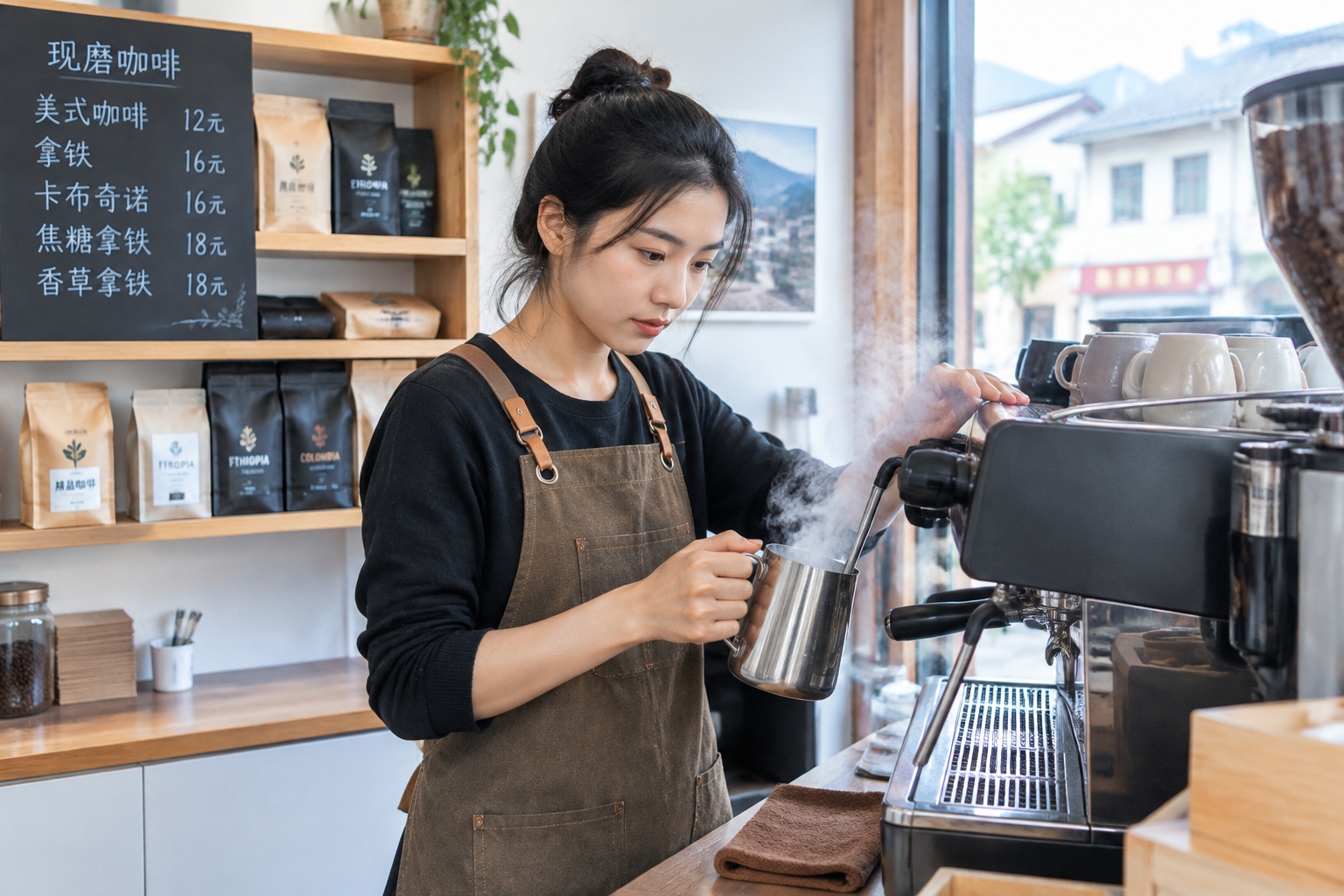
The second is who came home. After 2020, a visible number of young people who had worked in big cities returned to their hometowns—some priced out of metropolitan rents, some wanting to be near aging parents, some simply betting that a county with lower costs offered a better risk-reward than a crowded first-tier market. They brought urban tastes with them. The woman running this coffee bar learned to pull espresso in a Hangzhou chain; now she is her own boss, paying a fraction of the rent she would in the city.
The third is the phone. Short-video platforms like Douyin and lifestyle apps like Xiaohongshu flattened the information gap. A teenager in a county town sees the same latte art, the same cafe interiors, and the same brand launches as a design student in Shanghai, often on the same day. Desire travels faster than income, and businesses have learned to follow it.
Who is actually buying
It would be easy to assume these cups are bought by a thin layer of returnees performing big-city habits. The reality is messier and more interesting.
Local civil servants and teachers—stable incomes, predictable hours—are reliable regulars. So are small-business owners: the couple who run the phone-repair shop, the woman who sells children’s clothes online. Then there are the genuinely young customers, late teens and early twenties, for whom a coffee is less about caffeine than about a place to sit that is not home, not school, and not a mahjong parlor.
That last point matters. In many county towns, third places—somewhere to be in public that isn’t a restaurant or a shop—were scarce. A cafe with soft lighting, a decent playlist, and reliable Wi-Fi fills a social gap, not just a beverage gap. People will pay 35 yuan for ninety minutes of that.
The numbers behind the anecdote
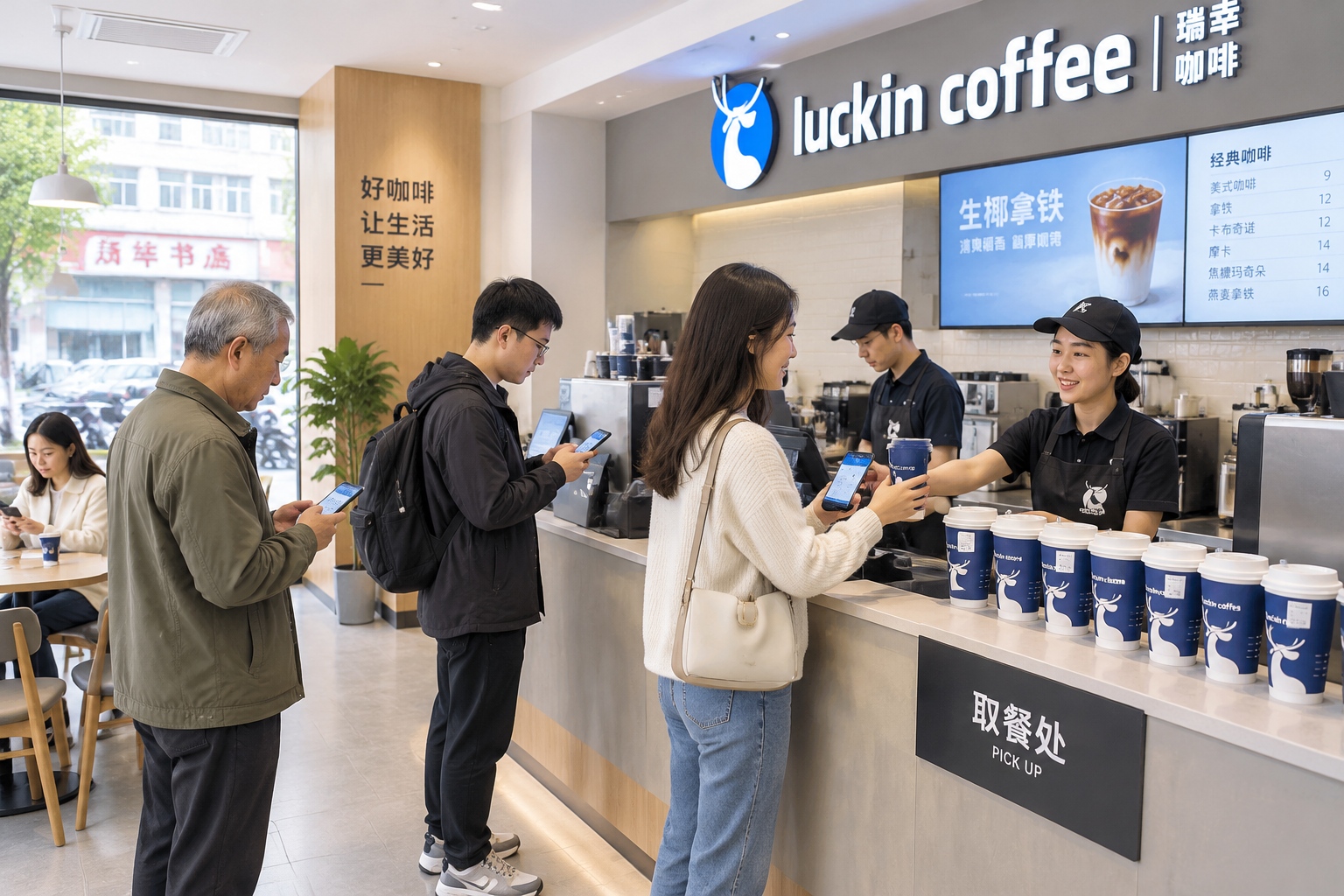
The anecdotes line up with the data. Luckin Coffee, China’s largest coffee chain, passed 20,000 stores in 2024 and has pushed aggressively into lower-tier cities and county towns, often undercutting on price with heavy app discounts. Where a chain like Luckin opens, it educates a market; independent specialty bars then move in above it on quality and atmosphere.
Retail sales growth in many county-level markets has outpaced the big coastal cities in recent years, partly because they started from a lower base and partly because incomes there have been catching up. Rural per-capita disposable income has grown faster, in percentage terms, than urban income for over a decade, narrowing a gap that is still real but no longer widening. When a household’s spare cash rises from almost nothing to a modest cushion, discretionary categories—coffee, skincare, pet food, travel, gym memberships—are where the new money shows up first.
The city-countryside gap, up close
None of this means the county has caught up with Shanghai. The gap is real and visible if you look.
Choice is thinner. The Zhejiang coffee bar has one espresso machine and a menu of maybe eight drinks; a comparable Shanghai cafe might offer thirty, plus a retail shelf of imported beans. Prices for the same cup are often similar or even higher in the county, because volume is lower and a shop cannot spread fixed costs across hundreds of customers a day. And the customer base is narrower: in a county town, specialty coffee is a habit for perhaps a few hundred people, not a mass behavior.
There are also quieter divides. The returnee entrepreneurs tend to be the ones who could afford to take a risk—who had savings, or family property to live in rent-free. Not everyone in the county has that runway. The 35-yuan coffee sits comfortably alongside the eight-yuan noodle bowl, but they are often bought by different people, or by the same person in very different moods.
What the coffee is really measuring
Strip away the latte art and what this trend tracks is a shift in expectations. A generation that grew up with smartphones, same-day delivery, and constant exposure to urban lifestyles does not see the county as a place where you simply make do. They expect a decent cup of coffee, a clean gym, a pet groomer, a bubble-tea shop with the national brands—and increasingly they can get them without moving to a megacity.
That is the quiet logic of the “county consumption upgrade”: not that everyone suddenly got rich, but that the distance between what a county resident wants and what they can buy has shrunk dramatically. The barista in Zhejiang put it simply when I asked why she thought people paid her prices. “They used to drive to the city for a day out,” she said, wiping down the counter. “Now the city kind of came to them.”
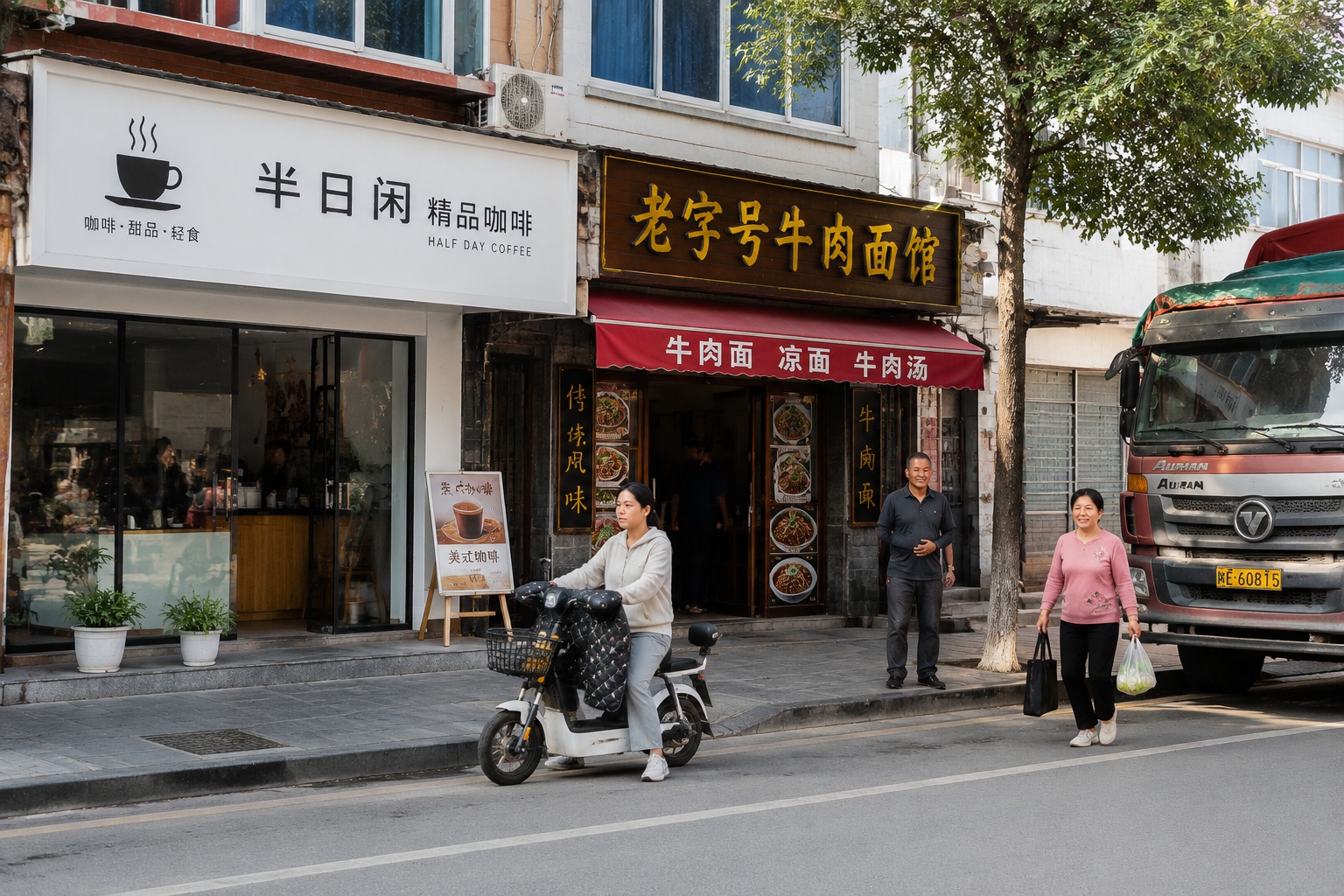
Her first customer finished his cup, left the empty glass on the tray, and walked back out past the hardware store. Outside, a truck idled, a loudspeaker from a nearby shop advertised a sale, and the smell of beef broth drifted over from next door. The coffee and the noodles share a street. That coexistence—not the triumph of one over the other—is what today’s China actually looks like.
Start the discussion at forum.chinacomes.com