

A crab, a steamer, and a very specific kind of patience
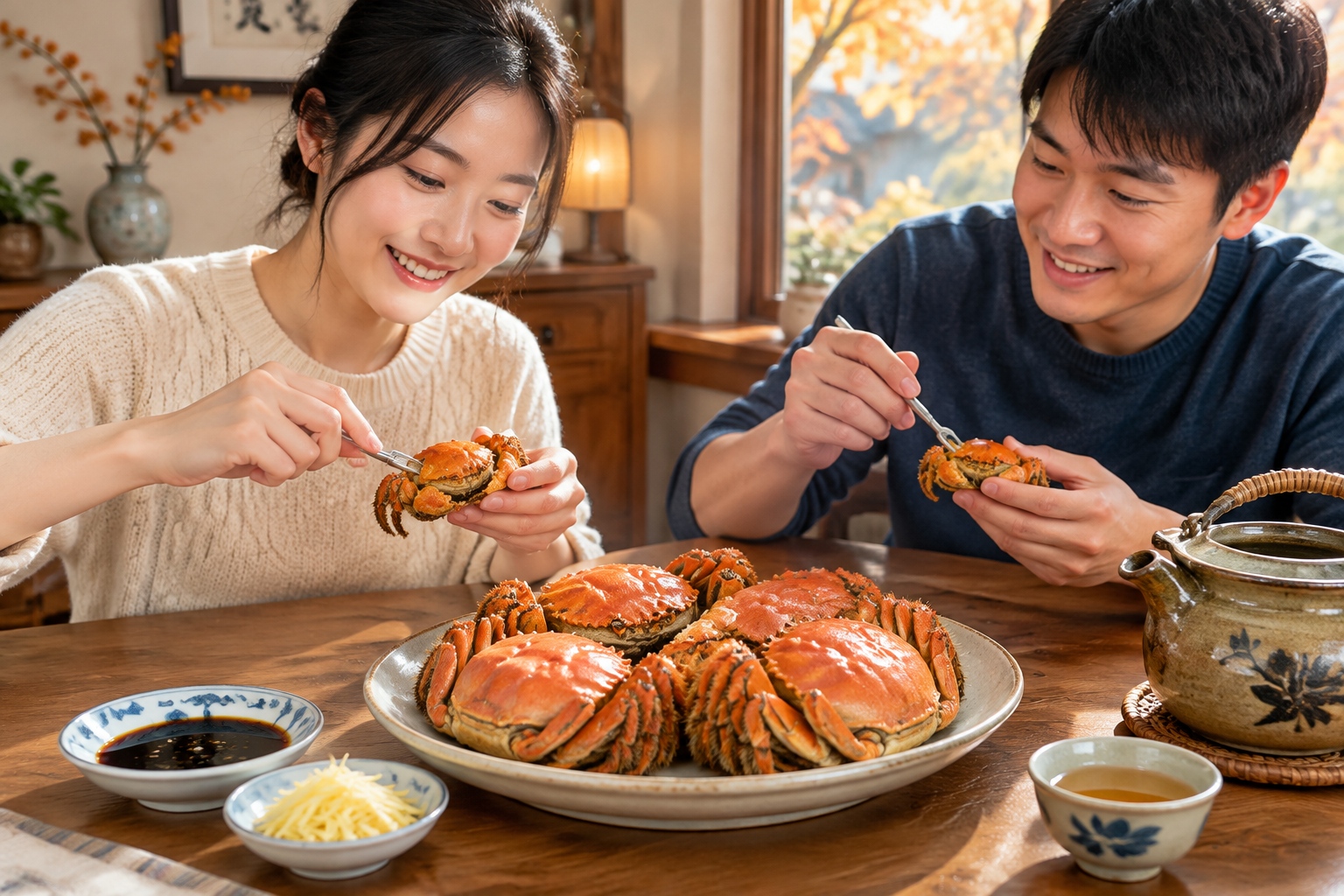
It’s a Saturday night in late October, and the dining table in a Shanghai apartment has gone quiet in the way a table only goes quiet when everyone is working. Three generations are hunched over small plates, cracking shells with tiny scissors and metal picks. A grandmother dips a sliver of orange roe into black vinegar cut with slivers of ginger. Steam from the last batch still fogs the kitchen window.
Nobody is talking much. This is normal. Eating a hairy crab is slow, fiddly work, and in China that slowness is the whole point.
The hairy crab, or dazhaxie (大闸蟹), is a freshwater mitten crab, named for the dense brown fur on its claws. For roughly two months each autumn, it becomes the single most talked-about food in the country. People schedule dinners around it, ship it across provinces, and argue about where the best ones come from the way wine drinkers argue about vineyards.
Yangcheng Lake: the name everyone chases
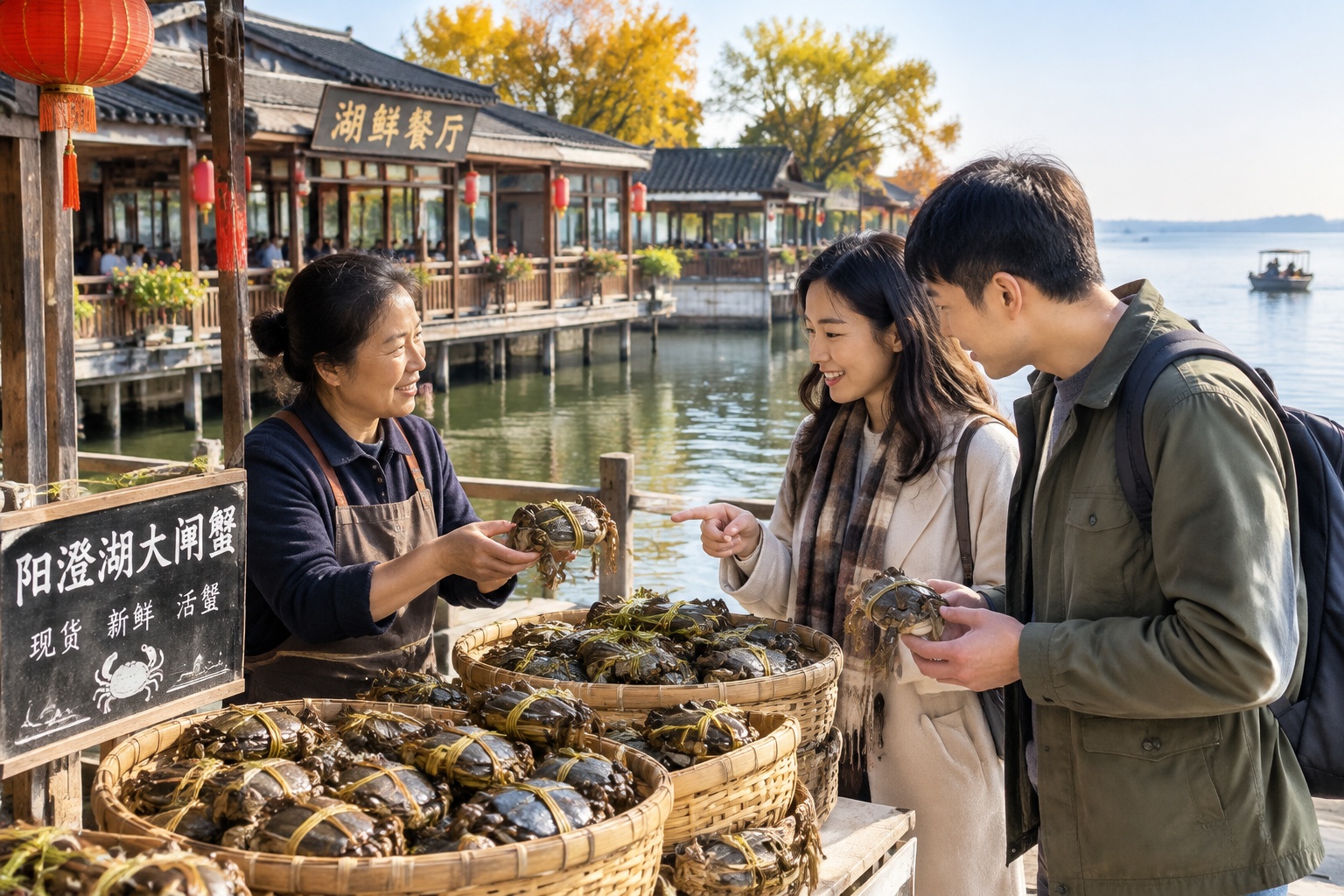
If you want to understand the craze, start with a lake. Yangcheng Lake sits just east of Suzhou, about an hour from Shanghai by car. Its shallow, clean-ish water and firm clay bottom are said to produce crabs with greenish backs, white bellies, golden-tipped claws, and yellow feet, the four marks locals use to judge a premium crab.
In season, the lakeside villages fill with cars from Shanghai and Nanjing. Restaurants built on stilts over the water sell crabs by weight, tied up in reed rope, still twitching. The males are prized for their creamy white fat; the females for their dense orange roe. Timing matters: the folk calendar says eat females in the ninth lunar month, males in the tenth.
Here’s the catch that drives locals a little crazy: genuine Yangcheng Lake crabs are a small fraction of what’s sold under that name. The lake’s actual farming area is limited and shrinking, yet “Yangcheng Lake hairy crab” appears on menus and gift boxes all over the country. To fight fakes, the regional producers’ association issues numbered anti-counterfeit rings that clip onto a crab’s claw, like a tiny plastic bracelet with a traceable code. Shoppers scan them with their phones. Even then, counterfeit rings circulate. The whole situation tells you something: when a food becomes this valuable, an entire economy of trust and fraud grows around it.
How to actually eat one
Watching a first-timer eat a hairy crab is a small comedy. Watching an expert is closer to surgery.
The crab is steamed whole, usually with a bit of perilla leaf, and served with a dipping sauce of dark vinegar, ginger, and a little sugar, plus warm yellow rice wine to balance the “cold” nature the crab is believed to have in Chinese food thinking. Then the ritual begins.
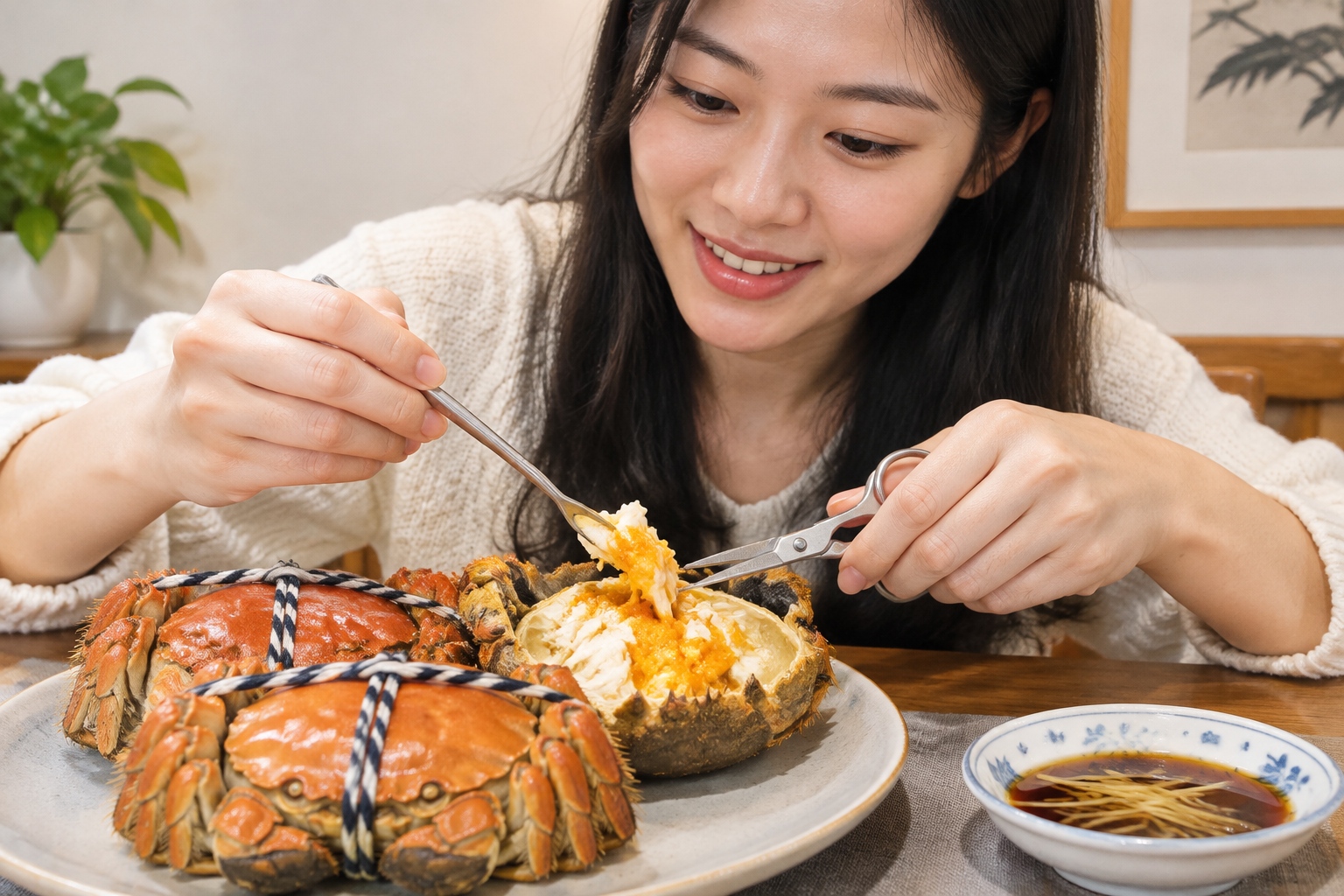
You pry off the top shell. Inside the female sits the xiehuang, the orange roe, firm and rich, almost like a savory custard. In the male you find the xiegao, translucent white fat that turns sticky and sweet. These are the prizes. The leg and claw meat, sweet and clean, comes second. Serious eaters use a full set of tools, sometimes eight small implements, to extract every strand without wasting a bite.
There are rules, mostly unspoken. You discard the gills, the stomach, the heart, and the intestines, both for taste and because folk wisdom calls them “cold” and unclean. A good eater finishes with a shell so cleanly picked it could almost be reassembled. This patience is admired. Rushing is not.
Why the price climbs so fast
In a Shanghai wet market in peak season, a single large female Yangcheng-style crab can run well over 100 yuan, roughly 14 US dollars, for one crab. A gift box of eight to ten premium crabs easily reaches several hundred to over a thousand yuan. Online, branded boxes with guaranteed sizing and overnight cold-chain delivery push higher still.
The economics are straightforward once you see the pressures. The season is short, essentially September through November. Supply from the most desired waters is capped. Size commands a steep premium, because bigger crabs take longer to raise and far fewer reach the top weights. And demand spikes all at once, nationwide, in the same few weeks.
Then there is the gift economy, which is where prices really detach from pure appetite.
The gift box that isn’t really about crab
Walk through any Chinese office building in October and you’ll see them stacked by the elevators: insulated gift boxes, often with a brand logo and a QR voucher inside rather than live crabs. The voucher lets the recipient order crabs delivered fresh whenever they like. It’s convenient, and it’s also telling. The crab has become a unit of social currency.

Companies send crab boxes to clients. Younger workers send them to parents. Business relationships are maintained, softened, and acknowledged through a seasonal delivery of a luxury animal. In Chinese, giving someone hairy crabs signals that you think highly of them and the moment, autumn abundance, success you want to share. The crab’s reputation as a delicacy of scholars and the wealthy, going back centuries in Jiangnan food culture, only deepens the symbolism.
This is why a voucher can matter more than the meal. You could, in theory, buy yourself a cheaper crab from a different lake and eat just as well. But a branded Yangcheng box carries a message the cheaper crab cannot: effort, taste, and respect.
The texture of a changing tradition
The craze is not frozen in time. A few shifts are visible if you look.
Cold-chain logistics changed everything. Twenty years ago, eating a genuinely fresh hairy crab meant traveling to the region. Now a live crab packed in a chilled box can reach a northern city overnight, which widened the market dramatically and, paradoxically, made authenticity harder to verify.
Younger consumers are more skeptical and more informed. They compare prices on their phones, read reviews, and know that “Yangcheng Lake” on a label is often marketing. Some have started valuing crabs from other respected waters, like Taihu Lake or Gucheng Lake, where quality can be excellent and prices gentler.
And there is a quiet counter-current. Not everyone joins the obsession. Plenty of people find the whole thing overpriced and would rather eat a bowl of noodles. In crab country itself, locals often eat simply prepared crabs at home for a fraction of the gift-box price, slightly amused by how much the rest of the country will pay.
A small animal, an outsized meaning
Hold a hairy crab in your hand and the economics seem absurd. It is a modest creature, a few hundred grams at most, mostly shell. You will spend forty minutes extracting maybe a few bites of genuinely sublime roe and sweet meat.
But that gap, between the small body and the large meaning, is the point. The crab concentrates a lot of Chinese cultural logic into one plate: respect for seasonality, pleasure in slow and skilled eating, the weaving of food into relationships and status, and a very modern willingness to pay for guaranteed quality and provenance.
By late November the season closes. The gift boxes disappear from the office lobbies. The lakeside restaurants quiet down. And the people who spent the autumn cracking shells with tiny scissors go back to ordinary dinners, already half looking forward to doing it all again next year.
Start the discussion at forum.chinacomes.com