
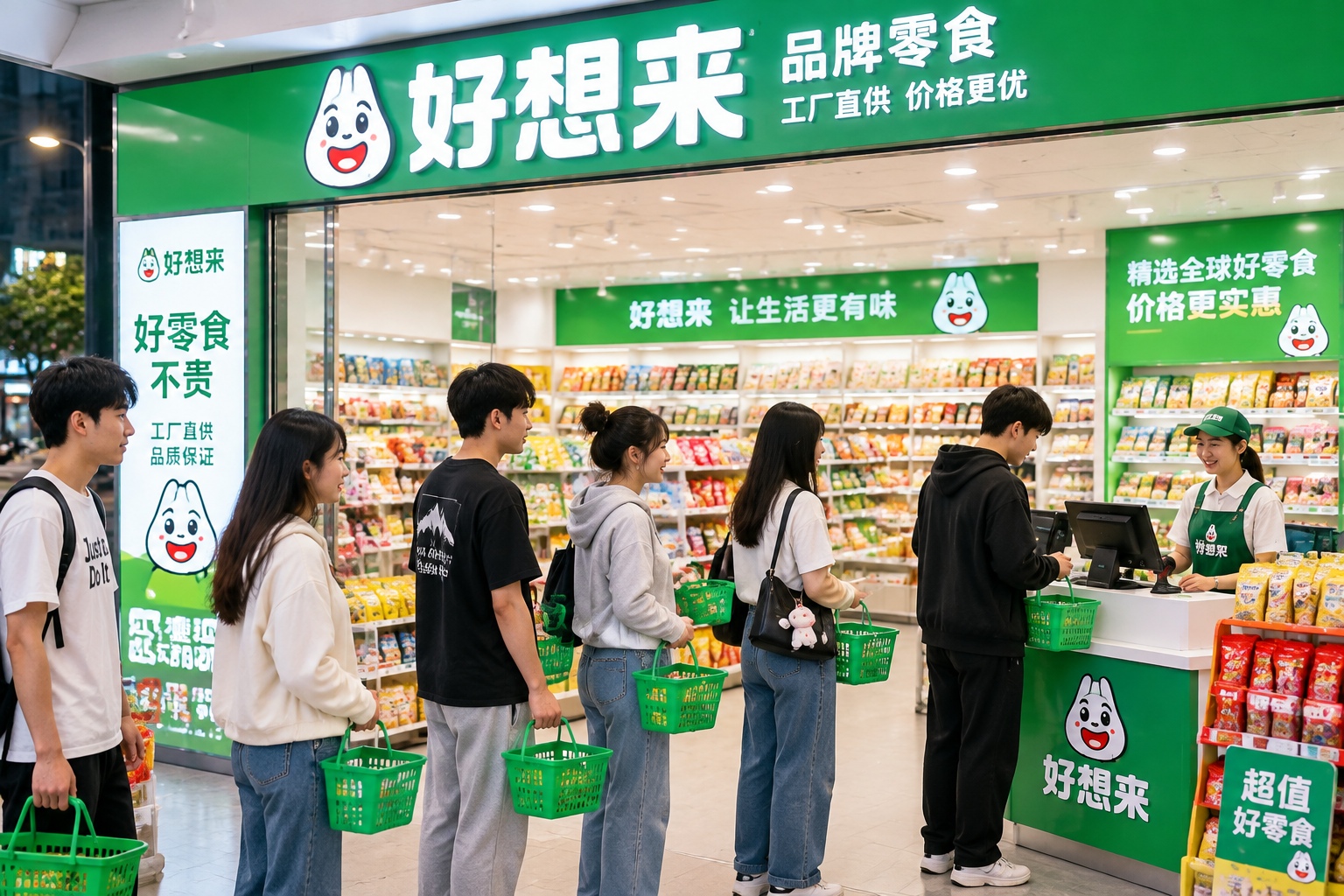

At 7 pm on a Thursday in Changsha, a city famous for its street food, the queue outside a green-and-white storefront isn’t for fried skewers or milk tea. It’s for snacks — bags of shrimp crackers, sweet dried mango, spicy meat sticks and chocolate wafer rolls. The store is called Haoxianglai, a chain whose name roughly means “sounds great, let’s go.” In the past two years, this kind of “bulk snack” shop has spread through China at an astonishing pace, and young people are happily lining up to fill their baskets.
The shoppers here are mostly in their 20s or early 30s. Some are university students; others just got off work. They carry plastic baskets, picking up one or two items at a time, yet by the counter, the baskets are almost embarrassingly full. A receipt might show just 34 yuan — about $4.70 — for a week’s worth of lunchbox treats.
What Exactly Is a Chinese “Bulk Snack Store”?
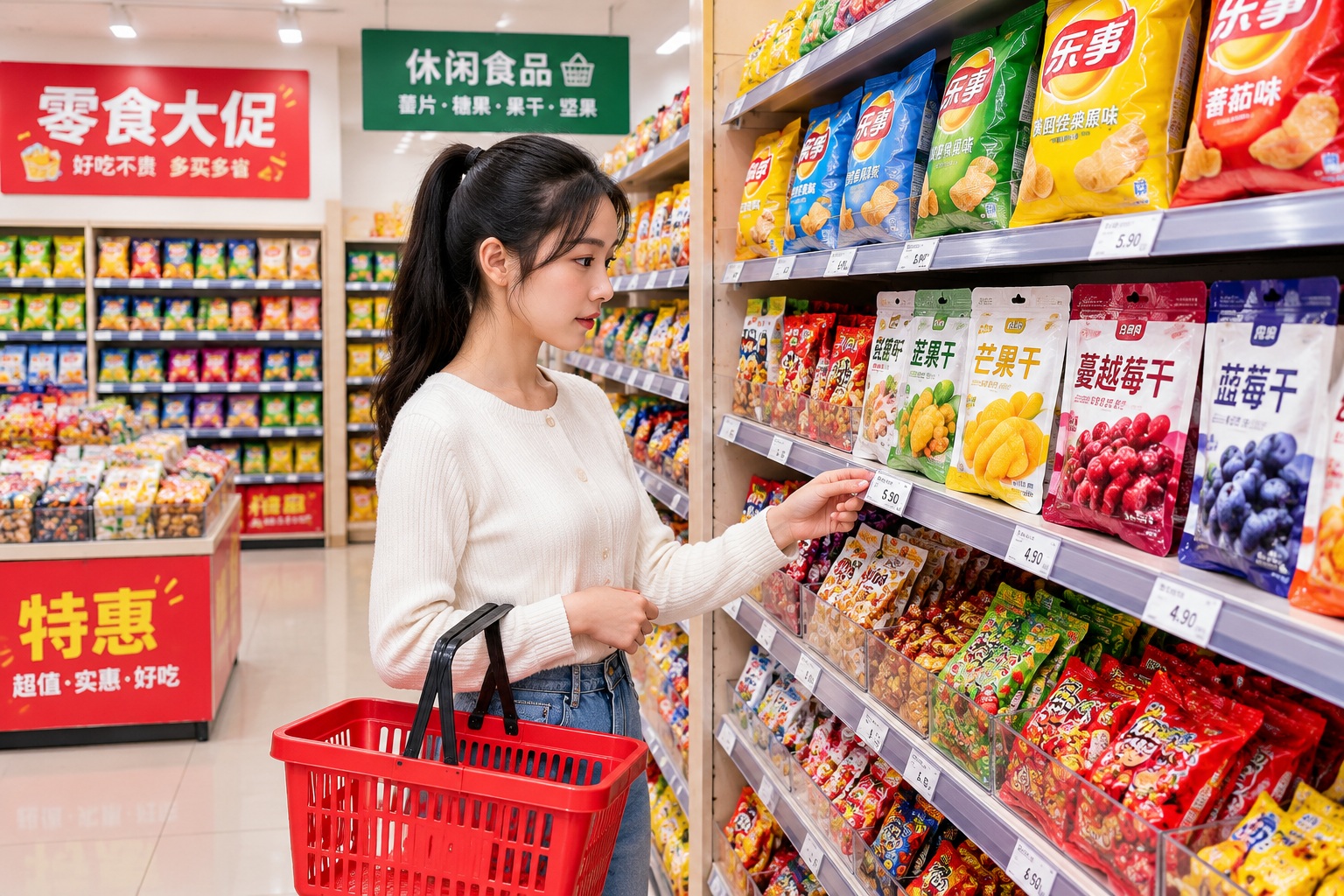
In Chinese, these stores are called “量贩零食店” (liàngfàn língshí diàn). The term comes from a Japanese retail practice of selling goods in bulk at marked-down prices. Picture a no-frills warehouse-turned-shop, with shelf after shelf of packaged snacks: familiar brands like Lay’s and Oreo, plus many domestic names you might not know. Everything is sold at below typical supermarket or corner-store prices.
Haoxianglai, now part of a larger group, is one of the biggest names. Zhaoyiming, another challenger, started in Sichuan and now has stores throughout the southwest and central China. Combined with dozens of smaller regional rivals, these chains have opened thousands of outlets in the last three years. They are especially visible in small cities, suburbs and county towns — places where a giant supermarket can feel far away and online shopping takes a day or two to deliver.
The Low-Price Secret: Less “Cool” Than You’d Think
How do they make money selling a bag of chips for the price of a cup of tea? The business model is surprisingly old-school. They buy directly from manufacturers in huge volumes, often bypassing the layers of wholesalers that feed small convenience stores. The shops are simple: less decoration, fewer staff, items displayed in cut cartons to reduce unpacking costs. Profit margins are extremely thin. Store owners rely on quick turnover — millions of packets sold per day across the chain — rather than big per-item profit.
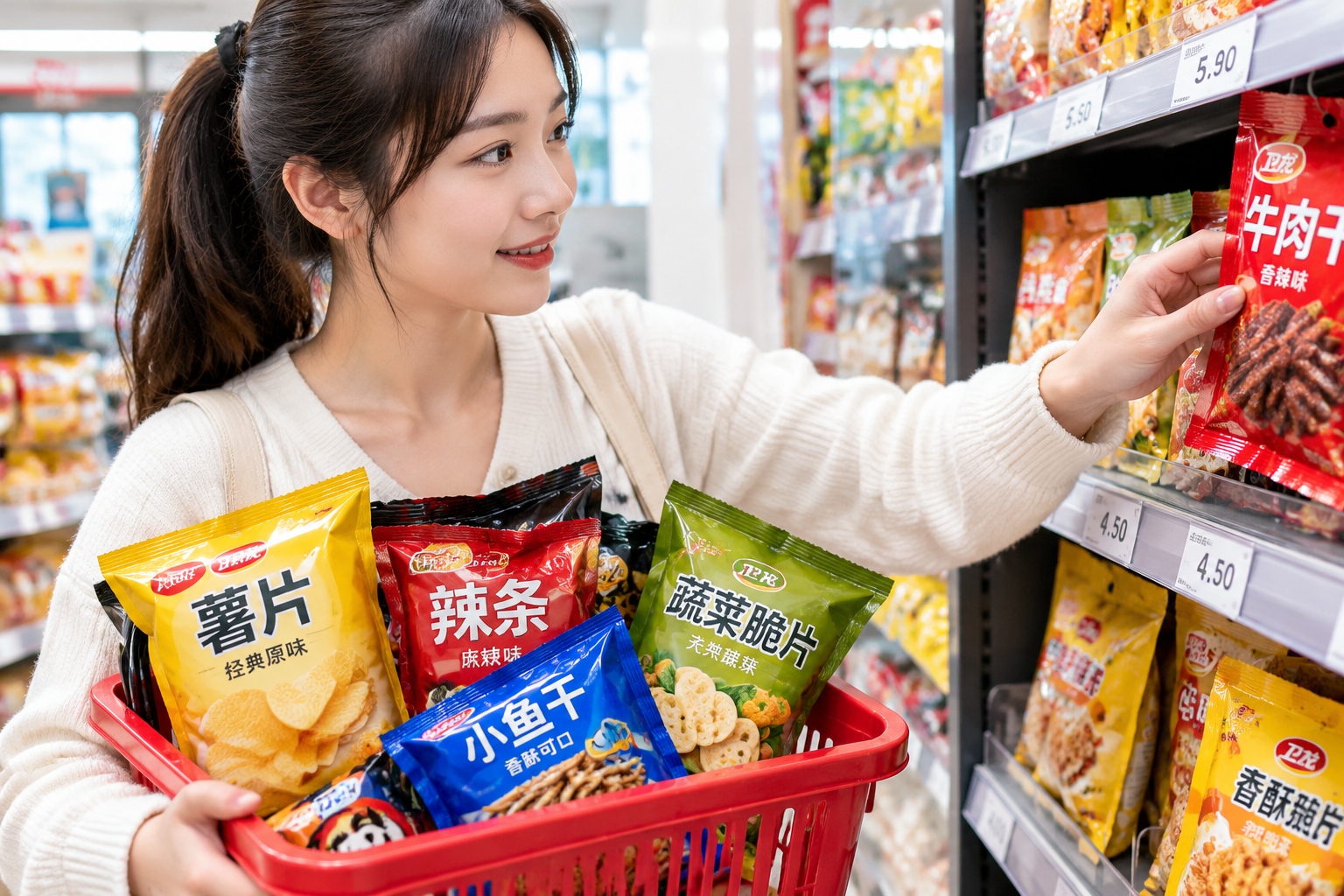
For a young person, the savings add up. A 45-gram bag of brand-name chips might sell for 6 yuan in a city convenience store but here costs 4.5 yuan. A packs of spicy tofu can be 20% cheaper. In a country where many people now compare prices across online platforms, a physical store that undercuts both the corner shop and the supermarket delivers an almost irresistible “deal” feeling.
Why Queue Then? Because It Feels Like Smart Shopping
Young Chinese do not line up for a brand or a status symbol. They line up because the local Haoxianglai, sometimes the only one in the area, is busy after dinner. The queue signals value to potential customers; it also creates a sense of “this is a good find.” But many say the wait doesn’t bother them. In an era of slower wage growth and a cautious consumer mood, buying a big basket of snacks for just ¥30 feels like a small act of winning.
“I don’t buy the most expensive thing,” says 24-year-old Zhou, who was queuing with two coworkers. “But I like filling this basket. I can pick any flavor, any quantity. The store treats me like a wholesale buyer, not someone who has to pick one small bag from a convenience shelf.”
From Cheap Thrills to Social Currency
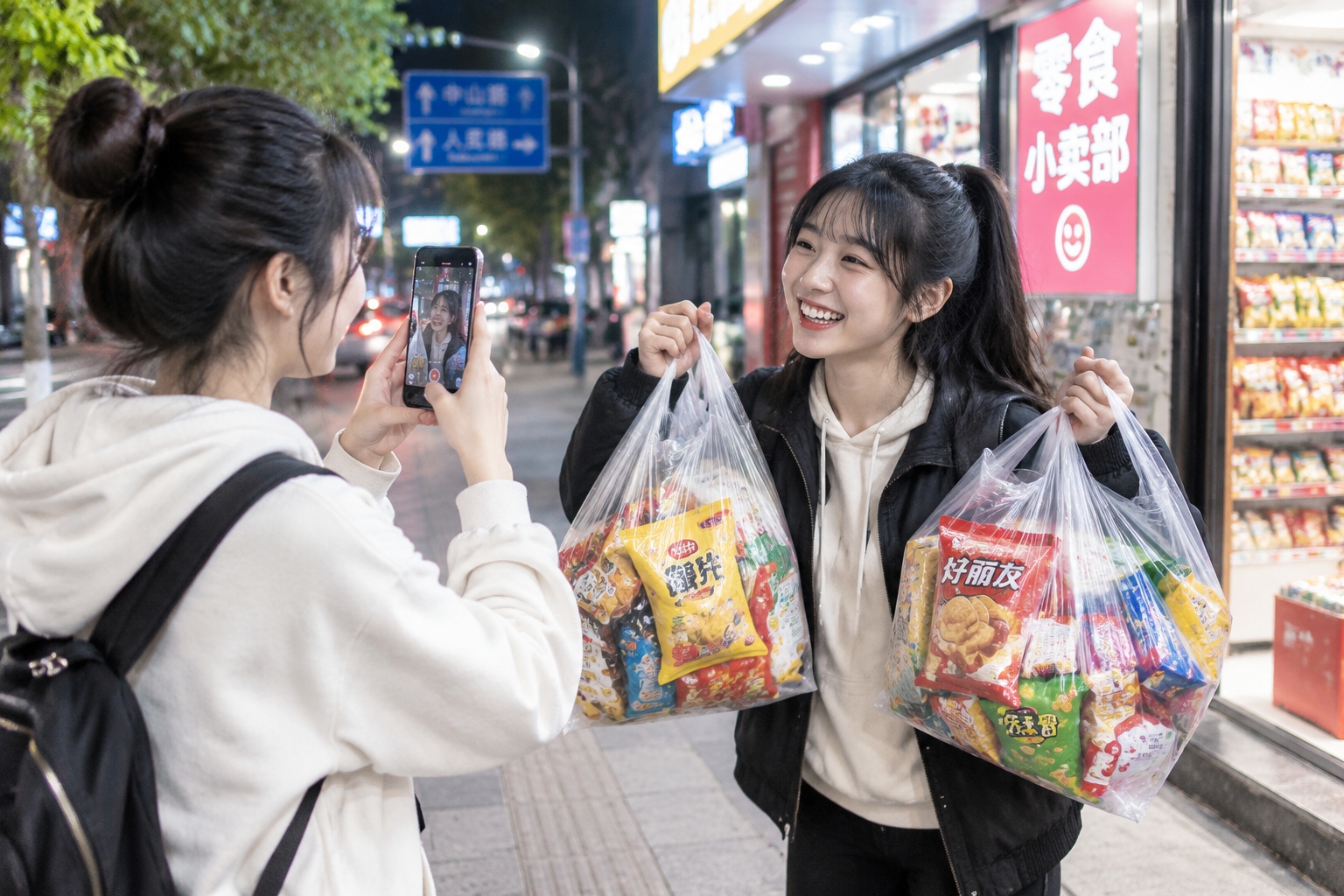
Part of the popularity lives in content creation. On Douyin and Xiaohongshu (China’s TikTok and a lifestyle app), “snack store sweep” videos are all over the place. A young woman walks down an aisle, throws dozens of packets into a basket, then shows the receipt with a heroic total of ¥50 — about $7. Comments often read: “So cheap, how?” These videos give the stores a fun, social media-friendly personality.
They also play into a broader phenomenon: “revenge spending on small things.” As big-ticket purchases like homes and cars become heavier burdens, small pleasures become more meaningful. Buying snacks, decorating a backpack, or collecting blind-box toys can make a day feel special without breaking the bank.
Booming in Small Cities, Not Just Shanghai or Beijing
Perhaps the most striking part of this story is where the stores thrive. Chinese retail used to follow a pyramid: flagship stores in Tier-1 cities, slower expansions downward. Haoxianglai and Zhaoyiming invert that logic. They first blanketed county towns and small-city neighborhoods, where consumers have less access to large supermarkets and are extremely price-sensitive.
In a place like Bozhou, a small city in Anhui province, you might find six or seven snack stores along one commercial street. For local teenagers and office workers, they are a new kind of public space: bigger than a convenience store, cheaper than an imported goods mart, and closer than the mall. After school, students come to share a ¥10 bag of jelly; after dinner, friends meet to “see what’s new.”
It’s Not All Perfect: Critics Raise Questions
Journalists and consumer advocates have also pointed out problems. Some of the products carry long ingredient lists, and many snacks are processed, sugar-heavy, or salty. Because stores depend on large supplies, food waste and stale inventory can occur. And as chains expand fast, quality control becomes tricky.
There are also market concern: too many competing stores in the same street can lead to cut-throat discounts and puny profits. In some cities, small convenience store owners say they are losing snack sales. But the shoppers I speak with are aware of the tradeoffs. They rarely believe these snacks are a health food. They just like having the choice to buy less fancy stuff at a fair price.
What the Queues Tell Us About Today’s China
To an outsider, the long lines at a snack store might look like panic buying or a childish fad. Watch a little longer, and they appear as something more nuanced: a generation that grew up with the internet but is now making deliberate, price-aware decisions. They still like to treat themselves. They want to be part of a crowd. But they also demand what economists call value-for-money.
The rise of Haoxianglai and Zhaoyiming is not a sudden burst of craziness. It is one of the clearest signs that Chinese consumers are changing from “buy it because it’s trending” to “buy it because it fits my budget and my life.” It also proves that a suburban mom, a college freshman, and an office worker can share an ordinary but real pleasure. And they don’t mind queuing for that.
Start the discussion at forum.chinacomes.com