

Everyone Loves a Bargain
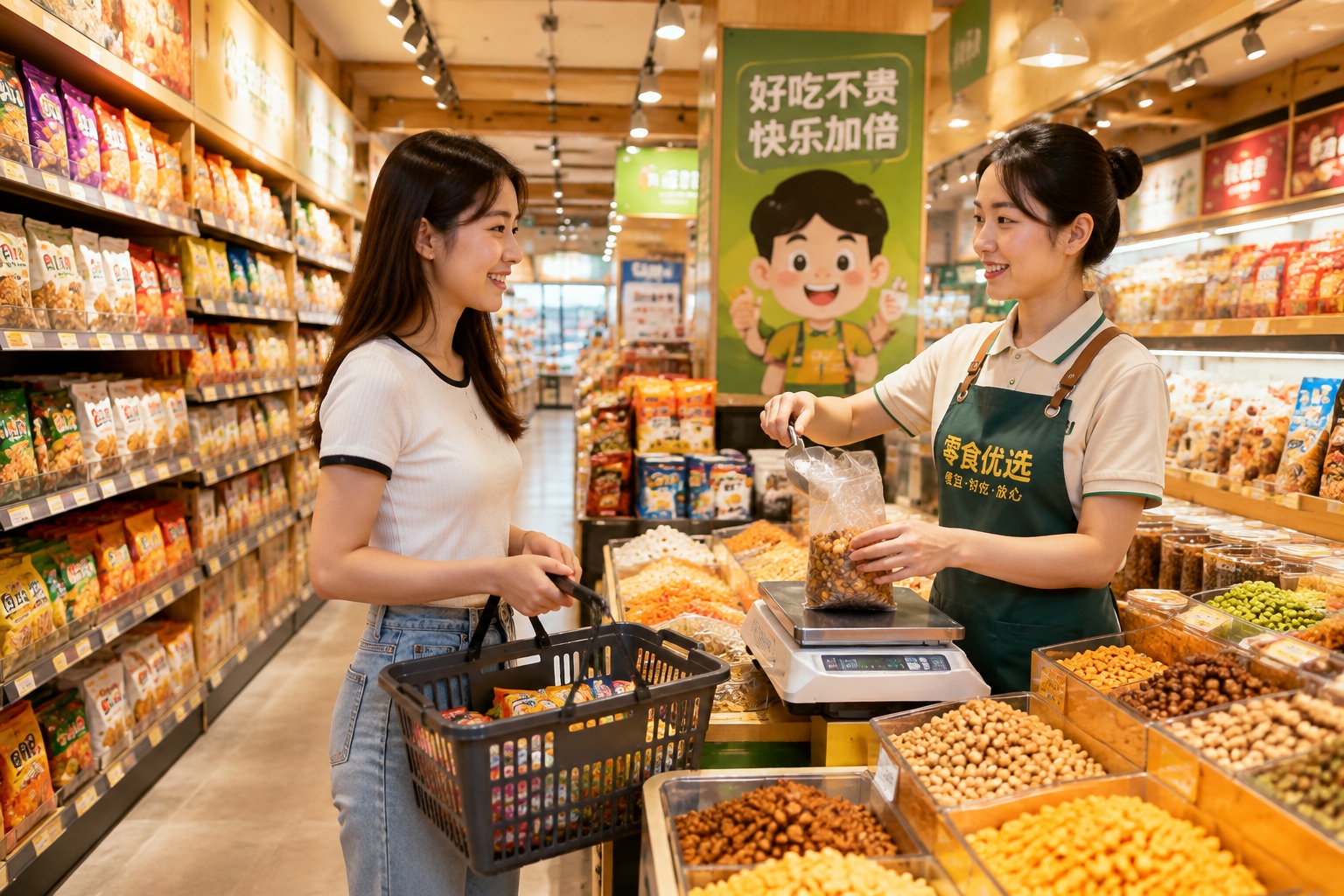
On a Thursday evening in a mid-sized Chinese city, a young woman walks into a brightly lit snack store. She grabs a red plastic basket, then fills it with packs of spicy dried tofu, jelly candies and potato chips. At the checkout counter, an assistant weighs the bulk sweets on a digital scale. The total is surprisingly low — about 4.5 U.S. dollars for a full bag. It feels like a steal compared with the supermarket two blocks away.

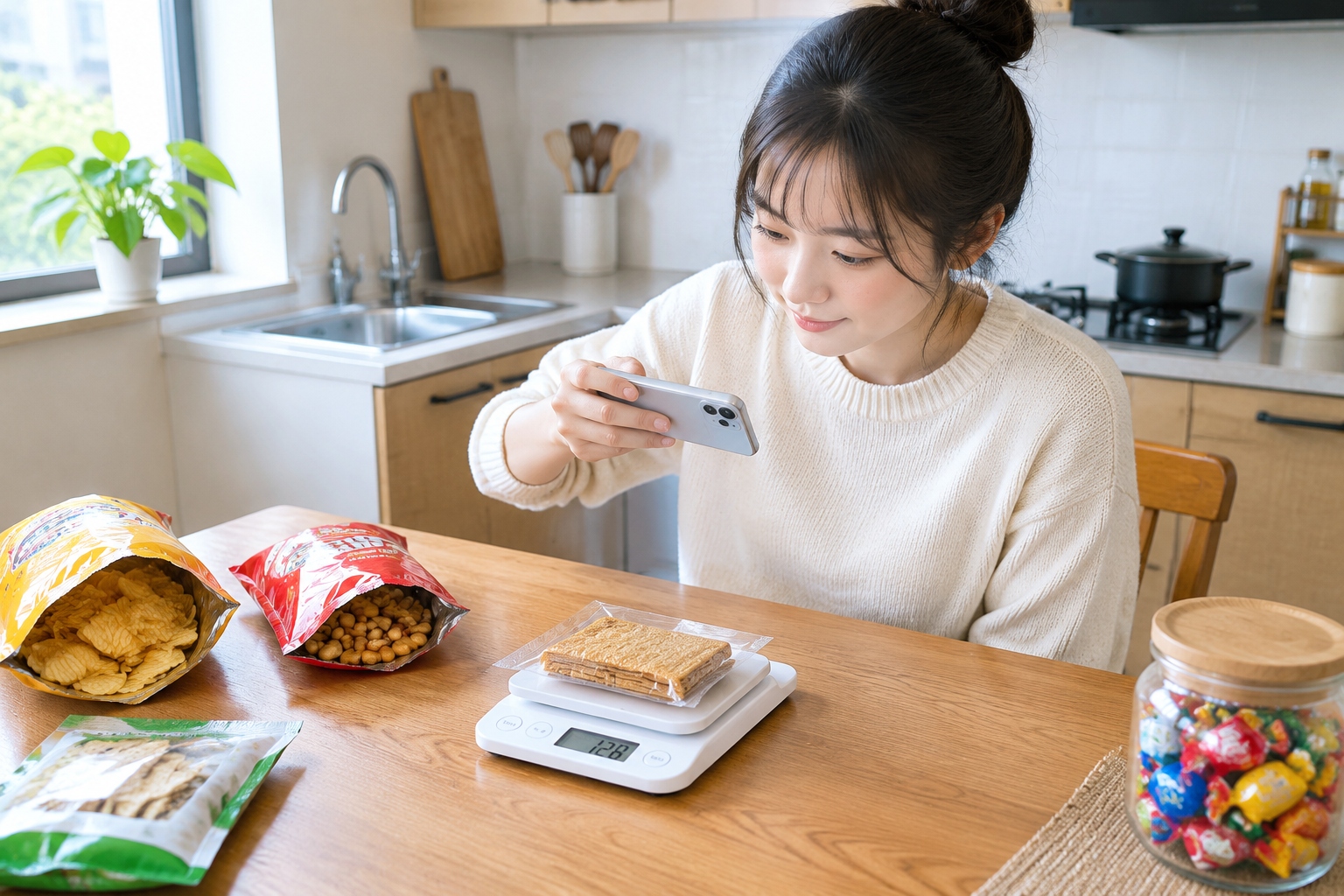
At home, she becomes curious. She places a sealed bag of dried tofu on her kitchen scale. The display reads 112 grams, while the package label claims 120 grams. A little short, she thinks. Then she checks the other items. Two jars of candies are lighter than their labels too. She records a video and uploads it. Within a day, it gets tens of thousands of views. Comments pour in: ‘I had the same experience,’ ‘I now bring my own scale to the store.’
These videos signal a growing headache for one of China’s hottest retail concepts: the ‘snack discount store,’ sometimes called a ‘bulk snack megastore.’ But the fast rise of these stores is beginning to collide with an old question: how cheap can you go before something invisible starts to break?
The Snack Megastore Phenomenon
Snack discount stores have become one of the most visible retail formats in China. Over just a few years, national chains such as Mingming Henmang (a merger of Snack Busy and Zhao Yiming), Haotemai and Food Love have built networks of thousands of shops. They choose street corners near schools, factories and apartment blocks, often in smaller cities and counties where traditional retail had lagged behind.
The stores are visually loud: wall-to-wall shelves packed with familiar snack brands — three strips of crispy seaweed for 1 yuan, a can of cola for 1.2 yuan, and bulk bins of mixed nuts, jelly and dried fish. What they promise is very simple: the same national-brand snacks you see everywhere, but at prices 20 to 30 percent below the local supermarket.
The discount comes from a carefully designed funnel. Snack chains bypass wholesalers and buy directly from manufacturers. They stock a very tight assortment — mostly best-selling, fast-moving items. In exchange for volume, they secure special discount deals and overnight cash payments. Then they strip back store frills: only a few staff handling cartons during slack hours, no fancy backrooms, no in-store bakery. In theory, this is a win-win. Manufacturers move more product; customers feel smart; stores earn on thin margins.
The attraction is real. A research report from the China Chain Store & Franchise Association in 2024 estimated that the total sales of bulk snack stores achieved double-digit growth for several years and the model had moved from tier-1 experimental districts into small county towns. In many cities, two rival snack stores open on opposite sides of the same street. That kind of competition would be worrying in any retail sector, but in China it has become particularly sharp.
Yet underneath the bright shelves, a different problem is going unnoticed by many industry researchers: the scale may not always tell the truth.
Different stores, same complaint
Complaints about short weight did not start yesterday. In traditional food markets, meat and fish stalls are famous for using ‘tap-the-hand’ tricks. What’s newer is that modern, brightly branded convenience stores are now facing the same accusation.
A quick search on social media shows hundreds of clips made under the hashtag ‘snack store short weight’. A man in Fujian collected his receipt and asked the staff to weigh the full basket one more time at a fair scale — the result was about 40 grams lighter than the first reading. A mother in Henan found a ‘small can of peanuts’ marked 135 grams was only 118 grams after opening the bag. Some video bloggers even make it a side practice: each time they buy from a discount snack store, they weigh every product at home and publish a ranking of brands that fail the test.
The pattern is consistent enough that local government regulators have noticed. In 2024, market supervision bureaus in several cities, including Hefei and Xi’an, ran special checks on snack retail stores. Their official notices mention problems such as electronic scales not being certified, settlements that seem to calculate a few extra grams per item, and packages whose net content is below the declared value. In more than one case, stores were fined and ordered to stop operating until they fixed the issue.
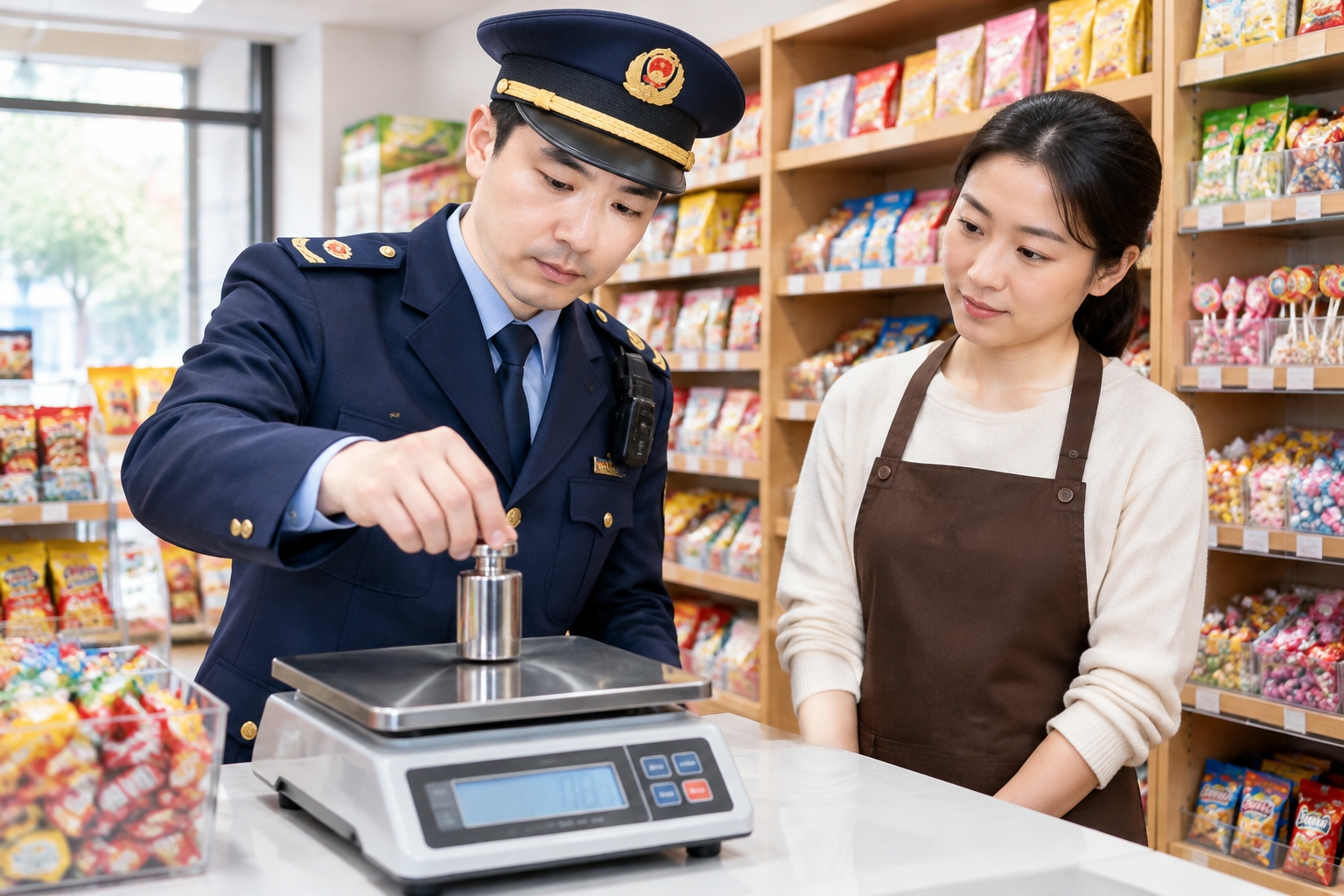
Those fines were small relative to the market size, but they exposed a systemic weakness in the sector’s rapid expansion story.
The arithmetic of zero-margin snacks
To understand why this happens, start with the money flow. A typical snack discount store operates on a gross margin that most supermarkets would find unbearably low. Data gathered from franchise materials and financial disclosures suggest that a single store’s gross margin often sits between 15 and 20 percent — sometimes even less during promotional windows. After rent, salaries, utilities and packaging, the net profit can fall to just 3 to 5 percent of revenue.
The main source of income for the parent company is not the store’s retail sales but the fees it collects from franchisees — initial joining fees, management fees and the ongoing profit from selling products to the shops at a markup. The fewer costs the parent company carries, the better. Some chains even supply 100 percent of the inventory, meaning the store owner has no choice but to buy from headquarters, at whatever price headquarters decides.
This formula works well for the chain, but it squeezes the person behind the counter. Franchisees must pay a high joining fee, often hundreds of thousands of yuan, to brand their shop with a successful name. To recover that investment, they need customers to come back often. So they discount aggressively. That is exactly what the parent company wants: more traffic, more store-level marketing, more sales through its distribution hub. But if a shop owner is barely above break-even after paying the utility bill, there is a strong incentive to quietly add a few grams to each weighing ticket — or to rely on cheap, uncalibrated equipment that always seems to drift upward.
The incentives are clear. If you are a franchisee paying fixed rent and rent plus staff, and the company insists your product prices stay close to the factory price, then any careless attitude toward measurement can turn into a few hundred extra yuan at the end of each month. The scale is a convenient, almost invisible lever. The consumer rarely checks the exact weight in a busy store; the checkout lines are long, and the total is often below 10 yuan.
The parent companies also exacerbate the pressure by setting high sales targets. To push more inventory through the pipeline, many chains force franchisees to rotate in new snack categories every few weeks. Unsold stock is often written off at the store’s expense. So freshness and net weight become two variables that store owners can subtly adjust.
Losing the most valuable asset: trust
At the heart of this controversy is an asset that all discount retailers depend on more than their inventory: consumer trust. A bargain is only satisfying if the customer believes they got a real deal. When a scale seems to lie, the entire business model feels like a trick.
Shrinkflation — the practice of giving customers less product without saying so — is not unique to China. Around the world, manufacturers quietly reduce package sizes to protect profit margins. In China’s snack discount scene, however, the shrink does not always happen at the factory. Sometimes it happens in the store, in front of your eyes, by a few grams per bag.
The weight-loss can be tiny. A typical bag of dried beef is supposed to weigh 80 grams, but the customer receives 70 grams after the cashier subtracts the plastic package. No single loss ruins a family budget. But combined with thousands of transactions every day, those missing grams build up like a hidden tax. Worse, they betray consumers who came to the store explicitly because they believed the price tag represented the full product.
Chinese customers are increasingly tech-savvy and vocal. Many of them now travel with small foldable kitchen scales and raise complaints on government hotlines. A viral weighing video can reach hundreds of thousands of people in an afternoon. For a national chain, a single such post can outweigh ten years of advertising.
Can the discount boom clean up?
In response to the backlash, some of the bigger chains have pledged to improve supervision. They claim to have introduced regular random checks by third-party agencies and installed ‘fair scales’ near storefronts for customers to verify their purchase. Several industry news reports from late 2024 note that leading chains have issued internal instructions to shut off any store found to be intentionally tampering with its scales. But external observers, including some consumer associations, argue that the root issue is the tense math of franchise economics, not simply rotten apples.
Making this sector honest requires a willingness to re-work profitability, not just add a new slogan. One option is to increase the transparency of product weight: printing the net content on every package and balancing the scale so it subtracts the packaging automatically. Another is to shorten the time between purchase and possible verification, for instance by making each receipt show the weight per item and encouraging customers to double-check at a designated scale before leaving. Some consumer-rights lawyers have also suggested that companies should compensate missing grams with a 10 percent markdown — punishing stores more severely than the small loss a customer suffers.
None of these fixes are revolutionary. They cost time and money. Yet they become urgent when a retail model reaches the scale of several thousand stores. A single reported issue can quickly escalate into a nationwide scan, as many Chinese chains learned in the food-safety scandals of the early 2010s. Those incidents taught the industry that trust is the only sustainable price advantage.
What the snack wave tells us about China’s new retail world
Snack discount stores are not an accident. They grew out of a consumer culture eager for value and convenience, especially among young people and family buyers in second- and third-tier cities. The business model brings real benefits: lower prices, easier access to national brands, and a more vibrant street retail scene. The growth data is staggering, and many storefronts still do steady business.
But the recent doubts about measurement are a reminder that every expansion milestone carries hidden risk. In high-frequency retail, where profits are razor thin, the operator’s character is as important as the supply chain algorithm. When shoppers begin to carry their own scales, the industry is already paying a price larger than any fine regulators could issue.
What happens next will set a precedent for China’s fast-moving discount economy. If chains and franchisees find a way to make honesty profitable, the snack megastore boom can be sustained for years. If they don’t, it may become another cautionary tale about speed that ran ahead of judgment.
Start the discussion at forum.chinacomes.com