
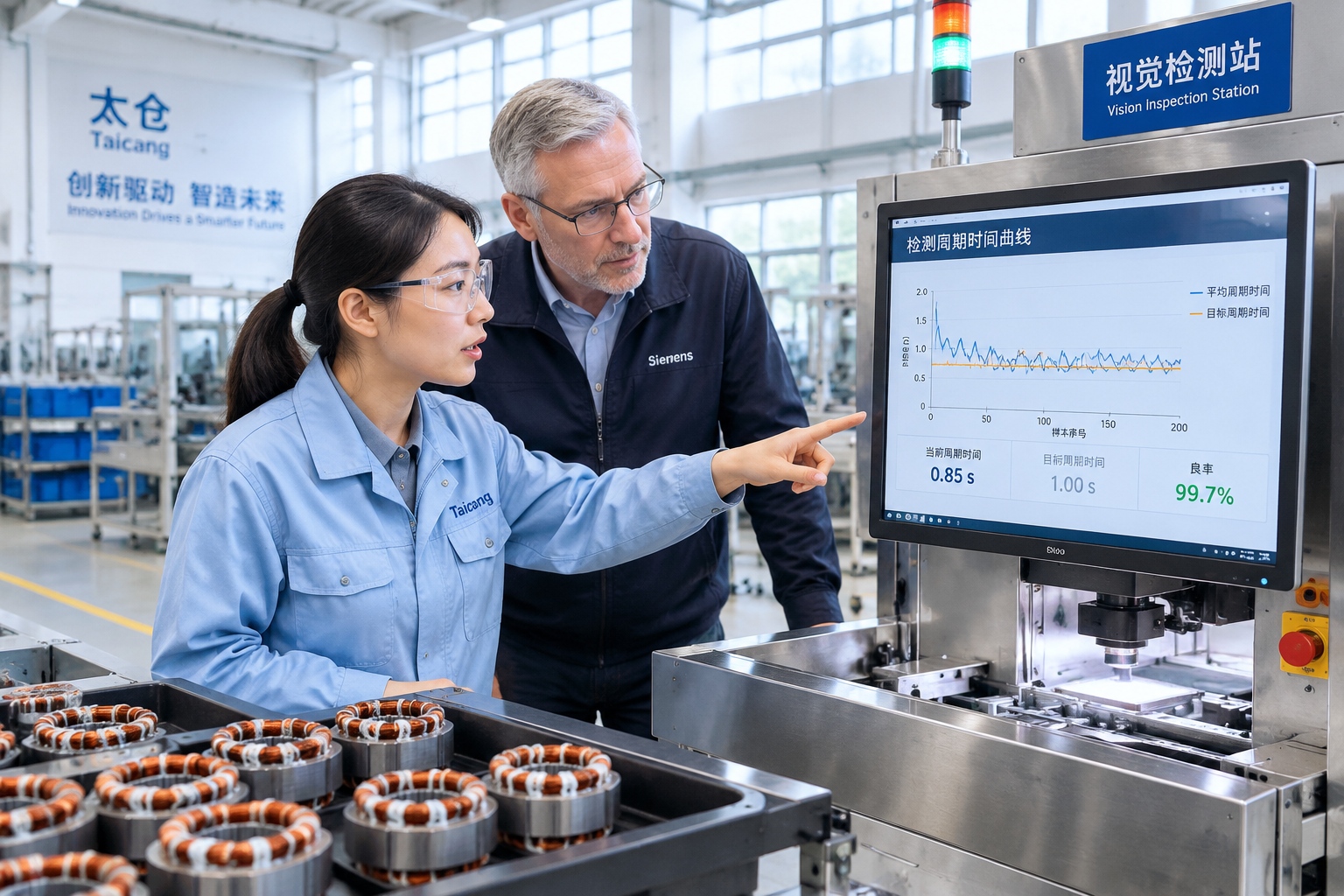

6:50 a.m., and the line is still 3.2 seconds slow
I like getting to the plant before the shift starts. The hall is quiet then. No air cylinders firing, no forklifts, no stamping. You can hear compressed air hissing somewhere near station four and the low hum of the transformer cabinet. When a line is running, you hear nothing. When it stops, you hear what is wrong.
For nine mornings in a row, our line had been wrong. Takt time here is 48 seconds per stator — the beat the whole line has to hit, like a metronome. We were running at 51.2. Nothing was broken. Nothing on the dashboard was red. The line simply refused to keep up, and every morning at the 7:30 handover, that number sat on the screen like a bad grade.
Markus Heller stood at station seven with his hands in his jacket pockets. He is fifty-four, from a small town near Stuttgart, and has been in China eleven years. He does not raise his voice. It took me about two years to stop finding that suspicious.
“The number is not the problem,” he said in German, then switched to English because two technicians had walked over. “The number is a fever. Find the infection.”
I am twenty-nine, from Yancheng, four hours north of here. I studied mechatronics in Nanjing and joined this plant four years ago as a process engineer. My German is good enough to argue in — which, it turns out, is the only language skill that matters on a line launch.
What Taicang is, and why Germans keep moving here
If you have never heard of Taicang: it is a county-level city of about 830,000 people in Jiangsu province, roughly 50 kilometres northwest of Shanghai. It has a Bavarian-style shopping street, a German bakery that sells out of pretzels by 11 a.m., an annual Oktoberfest, a German-language kindergarten, and — by the city’s own count — more than 500 German-invested companies. Trumpf, Krones, Schaeffler and Kern-Liebers all have plants here.
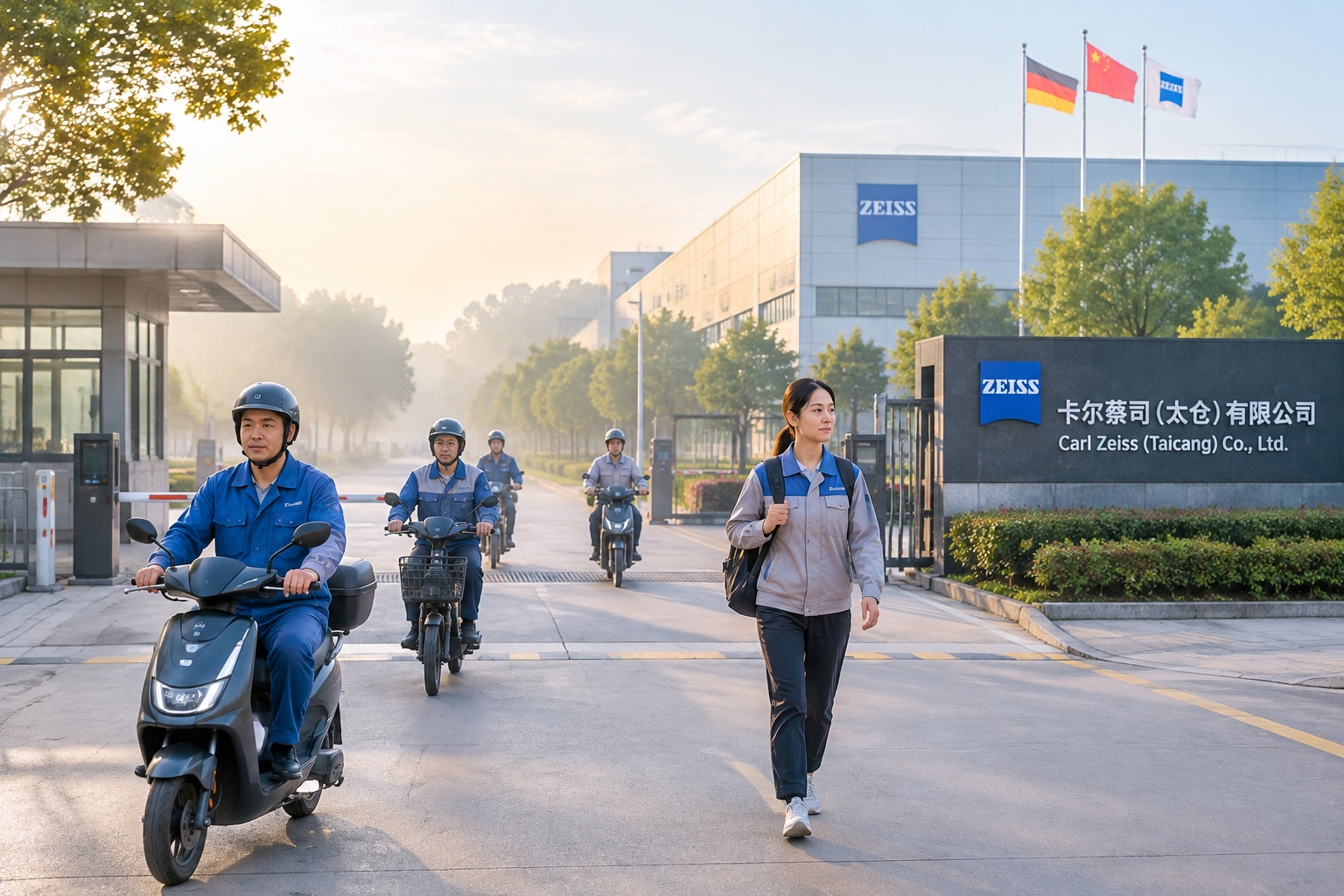
That is why I took the job. Not because of the German flag at the gate, but because a factory with this much German equipment in it is a good place to learn how machines are actually built. And it is a two-hour bus ride from my parents.
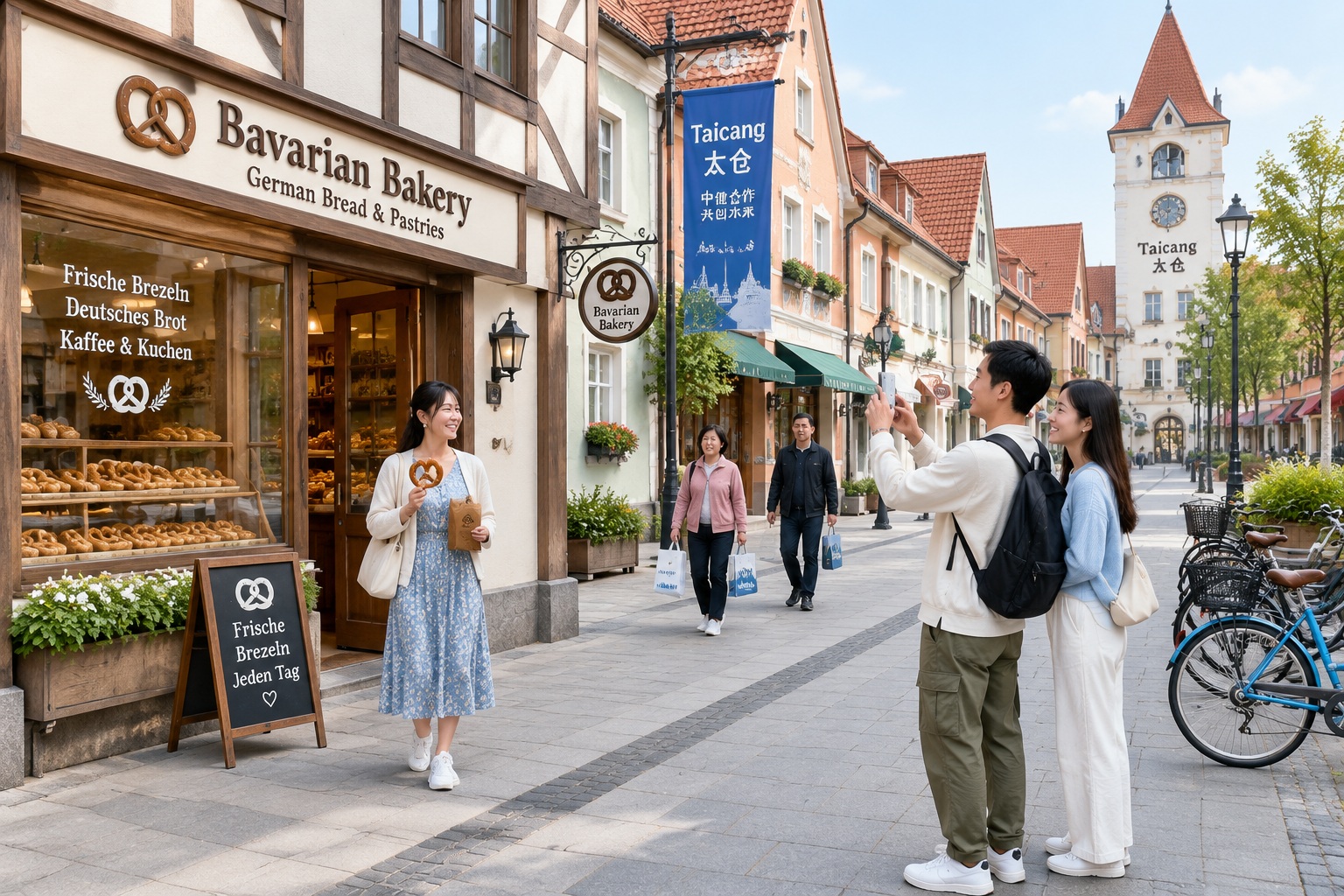
You will read a lot of stories about “Sino-German cooperation.” Most of them are about signing ceremonies. What actually happens is a Chinese technician and a German line manager standing in front of a machine at seven in the morning, disagreeing about a sensor, in English that belongs to neither of them.
The infection turned out to be a light
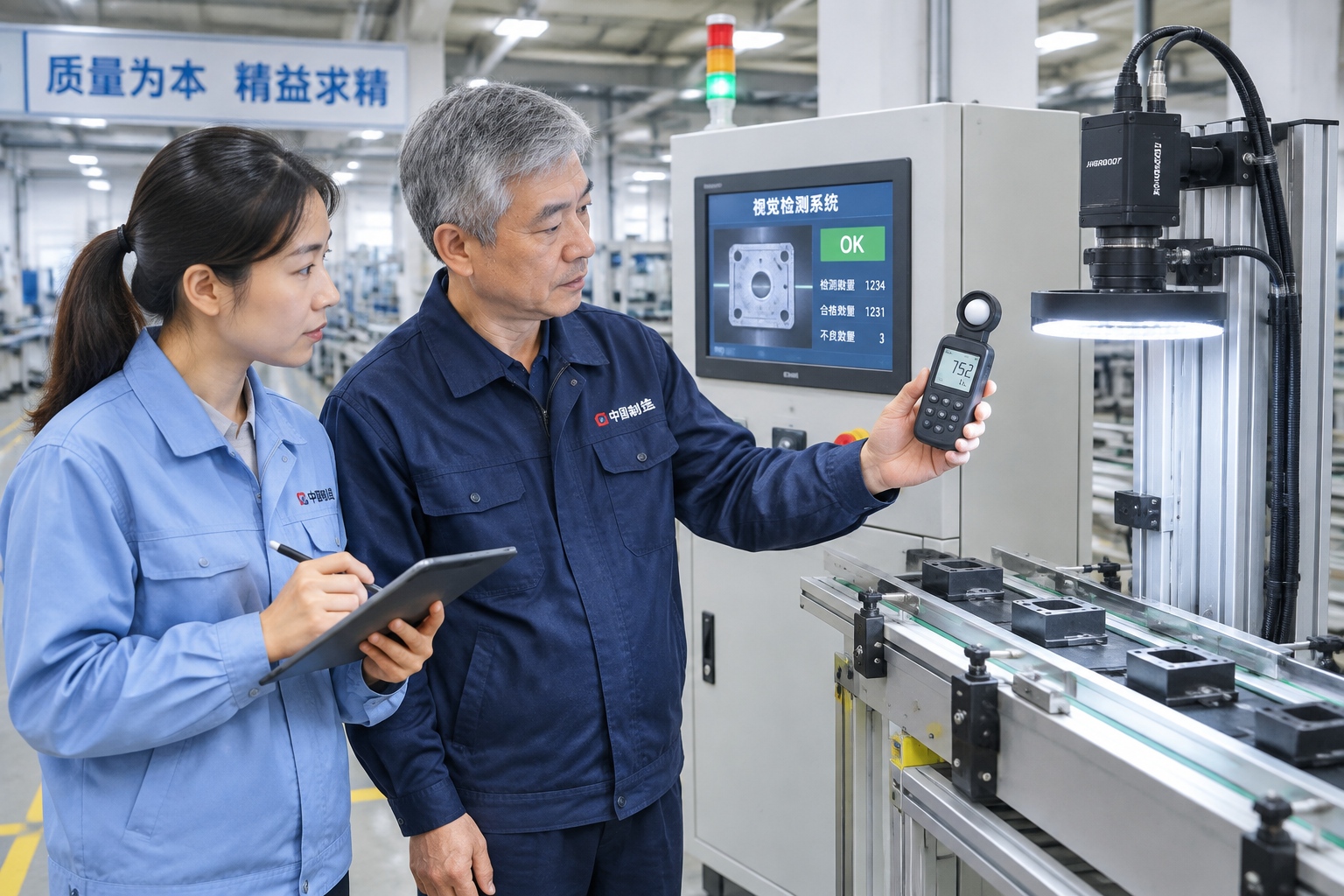
Station seven is where 48 copper hairpins get pressed into the slots of an electric motor stator. A camera checks that each hairpin sits at the right depth. If the camera cannot read the part, the line stops. For nine days it had been stopping roughly every forty parts, and every stop costs a restart cycle — purge, index, re-read — that eats the takt time we were already losing.
On day two we did what you are supposed to do: logged the stops, built the fishbone diagram — man, machine, material, method, measurement, environment. By day four we could prove the camera was the trigger. By day five we had replaced the camera, the lens and the cable. The stops continued.
Then we did the German thing, which is not smarter, only more patient: we stopped trying to fix it and started trying to measure it. Zhang Wei, our electrical technician — fifty-one, twenty-six years on factory floors — put a light meter in front of the vision station at 6 a.m., again at 10, again at 2 p.m. The ring light above the camera was losing about eight percent of its intensity as the cabinet warmed up across the shift. At eight percent, the contrast on the etched part number falls below the camera’s threshold. Nothing was broken. It was just different at two in the afternoon than it was at six in the morning.
“I thought it might be the light,” Zhang Wei told me later, over noodles. “But I wasn’t sure. And I didn’t want to say it in front of the German and be wrong.”
That sentence is, honestly, the whole story of working across cultures on a factory floor.
When we told Markus, he did not say “I told you.” He asked one question: “How long have you known?” Zhang Wei said, “Maybe since day three.” Markus wrote the answer on the whiteboard — not the light, the answer. Then he changed the meeting. Since April, the 7:30 handover opens with five minutes where every technician names one suspicion out loud, before any data is on screen. He calls it “Verdacht zuerst” — suspicion first. It is officially the silliest item on the plant’s agenda, and it has caught three problems before they turned into nine-day problems.
The fix took two hours: a different lens hood, a repositioned ring light, and a ten-minute warm-up cycle before the first real part. The line now runs at 47.6 seconds.
Two ways of saying “this won’t work”
This is the part that took me the longest to learn. In a German meeting, “this is wrong” is information. It means: we have a shared problem, and you just helped. In the rooms I grew up in, “this is wrong” is a verdict — on the person, on the relationship, on whether you get invited back.
So we developed a code. My “maybe we can consider another option” means “this is wrong.” Zhang Wei’s silence means “ask me again, in private.” And Markus, who has been here long enough to notice, learned to read our 差不多 — chabuduo, that famously untranslatable word. 差不多 usually means “close enough.” Around a new line, it means “please ask me one more question.”
The reverse happened too. I had to learn to say, out loud, in a meeting: “I disagree. Here is the data.” The first time, my hands were sweating. Nothing happened. He wrote down what I said, we tested it, I was right about one thing and wrong about another, and we moved on. That took longer to believe than to say.
Where the friction is still real: planning. German project plans want six weeks of validation; the customer wants the line in three. Markus calls it “the oldest argument in the company.” It is not solved by culture. It is solved by running two tests in parallel and accepting that one of them is wasted work.
Li Wenhao is nineteen, and he is the other experiment
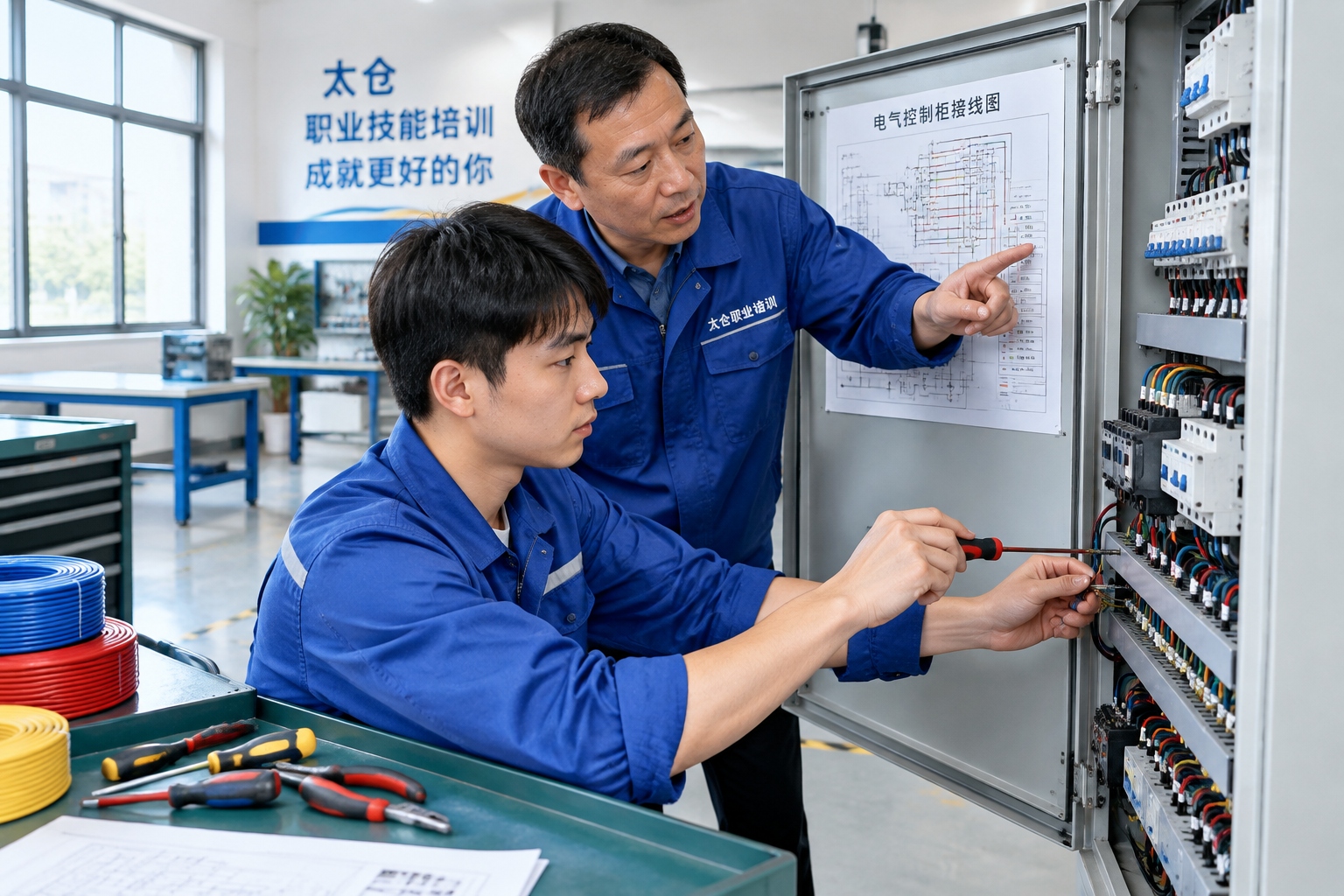
Down the hall sits Li Wenhao, who spends two days a week at a vocational school and three days on the floor. Taicang runs a dual-system training programme modelled on the German one: school and factory in the same week, a certificate from the German chamber of commerce at the end, and a job offer from the plant where he trained. He is in his second year. He can already wire a control cabinet and read a wiring diagram faster than I could at twenty-three. His allowance is around 2,500 yuan a month, which is not much; the certificate is worth considerably more.
“My parents wanted me to take the university entrance exam,” he told me. “My cousin did that, studied business, and now he does sales calls in Shanghai. I’m nineteen and I can set up a servo drive.” He grinned. “I don’t know if that’s better. Ask me in ten years.”
Not everyone lasts. Some apprentices quit in the first year, because twelve-hour days on a concrete floor are exactly as hard as they sound.
Why a German company is debugging EV motors in Jiangsu
The stator we build is a hairpin stator — the copper design that lets an electric traction motor hold high efficiency across a wide speed range. It goes into EVs sold in China and exported abroad. Ten years ago, this same plant mostly made parts for combustion engines. Whole buildings have been retooled, and the retooling is not finished.
Something else has changed. The process we worked out for station seven — the light measurement, the warm-up cycle, the suspicion-first handover — was written up and sent to the group’s plant in Bavaria, for a line they are launching there. That is the part I think people outside China have not caught up with. The flow is no longer only one direction.
The macro picture is messier. German companies put a record amount of direct investment into China in 2023 — close to €12 billion by Germany’s central bank count — and noticeably less in 2024 as the political mood in Berlin cooled. German firms here employ over a million people. Meanwhile the plants keep hiring, because the retooling for electric drivetrains happens on the ground, in Taicang, on a Tuesday morning, whatever anyone in Brussels or Beijing says about subsidies.
“Is it hard working for Germans?” — the questions I actually get
Is it hard working for Germans? No. It is hard working on a new line. The Germans just make you write down why.
Do you earn more than at a Chinese company? About twenty percent more than friends doing the same job at a local supplier. The bigger difference is that my overtime is logged and paid, which is not universal here.
Do they treat you differently? In my first years I was “the Chinese engineer.” Now I own a station’s process, and my name is in the inbox of Markus’s boss in Germany. That is not a slogan; it is a change I can date.
On Friday the line ran at 47.6 seconds all day. Markus went to the biergarten by the canal with the tooling team; I rode home on my e-bike, eight minutes. On Monday we start on station eight. There is always a station eight.
Start the discussion at forum.chinacomes.com