

A Country That Argues About Breakfast Before 7 A.M.
At 6:50 on a cold November morning in Wuhan, a woman in a puffer jacket slides four yuan across a metal counter and gets back a paper bowl of noodles she will eat standing up — chopsticks moving fast, one eye still on her phone. Behind her the line is already eight people deep. Twenty centimeters from her elbow, a man is grinding sesame paste into a bucket.
That is a Chinese breakfast: fast, cheap, extremely local, and fiercely defended. Nobody here agrees on the best morning food. Ask ten people in ten cities and you will start ten arguments — sweet or savory, soup or dry, wheat or rice, eaten sitting down or eaten while walking to the subway. What follows are the ten that turn up most often across the country, roughly in the order Chinese eaters themselves would rank them.
10. Doufunao: One Bowl of Tofu, Two Chinas
Doufunao is silken tofu pudding, and it is the clearest proof that this country runs on two breakfast cultures wearing the same passport.
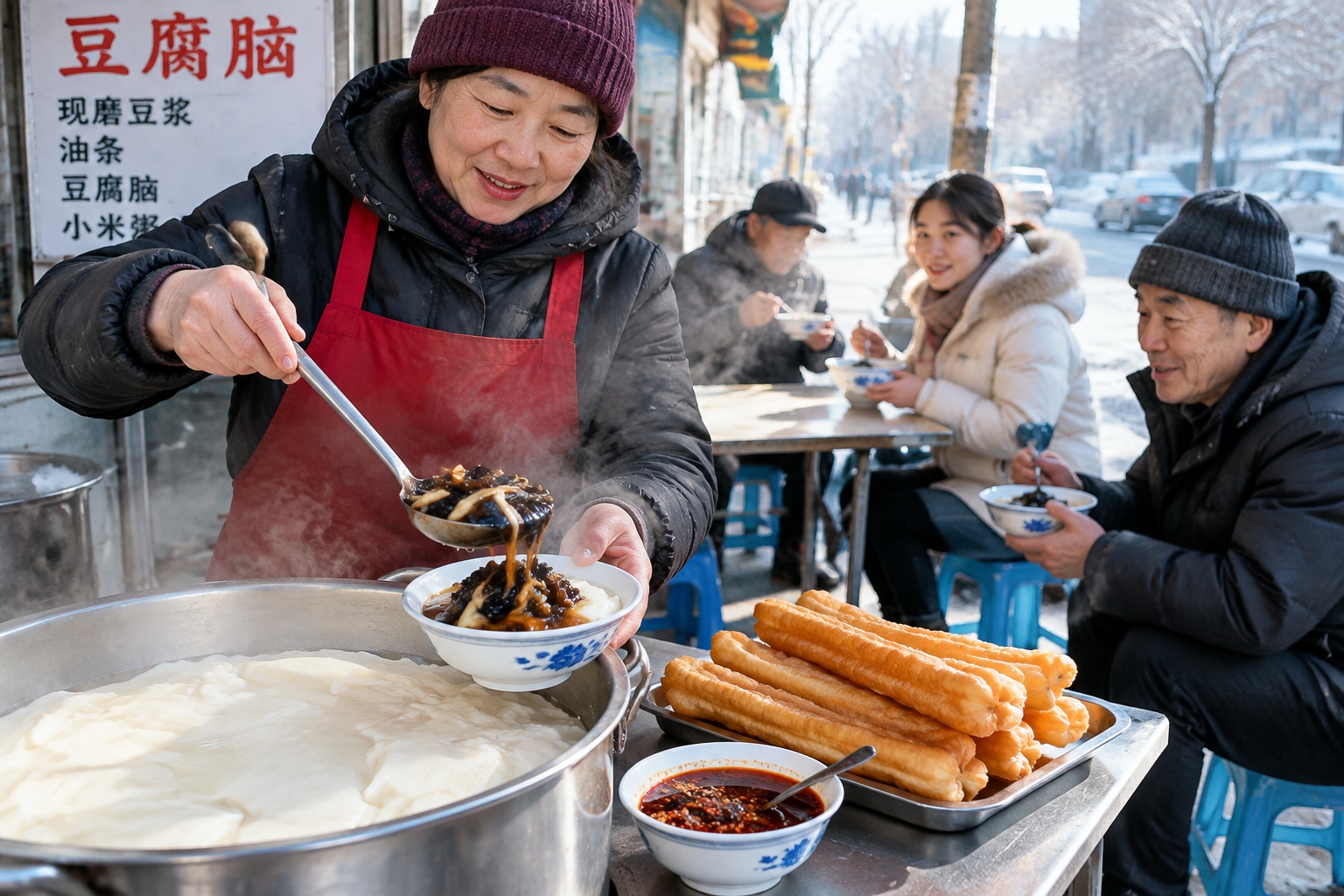
In the north it arrives savory: soft, trembling tofu under a dark glossy gravy of wood ear mushrooms and daylily buds, sometimes with a few drops of vinegar and chili oil. You eat it with a youtiao — a long fried dough stick — tearing off pieces and dipping them in. In the south, around Shanghai, Guangdong and Fujian, the same tofu comes with nothing but a spoonful of sugar or brown sugar syrup. Soft, slippery, gone in three bites. A bowl costs five yuan and warms your stomach before your brain has fully switched on.
9. Wontons: The Sound a City Makes When It Wakes Up
Huntun — wontons — are thin-skinned and generous with filling, served in a clear broth that tastes of pork bones and the sea. The morning version gets a spoonful of chili oil, a scatter of dried seaweed and tiny shrimp, and that is it. The wrapper is so thin you could read a newspaper through it. The whole bowl takes four minutes to eat and costs a little more than a bus ticket.
Every city has its old shops, doors open before dawn, with regulars who have ordered the same bowl for twenty years. Along with the vendors pushing out their carts, the wonton stalls are the sound a Chinese city makes when it wakes up.
8. Shengjianbao: Shanghai’s Loudest Breakfast
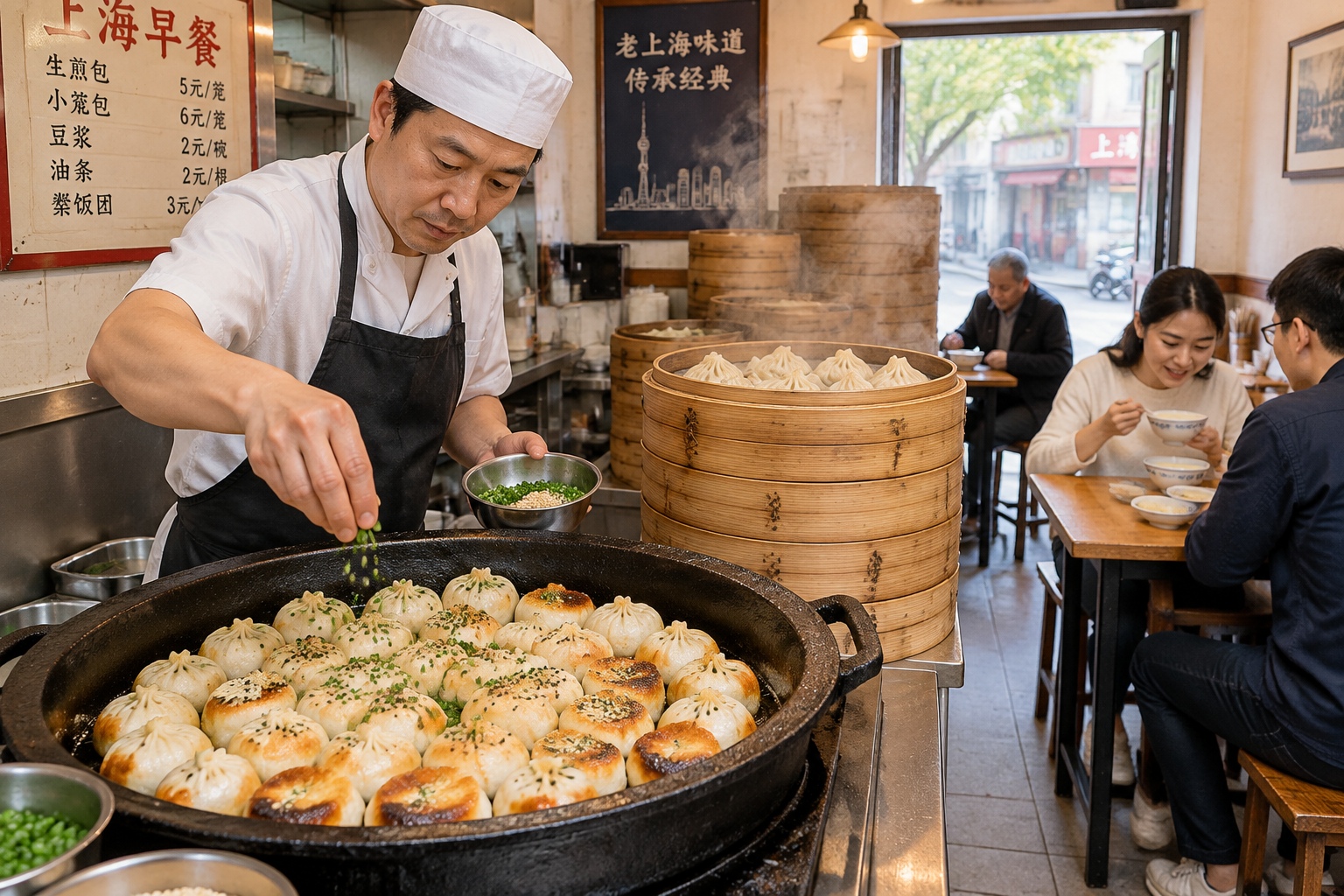
Shengjianbao is the city’s signature morning bun, and it is not a quiet food. Dozens of them are packed into a huge cast-iron pan, bottoms fried to a dark gold crisp, tops still white and soft from steam. Inside, pork filling is mixed with pork jelly, which melts into soup as it cooks. The pan is sprinkled with sesame and scallions, and the smell travels half a block.
There is a technique, and locals will correct you if you get it wrong: bite a small hole first — they call it opening the window — sip out the hot broth, then dip what is left in black vinegar. Skip the first step and you will burn your chin. Almost everyone does, once.
7. Xiaolongbao: A Steamer of Small Perfection
A bamboo steamer of xiaolongbao arrives too hot to touch and too neat to rush. The wrapper is paper-thin, pleated by hand into eighteen folds; inside is pork and pork jelly that turns to soup in the steam. Same rule as the shengjian: small bite, sip, then dip the rest in vinegar with shredded ginger.
The technique goes back to the Northern Song dynasty, more than nine hundred years ago. Today it is ordinary food — a steamer basket and a bowl of soy milk at a plastic table before work, in almost any Chinese city.
6. Roujiamo: The Sandwich That Eats Like a Meal
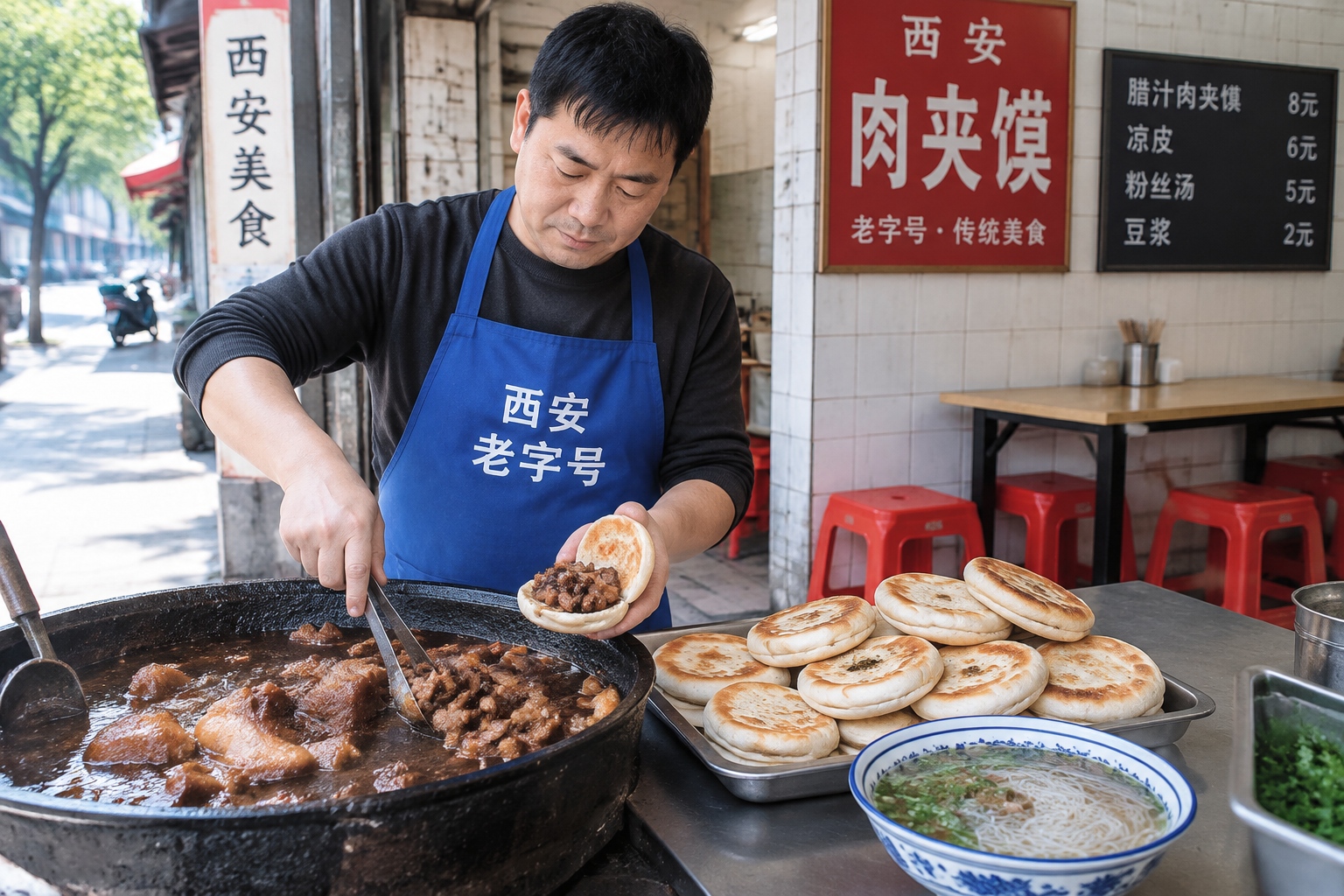
In Xi’an, roujiamo is sold from carts and counters all day long, but plenty of locals eat it at eight in the morning. The bun — baiji mo — is baked to order in a flat pan, crisp enough to flake when you squeeze it. The filling is pork braised for ten hours in a spiced soy broth and chopped with some fat left in, so it melts the moment you bite.
The most authentic version pairs a hot bun with cool meat; the juice runs straight into the bread. Add a bowl of vermicelli soup or peppery hulatang and you genuinely will not be hungry again until two in the afternoon.
5. Hulatang: The Soup That Wakes You Up Twice
In Henan, and across much of central China, a good day starts with hulatang. Beef or mutton stock is the base. Wheat gluten, wood ear mushrooms and daylily buds go in, then a heavy hand of white pepper thickens everything into something closer to gravy than soup. The heat hits the back of your throat.
A proper pot simmers for four hours or more and holds a dozen ingredients. You eat it with fried dough sticks or pan-fried buns, torn in and left to soak. On a cold morning it warms you from the stomach outward, and by the last spoonful your forehead is damp.
4. Cheung Fun: Southern Breakfast at Its Lightest
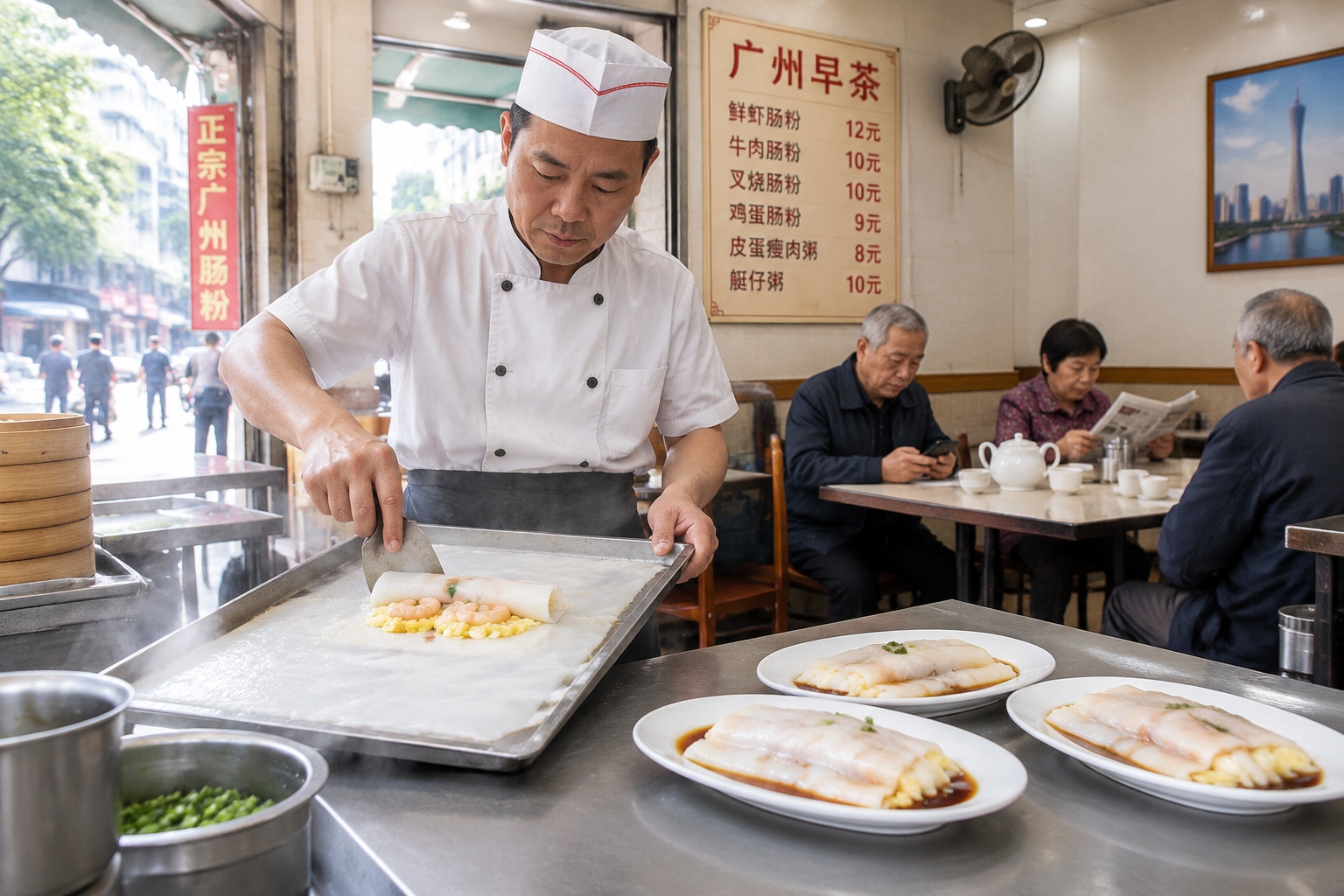
Cheung fun — rice noodle rolls — begin as a thin batter of rice flour and water poured onto a cloth or a steel tray, steamed for a minute, then rolled around beef, shrimp or egg. The result looks fragile, and it is. Too thick and it turns chewy; too thin and it tears. Getting the fire and the water-to-rice ratio right is a skill vendors guard carefully.
A plate costs around ten yuan, dressed with a light soy sauce that is sweet at the edge. This is the standard Cantonese morning tea order: a plate of cheung fun, a pot of tea, an hour of talking. Not heavy, not greasy — by southern standards, the ceiling of a light breakfast.
3. Wuhan Hot Dry Noodles: Five A.M., No Soup
Reganmian is why the woman in the opening scene was standing at that counter. Noodles made with alkaline water are boiled, drained, tossed with a little oil and left to cool; at serving time they go back into boiling water for a few seconds, then get mixed with thick, freshly ground sesame paste, pickled beans, diced radish and chili oil.
There is no broth. The sauce clings to every strand, dense enough to pull into strings. The first bite is dry and nutty and slightly stubborn; the tenth is addictive. In Wuhan, hot dry noodle stalls open at five in the morning, and the queue outside is the city’s version of a midnight diner — except it is dawn, and everyone is on the way to work.
2. Tianjin Jianbing Guozi: Breakfast You Eat While Walking
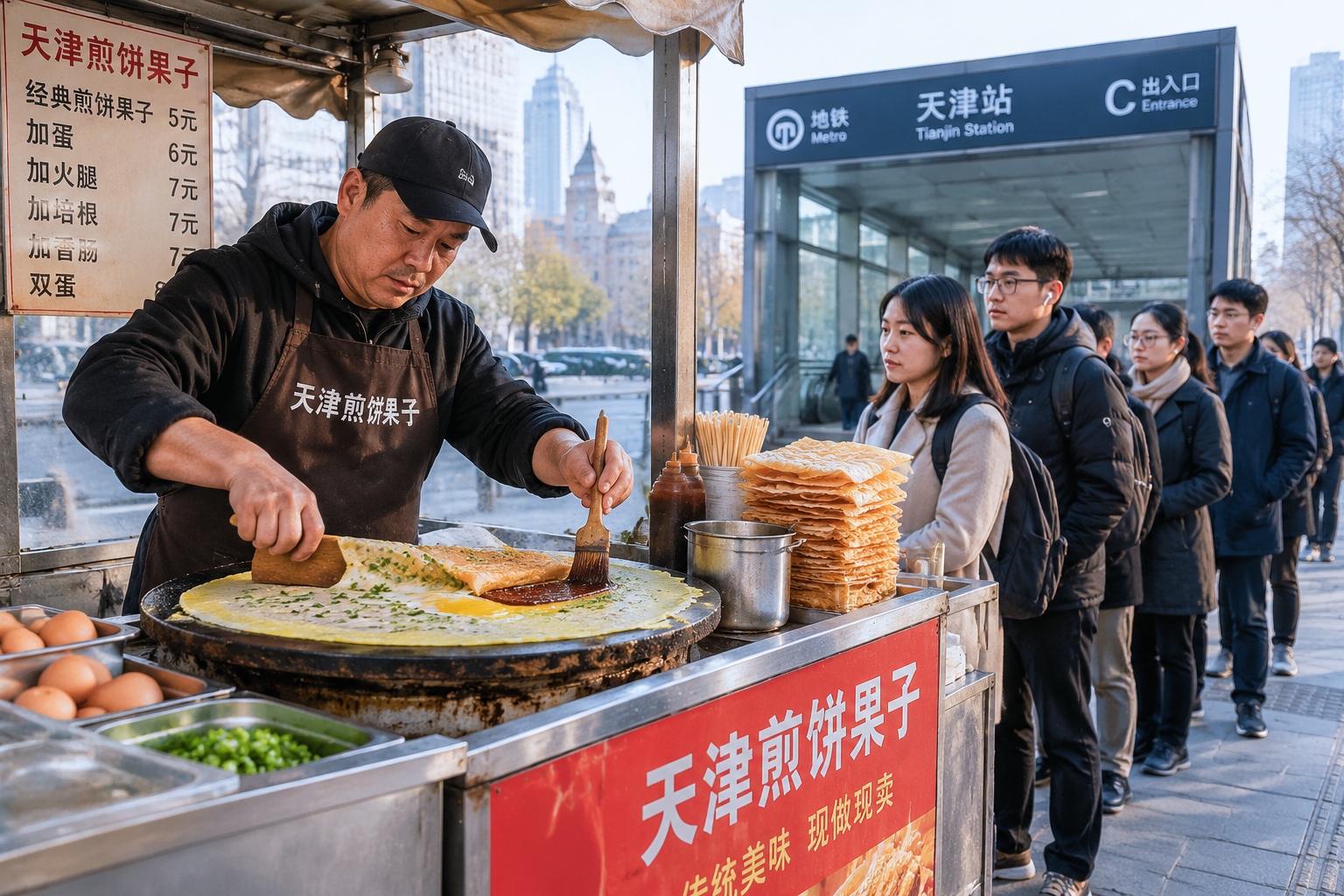
Tianjin takes its jianbing seriously, and the first rule is the batter: mung bean flour only, no wheat. A ladle goes onto a hot round griddle, a bamboo scraper spins once, twice, and spreads it into a thin even sheet. An egg is cracked on top and spread around, scallions and cilantro go on, then sweet bean sauce and fermented bean curd chili.
Finally comes the crunch: a youtiao or a thin fried cracker folded inside. The wrapper stays soft and chewy, the middle snaps. At 8:20 on a weekday, half the people leaving a Tianjin subway station are holding one in a paper sleeve, eating as they walk.
1. Soy Milk and Youtiao: The Undisputed Champion
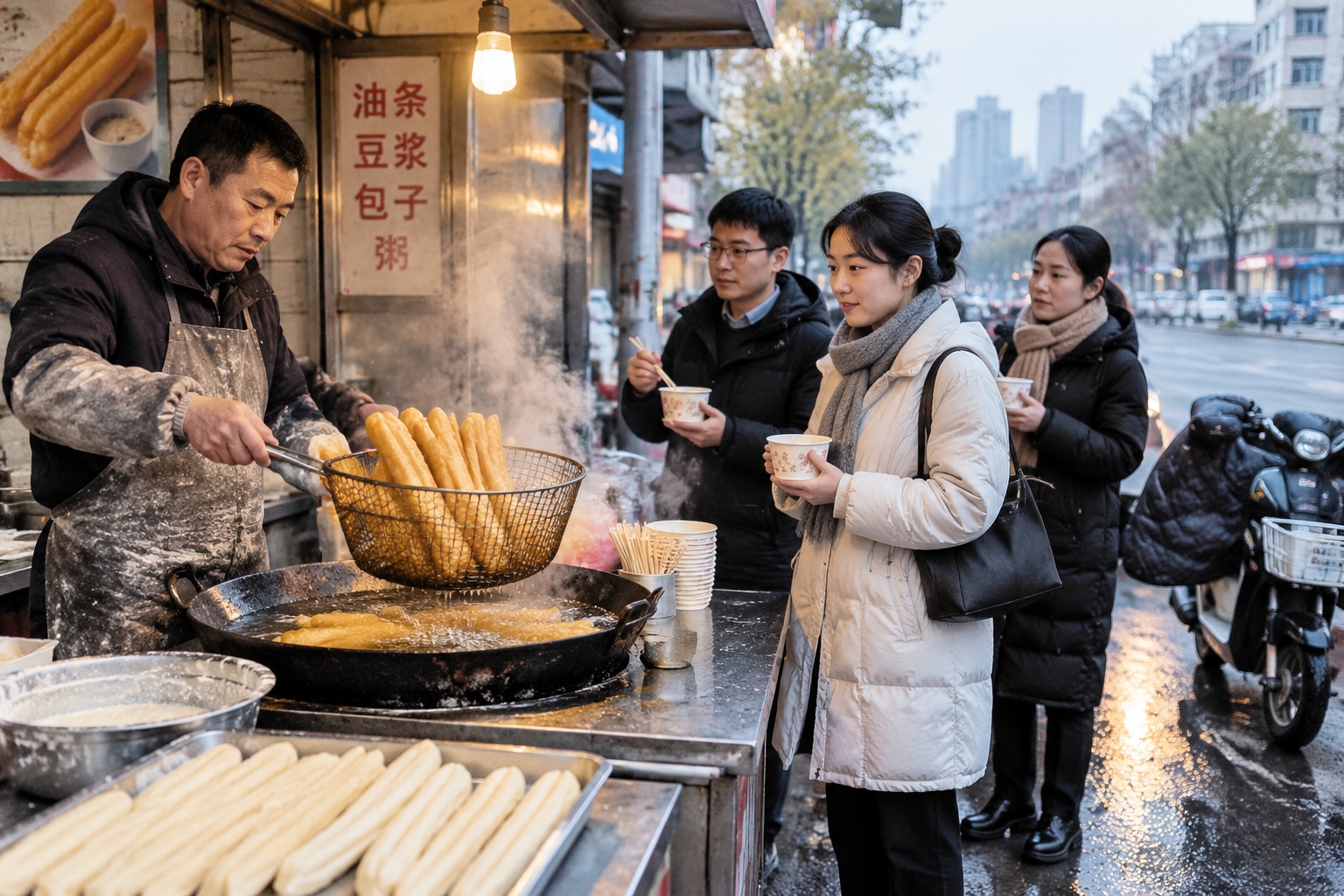
If one breakfast crosses every regional line, it is this. Youtiao are two strips of dough pressed together and fried until they puff and crackle. Dunked into a bowl of hot soy milk, the outside softens, the inside stays crisp, and the whole thing takes two minutes to eat standing up.
Soy milk comes sweet or savory depending on where you are — in parts of the south it is served with dried shrimp, pickles and a swirl of chili oil. Youtiao goes with everything: rice porridge, wonton soup, doufunao, hulatang. It costs about three yuan, it is sold on nearly every block, and for several hundred million people it is simply what breakfast means.
Why Chinese Breakfast Still Looks Like This
Two things hold the system together. The first is that almost everything is made in front of you, in small batches, on a cart or in a six-table shop — steamed, fried or boiled to order. That is why it is cheap, and also why it does not survive a long commute. The second is density. A single residential block can support five breakfast vendors within a hundred meters, so nobody has to plan ahead. You walk out of your building, decide what you want, and eat within ten minutes.
That is also why breakfast in China is not a trend. Delivery apps now bring congee and jianbing to office desks, and coffee chains have moved onto the same streets, but the carts are still there at six in the morning, and the argument about sweet versus savory is still going. Ask someone in Beijing and someone in Guangzhou what the best breakfast is, and you will get two answers, both delivered with total confidence.
Start the discussion at forum.chinacomes.com