

The Pools Are Not the Hard Part
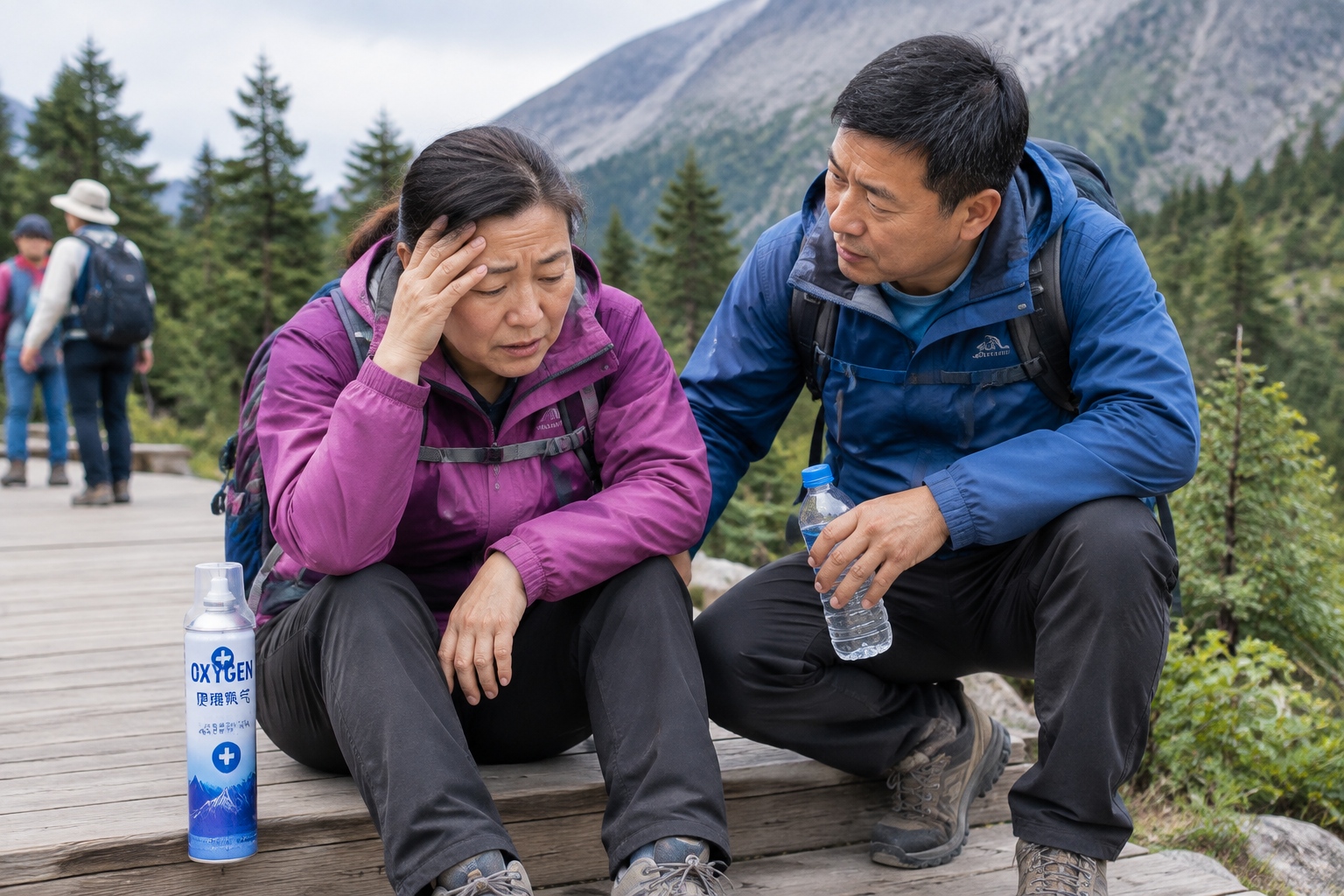
At 7:40 a.m., the boardwalk at the top of Huanglong valley in northern Sichuan is already full. Almost nobody is taking photos. A woman in her fifties from Guangzhou sits on a step with her head in her hands. Her husband fans her with a folded park map. A few metres away, a teenager is being sick into a plastic bag while his mother calls for oxygen.
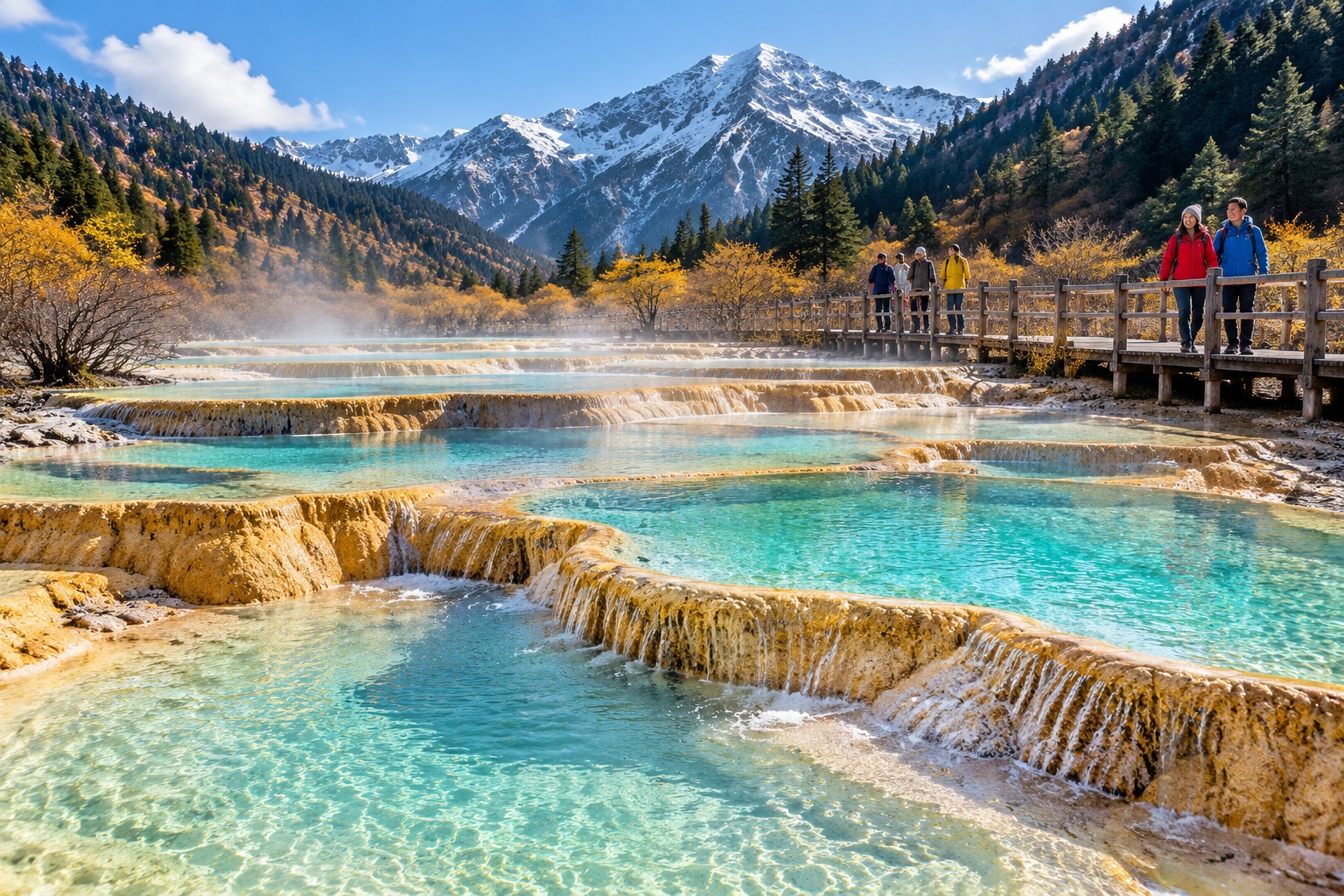
Ten steps further on is what everyone came for: terraces of turquoise, mint and rust-orange water sliding down a golden limestone slope. It is one of the strangest and most beautiful landscapes in China.
Hardly anyone is looking at it. They are busy breathing.
That is the honest version of Huanglong. The postcards don’t include the headaches.
What Huanglong Actually Is
Huanglong means Yellow Dragon. It is a valley of travertine pools in Songpan County, in the Aba Tibetan and Qiang Autonomous Prefecture of Sichuan, on the eastern edge of the Tibetan Plateau. It has been a UNESCO World Heritage site since 1992.
The valley floor starts around 3,190 metres above sea level. The highest pools, where the famous Five-Colour Pool sits, are somewhere between 3,500 and 3,600 metres, depending on which sign you read. The boardwalk from the entrance to the top runs about four kilometres, with roughly 400 metres of climbing.
The name comes from the golden travertine shoal running down the middle of the valley: 3.6 kilometres of it, the longest formation of its kind in China. Seen from above, it looks like the spine of a dragon.
Getting There Just Got Easier, and That Matters
For years the standard route was a flight into Jiuzhai Huanglong Airport, whose runway sits at 3,448 metres. You step off the plane already higher than most Alpine ski resorts, and the pools are another hour away by road.
That is a trap. Your body has had no time to adjust, and altitude sickness usually shows up six to twelve hours later, often in the middle of the night, in a hotel room.
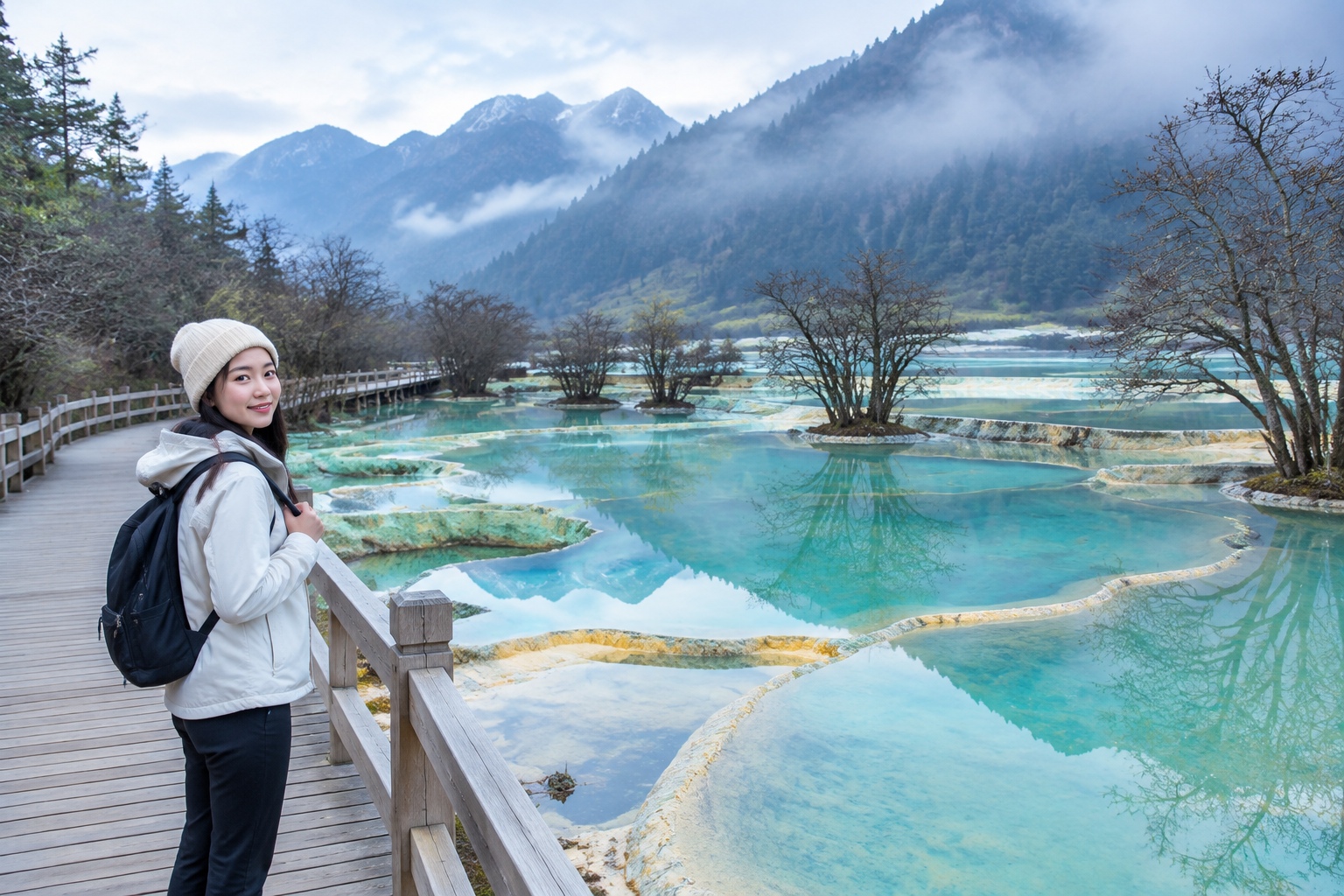
Since late 2023 there is a gentler option. The Chengdu–Xining high-speed rail line now has a stop called Huanglong Jiuzhai station. From Chengdu East it takes about one hour and forty minutes to two and a half hours, and from the station it is another 40 to 60 minutes by bus or taxi to Chuanzhusi town or the park gate. You climb slowly, on land, and you can sleep the first night at around 3,000 metres instead of 3,400.
Buses and taxis wait at the station. Tickets are sold through Chinese apps, and staff at most Chuanzhusi guesthouses will book one for you if you ask the night before.
Why the Altitude Hits Harder Than People Expect
At 3,500 metres the air pressure is roughly two-thirds of what it is at sea level. You breathe faster than you notice and take in less oxygen than you expect. Fitness barely helps. A marathon runner and a taxi driver can both get sick, and often the fittest person in the group feels it first, simply because they move faster.
Three things make Huanglong harder than its altitude suggests:
- The airport drops you at almost the same height as the destination, so there is no gradual gain.
- The cable car lifts you from about 3,200 metres to 3,500 metres in ten minutes, and then you walk two kilometres.
- Most visitors try to do the whole thing in one day, squeezed between two long drives.
A Two-Night Plan That Works
Night one: sleep around 3,000 metres
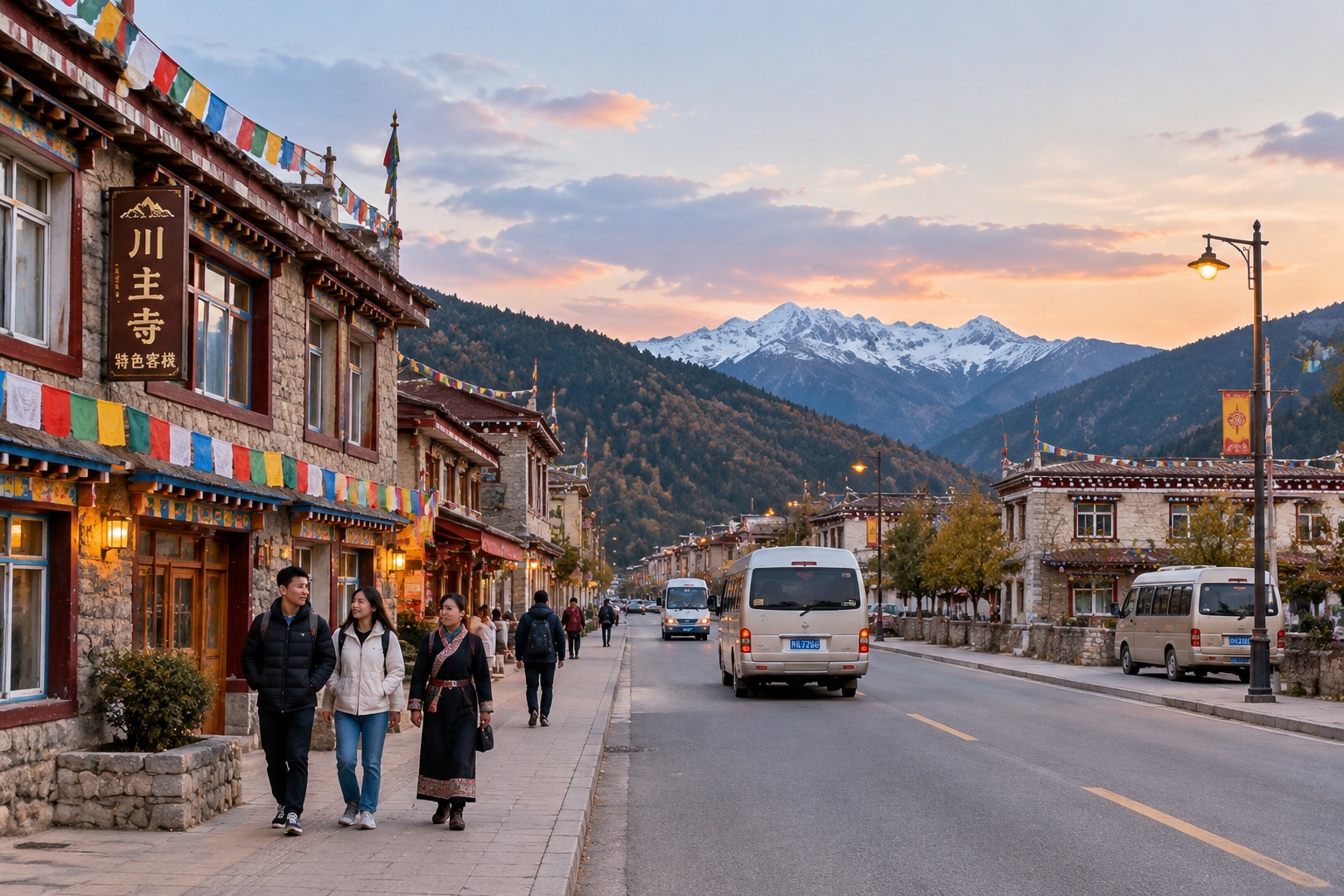
Stay in Chuanzhusi or Songpan town, both roughly 2,850 to 3,000 metres. Arrive in the afternoon, eat lightly, skip the alcohol, drink more water than feels necessary, and go to bed early. If you wake at 2 a.m. with a headache, that is common. Take ibuprofen, drink water, don’t panic.
Day two: ride up, walk down
Buy the cable car ticket up, about 80 yuan in high season. Park entry is around 170 yuan from April to mid-November and 60 yuan in winter. From the upper station it is a mostly flat two-kilometre boardwalk to Five-Colour Pool. Then walk down through the terraces: four kilometres of gentle descent, far easier on the body than climbing, and it gives you every viewpoint on the way.
Start early. Before 8 a.m. the boardwalk is nearly empty. By 10:30 it is a slow queue of tour groups taking selfies, and altitude feels much worse when you are stuck behind fifty people.
Night two: stay low again
Either go back to Chuanzhusi or drop down to Jiuzhaigou, about two hours away and roughly 1,000 metres lower. Going down is the single most effective treatment for altitude problems.
What to Bring, and What You Can Buy There
- Acetazolamide (Diamox), the standard preventive drug. It is prescription-only in most countries and needs to be started a day before you go up. Sort it out with a travel clinic before you leave home, not at the airport.
- Ibuprofen or paracetamol for the headache, which is the most common symptom by far.
- Canned oxygen, sold at the gate and in every shop for 20 to 40 yuan. Useful for a bad hour. Not a cure, and never a substitute for descending.
- Rhodiola (红景天). Chinese travellers swear by it and every pharmacy and souvenir stall sells it. The evidence is mixed. If you want to try it, start three to five days before you climb, not in the car park.
- A pulse oximeter, 50 to 100 yuan online. Knowing your own oxygen number beats guessing from how you feel.
- Sunscreen, sunglasses and lip balm. UV at 3,500 metres bites even under cloud.
When to Turn Around
A mild headache and getting winded on stairs are normal. These are not: breathlessness while sitting still, a wet cough, confusion, vomiting that will not stop, or being unable to walk in a straight line. Those can signal fluid building up in the lungs or brain, and they are emergencies.
The treatment is descent. Not oxygen, not rest, not a pill. Go down 500 to 1,000 metres and symptoms usually ease quickly. The nearest full hospital is in Songpan town, about an hour’s drive from the park, and the airport has a clinic. Travel insurance that covers high-altitude evacuation is worth paying for here.
The Quiet Side of a Famous Place
Huanglong is a World Heritage site, so calling it undiscovered would be a lie. But the crowds follow one narrow path, and it is easy to step off it.
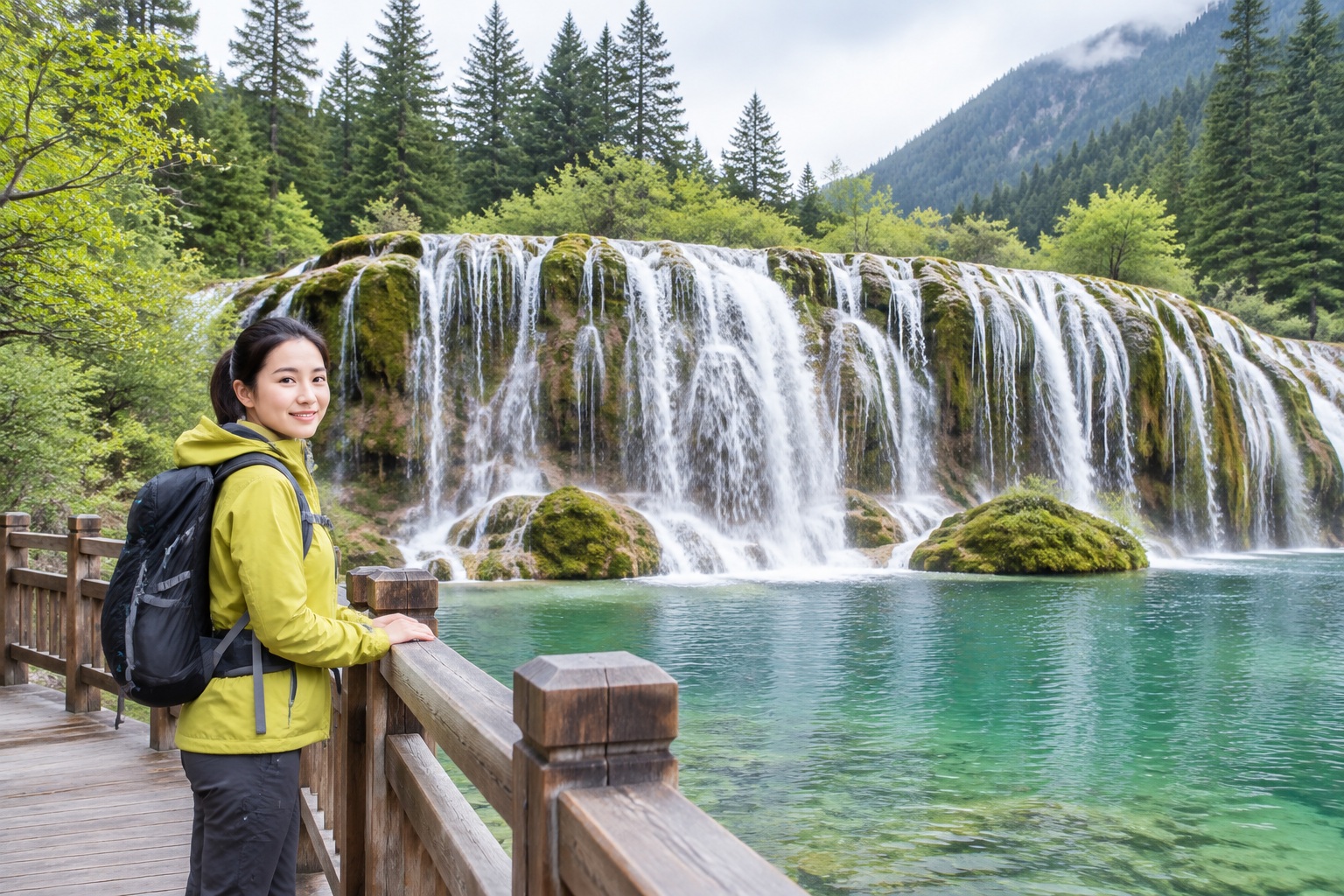
An hour and a half away, Munigou is closer to what Huanglong was like twenty years ago. It splits into two areas, Zhaga Waterfall and Erdao Hai, both lower and quieter, with room to sit by the water without a stranger’s elbow in your photo. Songpan’s old town, at around 2,850 metres, has a rebuilt Ming-era wall on its original footprint and makes a good first night if you are driving in from Chengdu.
Inside Huanglong itself, the trick is timing. Be on the first stretch of boardwalk before 8 a.m., and walk down instead of up. Tour buses come in at the bottom, ride up, and leave. People who walk the valley slowly, in the morning, see a completely different place.
So Is It Worth It?
Yes, with one adjustment in how you think about the trip. Huanglong is not really a sightseeing day. It is an altitude day with scenery attached. Plan the altitude first, sleep low, climb slowly, walk down, and know when to stop. The pools will still be there, and you will actually be able to look at them.
Start the discussion at forum.chinacomes.com