

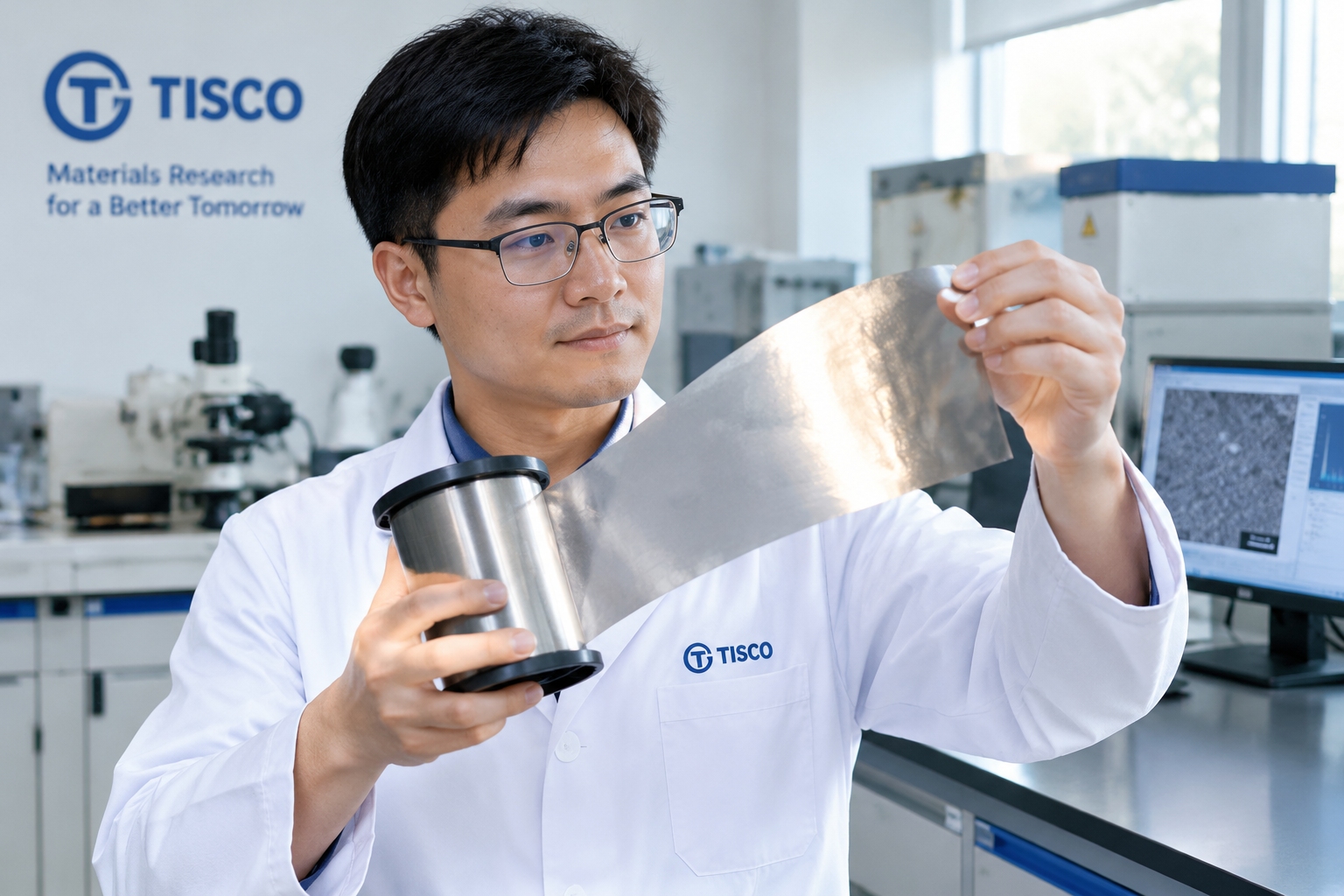
In a research lab in Taiyuan, China, an engineer unrolls a spool of steel so thin that you can see the light through it. The sheet is just 0.02 millimeters thick—about one-fifth of human hair. It’s called ‘hand-tearing steel’ because you can literally tear it with your hands. Yet this ultra-delicate-looking material has a tensile strength that makes it suitable for foldable phone screens, aerospace insulation, and precision electronics. The engineer calls it ‘the steel that looks like paper, works like armor.’
From an Ordinary Steelworks to a Global Name
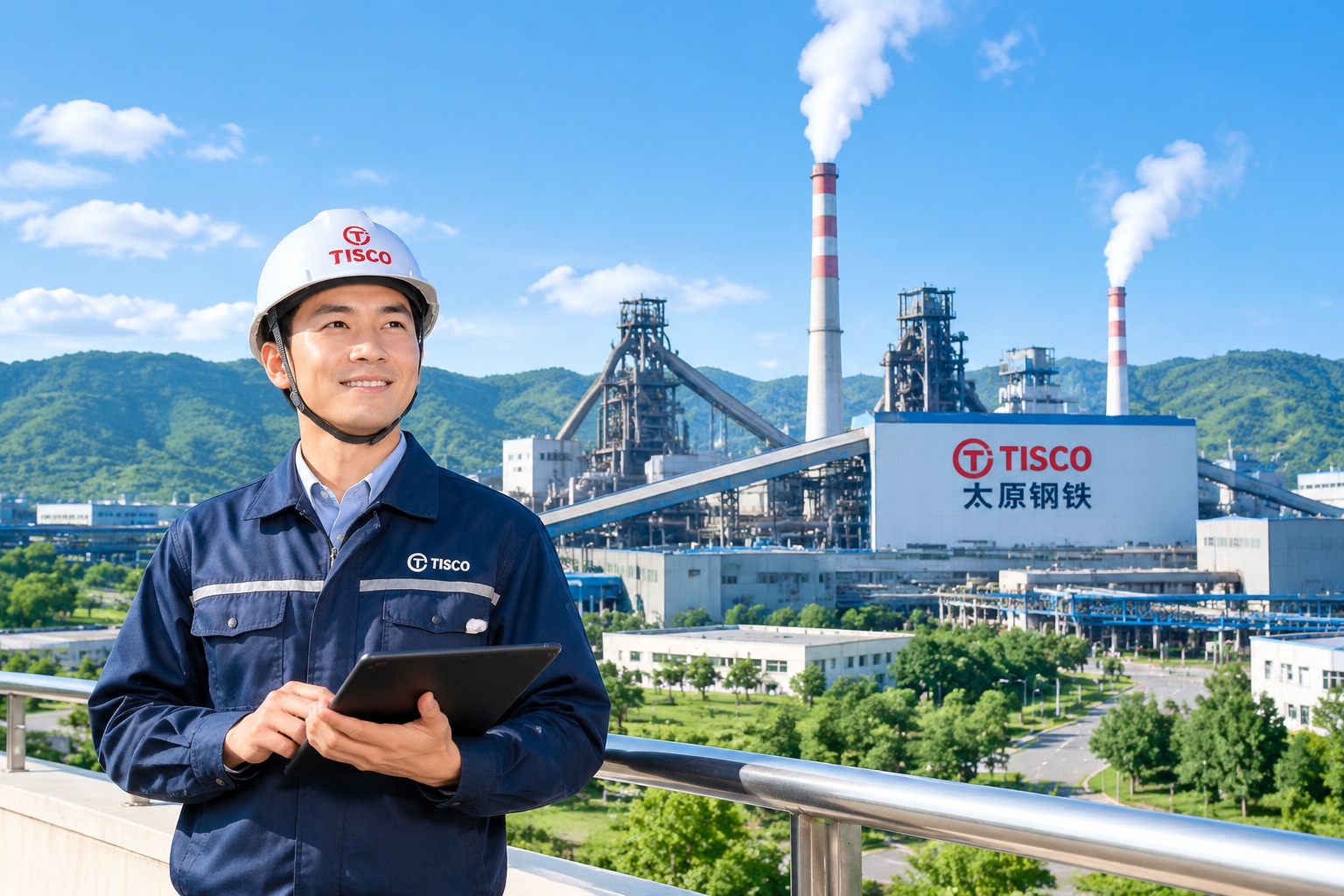
That lab belongs to TISCO, short for Taiyuan Iron and Steel Group. Founded in 1934, TISCO was for most of its life a typical Chinese state-owned steel mill, producing rebar and construction steel. Fast-forward to today, it is the world’s largest stainless steel producer by volume, with a product range covering more than 600 grades. How did a conventional factory in an inland city become a rival to industry veterans like Outokumpu, Acerinox, and Nippon Steel?
To appreciate that shift, consider what China’s steel industry looked like in the 1990s. Small mills dotted the countryside, cutting corners and polluting the sky. A government push for ‘supply-side reform’ in the last decade closed millions of tons of outdated capacity and consolidated the sector into a handful of large groups. TISCO was one of the survivors, emerging with a clear advantage: instead of chasing cheap tons, it focused on high-value products.
The answer lies in a combination of ambitious R&D, government-backed industrial policy, and a massive domestic market that gave Chinese manufacturers the confidence to experiment. TISCO started investing heavily in stainless steel technology in the early 2000s, at a time when most imported stainless grades were still two to three times more expensive than carbon steel. The company realized that the future wasn’t in making more steel—it was in making better steel.
The Breakthrough That Changed the Game
The most striking symbol of that ambition is the 0.02mm ultra-thin stainless steel, which TISCO launched in 2018 after more than 700 failed experiments. Rolling steel to such a thin gauge requires complete control over the material’s microstructure, something only a handful of companies had achieved. For years, Japan and Germany dominated this niche market, commanding prices up to several hundred dollars per kilogram. TISCO’s breakthrough not only cut the price by half but also pushed the technical frontier even further—they later developed a 0.015mm version, which remains the thinnest stainless steel in the world.
Another quiet revolution is ‘pen tip steel.’ Before 2016, China had to import virtually all of the special high-carbon stainless steel used for ballpoint pen tips, despite being the world’s largest manufacturer of pens. TISCO’s R&D team cracked the production process in just a few years, and today most of the ninety billion pens made annually in China use domestically produced steel. It’s a tiny part but a powerful symbol of import substitution.
Beyond the Lab: Steel in Everyday Life
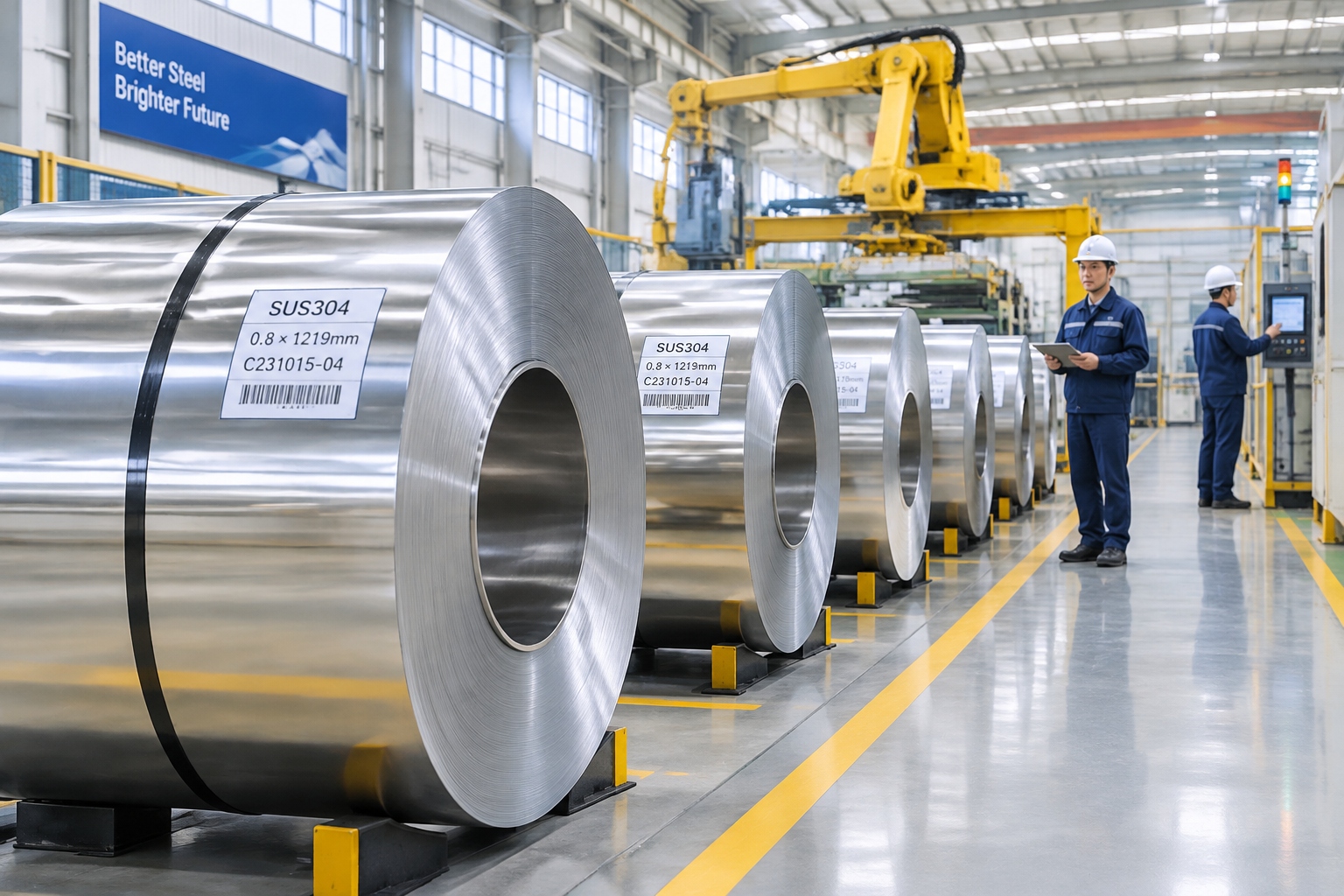
TISCO’s impact extends far beyond the factory walls. If you take a high-speed rail in China, the wheels and axles are likely made from TISCO stainless steel. The facade of the Beijing National Grand Theatre, the hulls of China’s deep-sea submersibles, and even the frames of folding bicycles all rely on TISCO materials. The company supplies nearly every major industry—from food processing to medical devices and renewable energy.
In Taiyuan, the transformation is visible at street level. The steelworks used to be a notorious source of pollution, coating the city in a layer of dust. But TISCO has spent more than RMB 10 billion on environmental upgrades over the past decade, installing electric arc furnaces, dust-removal systems, and carbon-capture pilot lines. The sky over Taiyuan is noticeably bluer now, a change that locals often mention. It’s a reminder that modern industrial development doesn’t have to come at the cost of the environment.
What Makes TISCO Different?
For an outsider, the easiest way to understand TISCO is to compare it to a company like ArcelorMittal. But there is a key difference: while ArcelorMittal is global, TISCO is deeply integrated. It owns iron-ore mines, coking plants, steelmaking furnaces, and more than a hundred specialty alloy production lines. This vertical integration gives it unmatched control over cost and quality.
If you come from Europe, you may know Outokumpu as a premium supplier of specialty stainless grades. TISCO’s strategy is different. It doesn’t just sell to the luxury market. It builds products for everyday use, from cookware to urban transit, then scales them up. That’s why it can produce more than 10 million tons a year while still pushing the limits of thinness and strength. In a way, TISCO is both a mass producer and a boutique lab inside the same company.
What’s more, TISCO treats R&D as a core muscle. Its central research institute employs over a thousand scientists and engineers, and it actively collaborates with universities and national laboratories. That might sound ordinary, but for an industry that has historically been seen as ‘low-tech,’ it signals a cultural shift. The company is also diversifying into green steel, with a new hydrogen-based direct-reduction plant that aims to cut carbon emissions by 30% by 2030.
However, not everything is smooth. TISCO’s global competitors still hold leadership in some premium segments, and anti-dumping tariffs on Chinese steel in the US and Europe limit its overseas expansion. High energy costs and stricter environmental regulations also pressure its margins. The company is well aware that being the biggest isn’t the same as being the most profitable.
The Road Ahead
By 2029, TISCO plans to have a zero-carbon production line fully operational. It is exploring the use of solar power and recycled scrap to produce steel, a move that could redefine the industry’s environmental image. For a century-old steelmaker in Taiyuan, that’s a remarkable evolution—from a factory that once made simple bars to a global giant that bends the limits of materials science.
Next time you unbox a new smartphone or admire the smooth surface of a high-speed train, think about where that steel came from. It might well have started as a coil in a factory at the foot of the Taihang Mountains, where engineers still believe that if you look closely enough, steel can be as thin as paper, as strong as armor, and as smart as any idea that makes it into the real world.
Start the discussion at forum.chinacomes.com