

Introduction: A Desert Energy Revolution
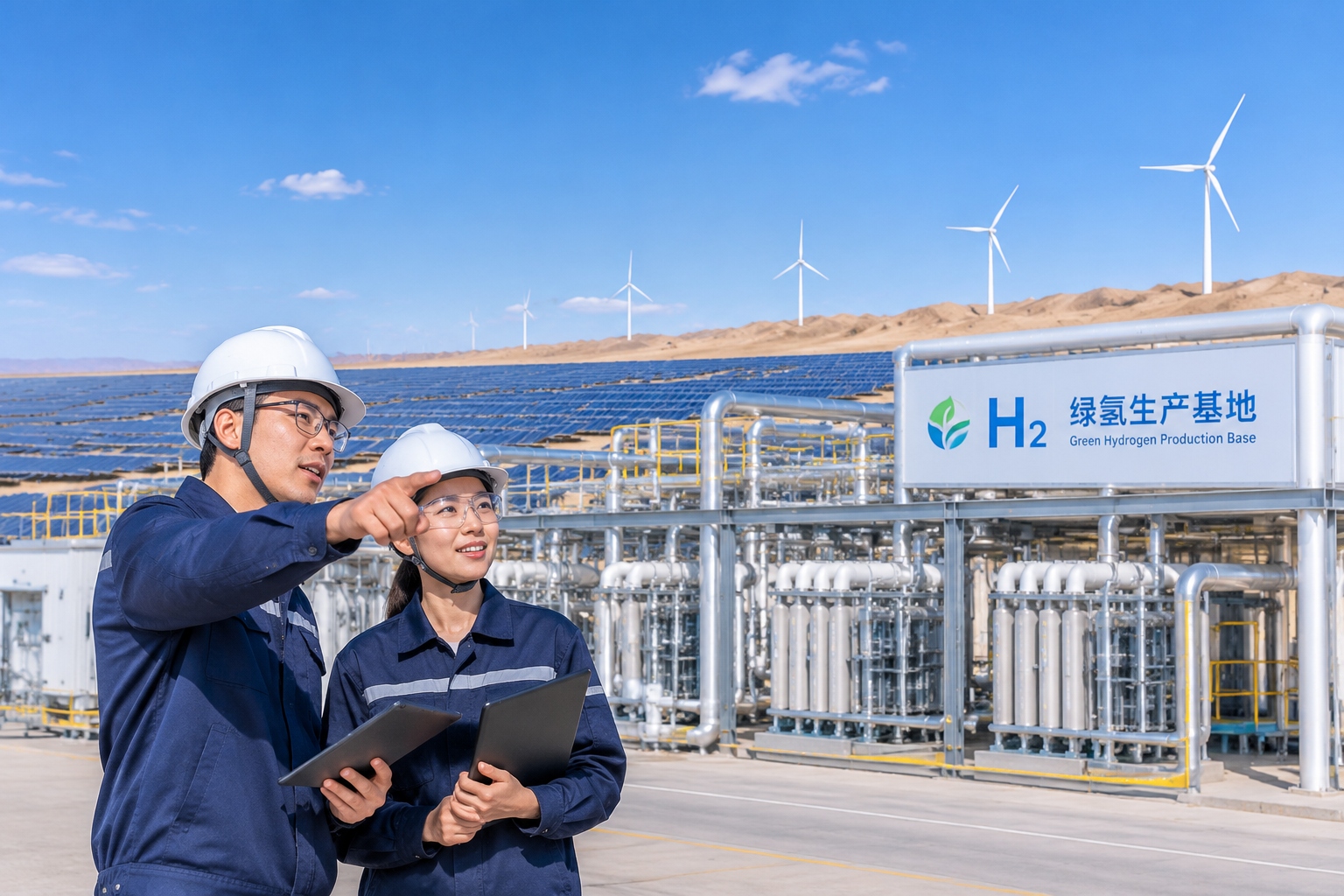
Near the edge of the Tengger Desert, rows of solar panels stretch for miles, their blue glass shimmering under a relentless sun. Less than a decade ago, this land in northwest China’s Ningxia Hui Autonomous Region was mostly parched, sparsely populated, and known for little more than its arid climate. Today, it is the setting for one of China’s most ambitious experiments in clean energy: turning sunlight and wind into hydrogen, the fuel many experts see as essential to a carbon-neutral future.
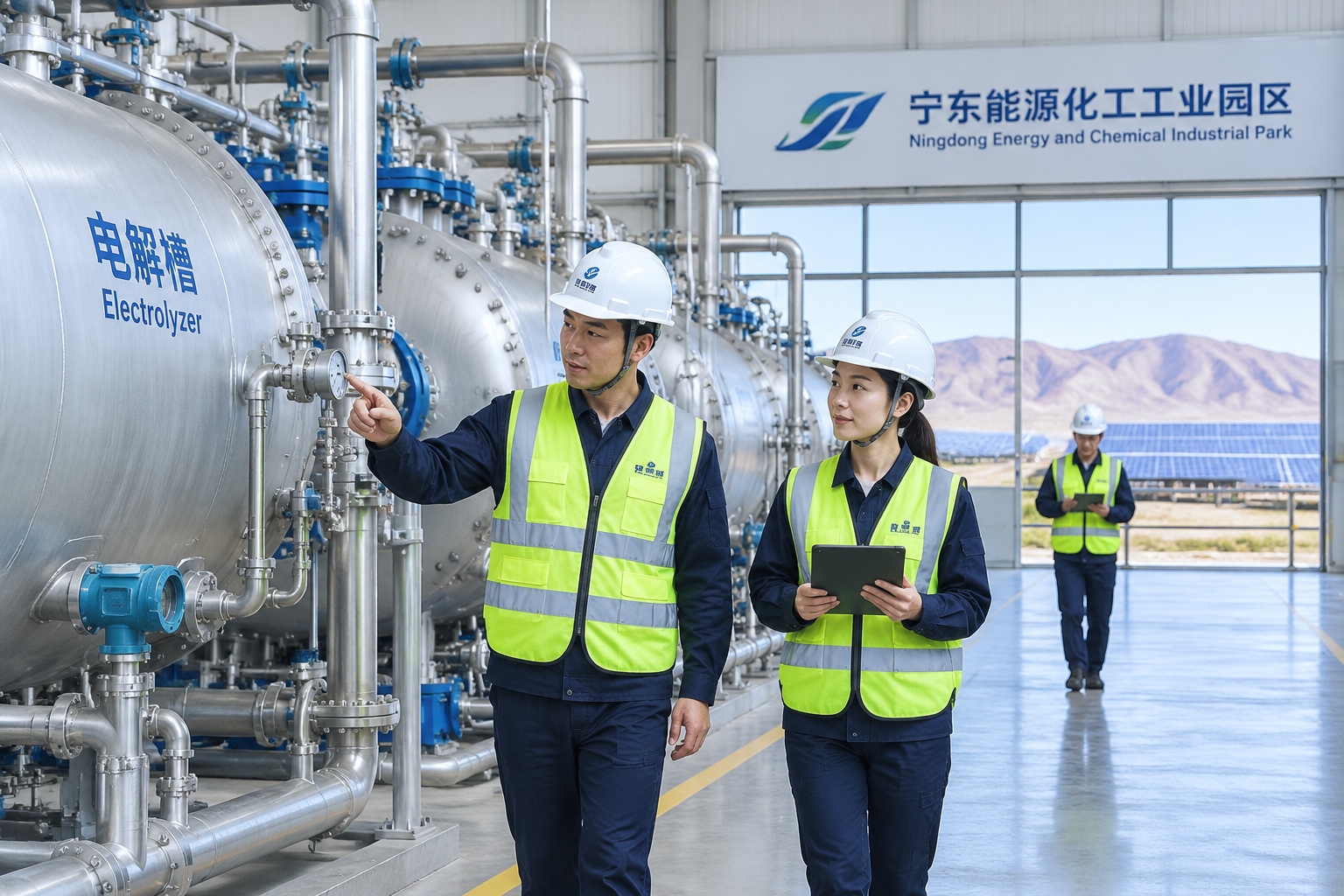
The project that caught my attention is a green hydrogen plant in the Ningdong Energy and Chemical Industrial Park, a sprawling complex of pipelines, storage tanks, and electrolyzers. Here, water is split into oxygen and hydrogen using electricity from nearby solar and wind farms. In the past, almost all hydrogen in China was made from coal or natural gas—a process known as “gray hydrogen,” which emits carbon dioxide. This new plant produces “green hydrogen,” with zero carbon emissions from production. It is a small but significant shift in how China powers its heavy industry.
Why Ningxia? Sun, Wind, and Empty Land
Ningxia may seem an unlikely site for a green energy hub. It is one of China’s smallest provincial-level regions, with a population of about 7 million. But it has three advantages: abundant sunshine, strong and consistent winds, and vast swaths of undeveloped desert land. The region receives over 2,800 hours of sunlight annually, far above the national average. Its position in the northwest corridor of China makes it a natural corridor for wind energy as well.
The Chinese government has designated Ningxia as one of the key zones for renewable energy development under its “14th Five-Year Plan” (2021–2025). The region plans to expand its wind and solar capacity to over 50 gigawatts by 2025, with a large share dedicated to producing hydrogen. This is not just an environmental gesture; it is an economic strategy. Ningxia is rich in coal, and for years its economy depended on mining and chemical plants that produced heavy emissions. Green hydrogen offers a way to decarbonize those industries while keeping local jobs.
How Green Hydrogen Is Made in the Desert
The process starts with solar and wind power. On a typical day, a 200-megawatt photovoltaic array east of the Yellow River feeds electricity into a substation. Some of that power goes directly to the grid, but a growing share is routed to a hydrogen production facility. There, industrial-scale electrolyzers—each the size of a shipping container—split purified water into hydrogen and oxygen. The hydrogen is then compressed, stored, and transported via pipelines or trucks to nearby factories and fueling stations.
One of the largest projects is operated by Baofeng Energy, a major chemical company that has invested heavily in green hydrogen. At its Ningdong site, Baofeng has installed electrolyzers with a combined capacity of over 150 megawatts, capable of producing more than 30,000 tons of green hydrogen per year. That hydrogen is used as a feedstock for making methanol, a chemical and fuel, replacing some of the natural gas or coal the company would otherwise use. Baofeng says its green hydrogen can cut carbon dioxide emissions by more than 400,000 tons annually.
Beyond Chemicals: Fueling Vehicles and Steel
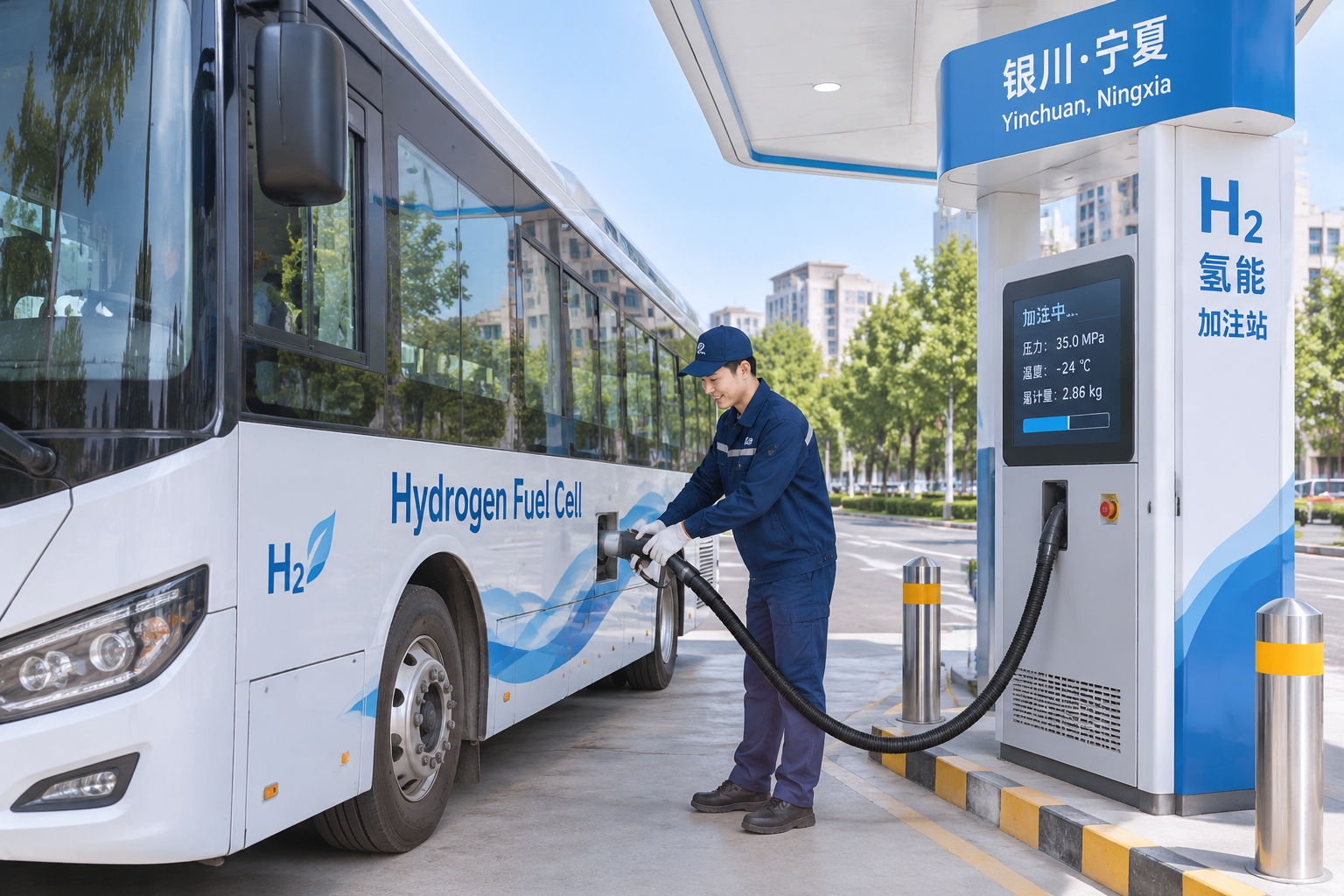
Hydrogen is not just for factories. In Yinchuan, the capital of Ningxia, city buses have been running on hydrogen fuel cells since 2021. The buses emit only water vapor, and they can be refueled in under ten minutes, offering a range of over 400 kilometers. A small network of hydrogen refueling stations now supports these buses, and the city is testing hydrogen-powered heavy trucks for use in mining and logistics.
Another promising application is in metallurgy. The steel industry accounts for about 15% of China’s carbon emissions, and conventional ironmaking uses coke (coal-based) to remove oxygen from iron ore. A new process called hydrogen-based direct reduction uses hydrogen as the reducing agent, emitting water instead of carbon dioxide. Ningxia’s large reserves of coal and iron ore—and its growing hydrogen supply—make it a natural place to pilot this technology. Several pilot plants are now under construction, backed by national research funds.
What It Means for Local People
The hydrogen boom is bringing visible changes. In the Ningdong park, new roads, worker housing, and training centers have appeared. Thousands of technicians and engineers have moved in, many of them graduates from nearby universities. For local farmers, some of whom were struggling with drought and low crop yields, construction jobs and service businesses offer an alternative livelihood.
But not everything is glamorous. The projects require enormous upfront investment, and green hydrogen still costs more to produce than gray hydrogen. Without government subsidies and carbon pricing, many plants would not be economically viable. Water is also a scarce resource in this desert region. Producers must use recycled water from industrial processes or alternatives like municipal sewage treatment, adding to costs. Still, the momentum is undeniable. In 2023, Ningxia’s hydrogen production exceeded 200,000 tons, and the provincial government announced plans to build one million kilowatts of green hydrogen capacity by 2025.
Challenges and the Road Ahead
Experts point to several barriers that remain. Storing and transporting hydrogen is difficult because it is highly flammable and has low density. Pipelines, trucks, and filling stations all need specific safety standards. Long-distance transport is especially costly, so Ningxia’s hydrogen development is tied to local demand. To grow further, the region will need to build a reliable network of industrial consumers, fuel stations, and export channels.
Another challenge is the intermittency of renewable energy. Solar panels produce less power at night and in winter, which means electrolyzers sit idle unless there is battery storage or backup power. Several pilot projects are now testing wind-solar-storage-hybrid systems that smooth out fluctuations and keep the hydrogen production running more consistently.
Despite these hurdles, the optimism is real. In many ways, this desert project embodies a broader trend in China: moving from “safer” fossil fuels to risky but necessary clean technologies. It is not just about lithium batteries or solar panels—it is about creating the entire infrastructure for a low-carbon economy.
Conclusion: Dust, Wind, and a New Future
Standing in the desert, watching a line of silent electrolyzers hum as they process water into fuel, you get a sense of how far this place has come. The same winds that once whipped sand into the faces of herders now turn massive turbine blades. The sunlight that evaporated the land now powers a chemical reaction that could one day power a truck, a factory, or a city. Ningxia’s hydrogen story is still being written, but it offers a glimpse of what a post-carbon energy system might look like—built not in a laboratory, but in a desert, by workers who trade the certainty of coal for the promise of chemistry.
Start the discussion at forum.chinacomes.com