

It Started with a Curious Cap
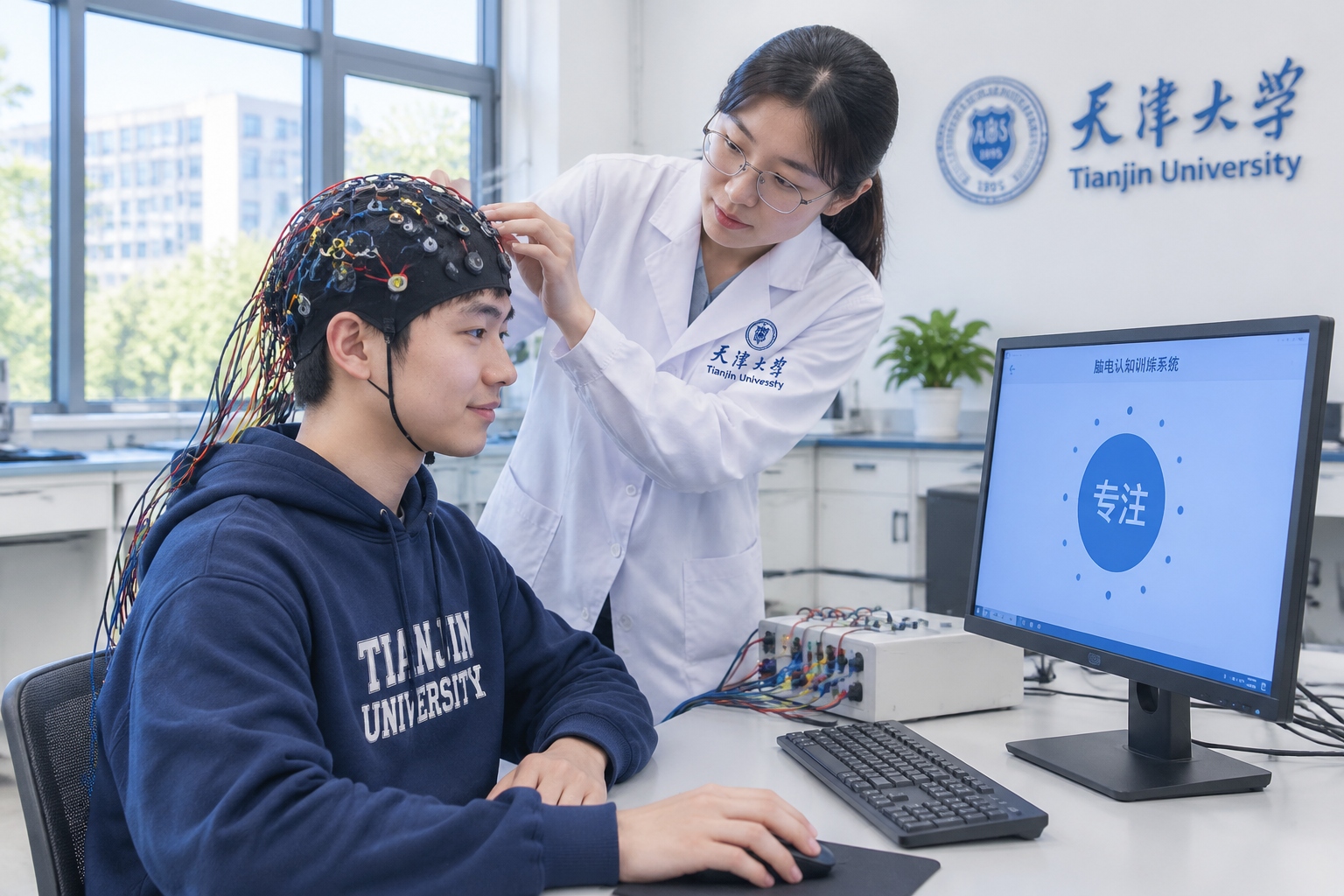
On a drizzly Tuesday morning in Tianjin, a city about 100 kilometers southeast of Beijing, I found myself in a small, bright room. A student volunteer named Zhang Wei, 22, sat in front of a computer wearing what looked like a dark gray swim cap. Wires ran from the cap to a small amplifier beside his elbow. No keyboard, no mouse. The screen in front of him showed a circle of characters. Zhang stared at the letter “H” for a few seconds, and the cursor jumped to it. Then “E,” then “L,” then “L,” then “O.” Without moving a single finger, he spelled out HELLO.
What I witnessed that morning was a brain-computer interface, or BCI, in action. For decades, this kind of mind-reading tech belonged to science fiction. But here, in a modest lab on the campus of Tianjin University, it is an ordinary part of graduate student life.
What Is a Brain-Computer Interface, Exactly?
Let’s start basic. A brain-computer interface is a system that reads brain signals and translates them into commands for a computer or machine. It’s not about clairvoyance. It’s about picking up the electrical signals our brains generate when we think, then using algorithms to decode those patterns.
There are two main kinds. Invasive BCIs involve implanting electrodes directly into the brain tissue, offering high signal quality but requiring surgery. Non-invasive BCIs, like the one Zhang used, rely on electrodes placed on the scalp. They pick up weaker signals, but they are safer and more practical for everyday use. Most of the work at Tianjin University is non-invasive, although the team also performs animal studies with implanted arrays to better map neural patterns.
Inside the Tianjin Lab: Monitors, Electrodes, and Patience
Tianjin University’s BCI lab is run by a team led by professor Ming Dong, a man known in China’s academic circle as one of the early pushers in this area. The lab itself feels less like a scene from a dystopian film and more like a psychology testing room. There are gray cubicles, a few rows of EEG devices, a cluster of desktop computers with colorful programming windows, and a stack of 3D-printed prosthetics on the shelf.
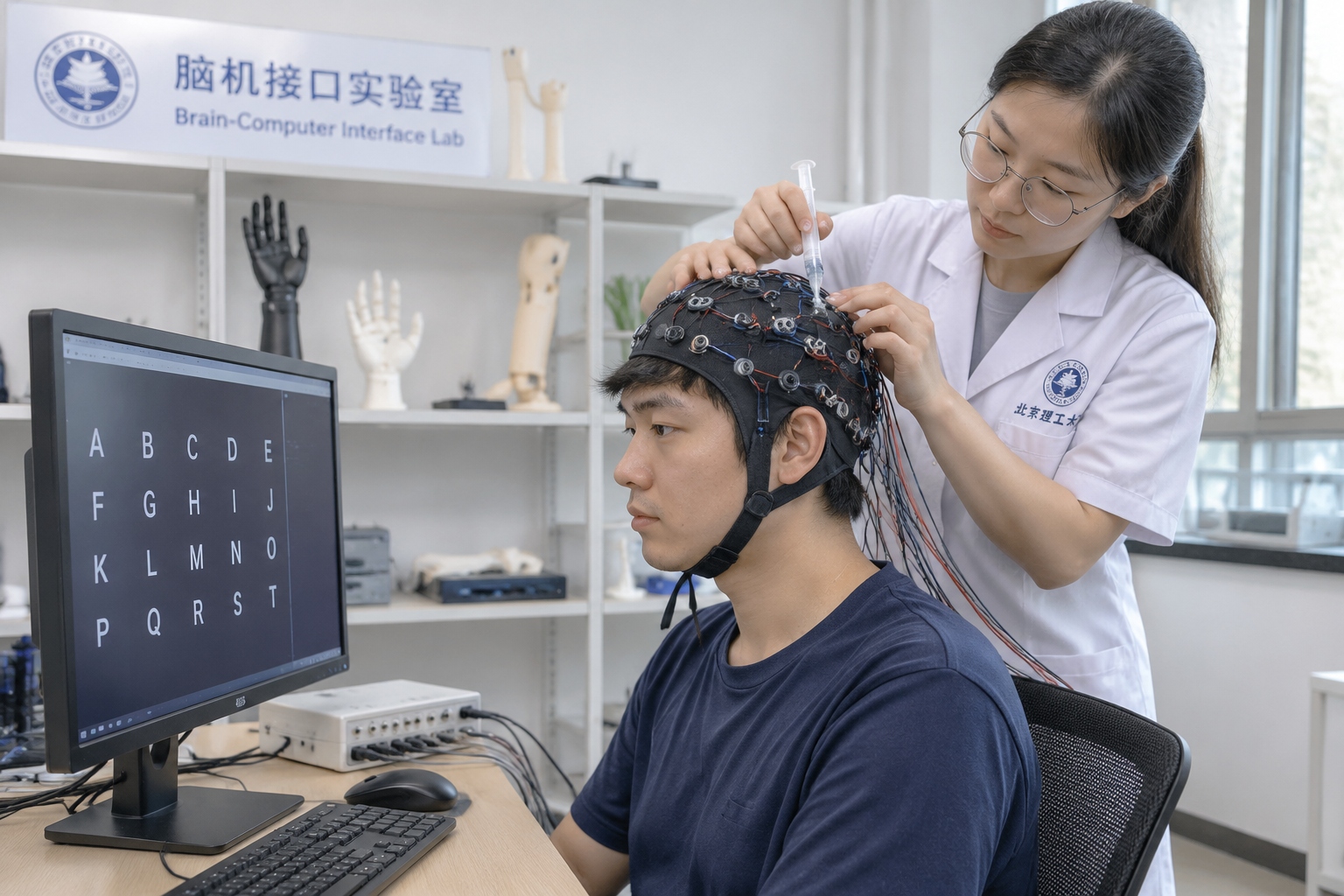
People expect lasers and hovering robots, said Wang Yan, a postdoc who has spent six years here. In reality, it’s mostly about patience and signal processing. He pointed at a large box of saline-soaked electrode caps. Every experiment starts with someone soaking the cap to make sure the electrodes pick up signals clearly.
The process is meticulous. A researcher helps the volunteer put on the cap, then injects conductive gel into each electrode site with a syringe. It looks uncomfortable, but Zhang insisted it’s just a 30-second squeeze. Then comes the calibration phase, where the system learns to recognize the volunteer’s unique brain patterns. This part can take up to 20 minutes, and the failure rate is not zero. Once calibrated, the actual task – such as spelling or moving a cursor – becomes surprisingly effortless.
From Theory to Therapy: Who Actually Benefits?
The core mission here is not entertainment. It’s rehabilitation.
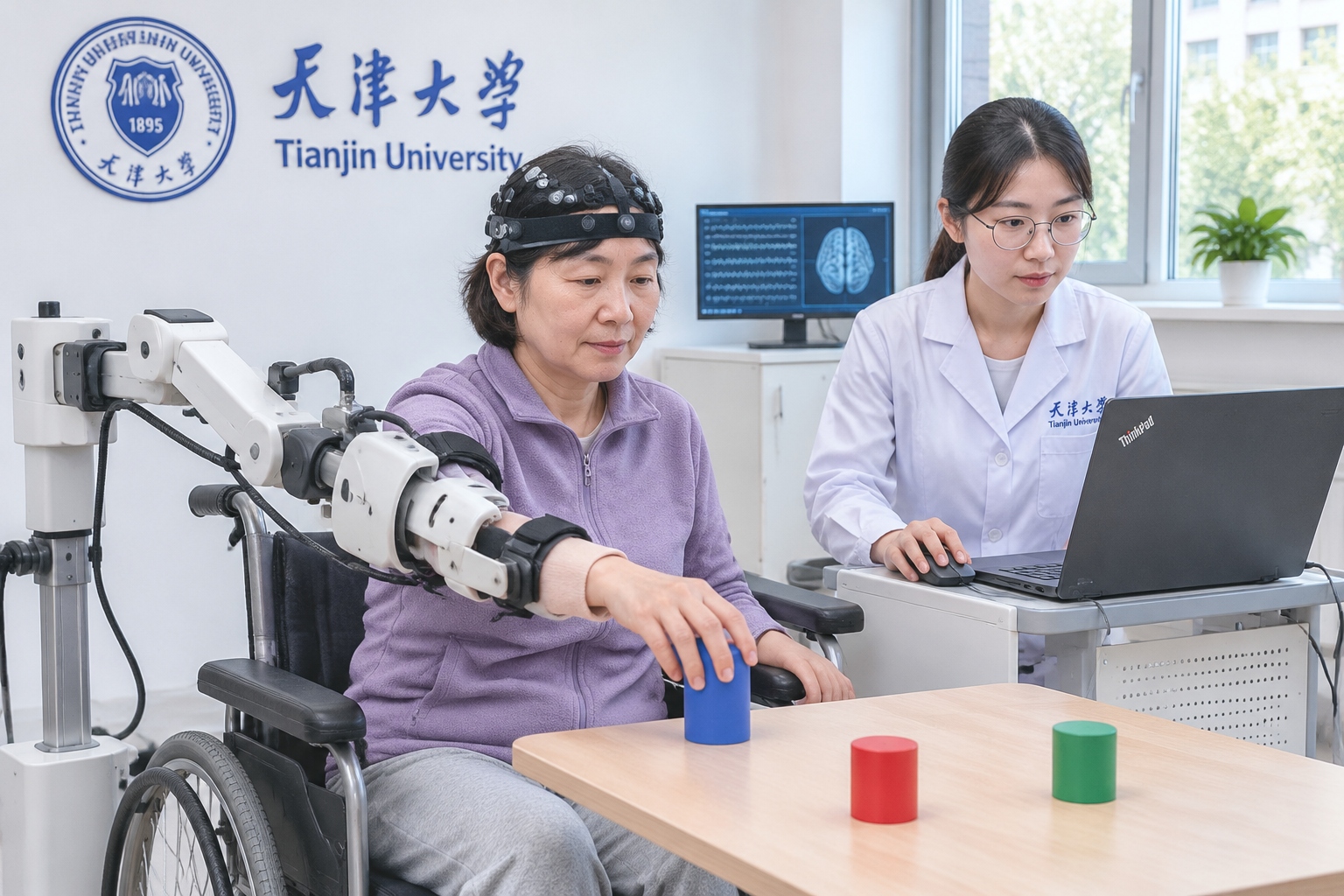
One ongoing project involves a stroke survivor who lost the ability to move his left arm. By wearing an EEG cap, the patient can imagine moving his own arm, and a robotic exoskeleton supports the actual muscle movement. The goal is to rewire neural pathways through repeated imagined practice. Another project focuses on patients with amyotrophic lateral sclerosis, or ALS, who can hardly move or speak. BCI gives them a way to spell out words to their family and doctors.
In a separate room, I watched a test run of a wheelchair controlled by thoughts. A participant with a headband was instructed to imagine moving their right hand to turn right, and imagine moving their left hand to turn left. It took a few tries, but the chair eventually rolled forward and made a smooth right turn. The nurse present told me the team reports about 300 milliseconds of signal delay, which is roughly the blink of an eye.
For many healthy people, this sounds like a fun gadget. But for the families of paralyzed patients, it is a lifeline. Zhao Lin, whose mother used a BCI-assisted communication system in a pilot program in Beijing, told me her mother typed thank you to a nurse for the first time in three years. It was just two characters, but we all cried, she said.
How China’s Policy Muscle Is Pushing the Field
Brain science has been on China’s policy radar for a while. In 2016, the 13th Five-Year Plan singled out brain science and brain-inspired intelligence as one of the country’s major research directions. More concrete money followed. In 2018, China’s National Natural Science Foundation announced a major project for brain-computer interface research, and universities in Beijing, Shanghai, Xi’an, and Hangzhou all joined the race. Tianjin University, along with Tsinghua and Zhejiang University, is often cited in international journals for engineering-oriented BCI research.
China has a practical advantage: a massive and aging population. The country’s National Health Commission reported in 2020 that about 2.5 million stroke patients are left with moderate-to-severe disability every year. For a government looking to reduce healthcare burden and improve quality of life, BCI-assisted rehabilitation is not a luxury. It’s a potential tool.
But we should be careful not to overstate the speed. Some foreign media like to say China is years ahead, said Wang Yan. Honestly, in BCI, no one is ‘years behind.’ The basic algorithms are shared in open papers. The challenge is clinical validation, not secret magic.
The Hard Questions: Privacy, Ethics, and Reality
Privacy is the biggest issue. Brain data is the most personal data there is. If a device can detect your level of attention or even your emotional state, who owns that information? Chinese scholars are actively debating it. Some propose a neurorights framework, similar to what Chile has adopted. Others think the conversation is premature. Talking to Wang Yan, he was cautious: We have to build ethics into the design, not as an afterthought.
For now, the lab follows its own rule: never store raw brain data beyond the study period. Data is anonymised, processed, and deleted. That level of discipline is not yet legally required, but it’s a sensible best practice. China’s National Medical Products Administration has started drafting technical guidance for brain-computer interface medical devices, which could eventually create a regulatory pathway.
Ethical questions also touch on autonomy. If a machine can sense fatigue or distraction, could an employer use it to monitor workers? That’s not strictly a BCI problem, but it becomes one when wearable EEG headsets enter the market. The lab researchers I spoke to were aware of these risks, but they also pointed out that every transformative technology carries a double edge.
A Visitor’s Takeaway: The Future Has a Damp Electrode Cap
As I walked out of the building, the drizzle had stopped. Students crossed the campus with umbrellas, some buried in phones. I kept thinking that a technology that feels so futuristic looks so ordinary in practice. The cap is not sleek. The screens are not holographic. But the hope, the effort, and the everyday courage of people testing it are very real.
If you ever get a chance to visit a BCI lab, don’t expect a movie set. Expect a slightly damp electrode cap, a patient volunteer, and a researcher who spends hours debugging code. Expect to see tomorrow being built, one small trial at a time.
Start the discussion at forum.chinacomes.com