

The Morning Ritual at Line 10
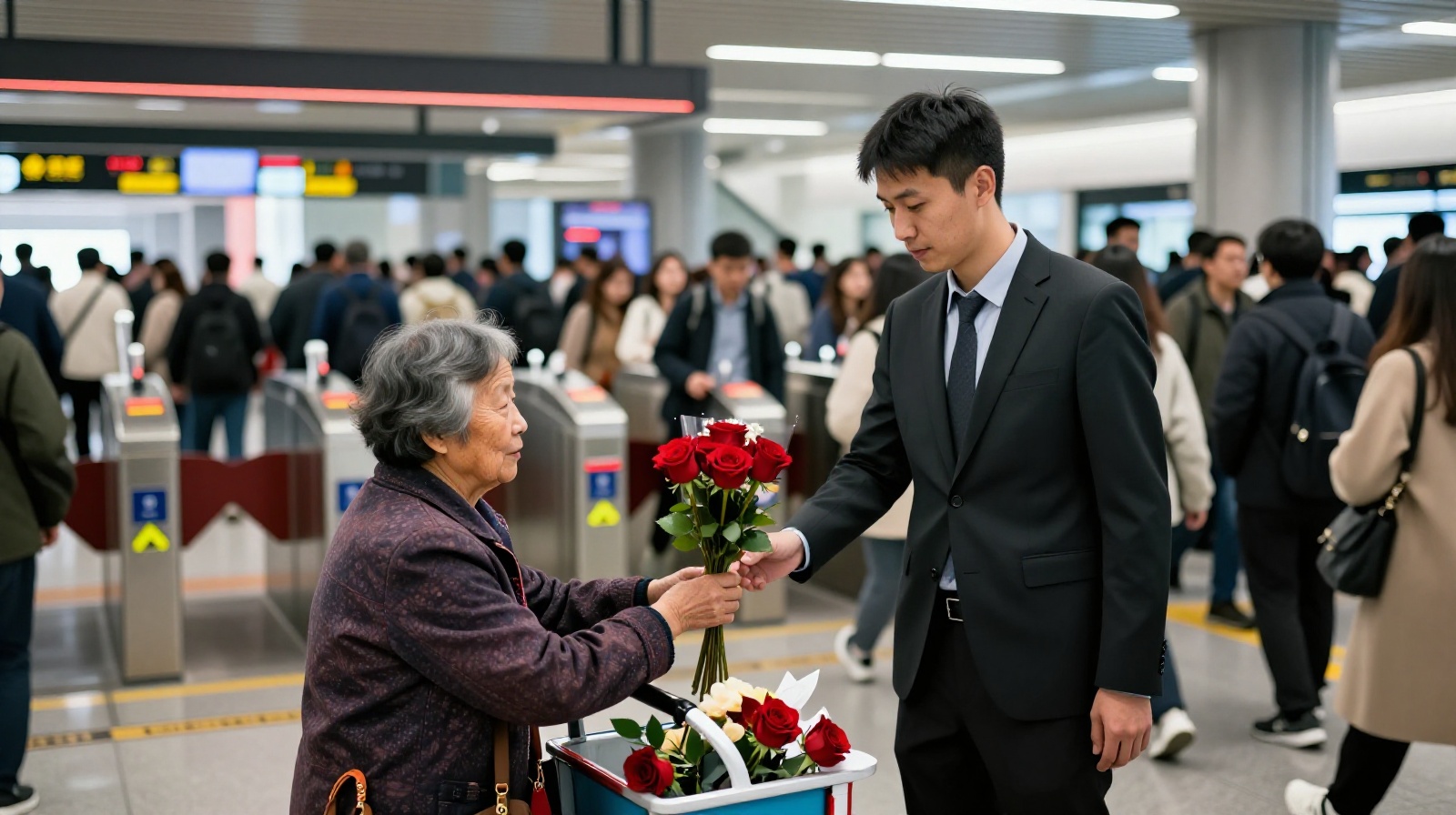
It is 8:15 AM on a Tuesday. The air in Beijing is crisp, carrying the faint scent of exhaust and roasted sweet potatoes. At the exit of Line 10, a metro hub serving thousands of tech workers and office clerks, a quiet commerce is taking place before the main rush hits.
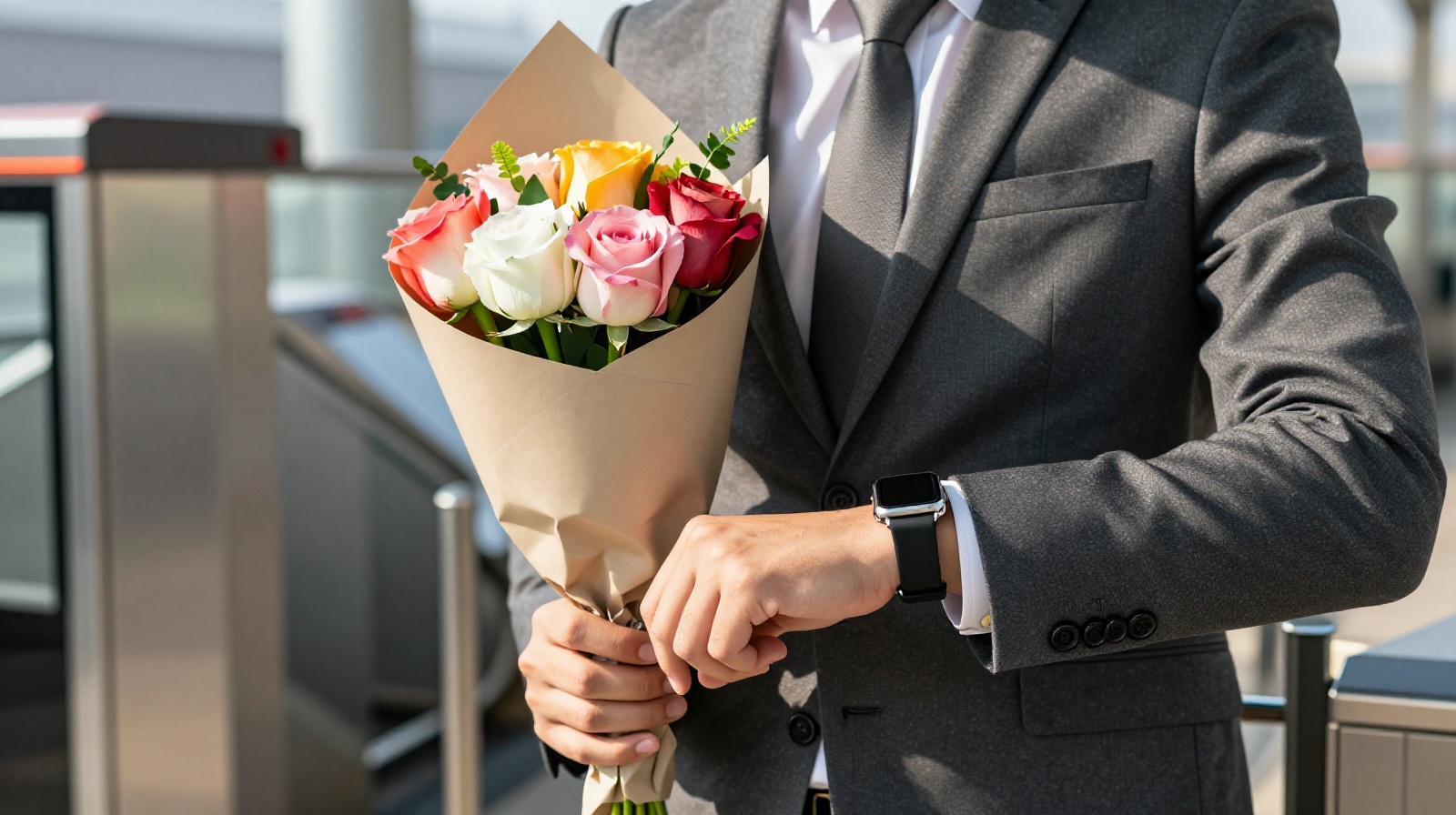
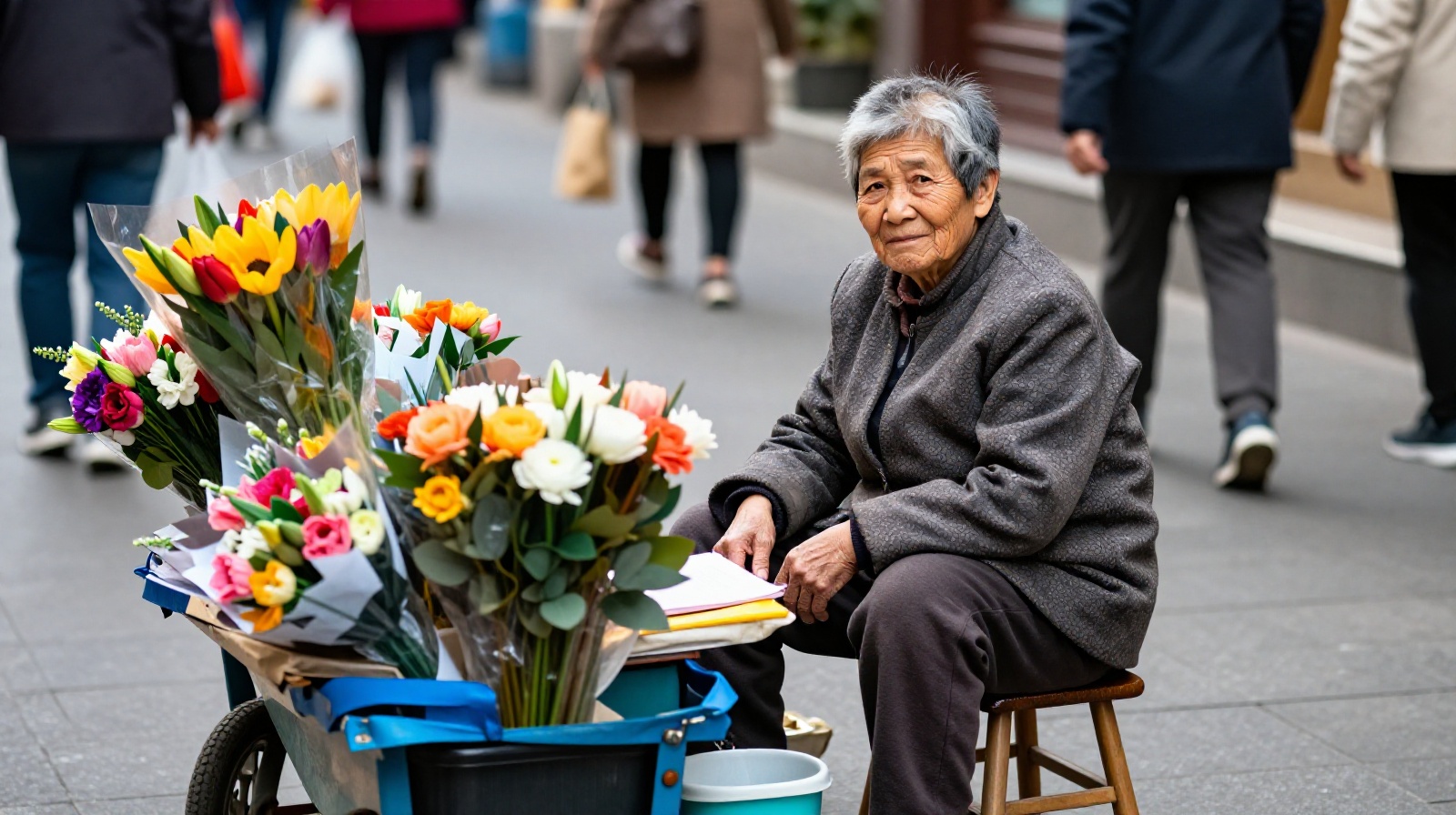
Wang Lihua, 62, adjusts her plastic-wrapped bouquet of red roses and white carnations. She isn’t selling luxury arrangements. These are simple, hand-tied stems, wrapped in brown paper, priced at 10 yuan (approx. $1.40) or sometimes just 5 yuan for a single rose. Her customer is not a romantic suitor with a diamond ring, but a young man in a wrinkled suit, checking his watch, who hands her a 10-yuan note without a word. He takes the flowers and merges into the crowd heading toward the tech parks of Zhongguancun.
This transaction is routine. For many Chinese urbanites, buying flowers is no longer reserved for Valentine’s Day or anniversaries. It has become a daily accessory to modern life—a small, affordable gesture of self-care or casual affection in an otherwise high-pressure environment.
The Anatomy of a Commuter’s Romance
Who buys these flowers? Observing Wang’s stall reveals a diverse mix. There are husbands buying forgiveness for a forgotten chore. There are young women treating themselves to a splash of color in their grey cubicles. There are colleagues gifting each other on birthdays that no one really remembers but all celebrate.
In China’s fast-paced urban centers, where work-life balance is often a theoretical concept, these small flowers serve as emotional anchors. They are low-stakes gestures. You don’t need a grand dinner reservation or an expensive gift card. You just need 10 yuan and the willingness to pause for ten seconds.
“It’s not about romance in the Hollywood sense,” says Li, a 28-year-old software engineer who buys flowers every Friday. “It’s about reminding myself that I am living, not just working. The color makes the subway ride home feel less like a shift change and more like a return to life.”\p>
This shift reflects a broader cultural change. As disposable income rises among China’s middle class, consumption is moving from “having” to “feeling.” The demand for emotional value—what sociologists call “emotional labor” in consumption—is driving new micro-markets. The flower auntie is the frontline operator of this economy.
From Greenhouse to Hand: The Logistics of Freshness
How do these flowers stay fresh at 8 AM? The answer lies in China’s incredibly efficient agricultural and cold-chain logistics network, often invisible to the end consumer.
Most of the roses Wang sells don’t come from local farms. They arrive from Yunnan Province, specifically the Kunming flower market, which is the largest flower trading hub in Asia. The journey takes less than 48 hours.
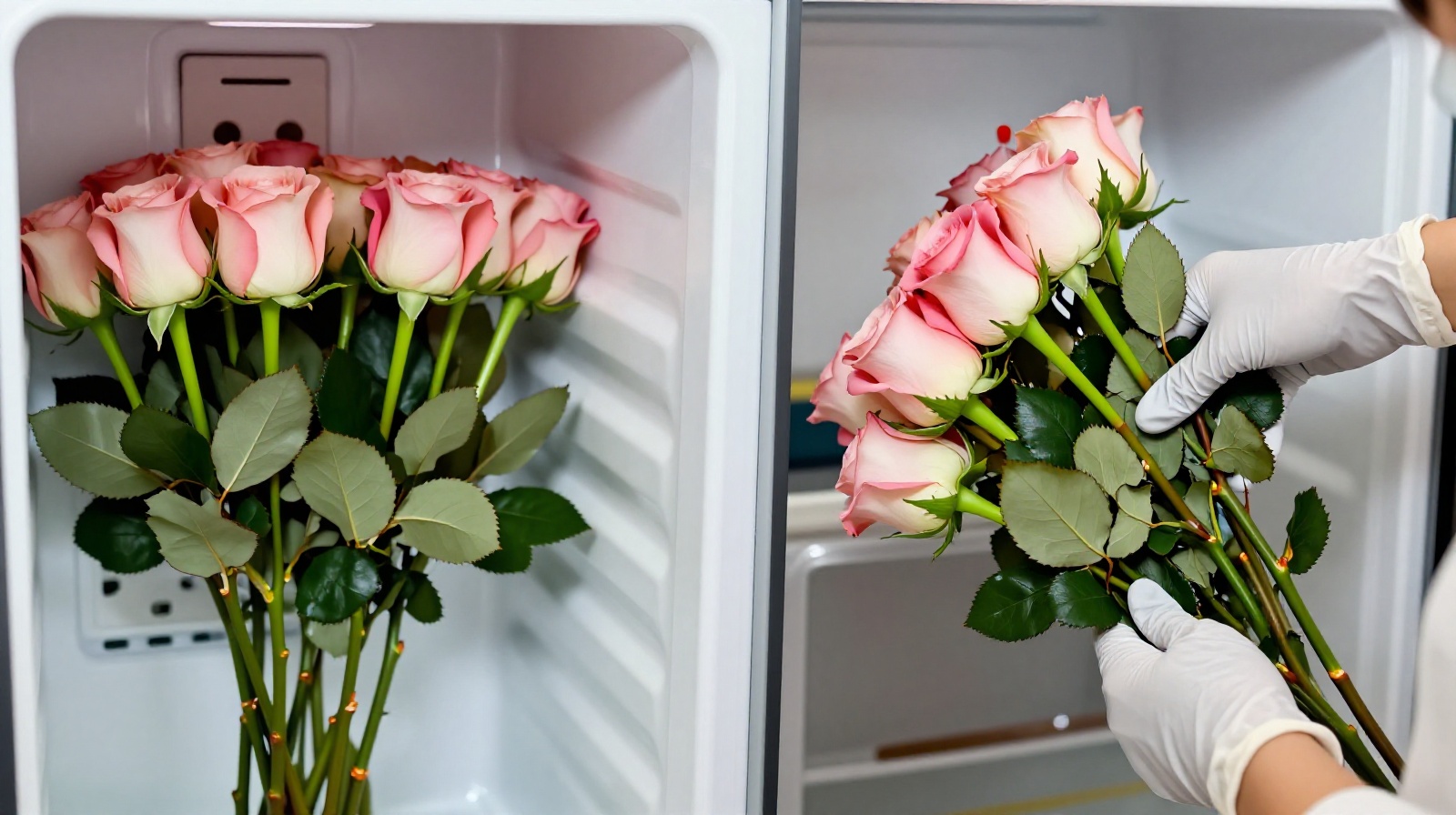
The process is a marvel of coordination. Flowers are harvested at dawn, pre-cooled immediately to lock in freshness, packed in ventilated boxes, and loaded onto refrigerated trucks or high-speed rail cargo cars. They travel hundreds of kilometers, crossing different climate zones, without ever touching ambient air. By the time they reach wholesalers in Beijing, they are still turgid and vibrant.
This supply chain efficiency allows for the low prices Wang offers. Even with transportation, packaging, and middleman margins, a rose can cost less than 1 yuan wholesale. The street vendor adds a small markup, but the turnover is high. It’s a volume game, not a luxury game.
The Economics of Small Gestures
Wang’s business model is deceptively simple but mathematically robust. She arrives at the station by 7 AM to set up. By 8:30 AM, during peak exit flow, she sells out. If she doesn’t sell everything, she takes the wilting stems home to boil for soup or compost them. Waste is minimized because demand is predictable.
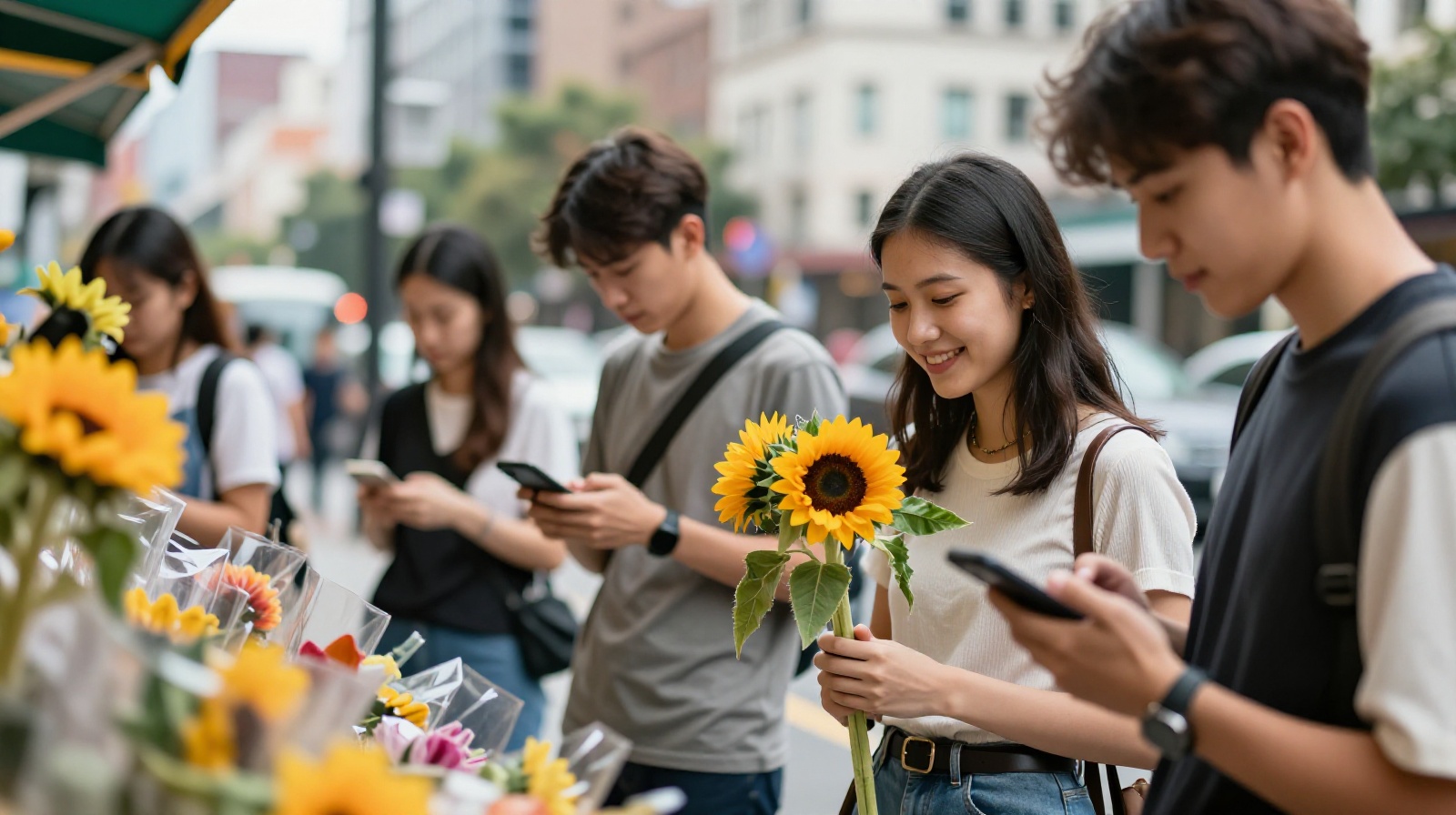
The pricing strategy relies on impulse and convenience. A bouquet in a formal florist shop might cost 50–100 yuan due to rent and service fees. At the subway exit, the price is stripped of overhead. It’s pure product value. This accessibility democratizes romance. It allows anyone with a smartphone and a few minutes of spare change to participate in the ritual of giving.
Moreover, this trade supports a large informal workforce. Many flower vendors are rural migrants or laid-off workers who found a niche in the city’s ecosystem. They navigate complex urban management rules, often moving their carts when inspectors pass, then returning when the coast is clear. It’s a delicate dance of survival and service.
A Splash of Color in the Grey Routine
In a city that never sleeps, where skyscrapers reflect the same grey sky and office windows glow with the same blue light, these flowers are a visual disruption. They break the monotony.
For the commuter, the flower is a token of connection. It might be connected to a partner waiting at home, a friend in another department, or simply to oneself. In a society that often prioritizes collective productivity over individual expression, these small, personal acts of care are quietly rebellious.
Wang Lihua doesn’t see herself as a poet. She sees herself as a worker with a quota. But her stall has become a landmark for many. Young professionals know the rhythm of her sales. Some even wave to her, holding up a single stem as they rush into the underground tunnels.
This is the texture of contemporary China. It’s not just about high-speed trains or AI algorithms. It’s also about the 10-yuan rose that brightens a Tuesday morning. It’s about how people navigate pressure, find small joys, and keep their humanity intact in the machine of urban life.
The flower auntie is selling more than petals. She is selling a moment of pause, a reminder of beauty, and a tiny piece of warmth in the cold steel of the subway station.