
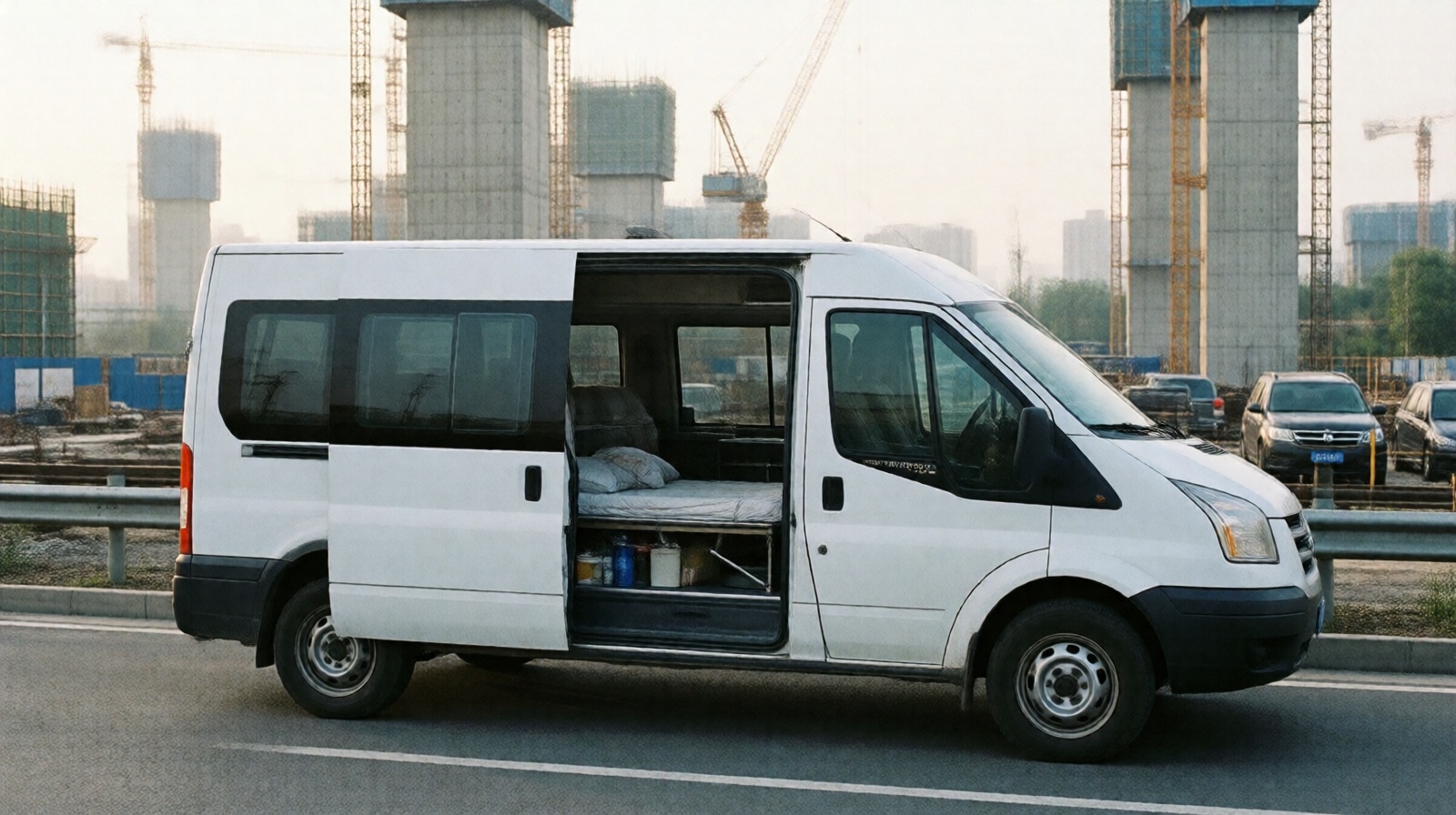

The Rolling Home on the Highway
At 6:30 AM, the engine of a white Ford Transit van rumbles to life in a parking lot outside a high-rise construction site in Wuhan. Inside, the air smells faintly of diesel and instant coffee. Li Wei, a 42-year-old scaffolder from Henan province, adjusts his rearview mirror. He doesn’t check his phone for messages from family first; he checks the fuel gauge. For Li, this van is not just a vehicle to commute to work; it is his bedroom, kitchen, and living room.
Three years ago, Li lived in a temporary dormitory provided by the construction company. It was crowded, noisy, and lacked privacy. “We shared rooms with six other men,” he recalls. “The walls were thin, and sleep was impossible.” When the project ended, he was often left without a place to stay until the next job was found. The uncertainty was exhausting. Then, a friend suggested buying a used van. It seemed like a long shot, but Li took the risk.
A Kitchen, A Bed, A Life
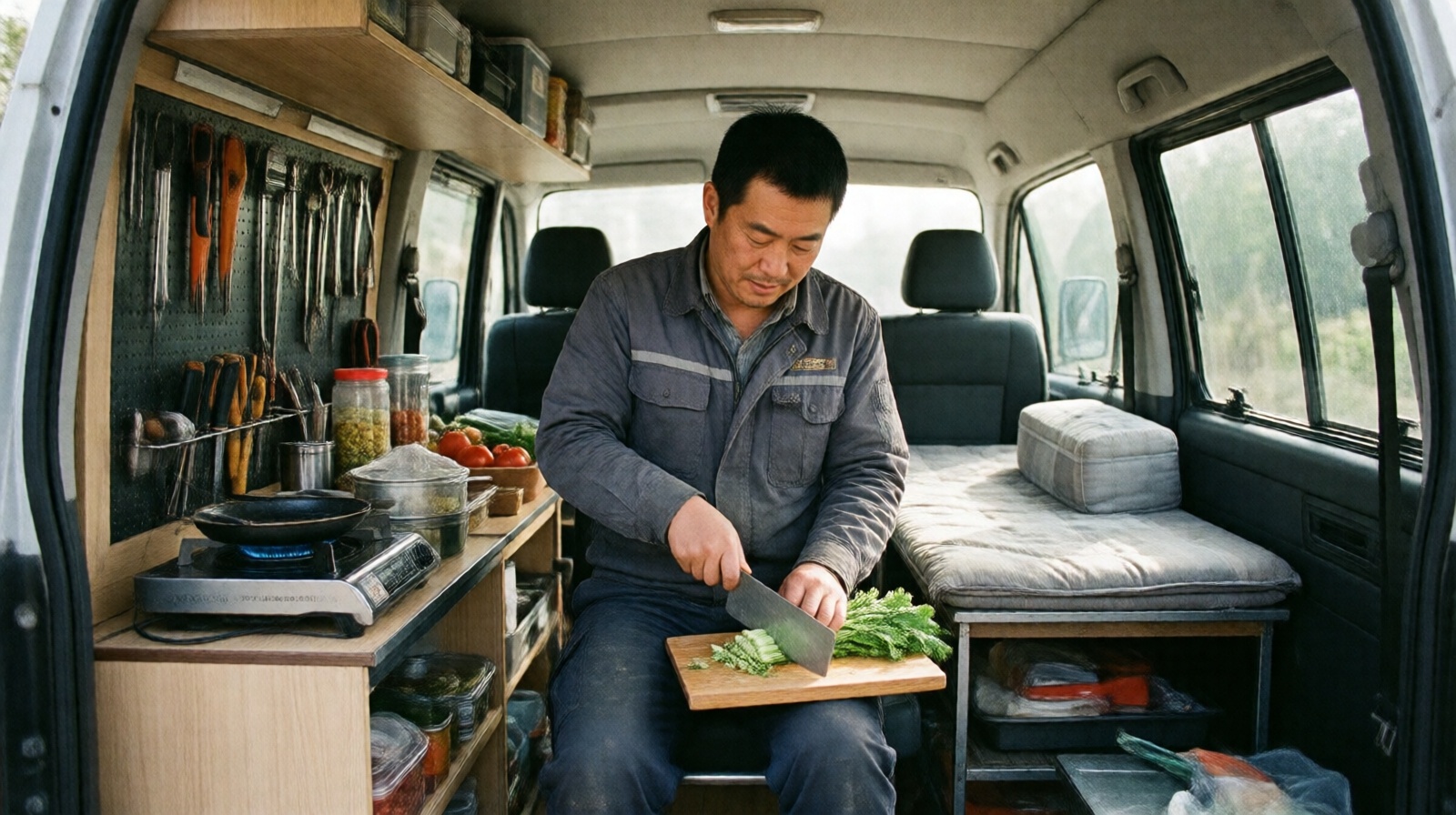
Inside the van, space is optimized with ruthless efficiency. The back seats have been removed and replaced with a foldable bed that doubles as a storage unit. A small induction cooktop sits next to a 12-volt refrigerator. Shelves are lined with tools, spare parts, and containers of dried vegetables. Every inch of space serves a purpose.
“It’s a small box,” Li says, wiping sweat from his forehead as he chops green onions on a cutting board balanced on his knee. “But it’s mine.” He prepares breakfast: rice, pickled vegetables, and boiled eggs. Outside, the city is waking up. Cranes are turning; trucks are backing up. Inside, it is quiet, save for the hum of the refrigerator. This routine is his anchor in a life defined by movement.
Living in a van requires adaptation. In summer, the metal box becomes an oven. Li installs a roof vent and uses heavy curtains to block the sun. In winter, he relies on a small electric heater and thick quilt. The van has taught him to read the weather like a second language. He knows which cities offer shelter from the wind and which roads are too rough for his suspension.
Following the Concrete
Li’s life is dictated by the pace of China’s urbanization. When a project in Shanghai finishes, he packs his van and drives north to Beijing. When Beijing slows down, he heads west to Chengdu. This “nomadic” lifestyle is not unique to Li. Thousands of migrant workers across China have adopted this method to avoid the instability of dormitory living.
The advantages are clear. No more sharing a room with strangers. No more worrying about losing personal belongings in a chaotic dorm. He can cook his own food, saving money on meals that often lack variety. But the challenges are significant. Social security benefits are tied to specific locations, making it difficult to transfer pensions and medical insurance across provinces. His children remain in his hometown, raised by grandparents. He sees them only during the Spring Festival, when he drives thousands of kilometers back home.
Connection Across Distance
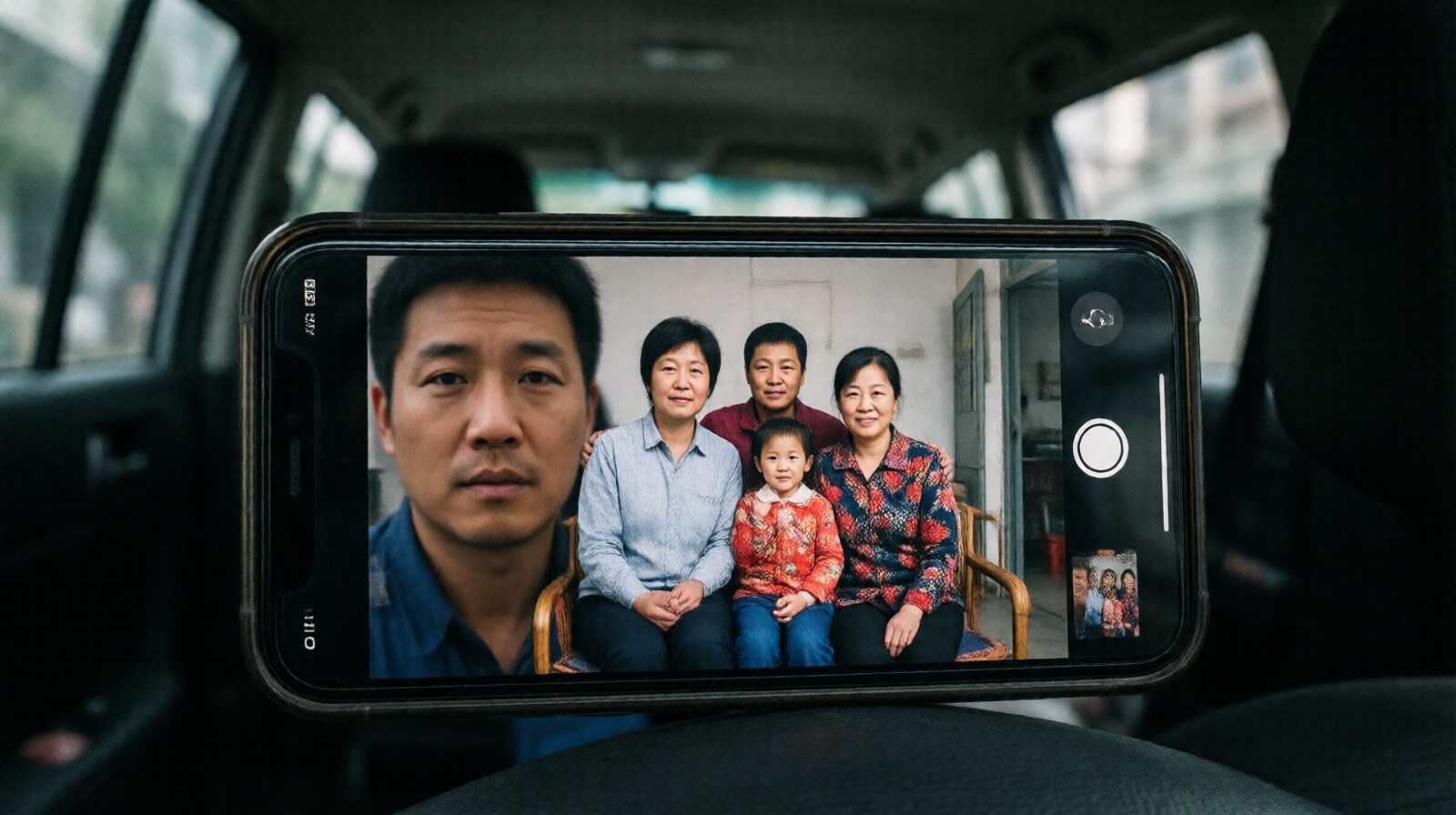
Technology bridges the physical gap. Every evening, Li sits in the driver’s seat, phone propped up on the dashboard, video-calling his wife and two children in Henan. The screen shows their small apartment, cluttered but warm. They tell him about school, about the new dog, about the weather. He talks about the construction site, avoiding complaints to keep them from worrying.
“I miss them every day,” Li admits. “But this way, I can earn more. The van saves money on rent and food.” It is a calculated sacrifice. The van is his ticket to providing for his family, even if it means missing their daily lives. The connection is digital, fragile, but essential. It keeps the family unit intact despite the physical distance.
Dignity in Motion
For many observers, the image of a construction worker living in a van might seem like a sign of poverty. But for Li and his peers, it represents autonomy. In a system that often treats them as disposable labor, the van is a symbol of self-reliance. It allows them to control their environment, their schedule, and their dignity.
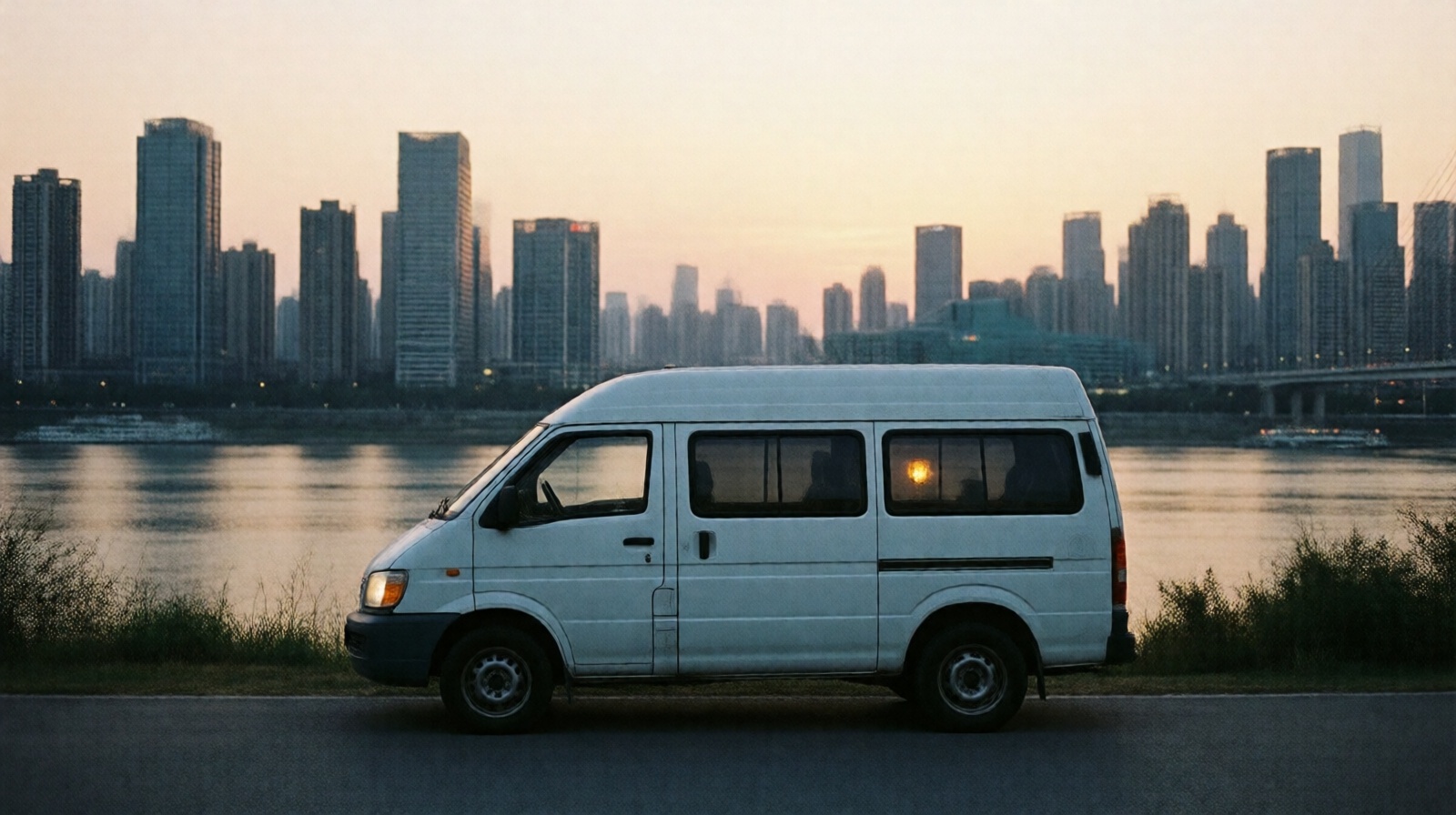
As the sun sets over Wuhan, Li parks the van near the river. He turns on a small lamp inside. The city lights twinkle in the distance, beautiful and untouchable. He is building these cities, but for now, he rests in his mobile home. Tomorrow, the engine will start again, and the van will move to the next site. His hotel is on wheels, and for now, that is enough.