


The Hum of Motors and the Crash of Waves
Imagine standing in a quiet, climate-controlled warehouse in Longgang District. The air smells faintly of solder and new plastic. Around you, rows of quadcopters sit on assembly lines, their propellers still. A technician in blue overalls tightens a screw with a precision that feels almost surgical. This is the heartbeat of Shenzhen’s hardware industry.
Now, take a 40-minute subway ride south to Dapeng Peninsula. The air changes. It becomes salty and humid. The silence is replaced by the rhythmic crash of waves against coral reefs. You are now in Xichong or Dongchong, neighborhoods where wetsuits hang next to rain jackets in local lockers. This is Shenzhen’s other face: a coastal city with a growing obsession for surfing.
For international observers, Shenzhen is often reduced to a monolith of tech manufacturing. But to live there is to experience a jarring, yet beautiful, duality. It is a place where the future is assembled on a conveyor belt by day, and chased on a board by sunset.
The Hardware Capital’s Hidden Coastline
Shenzhen sits on the edge of the Pearl River Delta, bordering Hong Kong to the east. For decades, its identity was tied to rapid industrialization. But as the city shifted from “Made in China” to “Created in China,” its relationship with its geography evolved.
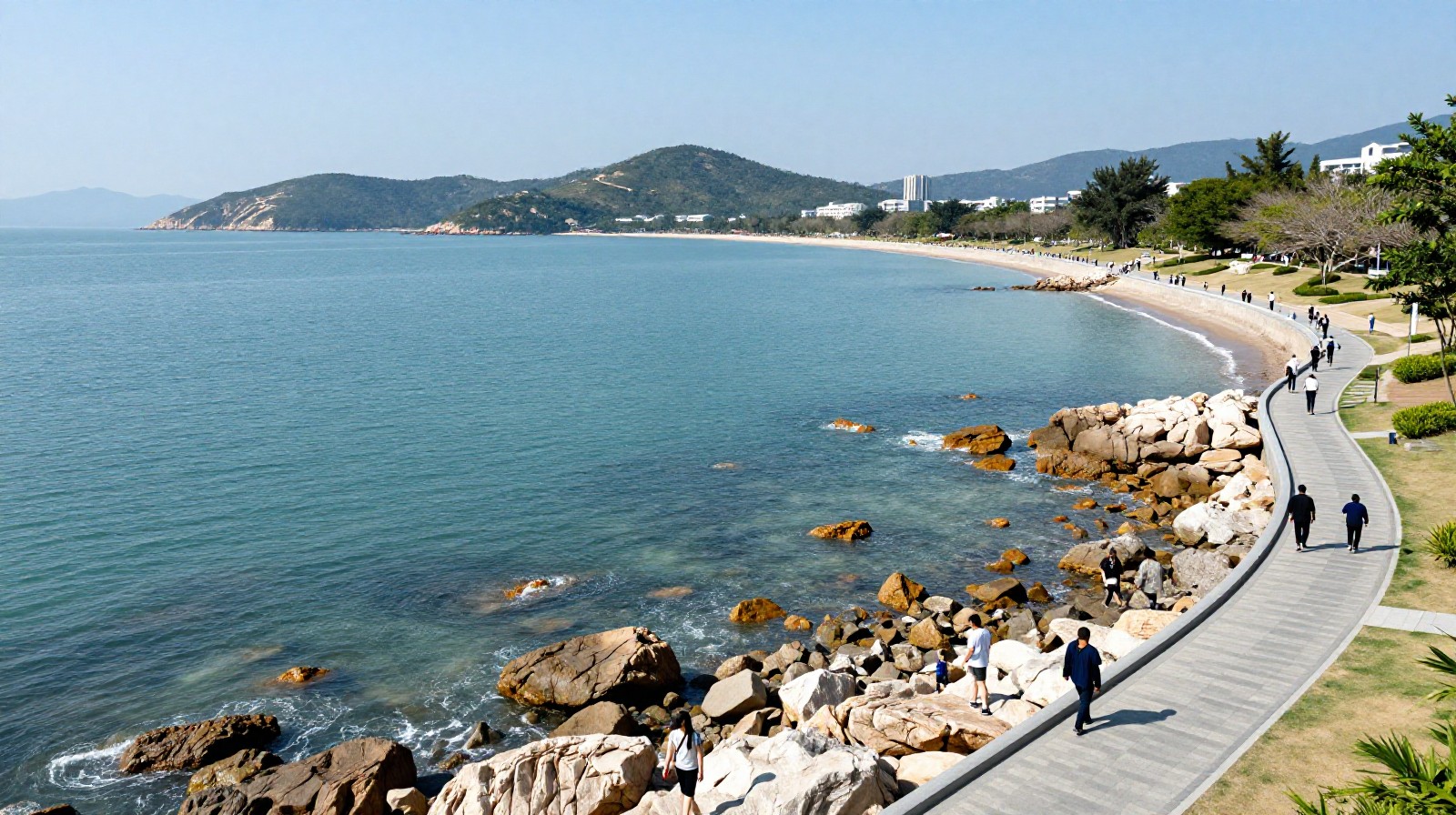
The coastline of Shenzhen is not just a scenic backdrop; it is becoming a social hub. In areas like Yantian and Dapeng, the government has invested heavily in public spaces, turning former industrial zones into parks and trails. This infrastructure supports a surge in outdoor activities. Surfing, once a niche hobby, has exploded in popularity among young professionals aged 20 to 35.
Why surfing? In a city where work culture can be intense—often referred to as “996” (9 am to 9 pm, six days a week)—the ocean offers a rare form of digital detox. The water is unpredictable and demanding. You cannot check your email while balancing on a surfboard. For many tech workers, this forced disconnection is therapeutic.
From Factory Floor to Surf Shop
To understand this blend, we spoke with Lin, a 28-year-old drone engineer at a major manufacturing hub in Bao’an District. By day, Lin tests flight stability algorithms for industrial drones used in agriculture and logistics. By evening, he is often seen at Xichong Beach, riding the afternoon swells.

“In the factory, everything is about control,” Lin explains. “We design drones to be precise, stable, and reliable. But on the board, you surrender control. The wave decides where you go. It’s a complete reset for my brain.”
Lin’s routine is typical of Shenzhen’s younger demographic. He takes the High-Speed Rail from Bao’an to Shenzhen North Station, transfers to the subway, and arrives at the coast by late afternoon. The commute is long, but the city’s connectivity makes it feasible. Many surfers use this time to listen to podcasts or unwind with music, transitioning mentally from coder to surfer.
This lifestyle is supported by a booming local economy. Surf schools, equipment rentals, and beachside cafes have sprung up in Dapeng. It’s not just about sport; it’s about community. In Shenzhen, where many residents are migrants from other parts of China, shared hobbies create instant social bonds. The surf shop becomes a de facto networking hub, where engineers, designers, and entrepreneurs exchange ideas over post-surf beers.
Tech Meets Tide: A New Urban Identity
The juxtaposition of high-tech industry and coastal leisure is not accidental. Shenzhen’s urban planning increasingly recognizes the value of quality of life in attracting talent. The city has transformed its coastline into a “blue belt,” integrating ecological preservation with public recreation.
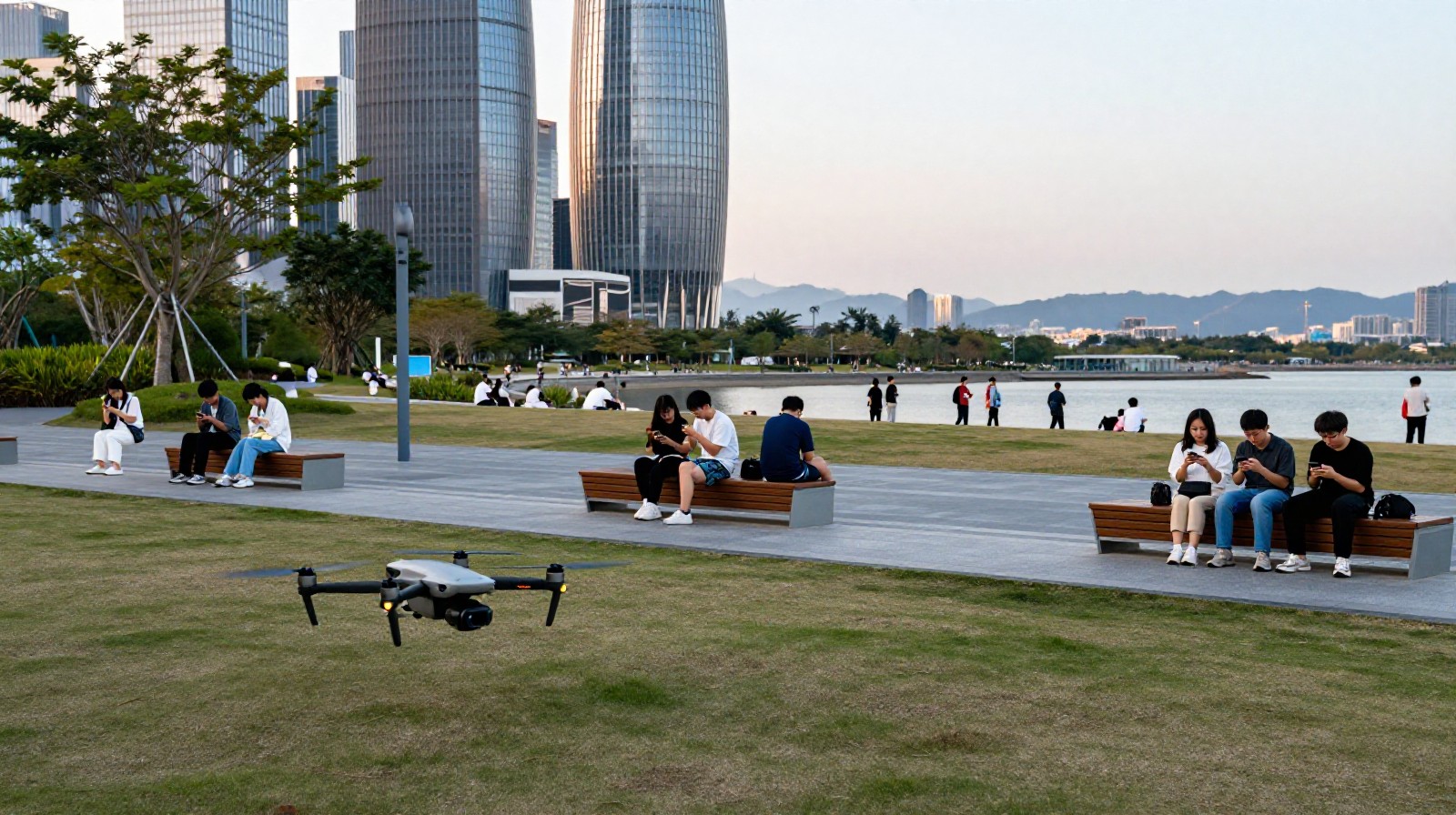
Moreover, the tech community itself is driving this trend. Many app developers are creating platforms for surf forecasts, gear sharing, and community events. The same innovation that powers Shenzhen’s drones is now optimizing how locals enjoy their free time. It’s a feedback loop: technology enables a better lifestyle, which in turn attracts more creative minds to the city.
For visitors, this dual identity offers a unique itinerary. Start your morning at the Huaqiangbei Electronics Market, marveling at the sheer scale of hardware innovation. Spend the afternoon visiting a drone exhibition or a tech museum to understand the engineering behind the devices. Then, head south in the late afternoon. Watch the sunset from a surfboard as the city lights begin to flicker on in the distance.
Beyond the Stereotype
Shenzhen challenges the stereotype of China’s cities as purely concrete jungles. It is a place of contrasts, where the precision of the factory floor meets the chaos of the ocean. For its young residents, this balance is not just about leisure; it is about survival and sanity in a fast-paced world.
As Lin puts it, “The drone gives me purpose. The wave gives me peace. I need both.” This sentiment resonates across Shenzhen. It is a city that builds the future while learning to surf on the edge of the present.