

The Blueprint of Ten Square Meters
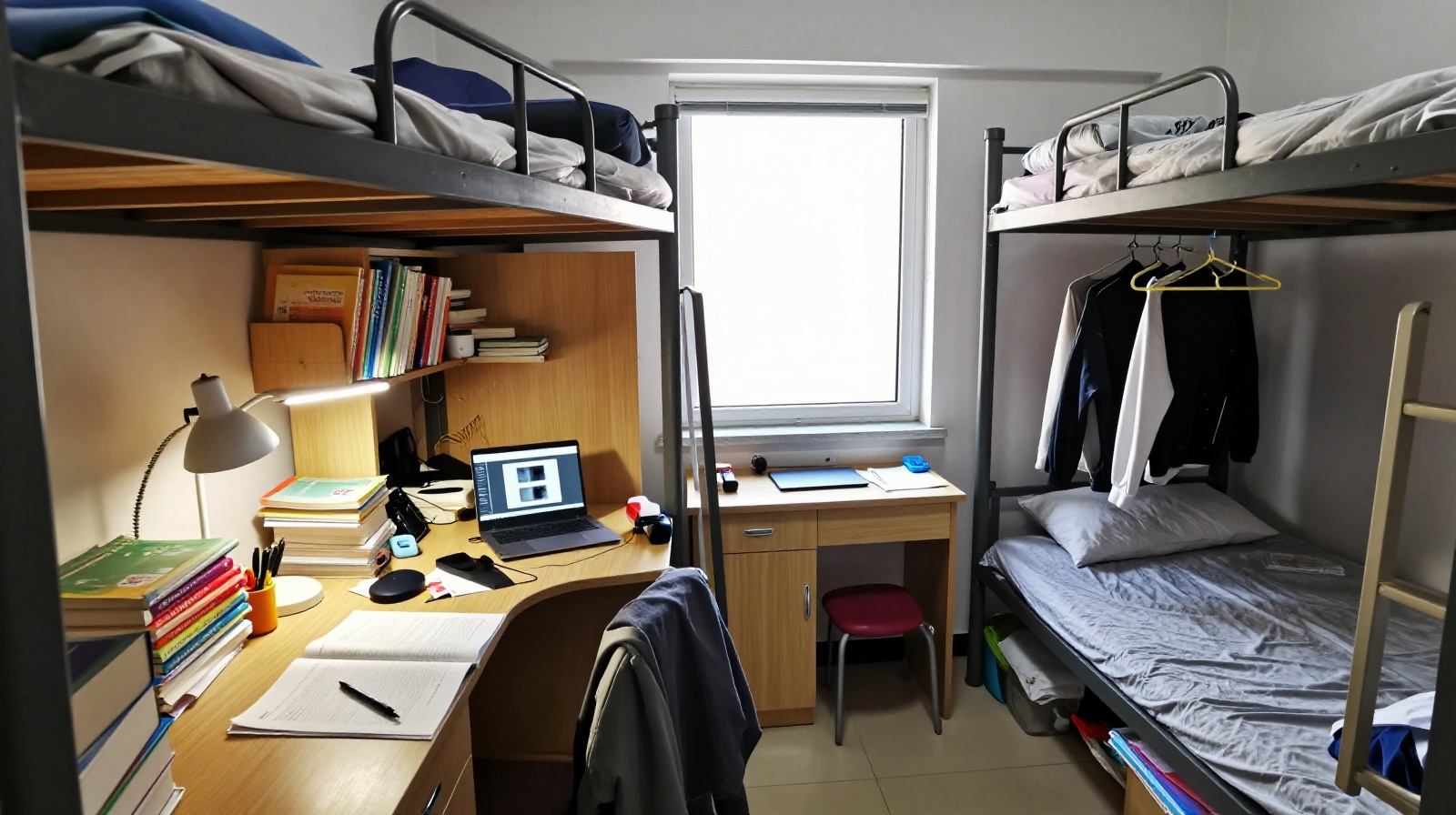
At 7:00 AM, the alarm on Li Wei’s phone vibrates against the wooden desk. It is loud enough to wake his two roommates, but they don’t stir. In this 10-square-meter room in Beijing’s Haidian District, silence is a luxury they cannot afford yet. The space is laid out like a tactical map: one narrow bed against the north wall, another tucked into the corner near the window, and a third squeezed against the east wall, facing a cluttered desk piled with textbooks and laptop chargers.
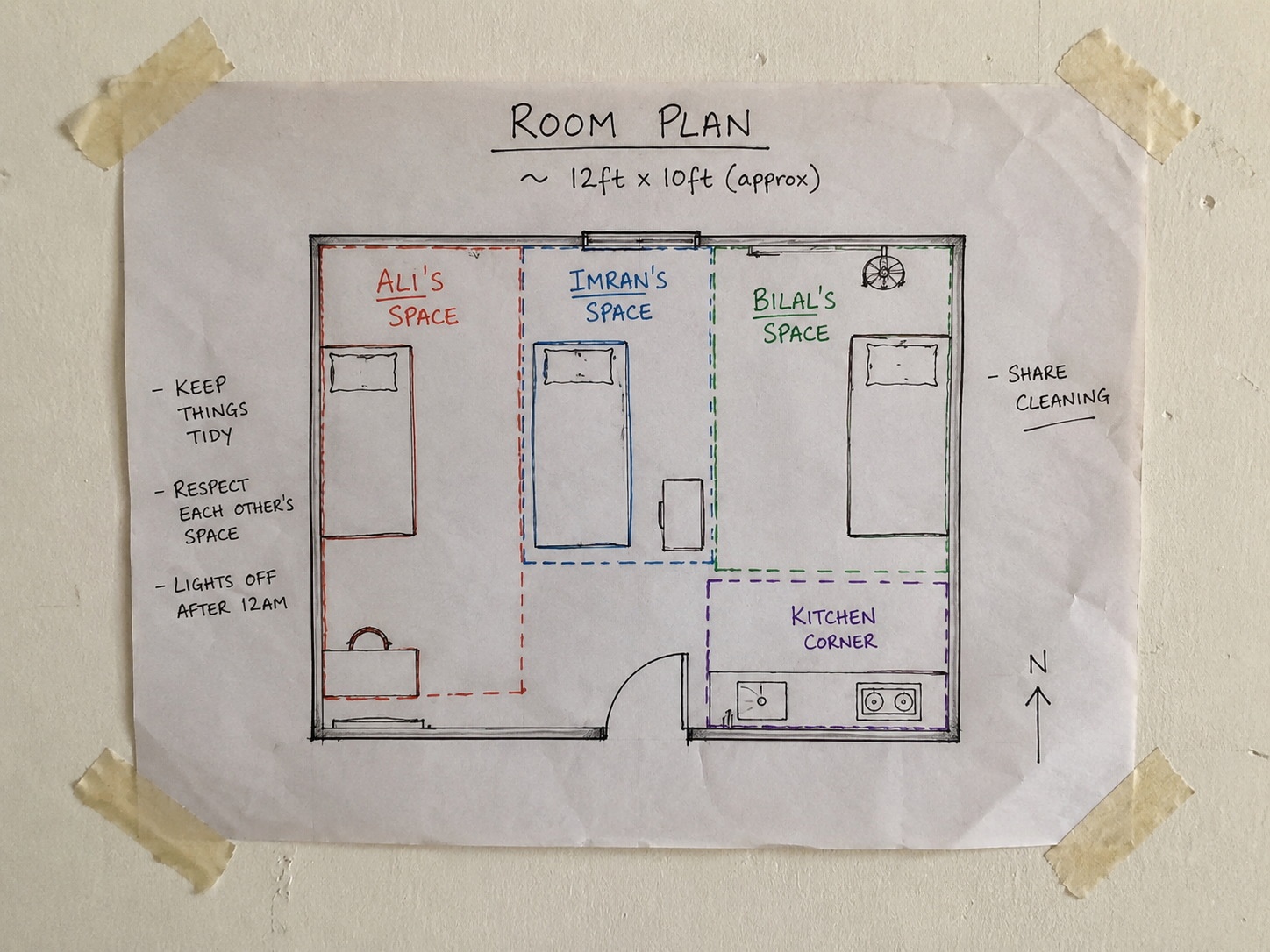
This room belongs to three university graduates from different provinces. Li Wei, 24, is a junior software developer trying to break into the tech sector. Zhang Meng, 23, is preparing for the national postgraduate entrance exams, surrounded by stacks of reference books. Chen Yu, 22, works as a graphic designer for a small agency, often bringing work home at night. Together, they call themselves the “New Ant Tribe.” Unlike the term’s origin in the mid-2000s—which described destitute graduates struggling to survive—today’s version is more nuanced. It is less about absolute poverty and more about the strategic pause of ambitious youth in mega-cities.
The Geometry of Sharing
Living in such a confined space requires a precise choreography. When Zhang Meng wakes up at 6:30 AM to recite English vocabulary, he puts on noise-canceling headphones. Li Wei leaves for his subway commute by 7:45 AM, navigating past Chen Yu, who is still asleep under a thin quilt. By 8:00 AM, the room is empty, leaving only the hum of the refrigerator and the scent of instant coffee lingering in the air.
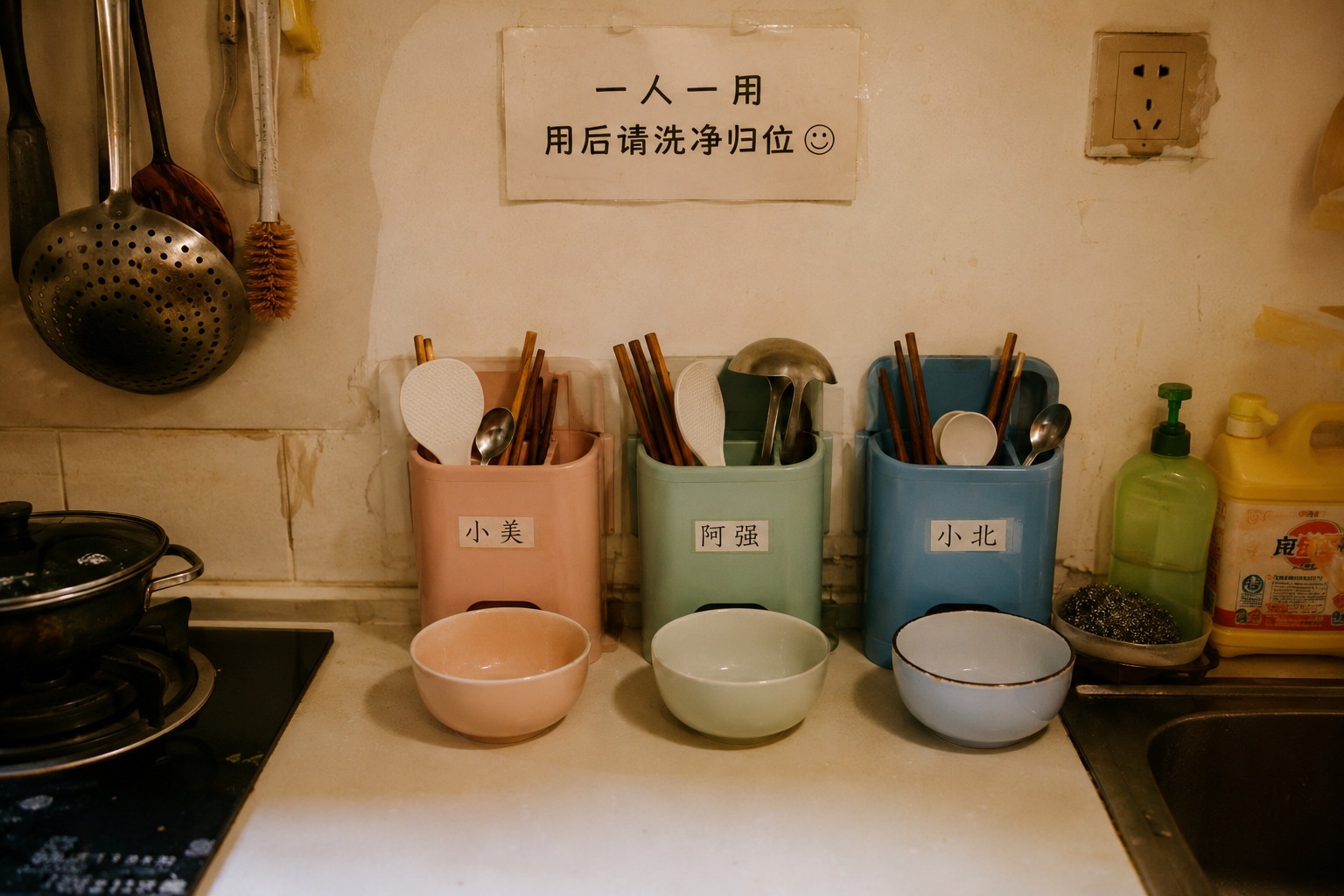
They have established unwritten rules to coexist without friction. No shoes inside the door. Shower time capped at 15 minutes. Kitchen utensils are color-coded: blue for Li Wei, green for Zhang Meng, red for Chen Yu. These small rituals prevent conflict in a space where personal boundaries are physically non-existent.
Economics of the Urban Leap
Why do they stay? The answer lies in the arithmetic of Beijing’s housing market. A single studio apartment in this district costs roughly 4,000 to 5,000 RMB (approx. $550-$700) per month—a significant portion of a fresh graduate’s salary. Sharing reduces this burden to around 1,200-1,500 RMB per person, freeing up capital for skill development or savings.
For Li Wei, the location is key. The apartment is a 15-minute bike ride from his office. For Zhang Meng, it is close to the university libraries where he spends his evenings. For Chen Yu, it is near co-working spaces that offer better lighting and internet for client pitches. They are not trapped; they are positioned. This is a calculated trade-off: sacrificing privacy today for proximity to opportunity tomorrow.
Warmth in the Cramped Quarters
Despite the physical constraints, the room is far from cold. At 10:00 PM, after everyone returns, the dynamic shifts. The narrow desk is pushed aside to make room for a small folding table. They order takeout—spicy hot pot or fried rice—and eat together, sitting on the edges of their beds.
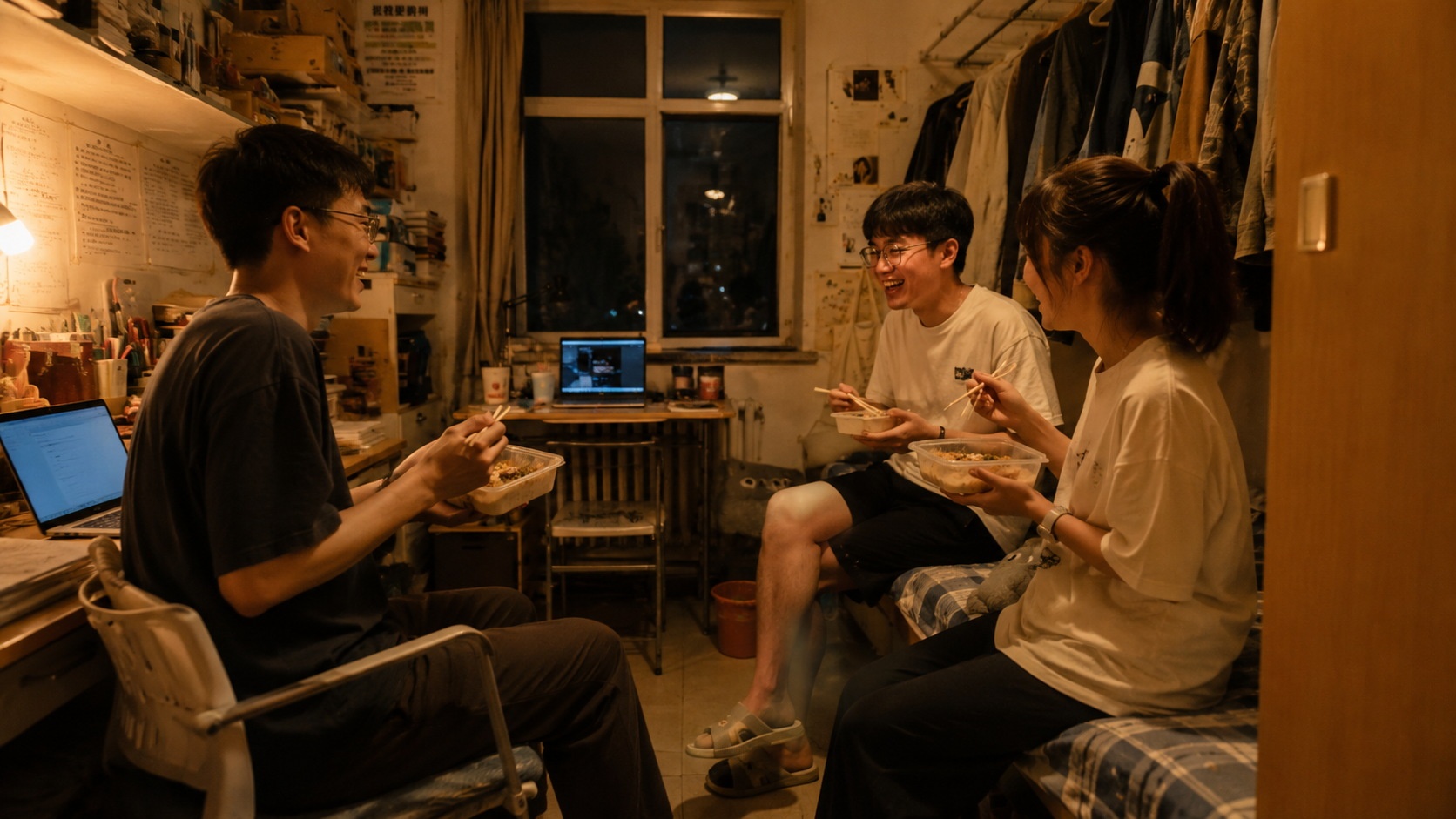
“I failed my mock exam today,” Zhang Meng admits one evening, looking down at his noodles. Li Wei, who is debugging code on his laptop, looks up. “The market is tough right now. I had three rejections this week. But we’re in the same boat. We just need to keep swimming.” Chen Yu adds a slice of cucumber to Zhang Meng’s bowl, a silent gesture of support.
These moments of vulnerability and mutual encouragement define their experience. They are not just roommates; they are a support network. In a city that can feel indifferent and isolating, this small room becomes a sanctuary of shared resilience. They celebrate each other’s small wins: a passed exam, a signed contract, a good night’s sleep without the subway noise.
Dignity in Transition
The “Ant Tribe” lifestyle is often criticized as a sign of urban failure or excessive pressure. However, viewing it through the lens of these three individuals reveals a different story. It is a testament to their agency and ambition. They are not giving up; they are enduring.
For cities like Beijing, Shanghai, and Shenzhen, this phenomenon highlights a critical need: flexible, dignified housing for young talent. While shared apartments are a market-driven solution, there is room for policy innovation—such as subsidized youth hostels or renovated micro-apartments—that could offer more comfort without breaking the bank.
As Li Wei packs his bag for another early morning, he glances at the hand-drawn schedule on the wall. It lists study hours, work shifts, and rest times. It is a blueprint not just for survival, but for ascent. In these 10 square meters, three dreams are breathing together, waiting for their turn to rise.