


The Last Time You’ll Need a Paper Ticket
Imagine you’re standing at the entrance of a bustling high-speed rail station in China. You have your passport, a reservation confirmation on your phone, but no paper ticket. A few years ago, this would have been a problem. Today, it’s perfectly normal – and actually faster. China’s railway system has gone completely paperless for e-tickets since 2020. For foreign travelers, that means the only key you need is your passport. But how exactly does it work? Let’s walk through the process step by step, so you can walk through those gates like a local.
Why No Paper Tickets?
Before we dive into the steps, a quick background. In 2020, China Railway (CR) rolled out a nationwide electronic ticket system for all high-speed trains (G, D, and C series). Physical paper tickets are no longer issued at counters or machines for these trains. Instead, your identity information is linked to your booking electronically. For Chinese citizens, that usually means scanning their ID card at the gate. For foreigners, it’s your passport – but not always in the same way.
The Golden Rule: Use the Manual Lane
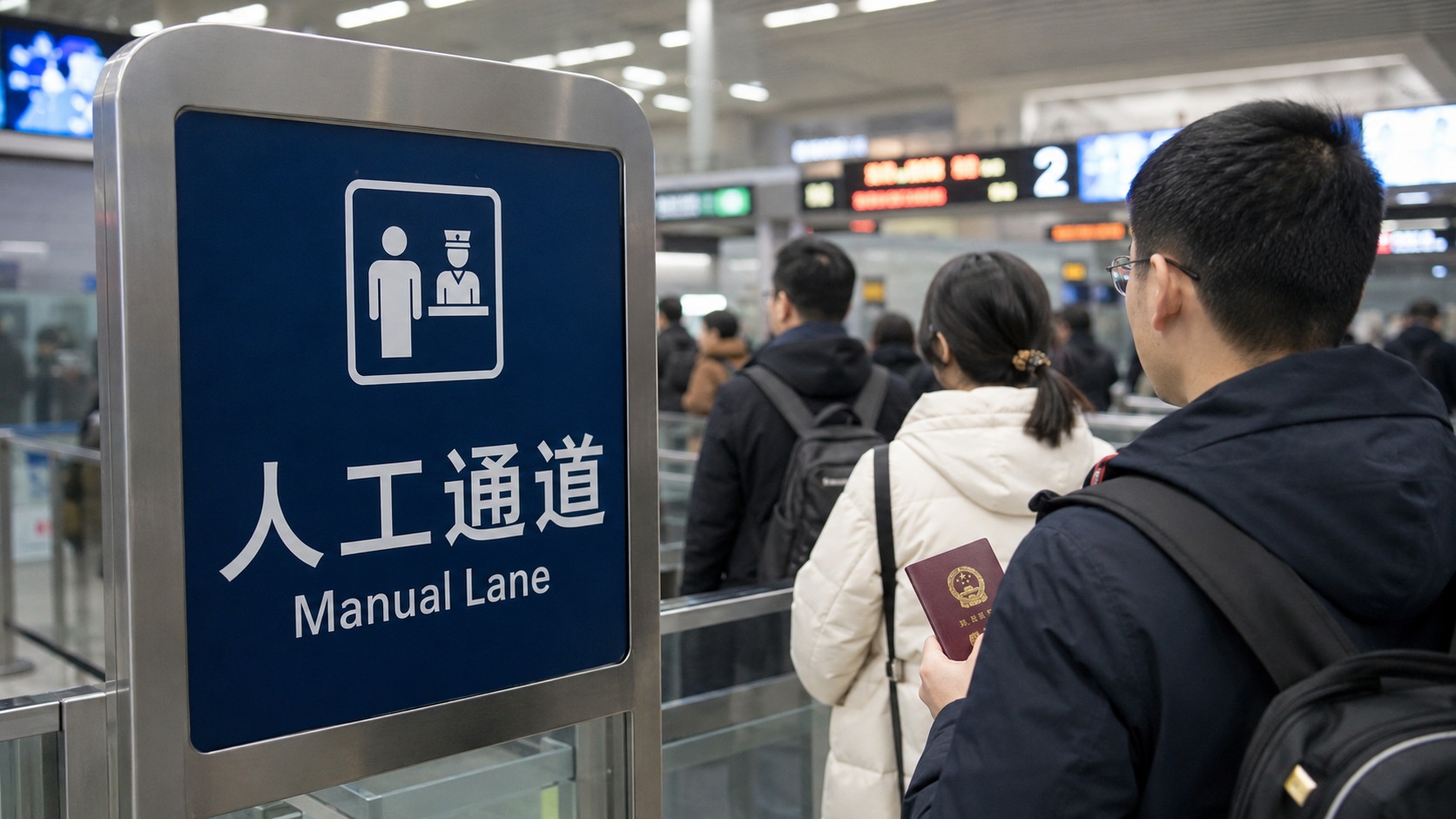
Most station gates are equipped with automatic ticket-checking machines. Chinese citizens simply tap their ID card on a scanner and the gate opens. For foreign passports, the situation is a bit different. The vast majority of these machines do not recognize non-Chinese ID documents. So you must use the manual lane – usually marked with a sign saying “人工通道” (rén gōng tōng dào) or “Manual Lane” in English. This is the single most important tip for foreign travelers.
At the manual lane, a station staff member will scan the barcode on your passport’s data page or manually verify your identity against your booking. They will then open the gate for you. It’s quick – usually takes less than 10 seconds – as long as your passport matches the name on the ticket.
The New Magic Gates: Scanning Your Passport Automatically
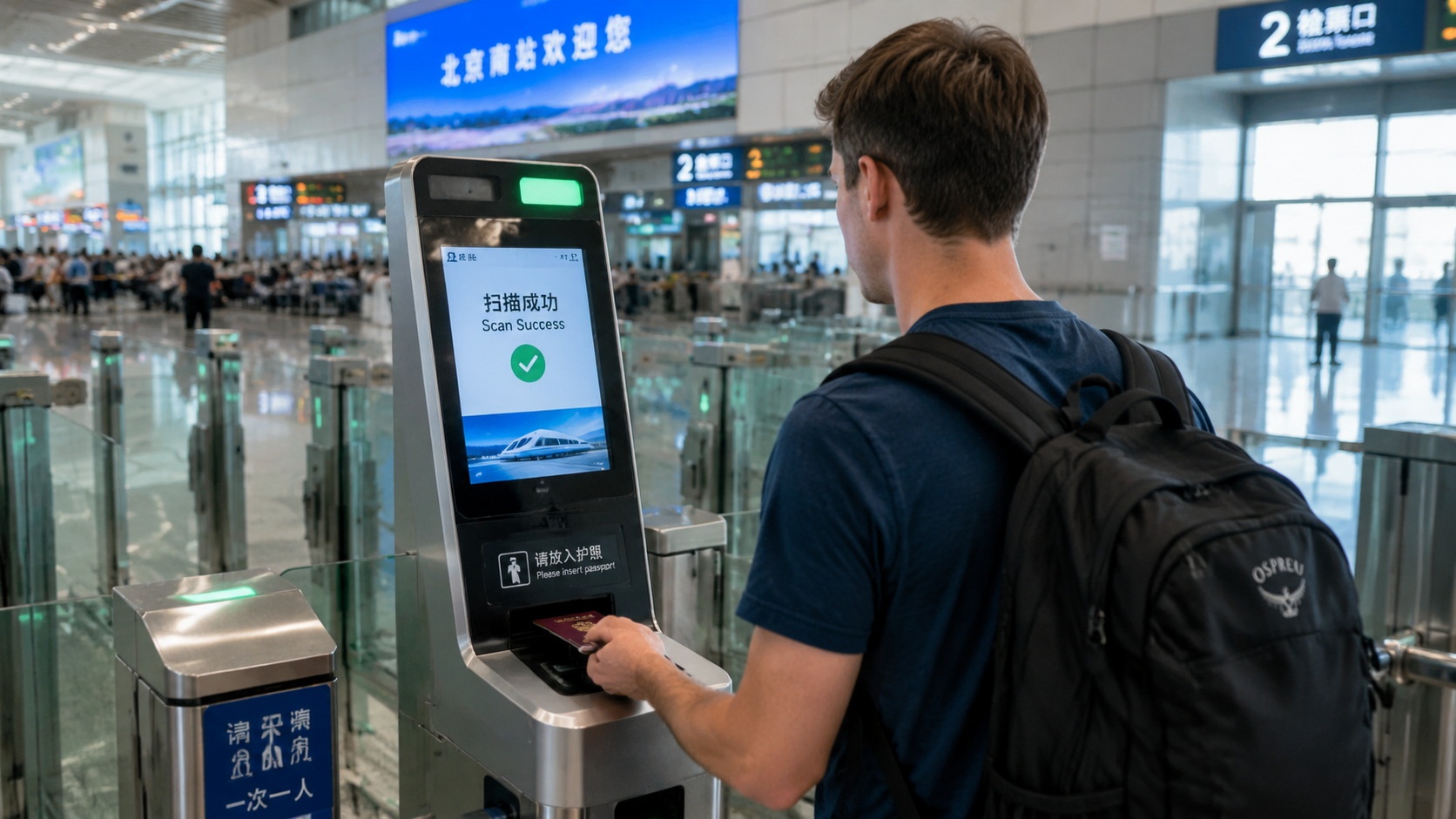
Good news: at some major stations (like Beijing South, Shanghai Hongqiao, and Shenzhen Futian), you may find automated gates that can scan foreign passports. These gates have a dedicated slot or scanner designed for international travel documents. If you see a sign that says “护照扫描” (Passport Scan) or an icon of a passport, give it a try. Insert your passport (biometric page facing down, or as instructed) and the gate will read your e-ticket info and open. Not all stations have these yet, but they are becoming more common. When in doubt, always head to the manual lane – you won’t get stuck.
Step-by-Step: How to Use Your Passport to Board a Chinese High-Speed Train
Step 1: Book Your Ticket with the Correct Passport Number
When you book your ticket (via the official 12306 app/website, or through a third-party agent like Trip.com or Ctrip), you must enter your passport number exactly as it appears on your passport. Double-check: no spaces, no hyphens unless they are printed. The name must match your passport name in Latin characters (not a Chinese translation). If your passport has a middle name, include it.
Step 2: Arrive at the Station – Skip the Ticket Counter
You don’t need to pick up any paper ticket. Just go straight to security and then to the waiting area. Keep your passport handy.
Step 3: Find the Manual Lane (or the Smart Gate)
As you approach the boarding gates, look for the entrance marked “人工通道” or “Manual Lane.” If you see a separate queue for foreign passports, join that. If not, wait at the manual lane. Staff are usually friendly and experienced with foreign passports.
Step 4: Present Your Passport
Hand your passport to the staff member (open to the photo page). They will scan the barcode or key in your details. In less than 10 seconds, you’ll hear a beep and the gate will open. If you’re using a smart gate, simply follow the on-screen instructions.
Step 5: Board the Train
Once through, check the digital display or your ticket for the platform number. Find your carriage and seat. Onboard, an attendant may check your passport again – just show it. No paper ticket needed.
Important Tips & Pitfalls
- Name Consistency: The name on your booking must match your passport exactly. If your passport has a surname and given name separated by a comma on the machine-readable line, that’s fine – just enter the name as it appears. Avoid using a nickname or variations.
- No Chinese Characters? Your passport name is in Latin letters. That’s fine. Do not try to invent a Chinese name.
- Passport Validity: Your passport must be valid. If it expires mid-trip, your booking may be invalid.
- Lost Passport: If you lose your passport, you cannot board. Report to the station police and your embassy.
- Different Station Rules: Smaller stations may have less automated gates; the manual lane always works. Larger stations may have dedicated foreign passport counters.
- What About the QR Code? Some booking apps provide a QR code for the ticket. But at most stations, the gate machines for Chinese IDs won’t scan a foreigner’s QR code. So still use the manual lane.
It Really Is Like Magic – Once You Know the Trick
China’s high-speed rail system is efficient and modern, and going paperless is one of its best features once you understand how it works for foreigners. The key takeaway: always use the manual lane. With your passport and a correct booking, you’ll pass through in seconds, just like a magic key. Happy travels!