
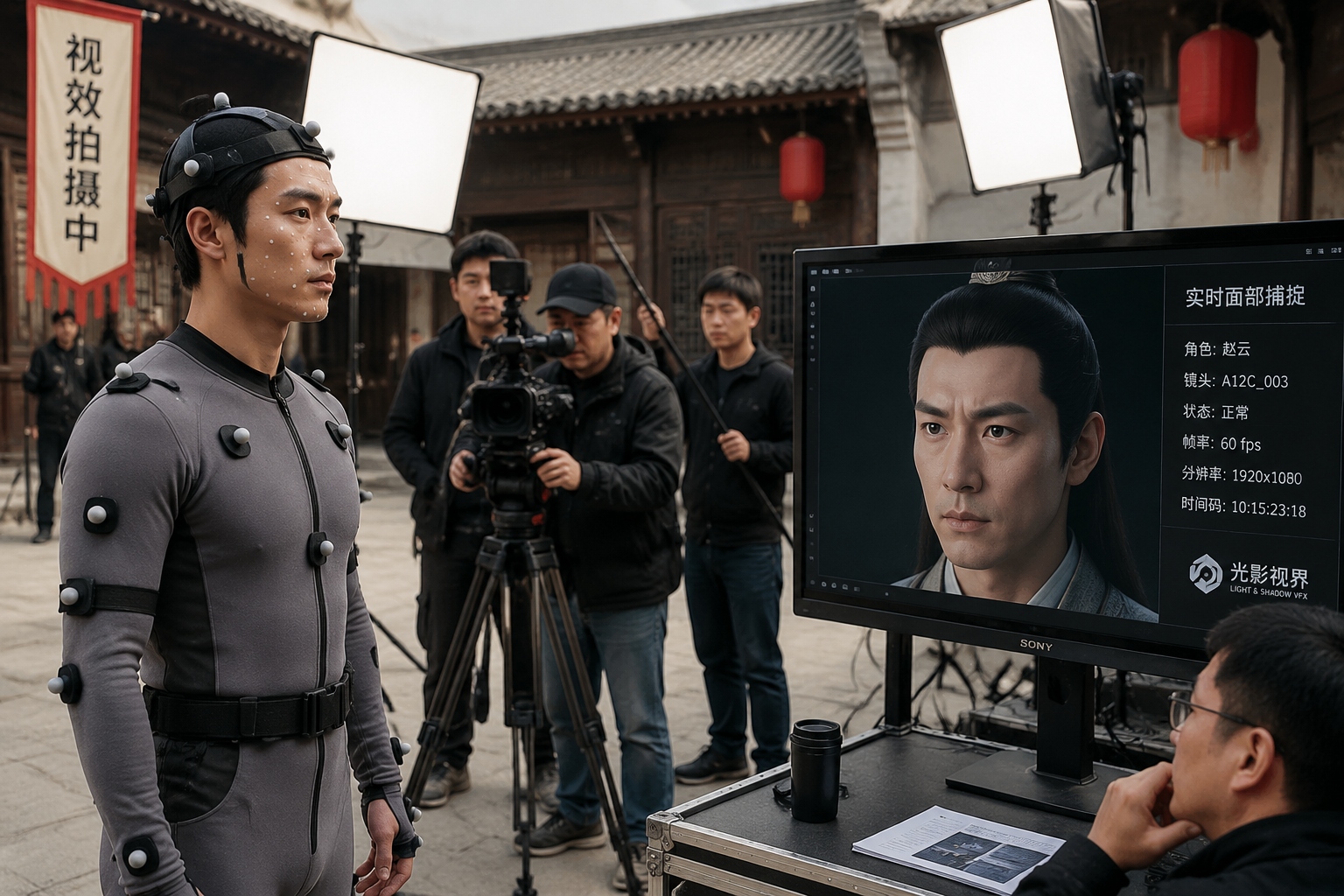

When Jackie Chan watched the 27-year-old version of himself on the big screen in The Legend (2024), the room got quiet. The young fighter on screen had Chan’s squint, his haircut, and nearly his rhythm in movement. One crew member whispered, half joking: “He doesn’t sleep, he doesn’t eat, and he never dies. You just met your own ghost.”
That ghost is now haunting more than movie sets. Across China’s film and television industry, actors are talking about “digital twins” not as a concept but as a daily working fear: someone may scan your face once and later cast it in a project you’ve never heard of.
You don’t need to be a superstar to worry. The fastest growth is in the lower-budget parts of the industry—short dramas, web series, live e-commerce streams and background crowd scenes—where the money is thin and the AI tools are cheap.
China’s AI actors are more real than you think
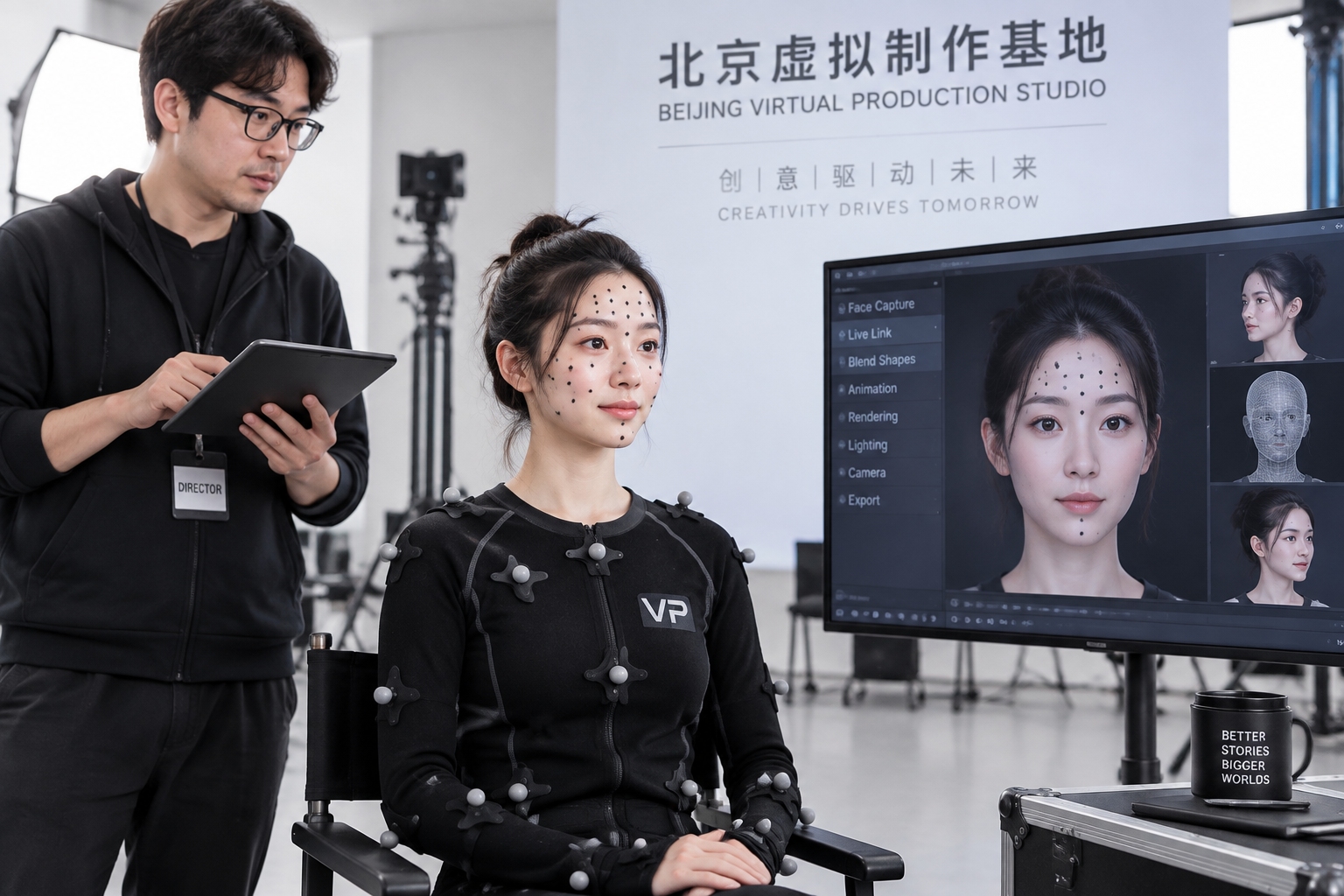
The first wave of digital “performers” in China were clearly fake: stiff virtual idols and animated news anchors. That period ended quickly. Since 2023, visual effects companies in Beijing, Shanghai and Shenzhen have been scanning performers with high-resolution cameras and motion-capture rigs to create digital actors that can be blended into ordinary footage.
One of the highest-profile examples is The Legend (2024), a martial-arts epic that used an AI-assisted, de-aged version of Jackie Chan for much of the action. It is not just a fleeting cameo; it’s an entire character built around a real actor’s movements and likeness. In Chinese film-trade magazines, such projects are described not as tricks but as demo reels for a new production pipeline.
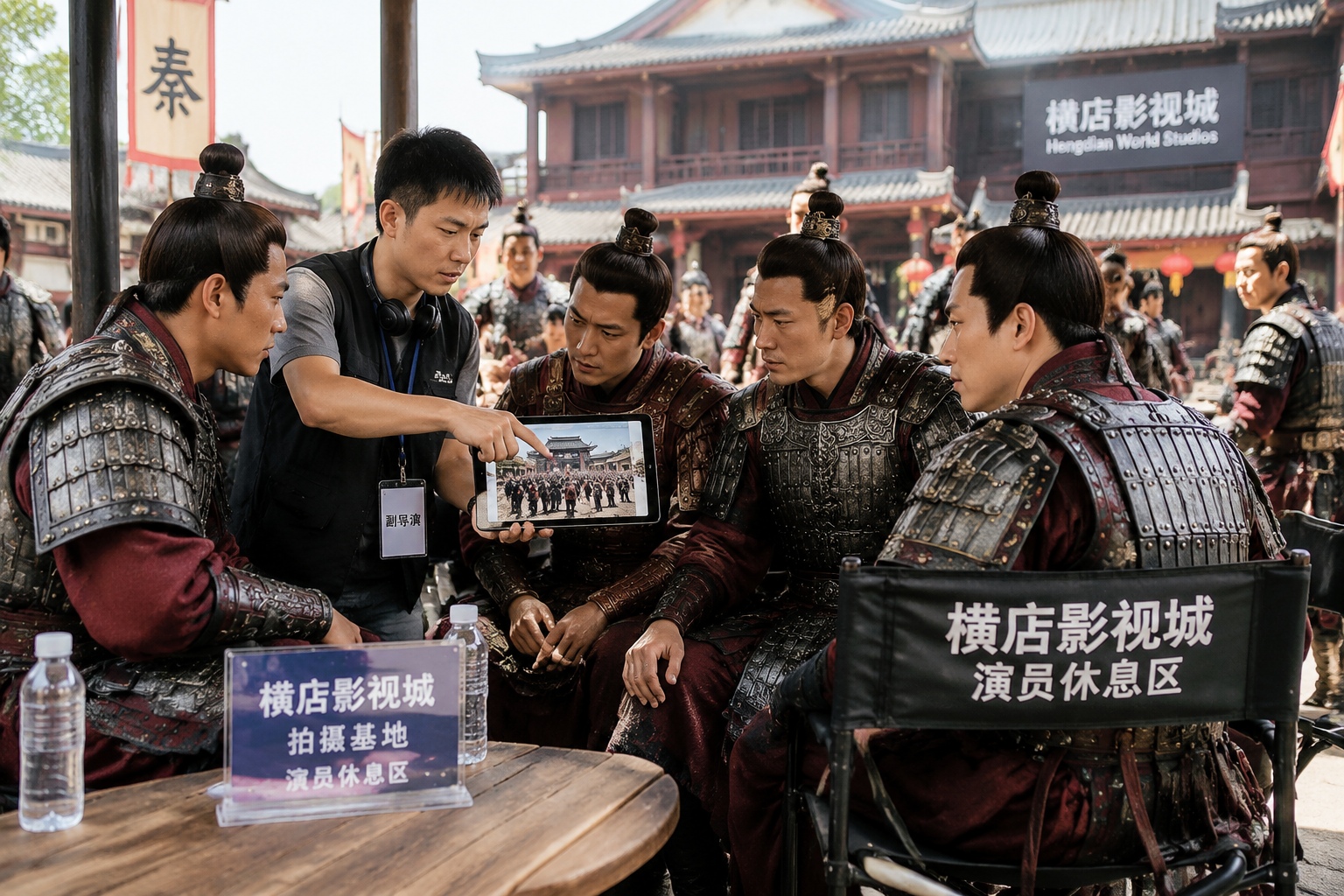
At the industrial end, short-drama factories in Zhengzhou and Hengdian work with AI tools to generate an entire crowd from just a few filmed extras. A first assistant director can shoot a handful of people, then use software to turn them into three hundred soldiers carrying banners. Some studios now advertise “a one-time scan, unlimited takes” to streaming platforms.
Meanwhile, digital humans also sell lipstick and insurance plans on Chinese livestream platforms, delivering scripts for twelve hours without a toilet break. In other words, China has moved from “is AI acting possible?” to “how do I license my double?” surprisingly fast.
The squeeze begins with extras, then climbs up the call sheet
The largest group feeling the pressure is the ground-level workforce: the tens of thousands of extras who gather every morning in Hengdian, a town in Zhejiang Province that calls itself China’s Hollywood. A basic group extra usually earns around a hundred yuan (about US$14) per shift, plus a meal box if they are lucky.
An AI crowd render costs a fraction of that and never asks for a longer lunch break. Studio managers also want to avoid the coordination headache of checking in hundreds of humans. The result? Digital armies are appearing where human extras used to stand.
Actors one level up are also facing identity trouble. Suppose a supporting character’s lines need to be shot. Sometimes producers will record an actor’s movement, then place that motion on a famous star’s face. The supporting performer now works as a body double in legal limbo. There are already media reports of performers paid a “scan fee” instead of an acting fee, with no clause controlling how the scan will be used.
Voice actors occupy an even tighter corner. Audio-cloning technology can produce lines in a native voice after only a few minutes of samples, and some results already show convincing emotional control. What does a veteran voice actor sell after a hundred episodes of their voice have been fed into a model?
The anxiety is not evenly distributed, of course. For visual-effects firms and AI startups, the new orders are a gold rush. A technician who understands cameras, lighting and neural networks can find work in both “digital human” companies and old-school VFX houses. On short-drama sets, it is not rare to see a director with an AI assistant replace what used to be a three-person post-production team.
Audiences have started to check for an “AI taste”
Chinese audiences are also learning to watch with suspicion. Streaming comments often contain the phrase “AI味太重” — the “AI flavor is too strong”. Audiences notice the tiny jump when a character turns, or the over-cleaned skin that lacks real pores.
This distrust is becoming a protection for human actors. The last thing a producer wants after spending millions on an AI face is a viral video mocking it. Some film fans now ask for credits that show who performed the motion capture or even the “AI double operator” — a demand that did not exist two years ago.
What do Chinese laws say if your digital twin shows up without your permission?
Law has been catching up from two directions. First, since September 1, 2025, new state rules require all AI-generated content to carry explicit visible or hidden labels. Platforms and producers that fail to do so face heavy compliance risk. This is partly designed to stop deepfakes from flooding the internet.
Second, personal likeness has been broadening in the courts. Under China’s Civil Code, image rights cover more than a photograph; they cover any form of visual representation from which a person can be recognized. Courts have also extended protection to human voice. In a widely reported 2024 case, a Chinese voice actress won 250,000 yuan in compensation from a company that built an AI clone from her professional recordings. Similar logic applies to an actor’s face and body motion.
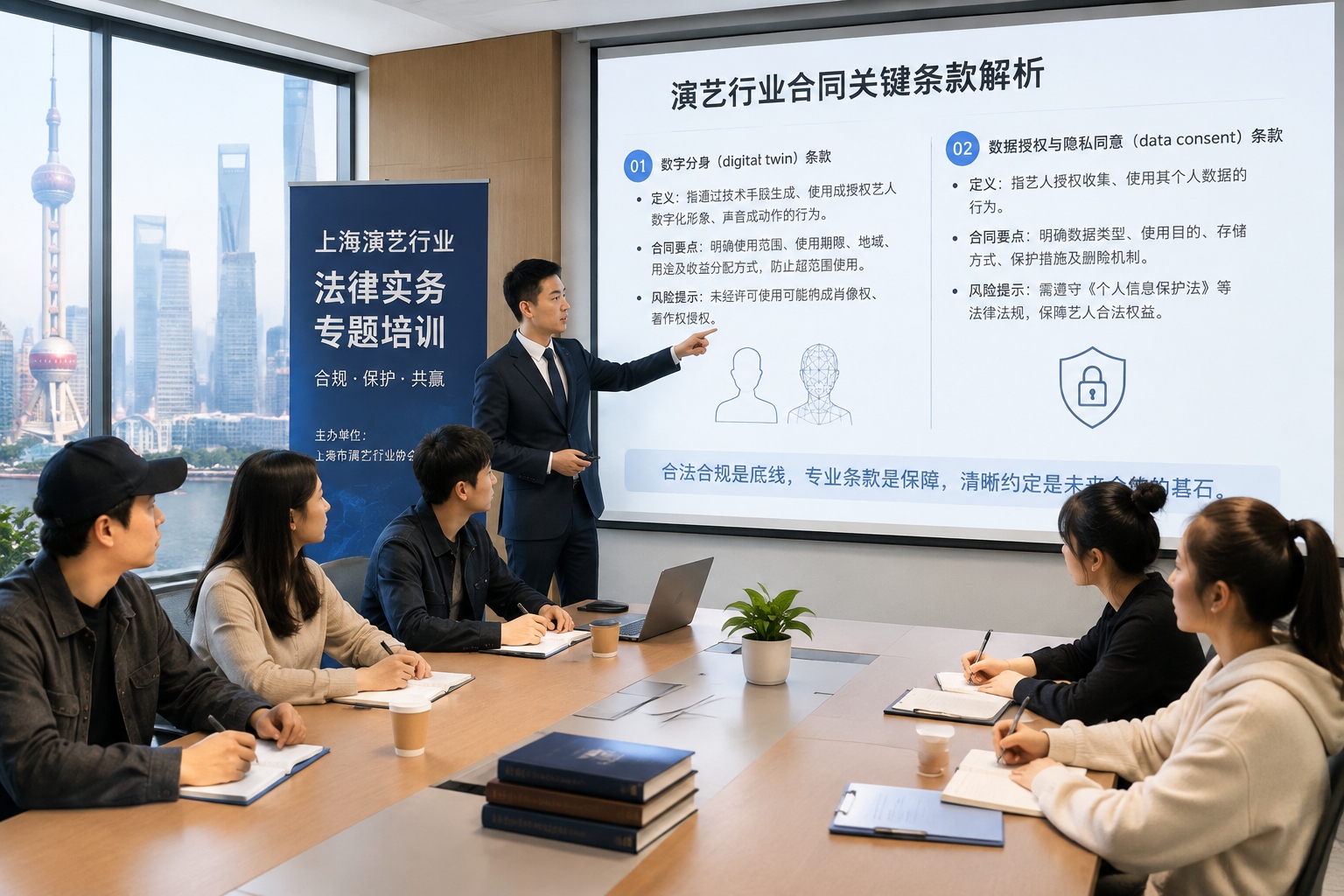
The contracts, meanwhile, remain messy. Many performers discover too late that they signed away digital rights in the fine print. Newer actor contracts now include separate clauses for “2D scanning”, “3D scanning”, “motion capture” and “voice data”, each with a checkbox. That kind of clarity is useful, but it also creates a negotiation burden for actors who have no agent and little legal help.
Can an actor learn to compete with their copy?
Being an actor in the AI age is no longer only about beating a machine at reading lines. It is also about running a small digital identity business.
Some Chinese actors are now negotiating deals in which their own digital double can be used for a limited period or in specific types of roles. They see the copy less as a thief and more as an extra income stream — like an endorsement that only uses their physical memory. This is already visible among public figures involved in e-commerce livestreaming, where overnight sales do not stop.
New jobs are emerging too. “Digital human operator” has appeared on Chinese recruitment platforms, and cultural companies are hiring technical directors who understand how to direct a machine performance. For younger performers without celebrity status, learning on-set AI capture, licensing basics and contract clauses can help them remain employable in a changing industry.
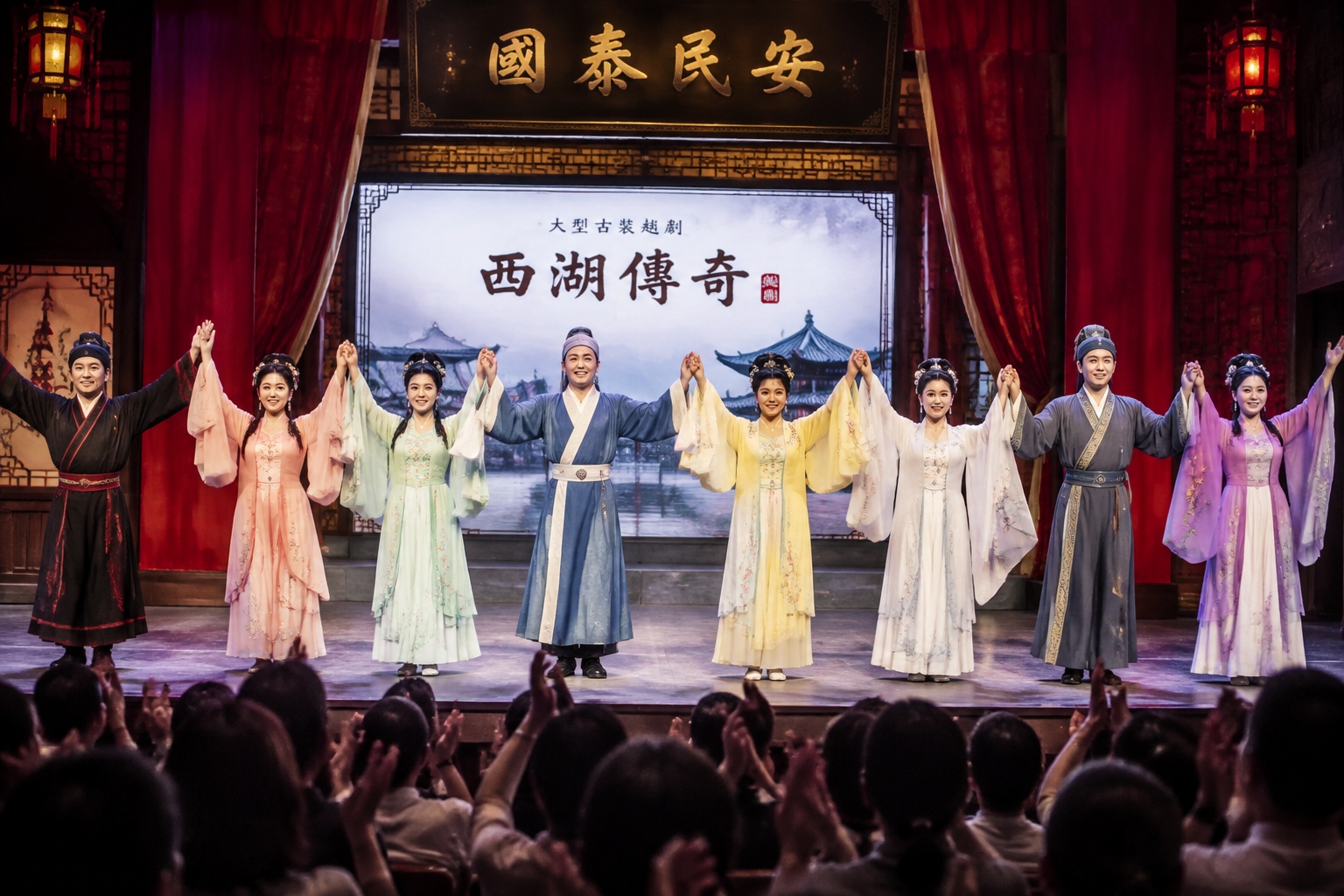
But the deeper change is about why audiences watch humans at all. Attend a live stage play in China today, and you will feel that the most electric moment in performance often lies in an unplanned hesitation or a sudden catch of breath. Even the best algorithm fills every pause with a perfect calculation. The audience forgives a human actor for a shaky voice; they do not forgive perfection that feels robotic.
In that sense, genuine actors are becoming rare and valuable again — but only if they know that it is their own imperfect, living presence that an AI can imitate but not create.
The next battle is not actors versus software
Back to that projected young Jackie Chan. His digital body had to be taught to move like him, which required weeks of motion-capture feeds from the real Jackie Chan at age seventy. The illusion worked because a real performer gave the algorithm something to copy.
The same dependency applies to every actor, at every level. A system that can endlessly reshoot the same material cannot create the moment when a performer finally decides to stop acting. That unnameable transition is the only thing a digital twin can’t steal.
So the question facing a Chinese actor has become more precise. Not “Will I be replaced?” but “Who owns my data, and where do I stand in every contract?” The answer will separate those who become raw material from those who remain artists.
Start the discussion at forum.chinacomes.com