
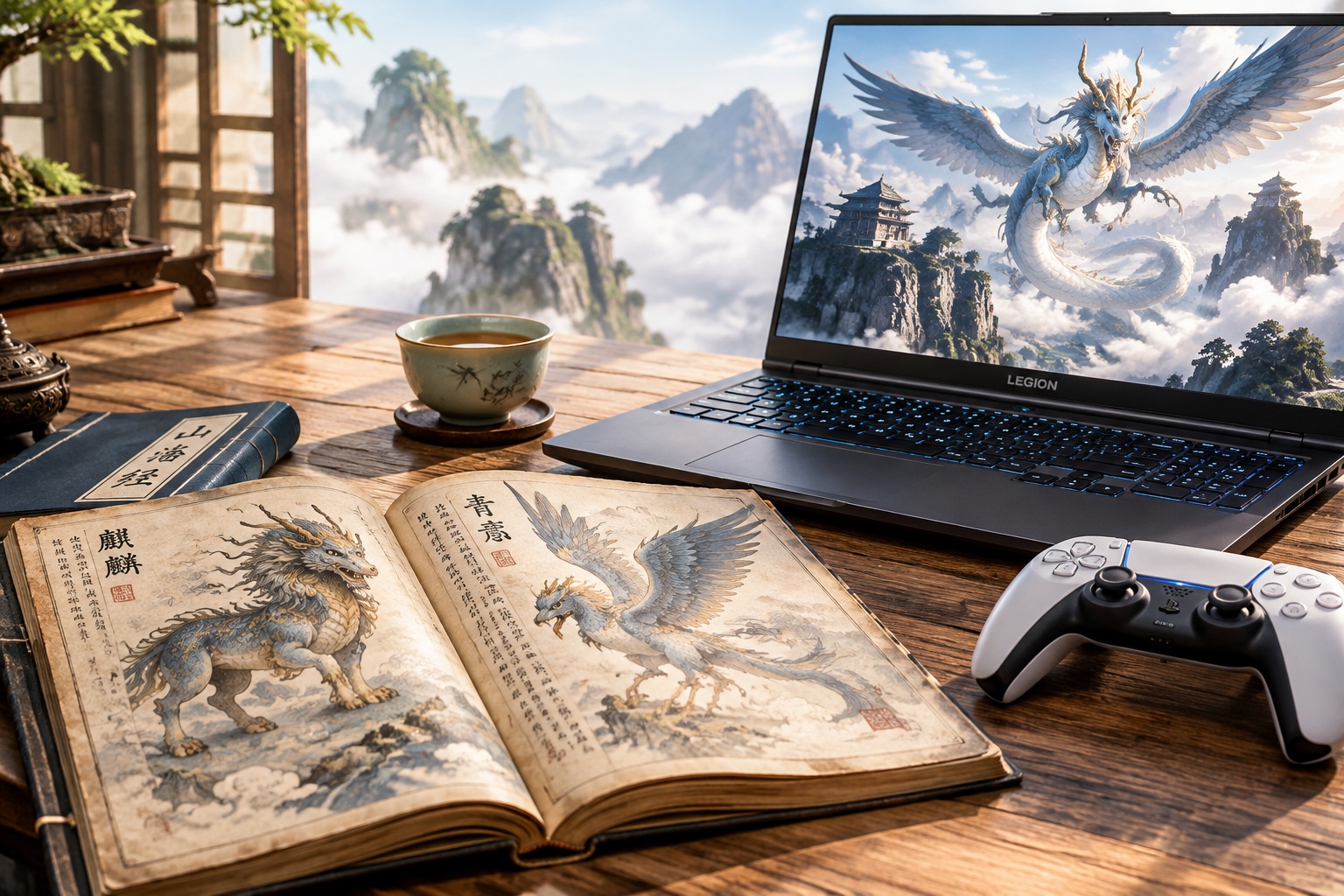

From an Ancient Book to the Modern Screen
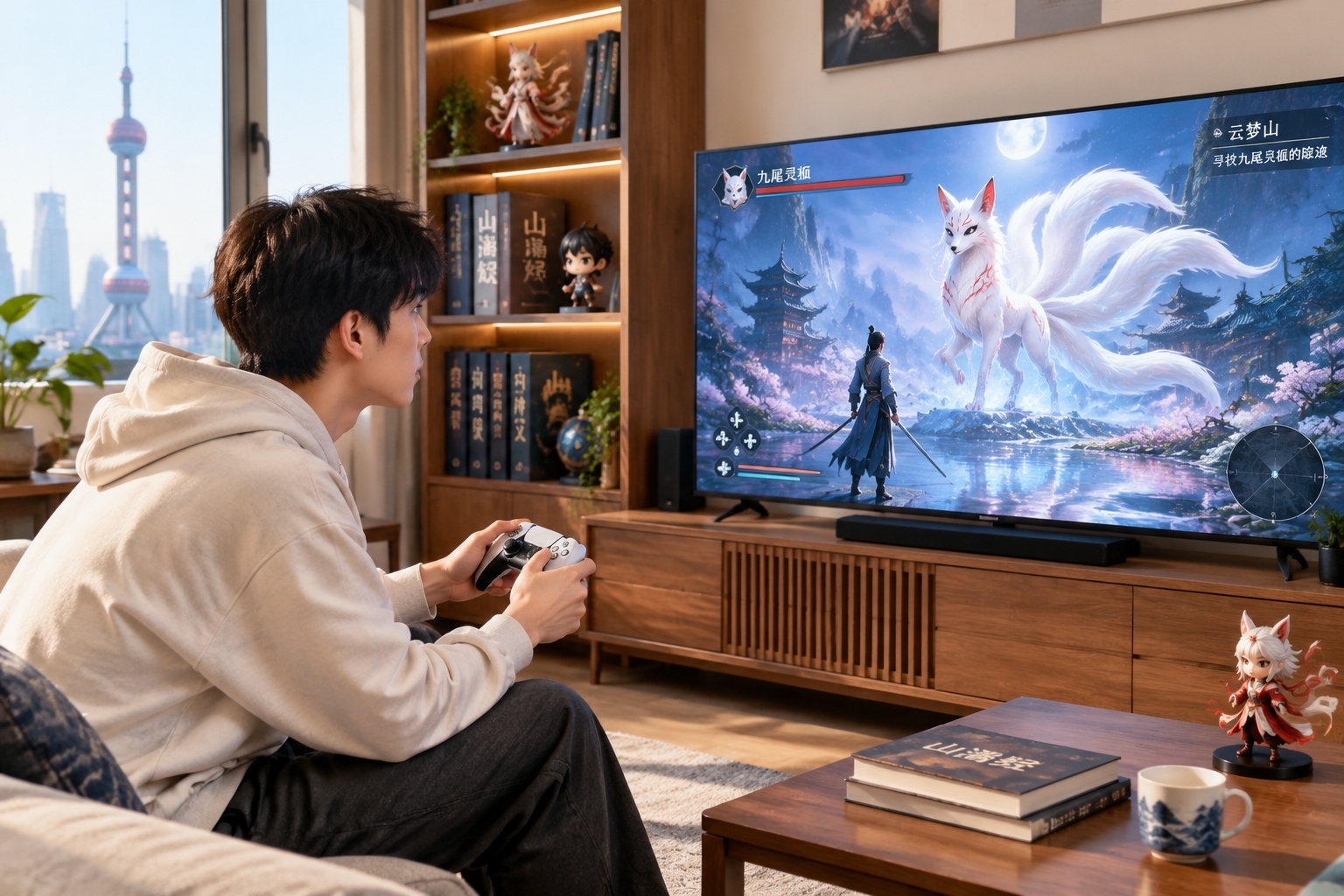
A few weeks ago, I was watching a friend in Shanghai play Black Myth: Wukong. At the most tense moment, a monster emerged from the mist — a horned serpent with wings like a bat. My friend paused the game, pointed to a battered old book on the shelf, and said: that one comes from the Classic of Mountains and Seas.
For overseas readers who are not familiar with Chinese culture, this is an obvious question: what is this ancient book, and why is a modern video game borrowing from it?
What Is the Classic of Mountains and Seas?
The Classic of Mountains and Seas (Shan Hai Jing) is a strange and fascinating text, written more than two thousand years ago. It is part geography, part mythology, and part natural history. The book describes mountains, rivers, and foreign lands, but its most famous content is its catalogue of creatures. There are nine-tailed foxes, horned snakes that can fly, birds that blink like lights — and of course, dragons in every shape, from the serpentine to the feathered.
These descriptions are always brief, often just a line or two. That brevity is exactly why game designers love it. It offers a starting point, not a final answer.
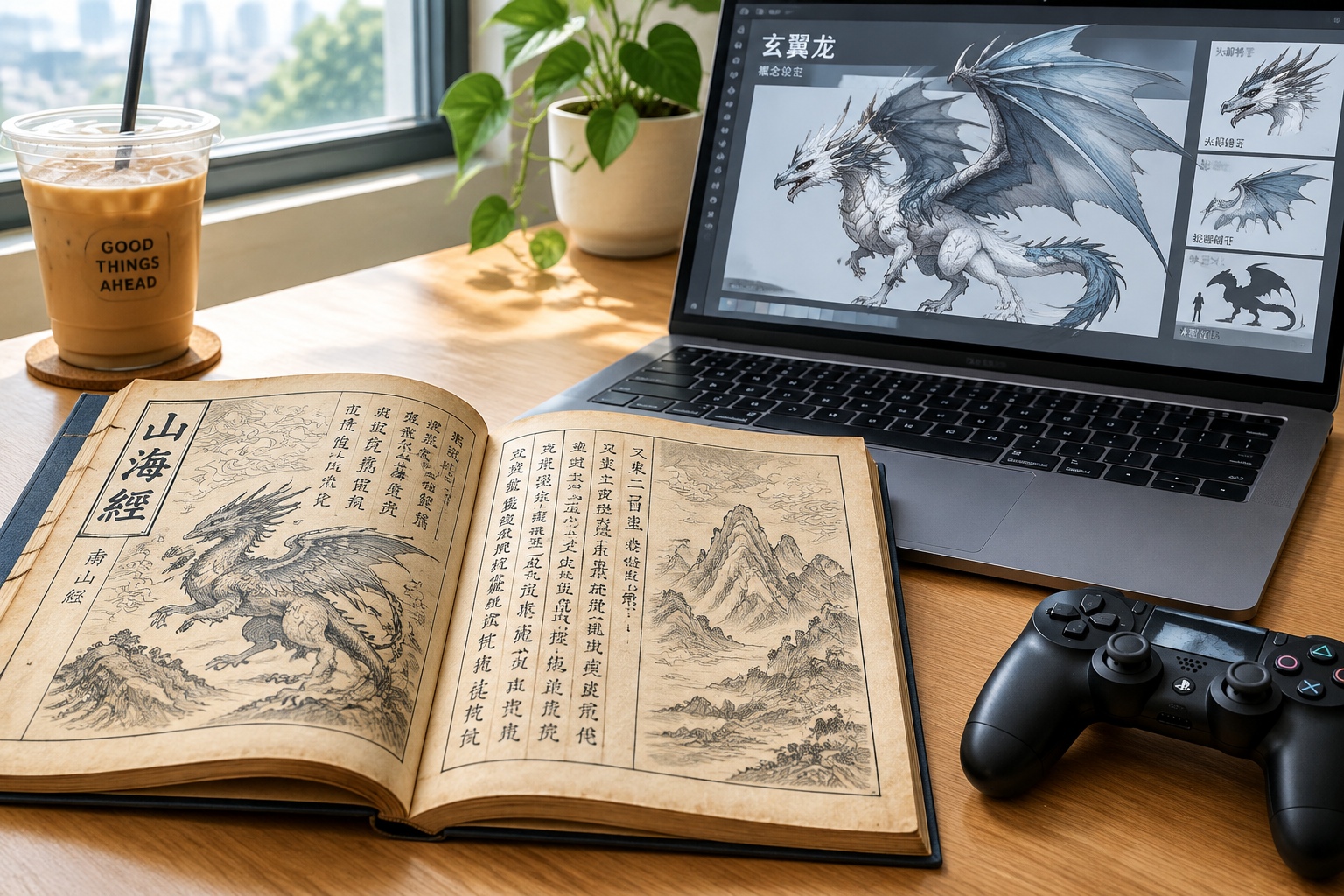
Meet the Beasts: A Quick Field Guide
To understand how ancient myth becomes modern gameplay, it helps to know a few of the best-known creatures:
Qiongqi
A winged tiger with a taste for human flesh. In games, it often appears as a formidable mid-boss, leaping across the arena and striking from above.
Taotie
A gluttonous beast with a huge mouth and no body, famous from Chinese bronze vessels. As a game enemy, it might be a devourer-trap, swallowing players or items.
Yinglong
A winged dragon that once helped ancient heroes control floods. In games, Yinglong is often a noble ally or an end-game mount.
Jiufu
The nine-tailed fox, a shapeshifter found in many Asian stories. Games reinvent it as a spy, a temptress, or a tragic guardian. Either way, players never forget it.
Huan
A strange pig-like creature with one eye and a cry like thunder. It might inspire a magical forest spirit or a guard beast that protects ancient ruins.
Dijiang
A red beast with six legs and four wings, and no face at all. In game design, it becomes a bizarre, fast-moving creature that players must learn to track without relying on normal eyes.
These are only a few examples. The book describes hundreds of creatures, each a ready-made character sketch waiting for a modern artist to fill in the blanks.
Black Myth: Wukong and the Power of Reimagination
When Black Myth: Wukong launched in 2024, it surprised the world with its scale and polished action. The game is based on Journey to the West, a 16th-century novel full of monsters and magic. But the novel itself drew from older sources, especially the Classic of Mountains and Seas. In the game, many creatures feel like they were lifted from the ancient pages and given a fresh layer of dust and fear.
Take the fierce winged serpent I saw that evening. The original text gives only a short description: it lives in a certain river, has horns, and can fly. The designers had to decide how it would move, how it would attack, and how it would sound. They built a creature that was old but felt completely new.
Other Chinese titles are doing similar things. The mobile game Shan Hai Jing, for example, directly names its characters after the book. The hit open-world game Genshin Impact includes a region inspired by China, full of spirits and beasts that echo Shan Hai Jing creatures. Even single-player classics like GuJian and Xianjian have borrowed from the same myth pool.
Inside a Game Design Studio
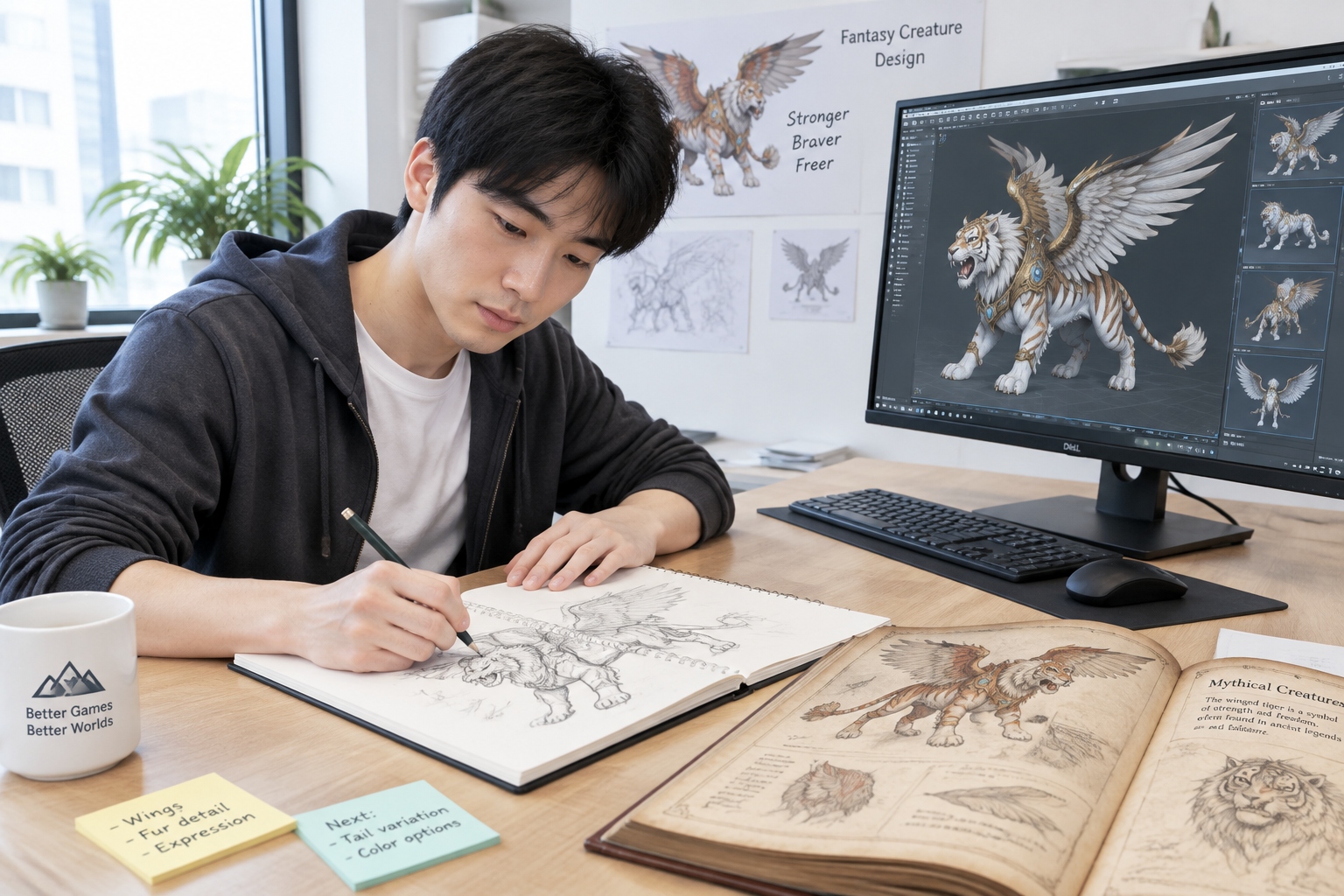
Last month, I visited a small game studio in Shanghai. On one artist’s desk, an old copy of the Classic of Mountains and Seas sat open, its pages marked with sticky notes. The artist explained their process: we read the original description, then we ask — how would this thing move? What would it eat? What does it want? The ancient text doesn’t tell you, so we have to invent the rest. It’s like a puzzle that’s two thousand years old.
That kind of thinking is not unusual. Many Chinese developers now see ancient mythology as a practical resource, not just a school subject. It gives them a visual vocabulary that feels distinct from the dragons and elves of Western fantasy.
Why Ancient Creatures Work in Modern Games
The success of Black Myth: Wukong proved that Chinese mythology can sell on a global scale. In the first week, the game sold ten million copies across all platforms. That caught the attention of developers everywhere.
But there is a deeper reason these creatures work so well. The Classic of Mountains and Seas is not a fixed story with a single plot. It is a list of possibilities. Game designers need worlds with rules and enemies with logic, but they also need surprise. A beast with three heads, or a dog that brings rain, instantly breaks the player’s expectations.
That is why you now see Shan Hai Jing motifs not only in Chinese games, but in international projects too. Anime, comic books, and western fantasy games have started borrowing from the same animal catalogue, sometimes without knowing its origin.
Global Players, New Conversations
For many players in Europe and North America, the creatures in Black Myth: Wukong are their first introduction to Chinese myth. The response has been a mix of awe and curiosity. On social media, fans post screenshots and ask: what is this thing called? The answer often leads them to the Classic of Mountains and Seas, and soon they are searching for English translations of the text.
This cultural exchange is not one-way. Chinese artists also study how foreign games handle mythology. They look at The Legend of Zelda or Elden Ring and learn how to build world lore. The flow of ideas has become global, and the ancient book is now part of that flow.
Beyond Gaming: The Living Myth
The power of the Classic of Mountains and Seas goes far beyond game screens. It shows up in toys, clothing, and street performances. In China, you can see people using the book’s animals to decorate phone cases, tattoos, and even theme-park rides.
For the younger generation, this ancient text is not something to memorize for an exam. It is a source of visual style, a creative playground. Getting to know it is like finding a hidden level in a game that you thought you had already finished.
The Next Monster Is Already Waiting
So the next time you play a Chinese game and meet a creature that makes you stop and stare, do a quick search. There is a good chance it came from the Classic of Mountains and Seas. This book has been around for more than two thousand years, and it is not going away.
As game engines get faster and artists get more ambitious, the ancient beasts will only become more vivid. The monster you face in today’s boss fight might be the distant cousin of a creature imagined by a writer during the Han dynasty. That is not just a game design trend; it is a living conversation between the past and the future.
Start the discussion at forum.chinacomes.com