
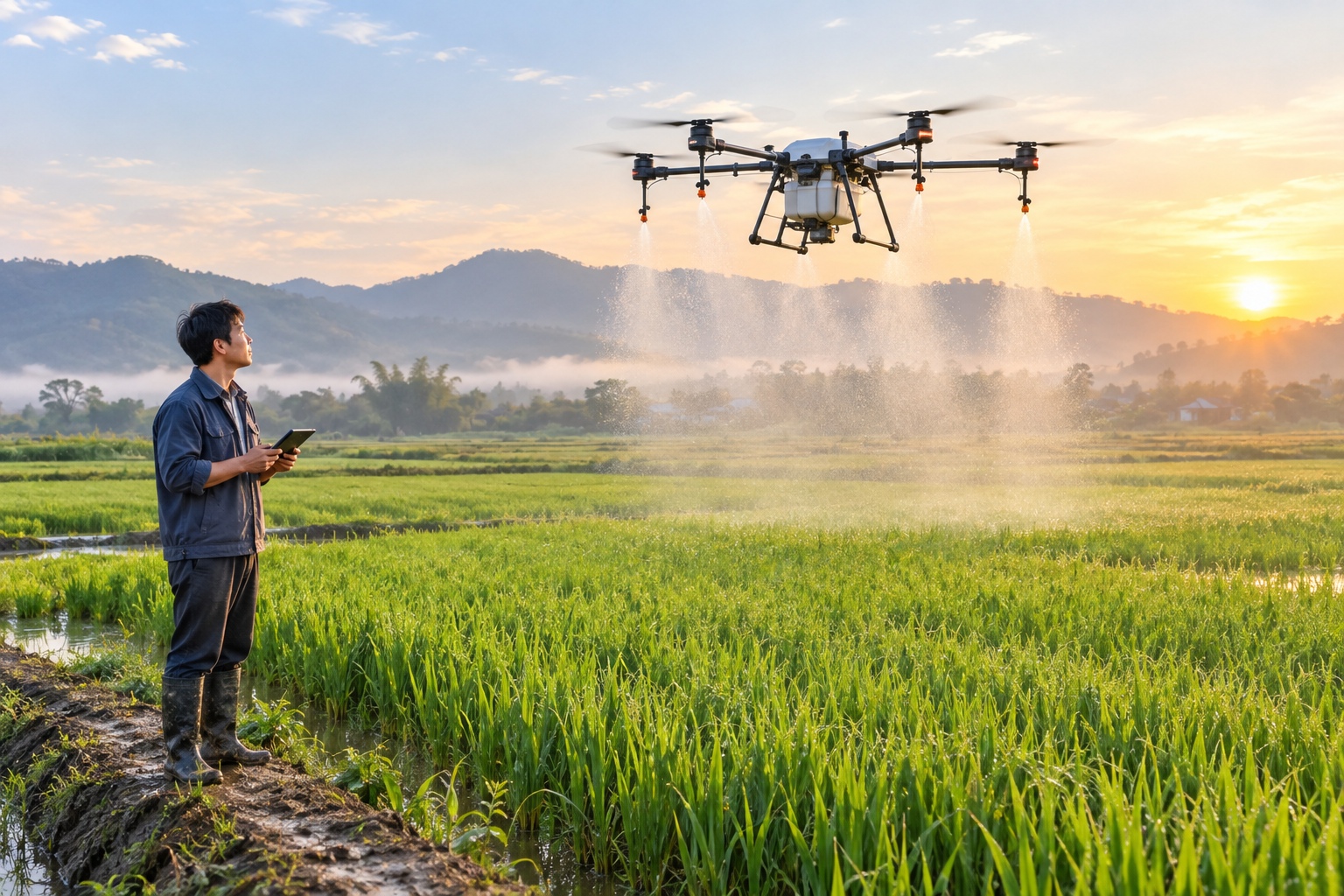

A little before seven in the morning, in a rice-growing county in Hunan province, Zhang Wei stands at the edge of a paddy field with a tablet in his hand. The air smells of wet earth and duckweed. His phone buzzes with a route plan, and a six-rotor machine lifts into the air with a soft whir. It will crisscross the rice for the next hour, spraying pesticide exactly where the app tells it.
Zhang is not an engineer from a tech start-up. He is a 34-year-old crop-protection contractor who learned to fly drones two years ago. The machine above him was not made by DJI—the Shenzhen company that most foreigners think of when they hear ‘China drone.’ It was built by XAG, a Guangzhou-based rival, or possibly by one of many smaller manufacturers that now sell specialized unmanned aircraft to people like Zhang.
This is the part of China’s drone boom that rarely appears in viral videos: drones that spray crops, inspect power lines, deliver medicine, and map construction sites. They may never earn a million views on TikTok, but they are quietly reshaping the economy—one field, one tower, one hillside village at a time.
A Morning in a Rice Paddy
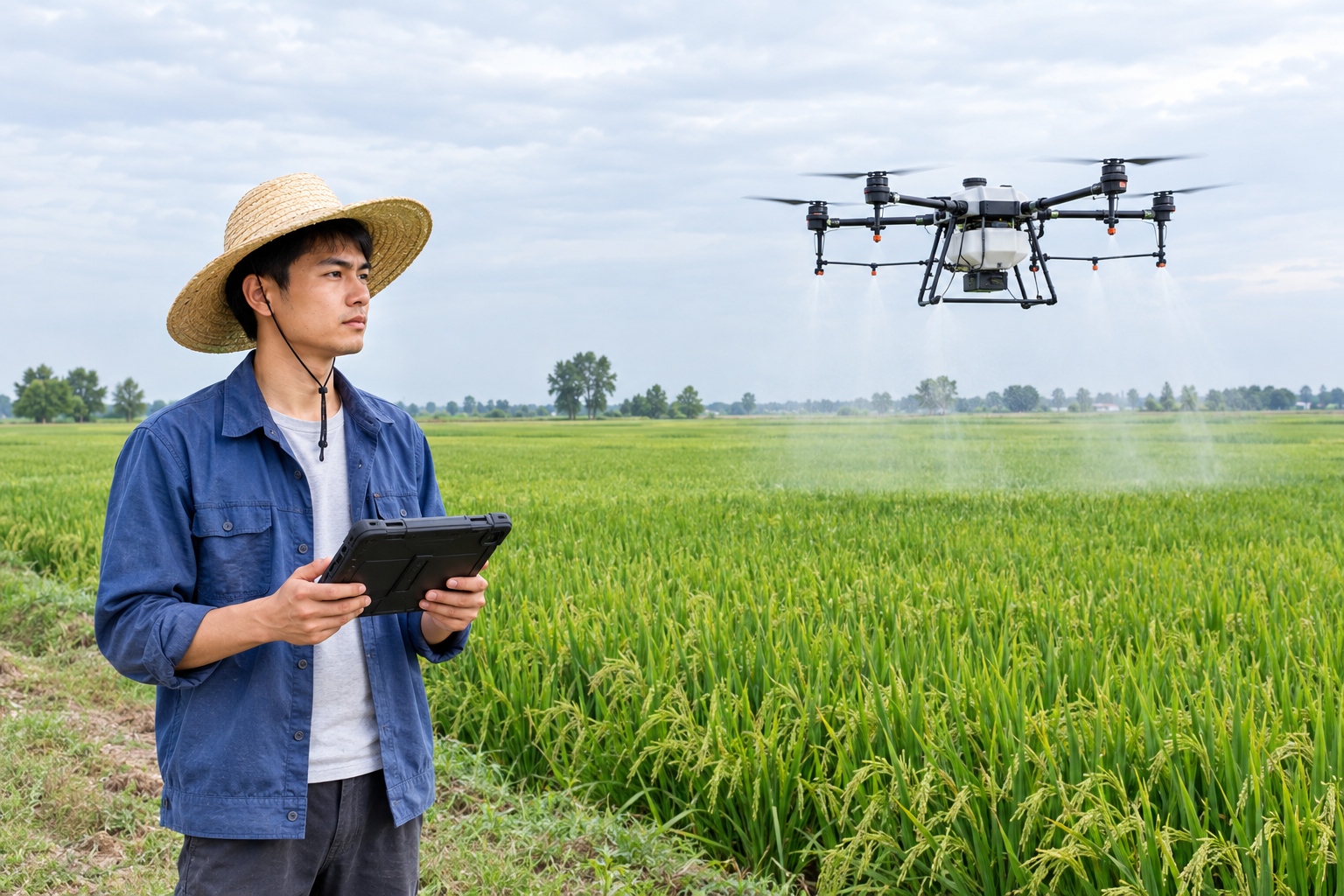
Zhang charges about 8 yuan per mu—roughly one-fifteenth of an acre—for a completely sprayed field. In peak season, he covers 300 to 400 mu per day. ‘A worker with a backpack sprayer gets through maybe twenty,’ he says. The math is simple. The advantage is not just speed; it’s safety, because no one has to walk through mist that carries chemicals.
The drone he flies is an agricultural P-series from XAG, a company that focuses almost entirely on outdoor robots. Its newest models use real-time kinematic positioning and high-definition mapping. The operator draws the field boundary on a tablet; the drone plans its route, flies close to the crops, and uses its rotary nozzles to keep spray on the plant rather than on the soil.
Older farmers were skeptical at first. Zhang remembers neighbors saying that the flying machine would blow their rice flat. Then they stood on the ridge and watched it work. The rice sprang back. Most asked for his phone number after that first harvest.
Agriculture is now one of China’s fastest-growing drone segments. Domestic and industry figures suggest that more than 200,000 agricultural drones operate across the country—some estimates go as high as half a million—covering hundreds of millions of acres a year with pesticide, fertilizer and seed. DJI still dominates in market share with its Agras series, but XAG and dozens of regional brands have carved out niches based on reliability, service and software.
More Than Crop Dusting: Inspecting Power Lines and Pipelines
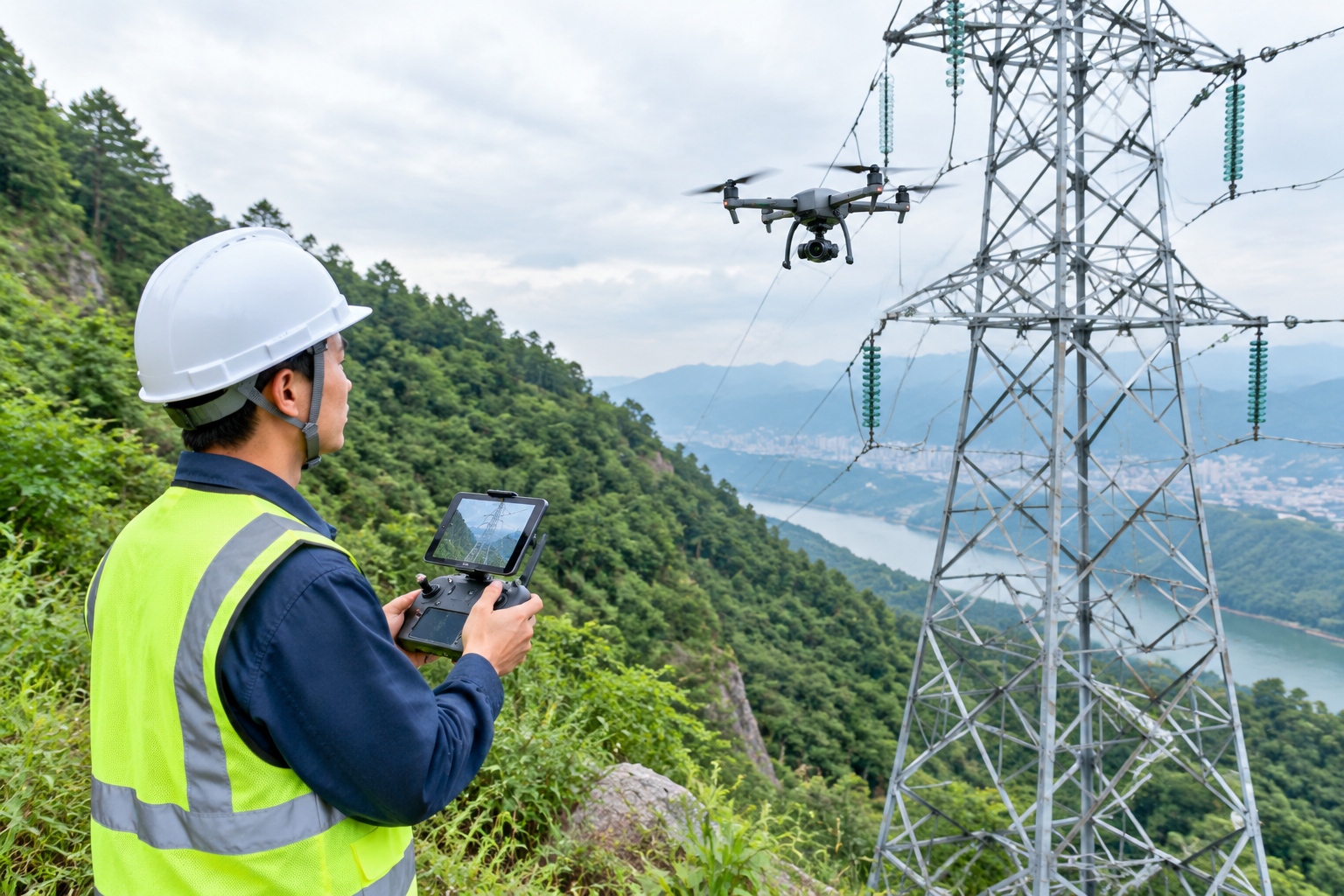
About 1,200 kilometers northwest, near the steep forested hills of Chongqing, a power-grid inspector pins on his safety harness and reaches for a quadcopter. He is checking a 110-kilovolt transmission tower that used to be climbed by hand. In the past, an employee had to scale the steel lattice to look for rust and cracks. That took half a day and opened the door to falls from twenty meters up.
Now the drone hovers a few meters from the tower, its gimbal zooming onto every bolt. The inspector, standing safely on the ground, checks the images in real time. The whole tower is done in ten minutes. Photos are sent to a cloud platform, and AI software helps spot tiny defects that human eyes tend to gloss over. Similar aircraft now patrol natural-gas pipelines, wind farms, and the scaffolding of high-rise buildings under construction.
For drone manufacturers, industrial inspection is where the money is. A single certified inspection drone can cost ten times more than a camera drone, and it has to survive rain, dust and electromagnetic interference from the very power lines it inspects. That has created room for start-ups such as JOUAV, a Chengdu-based maker of fixed-wing and vertical take-off drones, and for a long list of smaller specialized firms.
From Remote Villages to Emergency Drones: Logistics Takes Off
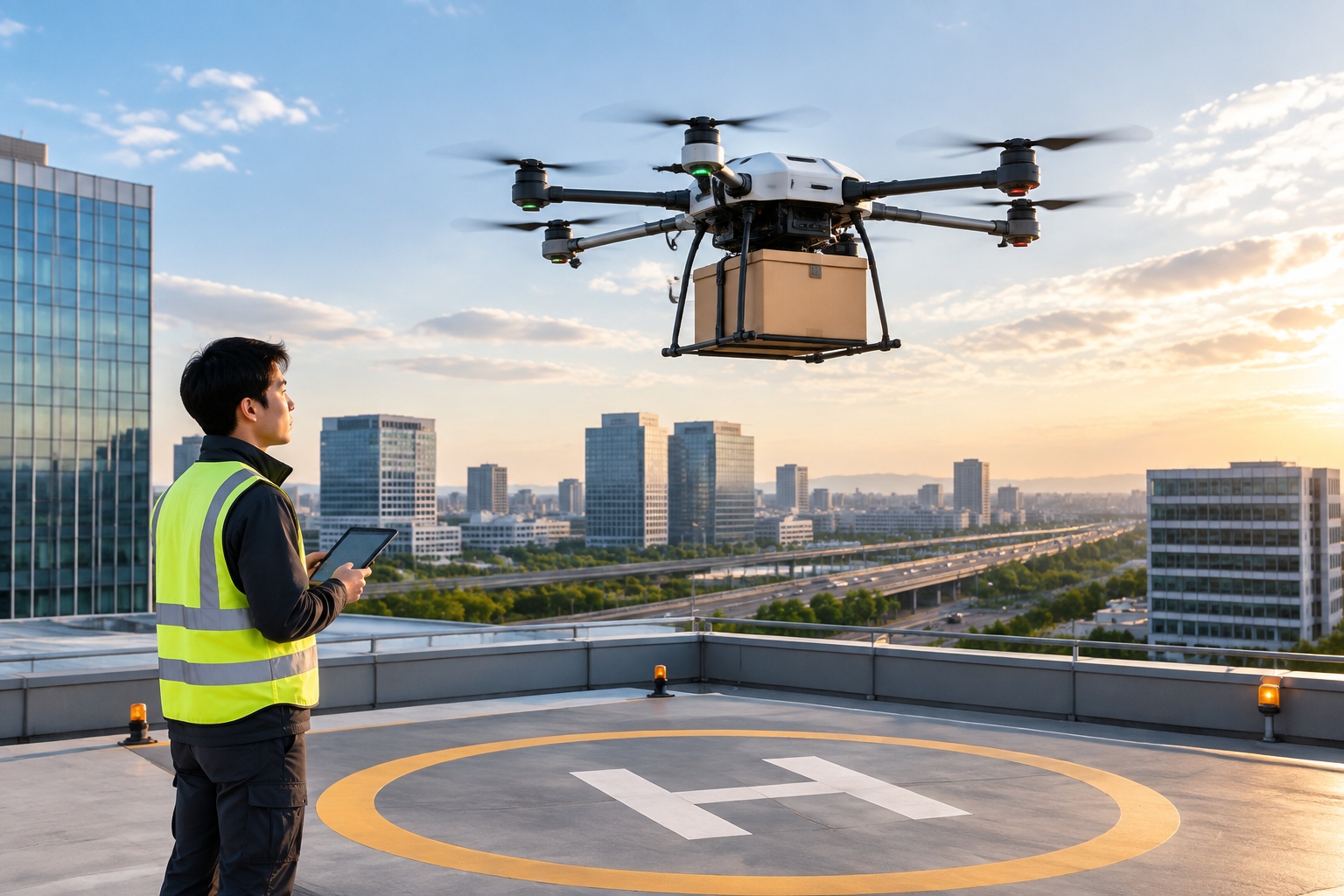
In the mountains of Zhejiang province, a medical drone has started making routine trips to a village clinic that sits on the other side of a river—unreachable by road when the narrow bridge is closed in floods. In the Yangtze River delta, an e-commerce company uses drones to deliver fresh fish and packages to small islands. In hospital compounds in Guangzhou and Shanghai, drones carry blood samples and emergency drugs between buildings, shaving minutes off a diagnosis that might literally count.
The COVID-19 pandemic turned many of these experiments into habits. When Wuhan was under lockdown, several drone companies transported test samples and supplies, proving that unmanned aircraft could operate under pressure in a city with blocked roads.
Logistics by drone still faces serious limits: battery life is short, load weights are light, and low-altitude airspace is crowded with new entrants. No one is replacing delivery vans yet. But for the last 10 kilometers of a delivery—or the last 300 meters inside a hospital campus—drones increasingly fit the job description. In 2024, a suburban district outside Shenzhen opened a dedicated low-altitude route network with rooftop landing pads and a management center that coordinates hundreds of scheduled flights per day.
How Policy and Supply Chains Shape This Ecosystem
None of this would have come together without a distinct mix of government policy and factory-floor speed.
In early 2024, the Chinese central government explicitly listed a ‘low-altitude economy’ in its annual work report for the first time. That policy signal sent local governments across China into action: they allocated land for drone airports, simplified approval for test flights, and created drone-scouting teams for emergency response. Provincial governments in Guangdong, Sichuan and Zhejiang now have their own industrial funds dedicated to drones and eVTOL (electric vertical take-off and landing aircraft).
On the supply side, Shenzhen and Guangzhou have built so-called drone corridors where a maker of composite propellers can order carbon-fiber arms from the workshop next door and have them delivered the same day. This density matters when a company needs to certify a new aircraft model in a few months, not years.
Not every company is thriving. Price competition has been brutal, and smaller players in racing drones or simple toys have folded. But each year, more professional-grade hardware reaches the market. According to data from the Zhongguancun Industrial Research Institute, the country’s civil drone market was worth around 120 billion yuan in 2023—about 17 billion U.S. dollars—and is expected to pass 200 billion yuan by 2025. The growth is now driven less by consumer toys than by machines that work for a living.
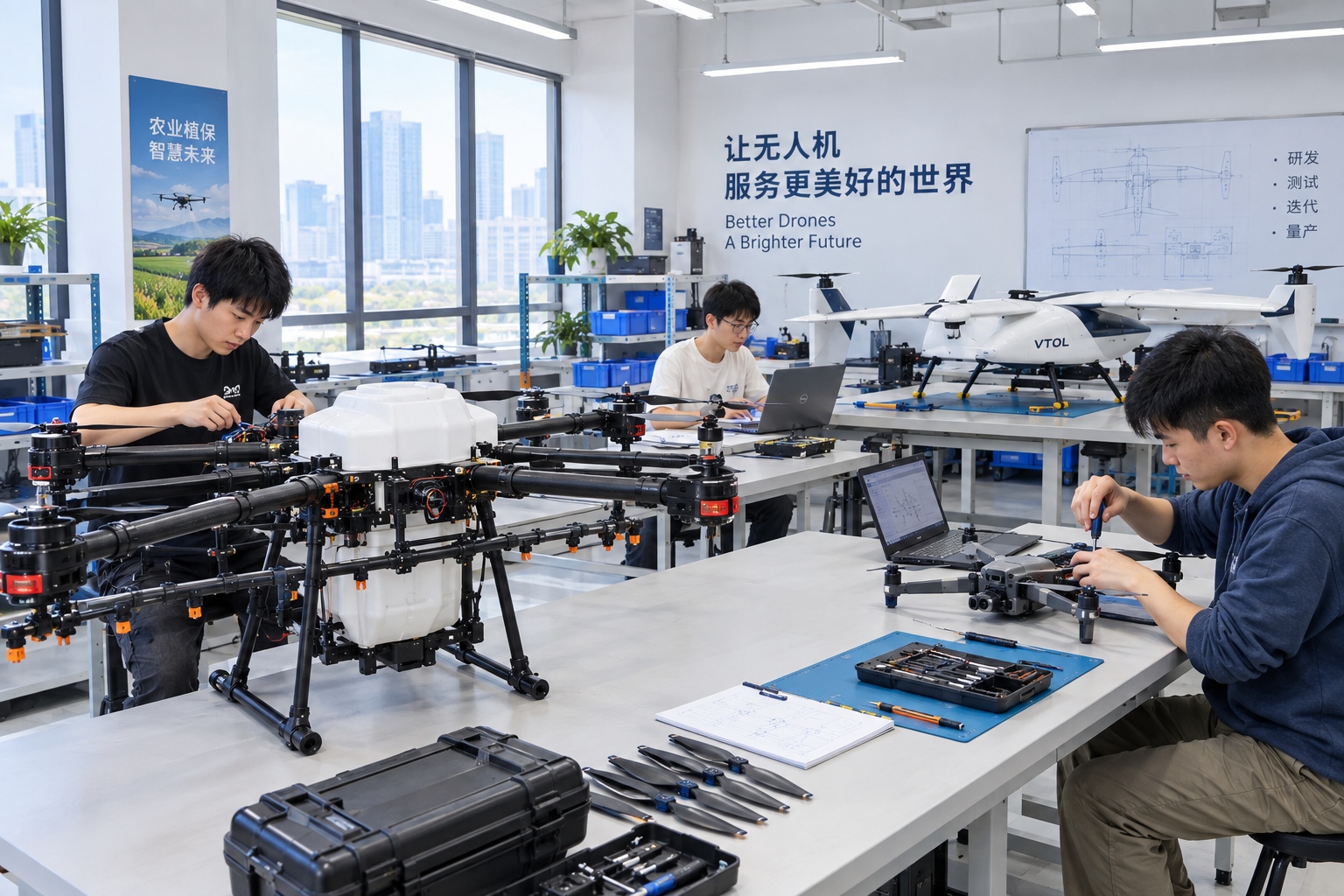
Overseas Opportunities: China’s Drone Solutions Go Global
The new wave has also started to spread across borders. Chinese agricultural drones, once dismissed as a local novelty, are now flying over rice paddies in Thailand and vineyards in southern Italy. XAG and DJI both operate farmer-training programs in Southeast Asia. In some African countries, start-ups import Chinese drones to deliver blood to remote clinics. The offer is the same one that works in China: fewer worker-hours, fewer accidents, more data for the farmer or utility operator.
Overseas expansion is not frictionless. Drone exports are scrutinized in many markets; too often, people see a quadcopter and think ‘camera’ or ‘missile.’ But for a farm in Vietnam or an electric company in Brazil, the value proposition is easier to explain: it is a machine that flies a pre-set route, records precise images, and lands without drama.
Conclusion: A Quiet Workforce in the Sky
Back in Hunan, Zhang Wei watches his agricultural drone drop low, hover, and land near his foot. The rotors stop. He walks to pick it up, already planning the next job. Someone asks if he worries that automation will make him obsolete. He laughs. ‘I stopped being a manual farmer the day I started using this. Now I’m an aerial operations manager.’
That joke captures something true. China’s drone industry is no longer just about impressive machines in videos. It is a quiet, specialized fleet working above rice fields and power lines, carrying medicine on island routes, and measuring the condition of every building and bridge. For the world, these are not just Chinese products. They are a reminder that some of the most meaningful technology is invisible, hovering low above the things we all need to survive.
Start the discussion at forum.chinacomes.com