

A building that learned to walk
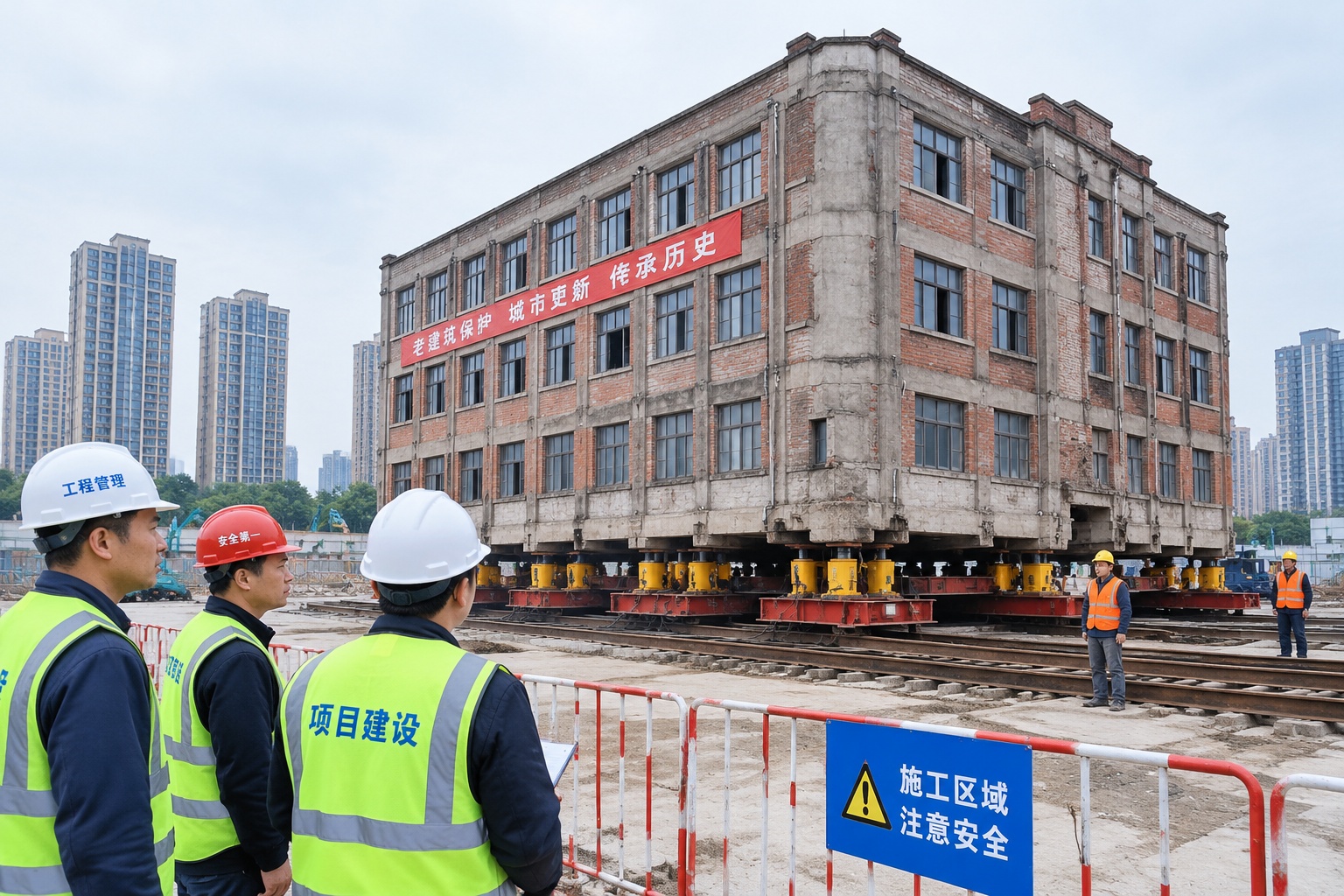
On a spring morning in Shanghai in 2023, a crowd gathered behind a safety barrier to watch something most of them had only seen in short videos: a five-story, 7,600-ton concrete school building slowly rotating and sliding across an empty lot. It did not shake apart. It did not crack. Over 18 days, the Lagena Primary School, built in 1935 in the city’s Yangpu district, traveled a curved path, turned about 90 degrees, and settled onto a new foundation several dozen meters away.
The building moved on 198 mechanical “legs” — hydraulic supports that lifted it, then shuffled it forward step by step, the way you might inch a heavy wardrobe across a room by rocking it. Engineers nicknamed the method “the walking machine.” To the people watching, it looked less like construction and more like the building had decided to go for a stroll.
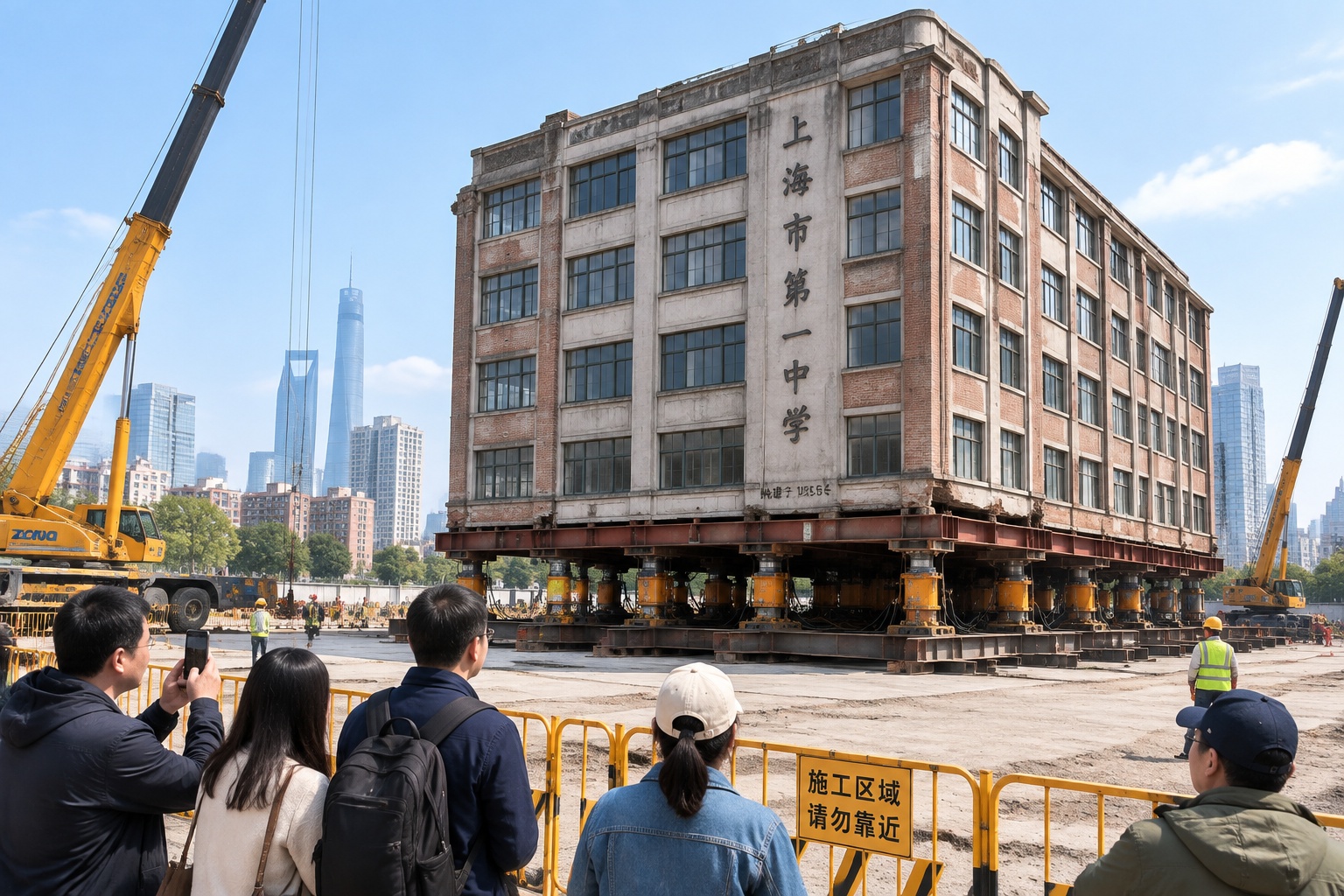
This was not a stunt. Shanghai needed the land for a new commercial and underground transit complex, but the school was a protected historical structure. Tearing it down was not an option. Rebuilding a replica would have erased the real thing. So the city chose a third path that has quietly become a Chinese specialty: pick the whole building up and move it.
How you move a building without breaking it
The basic idea is older than you might expect. Building relocation — in Chinese, jianzhu pingyi, literally “architecture horizontal shift” — has been attempted in various countries for over a century. What has changed is scale, precision, and how routine it has become in China.
The process works in a few stages. First, engineers reinforce the structure so it behaves as one rigid block instead of a stack of fragile parts. They wrap the base in a thick concrete frame, almost like fitting the building with a tray. Then they cut it free from its original foundation — the single most nerve-wracking moment, because for a short time the building rests only on temporary supports.
Next comes the track. Steel rails or sliding beds are laid along the planned route. The building, now sitting on rollers, sliders, or those hydraulic walking legs, is pushed by jacks that move it a few centimeters at a time. Sensors monitor tilt and stress constantly. A deviation of even a centimeter gets corrected before the next push. Finally, the building is lowered and bonded onto a brand-new foundation, often one that is sturdier and better protected against earthquakes than the original.
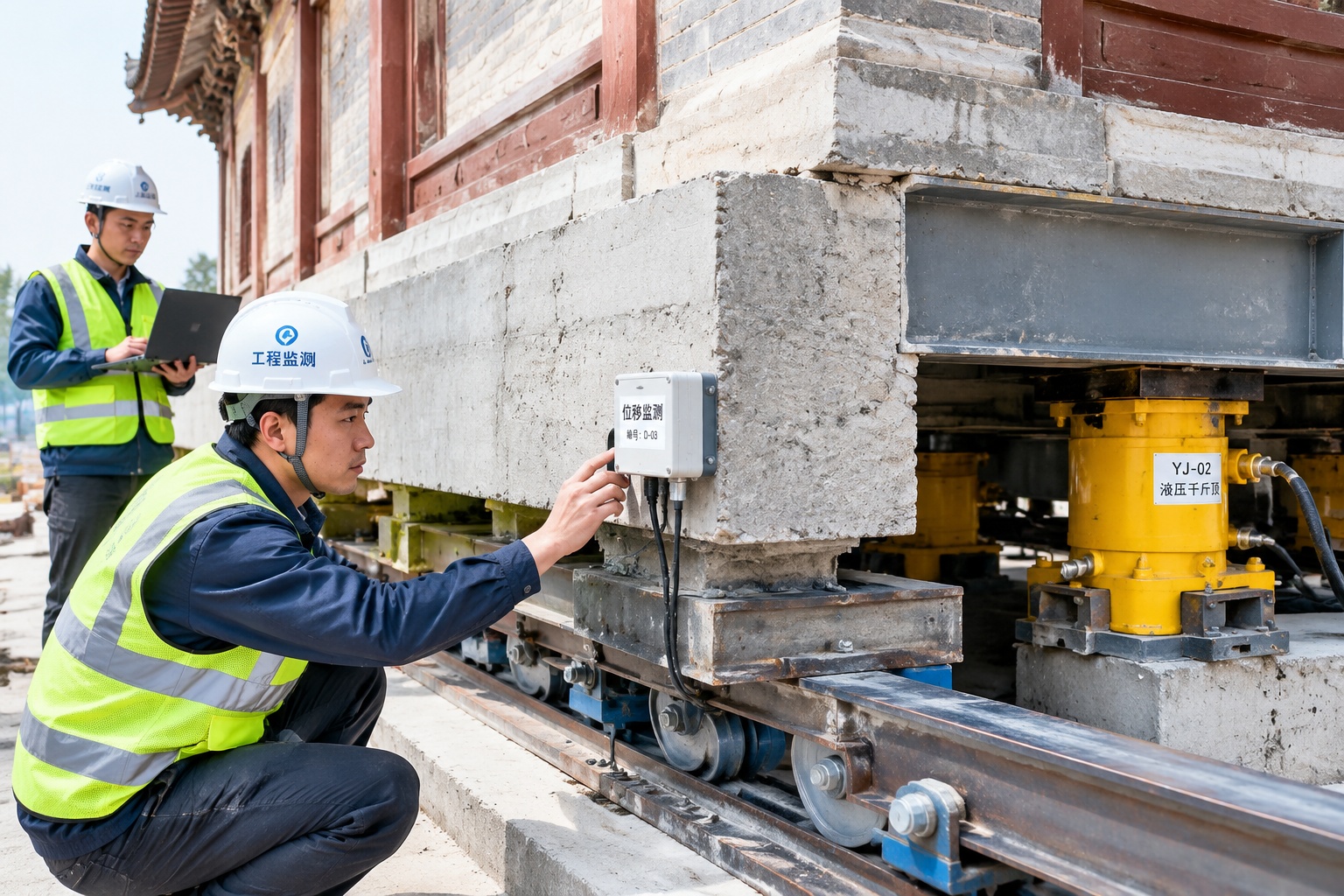
The hard part is not the pushing. It is keeping an old, often brittle structure perfectly level and intact while it is in motion. Brick walls crack easily. Old mortar is weak. A one-degree tilt can send a stress fracture racing up a wall. This is why relocation is as much about measurement and control as it is about brute force.
Why China does so many of them
If you search for building relocation projects, a striking share of the recent, record-setting ones are Chinese. There are concrete reasons for that, and they say a lot about the country today.
The first is simply the pace of urban change. For three decades, Chinese cities expanded and rebuilt at a speed with few historical parallels. Subway lines, ring roads, and new districts kept running into older buildings that stood in the way. When one of those buildings carries legal heritage protection or strong public sentiment, demolition becomes politically and emotionally costly. Relocation turns an either-or problem into a both-and solution.
The second reason is capacity. China has an enormous construction industry, a deep bench of structural engineers, and firms that have done this often enough to treat it as a repeatable service rather than a one-off miracle. Shanghai alone has relocated dozens of historic structures. Companies specializing in pingyi now bid on these jobs the way others bid on bridges.
The third is a shift in values. Twenty years ago, the default instinct in a fast-growing city was to clear the old and build the new. That instinct has softened. Residents push back when a familiar landmark is threatened. Local governments have learned that keeping a century-old facade can raise the appeal of a new district rather than slow it down. A relocated 1920s villa sitting beside a glass office tower has become a selling point, not an obstacle.
The people who move the past
Behind each of these projects is a team that spends months on calculations most of us never see. I spoke with engineers who have worked on relocations, and a few themes came up again and again.
One is patience. These jobs are slow on purpose. “People expect it to look dramatic,” one project engineer told me, “but a good move is boring. If something exciting happens, that usually means something went wrong.” The thrill, for them, is in the days of silence when every sensor reads normal.
Another is responsibility. Several described the strange weight of being personally in charge of a building that outlived their grandparents. “You are the only generation that will ever pick it up and move it,” one said. “If you drop it, that history is gone, and it is on you.” That pressure shows up in the redundancy they build into everything — backup jacks, backup power, backup monitoring.
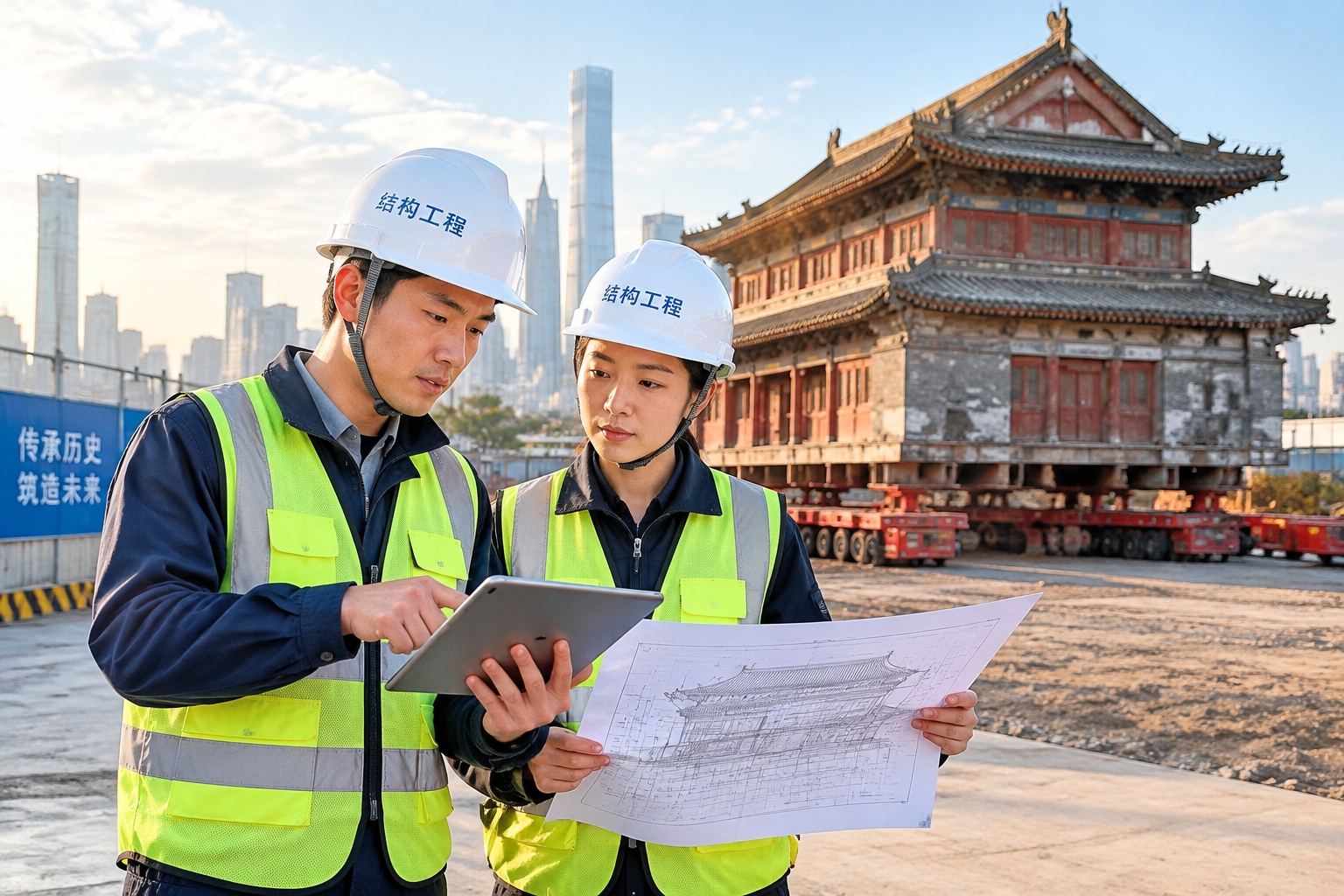
The third is a quiet pride that has nothing to do with records. Many of these engineers grew up in the same cities whose skylines they are now reshaping. Saving a school their parents might have attended, or a bank building their grandparents walked past, turns an abstract job into something personal. One engineer kept a photo of the original building on his phone and compared it, almost daily, to the structure sitting on its new foundation.
What relocation can and cannot solve
It would be easy to present building relocation as a tidy answer to the clash between growth and heritage. The reality is more mixed, and worth being honest about.
Relocation is expensive, often far more than demolition and sometimes comparable to new construction. It makes sense only for buildings with real historical, architectural, or emotional value. Most ordinary old structures are not candidates, and plenty still come down.
There is also a deeper debate. When you lift a building off the ground it has stood on for a century and set it down somewhere else, have you saved it, or changed what it is? A historic building is partly its context — the street, the neighbors, the exact corner where people met. Move it, and you keep the bricks but alter the meaning. Preservationists argue about this, and there is no clean answer.
Still, set against the alternative — losing the building entirely — relocation keeps a real, physical piece of the past in the living city rather than in a photograph or a museum model. The Lagena school now serves as part of a cultural and commercial space, open to the public, carrying its 1935 facade into a district built almost a century later.
A larger pattern, told in concrete
If you want to understand how China handles its own history right now, these moving buildings are a useful lens. The country is no longer only tearing down and building up. It is also, increasingly, trying to carry parts of the old world forward — not out of nostalgia alone, but because people have decided those pieces are worth the engineering, the money, and the time.
A building walking slowly across a construction site, measured to the centimeter, is a strange and literal image of that choice. It is development and preservation holding hands in the most physical way possible: the past, lifted off the ground, moved carefully aside, and allowed to stay.
Start the discussion at forum.chinacomes.com