


A morning that begins before the tour buses
At 5:40 a.m., the light over West Lake is still blue. Chen Lihua, 57, is already near the halfway point of Su Causeway. She retired last year and now walks this route almost every day — about six kilometers, sometimes eight if the weather is good. “If I skip it, my day feels off,” she says, not slowing down. A small speaker clipped to her waist plays old Yue opera.
By 6:30, the causeway is busy. Retirees practice tai chi with slow, precise hands. A group of women in matching pink jackets speed-walk past. A few teenagers on rented bikes wobble toward school. The first tour groups won’t arrive for another hour.
This is the West Lake that many visitors never see. Not because it’s hidden, but because it happens early, before the lake turns into a photo backdrop. For a lot of Hangzhou residents, the lake isn’t a scenic spot. It’s a habit.
What changed in 2002
That habit wasn’t always possible. For decades, many parks around West Lake charged admission. A family outing meant buying tickets at several gates. Local residents often stayed away.
In October 2002, Hangzhou removed the gates and ticket booths around the lake’s public parks. The change was bigger than it sounds. West Lake’s water covers about 6.4 square kilometers, and the lakefront path runs roughly 15 kilometers around. Suddenly, the whole shoreline became an open public space — no ticket, no closing time.
The city gave up ticket revenue. What it gained was harder to measure: daily use. Today, on an ordinary Tuesday, most people around the lake are not tourists. They are residents.
Who the lake belongs to now
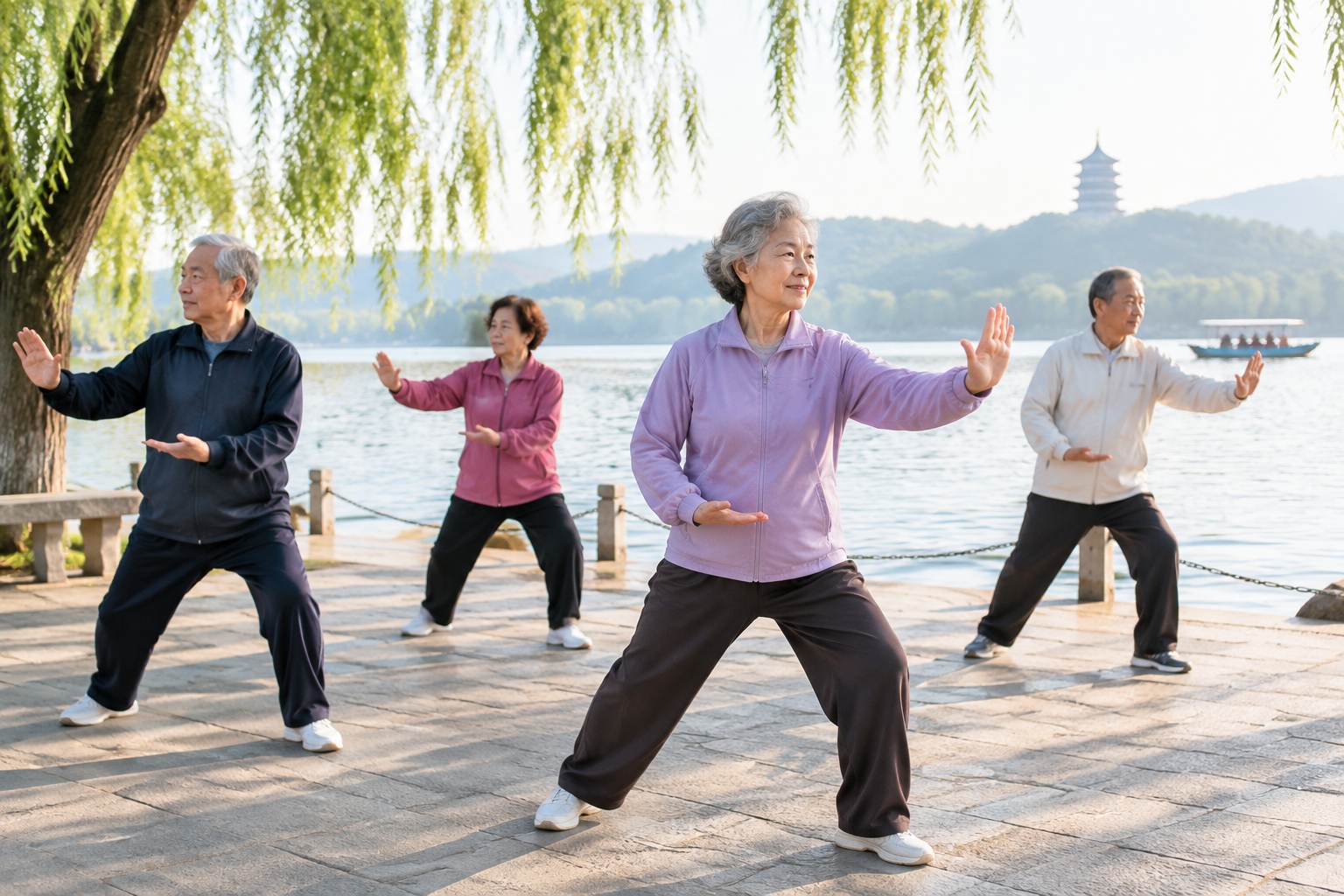
On a recent weekday morning, I counted the people I passed on a 30-minute stretch near Beishan Road: two men arguing about a chess move, three women stretching before a run, a man in a delivery uniform sleeping on a bench with his helmet over his face, a mother pushing a stroller while listening to a podcast, and at least a dozen people simply walking — no headphones, no destination.
That mix matters. A free lakefront gives different people different things. For retirees, it’s a social club. For runners, it’s a measured track. For students, it’s a cheap place to hang out. For gig workers, it’s a place to rest between orders. For couples, it’s a date that costs nothing.
None of this requires buying a ticket, booking a slot, or spending money at a café. You can, of course. But you don’t have to.
The city built a path to the water
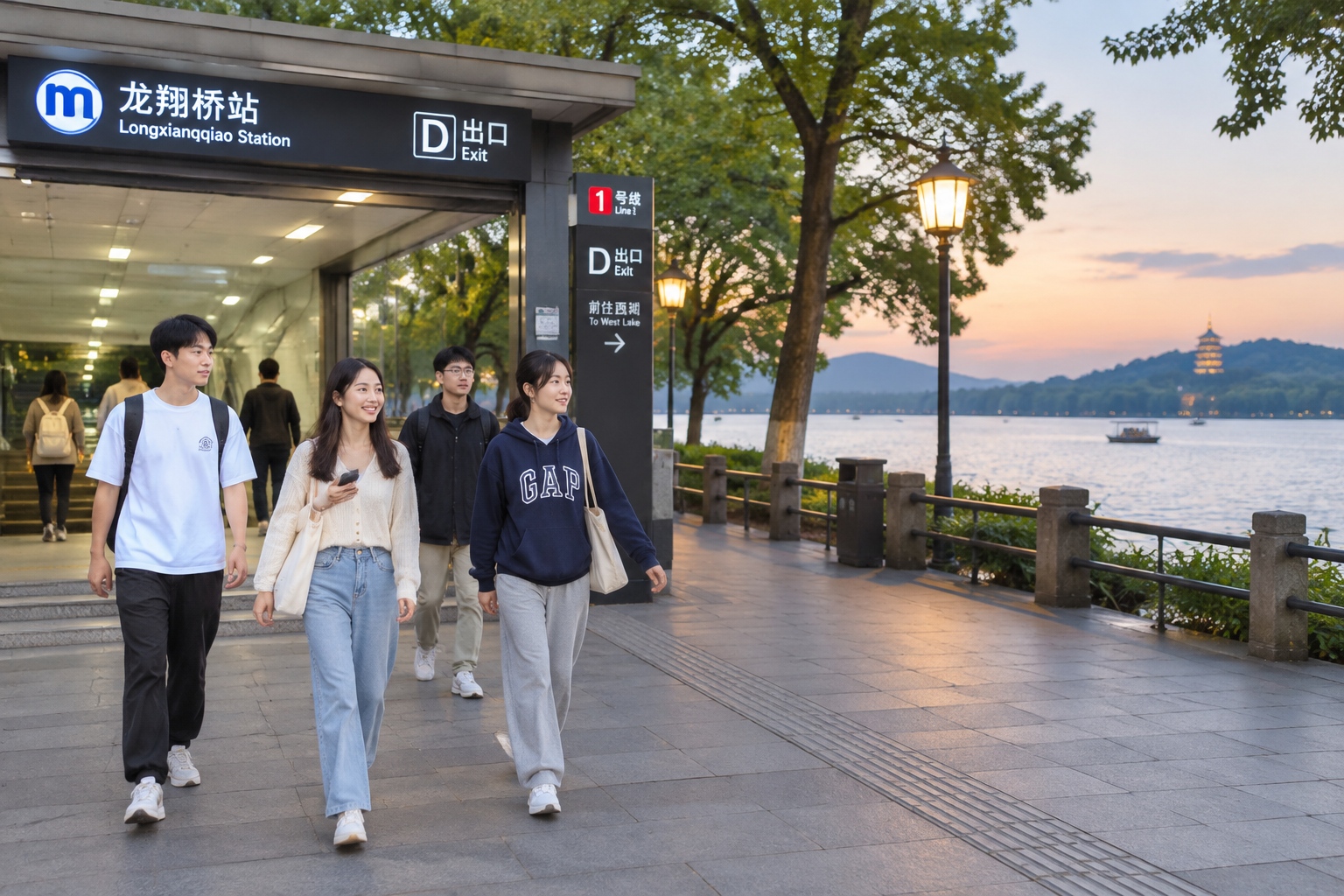
The free lakefront only works if people can get there. In the past decade, Hangzhou expanded its metro network to more than 500 kilometers. Line 1, which opened in 2012, has a station called Longxiangqiao that puts you about a five-minute walk from the lake’s eastern shore. On weekends, you can see the crowd shift: office clothes in the morning, sneakers and backpacks by afternoon.
The city also added shared bikes, bus lanes, and lighting along the water. In 2022, when Hangzhou hosted the Asian Games, some lakefront sections got new paving and better signs. These are small things, but they change how a public space feels. A place is easier to use when you don’t have to plan a whole day around it.
Why young people date at the lake
Dating in a Chinese city can be expensive. Dinner, drinks, a movie — it adds up. West Lake offers something different: a long walk with no entry fee, no minimum spend, and no pressure to perform.
On a Friday evening near Broken Bridge, I watched a couple in their early twenties share a milk tea and argue about which direction to go. They were not alone. All along Bai Causeway, couples walked slowly, some holding hands, some just talking. A few sat on stone benches facing the water, watching boats drift by.
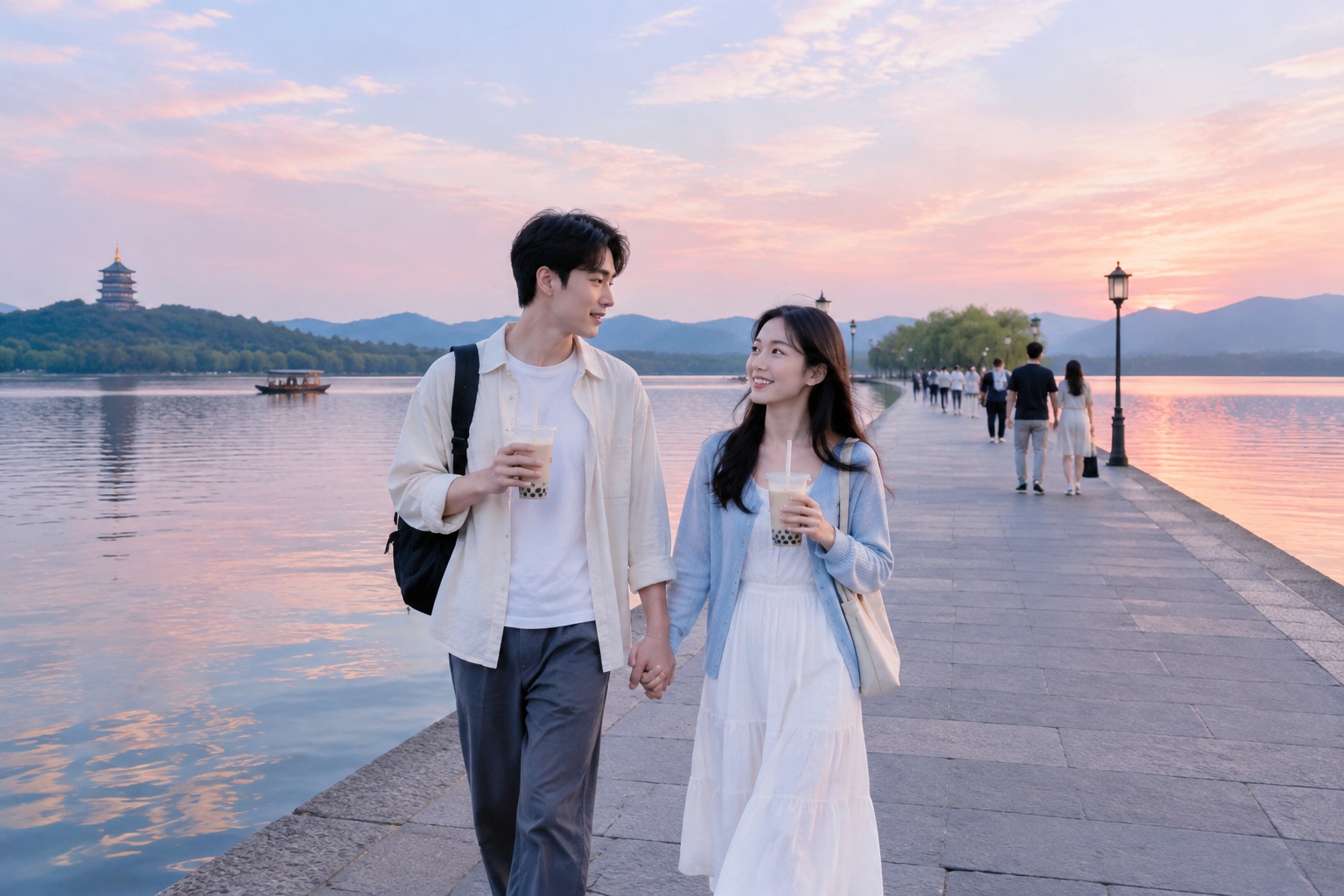
This is not a new phenomenon. West Lake has been a romantic symbol in Chinese literature for centuries. But the free-access policy turned that symbol into an everyday option. You don’t need a special occasion. You just need time.
For Gen Z in Hangzhou, the lake also fits a wider trend: the “city walk.” Young people wander through neighborhoods, take photos, stop for snacks, and treat the city itself as entertainment. West Lake is the biggest, oldest, and most beautiful city-walk route they have.
Free does not mean costless
There is a common misunderstanding about free public spaces: that they are free to maintain. They are not.
Someone has to clean the paths, prune the willows, repair the paving, manage the crowds, and keep the lights on. Hangzhou’s government pays for this. During major holidays, the lake gets crowded — sometimes uncomfortably so. On National Day in early October, visitors can number in the hundreds of thousands per day. Local residents often avoid the lake then. They know it will be there next week.
There are other tensions. Commercial development along the shore is carefully controlled, but not absent. Tea houses, restaurants, and souvenir shops cluster in certain areas. Some residents worry that the lake is becoming too polished — more stage than neighborhood. Others point out that without commercial revenue and public funding, the free access would be hard to sustain.
These are real trade-offs. But they don’t cancel the main point: a major heritage site in a city of 12 million people is open to everyone, every day, for free.
The lake has a calendar
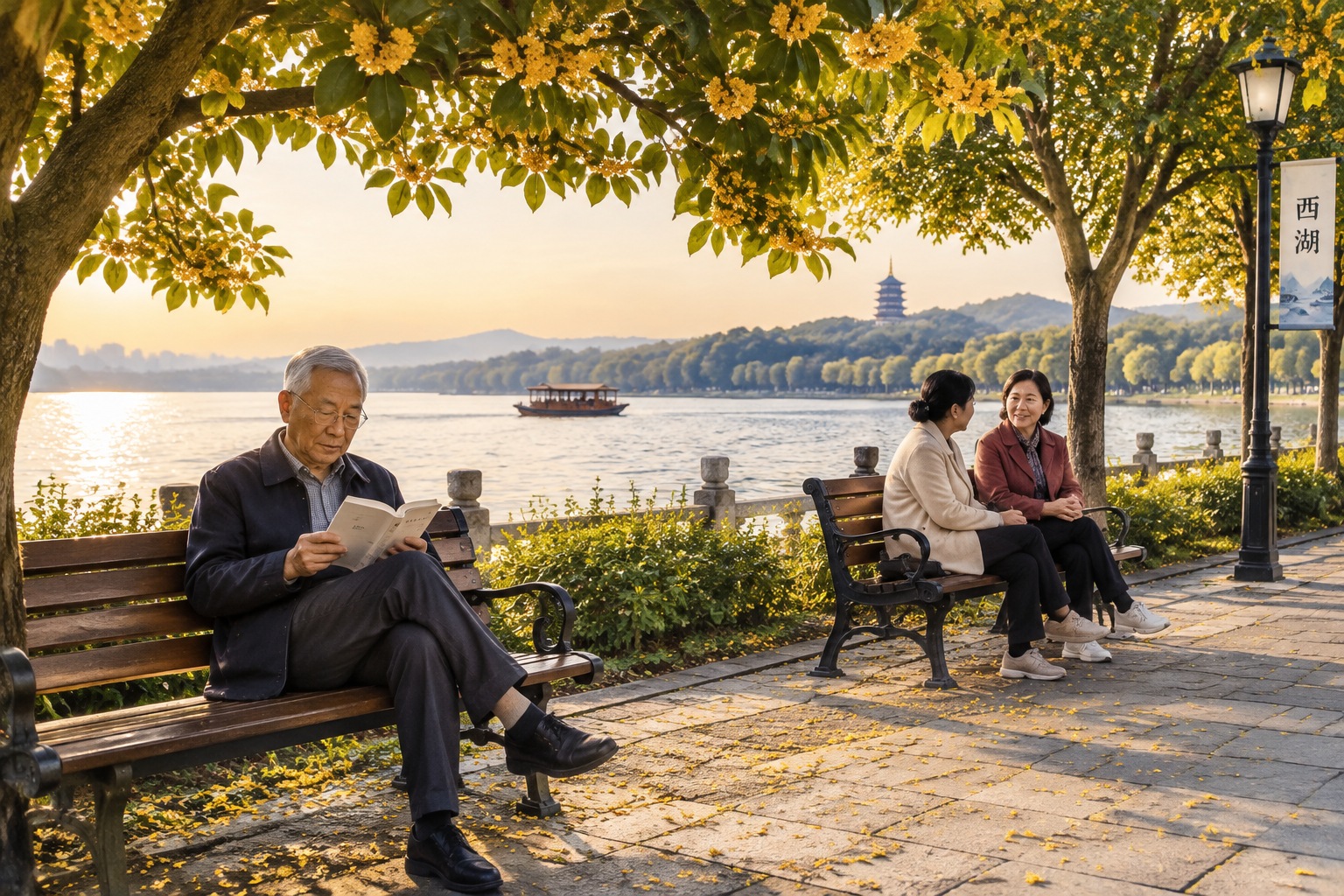
If you live near West Lake, you start to measure the year by it. In March, the willows turn green and the crowds return. In June, lotus flowers cover the water near Quyuan Garden, and photographers line up at dawn. In October, the whole area smells of osmanthus — sweet, almost syrupy — and people collect fallen flowers in small bags.
Winter is quieter. On rare snowy days, thousands show up to see “Melting Snow on Broken Bridge,” one of the classic West Lake views. Most years, there is no snow. People walk anyway.
What a free lake says about a city
It would be easy to tell the West Lake story as a tale of ancient poetry and postcard views. But the more interesting story is about a daily routine: a retired woman walking six kilometers before breakfast, a young couple sharing milk tea on a stone bench, a delivery rider sleeping for 20 minutes in the shade of a willow.
When Hangzhou removed the ticket gates in 2002, it made a bet that public space creates public life. Two decades later, the bet looks solid. The lake is not just preserved. It is used — every morning, every evening, by people who live here.
The next time you hear about a Chinese city “preserving heritage,” think of this: sometimes preservation means keeping people out. Sometimes it means letting them in. Hangzhou chose the second option. You can see the result any day before sunrise.
Start the discussion at forum.chinacomes.com