

A Light Switch in Shandong, a Turbine in Gansu
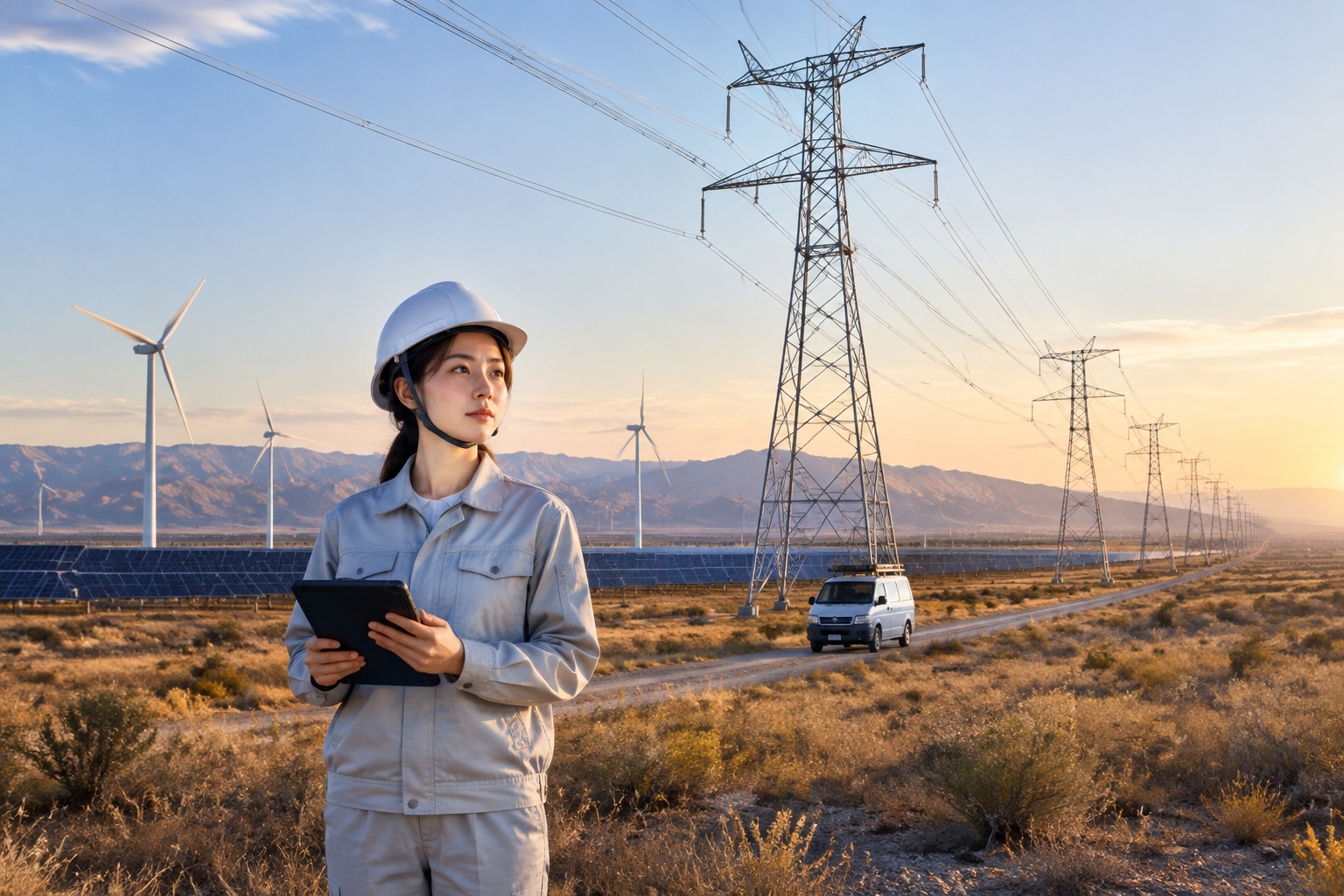
On a cold evening in Jinan, someone flips a switch and the kitchen light comes on. Nothing about the moment suggests distance. Yet the electricity behind it may have left a wind farm near Qingyang, in Gansu province, about 1,000 kilometres to the west, less than a second earlier. On a power grid, that fraction of a second is the whole achievement.
Gansu is dry, windy and thinly populated. Shandong has more than 100 million people, a heavy industrial base and one of the largest appetites for electricity of any province in China: roughly 790 terawatt-hours a year, more than the whole of Germany consumes. Moving power between places like that is mostly a hardware problem, and China’s answer is ultra-high-voltage transmission, or UHV — lines that run at 1,000 kilovolts of alternating current, or up to ±1,100 kilovolts of direct current.
Why Pushing Power Farther Means Pushing the Voltage Higher
Electricity loses energy as it travels. Wires have resistance, the current heats them, and that heat is the loss. The relationship is unforgiving: for a given amount of power, losses grow with the square of the current. Double the voltage and you halve the current, which cuts the loss to a quarter.
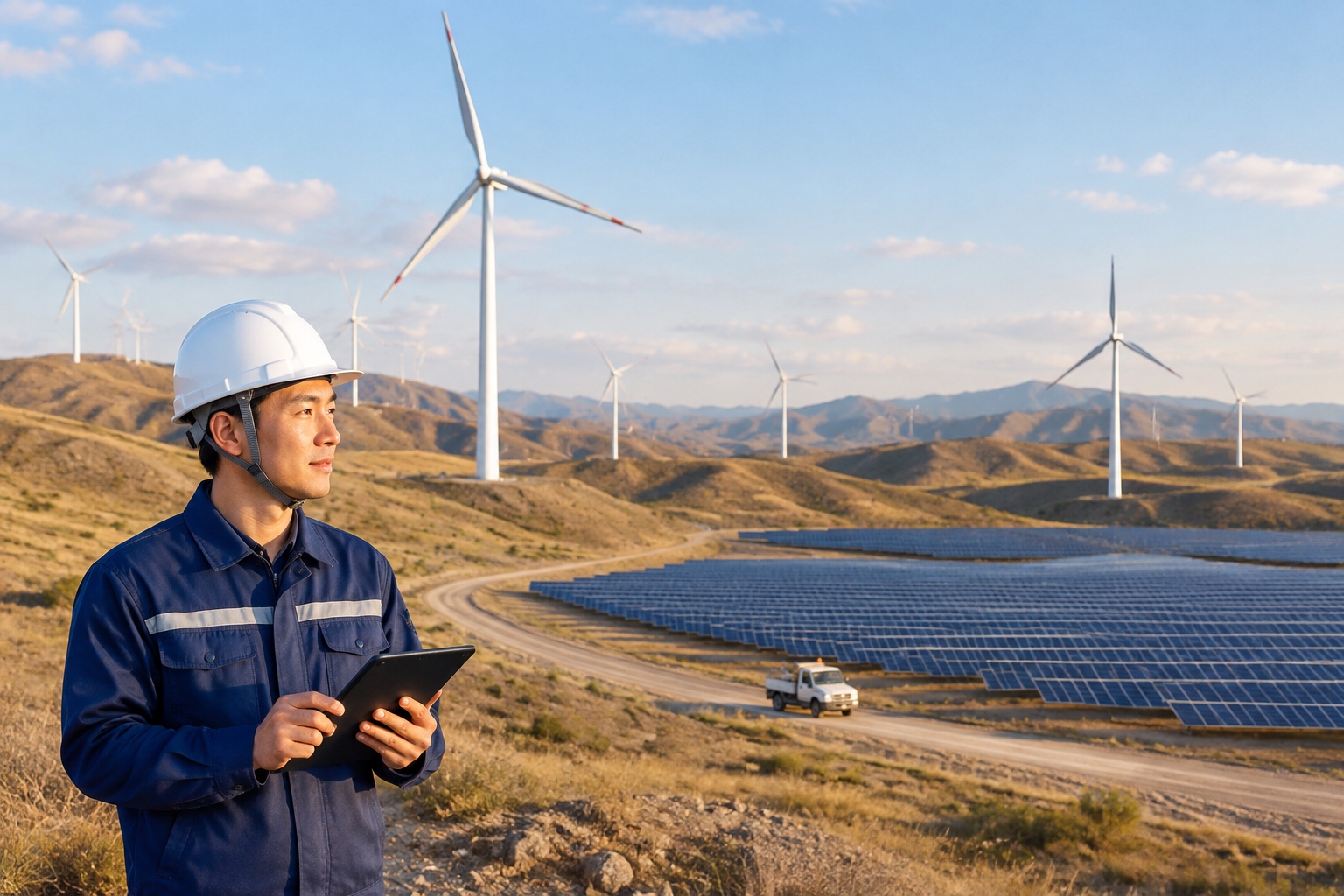
A wall socket in a Chinese home runs at 220 volts. A regional transmission line runs at 500,000 volts. UHV starts at 800,000 volts for direct current and 1,000,000 volts for alternating current. This is a step change, not a marketing label.
In practice, a ±800 kV DC line loses roughly 1.5 to 2 percent of the energy it carries per 1,000 kilometres. Older 500 kV lines lose several times that. Higher voltage also means fewer parallel circuits for the same number of megawatts, which matters in a country where land, farmland and rights of way are all contested.
Two Kinds of UHV, Two Different Jobs
UHV comes in two flavours, and conflating them is why a lot of English-language coverage of the Chinese grid goes wrong.
Alternating current at 1,000 kV works like a highway with on-ramps. It ties regional grids together, and power can be dropped off and picked up along the route. China’s 1,000 kV AC lines form a backbone across the north and centre of the country.
Direct current at ±800 kV — and on a few routes ±1,100 kV — works more like an express bus between two fixed stops. It carries bulk power point to point, is usually the cheaper option beyond roughly 1,000 kilometres, and can link grids that do not even share a frequency. The trade-off sits at the terminals: a converter station, roughly the size of a small industrial park, has to turn AC into DC at one end and back again at the other, and each conversion costs about 1 percent of the energy passing through.
The Longdong–Shandong Line, in Numbers
The Longdong–Shandong ±800 kV direct-current project is a useful case because the figures are public and concrete.
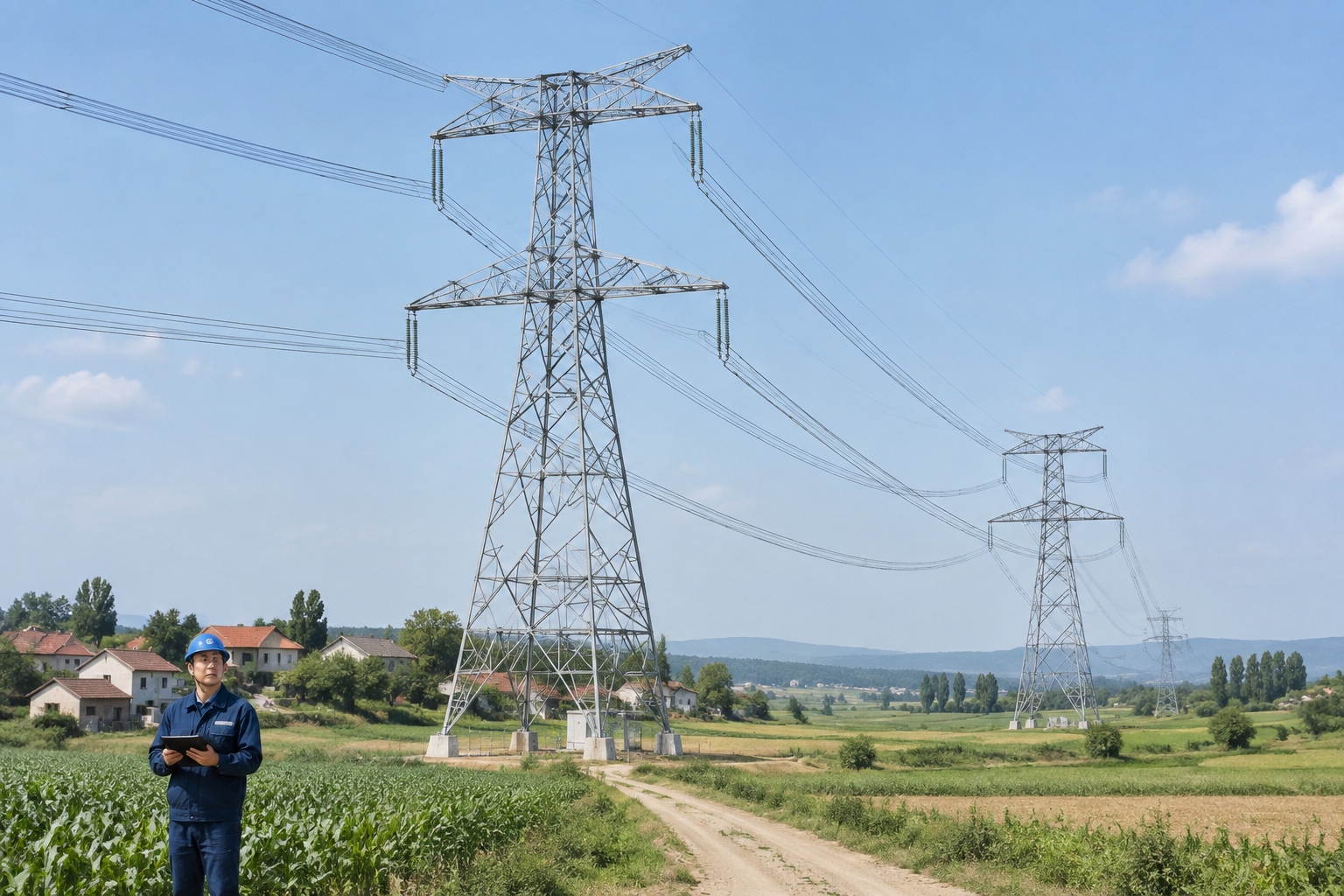
It starts at a converter station in Qingyang, in eastern Gansu — the region known as Longdong — and ends at one in Tai’an, Shandong. The route crosses five provinces: Gansu, Shaanxi, Shanxi, Hebei and Shandong, and runs roughly 1,000 kilometres. Its rated capacity is 8,000 megawatts, and it is designed to deliver on the order of 30 to 40 billion kilowatt-hours a year, somewhere around 4 to 5 percent of what Shandong consumes.
Eight gigawatts is an awkward number to picture. It is about the output of eight large nuclear reactors, or roughly the peak demand of a city of several million people on a hot afternoon.
Where does the power come from? The sending end is paired with what the industry calls a comprehensive energy base in Longdong: wind farms, solar arrays and upgraded coal-fired units. The coal is not a footnote. A DC line needs a controllable, steady source at the sending end for the hours when the wind drops and the sun sets, and storage on that scale does not yet exist. So the electrons arriving in Shandong are cleaner than the ones they replace, but they are not all green.
Why China Built the World’s Largest UHV Network
China did not build UHV because engineers liked big numbers. It built it because the country’s energy map and its population map point in opposite directions.
Roughly three-quarters of China’s coal sits in the north and northwest. About 80 percent of its hydropower potential is in the southwest. The best onshore wind and solar resources are in the northwest — Gansu, Xinjiang, Inner Mongolia, Qinghai — while more than 70 percent of electricity demand is concentrated along the eastern seaboard, where the factories, ports and megacities are.
The alternative to building lines was to keep shipping coal east by rail: expensive, slow, and it puts the pollution next to the people who consume the power. Sending electricity instead has reshaped the air in eastern cities. Several provinces have capped coal consumption and shut small coal boilers near population centres.
Scale matters here. China has built more than 40 UHV projects, and the West–East Power Transmission programme, 西电东送, now has a transmission capacity above 300 gigawatts across three corridors: northern (Inner Mongolia and Shanxi toward Beijing and Tianjin), central (Sichuan and Chongqing toward central and eastern China) and southern (Yunnan and Guizhou toward Guangdong).
Timing tells the story best. In 2016, Gansu threw away around 40 percent of the wind power it generated, because there was no way to move it out. Turbines were paid to stop. By the early 2020s curtailment in the province had fallen into the single digits, and new UHV lines are the main reason. It has not gone to zero, and in some weeks it still climbs — a reminder that transmission capacity is a queue, not a cure.
What an Ordinary Person Actually Notices
Almost nothing, which is the point.
Retail electricity prices in China are set by regulators, not by the weather in Gansu, so a household in Tai’an does not watch its bill swing with the wind. What people notice is reliability: air conditioners running through a 40°C afternoon, factories on three shifts. Roughly one-sixth of Shandong’s electricity now comes from outside the province, and that share is rising.
People notice the air too, even if they rarely connect it to a pylon 1,000 kilometres away. Shandong has shut down or upgraded large numbers of small coal-fired boilers over the past decade. Winter haze in Jinan is still bad, but it is visibly better than it was in 2013.
The costs are real as well, and mostly local. Towers cross farmland; a single tower’s footprint is small, but the compensation talks, the maintenance roads and the visual intrusion are not. Routes get adjusted around nature reserves, and environmental reviews have delayed more than one project. In Gansu, land under the turbines is used differently than before, and herders and farmers have had to negotiate access and payments.

Reading the West–East Map
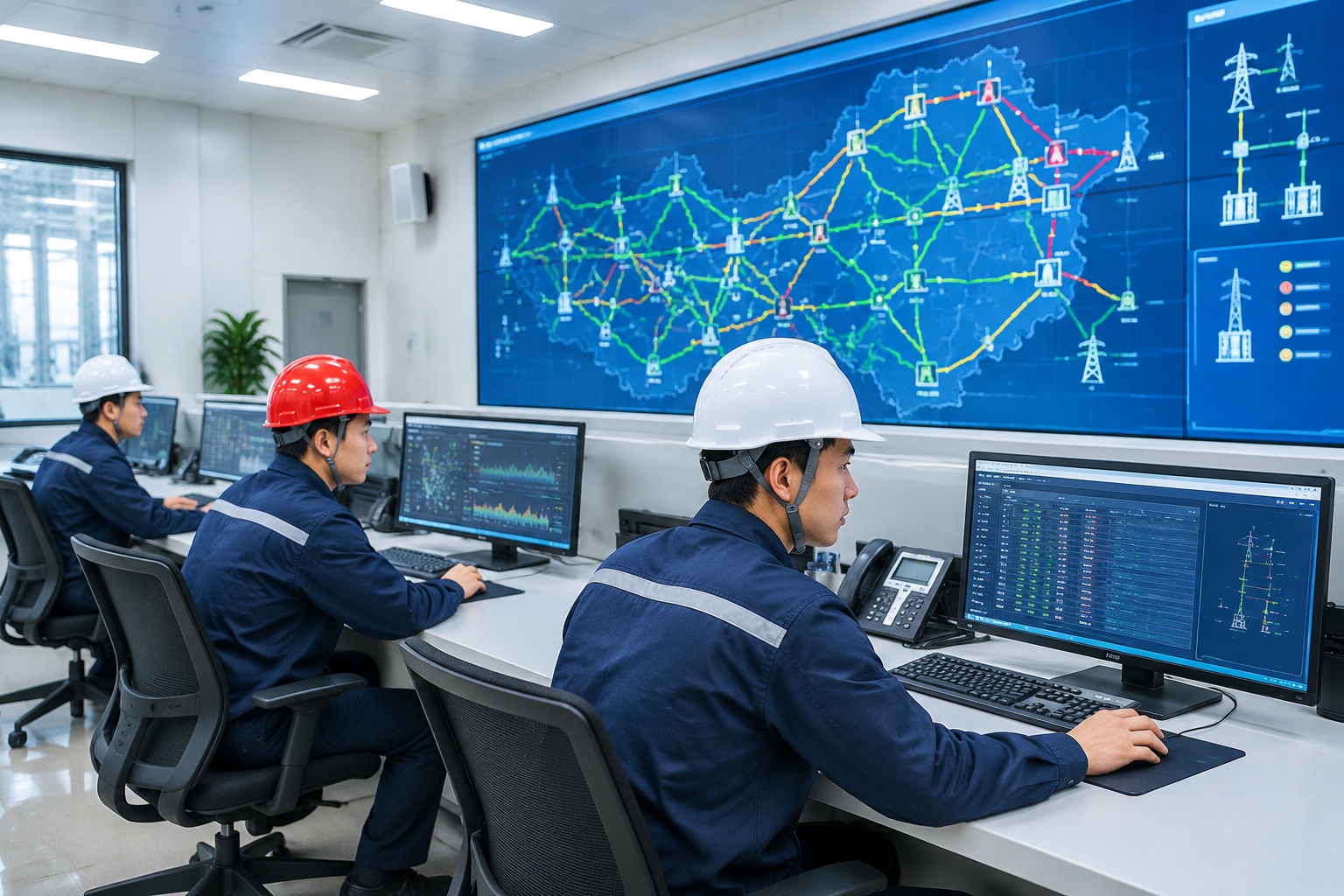
Put the whole thing on a map and the shape becomes almost obvious: heavy lines leaving the northwest and southwest, arriving in the east and south, with converter stations as the junctions. It is a picture of a country whose resources and whose people live in different places, and of a decision to move the energy rather than the industry.
The light switch in Jinan hides all of it. That is the achievement — and also why the argument over how to build the next 40 lines is worth following.
Start the discussion at forum.chinacomes.com