

A Boiler Room and a Rooftop, in the Same Building
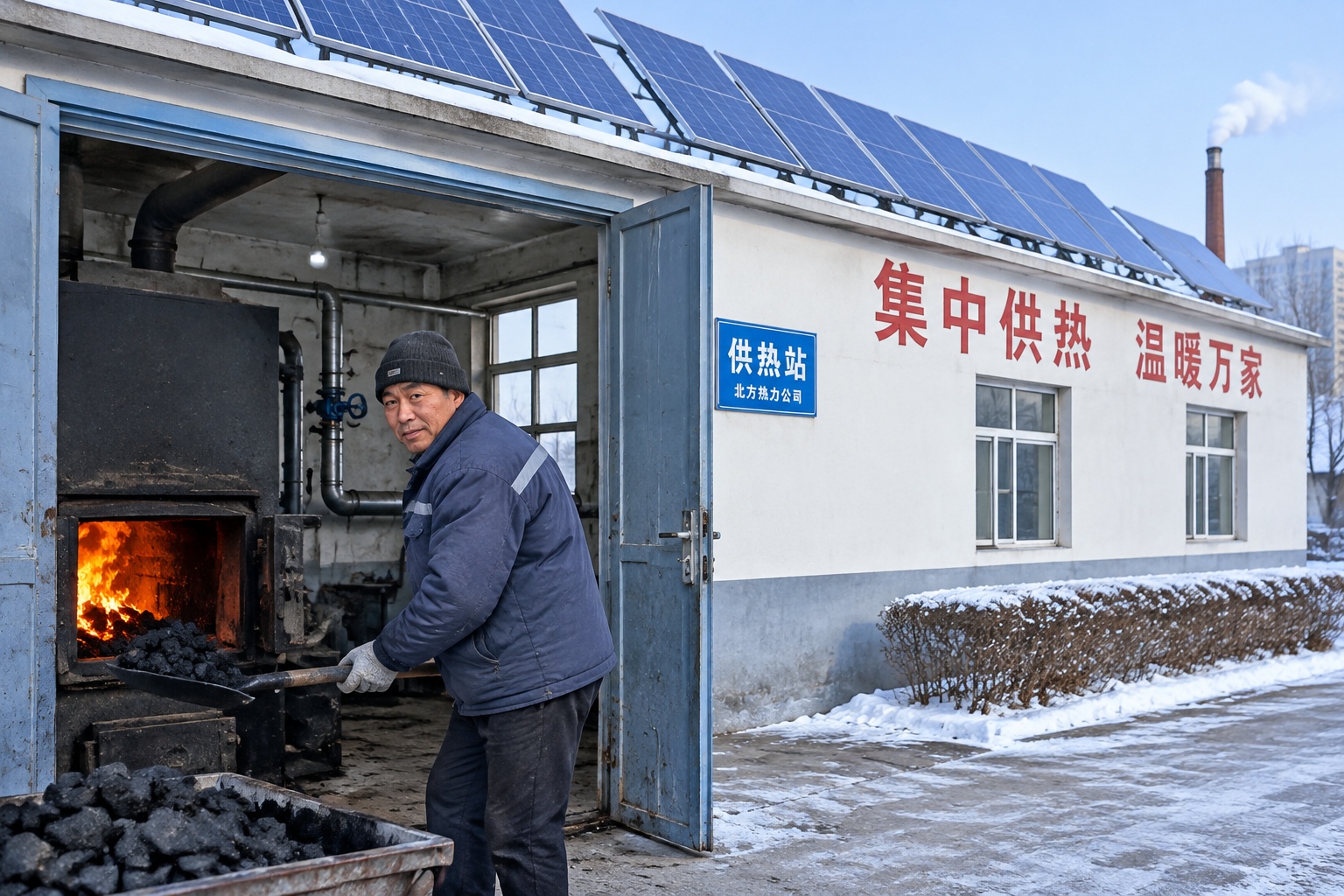
In a small city in northern China, winter mornings start early at the district heating plant. A worker in a padded jacket shovels coal into the furnace, the way plants here have done for decades. The warmth he produces will reach thousands of apartments where heating is centralized and runs all season.
Walk up to the roof of the same building and you find something newer: a grid of blue solar panels, installed two years ago, quietly feeding electricity back into the local network. Coal below, sunlight above, in the same place, on the same morning.
For many overseas readers, this is the puzzle. China installs more solar and wind than any other country on earth, leads the world in hydropower, and sells electric cars everywhere. So why is it still burning so much coal? The short answer is that an energy transition is not a switch you flip. It is a long handover, and in China the old and the new are expected to run together for years.
Why Coal Is Still the Staple
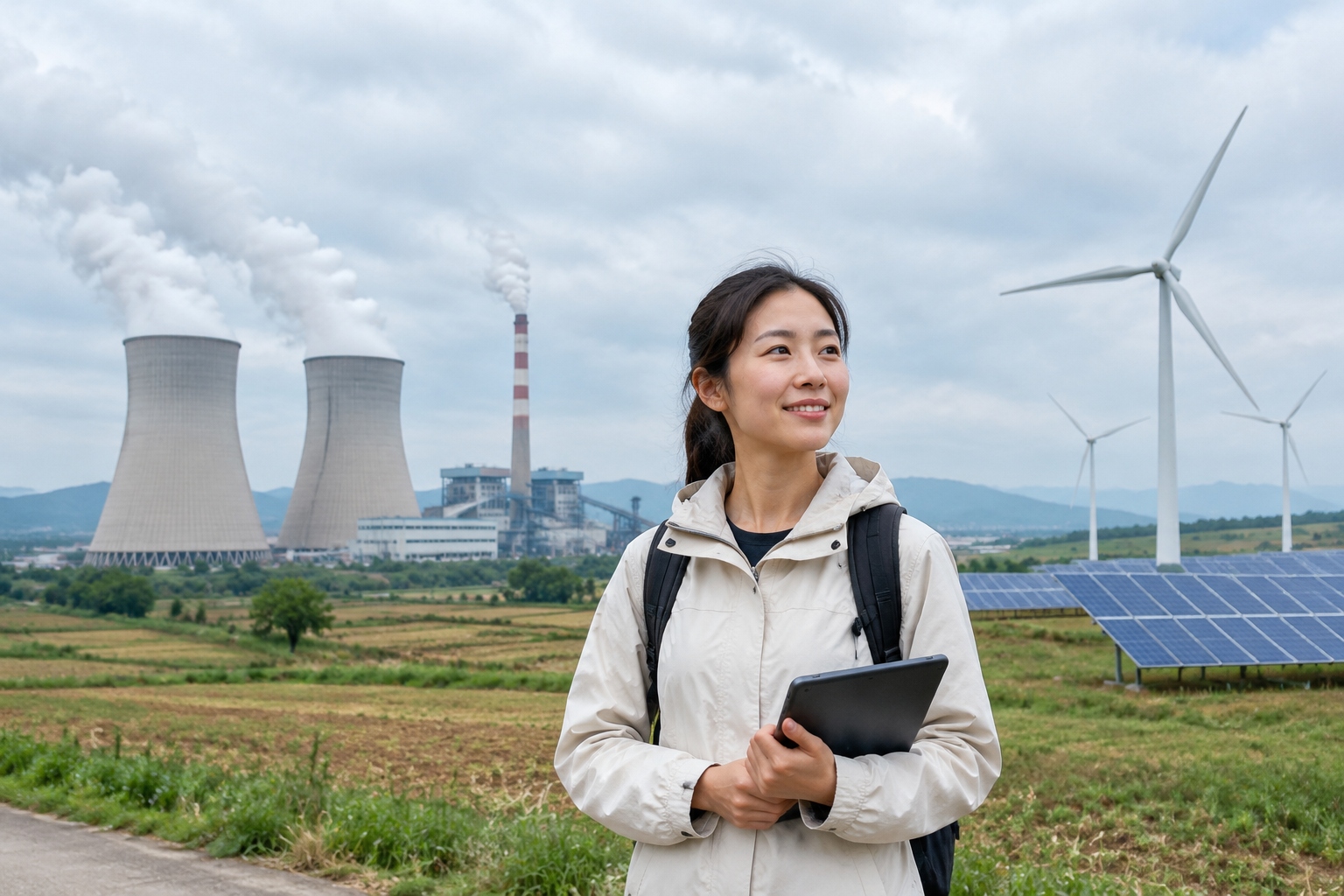
Coal still generates roughly 60 percent of China’s electricity. That number is falling steadily, but it is high by Western standards, where many countries have pushed coal below 20 percent or phased it out. To understand why, it helps to drop the moral framing and look at what coal actually does for ordinary life here.
First, it keeps the lights on reliably. China’s economy still runs a vast manufacturing base, from steel mills to the factories that make your phone and your furniture. Heavy industry needs power that is steady around the clock, not only when the wind blows. Coal plants can ramp up on demand, which makes them the backbone during peak loads.
Second, there are seasonal spikes. During a summer heat wave, hundreds of millions of air conditioners switch on at once. During a cold snap, heating demand surges in the north. In 2021 and 2022, several provinces faced electricity shortages, and the memory of those blackouts made energy security a top political priority. Coal became the insurance policy.
Third, coal is tied to jobs and local economies. Entire cities in provinces like Shanxi and Inner Mongolia were built around mines and power plants. You cannot shut them overnight without thinking about the people who work there.
How the New Energy Is Growing
If coal is the staple, renewables are the fastest-growing dish on the table, and the scale is hard to overstate. By 2024, China’s combined solar and wind capacity passed 1,200 gigawatts, a target it hit years ahead of schedule. In a single recent year, the country installed more solar panels than the United States has built in its entire history.
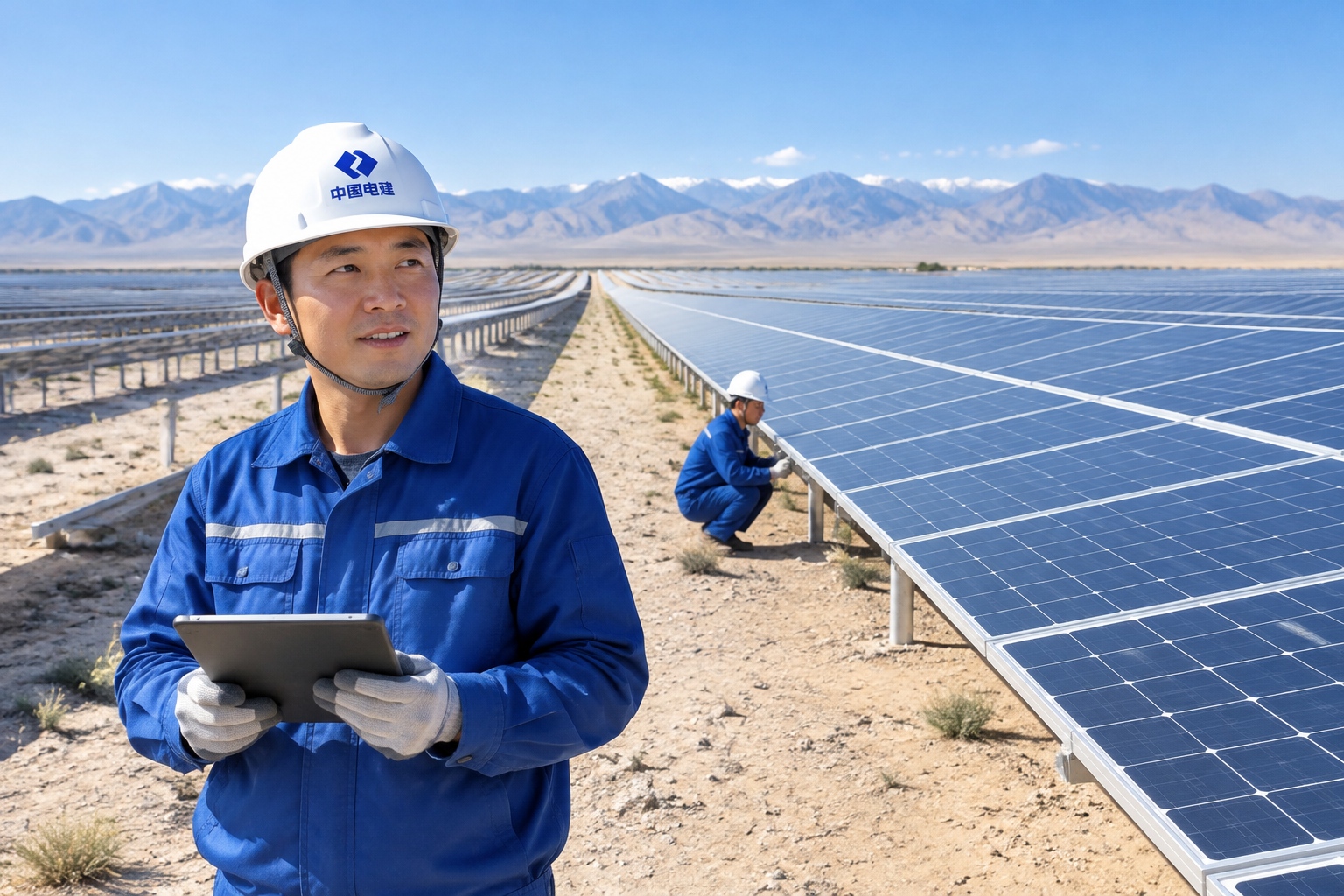
What does that look like on the ground? In the northwestern deserts of Qinghai, Gansu, and Xinjiang, there are solar farms so large you cannot see the end of them from a car window. These regions have cheap, flat, sun-soaked land that is useless for farming but perfect for panels. Along the coasts of Jiangsu, Guangdong, and Fujian, offshore wind turbines rise out of the sea, close to the dense coastal cities that consume the most power.
The transition is also reaching ordinary buildings. Rooftop solar, like the panels above that northern boiler room, now sits on factories, village houses, and warehouses. A farmer in Shandong might lease his roof to a solar company and collect a small monthly payment. A factory in Zhejiang might install panels to cut its own power bill. This distributed solar is less glamorous than a giant desert farm, but it adds up fast.
Why More Clean Energy Needs a Stable Old Base
Here is the part that feels counterintuitive. The more solar and wind China builds, the more it needs a reliable backbone to lean on. Sun and wind are variable. A cloudy, windless week still needs power. So the system has to be balanced.
Three things do that balancing. The first is coal and gas plants that can throttle up and down to fill the gaps, which is one reason old plants are being upgraded rather than simply closed. The second is energy storage, mostly large battery farms and pumped hydro, where water is pumped uphill when power is cheap and released to generate when it is scarce. The third is China’s ultra-high-voltage transmission network, a set of long-distance power highways that move electricity thousands of kilometers from the sunny, windy west to the hungry eastern cities.
Think of it like a restaurant. The renewables are a growing menu, but coal is still the kitchen that guarantees nobody goes hungry when the special runs out. Over time, batteries and smarter grids are meant to take over that guarantee. For now, the old base is what makes the ambitious new build-out possible without blackouts.
What Changes in Daily Life
You can feel the transition in small, concrete ways. Electric cars are everywhere in Chinese cities now, and charging stations have spread into parking lots, highway rest stops, and apartment compounds. More than half of new cars sold in China are now electric or hybrid, a shift that happened faster than almost anyone predicted.
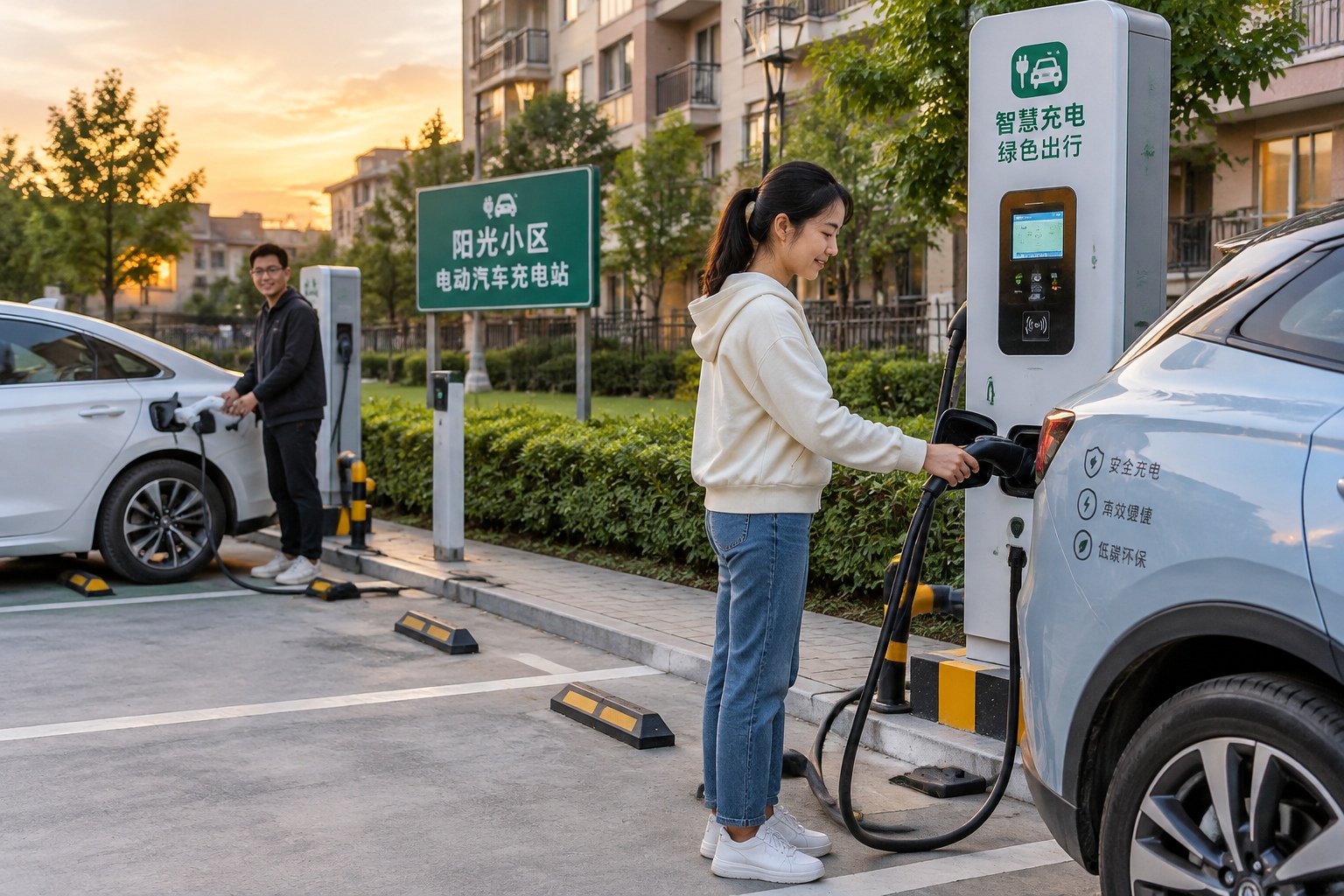
Electricity pricing is changing too. Many households and businesses now use time-of-use rates, paying less for power at night when demand is low. People charge their cars and run their washing machines after midnight to save money, which also helps the grid absorb off-peak renewable power.
Factories are being pushed to cut energy intensity, retrofitting old equipment and tracking consumption more carefully. And for coal workers, there are retraining and relocation programs, though these vary a lot in quality. Some former miners move into solar installation or grid maintenance; others face a harder adjustment. The human side of the transition is real and uneven.
The Problems Nobody Has Fully Solved
None of this is smooth. In the windy, sunny west, so much renewable power is sometimes generated that the grid cannot use it all, and some gets wasted, a problem known as curtailment. The transmission lines and storage have not fully caught up with the pace of new construction.
There is also a geographic mismatch. The best solar and wind resources are far from the biggest cities, which is why those long transmission highways matter so much and why building them is expensive and slow.
And then there is the hardest question: who pays? Shutting coal plants early strands investments. Retraining workers costs money. Upgrading grids is enormous. Provinces that depend on coal revenue have different incentives than wealthy coastal regions pushing for clean air. These tensions are political and economic, not just technical, and they are far from settled.
Back to the Boiler Room
Return to that building in the northern city. The furnace still burns, and the panels still catch the sun. A Western reader might expect one to replace the other quickly. What is actually happening is slower and messier: the two run in parallel, each covering for the other’s weakness, for as long as it takes.
That is the logic worth understanding. China is not choosing between old and new. It is managing a decades-long handover in a country that cannot afford to let the lights go out while it rebuilds the entire system underneath them. The transition is not a clean break. It is coal and sunlight, in the same place, on the same morning.
Start the discussion at forum.chinacomes.com