

A bowl of soup before anything else
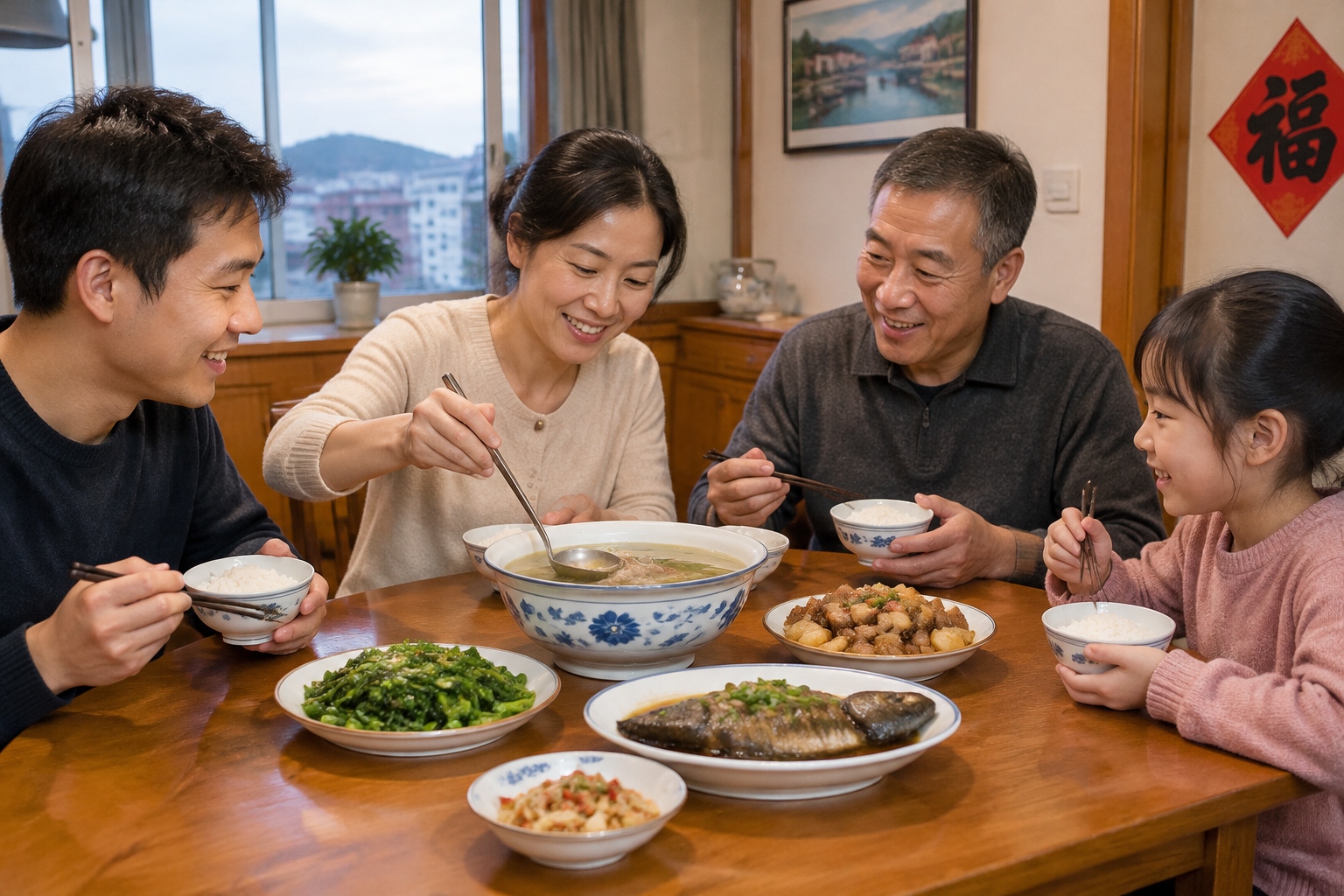
Walk into a home kitchen in Fuzhou around dinnertime and the first thing you’ll notice isn’t the rice or the stir-fry. It’s a clay pot quietly bubbling on the back burner, left alone for hours. Ask the grandmother what’s in it and she might just say, “today’s soup.” In Fujian, the soup isn’t a side dish you order to fill a gap. It often comes first, and the rest of the meal is arranged around it.
There’s a local saying that captures this: bu tang bu cheng yan, loosely “without soup it isn’t a proper meal.” For a quick orientation, Fujian is a mountainous, coastal province in southeastern China, directly across the strait from Taiwan. Its cuisine, known as Min cuisine, is one of China’s eight major regional traditions. And more than any other, it is organized around liquid, warmth, and a flavor that’s easy to miss if you’re expecting fireworks.
The philosophy: coax, don’t conquer
Most people’s mental image of Chinese food leans toward bold: the numbing chili heat of Sichuan, the heavy soy and sugar of Shanghai, the garlic and scallion punch of the north. Fujian cooking goes the opposite direction. The goal here is to pull flavor out of ingredients slowly, not to layer spice on top of them.
That flavor has a name English speakers now use freely: umami. It’s the savory, mouth-filling taste you get from aged cheese, ripe tomatoes, seaweed, cured ham, or a long-cooked stock. Japanese scientists named it over a century ago, but Chinese cooks had been chasing it for far longer. In Fujian, umami is the whole point. A proper broth is simmered for hours from pork bones, chicken, dried seafood, or mushrooms until the liquid turns cloudy and deep, and the taste is round rather than sharp.
Spices stay in the background. You won’t find a wall of chili or a heavy hand with pepper. A cook might add a splash of rice wine, a few slices of ginger, a little white pepper, and then step back. The flavor is supposed to feel clean. People here describe a good soup as qing, meaning clear or light, which is high praise, not a complaint that it’s bland.
The dishes that define the table
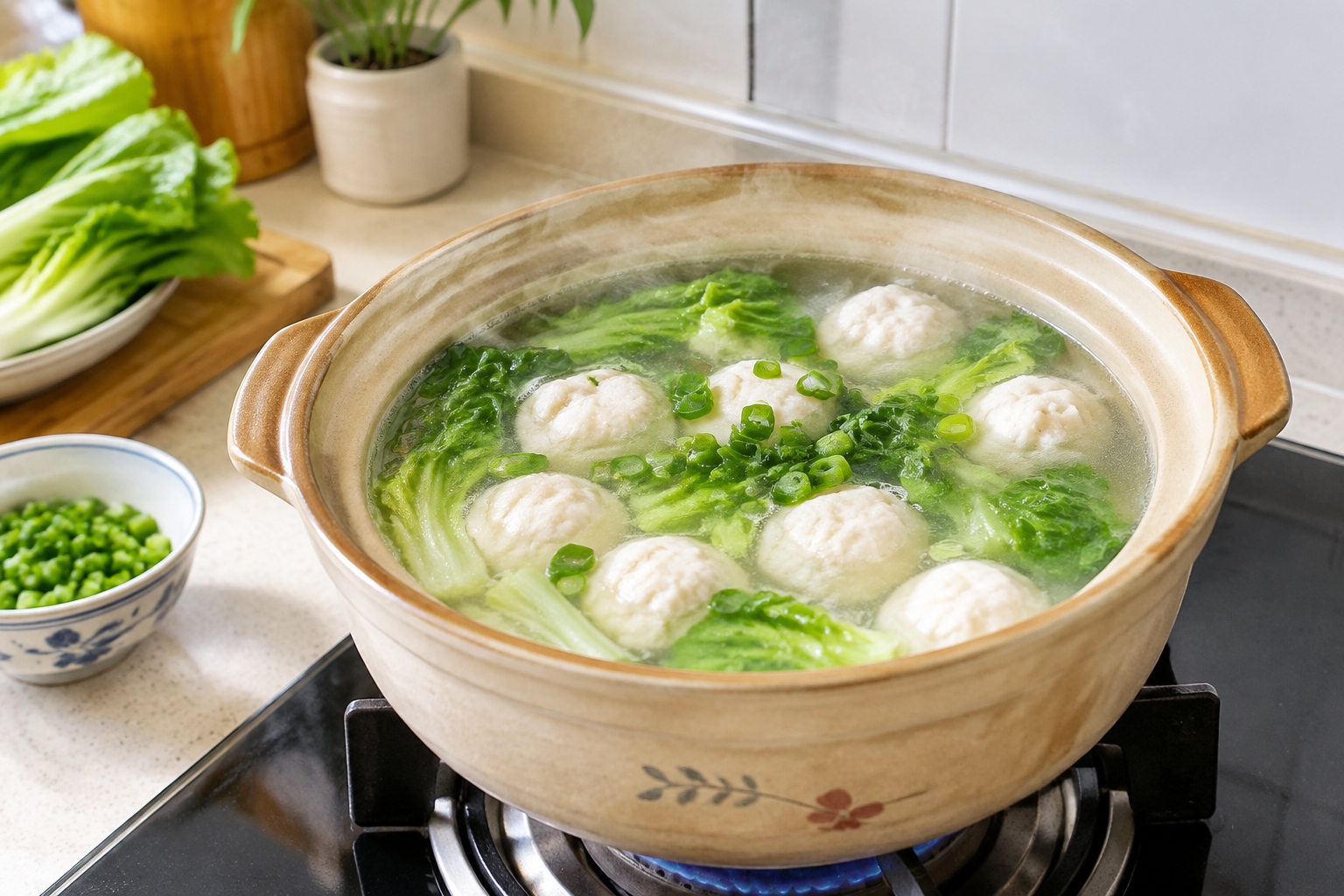
If you want to understand Fujian through three bowls, start with fish ball soup. Local fish balls aren’t the dense, rubbery kind from a supermarket freezer. The good ones are made from pounded fish paste wrapped around a nugget of minced pork, so they’re springy on the outside and juicy in the middle. They float in a plain, slightly peppery broth with a scatter of chopped scallion and a few leaves of greens. That’s it. The restraint is the skill.
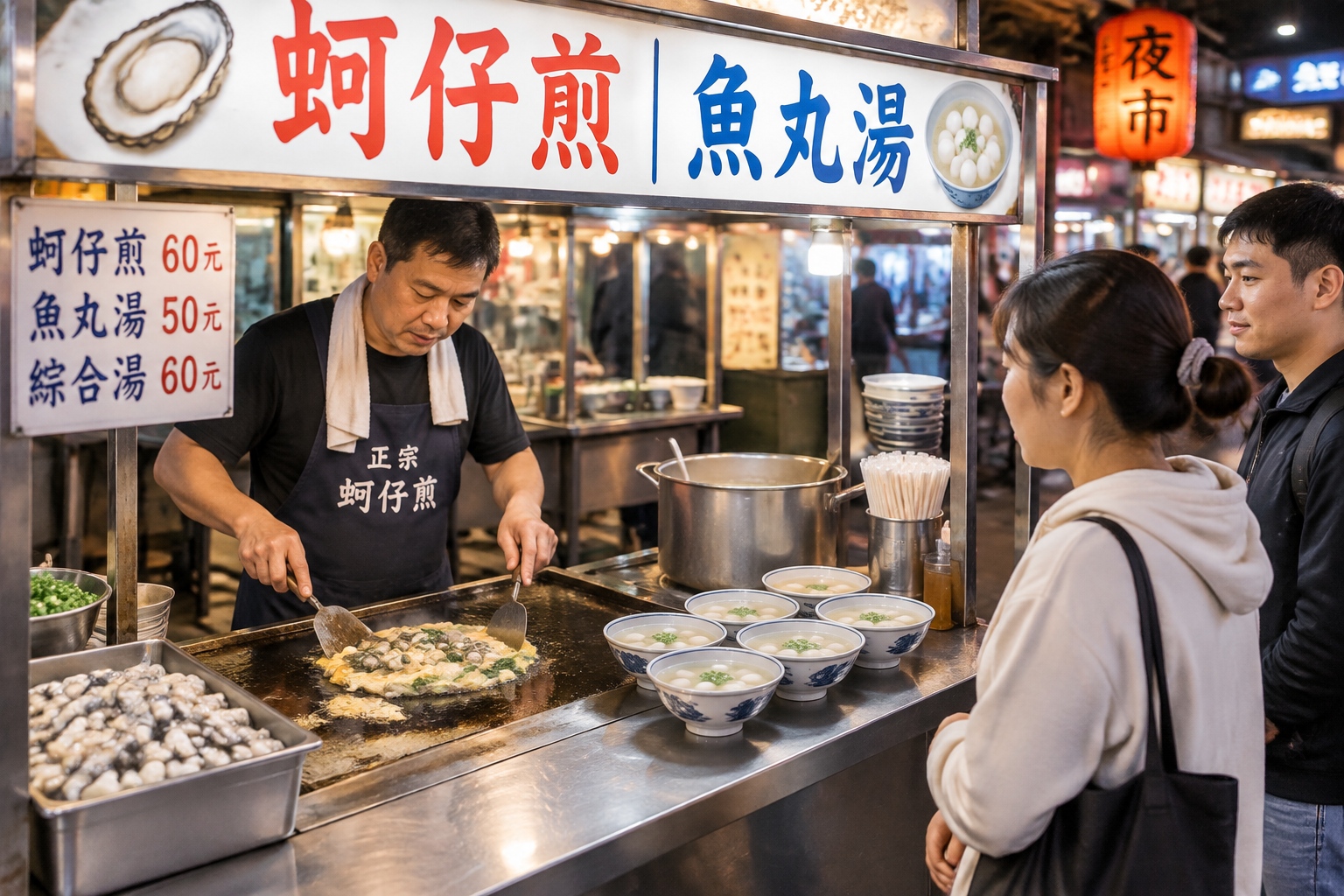
Next, the oyster omelet, or o-a-tsian in the local Hokkien dialect. In its most familiar form it’s a soft, slightly gummy pancake of sweet potato starch, egg, and small fresh oysters, cooked until the edges crisp. In coastal towns you’ll also find it served looser and wetter, closer to a thick oyster soup, with the brininess of the sea doing most of the work. It’s a classic night-market dish, cheap, fast, and best eaten standing up while the next batch sizzles behind the vendor.
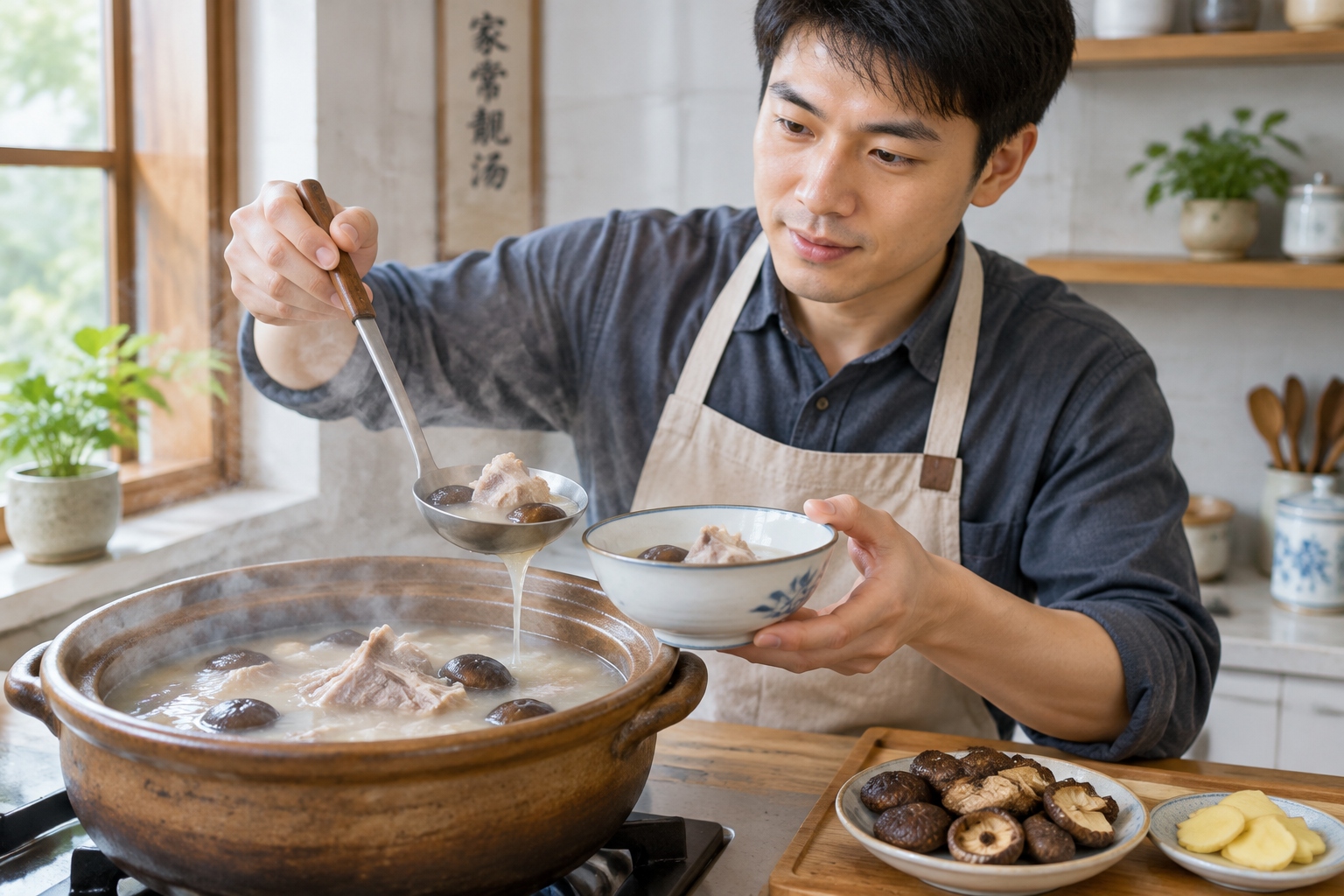
Then there are the mushroom soups. Fujian’s mountains produce a huge range of fungi, from shiitake to delicate wild varieties, and dried mushrooms are a pantry staple precisely because they concentrate umami as they age. A clear chicken and mushroom soup, barely seasoned, is the kind of thing a family makes on an ordinary Tuesday. It tastes like effort and patience rather than a recipe.
Soup as everyday medicine
To really get Fujian soup, you have to understand that for many families it isn’t only food. It’s maintenance. The idea comes from traditional Chinese medicine, which treats the body as a system that can be gently nudged toward balance through what you eat. Certain soups are thought to “tonify” or nourish, warming you in winter, cooling you in summer, helping new mothers recover, or supporting someone who’s run down.
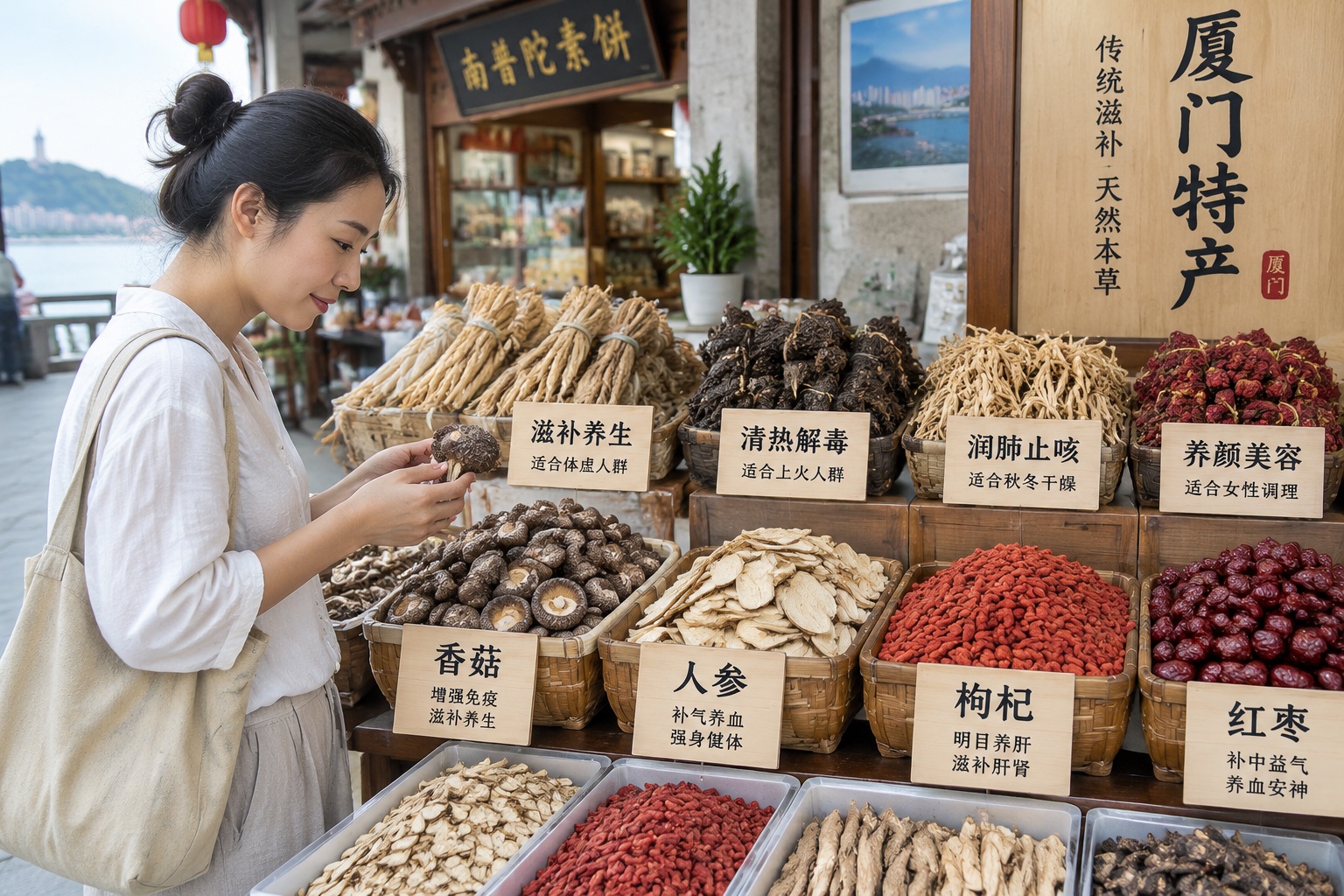
This isn’t fringe belief. It’s woven into normal life. A grandmother will simmer a dark herbal chicken soup when a grandchild has exams coming up. A pregnant woman’s relatives will bring specific restorative broths. Pharmacies and markets sell small bundles of dried roots, berries, and barks labeled for exactly these purposes, and people buy them the way others buy vitamins. Whether or not you believe in the medical theory, the practical result is that households here eat a lot of long-cooked, low-salt, vegetable-and-protein-rich liquid. As everyday eating habits go, you could do far worse.
I should be honest about the texture of modern life here too. Younger people in Fujian’s cities don’t always have hours to tend a clay pot. Many rely on their parents’ cooking on weekends, or buy ready-made broth packets, or order soup through delivery apps that reach their door in half an hour. The ritual persists, but it bends around work schedules and small apartments. What hasn’t changed is the instinct: when someone is sick, tired, or celebrating, the answer is usually a bowl of something warm.
Why mild wins here
It’s worth placing Fujian next to its neighbors to see what makes it distinct. Chinese regional cuisines are often sorted by their dominant sensation. Sichuan and Hunan built their reputations on chili and the tingling numbness of Sichuan peppercorn. Much of the north leans salty and wheat-heavy. Guangdong, next door to Fujian, shares a love of freshness and also prizes slow-cooked soups, but Fujian pushes even further toward the delicate and the sweet-savory.
Part of this is geography. Fujian has a long coastline and warm, humid weather, which gives cooks abundant seafood and a reason to favor light, hydrating food over heavy, heating dishes. Part of it is history. Generations of Fujianese emigrated across Southeast Asia and the world, which is why you can taste echoes of this restrained, broth-forward style in Hokkien communities from Singapore to San Francisco.
How to taste it for yourself
If you ever find yourself in Fuzhou, Xiamen, or Quanzhou, skip the instinct to order the spiciest thing on the menu. Order a soup first, let it cool slightly, and taste it before you reach for any condiment. The flavor arrives quietly. It builds. After a few sips you start to notice the depth that hours of simmering put there.
And if you can’t get to Fujian soon, the principle travels well. Buy good bones or a whole chicken, add dried mushrooms and a little ginger, cover with water, and let it go low and slow for a couple of hours with almost no seasoning. Taste at the end. If it’s rich without being salty, savory without any single flavor shouting over the others, you’ve found what this corner of China considers the whole point of cooking. In Fujian, the broth really is king, and the flavor it rules over is quiet on purpose.
Start the discussion at forum.chinacomes.com